The Third Act

The Third Act


I’ve always struggled with endings. I can write a beginning and a middle, and even a climactic confrontation, but actual endings, of stories, poems, songs, and especially novels, have been hard for me. I can write myself into a corner, like all of the experts tell you to do, with the stakes at their highest, and no hope to speak of, but I can’t write my way back out again.

We rely on stories to give our lives a more satisfying shape. We can tolerate the stress and conflict necessary in storytelling, because we believe we know that there will be relief and success in the end. But that’s never been my life experience. The tension never really abates. It just ratchets up and up until I get used to the higher level of anxiety. I may look back, a year later, and realize that I’ve solved a problem or learned a lesson, but I don’t feel the relief while it’s happening.

I’m always looking ahead. I can’t help it. Even when I read a book or watch a movie, and the happy ending comes along, I start imagining how badly the next part of the story will go instead of reveling in the joy. I must have accomplished things, or finished things, in my life, but it never feels that way. When I graduated from high school or college or graduate school, I was focused on the abyss ahead of me, rather than any sense of accomplishment at finishing something important. I never felt like I was really closing a book, or even a chapter, unless it was a chapter with a cliff hanger.

I am most comfortable with middles – where it’s just about doing the work in front of me, and not thinking about where I have to go next. But I’m not supposed to just stick to middles. I have to graduate, and start new things, and struggle all over again to figure out what to do, or why to do it.

The plan for my own third act (or fifth? Or ninth?), has been social work school, leading to a career, at least part time, as a social worker. But my third act is turning into a whole drama of its own, with a thousand catastrophes to overcome, and I’m barely a third of the way through the program.

One of the possible endings for a story, instead of a happy ending, or a tragic (everybody dies) ending, is simply getting up the next day to try again; the whisper of a hope of a happy continuation. This is what I’ve tried to tell myself, almost daily, of late: that it’s enough if I can get up the next day and try again. But I don’t really believe that. I want the relief of a happy ending. I want the denouement, the unknotting of tension, that I’ve been promised.

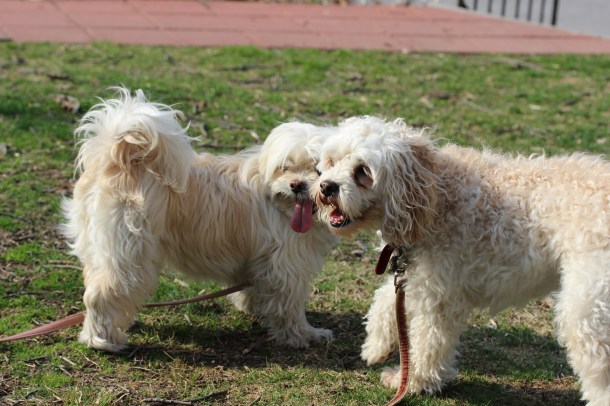
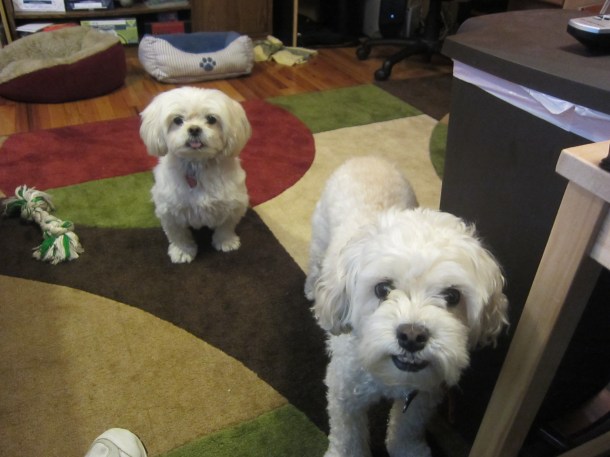
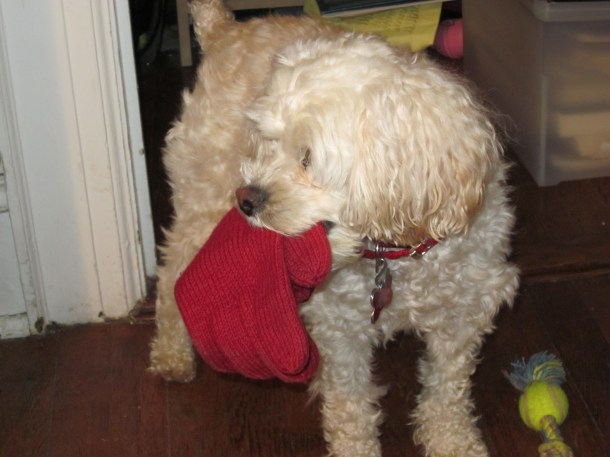
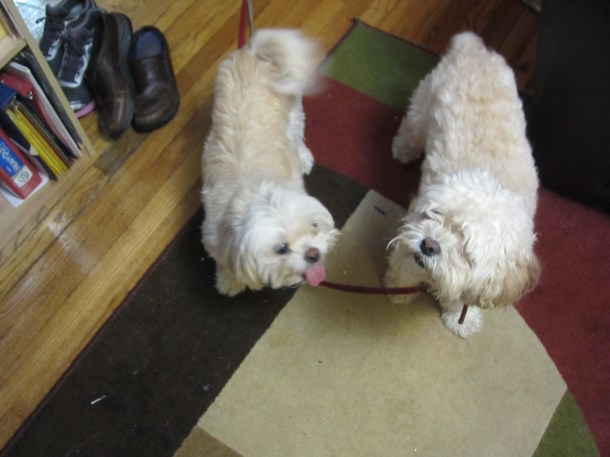
The dogs are so much better at shaping their stories. It’s the naps. Their days are made up of a series of short stories, conveniently separated by restful and rejuvenating naps. Cricket wakes up because she has to pee (inciting incident). She jumps on her Mommy, and cries and scratches, until Mommy agrees to take her outside (Cricket is the heroine of her own story). Outside, she sniffs, and barks, and chases squirrels and random humans, until she is ready to go back inside. Once inside, she stares at her Mommy and the treat bag, until the treat is given (the final climax). Then she eats her treat (denouement), and takes a nap (resolution). This neat structure happens over and over again every day, to Cricket’s great satisfaction.

img_0510

“Wake up, Mommy!”

pix-from-eos-086

“Watch me, Mommy!”

030

“Where are my treats, Mommy?”

img_0876

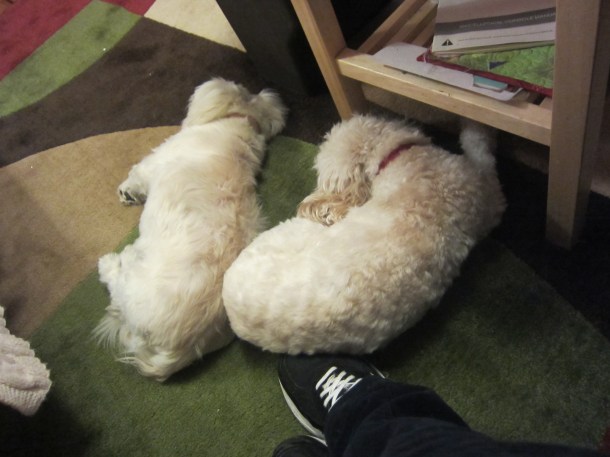
Sleepy time!

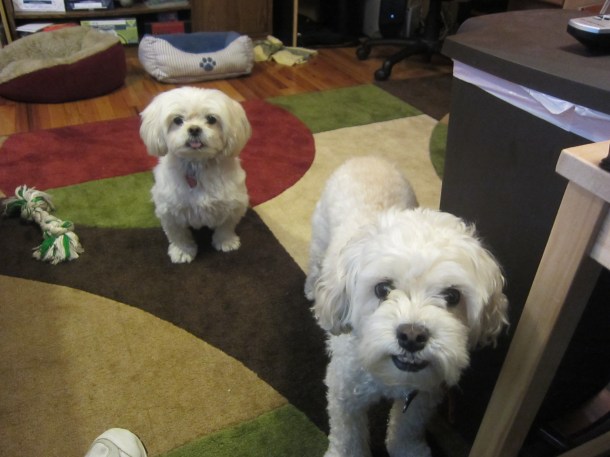
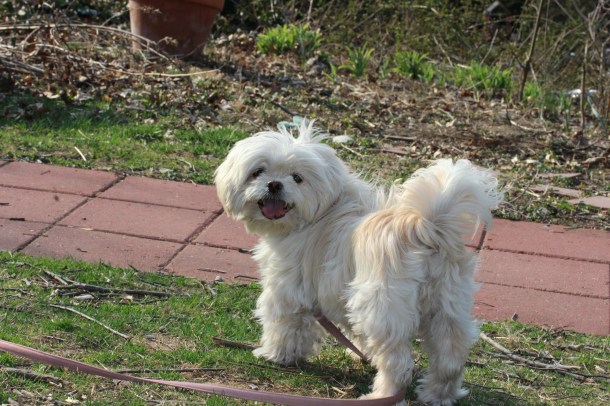
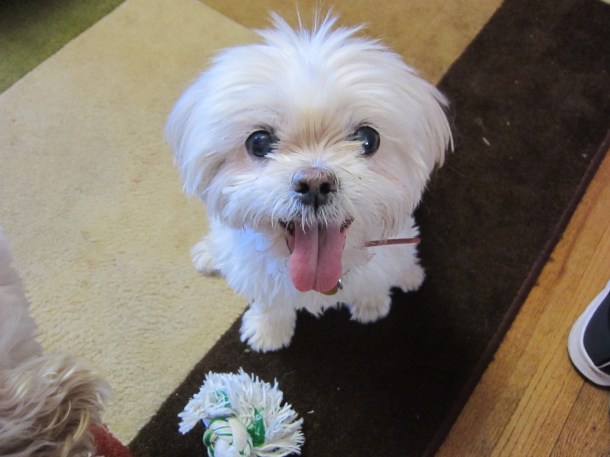
Butterfly hitches a ride on Cricket’s daily structure, but sometimes she gets to be the heroine of her own story: barking me awake, running free through the yard to finally relieve herself of her burdens. But she doesn’t mind being Cricket’s sidekick the rest of the time. There’s something satisfying in being part of someone else’s story, instead of always having to be the heroine of your own. But then again, it’s not like we have much of a choice. This is Cricket’s story and the rest of us are just her supporting characters.          Just ask her.


img_0321

Butterfly, the trusty sidekick.

pix from eos 041.jpg

Butterfly, the star of her own show!

img_0434

And it’s sleepy time again.

img_0313

Until,…

Hershey is Gone

img_1050

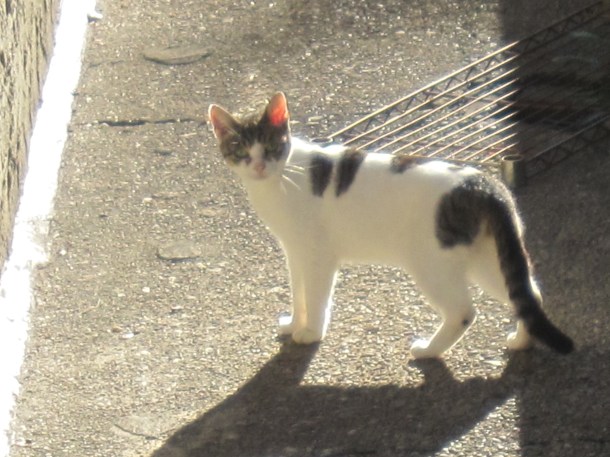
Hershey, the last feral cat at my building, has died. I wanted to believe that I was overreacting to her symptoms, especially when I saw her meandering around the property for a couple of weeks after she’d first seemed sick, but I was right to be worried. I started to count days, since the weekend, that I had not seen her around, hoping that I just wasn’t looking closely enough. But then I saw her outdoor house, a box covered in a blue tarp, removed from the alcove next to my neighbor’s apartment, and wrapped up to be taken away.

I asked the maintenance man, sitting on the steps at the last building, if he knew why Hershey’s house was wrapped up, and he said that Hershey had died, and my neighbor had asked him to pack up the cat house because she wouldn’t need it anymore, and maybe because she didn’t want the reminder.

I started sobbing as soon as I got into my apartment. But I was also very, very angry, at my neighbor for not seeking medical help for Hershey when her symptoms began, and at myself, for not confronting her or trying to trap Hershey myself to get her to the doctor.

img_1045

I’ve been told that there used to be fifteen feral cats on the property, and the lawns were dotted with dead mice (and these are the same people who are worried about my dogs peeing on the grass?). One of my neighbors was proactive about trapping the cats, to get them spayed and neutered, and intervening with new litters as soon as possible to get the kittens adopted out if at all possible. He supports a group called Alley Cat Allies based in Washington, DC that advocates for trapping and neutering programs, and helps fund one nearby. He also personally rescued cats that could not survive the feral life, and sought medical care for them whenever possible. Maybe it was all of his work, or just a change in the neighborhood, but by the time Mom and I had moved in, there were only two or three feral cats left. It was hard to tell, actually, because a bunch of my neighbors had indoor/outdoor cats as well, and left front doors or window open for the cats to go wandering on their own schedules, but eventually there were just two, Gimpy and Hershey.

And now there are none.

I’m supposed to be grateful that Hershey lived as long as she did, and as well as she did, as a feral cat. I’m supposed to be philosophical about her death. “That’s nature,” the maintenance man told me, with a shrug. “She wouldn’t have been able to tolerate a visit to the vet, or the medical care required,” another said.

moms-hershey-picture

I worry that Hershey caught whatever illness killed Gimpy (the second to last feral cat, who died a month ago, at age thirteen), or that, even worse, someone put out poison that killed both cats, and my dogs might be vulnerable as well.

Before the blue tarp-wrapped cat house was removed from the lawn behind the building, the girls had a chance to sniff their goodbyes to Hershey. They took a long time, checking each crevice, seeming to recognize her smell, and her story, in each corner.

pix-from-eos-006

“Hershey has to be here somewhere.”

There are still squirrels, and raccoons, and birds and, of course the dogs, around the place. But there is no more Hershey. I’d gotten used to having her around, and spying her through the greenery of the retaining wall. I’m not used to her being gone. I keep looking for her, everywhere.

img_1085

The Purpose of the Sukkah


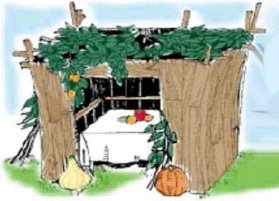
I don’t have a Sukkah at my apartment building; not only because the co-op board would frown on it, but because I really don’t want to. I have a lot of grumpy “I refuse” moments when it comes to religious practices. I don’t want to bow or bend during services. I don’t want to kiss the Torah scroll when it is carried past me at synagogue. I don’t want to wear a Tallit, a Jewish prayer shawl, even though many liberal Jewish women now wear them, and there are beautiful ones to choose from. And I don’t want to build a Sukkah and eat and pray in it for seven or eight days.

drawing-of-a-sukkah

This is a drawing of a Sukkah that I found on google images.

I didn’t roll my eyes or make snotty comments in the Sukkah at my synagogue during services for the first day of Sukkot. I sat amidst the greenery and decorations and prayed with everyone else. But I refused to borrow the Rabbis Lulav and Etrog (palm frond and other species, plus a large citron) to say the prayer and shake the Palm frond in every direction, like the Jewish version of a rain dance. I didn’t have a good intellectually-driven reason for skipping the ritual. My internal monologue sounded something like, “I don’t wanna! You can’t make me!” One woman suggested that I didn’t want to do it because it was a man’s ritual. (There’s something to be said for that, but not in the way she thought. The lulav has a phallic quality to it, especially with the Etrog – only one bulbous shape rather than two, but still – right next to it.) Someone else said that maybe I didn’t like the magical thinking of it (eh, I tend to be a fan of magical thinking).

lulav-and-etrog

Not my Lulav and Etrog.

I’m not an expert on the religious significance of Sukkot – the seven or eight days when Jews are supposed to eat and pray in a hut-like temporary shelter, with greenery overhead, instead of a roof, so that you can see the sky and the stars. There are various points of view to choose from. There’s the historical significance: to remember when we were nomads in the desert. There’s a social action interpretation: sit in the temporary shelter and think about what life is like for those without a secure home. There’s a self-awareness angle: to force us to think about the ways that we are too protected in our daily lives, and separated from nature and the world around us. It goes on and on. Just ask your nearest rabbi, who has to come up with new sermons about the holiday every year.

I remember putting together our Sukkah as a child, with my father and brother, and getting my fingers stuck between two of the flattened pipes that my father used as the frame for the temporary building. I remember having to carry full dishes of food, to and from the house late at night, while my father sat at the table in the Sukkah on our front lawn, like a king.

There is so much baggage left in my Judaism; personal, crummy, anecdotal baggage that I don’t want to have to relive constantly. It’s a funny mix. I love going to shul. I love singing the prayers, and being with my community, and studying. I love just looking at the Hebrew letters in my prayer book, as if they are my old friends returning to me. But then I hit these bumps, like the Sukkah, or candle lighting, or kissing the Torah, and I trip over the invisible rubble in my mind.

I’ve been told that, next year, our synagogue will be inviting animals into the Sukkah for a visiting day, as they’ve done in the past. There will be dogs, of course, but also snakes and gerbils and parrots and on and on. Maybe, when I can bring Cricket and Butterfly with me, I won’t find the Sukkah quite as intimidating. Or maybe Cricket will think the plastic fruit on the walls were put there just for her delectation, and I’ll have a whole new set of horrible memories of Sukkot to carry with me in the future.

pix from eos 059.jpg

Cricket is ready to go!

pix-from-eos-023

She’s training herself, to see how much she can fit into her mouth at one time.

pix-from-eos-026

Butterfly is practicing her facial expressions, for after Cricket misbehaves in public.

pix-from-eos-013

This is her “I’m the cute one” face.

Sacred Space


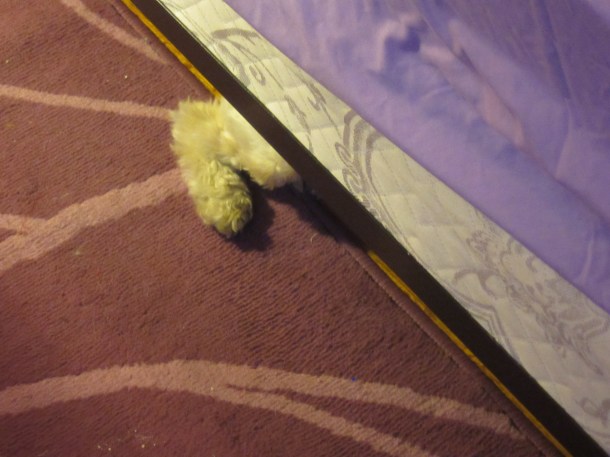
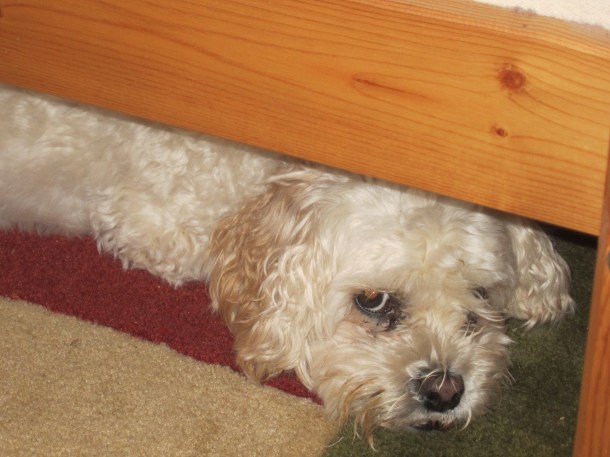
The Cantor at my synagogue has taken up a new topic to study this year: the technology of prayer. I can’t say that I understand what he means by that yet, but the first lesson was about sacred space, and how we arrange it. Butterfly is very often in sacred space, because she listens to the sounds around her and stands still and lets them encompass her. Cricket prefers hidey-holes as her sacred spaces. She feels safe and solemn in those small, enclosed spaces, and it allows her to rest and reemerge more whole.

puppy-in-november-007

“You can’t see me!”

img_0055

“I hear everything, Mommy.”

But, I am not good at interior design. When I decorate, I basically put things where they’ll fit, no Feng Shui or harmony involved, so the idea of contemplating the use of space made me whimper with anticipated boredom. The cantor talked about how most sanctuaries, Jewish and Christian at least, are set up with the congregation in rows of seats, all facing one way, with the clergy up on a riser, and the congregation a step down, like an audience watching actors on a stage. Then he showed us pictures of Jewish synagogues that were set up differently, with the congregation on two opposing sides, or even three sides of the sanctuary, and the clergy in the middle. The idea being to focus attention on the community, rather than on the clergy, who are there to lead the congregation, rather than to be the show itself.

The Cantor’s class on sacred space happened the night before Slichot, which is a service that takes place a week before the Jewish New Year, late at night. It is a preview of all of the themes of the high holidays, with all of the atonement, forgiveness, and cleaning of old forgotten laundry intended for this time of year. But for this one service of the year, the clergy members placed themselves with us in the congregation, and some of the ideas from the previous night’s class must have stuck with me, because as soon as the Cantor began to sing from his seat among us, I felt the change in the shape of the space. I got it. He became one of us instead of separate, and he became a voice only, rather than a performer to be watched. It was a small group the night of Slichot (not a lot of people come out a week before the high holidays, at ten o’clock on a Saturday night, to pray), which meant that the Cantor didn’t need a microphone to be heard, so that his unamplified voice, so intertwined with our own, made him seem even more a part of us.

Over the summers, at our synagogue, we move from the formal sanctuary to the small sanctuary for Friday night services. It saves on electricity, especially for the air-conditioning of the sanctuary and the social hall, and it saves us from seeing all of the empty seats from the families who go away on vacation, or just don’t feel especially religious in the heat. But the side effect of moving to the smaller, less formal room, is that our whole tone changes. The clergy stands at our level, and not above. We sit closer together, instead of spread out across the room. We can hear each other sing, and breathe. The space itself, usually just an ordinary room, becomes sacred space because of how we live within it.

Maybe sacred space actually changes from person to person and moment to moment. A lot of the time, I think a space feels sacred because of the people who are in it with you. That’s why I wish that the dogs could join me at synagogue, especially when we are at our most informal and communal. Cricket could sit in my lap, or hide under my chair, and Butterfly could wander around the room and listen to all of the voices around her. That would be my ideal of a sacred space.

001

That’s Cricket’s foot.

015

Cricket in her sacred space.


img_0418

Butterfly’s not allowed in, but she makes do.

Hershey and Gimpy


We’ve had two feral cats on the property of our co-op, until recently. Gimpy, the brown and grey cat with the wounded paw, died. Gimpy was here when we first moved in, running down from the woods to get his lunch, and then running back up. His benefactor on the other side of the building put his food out under a piece of slanted glass, to protect it as much as possible from the rain, and give him a semi-private place to eat his meal in peace. In the winter, Gimpy left tracks in the snow, complicated designs that showed how extensively he explored the grounds, and how lightly his paws indented the surface. He was a very self-sufficient creature, and was able to survive a serious, bloody wound to one of his forelegs, a few years back, that left him with only three working legs and his nickname.

Gimpy was often hiding under bushes, or spying from the corner of the building. He probably had a lot of stories to tell, but he wasn’t willing to share them with me. Towards the end, though, when he was getting run down with whatever illness eventually did him in, he was more sociable He was willing to stand longer on the walkway when I came by, and even rested out in the open sometimes, where anyone could see or smell him.

029

“I smell something. I definitely smell something.”

Not long before he died, my mother noticed Gimpy sitting in front of our building. He didn’t budge as she and the dogs walked within inches of him. She came to get me, but when I went outside to see him, he was able to gather enough energy to run away. But he only ran about ten feet, to the other side of our doorway, where he had to rest again. We left a message for the neighbor who had looked after him, to let him know that Gimpy seemed unwell.

013

“Is he okay, Mommy?”

The news of Gimpy’s death came third hand, without any details about time, or day, or cause of death. But we had already noticed that he wasn’t around.

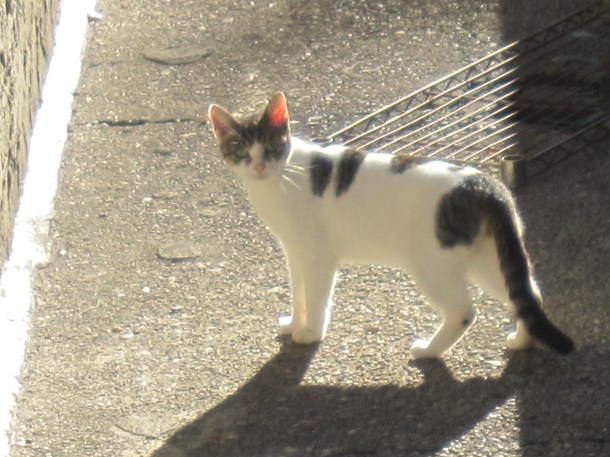
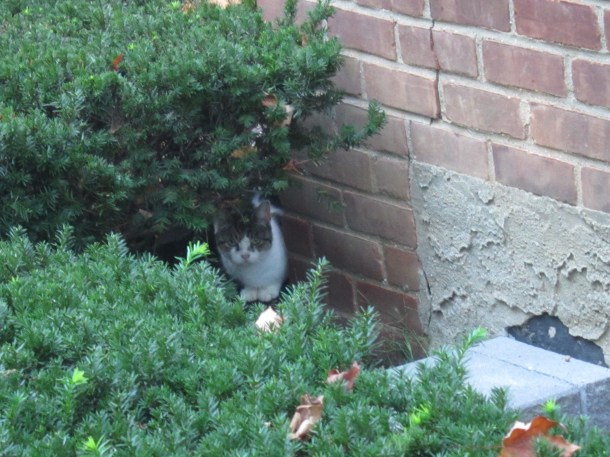
The other feral cat is Hershey, a white cat with brown and black markings, who was “adopted” by another neighbor who places food for Hershey right by her apartment window, in a protected alcove, shredding chicken for her by hand. Hershey likes to rest on the retaining wall, or in a flower pot in her alcove, or by the maintenance shed. Her answer to approaching dogs is to remain absolutely still, in the hopes that they won’t notice her, and it usually works.

img_1046

“What are you looking at, human?”

img_1085

“You can leave now.”

A couple of weeks ago, when I was out on a walk with the dogs, Hershey was sick right in front of us. Usually she hides her poop, but she had diarrhea out in the open, and it was a pale, greyish white. There were various older puddles nearby as well. She sat in front of the window of the neighbor who feeds her, mewing, ignoring the bowls of food and water that had been left for her on the nearby steps.

We let her benefactress know, not only what I’d seen for myself, but what I’d found when I googled Hershey’s symptoms; that mostly likely, she had liver disease. Her symptoms could have been caused by any number of things, and could even be a passing illness of no lasting consequence, but with Gimpy’s death so fresh in my mind, and Hershey looking thinner than usual, I was concerned. She’s feral in name only. She may even have other homes she visits for TLC and extra meals on a regular basis.

The next day, there were puddles of pink, filled with all manner of indigestible things. I think our neighbor had given her Pepto Bismal, thinking it was just light indigestion. I hoped she was right.

Hershey is not my cat. She does not come to my door to ask for food, and would not tolerate or accept my attentions. And she is still alive, weeks later, so maybe my anxiety was outsized, and she’ll be fine. Each time I see her moseying up the walkway or hiding in the flower pot, I breathe a sigh of relief. But it doesn’t last long, because I’m still afraid that she’s dying. She sat in her flower pot, unmoving, for hours the other day. I really want her to be okay, because I’ve lost enough lately, and she has squirmed her way into my heart, whether she meant to or not.


005

Hershey, resting in her flower pot.


The Baby Has Left the Building


The next door baby has left the building, because he and his parents and all of his accoutrements needed a larger living space. I’m going to miss hearing the sound of a baby crying as I walk through the hallway. I’m going to miss seeing the stroller waiting for him in the lobby, two tiny sneakers resting in the seat. I’m going to miss running into him on his daily walk with his nanny, who cooed to him as they returned from an afternoon of reading stories at the library and visiting geese at the duck pond. Both dogs liked to sniff the wheels of the stroller when it came back from its walks, but they weren’t especially interested in the baby himself. Maybe if he had shared his snacks with them, they would have felt differently.

IMG_0129

“Treats?”


I will miss watching the way his nanny soothes him, and his Dad plays with him, and his Mom makes googly eyes at him, full of love, that make him certain that he is the most important person on the face of the earth. He’d just recently developed a sustained gaze and the habit of smiling at people who smiled at him, and I’m going to miss that too.

My niece and nephews are all past the baby stage of life, and firmly into the sarcasm years. People become secretive and duplicitous so quickly nowadays; the honest and straight forward self-expression that is babyhood is a very precious thing to have around.

Cricket was not happy when we went downstairs, without the dogs, for a goodbye party for our neighbors. She couldn’t understand why she hadn’t been invited, first of all, and she imagined all kinds of treats she was missing out on, that the baby was allowed to partake in. I’m not sure what Cricket’s vision of paradise is, exactly, but she’s convinced it’s the place we go when we leave her at home. And she’s bitter about it. Butterfly, of course, was fine.

013

“How dare you go without me?”

001

Butterfly was busy snoring.

We will have a new neighbor soon, and I’m sure she will be lovely (the baby’s parents were thinking of our cozy little building when they chose their successor). And maybe she’ll have a dog or cat or bird who I will inevitably fall in love with. But there won’t be a human baby, and his absence will resonate with me for quite a while.

When moving day arrived, the baby was whisked away to avoid the trauma of seeing all of his stuff being removed. But Cricket had no such luck. She could hear every horrible moment of departure, and she’s not good with change. She spent the whole day announcing the presence of the movers, as if she thought we hadn’t noticed the first few times she’d barked her head off. There was also the added difficulty that, if we tried to take the dogs out while the movers were still traipsing in and out of the building and along the walkway, Cricket would bark them to death, so we had to put off anything but the most emergent need for an excursion. Unfortunately, Cricket thinks that it’s an emergency when she smells a squirrel in the air, and she whines and cries to let us know her plight.

img_0313

“Strange people are in my building!”

Even Butterfly added a bark or two along the way, to support her sister’s protest, if nothing else.

img_0321

“I’m here for you, Cricket.”

So it was a relief when the moving men left and quiet returned to the building. Except, it was too quiet. The apartment across the hall really is empty and the baby is not coming back.

Now Cricket is resting up for the next phase of the endeavor, when the new neighbor’s moving truck arrives and disgorges a whole new set of men and furniture to bark at. Announcing the apocalypse is a tough job, but, Cricket thinks, someone has to do it.

005

Resting, for now.


Training Cricket, Again


We are, once again, trying to intervene with Cricket’s bad behavior, but focusing small this time: just don’t bark on the way out the door. If she barks, I sit down and count to ten. The hardest part is remembering to follow through with the plan each time we take the dogs out. Cricket is very hard to train, and so am I. It’s usually the last trip at night, when other people are trying to go to sleep, that her barking is at its most inappropriate. She seems to think that I need to be reminded, even as I am getting her leash and putting on my shoes, that she really, really, really wants to go outside. And it takes her a while to notice that each time she barks, I sit down and start counting to ten, starting over at the beginning each time she interrupts the count. But I’m persisting with the plan.

img_0510

“I am Cricket. Hear me bark!”

It seems like a very small thing to try and improve about her behavior, especially because it has no impact on all of the other barking she does throughout the day: rushing to the front door of the apartment to tell the non-existent bogey man to go away; barking at boxes on our neighbors’ porches; and shadows on the grass fifty feet ahead; and, of course, barking at random humans who dare to walk in her yard. But it’s a place to start.

img_0474

Hmm. This method could work too.

Mom is trying to go along with the plan, but she’s set in her ways too. She tries to talk Cricket into being quiet, which just makes Cricket bark more, because she thinks they’re having a conversation. And Mom doesn’t like having to sit down each time Cricket barks, especially at night when she’s already exhausted. So I sit, and Mom stands, and Cricket thinks that means Mom can be convinced, so she jumps at her grandma’s legs and paws at her, in vain. Eventually, Cricket figures it out and quiets down, and we go outside.

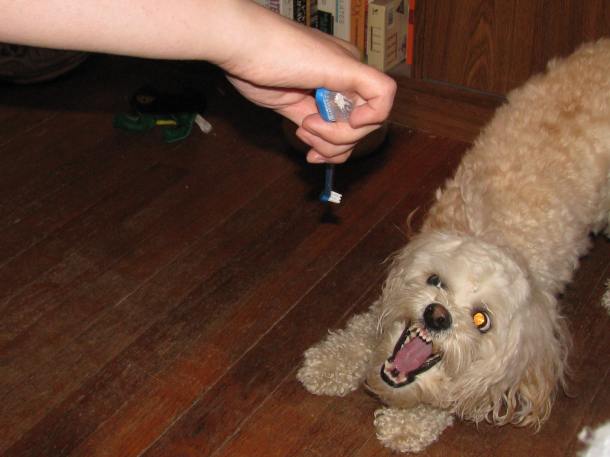
I wish I could convince Cricket to stop barking at babies, and other random residents of the co-op, when they try to pass within five hundred feet of her; I wish I could convince her to keep her teeth to herself, especially when I try to wipe the goop from her eyes; I wish I could convince her that the bath tub is not a torture device. But my many, many, previous attempts at teaching her those lessons have been utter failures.

anger

Cricket has some anger issues.

I rarely try to train Butterfly in anything anymore. Early on, we had to teach her how to poop outdoors, and climb the stairs, and take pills. After that, I thought I’d try to work on basics with her, like sit and stay, but she looked at me like I was a crazy person. She has her own learning style and it doesn’t include responding to voice commands. I’d love it if I could teach her to be less stubborn when she’s walking on her leash, or maybe teach her to sleep past seven o’clock in the morning, but after numerous attempts she is still indifferent to my efforts. And she’s twelve years old. She never bites anyone, and only barks to tell me that she’s hungry or needs to go outside, so, I’ve decided to let it go.

img_1144

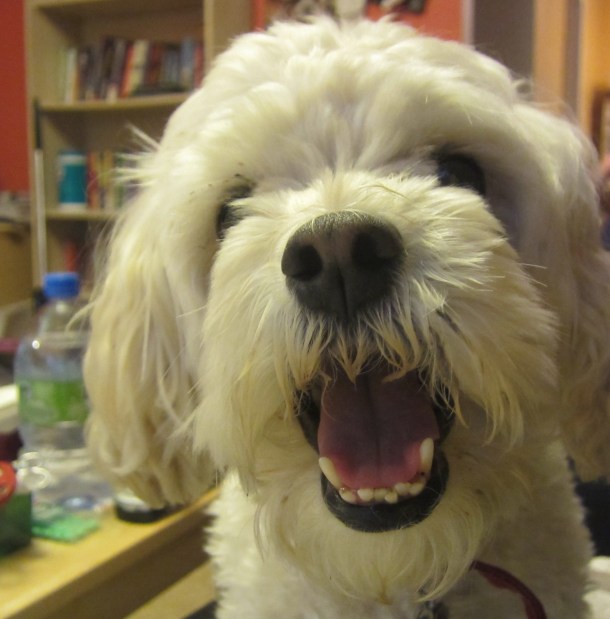
Yes, Butterfly knows how cute she is.

But Cricket is a menace. The noise pollution alone is at toxic levels, and I can’t, in good conscience, stop trying to protect my neighbors from the full panoply of Cricket’s behaviors.

030

“Who me?”

One magical moment happened, though, a few nights into the new regime. After three barking eruptions, and three full counts of ten, with no sign of a let up, Butterfly walked behind Cricket and gave her a look that seemed to say, please don’t bark anymore, because I really need to pee, and that actually seemed to work. Cricket quieted down, and we all went outside in relative peace. But most of the time, Butterfly is too busy having one last kibble for the road to expend too much energy in teaching her sister how to behave.

img_0568

“Psst.”

So I guess it’s up to me.

The Baby Squirrel


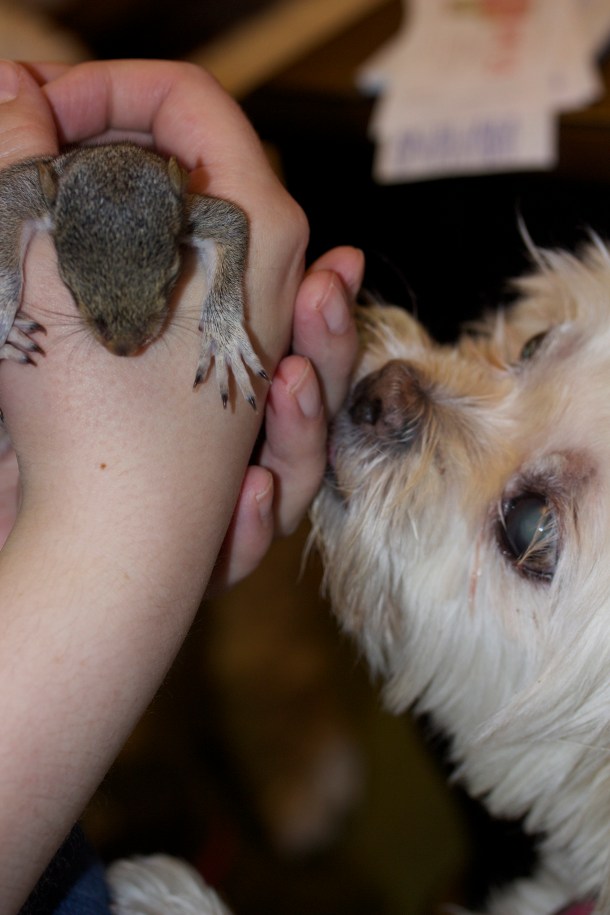
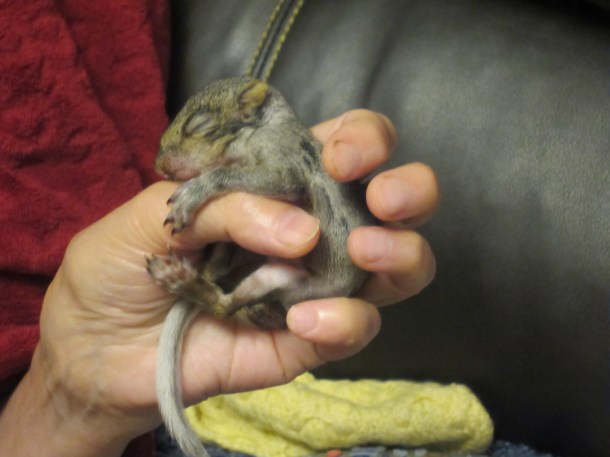
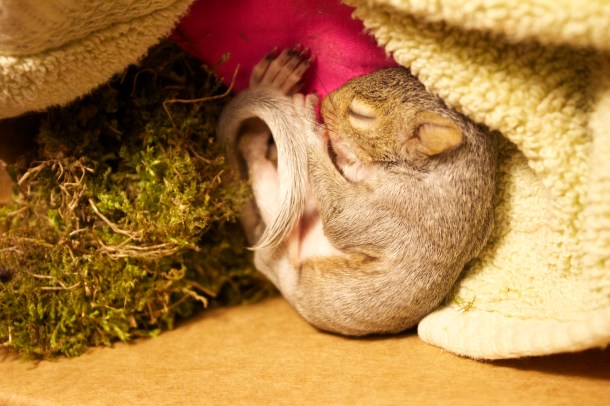
When we went out last Thursday morning for our too-early first walk of the day, Cricket found something. At first I thought it was a dead mouse. Cricket has found dead mice a number of times, because we have feral cats on the property who are allowed to stay because of their great mousing skills. So, I thought it was a dead mouse and I yanked Cricket away from it quickly. It was curled up a few feet away from one of the huge trees on the property, up in the lightly wooded area where we are encouraged to walk the dogs. Butterfly did her usual standing around and listening to the raindrops thing – oh yeah, it was raining, lightly by then, after a night of heavy rain – and it was a lovely sound, the way the rain drops hit the leaves far over our heads. But I was still getting wet. The girls both did their business, and we were on our way back out of the woods when I thought I saw the dead mouse move an arm. I stepped a little bit closer, but I’m afraid of dead things so not too close, and that’s when I realized that it was a tiny squirrel and not a mouse, with a big head, and grey and white fur, and not only was one arm moving, the tiny squirrel was breathing. It was alive.

I wasn’t sure what to do. I had to take the girls back inside, out of the train, first and foremost. I left them standing in the hallway while I went down to the basement to throw away their bag-o-poop, and I looked through the pile of Amazon shipping boxes outside the garbage room. I like ordering things, but I am nothing compared to my next door neighbors (with the new baby) who have ordered so many things that they now have to move into a house to make room for all of it. I chose a small, shallow box, with the new-fangled air-pillow box-filler stuff, and I popped the pillows to use it as a squirrel grabber, in case it really was dead and only seemed to be moving because of the wind and rain, but also as a temporary blanket, in case it was actually alive.

The girls watched me through the glass front door of our building as I went back out into the rain, and up the hill, to where Cricket had found the baby squirrel. It was still there, and still getting rained on, and still faintly breathing and moving an arm, but just barely. I picked it up carefully, all the time worrying that I should leave it there, to die a natural death, or to be found by its Mom after whatever calamity had sent her away. But it was alive, and I couldn’t just leave it there to die.

I took the box of baby squirrel inside to the girls, and we walked up the stairs and into the apartment, and that’s when I realized that I had to wake up my mom. She’s not a fan of early mornings, and I would have let her sleep through the drama, except that I knew I’d have to leave for my internship in less than an hour, and I needed her help.


As soon as Mom saw the baby squirrel, breathing in the shallow box on the dining room table, she was wide awake and in Mommy mode. She took the baby out of the box and wrapped it in warmed up towels and held it while I googled. There are surprisingly specific and comprehensive baby squirrel manuals online. One was long and alarmist – with the basic gist being that I should have left her out there in the rain to die. The other manual was shorter, simpler, and more hopeful.
005

Then Mom called our vet’s office to ask them what to do. The woman who answered the phone said that they’d stopped working with their wildlife specialist and had no other recommendations, and, really, the baby squirrel was going to die. Mom persisted, though, and looked up other wildlife groups she’d heard of in the area, and left messages for them on email and voicemail. In the meantime, we prepared the rehydrating solution recommended in the baby squirrel guide and then and I used Butterfly’s supply of liquid medicine syringes to start bringing the baby back to life.
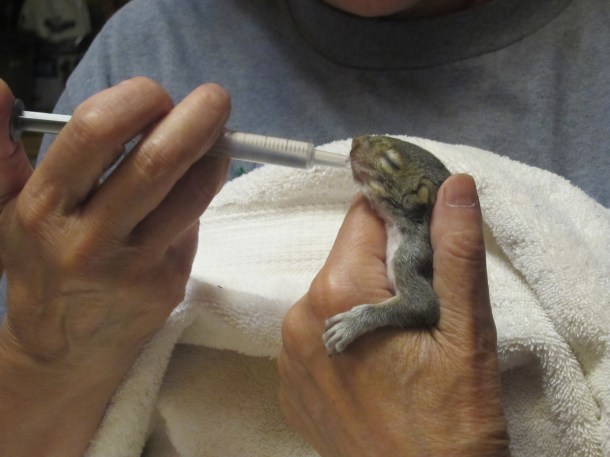
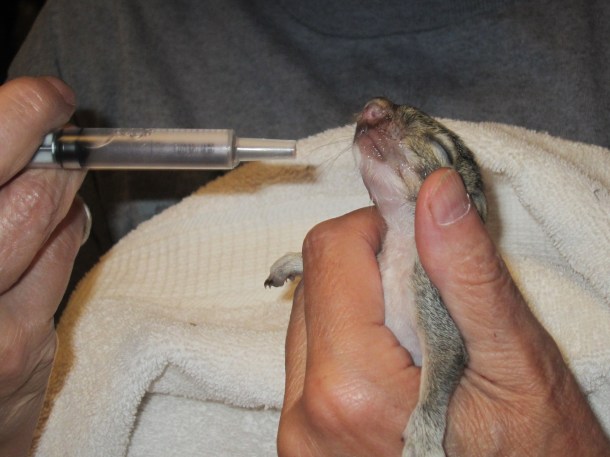
002

005

By the way, I am not an expert at identifying baby squirrel genitalia, but we later found out that she was a girl, so let’s just pretend I knew that from the beginning. We set her shallow box on a heating pad (on low), and filled the box with fabric from Mom’s quilting closet, because the baby squirrel guide said that regular towels could unravel and choke her.

I took care of Cricket and Butterfly’s morning routine, and made sure they got extra treats for all of their patience, and then I got myself dressed for work, charged my cell phone, and reluctantly left Mom to take on the burden of keeping the baby squirrel alive while I was away.
img_9840

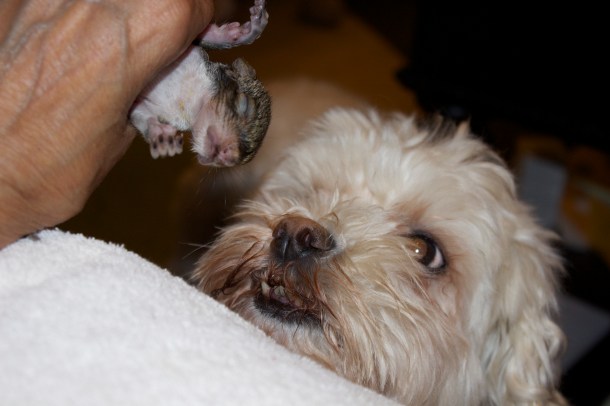
Cricket sniffing the baby

img_9871

Butterfly, worried I’m giving her peanut butter to the baby.

I tried to talk about the baby with a fellow intern, but she looked non-plussed. “You brought a squirrel into your house?” She asked, looking at me like I’d slathered bloody entrails on my door posts. So I focused on being nice and pleasant and helpful all day, and tried to put the baby squirrel out of my mind. The room we work in is filled with windows, and I could see as the rain got heavier and heavier, so I thought, maybe, I’d done the right thing by taking the baby into a dry place. But my mind was still racing, telling me that I’d made a mistake bringing her inside, and she would die and it would be my fault. She had a fractured arm, and probably other injuries, she was cold to the touch, and her mother had abandoned her; who was I to think I could save her?

When I got home, Mom was sitting on the couch and the baby squirrel on her chest, squeaking away. Her eyes were still closed, but she was much more alert, climbing on Mom and grabbing her fingers with a paw. The baby had survived eight hours in our care, against all odds, and the next job listed in the baby squirrel guide was to move from rehydration to actual feeding. The guide said we needed Esbilac milk powder for puppies, and we should mix it with water and heavy cream to mimic squirrel mommy milk. I asked Mom if she wanted to go out and have a break from baby care, but she didn’t, so out I went again, in the rain and rush hour traffic, to find the puppy milk powder.
img_9843

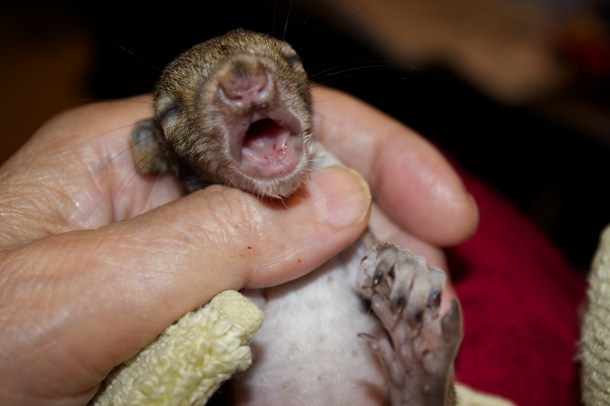
“Squeak!!!!!!!!!!”

When I came back, it was my turn to watch the baby. Her body temperature kept cooling down between feedings, despite the heating pad under her box, so Mom told me to hold the baby in my hands and try to keep her warm myself. I had to keep Cricket from sniffing too close, but Butterfly was largely uninterested in the baby; as far as she was concerned, there was no squirrel in the house.

007

After another few hours of rehydration, we mixed up a batch of the new squirrel baby milk, and watered it down according to the mathematical formula in the guide, and warmed it in the microwave until it was just right. The baby squirrel swallowed her milk through the syringe dutifully, only pulling her head away a few times.

I woke up every few hours overnight to feed her, and to check that she was still breathing, and when I woke up again at eight o’clock the next morning I realized that she’d survived more than twenty four hours with us. She even seemed to be a little more energetic, though that could have been my wishful thinking. Mom said, pointedly, that we shouldn’t name her and risk becoming too bonded, but she knew it was already too late.

IMG_9857.jpg


We were still waiting for call backs from the wildlife groups a few hours later, when a friend on Facebook recommended calling other vets in the area, to see if they could help. The first one we looked up had the number of a local wildlife rescue, and when we called, they told us to bring the baby over right away.

By noon on Friday, we were on the road, the squirrel baby in her box on my lap, on our way to the rescue hospital. I kept my hand in the box to keep her warm, and she decided to crawl into my hand and snuggle.

IMG_5405.jpg


When we reached the Wildlife center, I filled out forms about where I’d found the baby squirrel and the assumed circumstances of her injury (a fall from the nest in the storm seemed the most likely cause, especially when I found some of the nesting material a few feet away from where I found the baby). They gave me her rescue ID number and their email address and said that I could write to them for an update whenever I wanted, and then they took her away.

I was devastated, but also hopeful. I knew that the rescue hospital would be able to do a much better job than I could at treating her wounds and feeding her correctly. Giving her up was the right thing to do, but it was also awful, and painful, and I was starting to have trouble breathing. I was giving her the best possible chance to survive, though, and I had to hold onto that.

I waited a couple of days to give the wildlife center a chance to do their work, but then I got impatient for good news, and wrote to them.

This was the email I received from them on Monday morning:

Unfortunately, we had sad news about the baby squirrel. We brought her to our veterinarian right away who confirmed that she did have a fractured humerus (one of the bones in her arm). In addition to the fractured arm, she also had lung contusions caused by trauma from the fall. We began treating her right away for the fractured arm and respiratory issue, but sadly, she was so badly injured that she passed away overnight that night.

While not the outcome we had hoped for, we are glad you brought her to us so she was able to get treatment and passed away in a quiet and peaceful place rather than outside in the wild.

Thank you again for caring about her and bringing her to our center.


I read it over again a few times, to take it in, because the words were not making sense at first, and then I just cried until I couldn’t cry anymore.

On Tuesday Morning, Cricket found another squirrel, this time a full grown adult, and this time, it was dead. My first, and enduring, thought was that this must be the baby squirrel’s mother. Maybe they both fell in the storm on Thursday morning, and it took the mother longer to feel the effects.

We dug a hole for her, and covered her with dirt, to keep her safe from predators. I couldn’t think of a prayer to say, all I could think of to say was, “This is for baby squirrel.”

And it was.
IMG_9847.jpg

p.s. Many of these pictures were taken by Naomi Mankowitz (AKA Mom)

The Research Class


The administration at my online Social Work program decided to change the hosting format, right before the new school year began. The previous format for our classes was a bit stodgy, yes, but you could find everything you needed. The new format is not just new to the students, but also new to the teachers, and there hasn’t been any time to work through the bugs and figure out how to manage the new layout. So it’s a mess.

And maybe that would have been okay, if I were taking a less stressful class to start the semester, but I’m in Research One, and each assignment involves group collaboration and has to be finished in less than a week. I have bad memories of working in groups in high school and college, and having to either do all of the work myself, or spend all of my time gently, nicely, pushing my classmates to do their share of the work, or editing their attempts before the rapidly looming deadline. Some people think that ten o’clock the night before it’s due is the perfect time to start working on a project. I don’t. I really, really, really, don’t.

I want to use my insight and imagination and empathy and creativity, and none of those are allowed for a research class. It’s all about formatting and organizing other people’s work. I feel like a marathon runner forced to do finger exercises for hours on end, in a seated position. Every once in a while I may be allowed to move my whole hand, but rarely.

I want to scream. I want to throw things. I resent that it feels like the online faculty at my school is running a secret experiment on us – testing the impact of unpredictable stressors on student work quality and psychological wellbeing (I wrote that to my teacher in an email, and he seemed to take me seriously instead of getting that I was, sort of, joking).

My anxiety about the Research class and the new online format is making me obsessive. I’m overworking and under-coping. I feel a desperate need to control everything that feels chaotic to me. I can’t find restful or fun books to read. I can’t find anything decent to watch on TV. My mind just keeps filling the gaps with more work.

I need to take a nap and rest and recover and focus on other things, but my brain keeps telling me to re-read research articles, and do more searches, and try more databases, and do the whole group assignment by myself. But I know myself, even if I managed all of that, I’d just start obsessing about the reading and possible assignments for next week. It would never end.

It’s frustrating to have to see all of my flaws so clearly – my impatience, and rigidity, my temper, and need for control. I don’t want to know that there is so much still to fix.

For relief, I’ve been watching for the feral cats in the yard, and communing with them as much as they will allow. Hershey actually let me within five feet of her the other night, but then she scooted under the maintenance shed (her palatial estate). I also had a chance meeting with the neighbor-dogs, George and Zoe, and it made me unreasonably happy for a few minutes. Zoe barked a lot, and Cricket stared at her, in silence, as if this behavior, this barking at nothing, was completely alien to her. Then George clapped his front paws at me and asked for pats and a hug, and I willingly obliged. Zoe stood in her perpetual ballet first position and allowed me to pet her too. I even got to walk with the baby next door – or with his nanny, who was holding him as he slept – for a few minutes, and breathe in the utter, unspeakable cuteness of him.

IMG_1085

Hershey, hiding out.

IMG_1046

“Are you taking my picture again?!”

022

Zoe and George

But mostly I work. I read and summarize and research, and I attempt to keep my emails to my fellow group members polite and reasonable. I try to follow the conflicting instructions from the teacher, and the disorganized new formatting, but all I want is for the class to be over, and for all of this self-knowledge and hitting-my-limits to end.

Cricket is doing her best to distract me by barking at every moving thing, and Butterfly has doubled up her requests for scratchy sessions (for my sake, of course), but it’s not enough to calm me down. Clearly, I don’t have enough dogs.

IMG_1251

“I’m doing this for you, Mommy.”

IMG_0254

“I work so hard to protect you, Mommy, and you never adequately appreciate my efforts.”

010

“We do not need another dog, thank you very much.”


My Internship


My internship with Traumatic Brain Injury (TBI) patients, at an out-patient day program on Long Island, started recently. I get very anxious before and after my hours, but the adrenalin rush gets me through while I’m actually working there. One of my favorite activities they do there is chair yoga, though, because it gives me a chance to breathe again. I wish I could bring Butterfly with me, for my own sake but also for some of the clients, who could use some of her ambient joy. One of the guys used to have a dog, but he can’t have a pet at all now, because his aide has allergies. If he could just sit with Butterfly for a little while each day, and whisper in her ear and pet her back, it could really help him. I know that it does wonders for me.

IMG_1248

Butterfly, my therapy dog.

The purpose of the day program is multiple: one, just to give the families of our clients a respite; two, to get the patients out of their homes and into social situations, so they don’t feel isolated and lonely; three, to fight off boredom and depression in whatever ways we can; and four, to continue, on a more causal and social basis, the work of speech, movement, and cognitive therapy that they can’t do on their own.

I am most interested in that last part, if only because it holds the most potential for my active participation. But for the clients, I think the most essential part of the program is the socializing part. At the day program they can practice their speech and memory skills without being laughed at (for the most part), and their brain injuries are taken for granted; they don’t have to compete with “normal” people for attention, or be embarrassed or ashamed by what they can’t do.

The structure of our days at the program is a bit loosey goosey, but the clients’ favorite activities, over all, seem to be games: guessing games, Hangman, Pictionary, Jenga, Connect Four, Uno, etc. They’re laughing and testing their social skills and showing off. It reminds me of kindergarten, though, with games like Duck Duck Goose and Musical Chairs, which I found extremely stressful. Those games seemed to exaggerate the possibility of rejection for me, rather than mitigate it. But the other interns, and even more so our supervisor, are much more comfortable with this part of the work. They enjoy the games and know how to stay upbeat and playful, pushing back against the depression and stuckness that might otherwise prevail in the room.

I do well with the clients one on one, and in casual situations, because I’m genuinely curious about them, but I’m afraid of how I’ll manage running a workshop or exercise from the front of the room. I wish I could practice some of my group-running skills on the dogs, but, first of all, Cricket is not a joiner, and second, they can’t hold pens in their paws, or answer my questions in words, so a lot of the exercises would be lost on them.

IMG_0136

Cricket is not a joiner.

IMG_0129

Unfortunately, dogs can’t write.

My supervisor suggested that I use my writing background with the clients in some way: so I collected poems and song lyrics the clients might relate to; and I printed out a page of Cricket pictures so that they can identify the emotions on her face, and make up stories about what happened before the picture was taken (I’m hoping her faces will be a good instigator for discussions on anger and anxiety and joy and relief, all kinds of things they wouldn’t automatically discuss with each other out of the blue); and I made up a list of autobiographical questions for the clients to answer and turn into short essays; and then there’s a group exercise in storytelling; and then I did research on hand drumming and handclapping therapy; and I made up a quilting pattern exercise, using fabric and paper and glue. So, at least I’ve found an outlet for all of my nervous energy.

Early on, my supervisor warned me and my fellow interns that some of the clients can be manipulative, and we shouldn’t believe them when they say this or that, and they don’t want to be challenged, and they can do more than they’ll admit, and on and on. Even if all of those things are true, it’s never as simple as all that. Motivation plays a huge role in what people can and can’t do. That’s not being manipulative, it’s about genuinely needing a reason to take an action and not wanting to just do what someone tells you to do.

Depression also plays a big role. The brain trauma itself can cause depression, and so can some of the medications they need to take to control their symptoms, but there’s also the depression that comes from having your life plan obliterated, and your sense of your place in society taken away from you. It is much harder to figure out motivation when you know that you can’t meet your own goals, no matter how hard you try. You need to not only come up with a new set of goals, but you have to accept that those goals will be very modest compared to the people around you. There’s an expectation that these clients should feel grateful that they have a day program to go to, and people who will pay attention to them, but that kind of gratitude can be hard to come by when you feel like so much has been taken away from you.

I’ve learned a lot from Cricket about how to accept bad behavior that isn’t meant to be hurtful. Her short-circuited nervous system means that she has low frustration tolerance, so she will use whatever behaviors she can think of to relieve her anxiety. She doesn’t mean to be a hellion; she just wants to feel better.

013

Cricket just wants to feel better.

I’m enjoying the work, but it’s exhausting. When I came home from my first long day at work (Nine AM to Three PM feels long to me), Butterfly was out of her mind with excitement. She’s not used to me being away for so long and it felt great to be getting such a greeting; those are usually reserved for Grandma after she’s been out gardening for five minutes. She ran around in circles and bumped into her sister, who was hopping and panting and trying to sniff my shoes herself. It’s nice to be celebrated every once in a while.

008

“Mommy! You’re home!”