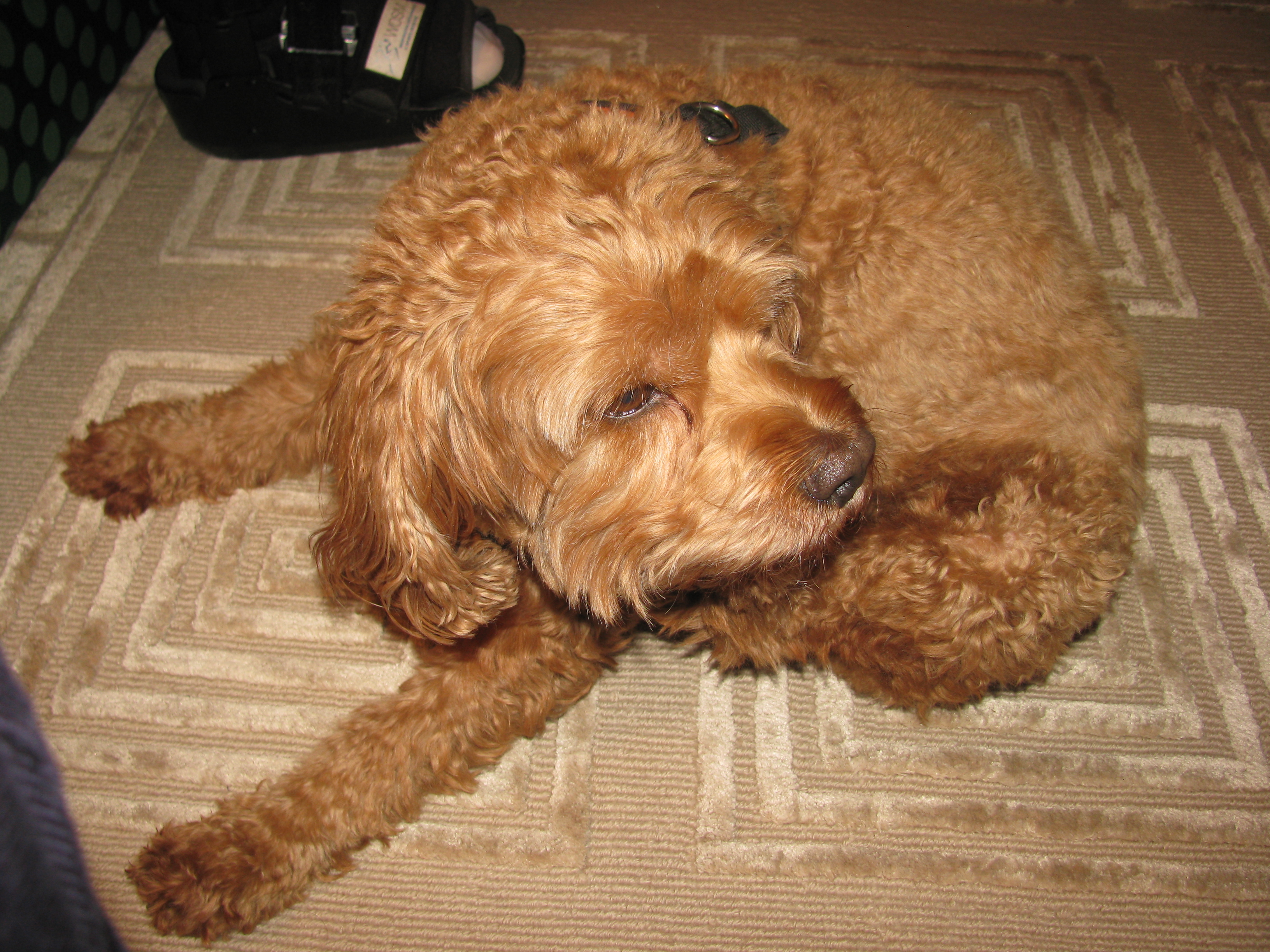
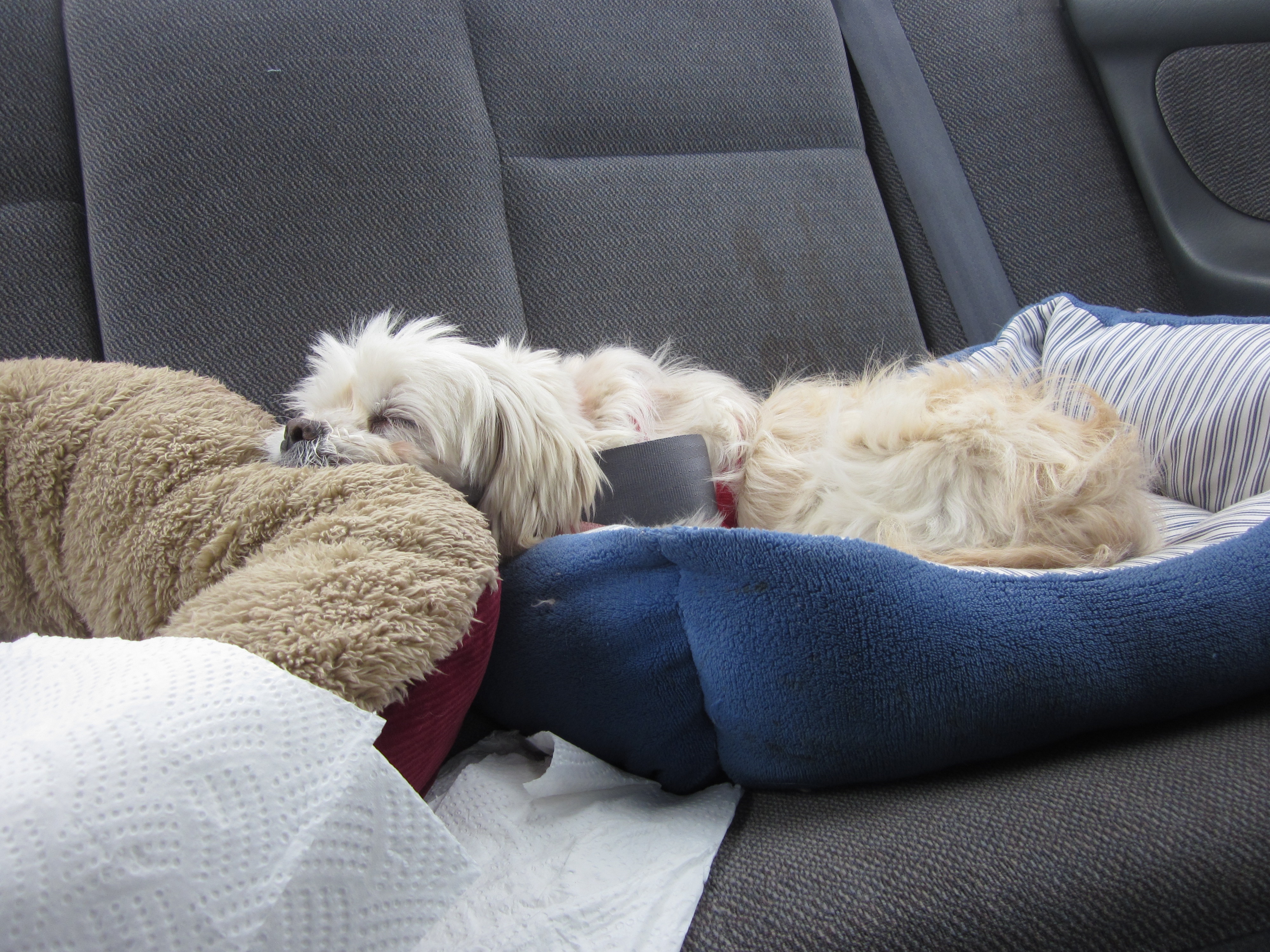
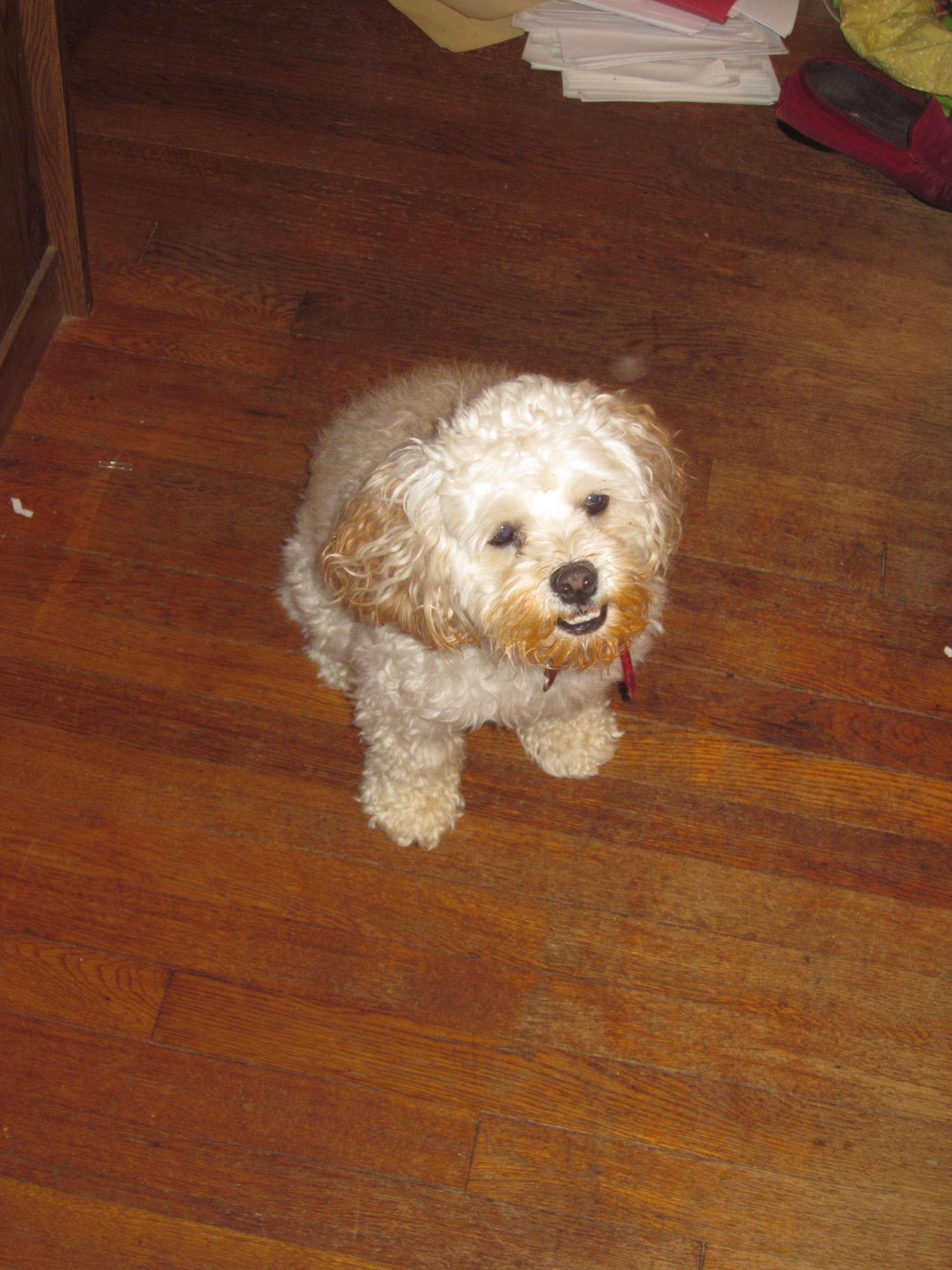
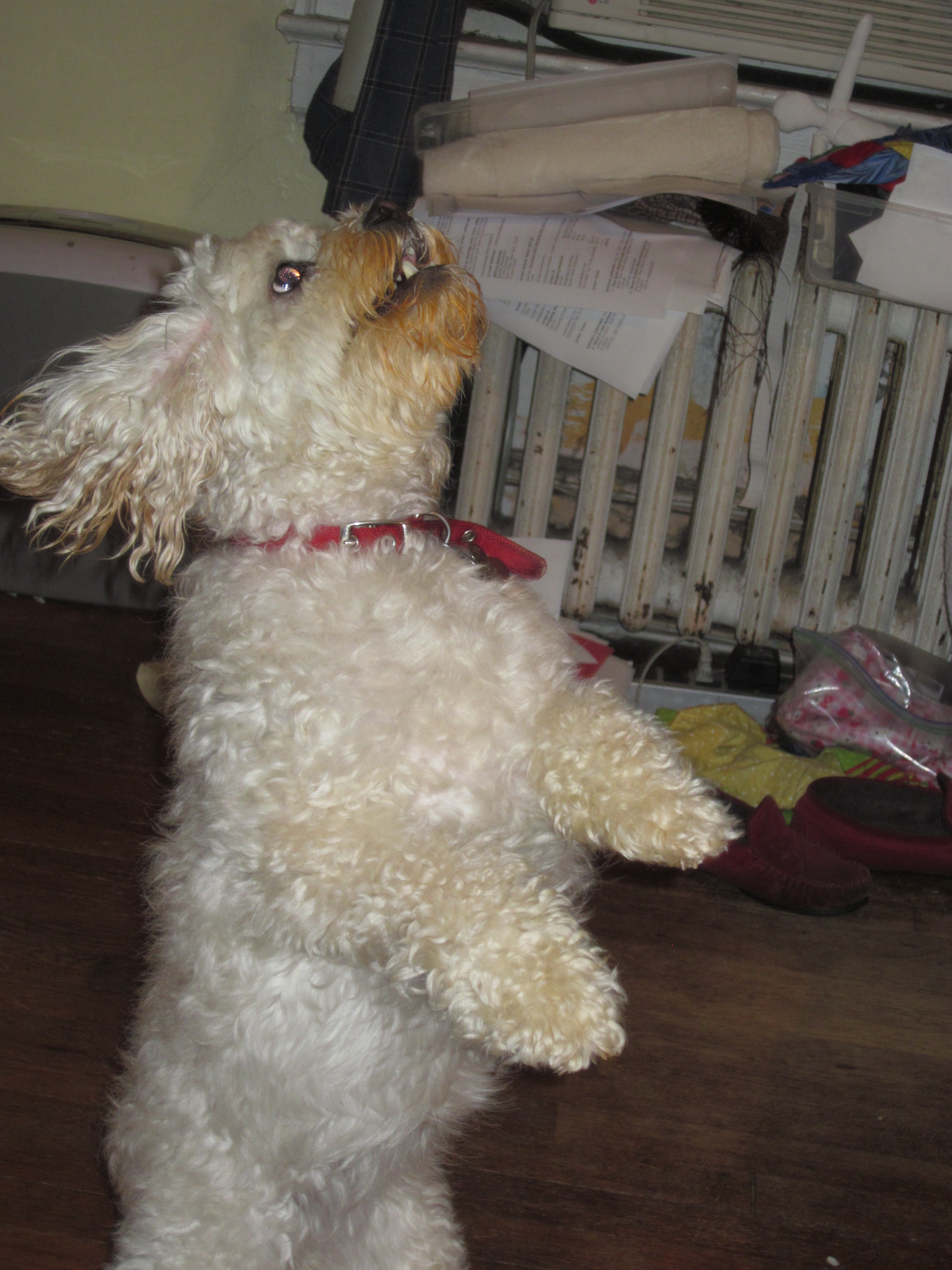
Tag Archives: family

Delilah’s Diabetes

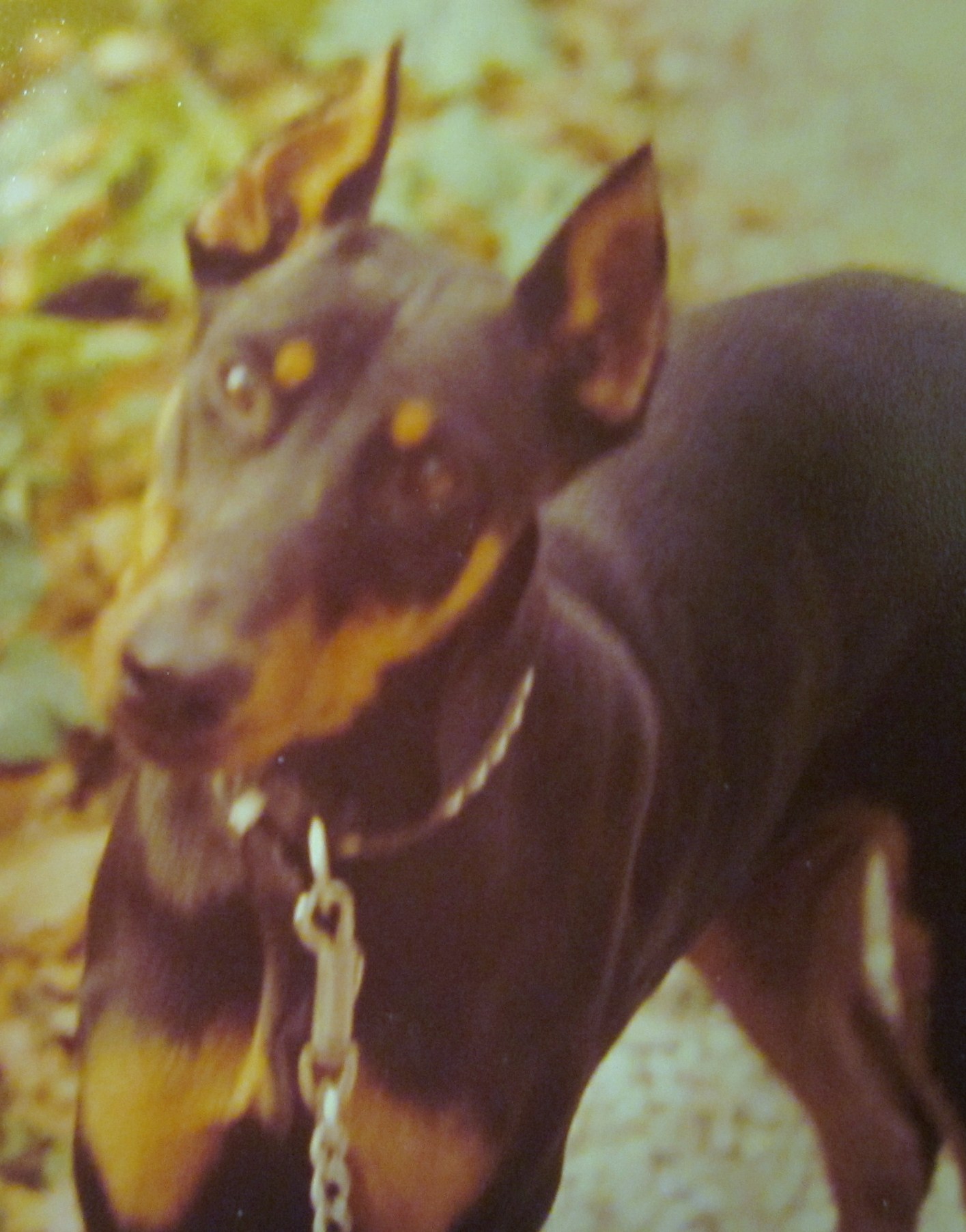
When Delilah was about eight years old, and I was fourteen, she developed diabetes. I don’t know how we discovered it, but we were sensitive to certain signs because my father had been diagnosed with type-two diabetes about four years earlier. Delilah was a healthy, if skinny, Doberman Pinscher until she got sick. She wasn’t the most energetic creature, but as soon as the door bell rang, she would start to bark, like the guard dog she was born to be. Except that, as the person entered the house, Delilah would walk backward up the stairs, and continue to bark from a safe distance.

She spent a lot of time out in the backyard. Mom would leave the back door open, with the screen door in place, so if Delilah wanted to go outside she could push the door open with her nose, and if she wanted to come back in she could bark once or twice. But more often than not she’d just rest on the back porch.

I never saw Delilah jump off the porch, I only heard about it, that this mostly quiet dog could get so worked up over the little birds who nested under the roof of the garage that she would stand on the porch with her front feet on the railing and then leap into the air to catch a bird. The drop from the porch railing looked steep to me, but Delilah was an athlete and took it in stride.

And then she got sick. The vet sent Mom home with hypodermic needles, alcohol wipes, and vials of insulin. She had to get the shots daily, with Mom learning how to pinch an inch of skin and plunge in the needle where Delilah was least likely to feel it.

Delilah was on insulin for almost a year before she died. I don’t even remember her showing signs of deterioration by the time summer came.

I had a habit of waking up early on Saturday mornings to clean the kitchen before my parents woke up. I generally woke up anxious, and scrubbing counter tops calmed me down. One Saturday morning in July, I was halfway down the stairs when I saw Delilah on the floor of the dining room. There was a greenish grey aura around her, like a dark version of the chalk outline the police on TV draw around dead bodies. This dog who had been brown and black, now seemed grey. I knew she was dead, and I panicked and ran back upstairs to hide in my room and let someone else find her.

By the time I came back downstairs a few hours later, my parents were there. They’d found her, wrapped her in a blanket, and moved her body to the back porch, because nothing could be done while it was still the Sabbath.

It was summer, so it was past nine o’clock by the time the Sabbath was over. It was dark by then, and raining. Suddenly, my father thought burying her was an immediate necessity. It couldn’t wait until the morning. It couldn’t be handled by the vet. He couldn’t ask friends to come and help. I had to help carry the blanket covered dog down the porch steps, to the back corner of the backyard, dig a hole, put her in, and cover the hole with dirt.

Mom tells me it was more common back then to bury a dog yourself, but by the time I was fifteen, it didn’t feel common at all, it felt illegal and disturbing. I was crying and shaking and my father was yelling at me to hurry up and to shut up.

It wasn’t a good way to say goodbye to someone who had been family to me for more than half of my life. And it was too dramatic for Delilah. She would have preferred something quiet and peaceful, with the TV on in the background and a few gentle pats on the head.

Delilah’s Puppies


Delilah was a pure bred Doberman Pinscher. We adopted her from a breeder when I was six or seven years old on the condition that her first litter would go back to the breeder (and he would supply the stud and medical care). My father fed her from the table and spoke to her in German, but she liked to sleep on my bed in the afternoons, after barking at strangers passing by all day.

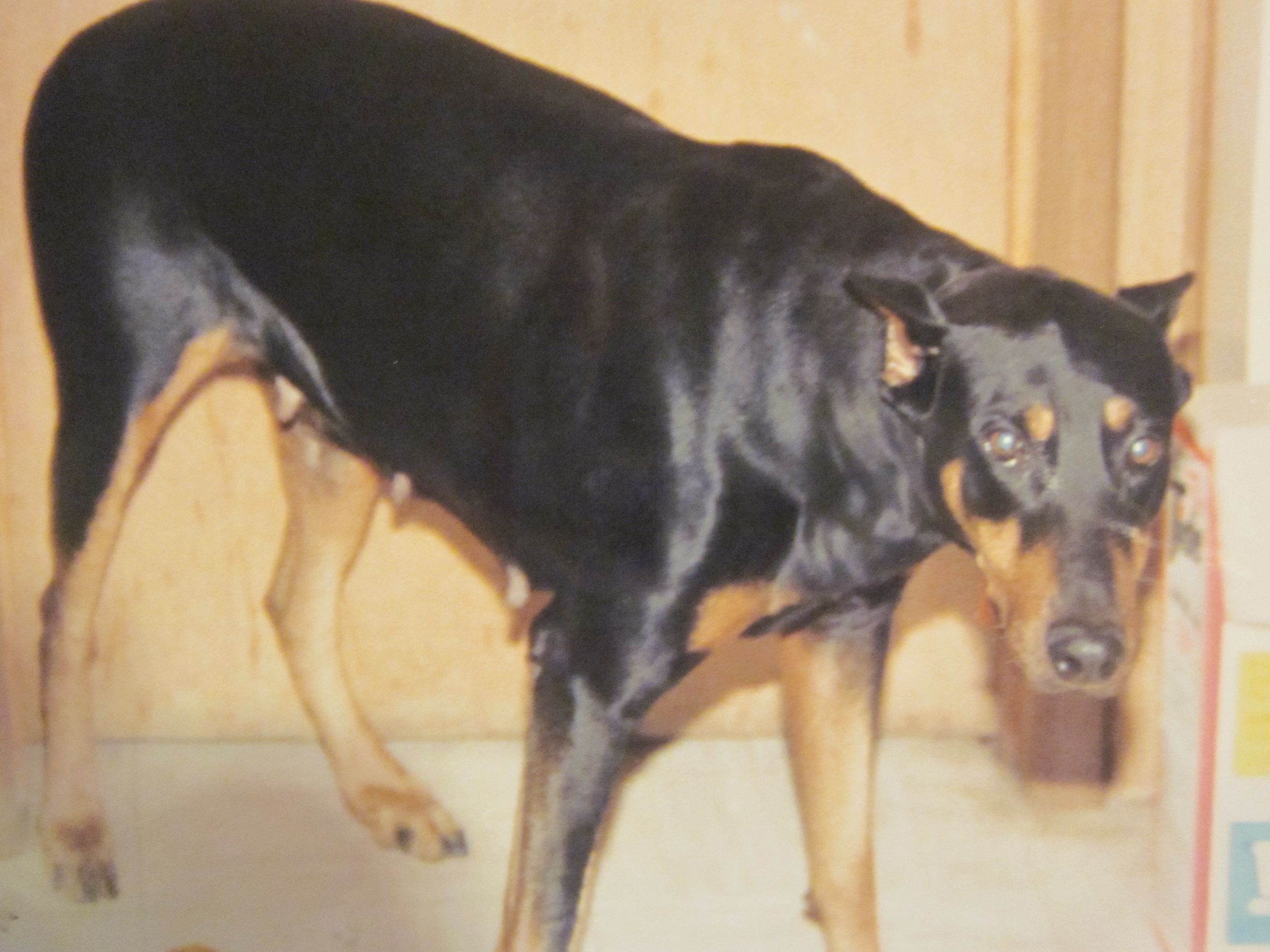
She had a job, though, and that was to get pregnant as soon as her body was ready. Mom woke me up when Delilah went into labor. I think it was sunrise or shortly afterwards, because the rays of the sun were shooting through the windows in the little vestibule between the kitchen and the dining room. The vestibule was just the right size for Delilah, her puppies, Mom, my brother, and me.

I remember Delilah breathing heavily, panting, with sweat dripping from her tongue. She had a kind of crazed look on her face, but very serious, especially after each bag of puppy slid out of her. The bags were grayish brown and slimy, but Delilah was conscientious about freeing each puppy from its cocoon, and cleaning it thoroughly so it could start to breathe and walk freely.

Suddenly, Delilah was a warrior. Any attempt to get close to her puppies without her permission and she’d bare her teeth and growl.

At around six weeks, the puppies were sent to the breeder for a medical visit. My father brought me with him to the breeder’s workshop to pick them up. I got there just in time to see a row of puppy tails on the work bench, unattached to the puppies. They had their ears wired up as well, with what looked like copper wire laced through each ear like a long row of earrings.

The puppies were warm, squeaky and cuddly, and when my parents brought them back to the breeder for good at eight weeks old, I was sad, but I wasn’t heart broken. I’d thought of them as borrowed, from the beginning.

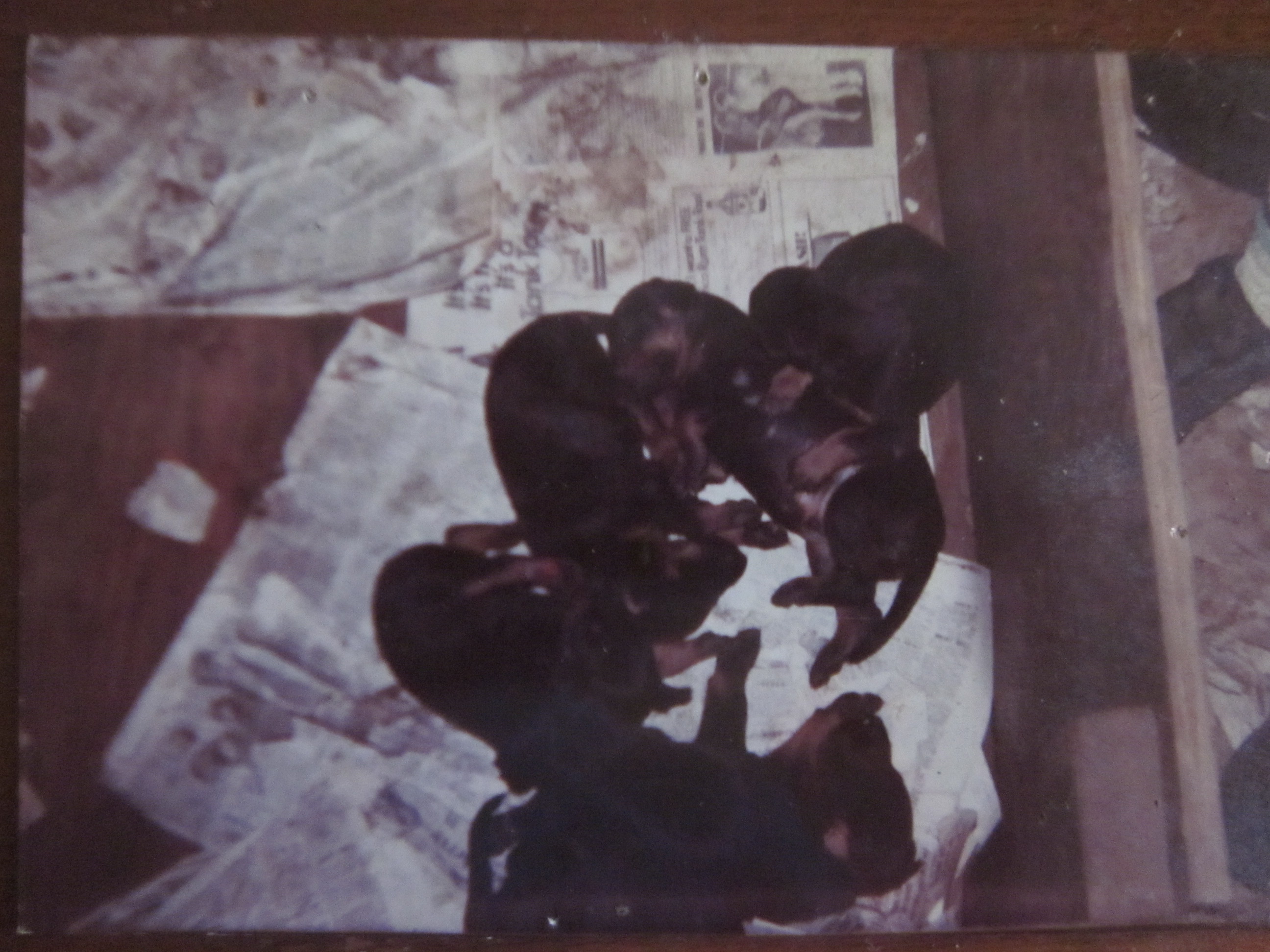
The second litter of puppies was different. My father thought he could make money as a breeder on his own. He paid the original breeder a stud fee, and then the resulting puppies were ours to sell, free and clear.

My brother and I were away at sleep away camp during the pregnancy and arrived home a few days after the puppies were born. My father made sure to tell us that there had been eight puppies originally, but that Delilah had rolled onto one and killed it. When I repeated the story to my mother recently, she said no, it was a still birth. Delilah didn’t kill her own baby, why would you think that? But Delilah did, supposedly, leave a mark on the foot of one of the seven puppies, a boy, and I named him Wounder.

I believed the story – that Delilah had stepped on him, and wounded him – and somehow, in my nine year old brain, that transposed into “Wounder.” Maybe I was trying to combine the two things I saw in him, “wound” and “wonder.” But the final version resonated as more meaningful to me, even then, before I’d ever heard of a Freudian slip.

Mom put an ad in the paper after a few more weeks, and people came by to look at the puppies. But no one bought them. Maybe it was because we weren’t registered breeders or the paperwork wasn’t good enough, or we were asking for too much money.

My father was angry that the puppies didn’t magically sell themselves, and he abdicated responsibility for them. Eventually my mother had to bring the puppies to the animal shelter to be adopted out, because, she said, we just couldn’t keep eight full grown Doberman Pinschers in one house.

The shelter took all of the puppies but one, Wounder. They said he was too rambunctious, climbing on counters and showing them he was boss. I loved that about him. I was sure that my father would have to let me keep Wounder now, but he said no. We couldn’t have an un-neutered son and his un-spayed mother in the same house, and my father refused to have either of them fixed, so Wounder would have to go.

My mother tried to find him a home, but no one would take him, even for free. She had to take him to the pound, where, I knew, they put unadoptable dogs down after a specified period of time. I was told that he was adopted from there, but I’m not sure I believe that.

Delilah went back to sleeping on my bed every afternoon and barking at strangers who came to the door. But I never forgot Wounder, and I don’t think Delilah forgot him or the rest of her puppies either. They were her babies, after all.

The Lucky Ladybug

            One day a few years ago, I noticed that I was being followed by ladybugs. There would be one on the wall behind my bed, then another one on my dresser, then out on the porch and on my wrist. I asked around, in case there was a surplus of ladybugs and everyone was having this experience and I was told, instead, that ladybugs are lucky.

Now, I have not been an especially lucky person. I don’t win contests or get discovered in malt shops. I gain weight easily and get injured easily. I tend to wish on eyelashes more than I should. But these ladybugs kept following me around.

A few weeks ago, there was a ladybug on my bedside table for twenty-four hours. At first, I thought it had come here to die. It was so still. I tried to move papers out from underneath it, and it didn’t move. But then mom nudged it with a finger, because she’s braver than I am, and it lifted its wings for a second and then settled back down. Maybe it liked having the light of my table lamp aimed at its back, maybe it was doing a little light reading, or maybe it had something it wanted to tell me.

I felt honored to be chosen like that. Honored to be the safe place for a ladybug to rest and recuperate or to pause before the next big journey. I wondered if my luck would change now that a ladybug had chosen me.

But in the research I did online it said the ladybug has to land on your body to bring good luck, and she didn’t do that. She stayed for twenty four hours and then disappeared.

Then, just recently, the ladybug returned, crawling up the length of my red comforter, looking like she fit right in. She walked right up onto my hand and then flew to my shoulder and tried to crawl up my neck and into my hair. That was a bit too creepy for me.

But is it the same lady bug? Is she persisting in trying to get her magic across to me? I would like to believe that. I would like to believe in the power of magical thinking, not just as an anti-depressant, but as an agent of change in the world. Just like prayer has been proven to have an effect, not just on the person who prays, but on the people she prays for, I want to believe the same about ladybugs. That just the act of wishing for and believing in luck can change the energy in the world, and change what happens next.


Solomon, the dastardly Doberman


            Solomon was the first significant dog in my life. We have no pictures of him, probably because he was never stationary long enough to be caught on film. He was a Doberman Pinscher with clipped ears and tail, and he was mythological in personality. He was a puppy when I was still in diapers, and he used to grab the used cloth diapers away from my mother before she could clean them.

It was odd, looking back, for my Jewish father to be drawn to a pure bred, German dog. He came from a generation of Jewish people who refused to even buy a German car. But he liked the idea of a guard dog to protect his house, or his castle.

As Solomon got older, he was a very handsome dog, but not kid friendly. He was eighty pounds of muscle and he only did what he wanted to do. He didn’t like cuddles or playing catch. He certainly didn’t want to play dress up with me. He had a habit of escaping from the backyard and leading a parade of cars trying to catch him as he ran down the street.

One time, he ran away and took over someone’s lawn. He wouldn’t let the family into or out of their house for a whole day, until they were able to get to his name tag and call my parents to come get him. That’s probably when my parents called a trainer to help them manage him better. But the trainer said that my father’s aggressive response, jerking Solomon’s chain and yelling at him, and my mother’s very opposite submissive response, were the problem. And my parents knew they couldn’t change each other any more than they could change Solomon, so that was the last of the trainer.

When Solomon was four years old, and I was five, he was diagnosed with Parvo. I looked up the parvovirus online recently, and the symptoms didn’t sound good: bloody diarrhea, vomiting, anorexia, lethargy, fever, and severe weight loss. He stayed overnight at the vet and they sent him home with medication and an uncertain prognosis.

A few days later he was stretched out on our kitchen floor, listless. Our kitchen was very seventies, with orange and yellow wallpaper and a lot of light coming through the windows and the open back door. I sat on the floor with him. He was still alive but this vigorous, aggressive creature was wiped out by his disease. He was still and silent and he watched me solemnly as if he was finally seeing me. I don’t know what he was trying to communicate. Maybe he was asking me why he had to be so sick. Maybe he hoped I could make him better. Maybe he was just relieved to have someone with him while he died.

My mother covered him with a yellow knitted blanket, and stayed with us in the kitchen. I don’t remember if she was cleaning the kitchen or making dinner but it seemed like she was keeping busy because she was too sad to look at him. I sat there next to him and patted his head and looked into his eyes and I felt like we were together in this.

People underestimate what children can feel and understand, because children don’t have the words yet to tell you what they know. But I felt his grief and I stayed with him until he was gone, because that’s what I would have wanted him to do for me.

Image

Cricket and the Brown Mouse


            A few years ago, I walked into the kitchen and saw a tiny brown mouse eating from Cricket’s food bowl. Cricket had left half of her breakfast scattered on the floor around her bowl, trusting that she could come back to it later if nothing better came up in the mean time. But there was this tiny brown mouse, holding a twig of her dry food in its hands and getting ready to nibble. I wasn’t sure what I was seeing at first, because I’d never seen a mouse stand still like that, not with a human and a dog nearby.          Finally, Cricket stepped forward and gave a low growl. Not the bark she’d have handed the mail man, but a warning none the less. And the little mouse backed up, dropped the food, and ran away. Clearly it was a baby mouse, just learning the run and hide rules of the tribe.

There may have been mice over the years, but I hadn’t seen them again, until I recently noticed mouse droppings in the corner of my bedroom, near the stairs. Then mom heard scritch scratching overnight in her room. And then we saw a brown mouse scamper behind the plant table in the kitchen. So Mom went to the store to buy mousetraps.

Once, when I was a kid, we had a glue trap. The guy at the store had recommended it as more humane than the regular mousetrap, but then I saw a mouse caught on the glue. It was still alive, but struggling to get free, and with each movement it became more trapped. I almost threw up, and then I cried inconsolably. Mom promised me she’d never use a glue trap again, but she made no promises about regular traps. Because you’re just not supposed to accept having mice in your house. It’s not clean, or healthy, or polite.

Mom put out the new traps, but because we hadn’t used them in years, she’d forgotten how to set them correctly. She placed one on a paper towel and shoved it under the plant table, and the next thing we knew, Cricket had pulled the paper towel out and eaten the cheese, leaving the trap unsprung.

The way Cricket barks at humans and chases squirrels outside of the house, you’d think she’d notice, and mind, the presence of tiny interlopers, especially near her food or by her bed. But she hasn’t been barking at them. They must have been around for months before we noticed, and she never told us.

I wonder if she’s friends with the mice behind our backs, bringing them food, tossing them a ball every once in a while, acting as guard dog for them when humans come near.

But maybe they’re just too small to seem like a threat to her. She doesn’t bark at ants either.

Walking with Cricket

Image

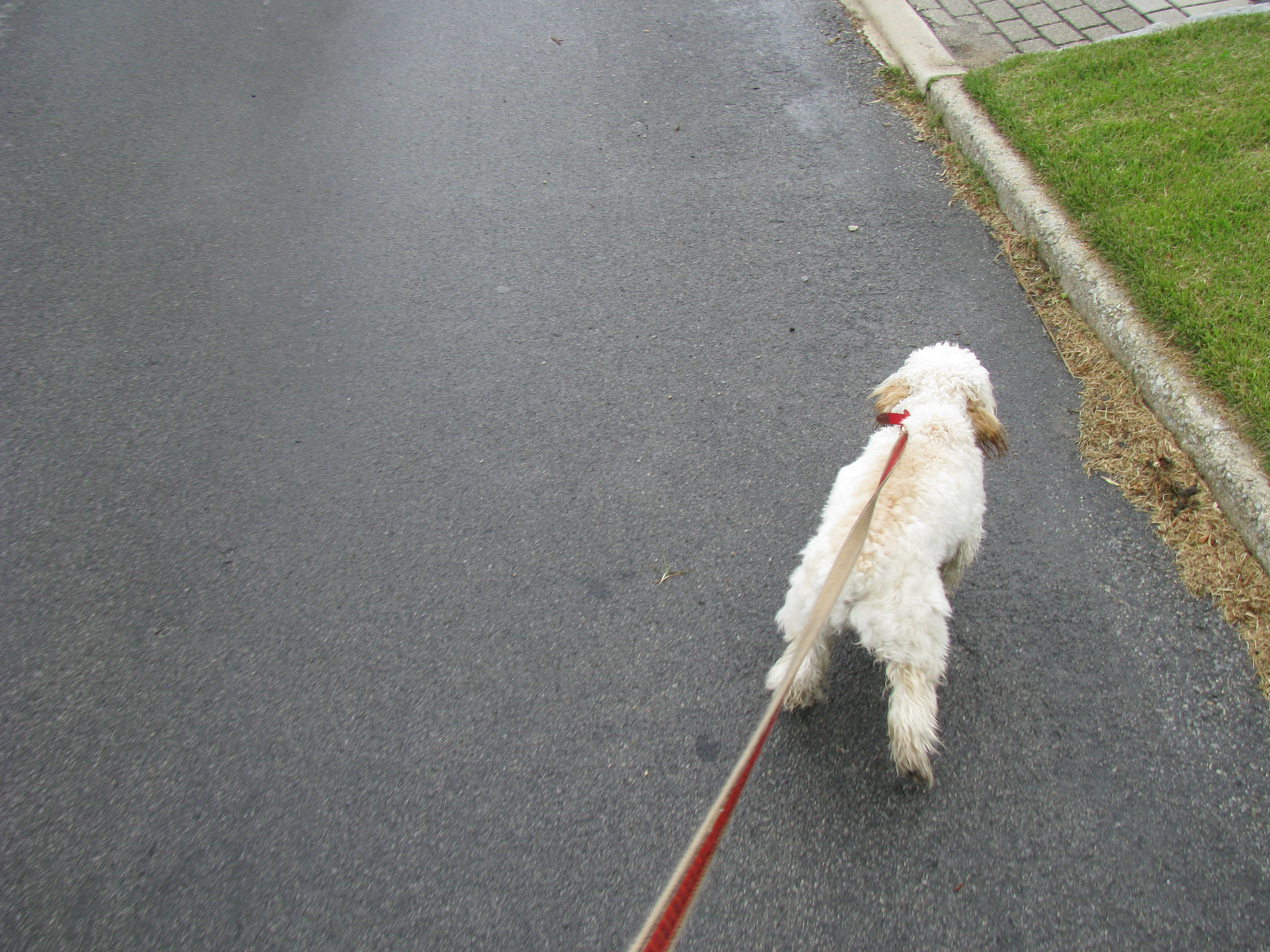
Cricket and I used to do a two mile walk around the neighborhood, when the weather was right and we’d been cooped up too long in the house. I’d fill a bag with her necessities: a Tupperware cup full of water, extra poopie bags, and a paper towel or two in case of emergencies. Cricket knew that a bag like that signaled a long walk and once she had her leash on, she raced down the stairs with the leash flailing behind her and jumped up to reach the door knob with her nose. She had to wait for me to turn it, though.

The first few minutes of the walk were a blur of effort for her, dragging me, like a horse with a plow, past the corner and down the block until we had truly reached THE WALK ZONE, which was at least a block past the shorter PEE ZONE. Then Cricket could focus on her sniffing without fear that it would all end too soon.

Walking smoothes out her brain chemicals, and the neighborhood fills her up with smells and experiences that keep her mind busy for hours afterwards. She doesn’t mind hot weather, or cold weather. In fact she would drag me out in ice and snow if she could, though not rain, raindrops are like poison darts on her head.

Walking with Cricket helps to calm me down, too. If I wake up anxious, which I usually do, with twenty different ideas of what the day should hold running through my head, I take Cricket out for a walk, and burn off the extra energy. Walking with Cricket, instead of on the treadmill, has the added benefit of forcing me outdoors, where there are beautiful things to look at. My neighborhood is especially beautiful, filled with dogwoods and maples and birds and flowers, and the ground isn’t flat, so when we go up and down the hills, we get a whole new look at the view.

I still try to take Cricket out on her walks around the neighborhood, but in the forty-five minutes it used to take to do two miles, I can barely do one. Some days, I just walk slowly. Other days, my legs go wonky, and I look like a marionette. My hands curl up and my face twitches. On those days, walking uphill is like climbing Kilimanjaro and walking downhill is a race against gravity.

The doctors don’t know what’s wrong with me, but Cricket doesn’t mind if I walk funny. She runs circles around me when I’m slow, and gets twice the exercise in the same amount of time. Or she goes out with her Grandma, and barks all of the details of her adventure to me when she returns.

I wish I could put her on the treadmill to help her burn off the energy left over after her shortened walks. I worked on that with her when she was little. I built her up gradually, from standing on the unmoving treadmill, to walking at the slowest speed for two minutes. But then, abruptly, she changed her mind about the experiment. Maybe she decided that she didn’t like the ground moving under her feet, or she didn’t see the point of a walk with no peeing component and nothing to sniff.

My dream is to be healthy enough to take Cricket out for the longest walk she can stand. She will empty her bladder so completely that even she can’t believe she has any more pee left to give. She’ll drink all of the water in her Tupperware cup, and meet as many dogs as she can. And then, without any prompting from me, she will look up and say, Mommy, I’m ready to go home.

Image

Cricket still seems like a stranger

Image

Cricket still seems like a stranger. I don’t know how to explain this. I love her, and I miss her if I’m away from her for a few hours, and I’m jealous of all the time she spends with Mom instead of with me. But when I’m sad or angry or lonely, I don’t see an echo of it in her face. I feel like when I look into her eyes, we are not really seeing past the surfaces of each other. We are not soul mates.

When Cricket first came home, I was addicted to the digital camera, trying to capture every different look on her face, so that I could get to know her: the way her lower teeth jut out so she looks like a fighter, the places where her hair is curly and where it is straight, and the wide variety of her different chirps and growls.

I know which foods she likes, and how small the first piece of a new food needs to be in order for her to try it. I know how often eating a small piece of cheese will remind her that she has dinner in her bowl.

I know that she will wait for Grandma on the second step from the top, and cry to be picked up when Grandma comes home, and then scrabble to be put down just as quickly. I know where she hides her treasures: under the second pillow on my bed, in the corner of my couch, under Grandma’s bed, behind the cushion on Grandma’s chair.

I know that the sound of the treadmill puts her to sleep. And unzipping the guitar bag makes her angry.

But we haven’t started to look more like each other over time, or developed similar mannerisms. We are nothing alike, and that makes me feel like I’m the stranger, and I’m the one who doesn’t belong.

But I still love her. And whenever I forget that I love her this much, she sparks again. Like when she waits for me at the front door, with her face peeking through the curtain. Or when she runs upstairs in the morning and jumps on my chest to wake me up so we can spend the day together.

I wonder if Cricket keeps a list in her head too, of all of the wacky things she knows about me: the way I smell in the morning, the careful way I pluck goop from the corner of her eye, the look on my face when I see her at the front door.

I am nothing like her, but she loves me anyway. I think I’m okay with that.

Image

Vacation with Cricket

Image 

            We took Cricket on vacation to Lake George one weekend, a few years ago. She slithered out of her car harness within the first thirty seconds of the trip, and then stood with her front feet on the seat divider and barked at everything she saw out the window for the six hour drive north.

            We found a motel that accepted dogs and wasn’t too expensive. And then we risked walking around town, but Cricket barked at everyone. Little children hid behind their parents. Grown men laughed, until they realized there was real bite behind her bark. We stayed in after that. Cricket spent the whole night standing on my bed, barking at every noise in the motel, and jumping on my feet like an alarm clock with sharp toenails.

            The next morning, we walked behind the motel, where there was a tiny scrap of beach, with a dock and a few boats. We rented a row boat, two oars, and three life preservers. Cricket was not thrilled when one of the life preservers was wrapped around her waist, and she held onto my shoulder and dug in with her nails when I tried to carry her into the boat. Water is not her favorite thing, even tiny bathtub shaped water or raindrop shaped water, let alone a huge lake full of the wet stuff.

Once we were safely in the boat and away from the dock, though, she settled down. Pretty soon, she fell asleep to the lapping of the lake water at the sides of the boat. I was still antsy. I worried that we wouldn’t recognize our particular dock once we were out into the belly of the lake. And I worried that we’d lose an oar and I’d only be able to row in circles and never make it back to dry land. But once we were out far enough, and I couldn’t see the crowded line of beaches with the crowded row of motels behind it, I started to relax. I didn’t feel guilty or anxious or worthless or angry or frantic to accomplish something. Maybe if we had stayed out on the water longer, all of that noise would have filtered back into my head and found its normal level, but for a few minutes, there was peace.

When we rowed back to shore, I wasn’t quite ready to leave yet. I asked Mom if she would mind if we sat out by the motel’s pool for a little while before getting in the car for the ride home, and Mom and Cricket both agreed to the plan.

There were leaves at the bottom of the pool, and maybe some algae scattered around, so I didn’t have to actually go swimming. Cricket sat with Mom on a beach chair, and I sat on the side of the pool and dangled my feet in the water. It was the manageable compromise for me, between what I wanted to do (swim) and what I could tolerate. Swishing my legs in the water was nice.

I wish, instead of a vacation, I could move into a nice little house, with a washer and dryer and a dishwasher and central air conditioning, and a backyard pool, where I could swim without worrying who would see me. I’d probably still wear a t-shirt and shorts over my bathing suit though, just in case the back yard fence wasn’t high enough.

That vacation to Lake George was the last one we all took together. I get too anxious, about Cricket barking at strangers, about money, and about not getting enough work done to really enjoy the trip. But mostly, I have the same object permanence problem babies have. If you cover my eyes and I can’t see home, I’m not sure it exists anymore. Going away on vacation makes me think I’ll never be able to go home again.

So, Mom goes on vacations by herself, or with her friends, and Cricket and I stay home, and worry about her. That’s the manageable compromise we’ve come up with, for now.

Image

Abraham, the suburban pony


Image          

  My parents had a pony named Abraham before I was born. The pony originally belonged to one of my father’s students, who could no longer afford to stable him in the city. So my father paid $50, and brought the pony out to Long Island in the back of a van. The name Abraham was supposed to signify that he was the first animal in the family, or at least, the first male animal, which, to my father, meant the same thing.

            My parents seemed to believe that a pony would fit right into the suburbs. This was forty years ago, when Long Island was still developing, and looked sort of like the country, if you squinted. They kept rabbits and ducks in the backyard, along with the pony and a dog. They received a lot of complaints from the neighbors, especially about the smell. But my father would just ride around in the horse cart that Abraham pulled down the street, and ignore what anyone else had to say.

            The house had actually been built on a former horse farm, but by the time my parents arrived, the streets had been paved and the area had been developed into rows of suburban homes, with fenced in yards. Abraham’s stall was in the back of our garage, but he had free run of the backyard while my parents were at work during the day.

All of Abraham is a story to me, because he was sent away before I was born.

The neighbors were finally able to change the local ordinance to make keeping a pony in your backyard illegal.

            My mother met the veterinarian who agreed to take Abraham to live at his farm. She saw him loaded into a trailer with her own eyes. And she assures me that he was taken to an actual farm, though it sounds like one of those stories parents tell their kids when the dog dies. Abraham isn’t really dead, he’s gone off to live happily ever after in a place where he can really stretch his legs.

            There was a horse farm next door to our synagogue when I was a kid, and every once in a while one of the horses would be outside, and I’d reach through the fence to pet his nose, and I’d ask him if he knew Abraham.

            Maybe the Abraham stories explain why I dream of having a farm of my own, despite having no recognizable farming skills. Or maybe it comes from reading Charlotte’s Web so many times. I thought I was just like Wilbur, the little pig, when I was growing up. I was chubby and white and naïve and I could have used Charlotte’s help quite a bit. And maybe I thought that having a pony, and some ducks and rabbits and a few extra dogs in my backyard would have made me feel spectacular, just like Wilbur.

           Image

Cricket’s English Comprehension


Sometimes I think Cricket understands full sentences. Like the times when she starts barking at her Grandma, trying to boss her around.

First, of course, I say “No,” in a firm, loud voice. But Cricket ignores the command and keeps trying to get Grandma’s attention. So then I tell her, in my conversational tone, that she’s being rude to her grandma and it is not time to go out or have a snack and she can rest for now. And Cricket listens to me, and stops barking, and crawls under Grandma’s chair to go to sleep.

Cricket knows the important words, like: walk, poopie, grooming, bathtub, chicken treats, cheese, out, go, sit, no, and Cricket. When we are out walking and I say the word “water,” she looks to the bag that holds her Tupperware cup full of water. If she hears the word “breakfast,” she will lick her lips. One time, when we were outside, I said the word “foot,” and Cricket lifted her back foot and stared at it.

            She has selective hearing, like any other child. When she’s exhausted, she’s less sensitive to words like “toy” or even “walk.” The “G” words almost always get through to her, though. If I say “grooming,” she runs to the bathroom and climbs into the bathtub, which is where the grooming happens. She loves grooming because it’s her most reliable source for chicken treats. She would prefer to stand in the bathtub and be fed treats without having to get a comb through her hair, but the treats make anything bearable.

When she is over excited, she can’t really hear me over the noise in her own head, or the screeching she’s doing out loud. When I take the leash out, she jumps two feet in the air, over and over, like a Jack Russell, and if I try to tell her to sit, so I can attach the leash, she seems to be screeching “What? What?!” as if I’m speaking French.

I remember seeing a dog on TV who could identify each of her thirty toys by name. Her dad, a psych professor, would say “fish” and she would dig through a toy box and come back with the fish. Cricket knows that “toys” are in her toy box or scattered on the floor, but individual names for toys don’t seem to be strongly correlated for her. If I say “Fishy” and it’s the only toy she sees, she’ll bring it, but if her birthday cake or purple dinosaur is near by she might pick that up instead.

She is very smart, but she has no interest in making the most of her potential. She’s not a working dog or a people pleaser. I wish I could accept this about her, but some part of me still dreams of index cards and word drills and Cricket hearing the word “fish” and digging through her toy box to bring me a fish. Because that would at least make me feel smart.