Over the past year, Tzipporah had successfully mastered the art of peeing and pooping on the wee wee pads; we had to throw out a few rugs early on, and do a lot of scrubbing, but eventually we figured out the right number of wee wee pads, at the right strategic places, to make the whole thing work for her. But then, a few weeks ago, she started to leave tiny pee puddles in my bedroom, out of nowhere.
I was 95% convinced that she was using her pee as a form of criticism, rather than having a health problem, because I noticed that the pee puddles only seemed to appear when there were no more treats left. So, if I took a nap during the day and didn’t remember to put a Greenie in front of the air conditioner, there might be a pee puddle by my door when I woke up, and if I set out a trail of chicken treats at bedtime, but failed to refill it at some point during the night, there might be a pee puddle on my path to the bathroom in the morning.
“Oops.”
Then, one night, while I was sitting with her in the living room, Tzipporah suddenly got up, walked across the room, and disappeared down the hall. I sat very still, in shock, wondering if she’d forgotten I was there, because in her almost-a-year of living with us, she has never gotten out of her bed while I was in the room with her, let alone walked brazenly across the room. When she returned to her bed, I snuck a peek into the hallway and saw that she’d left a poop on the wee wee pad. Good girl! I cleaned up after her and praised her and gave her a treat, dizzy with the belief that we were finally turning a corner in our relationship. But the second and third time she left the room, she went straight to my bedroom and used my rug as her bathroom, overcome with a bout of diarrhea. It’s a cheap rug, so I wasn’t overly upset about that, but the spark of joy I’d felt when I thought she was making progress was immediately flushed down the toilet.
It turned out that during her evening strolls through the apartment, she’d been eating whatever she could find on the floor, whether it was a piece of onion dropped during the preparation of dinner, or a piece of the Siberian Iris leaves Mom was using for weaving. Once we figured out the cause of the problem, we were able to keep the floor safer for her, and the diarrhea and the pee puddles quickly disappeared.
The truth is, though, that she really has been making some progress. She’s become much more present during her once-weekly therapy visits, lifting her head and looking around the room instead of hiding under my elbow. And she’s gotten used to the routine of sitting in the backseat of the car with her seat belt on, and then walking towards the door to be detached and picked up. Most of the time she practically jumps into my arms, whether we’re on our way into therapy or on our way home.
And she has started to express herself more forcefully with me, pawing at my hand when she thinks I’m brushing her hair too much, giving me the evil eye whenever I go near her tail with the comb. She was already letting loose with a bark or two each night, at Grandma, when the treats came too slowly, but recently she actually barked at the TV, pacing back and forth and yelling at a man on the screen, though I wasn’t there in person so I have no idea who she was barking at or how much he deserved it. I still only get to see her adventures when Mom can record them for me, since Tzipporah’s law against leaving her bed while I’m in the room came back into play as soon as her belly problems resolved.
My big hope is that while I’m away in Israel, in a few weeks, she will realize that she can run freely around the apartment without fear of running into Mommy, and then she’ll get so used to her freedom that she won’t want to relinquish it even when I return. It’s my dream, anyway, and I’m allowed to dream. I mean, if peace can come to the Middle East, surely Tzipporah can figure out that I’m not all that scary. Right?
“Mommies are so needy.”
If you haven’t had a chance yet, please check out my novel, Yeshiva Girl, on Amazon. And if you feel called to write a review of the book, on Amazon, or anywhere else, I’d be honored.
Yeshiva Girl is about a Jewish teenager on Long Island, named Isabel, though her father calls her Jezebel. Her father has been accused of inappropriate sexual behavior with one of his students, which he denies, but Izzy implicitly believes it’s true. As a result of his problems, her father sends her to a co-ed Orthodox yeshiva for tenth grade, out of the blue, and Izzy and her mother can’t figure out how to prevent it. At Yeshiva, though, Izzy finds that religious people are much more complicated than she had expected. Some, like her father, may use religion as a place to hide, but others search for and find comfort, and community, and even enlightenment. The question is, what will Izzy find?
I’ve been reading through piles and piles of notebooks, and files and files on the computer, to see which of my writing projects still spark my interest; and unfortunately, they all do. I can sort of prioritize one, or two (or five) above the rest, but it’s like trying to choose my favorite dog and having to ignore all of the others. How can you look away from that sweet, lonely, hungry little dog?! What kind of monster are you?!
There are novel ideas in the notebooks, and novel drafts on the computer, and drafts of long essays and short essays, and children’s stories, and short stories, and mysteries, and even a science fiction story or two. And along with all of the writing projects, I also have lesson plans to write, and a ton of therapy work I still need to do in order to become the kind of functional adult who doesn’t need to crawl under the bed and hide (which hurts my back, honestly).
This is what happens when I try to open the creaky, dusty, long-closed doors in my brain. I know I have to do this every once in a while, if only to make sure I’m not leaving something important behind, but it’s overwhelming. And, of course, there are endless internal arguments over which ideas have the best chance of getting published, and which ones will be an exhausting waste of time, and why do I have to be a writer at all when I really should be doing something more useful with my life, or at least more practical. But I’ve been a writer since I first learned how to hold one of those fat red pencils in nursery school, and if I stopped writing it would feel like I’d stopped breathing. And, really, even if it looks like I’m standing still, I am frantically kicking my feet under the surface, like a duck; and yet I judge myself only by what other people can see.
At some point, hopefully soon, I will finish this reassessment period and be able to choose a few manageable goals to work towards and put the rest aside. And then maybe I can put off the next reassessment for a while, or at least make sure I’m better medicated by then.
“Chicken fixes everything.”
If you haven’t had a chance yet, please check out my novel, Yeshiva Girl, on Amazon. And if you feel called to write a review of the book, on Amazon, or anywhere else, I’d be honored.
Yeshiva Girl is about a Jewish teenager on Long Island, named Isabel, though her father calls her Jezebel. Her father has been accused of inappropriate sexual behavior with one of his students, which he denies, but Izzy implicitly believes it’s true. As a result of his problems, her father sends her to a co-ed Orthodox yeshiva for tenth grade, out of the blue, and Izzy and her mother can’t figure out how to prevent it. At Yeshiva, though, Izzy finds that religious people are much more complicated than she had expected. Some, like her father, may use religion as a place to hide, but others search for and find comfort, and community, and even enlightenment. The question is, what will Izzy find?
I’ve been watching videos in Hebrew for a while now, to practice my listening skills and to get a wider sense of Israeli culture, and one of the richest sources for short (2-15 minute) videos is Kan Digital, the online section of the public broadcasting channel in Israel. I have no idea how many of these videos actually end up on TV in Israel, but there are tons of them available on YouTube; along with a really great interview series by Orit Navon that delves into serious subjects (mental illness, living with disability, bullying, grief, having one Jewish and one Muslim parent), there are also videos by a variety of reporters/performers from different segments of Israeli society (religious and secular, Ethiopian and Russian, Israeli Arab, Jewish, Muslim, Christian, etc.), on a wide range of subjects, from serious, fact-based pieces on how Israeli elections work, to slice of life videos about working from home during Covid, to a dance video on how to choose a watermelon.
Orit Navon
Recently, I saw a video from one of the usually less serious performers/reporters (he did the watermelon video), where he’s sitting in what looks like a real therapy session, or a very close facsimile thereof, and both the reporter (Ehud Azriel Meir) and the therapist seem to be from the Religious Zionist community (roughly equivalent to Modern Orthodox in America – which you can tell from their crocheted kippot and casual clothes, as opposed to the more formal clothing and black hats worn by Haredim/ultra-orthodox). I’d seen a lot of videos from Ehud before; he did a whole series where he was supposedly sent to work with the Arabic language division at Kan to create educational videos about Jewish holidays and rituals, and each video in the series poked fun at all of the assumptions Jews and Muslims and Christians in Israel make about each other. It was silly and light, but also allowed for a pretty deep exploration of social conflicts Israelis grapple with on a daily basis. In general, Ehud’s videos are like this, characterized by humor and a willingness to show his own flaws and mistakes, but the video with the therapist had a much more serious tone than I was used to from him.
Ehud Azriel Meir
The therapy session starts with Ehud’s feelings of guilt at wanting to vote for someone other than the Religious Zionist candidate in the coming election. He believes that if he votes for “the other” candidate, he’s not only letting his own side down, he’s letting the other side win (though in Israel’s multi-party system there are always more than two options). This led to a discussion of the moment he started to feel some alienation from his own political party, which is also his religious community, way back in the 1990’s, when Prime Minister Yitzhak Rabin was assassinated. Before the assassination, Ehud, as a teenager, took part in a lot of the demonstrations against Rabin’s push for the Oslo Accords. He and his fellow Religious Zionists believed strongly that the accords would lead to more terrorism rather than to peace, and they were loud and vehement in their opinions, calling Rabin a traitor and a murderer. And then, Yigal Amir, also a Religious Zionist, shot and killed Rabin at a peace rally.
For Ehud, Rabin’s murder was a moment of awakening. It truly devastated him that this man, who was like a father to him and to the country as a whole, had been killed by someone on “his side.” He had never considered the possibility that people were taking those screamed epithets literally, but when he and his friends tried to go to the vigils to mourn Rabin with the rest of Israel, they were turned away. And, still today, he resented that the secular Israelis blamed him for Rabin’s death, and he felt like it would be disloyal to his own group, and to himself, to vote with them on anything, even when he agreed with their policies.
The therapist pushed Ehud to acknowledge that his strong feelings around all of this might mean that he did feel somewhat responsible for Rabin’s murder, and that maybe he was uncomfortable in both the Religious and the secular worlds because he was still trying to avoid facing those feelings of guilt. Ehud bristled at that idea, but the therapist persisted, suggesting that in order for him to be at peace with having one foot in each camp, he needed to wrestle with the ways he himself believed that his actions long ago may have done harm, and to acknowledge that no matter how much he treasured his identity as a Religious Zionist, that wasn’t all of who he was.
There was something really powerful for me in watching this usually very un-serious guy, now grumbling and uncomfortable, being willing to share his discomfort and uncertainty with the public, in case it might do some good. And his internal conflict resonated with me too, even more so because he used the words Gam ve Gam (Both/And) to describe his feeling of being both a Religious Zionist, and something else as well.
Whenever I start a new semester of online Hebrew classes, I’m asked if I prefer my name to be pronounced the English way or the Hebrew way, and I always say Gam ve Gam, both because I grew up going to Jewish day schools where half the day I was one and half the day I was the other, but also because the feeling of having different parts of me that fit in with different groups is a big part of my everyday life. It can be really hard to live in the Both/And. I’m never sure if I should stand with one foot in each camp, or hop from one side to the other, or stand in the middle all by myself. More often than not, I feel like I have to hide parts of myself, or act in ways that feel wrong to me in order to fit in.
“I like both chicken treats AND Greenies.”
Watching this video reminded me of the traditional Ashamnu prayer that we say during the Jewish high holidays each year, where we pound our chests and admit to all of the possible sins that may have been done by a member of our community. That level of exaggerated responsibility has always bothered me, because I work so hard to make sure I do no harm, and it doesn’t seem fair that I should have to take responsibility for Joe Schmo over there who couldn’t care less who he hurts. It’s not even clear which community the prayer is referring to: does it include all Jews? All Jews on Long Island? All human beings on earth?
But now I wonder if the prayer is trying to get at the collective guilt we tend to feel when someone from our own political party, or tribe, or family, does something wrong. Even if we are not directly responsible for an evil act, we may have played a role in creating the conditions for that evil act to take place; or maybe our strongly held beliefs led us to encourage someone in the direction that led them astray; or maybe we were silent when we knew we should speak up, because we were afraid of being kicked out of the group; or maybe we felt responsible simply because outsiders told us that we were responsible, because they see our group as a single entity rather than a collection of individuals.
Once a year, this prayer gives us the opportunity to acknowledge those complex feelings of communal guilt, and reminds us that we need to recognize the impact we can have on the people around us, whether we intend that impact or not. And maybe most of all, the prayer reminds us that even when we disagree with our fellow community members, and speak up against them, we are still part of that community and that community is still a part of us.
I had a Creative Non-fiction teacher back in graduate school who told us that in order to write a good essay (for her class, at least), we needed to write about two seemingly unrelated subjects at once. For example, if you’re writing about pizza, you could also write about existential philosophy; or if you are writing about fashion, you could also look back at a memory from a childhood dance class, or a nature walk, or a chess game. Because, she said, the most interesting material comes from the way those two unrelated topics brush up against each other and create something new. And I think that’s true of more than just a good essay. When I live my life in both A and B (and often in C and D and E as well), the friction that comes from those mashups creates a lot of sparks, and what would our lives be like without all of those sparks to help light the way forward?
“You said pizza. I didn’t hear anything after that.”
If you haven’t had a chance yet, please check out my novel, Yeshiva Girl, on Amazon. And if you feel called to write a review of the book, on Amazon, or anywhere else, I’d be honored.
Yeshiva Girl is about a Jewish teenager on Long Island, named Isabel, though her father calls her Jezebel. Her father has been accused of inappropriate sexual behavior with one of his students, which he denies, but Izzy implicitly believes it’s true. As a result of his problems, her father sends her to a co-ed Orthodox yeshiva for tenth grade, out of the blue, and Izzy and her mother can’t figure out how to prevent it. At Yeshiva, though, Izzy finds that religious people are much more complicated than she had expected. Some, like her father, may use religion as a place to hide, but others search for and find comfort, and community, and even enlightenment. The question is, what will Izzy find?
One of the things I’ve been enjoying a lot lately in my online Hebrew classes is watching Israeli stand-up comedy routines. Even a year ago, I would have found it really difficult to follow what they were saying because they speak so quickly, but now, as long as the videos include subtitles in Hebrew, I can pretty much follow what’s going on. And I’ve found that I’m learning a lot about Israeli culture from these short videos on YouTube, because a comedian’s job is to comment on, and laugh at, all of pompous, ridiculous, or just plain wrong things the politicians, the media, and regular people are saying and doing every day.
“I prefer give-me-a-treat-comedy.”
One of my favorite Israeli comedians is Giora Zinger. He and his family made Aliya (immigrated to Israel) from Ukraine when he was five or six years old (he has a whole bit about how he, and many other Jewish boys from the former Soviet Union, had to be circumcised when they arrived in Israel, and getting circumcised as a newborn is a completely different experience from getting circumcised when you are old enough to know what’s going on). A lot of his humor is about the cultural divide between his Ukrainian parents and the Israeli culture he grew up in. And his version of his mother’s accent, in Hebrew, is probably my favorite thing in his act, both because his version of his mother speaks much more slowly than most Israelis, so I can understand what she’s saying, and because his version of her says all of the things you’re not supposed to say out loud.
Giora Zinger
Israeli humor is, overall, less politically correct than American humor, so some comedians can come across as a little mean, but most of the time they are refreshingly honest and give me a lot of insight into how people in Israel really feel.
Another comedian I started watching recently is Yuval HaGanan, which translates to Yuval the Nursery School Teacher, and his act comes straight out of his day job as a, yes, nursery school teacher. He does a lot of impressions of his three- and four-year-old students, sharing their responses to the war, or a death in the family, young love and, of course, poop. And, like Giora Zinger’s mother, they tend to tell it like it is. Yuval also talks about all of the times when he had no idea what he was supposed to say to the kids’ very direct questions and just went with whatever came out of his mouth, and I can relate.
Yuval HaGanan
But my favorite Israeli comedian at the moment is Udi Kagan. His humor is often very silly, and filled with bodily noises, and jokes at his own expense, and at his failures as a husband and as a father and as an adult male in general. He is also a musician and often plays the piano and sings as part of his act. There was one video about re-hearing the Aerosmith song “I don’t want to miss a thing,” (from the movie Armageddon), years after it became a hit, and suddenly realizing how disturbing the lyrics are (I could stay awake just to hear you breathing…). He plays a lot with that space between Hebrew and English, where Israelis often find themselves, because they watch a lot of American TV, and listen to a lot of American music, and study English much more seriously in school than Americans study any second language.
Udi Kagan
But the reason why he’s my favorite right now is because of a 20-minute clip that was recently posted on YouTube where he talked about suffering from PTSD after his army service, and how it came roaring back after the Hamas attacks on October seventh. In Israel they either say “PTSD,” in English, or they use the Hebrew translation of “Battle Shock,” which is an old term for PTSD, and maybe more to the point in this case. In the video, he talks about all of the ways he and his friends tried to ignore their symptoms, or mute them with drugs and alcohol, until he finally asked for help and started to get better. And something about his vulnerability, and silliness, and self-deprecating honesty, allowed the audience to really go there with him. And not just the in-person audience, because I’ve already seen a bunch of videos of young Israeli men responding to his performance and opening up about their own experiences with PTSD.
I was getting frustrated that I couldn’t share these Israeli comedians with my friends and readers, because their acts are in Hebrew with only Hebrew subtitles, but when I went back to watch Udi Kagan’s “Battle Shock” video again, I found a version with English subtitles. None of his other videos, that I could find, had been translated, but maybe someone recognized that this one needed to be shared with as many people as possible.
There are, of course, many other voices in Israeli comedy. There are even Israelis who perform in English, like Yohai Sponder, who has become a huge presence online (for the Jewish world at least) since October 7th. His broken English is a big part of his act, as is the giant star of David he wears around his neck. He’s not gentle and sweet like Udi or Yuval or Giora; he has the macho style that is more often identified with Israeli men. But a lot of Diaspora Jews have found comfort in his confidence, and his pride in being Jewish, in the face of the renewed wave of antisemitism.
There is still something amazing to me about the existence of a country, however small, where being Jewish is the norm, and therefore where the music and the art and the drama and the comedy all either come from a Jewish perspective or are in conversation with Jewish history, without apology. My hope is that this war will end soon, and the hostages are returned, and a road to peace with the Palestinians can be found, and that peace will make it possible for the lighter, softer side of Israelis to become more visible, both so people can see them more fully, and because I think Israelis have wisdom to share about resilience and how to find humor and love and hope even under difficult circumstances.
If you haven’t had a chance yet, please check out my novel, Yeshiva Girl, on Amazon. And if you feel called to write a review of the book, on Amazon, or anywhere else, I’d be honored.
Yeshiva Girl is about a Jewish teenager on Long Island, named Isabel, though her father calls her Jezebel. Her father has been accused of inappropriate sexual behavior with one of his students, which he denies, but Izzy implicitly believes it’s true. As a result of his problems, her father sends her to a co-ed Orthodox yeshiva for tenth grade, out of the blue, and Izzy and her mother can’t figure out how to prevent it. At Yeshiva, though, Izzy finds that religious people are much more complicated than she had expected. Some, like her father, may use religion as a place to hide, but others search for and find comfort, and community, and even enlightenment. The question is, what will Izzy find?
You might remember that a while back I decided to set out a trail of treats for Tzipporah, to encourage her to spend more time in my room. Well now, multiple times during the day and night, Tzipporah sneaks into my room like a phantom, ignoring me completely, looking for her trail of treats; even after she’s eaten all of the treats I’ve carefully placed around the room, she comes back again and again, hoping, expecting, that new treats will have sprouted from the floor. But even though she had a traumatic early life in the puppy mill, I’m pretty sure she’s not living a double life as a murderous phantom taking out her trauma on unsuspecting victims, though one can never be sure.
“Where’d you hide the treats?”
I wish I could convince her that I am friendly and harmless, but I’m also the one who insists on cleaning her tushy when she has an accident, and combs through her hair when she has knots, so she has legitimate reasons for doubt. But even though she doesn’t play with me, or sing at me, like she does with her grandma, she does watch me carefully and sit by my side at the computer, so even if I’m scary, I seem to be fascinating too, which is nice.
She sat with me this summer while I sent out my query letters to potential agents, and while I collected the rejections; and she sat with me as I watched The Rachel Maddow Show each Monday night, and tried to believe her when she said that we can survive the current situation in the United States; and Tzippy was with me when I found out that The Late Show with Stephen Colbert got cancelled (though the show isn’t over until next May, so there’s still some comfort left); and she was with me while I watched the news of the Catholic school shooting in Minnesota, which felt dangerously close to home because I teach in a synagogue that has been under threat for years now, with ever increasing security measures as antisemitism and violence in general have continued to grow.
I’ve been overwhelmed with anxiety this summer, from every direction, but the biggest anxiety seems to come up around planning and packing for my trip to Israel in November. Somehow, I’ve become obsessed with the fear that I’m going to overpack and have my suitcases taken away at the airport, or that I’ll forget to pack something essential that can’t be bought in Israel, though I have no idea what that might be. But my automatic response, when it feels like there are too many things outside of my control, is to try to control the little things, like making sure I have everything I could possibly need for the trip, which means I’ve been spending a lot of time scrolling through Amazon, looking for things I definitely need but have never heard of before.
Now that September has arrived, I’m going to have less time to spend on Amazon, and focus more of my energy on my students, and trying to come up with ways to make my classroom fun and welcoming, so we can keep the world at bay for a couple of hours at a time. I wish I could bring Tzipporah with me to class, but her anxiety skyrockets as soon as she leaves the apartment.
When I think about it, I’m not sure if Tzipporah is the Phantom of the apartment, or if I am, or if there’s some invisible threat that we both feel radiating from the world around us. I’m not even sure if I’m really more anxious than usual, or if there are just so many more echoes of my anxiety in the world around me that it all seems louder and more pervasive.
There was one nice break from the anxiety last week. The weather was nice enough that I was able to take Tzipporah outside to socialize with the neighbors, and Kevin the mini-Goldendoodle did his best to reassure her that he’s a nice boy and only wanted to sniff her nose and invite her to play. She wasn’t any more convinced by him than by me, at the beginning, but by the end of the visit she had relaxed on my lap, and stopped shaking, and she was able to watch Kevin run across the lawn chasing his favorite ball. It was only a few moments, but it was progress, though I’m pretty sure Tzippy’s favorite part of the outing was when we returned to the apartment, and she ran straight to her bed, and, magically, found a chicken treat sitting there waiting for her. That apartment phantom knows my little girl very well.
“I’m not that complicated, Mommy.”
If you haven’t had a chance yet, please check out my novel, Yeshiva Girl, on Amazon. And if you feel called to write a review of the book, on Amazon, or anywhere else, I’d be honored.
Yeshiva Girl is about a Jewish teenager on Long Island, named Isabel, though her father calls her Jezebel. Her father has been accused of inappropriate sexual behavior with one of his students, which he denies, but Izzy implicitly believes it’s true. As a result of his problems, her father sends her to a co-ed Orthodox yeshiva for tenth grade, out of the blue, and Izzy and her mother can’t figure out how to prevent it. At Yeshiva, though, Izzy finds that religious people are much more complicated than she had expected. Some, like her father, may use religion as a place to hide, but others search for and find comfort, and community, and even enlightenment. The question is, what will Izzy find?
Over the past year or so, I’ve been listening to an English language podcast by Sruli Fruchter (formerly the editor of The Commentator at Yeshiva University, now a rabbinical student in Jerusalem) as part of an educational platform called the 18Forty Project, which asks the same 18 questions (basically) of forty diverse Israeli thinkers. The goal of the podcast is to give the English-speaking world a wide and thorough understanding of where different groups in Israel stand on the issues of the day (politically, ethically, religiously), and it is a potent reminder that Israel is a democracy, rather than an autocracy; which means that all of the people have a voice, as opposed to most countries in the Middle East, where the leadership of a country (like, say, Iran) can be laser focused on one goal for 40 years (like, say, destroying Israel). These interviews also make it clear that democracy is messy, and full of compromises and disagreement, and it isn’t always rational, or linear, as we have clearly experienced in America’s democracy as well.
The first few interviews I watched/listened to on YouTube were with Israeli journalists I knew from other venues (Haviv Rettig Gur and Yossi Klein Halevi), and I found the questions interesting, even if the answers were familiar, so I decided to look for more interviews with less well-known (to me) figures. The interviews don’t exist in a time vacuum, so an interview that took place early in the war with Hamas will have a different vibe than one that happened after the 12-day war with Iran, but because of the consistent format (those eighteen questions) you can get a pretty solid idea of where each of these thinkers would land, independent of when you meet them. Some of the 18 questions include: Is Zionism still necessary now that the state of Israel exists? Which is more important for Israel: Judaism or democracy? And, how have your views on politics and religion changed, if at all, since October 7th?
What happened for me, over time, was that I came to trust the format, and the interviewer, despite the fact that he looks a lot like my oldest nephew (aka very young), or maybe because he seemed so familiar, which allowed me to go with him in his curiosity as he interviewed Israeli voices further and further from the center. There was one interview that stood out for me, with Rabbanit Shani Taragin, who is part of the settler movement. This woman, voicing her sincere hope that as a result of the current war she and her family will be able to return to Gaza, is far outside my comfort zone as a progressive American Jew. She and her family lived in Gaza before the disengagement in 2005, when the prime minister at that time, Ariel Sharon, following the advice of Israel’s international friends (especially The United States) ordered the Israeli army to remove all Jewish presence from Gaza, from the Israeli army bases down to the Jewish bodies buried in the ground. The goal of the disengagement was to hand over control of the Gaza strip to the Palestinians, in the hope that creating distance between the two communities would lead to peace. Unfortunately, Hamas quickly took over (through a combination of elections and killing of the opposition) which has led, clearly, to the opposite of peace.
It is practically dogma that the biggest obstacle to a two-state solution, and therefore to peace between Israel and the Palestinians, is the Jewish settlements in the occupied territories (in Gaza, before 2005, and in the West Bank/Judea and Samaria still today). This has been accepted wisdom for a very long time, even though the first small settlements only started after Israel won the 1967 war and the hoped-for land for peace deals with the surrounding Arab countries failed to take place (the answer from every Arab country at that time was a firm no, to any deal, of any kind). Because of the lack of a peace deal, Israel remained in control of the land, and allowed some Jewish people to settle there; some wanted to return to the property they owned before the 1948 war, and some wanted to create settlements to reinforce security for the borders of official Israel, and some saw the land as an essential part of greater Israel as described in the Hebrew Bible and believed that it was God’s will that they should live there.
“Oy.”
Eventually, after the peace deal with Egypt, which traded the Sinai desert for peace (and specifically did not include the Gaza strip, at Egypt’s request, even though Gaza had been under Egyptian control from 1948 to 1967), when negotiations began with the Palestinians themselves (rather than with the surrounding Arab countries), the Jewish settlements in the territories became a sticking point, among others, in the discussions of a two-state solution. The other big obstacle to peace was the fact that Hamas, and other Palestinian groups, refused any offer of peace that allowed Israel to continue to exist, and used terrorism to disrupt the attempts of more moderate Palestinians to make peace with Israel. Hamas is not alone in its belief that Israel shouldn’t exist, and that the land from the Jordan river to the Mediterranean Sea belongs to the Arabs; it’s one of the slogans repeated often at pro-Palestinian demonstrations, though when translated into English it changes to “From the river to the sea, Palestine will be free.”
So, is it terrorism, or is it the settlements that prevented peace? Or something else? There is so much history here, and so much dogma, and so much misinformation and confusion, that it is all very difficult to untangle and absorb. And given all of the bad feelings about the role of the settlements in preventing peace, the idea that I would have been willing to sit down and listen to someone from the settler movement, for more than an hour, with an open mind and even compassion, was hard to imagine. But Sruli Fruchter’s gentle style, and his patience and respect, in this interview as with all of the others, allowed me to hear this woman’s often thoughtful and surprising answers. And listening to her opened a door for me, to read more articles and listen to more interviews, from Israel Unpacked and The Times of Israel and Haviv Rettig Gur, that went into more depth on the settlements and helped me to understand that there are many different groups under the umbrella of “settlers,” most of whom are non-violent, and many of whom are left wing and even secular, often living in the West Bank (Judea and Samaria) because property is more affordable there than elsewhere in Israel. The more violent segment of the settler movement, sometimes known as The Hilltop Youth, many of whom are part of the community that was forcibly removed from Gaza by Israeli soldiers 20 years ago, aim their anger and violence not only at the Palestinians but also at the Israeli soldiers who come to intervene. It gets even more complicated, because sometimes the settlers are responding to genuine acts of terror by Hamas or Islamic Jihad, and sometimes they are punishing whole villages for the acts of a few, and sometimes they are just attacking for what looks like no good reason (I’m sure they have their own reasons for who they target, but it looks chaotic from the outside). And, some Israeli soldiers sympathize with the Hilltop Youth and take the side of the settlers instead of protecting the Palestinian civilians, even when the settlers are clearly in the wrong.
Suffice it to say, the gap between the Hilltop Youth and this woman being interviewed by Sruli Fruchter, is vast, and yet, before listening to her, I would have assumed they were one and the same. And even though listening to her didn’t change my opinion about the danger of allowing Jews to resettle in Gaza, it helped me to have more compassion for the people who hope for that with all their hearts, and to have more understanding of why this conflict is as complicated and intractable as it has become.
These interviews also allowed me to hear from Arab Israeli thinkers and activists, and far left Jewish voices, and right-wing rabbis, and historians, and former peaceniks who are now hawks, all of whom disagree with each other, vehemently, about what constitutes reality and what Israel needs to do to reach peace. I think these voices were chosen because they could do the best job of advocating (in English) for their particular points of view, so that we could have a better idea of what the war of ideas in Israel actually looks like, rather than hearing from people who just scream epithets at each other (which is as large a feature of Israeli politics as it is in America), which would set up each argument as a straw man that could easily be knocked down.
I am still confused, for myself, about what’s true, and what will or won’t work, and what’s fair, but I feel like I have a much better grasp on the range of opinions involved, and the actions that have been tried and have failed, and the hopes and prejudices that keep people engaged in the fight, than I ever had before.
I’m not imagining that many people who read this blog post are going to watch or listen to all forty hour-plus-long interviews, but maybe one or two of them could spark someone’s curiosity and create a little more bandwidth for the understanding that this conflict cannot be solved, or judged, in a hashtag.
I’m also hoping that the 18Forty Project decides to keep going with these interviews, maybe reaching even farther afield to the non-Israeli figures who are intimately involved in the discussions and would play a role in any potential resolution of the conflict (though I feel pretty protective of this nephew-look-a-like, so I don’t want anyone sending him to places where his safety would be at risk). For now, since the forty planned interviews have been completed, Sruli and his team have been creating something like mixtapes, a collection of a tapas platters of different voices on specific questions, cut and pasted from the already existing interviews. It’s yet another way of opening a door, so that if you watch one of the collections and hear a voice that captures your attention, you can then go and watch the whole interview and learn more.
There are a bunch of interviews that I want to go back and listen to again myself, either because I fell asleep halfway through (don’t judge, I usually listen to these at bedtime when I can’t keep my eyes open but still need something to crowd out the silence), or because there was so much to take in that I couldn’t absorb it all in one session. There were also a few interviews that I gave up on halfway through, for any number of reasons, and I may have to push myself to sit through those again as well, just to be fair. We’ll see.
“Oy. Again.”
Some links from the series, if you’re interested in dipping a toe in:
If you haven’t had a chance yet, please check out my novel, Yeshiva Girl, on Amazon. And if you feel called to write a review of the book, on Amazon, or anywhere else, I’d be honored.
Yeshiva Girl is about a Jewish teenager on Long Island, named Isabel, though her father calls her Jezebel. Her father has been accused of inappropriate sexual behavior with one of his students, which he denies, but Izzy implicitly believes it’s true. As a result of his problems, her father sends her to a co-ed Orthodox yeshiva for tenth grade, out of the blue, and Izzy and her mother can’t figure out how to prevent it. At Yeshiva, though, Izzy finds that religious people are much more complicated than she had expected. Some, like her father, may use religion as a place to hide, but others search for and find comfort, and community, and even enlightenment. The question is, what will Izzy find?
I’ve been waiting for my appointment with the oral surgeon for most of the summer, ever since he decided that there was something he could do to deal with my recurring infections (caused by the original oral surgeries, two and three summers ago), other than more cycles of antibiotics. He’s come up with a few different explanations for the infections over time: that the screws they used for the implants way back when (three years ago) were too porous; that the original bone loss left pockets where food could get stuck; that it’s all my fault.
I was worried that this would turn out to be yet another involved, painful, expensive procedure, but instead the doctor told me it would just take an hour or so, while they took some skin from the roof of my mouth to fill in the vulnerable area, and there would be no extra cost. And, the doctor said, the pain wouldn’t be too bad, just like “a pizza burn.”
I haven’t had much pizza over the past eight months, since I’ve been on Zepbound and certain favorite foods have become unfriendly, but I vaguely remember burning the roof of my mouth a few times and not being traumatized by the experience.
Most of the anxiety came before the procedure itself, of course, because it was all unknown. I was relieved when I found out that I wouldn’t need to do all of the medical checks I went through before the two big procedures, because it would be a much shorter, less involved process, and only require twilight sleep instead of full anesthesia. But I still had two months to wait and worry before the appointment, and I’m very good at anxiety.
“Me too.”
Finally, on the day itself, we had to take a car service to the doctor’s office, because I wouldn’t be allowed to drive home, and even though Mom would be with me for moral support, she can no longer drive. And, of course, I was about as anxious about the car service as the procedure itself, because I’m not so good with strangers, in small spaces, early in the morning, or ever. But when I got to the office, the doctor’s assistant welcomed me, and she has been the reliable, friendly, down-to-earth face of the practice all along, so that helped calm me down. A little. She brought me into one of the regular exam rooms, where the light fixtures are covered with happy clouds in a blue sky, which also helped. And then I had time to get anxious again while they set up around me. My x-rays were loaded onto the screen in the front of the room, making me look like a very scary alien, and then my charts came up, saying that I had been told to “aggressively waterpik” (which was news to me, because I was sure “assertive waterpik-ing” should have been good enough). And then I saw the words “arm restraints” pass by quickly on the screen, and I, of course, had to ask what that was about. It turned out they were going to be restraining my arms during the procedure, to prevent me from, I don’t know, punching the doctor or trying to scratch my nose.
Then they took my glasses, so I couldn’t read anymore, which was a relief, and they put on the automatic blood pressure cuff, and the pulse/ox monitor, and then the oxygen mask, which made my nostrils feel cold and sore. And then came the needle. They had to use my left arm, for choreographic reasons, even though the good vein is clearly on my right arm (I get a lot of blood tests), which meant they couldn’t find a good vein in the usual places and ended up sticking the needle into the back of my left hand, which hurt more than pretty much anything else the whole day. And then there was nothing.
I came to while they were removing the different monitors and restraints, and telling me that everything had gone well. Then they walked me to the recovery room (pretty much a closet with two places to sit) where Mom was waiting for me, and then they gave me instructions for how and when to change the gauze pads, and ice the wounded area, and let me go home.
Half of my face was numb for the rest of the day, so I was only allowed to eat pudding (yay!) and cold soup (eh, not so much), but I wasn’t especially hungry anyway. On day two, I was allowed to rinse with medicated mouthwash and as much warm salt water as I could ever want, but no brushing or aggressive waterpik-ing, yet. And I could chew again, though I still wasn’t eating anything too complicated. By the end of day two, the pain was actually worse, and the swelling had started to kick in, but not so bad that I had to fill the prescription for opiates; I was able to make do with Ibuprofen and Acetaminophen.
Day three was a rest day. It was sort of a delayed reaction to the procedure, as if I’d been the one doing the surgery rather than the one sleeping through it. The doctor called to check on me towards the end of the day and seemed pleased with my report. I’ll see him next week so he can marvel in person over what a great job he did (he likes to marvel at his work like that, unironically), and hopefully, once this short recovery period is over, I will be done with the infections, and maybe that will mean that I’ll feel better overall (since cyclical infections can’t be helping my overall health), though there are no guarantees.
The thing is, I’ve been really, really tired this summer. I’m always tired, to be honest, but it has seemed worse lately, and I don’t know if reducing the frequency of infections will make much of a difference, or if whatever underlying disorder that has been causing all of my symptoms is ever going to resolve. No further diagnostic progress has been made in the past few years, despite visits to geneticists and neurologists and neuromuscular specialists and rheumatologists, etc., and all kinds of tests and treatments along the way.
At the very least, I’d like this one procedure to have been successful, and for that to mean a somewhat less crowded year of doctor appointments ahead. Though it would be really nice to feel like a healthy person for a little while. Weird, but nice.
“Weird, but nice? Welcome to my life.”
If you haven’t had a chance yet, please check out my novel, Yeshiva Girl, on Amazon. And if you feel called to write a review of the book, on Amazon, or anywhere else, I’d be honored.
Yeshiva Girl is about a Jewish teenager on Long Island, named Isabel, though her father calls her Jezebel. Her father has been accused of inappropriate sexual behavior with one of his students, which he denies, but Izzy implicitly believes it’s true. As a result of his problems, her father sends her to a co-ed Orthodox yeshiva for tenth grade, out of the blue, and Izzy and her mother can’t figure out how to prevent it. At Yeshiva, though, Izzy finds that religious people are much more complicated than she had expected. Some, like her father, may use religion as a place to hide, but others search for and find comfort, and community, and even enlightenment. The question is, what will Izzy find?
I don’t remember if I’ve written much about my childhood friend Alex in these pages, but he was my best friend in nursery school and kindergarten, and despite being in my life for such a short time, he has retained something like heroic status in my memory, maybe because he was one of the few people to see me and accept me at that vulnerable time in my life. At some point during those same years, my family went on a camping trip by a lake and I found a salamander by the water: a plain, greenish-black creature who climbed across my child-sized hand and immediately felt like a friend. And, over time, Alex and the salamander have started to merge in my mind – not because they looked alike, but because they both symbolized friendship in its most magical form, able to treat me with kindness, and willing to spend time with me even when there was nothing to say.
“I must be very magical too.”
I don’t remember for sure if there was just one salamander, or of I’ve merged a couple of different memories into one, but I remember seeing the salamander and thinking that he was just like me: vulnerable, curious, and alone. I also remember thinking that his feet were soft, and that he reminded me of the frogs I’d met on another camping trip, when my brother and I sat next to a pond in the rain, counting tadpoles in the water.
When I looked up salamanders online, I found out that salamanders are amphibians, like frogs rather than lizards, and that they thrive in moist environments and hide in shadows, which is why they’ve come to represent the hidden aspects of ourselves in psychology and mythology. Most meaningful to me, salamanders are supposed to represent healing, because they can regenerate lost limbs, as well as other damaged parts of their bodies, like the heart or even part of the spinal cord, without scarring. Not only can salamanders regenerate lost limbs, they often intentionally drop their tails in order to get away from a predator, which is a skill that would have served me well when I was growing up in my father’s house.
I like the symbolism of the salamander regenerating limbs because even though I’m not an especially adaptable person, I have been able to regrow parts of myself that I thought I’d lost along the way. It has been a painful process, kind of like the bone-regrowing potion in the Harry Potter books, but it feels magical nonetheless. I don’t remember Alex losing an arm or leg in nursery school, or regenerating it a few weeks later, but in my imagination that was something he could have done, because he seemed only half human to me, with magical powers of his own, like the ability to draw pictures of the images I saw in my head and make them real.
There is a lot of diversity among salamanders, in color and size and shape and limbs, but the more brightly colored they are, the more likely they are to be poisonous, unlike my drab-colored, benign little friend. There are about 760 living species of salamander found in north America alone, but I couldn’t find a picture of my salamander, so maybe he was feeling shy on picture day.
Interestingly, there’s a whole mythology around salamanders being created by fire, or impervious to fire, because they tended to live in hollowed out logs, and when those logs were set on fire, the salamanders would run out, in order to survive. But, even if they can’t withstand fire, or create it, it probably helped their survival to have these myths swirling around them, scaring people away, or inspiring their awe and support.
Along with a reputation for healing, and surviving fiery logs, salamanders are also seen as symbols of transformation. While they can regenerate lost body parts throughout their lives, they also go through a one-time transformation, like a caterpillar who becomes a butterfly, as part of their growth cycle. But in my mind, both Alex and Alexander the salamander have remained unchanged over time, and have offered me a tremendous amount of comfort as I have grown and changed into new versions of myself that neither of them would recognize, though they might recognize something familiar around the eyes.
If you haven’t had a chance yet, please check out my novel, Yeshiva Girl, on Amazon. And if you feel called to write a review of the book, on Amazon, or anywhere else, I’d be honored.
Yeshiva Girl is about a Jewish teenager on Long Island, named Isabel, though her father calls her Jezebel. Her father has been accused of inappropriate sexual behavior with one of his students, which he denies, but Izzy implicitly believes it’s true. As a result of his problems, her father sends her to a co-ed Orthodox yeshiva for tenth grade, out of the blue, and Izzy and her mother can’t figure out how to prevent it. At Yeshiva, though, Izzy finds that religious people are much more complicated than she had expected. Some, like her father, may use religion as a place to hide, but others search for and find comfort, and community, and even enlightenment. The question is, what will Izzy find?
Each year, I read Behind the Bookcase: Miep Gies, Anne Frank, and the Hiding Place (by Barabara Lowell and Valentina Toro) with my synagogue school students for Holocaust Remembrance Day (Yom HaShoah). This picture book is a retelling of the Anne Frank story, through the eyes of Miep Gies, one of the women who helped to hide her and her family from the Nazis. I love the gentle way the book introduces difficult themes to young children, and the way the pictures allow my students to connect to real people and how they feel; but I think the biggest reason why I chose this particular book, out of a pile of just-as-good books on the subject, is because the idea of a bookcase that hides a secret door has always resonated with me. Because, in the house I grew up in, we actually had a bookcase that hid a secret door.
The secret room in my house, wasn’t an attic, or a place to hide Jews, it was actually just a workroom for my mom’s home graphics business. I guess it’s possible that we could have hidden in our secret back room off of the living room, if robbers or Nazis, had entered the house, except that we rarely closed the bookcase door. Generally, it stood partly open, connecting the back room to the living room in general, which was filled with built-in bookcases on every wall, a grand piano in the corner, and a huge fireplace that we rarely used, even after the home business closed a decade later.
My father, who planned out our living room himself as part of a years’ long renovation, was a fan of hiding places and secrets in general, to the point of paranoia. I found out later that he hid all kinds of things around the house, in his sacred books, and in ceiling tiles; things he didn’t want us to find, or didn’t want to know about himself.
The deep resonance of hiding places and secret doors has stayed with me, to the point where I envision my brain as being made up of hidden tunnels and secret passageways that need to be explored and excavated. Hidden rooms show up in my dreams all the time, with lost puppies and long-lost toys and treasure troves of documents, and, you know, treasure, hidden behind secret doors and only discovered years later. Hidden rooms and crawl spaces are also a constant theme in the mysteries I like to read, including priest holes, where catholic priests were hidden from priest hunters in 1500’s England, and the hiding places used by the underground railroad in the US, that hid escaping slaves on their way to freedom, and, of course, the basements and attics and barns and holes in the wall where Jews were hidden by their neighbors during the Holocaust.
My feelings about these hidden rooms teeters between a desire to be hidden away and a desire to open every secret door to the light. I remember when I first read the Harry Potter books, I couldn’t understand why Harry hated his cupboard room under the stairs. Yes, it was tiny, and he was being treated like a pile of rags while his cousin had two bedrooms upstairs for his own use, but the idea of that tiny space, with low ceilings, and very little light, always seemed comforting to me.
There’s still so much hidden away in my memory, cordoned off because it feels too dangerous for me to look at, or held safely in isolation, where it won’t have to face the harsh light, or both at the same time. I can see shadows under the floorboards and cozy blankets piled high in corners, and I know that there’s more that I need to discover, but also that some of it can wait, while the frightened parts of me stay in their safe, warm corners a little bit longer.
The whole idea of the hidden rooms came back to me when I watched videos of Israeli families in their safe rooms, during the recent 12-day war with Iran, and I thought of the room behind the bookcase in my old house, and how useless it would have been as a saferoom, because there were tons of windows and anyone could have seen in from the outside, and bombs would have shattered those thin walls from miles away.
My ideal of a secret room, or a safe room, would have been one that I could have accessed from the closet in my childhood bedroom. I would have been able to push the clothes aside, pull a rope that released a hidden stairway, and then I would have climbed up to my hidden room, filled with stuffed animals, and piles of books, and a freezer full of ice cream just for me, and finally, I would have felt safe.
Not my picture
“But, what about me?!”
If you haven’t had a chance yet, please check out my novel, Yeshiva Girl, on Amazon. And if you feel called to write a review of the book, on Amazon, or anywhere else, I’d be honored.
Yeshiva Girl is about a Jewish teenager on Long Island, named Isabel, though her father calls her Jezebel. Her father has been accused of inappropriate sexual behavior with one of his students, which he denies, but Izzy implicitly believes it’s true. As a result of his problems, her father sends her to a co-ed Orthodox yeshiva for tenth grade, out of the blue, and Izzy and her mother can’t figure out how to prevent it. At Yeshiva, though, Izzy finds that religious people are much more complicated than she had expected. Some, like her father, may use religion as a place to hide, but others search for and find comfort, and community, and even enlightenment. The question is, what will Izzy find?
A few weeks ago, I was talking to my rabbi about the High Holiday readings (because I spell check/copy edit every year), and he told me that the clergy team at our synagogue has decided to focus on hope and comfort for this year’s high holiday services (in late September), rather than the usual emphasis on what we could be doing better, or what’s going on in the world that we need to pay more attention to. The decision was made a few months ago, when it had already become clear that people had hit their limit on pain and suffering and couldn’t take much more, and the news has only gotten worse since then.
There’s some relief in knowing that I am not alone in needing more hope, but that conversation made me realize that, actually, I still have a pretty big reservoir of hope to rely on. I’ve spent a lifetime learning how to find hope where it shouldn’t exist, and to build it up out of almost nothing. It’s like strengthening any other muscle, just that this one creates a spiritual ache from the effort, rather than a physical one. But even before I began the daily work of lifting myself up out of despair, I had a foundation of hope that came from years of being taught to think in terms of millennia, rather than centuries or decades. From lessons in Jewish history and the Hebrew Bible, I was taught to see people who lived 3,000 years ago as my family, and to see their life experiences as my own, and the lesson I learned from all of those family stories is that there is always a way forward, even if it’s difficult and messy and confusing, there is always a next step.
“I’m ready.”
The Hebrew Bible is not full of success stories, where the heroes are perfect and everything goes their way, not at all, these are people who try, and make mistakes, and suffer from their own bad choices, and suffer from other people’s bad choices, but find a way to keep going anyway. In fact, they are always doing Teshuva (repentance or return), making amends for the stupid or selfish decisions of the past, because they believe it is possible to repair the damage you’ve done, and the damage that has been done to you.
The ancient Israelites became slaves, and spent generations in slavery, and even resisted freedom out of fear of the unknown; and they fought wars and lost a lot of them; and they worshiped other gods and got punished for it over, and over again. They lived on their own land, and lived in exile; they survived by devotion to the old traditions and by seeking out new ones. There has been no generation of Jews that got everything right, or that got to live in a world full of only light and love, and the lesson I’ve learned from all of this, is that you need hope in order to take those next steps out of despair. You need hope to continue going through the knee-deep swampy water, or to drag yourself through the desert in the blazing heat. It’s not about certainty. My ancestors rarely knew the right thing to do at every moment and never followed the recipe (or the Torah) to the letter, but they held onto the hope that if they made the wrong choice or did the wrong thing, they could always try again.
Even though my ancient ancestors taught me all of this, my more recent ones, like my father, believed that there was a right way to do everything, and that if I was smart enough, and worthy enough, I’d just figure it out on my own. My teachers also held onto this one-right-answer idea, writing every test with the assumption that there was only one right answer to every question, and that most of my ideas were wrong. Having faith that there is one-right-answer, and that you already know what it is, meant that they didn’t need hope. They had certainty. But for me, who never seemed to know what that one right thing might be, I had to rely on the hope that something I would do, anything I would do, would turn out to be right.
At times, I’ve had to build my hope muscle out of magical thinking and imagination, and out of whatever leaves and twigs and feathers I could find; and along the way, I’ve discovered that it doesn’t matter where the hope comes from, or what it’s made of, as long as it’s there when you need it. But pick a day, for example a day when there are pictures everywhere of starving children in Gaza and it feels like everyone is lying about the situation on the ground – Hamas, Israel, the UN, the journalists – and the despair makes it hard to breathe. And even in these impossible moments, the only way I know to keep moving forward is to rely on hope, even unreasonable and unfounded hope, that somewhere up ahead there will be an oasis of peace. I just have to keep going and I will get there, someday.
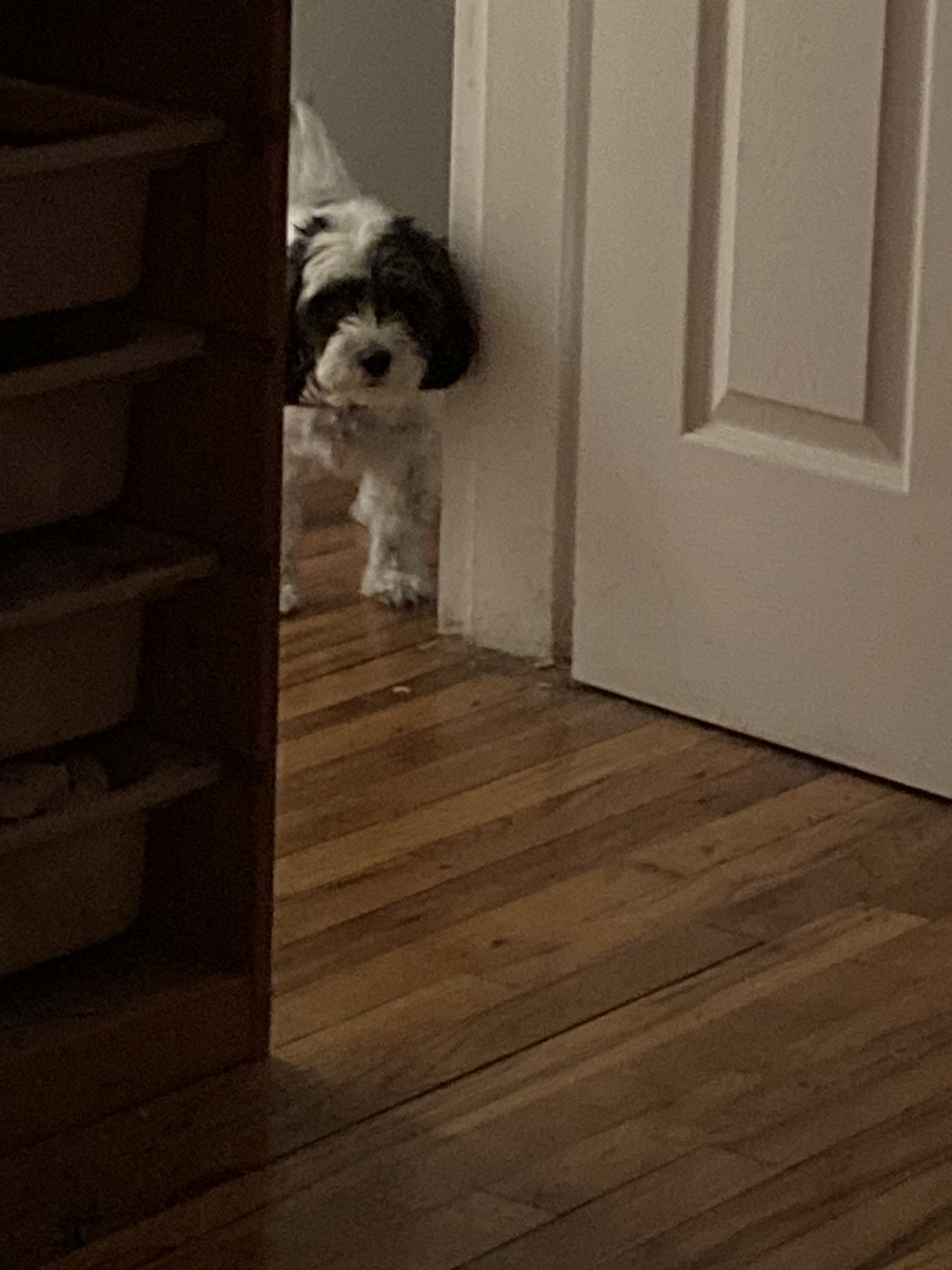
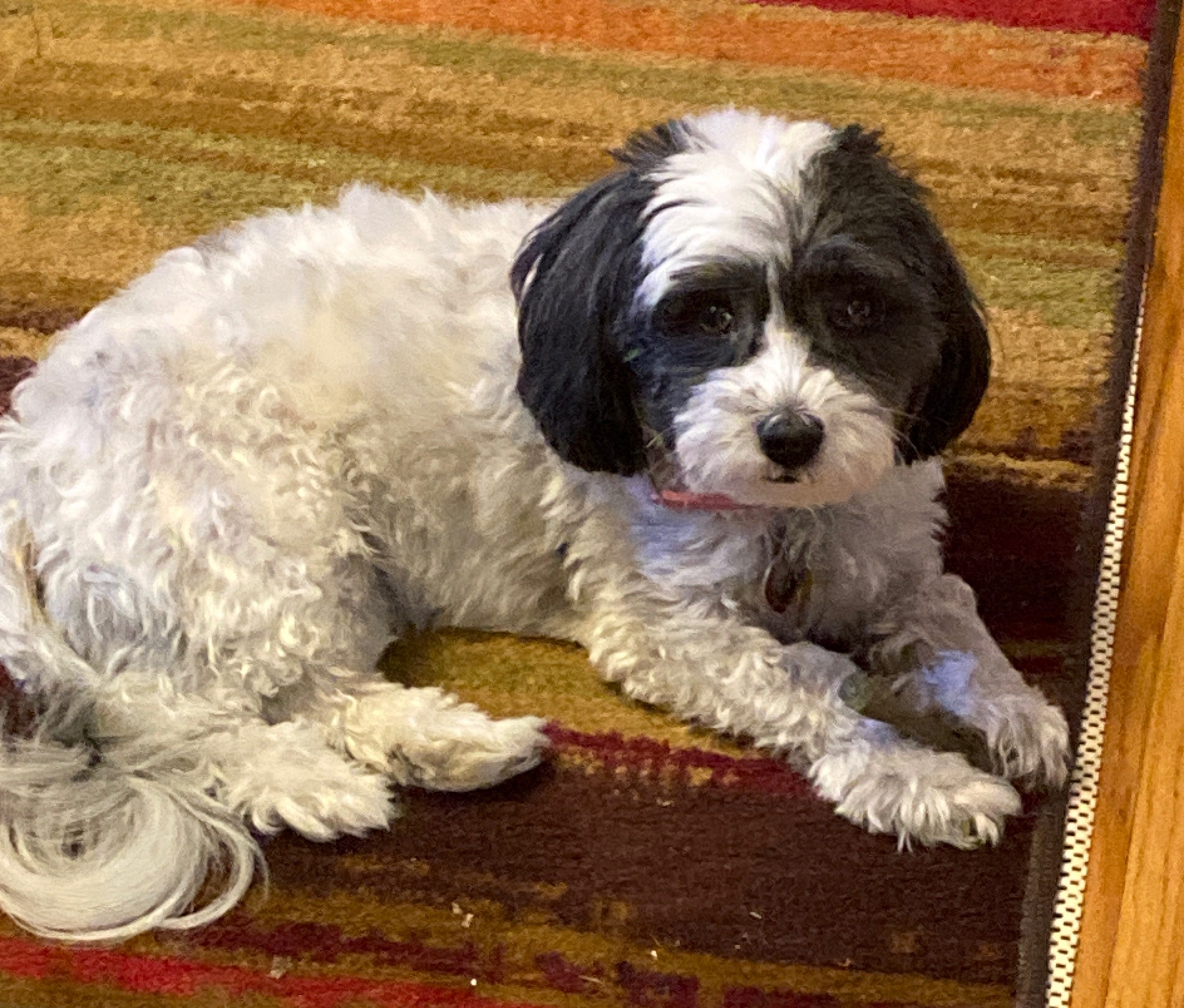
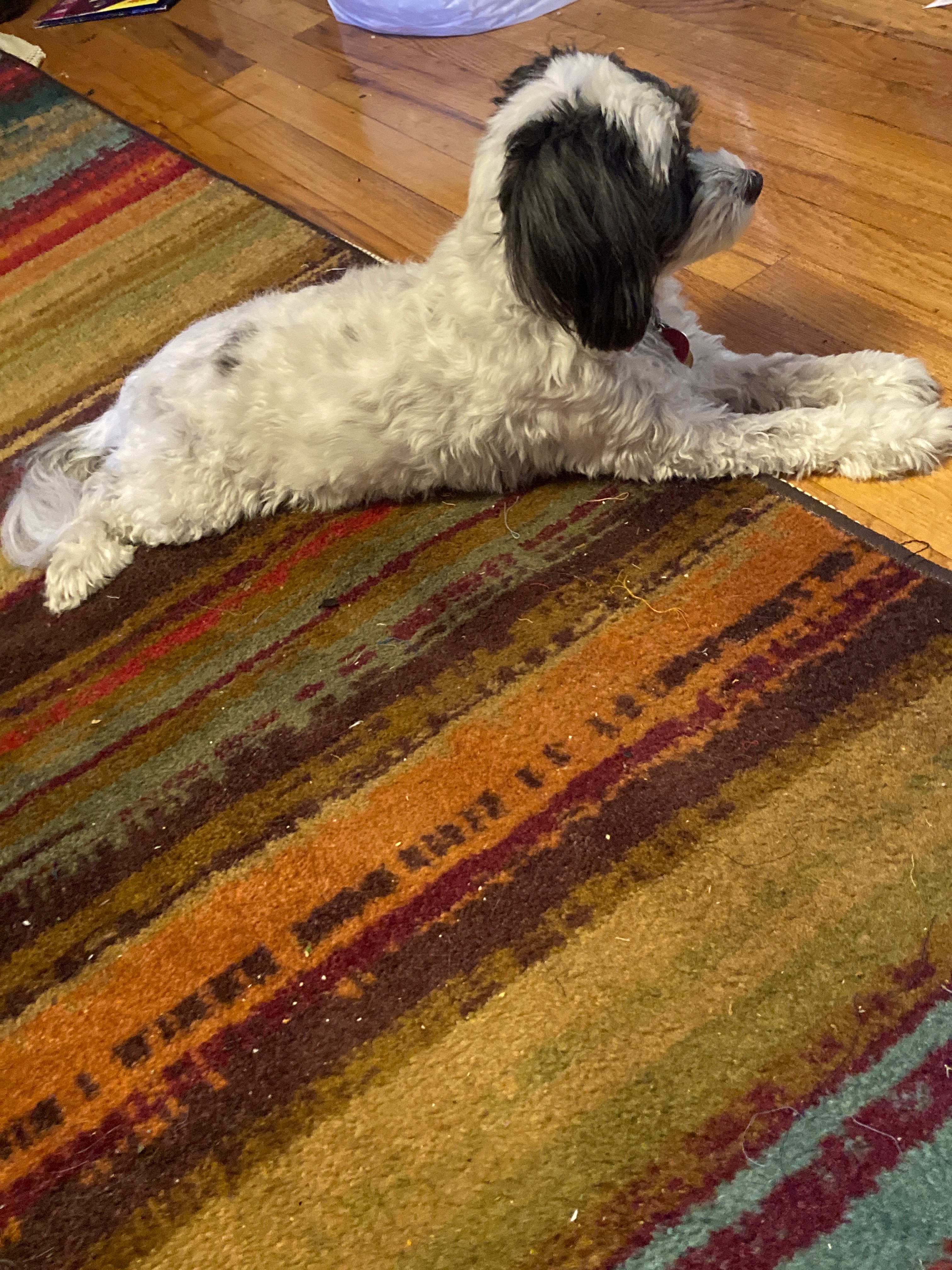
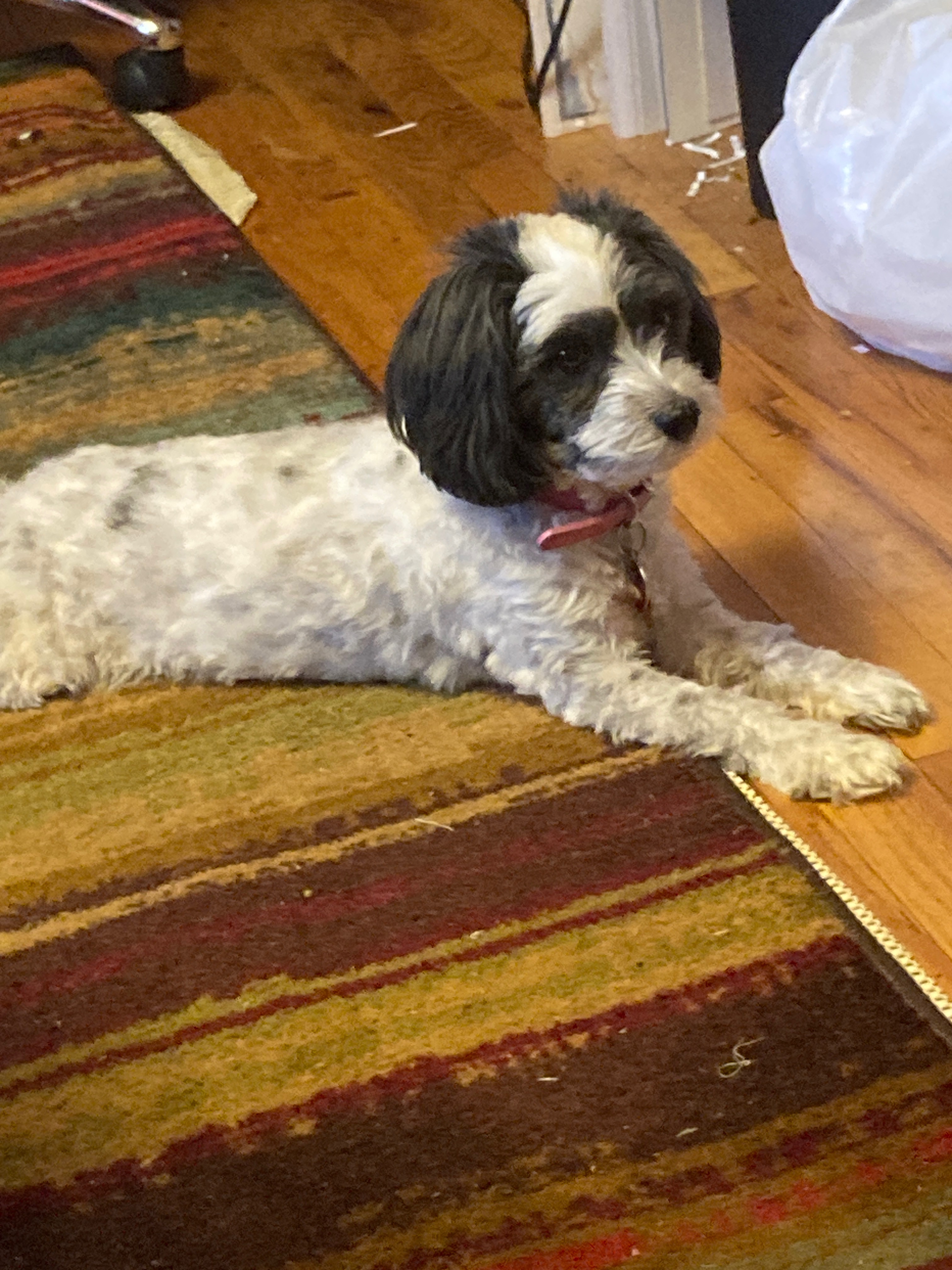
Tzipporah is waiting impatiently.
If you haven’t had a chance yet, please check out my novel, Yeshiva Girl, on Amazon. And if you feel called to write a review of the book, on Amazon, or anywhere else, I’d be honored.
Yeshiva Girl is about a Jewish teenager on Long Island, named Isabel, though her father calls her Jezebel. Her father has been accused of inappropriate sexual behavior with one of his students, which he denies, but Izzy implicitly believes it’s true. As a result of his problems, her father sends her to a co-ed Orthodox yeshiva for tenth grade, out of the blue, and Izzy and her mother can’t figure out how to prevent it. At Yeshiva, though, Izzy finds that religious people are much more complicated than she had expected. Some, like her father, may use religion as a place to hide, but others search for and find comfort, and community, and even enlightenment. The question is, what will Izzy find?















 rachelmankowitz