My plan for the summer included writing the first draft of my mystery novel, finally, after years of thinking about it and plotting it out. Everyone I talked to said it sounded like a great idea, and of course I should pursue it, and it would be so much more fun than all of my other writing ideas, which are, let’s face it, pretty depressing. So, I wrote out my list of open questions about the plot and the characters and who was getting killed and who was doing the killing, and I printed out worksheets with one prompt per page (so it wouldn’t be too overwhelming), and I got through the first few pages and then…nothing. I also bought a few (used) copies of How-to-write-a-mystery books, and I read half of one chapter of one book and then that petered out too. Which is, I guess, my brain’s way of telling me that it’s not the right time for the mystery yet.

But I’m not sure what to work on instead. Most of the summer, and for a long time before that, to be honest, the writing that has come most naturally to me has been memoir essays, for the blog and otherwise, but does that mean I should be writing a memoir? Because I still don’t really believe that I can write a whole memoir, or get it published, and I’ve also been thinking about a bunch of other projects that have been on hold for one reason or another, and I’m asking myself how much memoir and how much fiction is the right balance for me at this moment. How much of my own pain can I tolerate? And how much fiction do I need to infuse into my life to make it bearable? I once had a non-fiction teacher who said that all writing is 80% true and 20% fiction, whether you choose to call it a novel or a memoir, which sounded both jaded and possibly true to me at the time, but then a lot of memoir writers got caught outright lying, so… Honestly, I’ve always believed that full-length memoirs only work when people are writing about suffering and struggles and vulnerability that they have already overcome, and therefore I should write fiction until my life works out, and then I can write a memoir if I really want to. I’ve also never been much of a memoir reader, even when literary memoirs were at the top of the best seller lists, and they say that you should write the book you want to read, which is why I thought I should write a mystery in the first place. So, I’m confused.
My therapist used to tell me that my problem was stubbornness. She believed that I was choosing not to write the kinds of things that would get published, and choosing not to do all of the other things that normal people do – because of my ideals. And I would love to be able to take credit for that, but it’s bullshit. I spent a lot of time trying to figure out academic writing, until I finally had to accept that a PhD thesis would probably kill me. And I took classes in poetry and TV writing and playwriting and fiction and non-fiction and on and on and I tried to figure out what was getting published and how to write it, I just wasn’t successful. So, sitting there in therapy and being told that I was being stubborn, and a perfectionist, when I knew that’s not what was going on, left me feeling like I couldn’t be trusted to know myself, or know anything. If no one believes you are who you say you are, are you still you?
I love writing the blog. I love writing essays, period. I always have. In college, I used to write essays for my teachers, not for credit, just to try out my ideas and process what I was learning in class. But when I sent my essays out to literary magazines, and my short stories and poems and novels, they were rejected over and over again. And I figured, first of all, if I’m going to be rejected, I’d rather it be for something that isn’t 100% me, thank you very much. And second, I can’t really fix who I am to make myself more palatable and marketable, but I can make things up, so better to stick with fiction. Except, I don’t know what to fix in fiction anymore either. I really don’t know what makes one story/novel/memoir/artist successful and another an also-ran.
I’ve been watching the auditions from The Voice Israel on Youtube and most of the people who don’t get a chair to turn, sound (to me) just as talented as most of the people who do. It has so much to do with what each judge can relate to, in that moment, on that day. And that sucks. If I can be just as talented and work just as hard as another writer, but because their stars align and mine don’t, they are successful and I am not – where does that leave me?
And I guess I’m thinking, maybe there is no “right” answer. Maybe there is no type of writing that will automatically be successful, and I’m not stubbornly avoiding the correct path, and I don’t need to browbeat myself into becoming a totally different kind of writer, because it wouldn’t make a difference.
Ideally, I would have a plan going forward. I would work on one project at a time, research the perfect agent/publisher/audience for it, become wildly successful, and then move on to the next one. But my brain doesn’t work that way, and trying to twist myself into shapes that don’t fit me is both really uncomfortable and clearly a waste of time. So, what does that mean? I have no idea. I guess it means that I should write what I’m up to writing, when I’m up to writing it, and ignore as many of the insistent shoulds as I possibly can, except that ignoring those voices in my head is not one of my natural talents either. Basically, I’m getting my writing done, if I’m learning about myself and the world around me and I’m doing the best I can, maybe that is enough for now.

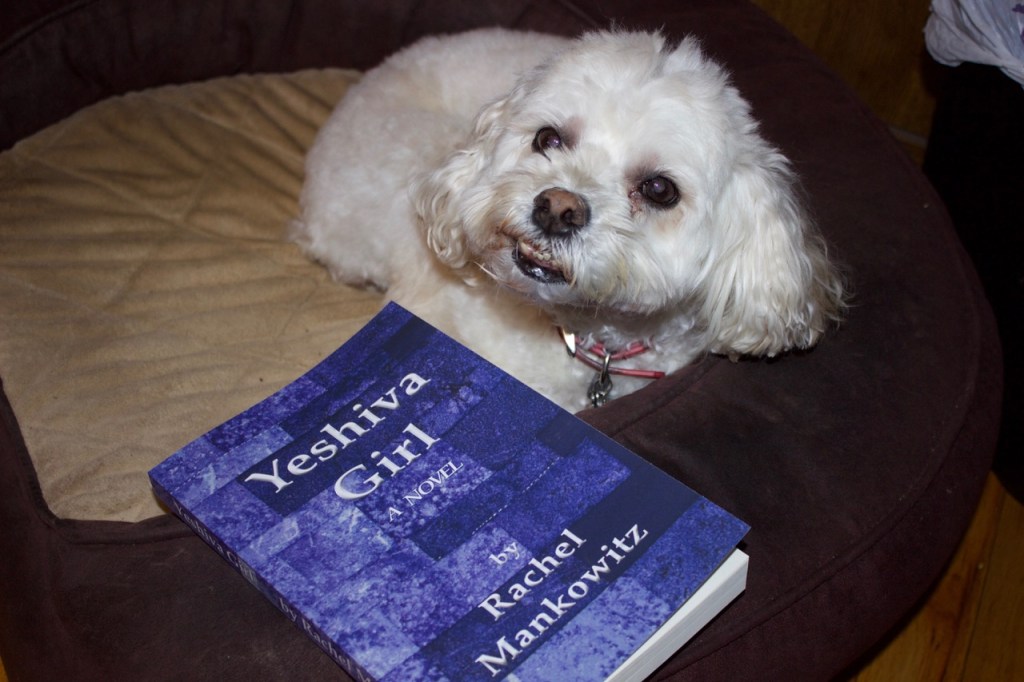
If you haven’t had a chance yet, please check out my novel, Yeshiva Girl, on Amazon. And if you feel called to write a review of the book, on Amazon, or anywhere else, I’d be honored.
Yeshiva Girl is about a Jewish teenager on Long Island, named Isabel, though her father calls her Jezebel. Her father has been accused of inappropriate sexual behavior with one of his students, which he denies, but Izzy implicitly believes it’s true. As a result of his problems, her father sends her to a co-ed Orthodox yeshiva for tenth grade, out of the blue, and Izzy and her mother can’t figure out how to prevent it. At Yeshiva, though, Izzy finds that religious people are much more complicated than she had expected. Some, like her father, may use religion as a place to hide, but others search for and find comfort, and community, and even enlightenment. The question is, what will Izzy find?