After six months of semi-regular vocal practices, using one app or another, following one voice teacher or another, using the singing straw or doing lip trills, and singing along to every possible song on my YouTube list, I noticed that I had started to hum at random times during the day. I’ve been singing along to my Spotify list in the car and waking up with random songs playing in my head forever, but it’s been a very long time since I found myself randomly humming. Even after I realized I was doing it, I didn’t realize Mom could hear me. I thought I was just listening to my own soundtrack as I went about reading emails and typing essay drafts and playing silly games on my phone. When she mentioned that, by the way, she could hear me, I got self-conscious and stopped humming for a few minutes, but that didn’t last long. There was a song playing over and over in my head and it needed to escape somehow.
I’m sure I must have hummed at other times over the years without noticing it, but the last sustained period in my life when I remember humming to myself on a daily basis was when I was in elementary school. I spent a lot of time by myself in between classes, skipping down the hall singing along to whatever tune was playing in my head (and I still had no idea why the other girls didn’t want to be friends with me. Go figure).
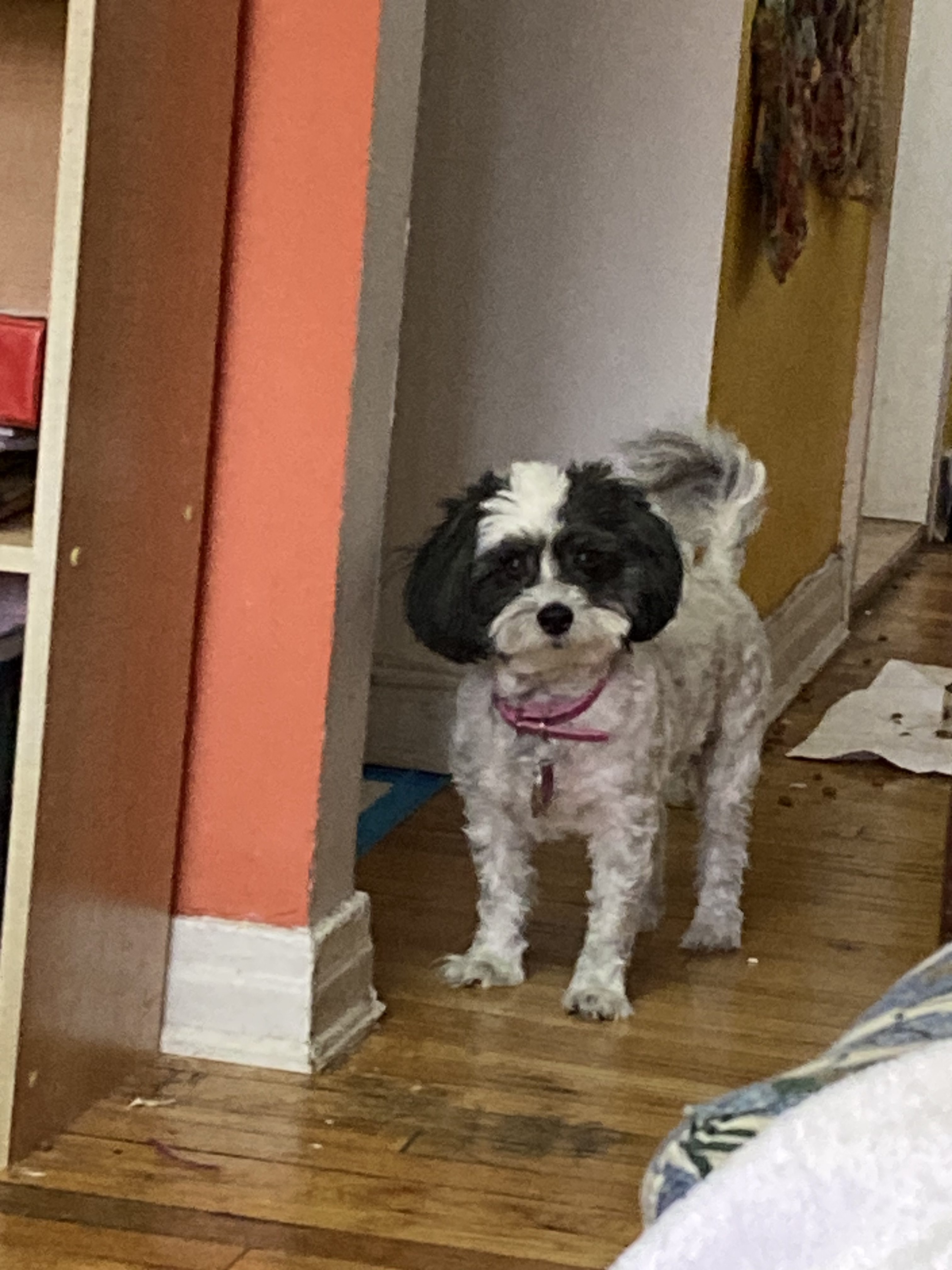
“Hmm.”
I think I stopped humming out loud when I started seventh grade at a new school, because I suddenly had the opportunity to make new friends after being on the no-go list at my old school pretty much since kindergarten. I still sang all the time (or so it says in my eighth-grade yearbook), but only on purpose. By then, I guess, I had become too self-conscious to do anything un-self-consciously. It took a few more years before I stopped singing altogether, for a thousand little reasons that added up to me believing that singing was for other, more talented, more confident, more beautiful people. I even took voice lessons for a few years, but I didn’t have the nerve to sing in public or pursue music in any serious way, and eventually I stopped writing songs, and then I stopped writing poems, and music just sort of disappeared from my life. I’ve tried to bring it back a few times over the years, by joining the choir and practicing piano and learning guitar and then ukelele, but I still felt really self-conscious and like I didn’t have the right to sing on my own. I was fine practicing my choir songs at home, just to get the notes right, but I would keep my voice low and wear headphones so I couldn’t even hear myself.
Over the past few years, though, as I’ve been listening to the professional opera singer who stands behind me in choir rehearsals, something has started to shift. There’s something magical that happens when he sings; the notes fill the room and at the same time it feels like he’s giving the rest of us the oxygen we need to breath. I’ve never had the nerve to ask him for voice lessons, but listening to him sing inspired me to look for breathing exercises last year, and then this year, it finally pushed me to look for vocal exercises to try at home. It was a big deal to give myself permission to “waste” time on singing every day, but I was finally able to start about six months ago and develop a relatively consistent practice.
And then, last week, the humming started. I don’t want to jinx it, or scare it off, but it feels like the humming represents some bedraggled, neglected part of my soul starting to come back online. It’s still tentative and I don’t know where it will lead (I’m hoping I’m not on a direct track to singing randomly in the aisles at the supermarket), but there’s something comforting about the humming. I used to sing myself to sleep when I was a kid, singing stories until every detail of my life seemed to fit into a gradually evolving melody with real shape and structure. I would love to find life becoming a song again, but I don’t want to jinx it, so I’m just going to note down what’s happening and see what comes next.
If you haven’t had a chance yet, please check out my novel, Yeshiva Girl, on Amazon. And if you feel called to write a review of the book, on Amazon, or anywhere else, I’d be honored.
Yeshiva Girl is about a Jewish teenager on Long Island, named Isabel, though her father calls her Jezebel. Her father has been accused of inappropriate sexual behavior with one of his students, which he denies, but Izzy implicitly believes it’s true. As a result of his problems, her father sends her to a co-ed Orthodox yeshiva for tenth grade, out of the blue, and Izzy and her mother can’t figure out how to prevent it. At Yeshiva, though, Izzy finds that religious people are much more complicated than she had expected. Some, like her father, may use religion as a place to hide, but others search for and find comfort, and community, and even enlightenment. The question is, what will Izzy find?
Lewis Capaldi is a Scottish singer who came up on my YouTube feed because he is One Direction-adjacent, as the best friend of one of the One Direction band members, Niall Horan. But I’d heard his songs before, and loved them, without ever having heard his name or recognized his face. If you’ve ever heard his music on the radio (Somone You Loved, Wish You the Best, Before You Go) you could be forgiven for picturing him as one of the many thin, dour, male singers from Britain who have been singing sad songs to us for a while now. He is, instead, kind of small and chubby, with unruly reddish hair and a constitutional inability to be serious in interviews. His music is full of heartbreak and his voice is soulful, but his personality is laugh out loud funny, blunt and silly. He is, maybe, the anti-Harry Styles, wearing random, ill-fitting clothes, never combing his hair, and saying pretty much whatever comes to mind. He told a story in more than one interview about the time he drunk dialed Harry, who he did not know, and possibly sent him an embarrassing video, though he has no recollection of which video he actually sent.
Anyway, I love his songs, and his interviews are endlessly entertaining, so I fell into a mini-Lewis Capaldi-shaped black hole on YouTube recently, which led me to the Glastonbury story. In 2023, Lewis Capaldi was singing at the Glastonbury festival when he was overcome with tics and exhaustion and panic and couldn’t finish his song, and in response, the audience sang the rest of the song for him. Anyone watching that video can see the love the crowd feels for him and the way they tried to hold him up and let him know that he was okay, but in interviews, later on, he said that for him the experience was humiliating and frightening. He’d been diagnosed with Tourette’s sometime before then, but he wasn’t managing his health very well and his anxiety was through the roof and it all came down on him that day on the stage at the Glastonbury festival, forcing him to take a long break from performing in the aftermath. He spent two years working hard in therapy, finally, and then in June 2025 he made a surprise return appearance at the Glastonbury Festival to sing the song he couldn’t finish two years earlier, and to debut his new single, Survive, which directly addressed his mental health issues. I’ve watched both videos multiple times, of the crowd singing for him when he could barely stand, and the crowd singing with him when he returned, and it’s inspiring to see how a group of strangers can come together and show so much love and support to one small human being in trouble.
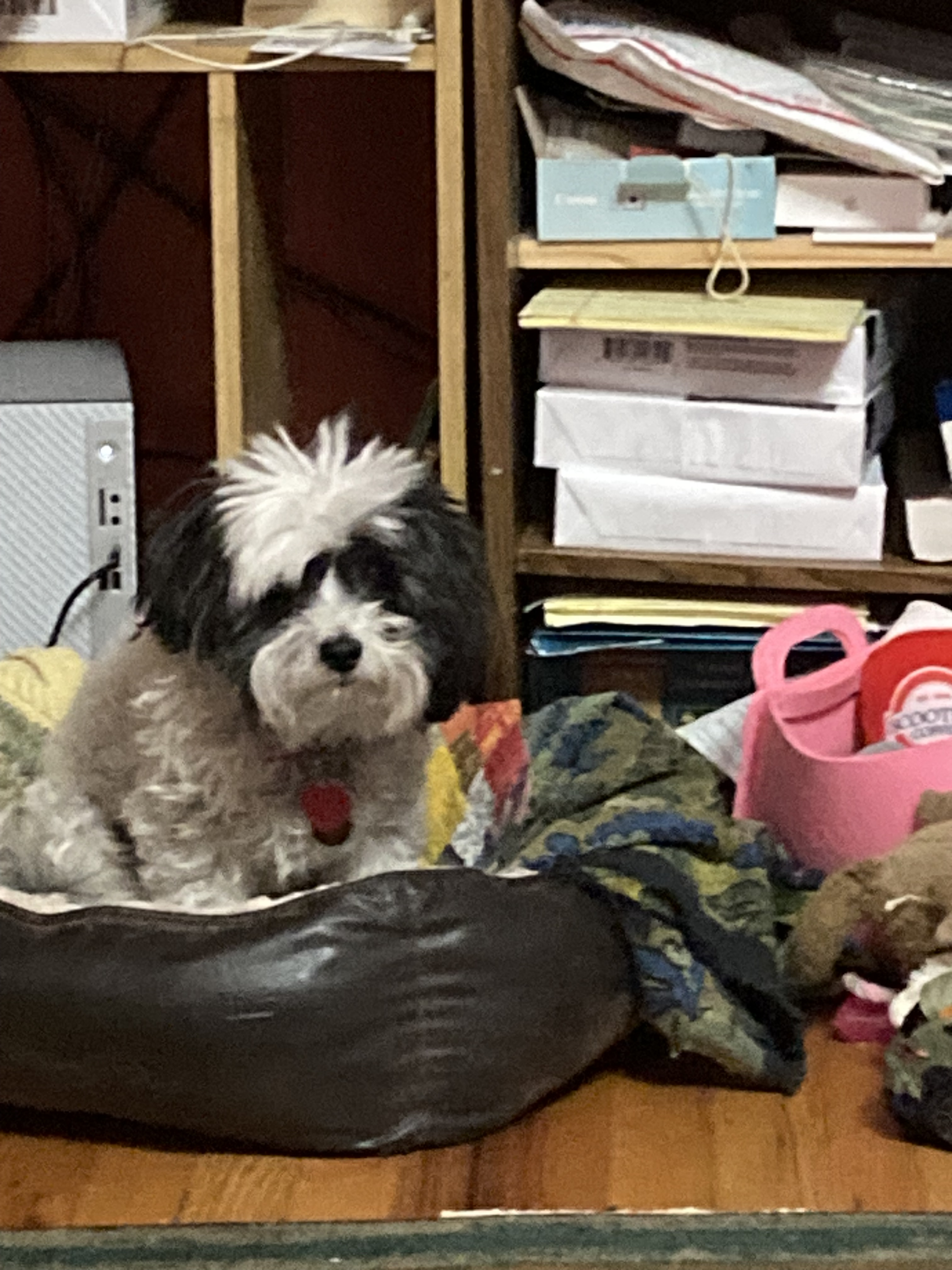
“I don’t like strangers.”
But, at the same Glastonbury Festival, in 2025, on a different stage, a British punk band called Bob Vylan led the crowd in chants of “Death to the IDF,” and it aired live on the BBC. It surprised me that so many people would even know that the Israeli army is called the IDF (Israel Defense Forces), but it truly scared me that they would chant for the death of the citizen army of the only Jewish country in the world. I don’t know what would have happened if the band had chanted “Death to America,” like they do in Iran, and now in some protests in the United States, but I think someone at the BBC, or someone in the crowd, would have been shocked enough by that to intervene. As it was, the band finished its set, filled with many other antisemitic statements and crowd chants against Jews and Israel, and it was only later that politicians spoke out and questioned why it had been allowed to air given that an Irish Hip Hop band called Kneecap, with a reputation for antisemitic and pro-Hezbollah messaging, had been pre-empted (Kneecap was later invited to perform at Coachella where they displayed large screens saying, among other things, “Fuck Israel”).
At this moment in history, for any number of reasons, it has become socially acceptable to brand people who support the existence of a Jewish state (Zionists) as evil, and to call for the deaths of Jews, again. And I don’t know what to do with these two wildly divergent images from the same music festival – one where people were moved to generosity and kindness by empathy and one where people were moved to hatred of people they don’t even know by a catchy chant.
Historically, Jews have been an easy target, because there are so few of us, and yet we seem to make an outsized impression on the world and that must mean we are doing it in nefarious ways. But after the Holocaust, there was a long period of time when the crowd seemed to agree that Antisemitism was socially unacceptable, and if criticism was going to be aimed at a particular Jew or a particular government official it would both have to be substantiated and clearly delineated from some kind of blanket statement about the evil character of Jews and Israel, but the crowd seems to have changed its mind again, or some crowds anyway.
Emotional contagion is a real phenomenon. When you are part of a large group of people and they are all doing or saying the same things, it can be really difficult to do something different. There’s the peer pressure of it, which might make you scared to express something the rest of the crowd won’t like, but there’s also a chemical reaction that seems to happen in our bodies when we are in large groups and the impact is definitely heightened by music, which is probably why so many people are willing to spend so much money going to live concerts, despite having so much music available on other platforms for free. I’ve felt it hundreds of times, where just singing along with other people has made me feel more connected to them and somehow to the universe overall. We automatically look to the people around us for how to interpret the world, whether we realize we’re doing it or not. In Kindergarten, we look at what the other kids are eating for lunch, or what they’re wearing, or how they’re responding to the teacher in order to figure out what’s considered “normal.” And even after we’ve absorbed those norms, we still look for cues in our environment to help us interpret what we are seeing and feeling. For example, if I’m walking through the mall and hear what sounds to me like machine gun fire, but no one else is reacting, I will probably try to find any other way to interpret what I heard (a video game, a truck backfiring, loud music) before I’m willing to trust my ears. The opposite is also true. Even if I don’t hear or see anything threatening, if people around me start to scream and run I will get frightened and start running long before I ever have the chance to find out what caused their fear and decide if the cause is legitimate.
This crowd effect has been active on social media for a while now, creating consensus around extreme views in part because being in a virtual space with like minded people starts to make it feel like the whole world is in agreement, but now it is moving out of the dark. Last week, there was an op-ed in the NY Times by Nicolas Kristof, where he repeated old, debunked claims from a Hamas-linked NGO that the Israeli army is training dogs to rape Palestinian prisoners. He put this claim into an opinion piece that included information from various different sources, some substantiated, many not, without distinguishing between the two. And while, ideally, everyone who read the article would recognize that this was sloppy reporting and choose to get their facts from somewhere else, this was published in the NY Times, instead of in some dark corner of the internet, and there are still a lot of people who believe that if something is printed in the NY Times it must have been thoroughly vetted and therefore it must be true.
I don’t know when we reached the point where people are willing to believe almost any evil of Israel, without substantiation or logic, but that seems to be where we are. My therapist, a Jewish woman in New York, believes that Israel is intentionally murdering women and children, and refuses to listen to any argument or context that could dissuade her. When I dared to ask her for the source of her belief, she got angry and said, “I know what I feel and you are not going to convince me of anything.” She didn’t want to hear about Hamas or Hezbollah or Iran. She didn’t want to hear that Israel is a Democratic country and not a monolith and that elections are coming up that could take Netanyahu out of office, or that Israel’s own media and government watchdogs have been calling out abuses against Palestinian prisoners and trying to hold individual soldiers accountable for inhumane behavior on the battlefield. She equated Netanyahu with Donald Trump, as if they were basically the same person and have equal power in the world, despite the fact that one is the prime minister of a tiny country in the Middle East and one is the president of what is still the most powerful country in the world. And this is a smart, educated person, who is Jewish and knows many Jews. I can’t even imagine what someone with no direct knowledge of Jews could be led to believe.
And honestly, I think this is how the Holocaust happened. Regular people in Germany were led to believe that the Jews were uniquely evil and that if they could just get rid of those evil Jews (and the homosexuals, and the crippled, and the Romany), they would be a successful nation again. It was simplistic and non-factual, but it felt true and it carried them into a war against half the world that killed and displaced millions. We like to tell stories of World War Two as if it was obvious to everyone, all along, who was good and who was evil, who was right and who was wrong, but it’s important to remember that the Germans, and even the Nazis, did not think they were the bad guys. They believed they were right. Many Germans, and many others, truly believed that the Jews were the problem and therefore the only righteous thing to do was to eliminate them.
I will leave it to other people to discuss the complexities of Israel/Palestine, because there are many other people who are better at it than I am (Haviv Rettig Gur is a current lifeline for me), but it feels like we’ve already bypassed the actual politics involved and are barreling towards an inevitable conclusion that can’t be stopped. And, really, it’s hard to ignore the signs when the crowd starts to shout for the death of my people, again. And it scares the shit out of me.
“I need another blanket, Mommy.”
If you haven’t had a chance yet, please check out my novel, Yeshiva Girl, on Amazon. And if you feel called to write a review of the book, on Amazon, or anywhere else, I’d be honored.
Yeshiva Girl is about a Jewish teenager on Long Island, named Isabel, though her father calls her Jezebel. Her father has been accused of inappropriate sexual behavior with one of his students, which he denies, but Izzy implicitly believes it’s true. As a result of his problems, her father sends her to a co-ed Orthodox yeshiva for tenth grade, out of the blue, and Izzy and her mother can’t figure out how to prevent it. At Yeshiva, though, Izzy finds that religious people are much more complicated than she had expected. Some, like her father, may use religion as a place to hide, but others search for and find comfort, and community, and even enlightenment. The question is, what will Izzy find?
I wrote about the beginning of my deep dive into the history of the boy band One Direction a few weeks ago, as part of my post on the Michael Jackson movie, but of course, when I dip a toe into the YouTube waters I quickly get swallowed up and lose all sense of time and place, and that happened to me again. There’s something about the way the app vacuums up every shred of available material, without discriminating between the official and the random, that fascinates me. I remember back when I was trying to learn how to do library research in college and there was a whole science to choosing your search terms in order to access even a sliver of the material you were looking for. But now, with YouTube and Google AI, you could type nonsense words into the search bar and the algorithm would still vomit out more than you could possibly absorb in a lifetime.
Despite knowing how addictive it is, and despite knowing that the quality of the information is wildly variable, I was still easily seduced into the black hole, in large part because it’s so exciting to find all of this music (for free!) that used to be impossible to find. When I was a kid, I had to buy records or tapes in order to listen to the music I liked, or sit by the radio and wait for the D.J. to play my song, and now I can sit at Youtube’s feet and not only find all of the music I could ever want but find it curated into convenient lists of the best rock, pop, classical, or hip hop written a on random day in July.
I can’t remember where my One Direction journey started exactly, or if there was even a single starting point that led to the Harry Styles mania that now fills my recommended videos list. Maybe it started when I was looking for vocal exercises and found a voice teacher who did reactions to music videos, or maybe it started when I was watching all of the collected Glee videos online, skipping the plots and just mainlining the music, or maybe it started in the primordial ooze and I will never be able to find the beginning of that string. Suffice it to say, I have now watched too many videos about Harry Styles and his One Direction bandmates, including his latest music video, Dance no more, and I have some thoughts.
“Uh oh. Mommy has thoughts.”
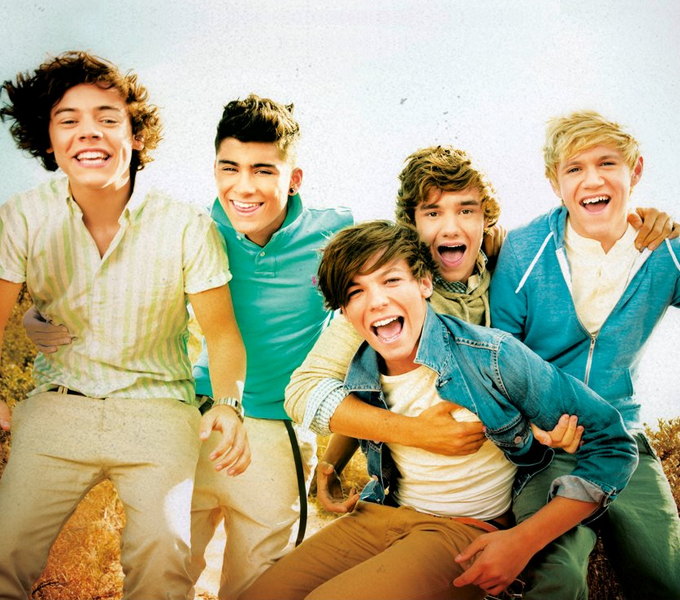
The Directioners (what the One Direction fans called themselves) made the band. They saw these five adorable teenage boys on X Factor in Britain, in 2010 or so, and they fell in love. Looking at the old videos now, I can see that there’s something incredibly endearing about a group of teenage boys climbing all over each other and making silly jokes and pouring water over each other’s heads. It reminds me a lot of the boys in my classroom. Girls might hug each other or sit on each other’s laps or whisper secrets, but boys wrestle and grab and seem like they are magnetically drawn together. And in a world where we are all so used to living in our own silos there’s a vicarious high in watching these boys come together and form a single entity. They didn’t actually know each other before they were put together by the judges on the show, but then they spent 5 years together (4 for Zayn, who left the band early), constantly touring and traveling and writing and promoting their music, and their lives, on social media.
One Direction
This all happened at a transitional moment in social media’s development, when it changed from a convenient way to keep track of old friends or argue about computer operating systems into a universe of its own, with its own rules and fads and terminology. I don’t know if Harry Styles, at 32, counts as a Millennial or Gen Z, but his fans have a very Gen Z vibe about them – social media literate, sophisticated psychological terminology used to describe even the most mundane daily experiences, wildly curious and exquisitely jaded at the same time, and, most importantly, uncertain if life or thought can be said to exist if it has not been shared to social media.
As a, maybe inevitable, result of the constant coverage of their lives, fans started to imagine love affairs between the boys, interpreting every gesture to fit their generation’s gender fluid, sex-saturated view of the world. There are videos of some incredibly sweet interactions between these young men, so I can understand why fans wanted to believe there was something more going on, especially between Harry Styles and Louis Tomlinson, who fans re-named Larry Stylinson, believing they were a secret couple kept apart by the evil record execs. Except, the boys’ love lives outside of the band were well-documented. Harry was famously attached to Taylor Swift for a minute and then to Kendell Jenner, and Louis often talked about his hometown girlfriend in interviews. It took me too long to realize that the fans had created this fantasy out of whole cloth, and by then I was shipping Larry Stylinson too, and the grief I felt at realizing that they weren’t really in love was palpable. It’s hard to know how much of an active role the boys played in creating these storylines for their fans, or if it came from the record company, or just from fan obsessions, but when Harry started to dress more flamboyantly many people took it as more evidence that he was secretly gay, despite the fact that being a gay pop star in the 2010’s was no longer the kind of secret someone would need to hide.
Harry Styles
Interestingly, Harry Styles, of all the One Direction boys, seems to have made the most use of these internecine fan theories and obsessions to build his brand. He often seems to be winking at the fans, in his videos, in his interviews, and especially at his tour performances, which end up looking and feeling like a huge party with thousands of old friends coming together to share their own private jokes. I don’t know if Harry Styles feels like he has some control over the fan fiction, or if he just has an internal deflection shield that allows him to take in the love and ignore the dark underbelly of it, but he seems to be okay. Whereas Liam Payne, the fifth band member, who started out on X Factor as a painfully earnest fourteen year old, two years earlier than the other boys, and returned at sixteen just in time to be swept up in the One Direction phenomenon, seemed to have no deflection shield at all. He took in all of the good and all of the bad until he couldn’t tell the difference and couldn’t survive it.
As far as I can tell., the other three living members of the band also have huge and devoted fan bases, but nothing like the sexually-charged, obsessively analyzing love that follows Harry Styles. Part of it is probably because Harry had a reputation as a flirt from the beginning, which may have been earned or may have been manufactured, or both, and part of it is that he has just been making really good music as a solo artist and always seems to be working to become a better musician/dancer/actor/performer, evolving through his own different eras much like his erstwhile ex Taylor Swift.
I missed most of the One Direction/Taylor Swift/Justin Bieber-mania when it was actually happening, partly because I put off getting a smart phone much longer than other people, sticking to my flip phone for dear life until it was impossible to survive without a direct internet connection in your pocket. But I seem to be making up for lost time now, and there’s something compelling about how thoroughly YouTube’s endless supply of videos seems more real to me than anything happening in my daily life. Both the process of being swallowed up by social media, and the attempt to figure out what the hell just happened to me, seems like an important phenomenon to try and understand, since it’s going to be one of the dominant mental health problems for the next generation. Instead of reading articles or books on different subjects, most of the information we now consume comes through social media, where it is wrapped up in how we feel about the influencers who are giving us the stories, and those social media figures can seem to be closer to us than our closest friends, so we end up seeing everything through those relationship-lenses instead of from a comfortable distance. I can see how all of this stuff discombobulates me, so I can’t imagine how Gen Z and Gen Alpha feel about it, never having lived outside of social media’s grasp. I’m scared for them, but I’m also really impressed by their creativity and technological sophistication and confidence.
Which takes me back to the latest Harry Styles video. Back when they were in One Direction, the boys specifically avoided the dance routines that were ubiquitous in boy bands, in large part because they were not good dancers, but over time Harry has embraced more and more dance in his shows, and now in his music videos, which I love. Except, in Dance No More there’s an edge I can’t quite place, beyond his performance of gay-coded moves (despite the constant thrum of gossip about Harry’s engagement to Zoe Kravitz), where it feels like he’s saying both I love you and I hate you to his fans at the same time. And even though I’m not the target audience, I still feel the pinch. I’ve noticed that Harry has a tendency to play with opposites a lot – I hate you/I love you, I’m gay/I’m straight, I’ll tell you everything/It’s none of your business – and then he refuses to clarify any of the resulting confusion, saying, basically, it’s all open to interpretation, which may seem generous at first but ends up feeling manipulative. For example, When Harry hosted Saturday Night Live he addressed accusations of queerbaiting by kissing one of the male cast members, and then turning to the camera to say, now that’s queerbaiting.
I feel much calmer when I’m watching interviews of Louis Tomlinson or Niall Horan, because they are both very straight forward and seem to have less porous boundaries between their public and private lives than Harry, though they are clearly just as addicted to the kind of validation and connection and, really, love, that they receive from their fans. But the bottom line is the music, and the music is really good, from all of them. My favorite from Harry Styles is a song that seems to be about his older sister, called “Sweet Creature,” and my favorite from One Direction is probably “The Story of My Life,” but there are so many songs worth listening to.
If you haven’t had a chance yet, please check out my novel, Yeshiva Girl, on Amazon. And if you feel called to write a review of the book, on Amazon, or anywhere else, I’d be honored.
Yeshiva Girl is about a Jewish teenager on Long Island, named Isabel, though her father calls her Jezebel. Her father has been accused of inappropriate sexual behavior with one of his students, which he denies, but Izzy implicitly believes it’s true. As a result of his problems, her father sends her to a co-ed Orthodox yeshiva for tenth grade, out of the blue, and Izzy and her mother can’t figure out how to prevent it. At Yeshiva, though, Izzy finds that religious people are much more complicated than she had expected. Some, like her father, may use religion as a place to hide, but others search for and find comfort, and community, and even enlightenment. The question is, what will Izzy find?
Tzippy was making so much progress! We’d gotten to the point where she was able to walk up and down the two steps in front of our building, and even to follow me down the walkway to the parking lot, reluctantly. But her favorite thing, by far, was the return trip home. Each week, when we came back from therapy, she’d wait impatiently in my arms as I carried her up the steps from the parking lot to the walkway, and as soon as she was able to put her paws on solid ground she started to pull me towards home, smiling and looking back at me every once in a while as if to ask what was taking me so long. I was feeling so good about her progress that I’d even started my next experiment, expanding the trail of chicken treats in my room all the way to Butterfly’s old doggy steps, to try to convince her that stairs aren’t so scary.
“Almost home!”
But the process was interrupted when Tzipporah got sick for a few days and needed three separate baths to get clean and had to avoid all treats until her stomach settled down. For a while there I was too busy scrubbing every square inch of carpet to focus on anything like training. As a result of all of those baths, Tzipporah developed a strong antipathy to being in the same room with me for the next few days, and then continued to watch me carefully for any sign that I was about to dognap her back to the bathroom sink. Part of the problem was that she was at full fluff, just days away from her grooming appointment, so there was a lot of hair to clean, and part of the problem was that she already hated bathtime before any of this happened. I had to wash her bed and blankets a few times too, because she kept racing back to her safe place to hide from the hated baths.
“Oy vey.”
Once her stomach had settled down, though, and she could stand to be in the same room with me again, we took her out for a walk, past the parking lot, around the corner, and up the street to the Seven Eleven. Tzippy was not at all sure about this new adventure and needed a lot of reassurance to keep going up the hill, stopping to check on Grandma every few seconds and then standing and shivering to let me know that I was asking way too much of her. But, again, as soon as we turned back towards home, she ran ahead gleefully leading the family along the right path. She was even willing to walk on the grass in the backyard in order to visit Grandma’s vegetable garden at the far end of the yard.
We celebrated these great accomplishments by sitting on Grandma’s bench for a rest and almost as soon as we sat down, Kevin the mini-goldendoodle came running out for a visit. We hadn’t seen him and his parents in forever, so we all caught up while Tzipporah sat on my lap and Kevin sat politely in front of my legs, catching up on all of the petting he had missed.
When it was time to go back into our building, I tried, valiantly, to encourage her to walk up the stairs to our apartment, but Tzipporah seems to think the stairway looks like Kilimanjaro and refuses to even lift a paw towards the lowest step (you would not believe the crazy eyes and flying paws that greet me when I attempt to lead her forward). But she has conquered so many other challenges this year that I’m hoping those stairs will eventually look less like a mountain and more like a manageable molehill. Though it will probably be a long time before she can see a bottle of doggy shampoo and a bath towel without flinching. Me too, baby girl. Me too.
Tzippy, fresh from the groomer.
If you haven’t had a chance yet, please check out my novel, Yeshiva Girl, on Amazon. And if you feel called to write a review of the book, on Amazon, or anywhere else, I’d be honored.
Yeshiva Girl is about a Jewish teenager on Long Island, named Isabel, though her father calls her Jezebel. Her father has been accused of inappropriate sexual behavior with one of his students, which he denies, but Izzy implicitly believes it’s true. As a result of his problems, her father sends her to a co-ed Orthodox yeshiva for tenth grade, out of the blue, and Izzy and her mother can’t figure out how to prevent it. At Yeshiva, though, Izzy finds that religious people are much more complicated than she had expected. Some, like her father, may use religion as a place to hide, but others search for and find comfort, and community, and even enlightenment. The question is, what will Izzy find?
Coming to the end of another school year means it’s time to reassess and plan for next year, but I’m not ready. My thoughts keep swirling and I can’t slow them down enough to make any decisions. I have yet another oral surgery coming up at the end of May (hopefully the last one, but I’m not holding my breath), and I’m exhausted from all of the effort that has gone into trying to get healthier when the only thing that improves, somewhat, are my numbers, rather than how I actually feel.
I have lost most of the weight I need to lose, overall, but there’s still too much fat at my belly, which is specifically dangerous cardiac-health-wise, so I have to keep going, but each time the doctor has raised the dose of Zepbound, my depression has gotten worse and I’ve had to ask the psychiatrist to raise the dose of my antidepressants in response. The GLP-1 drugs are relatively new, so it’s not surprising that some side effects were underreported, but depression seems like a big one to have overlooked. I was warned about the gut issues, but not the dizziness on standing and not the depression, but it feels like I have to keep going anyway.
I’ve been trying my best to look for other ways to raise my serotonin naturally, like singing more each day, or exercising more, but I’ve been so exhausted that even getting the laundry done feels like an insurmountable task. Whenever I get an idea, even a small spark, I write it down, somewhere, in the hopes that the small sparks will add up to something meaningful, someday. I’d love to spend more time singing with other people, and going to classes, and writing more, and spending more time with friends, but I don’t know how to get there. For now.
“Let’s just sit here and enjoy the beautiful weather, Mommy.”
If you haven’t had a chance yet, please check out my novel, Yeshiva Girl, on Amazon. And if you feel called to write a review of the book, on Amazon, or anywhere else, I’d be honored.
Yeshiva Girl is about a Jewish teenager on Long Island, named Isabel, though her father calls her Jezebel. Her father has been accused of inappropriate sexual behavior with one of his students, which he denies, but Izzy implicitly believes it’s true. As a result of his problems, her father sends her to a co-ed Orthodox yeshiva for tenth grade, out of the blue, and Izzy and her mother can’t figure out how to prevent it. At Yeshiva, though, Izzy finds that religious people are much more complicated than she had expected. Some, like her father, may use religion as a place to hide, but others search for and find comfort, and community, and even enlightenment. The question is, what will Izzy find?








 rachelmankowitz