Tag Archives: writing

Reassessing

            I’ve been reading through piles and piles of notebooks, and files and files on the computer, to see which of my writing projects still spark my interest; and unfortunately, they all do. I can sort of prioritize one, or two (or five) above the rest, but it’s like trying to choose my favorite dog and having to ignore all of the others. How can you look away from that sweet, lonely, hungry little dog?! What kind of monster are you?!

            There are novel ideas in the notebooks, and novel drafts on the computer, and drafts of long essays and short essays, and children’s stories, and short stories, and mysteries, and even a science fiction story or two. And along with all of the writing projects, I also have lesson plans to write, and a ton of therapy work I still need to do in order to become the kind of functional adult who doesn’t need to crawl under the bed and hide (which hurts my back, honestly).

            This is what happens when I try to open the creaky, dusty, long-closed doors in my brain. I know I have to do this every once in a while, if only to make sure I’m not leaving something important behind, but it’s overwhelming. And, of course, there are endless internal arguments over which ideas have the best chance of getting published, and which ones will be an exhausting waste of time, and why do I have to be a writer at all when I really should be doing something more useful with my life, or at least more practical. But I’ve been a writer since I first learned how to hold one of those fat red pencils in nursery school, and if I stopped writing it would feel like I’d stopped breathing. And, really, even if it looks like I’m standing still, I am frantically kicking my feet under the surface, like a duck; and yet I judge myself only by what other people can see.

            At some point, hopefully soon, I will finish this reassessment period and be able to choose a few manageable goals to work towards and put the rest aside. And then maybe I can put off the next reassessment for a while, or at least make sure I’m better medicated by then.

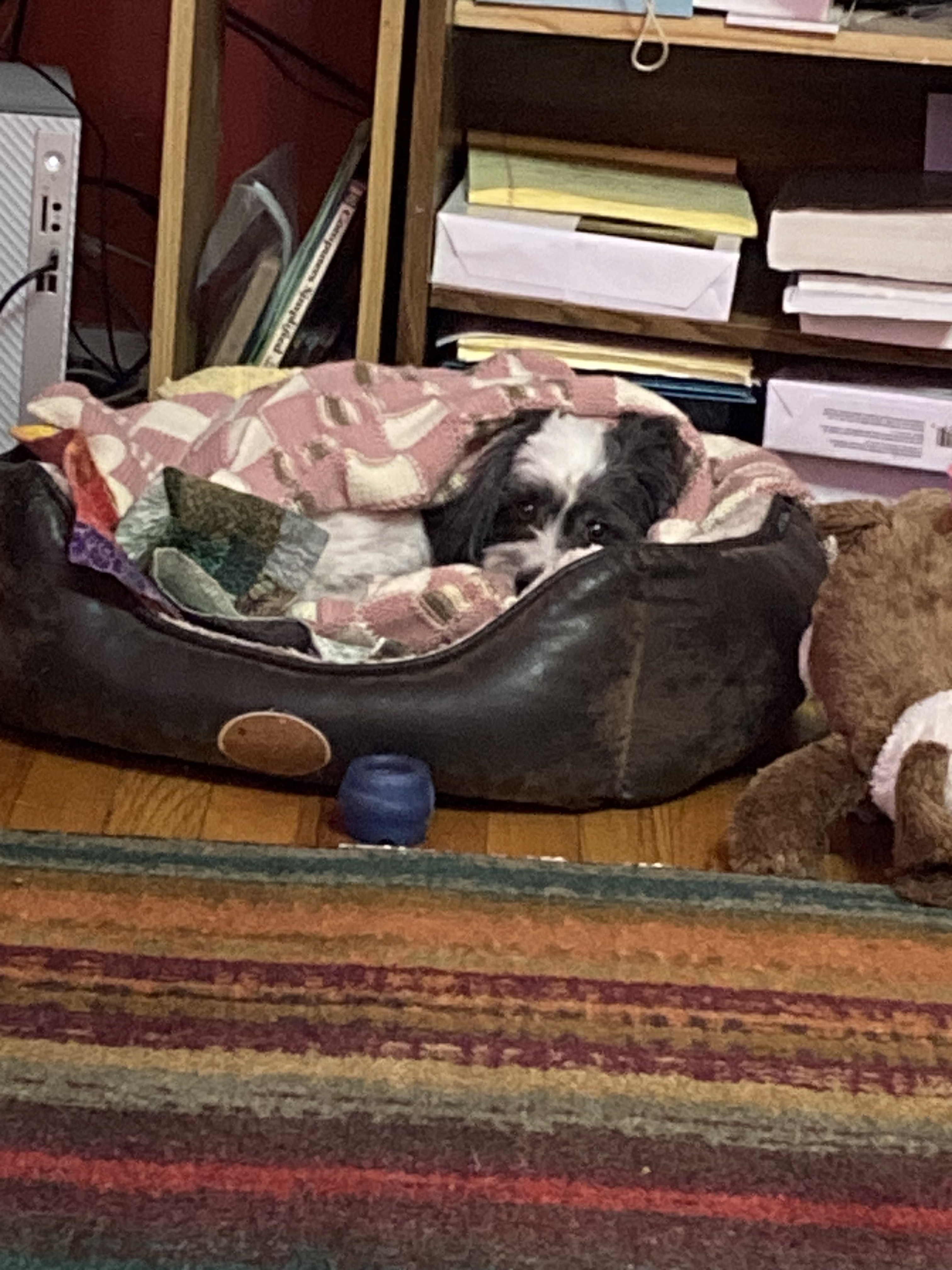
“Chicken fixes everything.”

If you haven’t had a chance yet, please check out my novel, Yeshiva Girl, on Amazon. And if you feel called to write a review of the book, on Amazon, or anywhere else, I’d be honored.

            Yeshiva Girl is about a Jewish teenager on Long Island, named Isabel, though her father calls her Jezebel. Her father has been accused of inappropriate sexual behavior with one of his students, which he denies, but Izzy implicitly believes it’s true. As a result of his problems, her father sends her to a co-ed Orthodox yeshiva for tenth grade, out of the blue, and Izzy and her mother can’t figure out how to prevent it. At Yeshiva, though, Izzy finds that religious people are much more complicated than she had expected. Some, like her father, may use religion as a place to hide, but others search for and find comfort, and community, and even enlightenment. The question is, what will Izzy find?           

Both/And

            I’ve been watching videos in Hebrew for a while now, to practice my listening skills and to get a wider sense of Israeli culture, and one of the richest sources for short (2-15 minute) videos is Kan Digital, the online section of the public broadcasting channel in Israel. I have no idea how many of these videos actually end up on TV in Israel, but there are tons of them available on YouTube; along with a really great interview series by Orit Navon that delves into serious subjects (mental illness, living with disability, bullying, grief, having one Jewish and one Muslim parent), there are also videos by a variety of reporters/performers from different segments of Israeli society (religious and secular, Ethiopian and Russian, Israeli Arab, Jewish, Muslim, Christian, etc.), on a wide range of subjects, from serious, fact-based pieces on how Israeli elections work, to slice of life videos about working from home during Covid, to a dance video on how to choose a watermelon.

Orit Navon

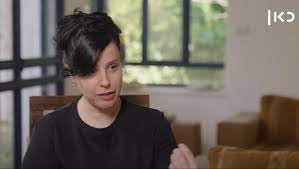
Recently, I saw a video from one of the usually less serious performers/reporters (he did the watermelon video), where he’s sitting in what looks like a real therapy session, or a very close facsimile thereof, and both the reporter (Ehud Azriel Meir) and the therapist seem to be from the Religious Zionist community (roughly equivalent to Modern Orthodox in America – which you can tell from their crocheted kippot and casual clothes, as opposed to the more formal clothing and black hats worn by Haredim/ultra-orthodox). I’d seen a lot of videos from Ehud before; he did a whole series where he was supposedly sent to work with the Arabic language division at Kan to create educational videos about Jewish holidays and rituals, and each video in the series poked fun at all of the assumptions Jews and Muslims and Christians in Israel make about each other. It was silly and light, but also allowed for a pretty deep exploration of social conflicts Israelis grapple with on a daily basis. In general, Ehud’s videos are like this, characterized by humor and a willingness to show his own flaws and mistakes, but the video with the therapist had a much more serious tone than I was used to from him.

Ehud Azriel Meir

The therapy session starts with Ehud’s feelings of guilt at wanting to vote for someone other than the Religious Zionist candidate in the coming election. He believes that if he votes for “the other” candidate, he’s not only letting his own side down, he’s letting the other side win (though in Israel’s multi-party system there are always more than two options). This led to a discussion of the moment he started to feel some alienation from his own political party, which is also his religious community, way back in the 1990’s, when Prime Minister Yitzhak Rabin was assassinated. Before the assassination, Ehud, as a teenager, took part in a lot of the demonstrations against Rabin’s push for the Oslo Accords. He and his fellow Religious Zionists believed strongly that the accords would lead to more terrorism rather than to peace, and they were loud and vehement in their opinions, calling Rabin a traitor and a murderer. And then, Yigal Amir, also a Religious Zionist, shot and killed Rabin at a peace rally.

            For Ehud, Rabin’s murder was a moment of awakening. It truly devastated him that this man, who was like a father to him and to the country as a whole, had been killed by someone on “his side.” He had never considered the possibility that people were taking those screamed epithets literally, but when he and his friends tried to go to the vigils to mourn Rabin with the rest of Israel, they were turned away. And, still today, he resented that the secular Israelis blamed him for Rabin’s death, and he felt like it would be disloyal to his own group, and to himself, to vote with them on anything, even when he agreed with their policies.

The therapist pushed Ehud to acknowledge that his strong feelings around all of this might mean that he did feel somewhat responsible for Rabin’s murder, and that maybe he was uncomfortable in both the Religious and the secular worlds because he was still trying to avoid facing those feelings of guilt. Ehud bristled at that idea, but the therapist persisted, suggesting that in order for him to be at peace with having one foot in each camp, he needed to wrestle with the ways he himself believed that his actions long ago may have done harm, and to acknowledge that no matter how much he treasured his identity as a Religious Zionist, that wasn’t all of who he was.

            There was something really powerful for me in watching this usually very un-serious guy, now grumbling and uncomfortable, being willing to share his discomfort and uncertainty with the public, in case it might do some good. And his internal conflict resonated with me too, even more so because he used the words Gam ve Gam (Both/And) to describe his feeling of being both a Religious Zionist, and something else as well.

Whenever I start a new semester of online Hebrew classes, I’m asked if I prefer my name to be pronounced the English way or the Hebrew way, and I always say Gam ve Gam, both because I grew up going to Jewish day schools where half the day I was one and half the day I was the other, but also because the feeling of having different parts of me that fit in with different groups is a big part of my everyday life. It can be really hard to live in the Both/And. I’m never sure if I should stand with one foot in each camp, or hop from one side to the other, or stand in the middle all by myself. More often than not, I feel like I have to hide parts of myself, or act in ways that feel wrong to me in order to fit in.

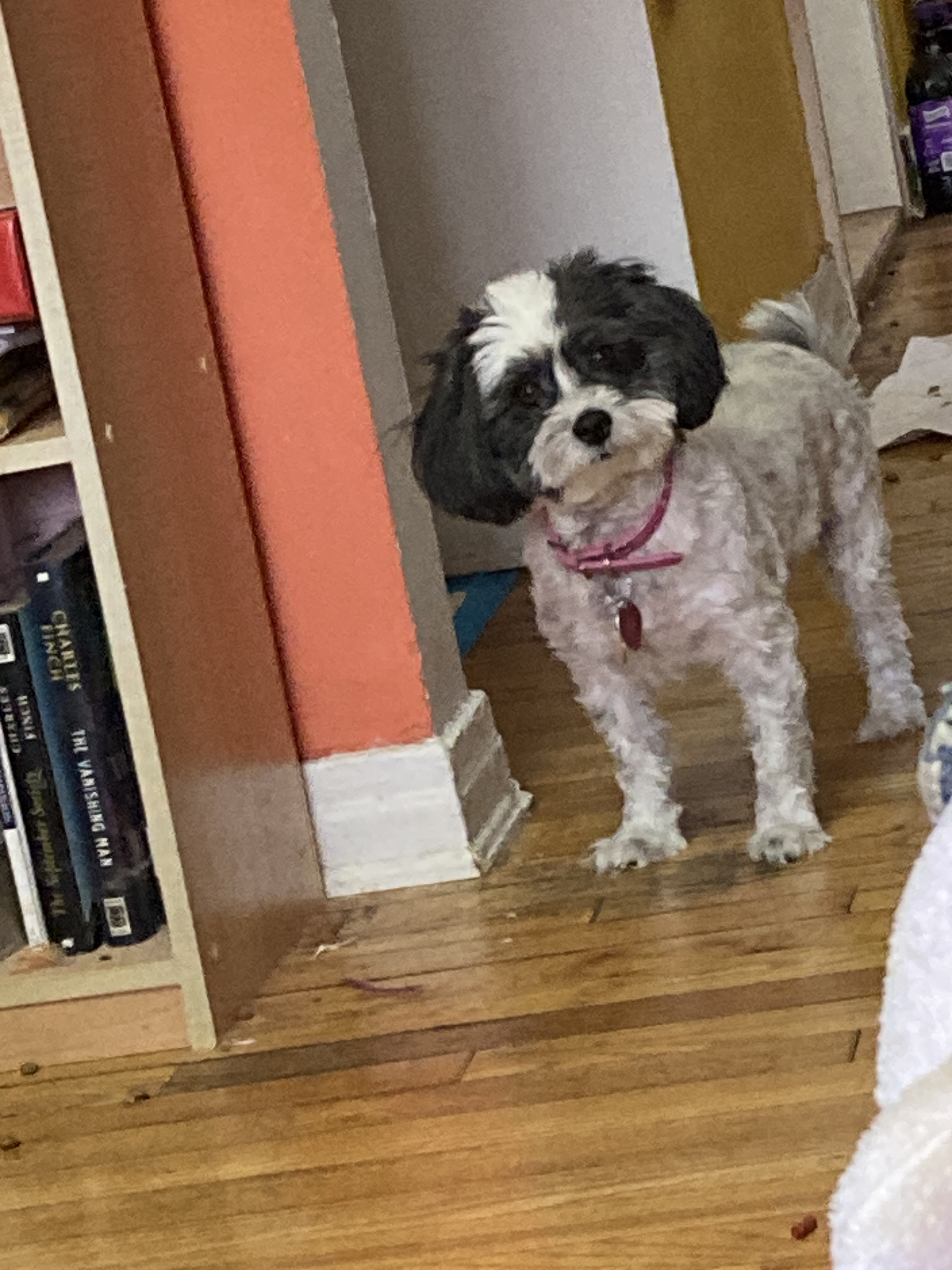
“I like both chicken treats AND Greenies.”

            Watching this video reminded me of the traditional Ashamnu prayer that we say during the Jewish high holidays each year, where we pound our chests and admit to all of the possible sins that may have been done by a member of our community. That level of exaggerated responsibility has always bothered me, because I work so hard to make sure I do no harm, and it doesn’t seem fair that I should have to take responsibility for Joe Schmo over there who couldn’t care less who he hurts. It’s not even clear which community the prayer is referring to: does it include all Jews? All Jews on Long Island? All human beings on earth?

But now I wonder if the prayer is trying to get at the collective guilt we tend to feel when someone from our own political party, or tribe, or family, does something wrong. Even if we are not directly responsible for an evil act, we may have played a role in creating the conditions for that evil act to take place; or maybe our strongly held beliefs led us to encourage someone in the direction that led them astray; or maybe we were silent when we knew we should speak up, because we were afraid of being kicked out of the group; or maybe we felt responsible simply because outsiders told us that we were responsible, because they see our group as a single entity rather than a collection of individuals.

Once a year, this prayer gives us the opportunity to acknowledge those complex feelings of communal guilt, and reminds us that we need to recognize the impact we can have on the people around us, whether we intend that impact or not. And maybe most of all, the prayer reminds us that even when we disagree with our fellow community members, and speak up against them, we are still part of that community and that community is still a part of us.

I had a Creative Non-fiction teacher back in graduate school who told us that in order to write a good essay (for her class, at least), we needed to write about two seemingly unrelated subjects at once. For example, if you’re writing about pizza, you could also write about existential philosophy; or if you are writing about fashion, you could also look back at a memory from a childhood dance class, or a nature walk, or a chess game. Because, she said, the most interesting material comes from the way those two unrelated topics brush up against each other and create something new. And I think that’s true of more than just a good essay. When I live my life in both A and B (and often in C and D and E as well), the friction that comes from those mashups creates a lot of sparks, and what would our lives be like without all of those sparks to help light the way forward?

“You said pizza. I didn’t hear anything after that.”

If you haven’t had a chance yet, please check out my novel, Yeshiva Girl, on Amazon. And if you feel called to write a review of the book, on Amazon, or anywhere else, I’d be honored.

            Yeshiva Girl is about a Jewish teenager on Long Island, named Isabel, though her father calls her Jezebel. Her father has been accused of inappropriate sexual behavior with one of his students, which he denies, but Izzy implicitly believes it’s true. As a result of his problems, her father sends her to a co-ed Orthodox yeshiva for tenth grade, out of the blue, and Izzy and her mother can’t figure out how to prevent it. At Yeshiva, though, Izzy finds that religious people are much more complicated than she had expected. Some, like her father, may use religion as a place to hide, but others search for and find comfort, and community, and even enlightenment. The question is, what will Izzy find?

Sending Out the New Novel

“What are you doing now, Miss Mommy?”

            So, I finished writing a novel. It’s called Hebrew Lessons, and it’s a love story between an American Jew and an Israeli Jew, including all of the cultural divides that have to be overcome, or can’t be overcome. I’m really happy with the story, and my Beta readers gave it a thumbs up, but now that means I have to go on the agent search again, and I’m dragging my feet. The publishing world has not been an especially welcoming place for me, and I’m dreading the rejection, and the critiques, and the roller coaster of hope and disappointment that I went through last time, with Yeshiva Girl.

            But before I can even get to all of that, I have to sit down and write a query letter, and a plot summary, and research potential agents, and my brain is not letting me go there. I’ve come so close to acceptance by the literary world, but never close enough, and there’s no guarantee that this time will be any different. Part of me wants to just self-publish the novel and maybe get a few nice responses and leave it at that. Another part wishes I could hand the book off to someone else – to query agents and write a synopsis and copy edit, etc. – and move on to writing the next novel. But I’ve worked hard on this novel, and I want to give it the best chance to be read, and loved, if at all possible.

            I wish I had the self-confidence to send my work out as consistently as other people seem to be able to do, but it takes me a long time to recover between bouts, and each small step feels like hiking a mountain range. Even the tiny steps I’ve already taken to research the changes in the marketplace have been overwhelming; there has been an explosion of critiquing sites, and self-publishing companies, and writing and publishing blogs with wildly contradictory advice that have appeared since the last time I investigated all of this, and it feels impossible to figure out what’s legitimate and what’s a scam, what’s necessary and what’s irrelevant.

I don’t understand how other authors make their way through all of this chaos, but then again, the publishing world has never really made sense to me. I’ve never been able to understand the rules of the business of writing: the very specific categories each book needs to fit into, or why one author gets lauded and another can’t even get published. Despite years of effort, the mysteries of the publishing world are still mysteries to me, and yet, I can’t stop being a writer and I can’t stop wanting people to read my work. Believe me, I’ve tried. So, I guess I’m diving back into the deep, dark, possibly shark-infested waters.

Wish me luck!

“Did you say sharks?!”

If you haven’t had a chance yet, please check out my novel, Yeshiva Girl, on Amazon. And if you feel called to write a review of the book, on Amazon, or anywhere else, I’d be honored.

            Yeshiva Girl is about a Jewish teenager on Long Island, named Isabel, though her father calls her Jezebel. Her father has been accused of inappropriate sexual behavior with one of his students, which he denies, but Izzy implicitly believes it’s true. As a result of his problems, her father sends her to a co-ed Orthodox yeshiva for tenth grade, out of the blue, and Izzy and her mother can’t figure out how to prevent it. At Yeshiva, though, Izzy finds that religious people are much more complicated than she had expected. Some, like her father, may use religion as a place to hide, but others search for and find comfort, and community, and even enlightenment. The question is, what will Izzy find?           
God as a Metaphor

            A few years ago, Rabbi Toba Spitzer came out with a book called God is Here: Reimagining the Divine, which delves into the metaphors we use to help us discover God. I haven’t finished reading the book, so don’t tell me how it ends, but what has stood out for me so far is how we rely on metaphor to give us a sense of who, what, and how God might be, just like we use metaphors to help us understand emotions and ideas that we can’t describe in any other way. These metaphors are often treated as literal descriptions by many religious people, as if we are watching a play about the world and God is playing all of the roles. And, to be honest, I don’t believe I can know God with any certainty, or that God is literally an anthropomorphic being. But there are metaphors for God that reach me on a deep level, and that seem to help me tap into the “God energy” within myself and/or in the world around me.

            The Toba Spitzer book has been sitting on my shelf for a while, filled with sticky notes and other place markers, because it is too rich to read all at once, but it came back to mind recently while I was listening to Ishay Ribo, a religious Israeli singer who has become very popular among religious and secular Israelis, and Jews around the world, for singing popular music that is full of metaphors for God, with lyrics that are often pulled directly from traditional Jewish prayers. It is surprising, and also not surprising, that his music has crossed over into the secular world, among people who would say that they are agnostic at best, and would scoff at the idea of an anthropomorphic God who actually intercedes in our lives. And yet, the music has meaning and power for them too. Why?

             I’ve always heard these metaphors for God in Jewish prayer: God as nature – wind, rain, tides, sun, moon, trees. God as warrior. God as provider. God as lover and beloved. God as teacher. God as judge, magistrate, accountant, social worker. God as rock, redeemer, savior. God as breath, spirit, life itself.

            But what I realized as I listened to these metaphors as they are used in Ishay Ribo’s songs, is that the metaphor is really about the nature of our relationship with God, rather than a way of describing God him/her/itself. If God is a Shepherd, then we are the wayward flock. If God is a king, then we are the dependent subjects. If God is a mother, we are her children in need of comfort and nurturance and protection. If God is the teacher, we are the students, looking for knowledge and wisdom. If God is the doctor, we are the patients in need of healing. The metaphor for God that we find most meaningful in any instance will depend on how we see ourselves in that moment, and what we are longing for that we can’t find elsewhere.

            I decided to do a deep dive into some of the songs, or at least use Google Translate to see what I’ve been singing along to all this time, and I found a lot of familiar metaphors for God. In one of Ishay Ribo’s songs, Tocho Retzuf Ahava (He is filled with love), he says of God: “He never turns a blind eye from the sheep of his pasture,” meaning, we are the wayward sheep longing to have someone keep us safe from harm, and especially from our own mistakes, like a shepherd would do with his flock. In another lyric, he sings, “Even when we’re broken vessels, we are still his precious vessels,” which really resonates for me. Whether we are thinking about God or not, the deep need to feel loved and cherished, especially when we feel broken, is something we all share. And then there’s the magic of God, or the alchemy ascribed to God’s power: “In the future [God] will give glory in exchange for ashes, the oil of joy will replace our grief, a shroud of glory will replace a heavy spirit.” Who doesn’t want to believe that God, or fate, or someone, will eventually step in and make things better. You don’t have to believe in God in order to long for that spark of hope when you’re feeling hopeless.

            In his song, LaShuv HaBaita (To Return Home), Ishay Ribo sings: “The time has come to wake up, to leave everything, to overcome, to return home,” and though I know, intellectually, that he is referring to a return to God and Jewish practice, the metaphor of returning home has power for me anyway. And the idea that, “Even if we’ve done something wrong, he forgives and pardons,” feels like a prayer for how the world, or our loved ones, will respond to us. And, “He reaches out a hand to help, and gives, with mercy, the power to correct and fix ourselves and return to him.” I don’t have to believe in an all-powerful God to be comforted by the image of someone who will help me help myself. And I don’t have to see that help as coming from God. I can replace God with friends, teachers, parents, and mentors, in my mind, and be just as comforted.

            I watched an interview with Ishay Ribo on YouTube recently, in Hebrew and without subtitles so I may have misunderstood, but the message I took from it was that he knows his music is reaching more than just believers in God and or orthodox Jews in particular, and that that’s intentional. The words he sings are meaningful to him because he’s using the language that comes most naturally to him, but he is expressing universal experiences of doubt, pain, anger, hope, longing, and joy. And if you want to call all of that God, fine, and if not, that’s fine too. To be fair, Ishay Ribo probably wouldn’t say it that way, exactly, but I think he would agree that it’s the connection between human beings that holds so much power in his songs, and in his singing.

If the energy that connects us is God, or just our own energies radiating outward, what does it matter, as long as we are, eventually, connected? These metaphors have lasted millennia and have held power for the people who have used them, because they help us to describe parts of our internal landscape that are otherwise left in shadow. The metaphors allow us to see and feel and talk about states of longing and pain and hope that otherwise are left unspoken, and that is why they are so healing.

It’s true that, at times, when I sing along to these songs, or take part in Jewish prayer services, I will notice a line about God as father or God as Shepherd and roll my eyes a little bit at the idea that God would literally be any or all of these things. But most of the time, I just close my eyes and feel deeply heard, and comforted, and seen. And I’m not alone.

Ishay Ribo and the Solomon Brothers, LaShuv HaBaita in English and Hebrew: https://youtu.be/WZ6HvzFh7js?si=F6AIRcWu1XOf3smL

Some of Ishay Ribo’s songs in Hebrew:

HaLev Sheli: https://youtu.be/6U_5KhaH6IM?si=Hl_wcxj0TVhKrMCR

LaShuv HaBaita: https://youtu.be/Y30pfWIQfoo?si=Ly0Wz1qWrltC5dzY

Tocho Retzuf Ahava: https://youtu.be/fQRgX3ivUKU?si=YcFnd-2El0GIzqpj

If you haven’t had a chance yet, please check out my novel, Yeshiva Girl, on Amazon. And if you feel called to write a review of the book, on Amazon, or anywhere else, I’d be honored.

            Yeshiva Girl is about a Jewish teenager on Long Island, named Isabel, though her father calls her Jezebel. Her father has been accused of inappropriate sexual behavior with one of his students, which he denies, but Izzy implicitly believes it’s true. As a result of his problems, her father sends her to a co-ed Orthodox yeshiva for tenth grade, out of the blue, and Izzy and her mother can’t figure out how to prevent it. At Yeshiva, though, Izzy finds that religious people are much more complicated than she had expected. Some, like her father, may use religion as a place to hide, but others search for and find comfort, and community, and even enlightenment. The question is, what will Izzy find?

What is there to be thankful for this year?

            For some reason, Thanksgiving has never been my holiday. Maybe it’s because of that one extreme rabbi at my high school who called this secular American holiday a Shanda (a shame/a scandal), and yelled at us to avoid eating even one turkey sandwich; or maybe it’s because I can’t resonate with a holiday that’s all about gratitude when I’m used to Jewish holidays, where we grump at least as much as we celebrate; but most of all, it’s probably because the Thanksgiving-themed TV shows and movies I watched when I was growing up were all about the torture of family get-togethers, as opposed to the Christmas movies, which were full of romance and joy and candy and toys.

            As for the events of the day itself: I’m not a parade person, or a football person, or a dog show person; and I’m really, really not a turkey person.

            I saw a meme on Facebook recently that suggested we stop eating turkey for Thanksgiving and switch over to brisket, and while I’m sure it was created either by a Save-the-Turkeys group or by the Cattlemen-of-America, I wasn’t upset by the idea. Trying to cook even a small turkey for just me and Mom would mean eating turkey sandwiches for the next month, and even though I’ve been told that there are ways to cook a turkey to make it taste better, I’m pretty sure that’s just fantasy fiction.

            Of course, Thanksgiving’s big claim to fame, other than turkey and a now-controversial origin story, is that it’s a day for expressing gratitude (it may only be a coincidence that Thanksgiving comes a few weeks after election day each year, when people are still stewing over those results). And for me, Thanksgiving is a time when I feel compelled to remind people that there is such a thing as toxic positivity, and that forcing gratitude out of grumpy people is just cruel. But, of course, I am also extremely vulnerable to peer pressure, so I end up searching through my life for the things I can be grateful for every year anyway. So, this year:

            I’m glad that I was able to start writing poems again, and that I actually finished two drafts of my new novel (the third draft is taking its time); and I’m thrilled that I returned to online Hebrew classes this past summer with renewed joy and inspiration; and I’m grateful that I’m still able to teach, and that I have wonderful students again this year; and I’m grateful for my thoughtful friends and loving family.

But, of course, all of that hopeful, positive energy inevitably stirs up memories of all of the things I’m not grateful for: I keep getting older, and so does Mom; doctors still have no idea what’s wrong with me, but the copays keep coming in larger and larger doses; Israel is still at war and there are still 101 hostages being kept in Gaza (alive or dead, no one seems to know); and then there’s the fact that a majority of voters in the United States chose a predatory criminal as our president, despite mountains of evidence of his crimes, against our country, and against women in particular.

            So, yeah, it’s a mixed bag. My hope is that I will be able to survive the next month of teaching, by relying on Christmas movies and French murder mysteries to keep me going, and then I will be able to rest and recover over winter break. My plan, then, is to watch as little news as possible, and write as much as possible, and start the new year with my feet solidly on the ground and my heart filled with (some) hope.

            We’ll see how it goes.

p.s. Someone arrived the day after Thanksgiving and is waiting to be introduced to everyone. Next week.

If you haven’t had a chance yet, please check out my novel, Yeshiva Girl, on Amazon. And if you feel called to write a review of the book, on Amazon, or anywhere else, I’d be honored.

            Yeshiva Girl is about a Jewish teenager on Long Island, named Isabel, though her father calls her Jezebel. Her father has been accused of inappropriate sexual behavior with one of his students, which he denies, but Izzy implicitly believes it’s true. As a result of his problems, her father sends her to a co-ed Orthodox yeshiva for tenth grade, out of the blue, and Izzy and her mother can’t figure out how to prevent it. At Yeshiva, though, Izzy finds that religious people are much more complicated than she had expected. Some, like her father, may use religion as a place to hide, but others search for and find comfort, and community, and even enlightenment. The question is, what will Izzy find?

The Basement

In the basement

In the green house

There were all kinds of tools.

My father collected them.

He taught Industrial Arts to teenagers,

And he loved to build things,

And fix things,

And take things apart,

With his own hands.

Sometimes,

We would go down to the basement to visit our father

On the steep staircase,

Stairs that always creaked.

It seemed like the stairs were warning of something.

The smell in the basement was, in large part, sawdust.

There was sawdust in every corner, and in the air.

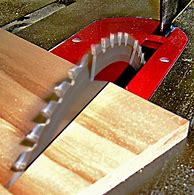
The table saw was in the middle of the room,

And the jigsaw,

And all of the handsaws in a line hanging from the ceiling.

The floor of the basement was made of concrete

And the walls were painted grey

And it all looked like a bomb shelter.

There were metal exit doors parallel to the floor

At the end of a set of additional steps

And I always thought that these doors were there to let us out

After the dust settled, after the end of the world.

There was a darkroom in the basement, to develop photos,

In black and white and color.

I didn’t like the red light in the darkroom,

Even more so the darkness itself.

And there was a corner of the basement for making bullets

With gun powder and casings.

My father had more than one gun.

Everywhere, my father had Philips head screwdrivers and

Flat head screwdrivers and wrenches and drills in every size.

He had a wood lathe and a metal lathe

And hammers and nails and an anvil screwed to the floor.

There was also a ceramics kiln and a jewelry kiln.

There were clay molds

And a printing press that had to be used carefully,

One letter at a time.

There were all kinds of things in my father’s basement,

Loud noises

And smells that burned the inside of my nose,

Smells like turpentine and sawdust and metal,

And maybe blood, or maybe that was just in my imagination.

not my pictures, but very familiar

בָּמָרתֵף

בָּבַּיִת הָיָרוֹק

הָיוּ כֹּל מִינֵי כְּלֵי עָבוֹדָה.

אָבָּא שֶׁלִי אָסָף אוֹתָם.

הוּא לִימֵד אָמַנוּיוֹת תָעָשִׂייתִיוֹת לְבּנֵי נוֹעָר,

וְהוּא אָהָב לִבנוֹת דְבָרִים,

וְלְתָקֵן דְבָרִים,

וְלְפָרֵק דְבָרִים,

עִם הָיָדַיִים שֶׁלוֹ.

לִפְעָמִים

יָרָדנוּ לָמָרתֵף לְבָקֵר אֶת אָבָּא

בְּמָדרֵגוֹת הָתלוּלוֹת,

מָדרֵגוֹת שְׁכֹּל פָּעַם חָרקוּ.

נִרְאָה שְׁהָמָדרֵגוֹת הִזהִירוּ מִמָשְׁהוּ.

הָרֵיחַ בָּמָרתֵף הָיָה, בְּגָדוֹל, נָסוֹרֶת.

הָייתָה נְסוֹרֶת בְּכֹּל פִּינָה, וְבָּאָוִויר.

הָמָסוֹר שׁוּלחָן הָיָה בְּאֶמצַע הָחֶדֶר,

וְהָמָסוֹר פָּאזֶל,

וְכֹּל מסוֹרֵי הָיָדנַיִים בְּשׁוּרָה וְתָלוּי מְהָתִקרָה.

הָרִצפָּה שֶׁל הָמָרתֵף הָייתָה עָשׂוּיָה מִמֶלֶט

וְהָקִירוֹת נִצבְּעוּ בְּאָפוֹר,

וְהָכֹּל נִראָה כּמוֹ מִקלָט.

הָיוּ דלָתוֹת יְצִיאָה מִמָתֶכֶת מָקבִילִם לָרִצפָּה

בְּסוֹף סֶט מָדרֵגוֹת נוֹסָף

וְכֹּל הָזמָן חָשָׁבתִי שְׁהָדלָתוֹת הָאֵלֶה הָיוּ שָׁם לְשָׁחרֵר אוֹתָנוּ

אַחָרֵי שְׁהָאַבָק שָׁקָע, אָחַרֵי סוֹף הָעוֹלָם.

הָיָה חֶדֶר חוֹשֶׁך בָּמָרתֵף, לִפִיתוֹחַ תְמוּנוֹת,

בְּשָׁחוֹר לָבָן וְגָם בְּצֶבָע.

לֹא אָהָבתִי אֶת הָאוֹר הָאָדוֹם בָּחָדָר הָחוֹשֶׁך,

עוֹד לֹא אֶת הָחוֹשֶׁך עָצמוֹ.

וְהָייתָה פִּינָה בָּמָרתֵף לְהָכָנָת כָדוּרִים

עִם אָבָקָת רוֹבָה וְתָרמִילִים.

הָיוּ לְאָבָּא יוֹתֵר מְאֶקדַח אֶחָד.

בּכֹל מָקוֹם, הָיוּ לְאָבָּא מִבגָרִים בְּרֹאשׁ פִילִפּס וְבְּרֹאשׁ שָׁטוּחַ

וְמִפתַחֵי בָּרגִים וְמָקדָחִים בְּכֹּל מִידָה.

הָיָה לוֹ מְחַרטֵת עֵץ וְמְחַרטֵת מַתֶכֶת,

וְפְּטִישִׁים וְמָסמָרִים וְסָדָן מוּברָג לָרִצפָּה.

גָם הָיָה כָּבשָׁן קָרָמִיקָה וְכָּבשָׁן תָכשִׁיטִים.

הָיוּ לוֹ תָבנִיוֹת חִמֵר

וְבֵית דְפוּס שְׁצרִיכִים לְהִשׁתָמֵשׁ בָּה בְּזְהִירוּת,

אוֹת אַחַת בְּכֹּל פָּעָם.

הָיוּ כֹּל מִינֵי דבָרִים בָּמָרתֵף שֶׁל אָבָּא,

רָעָשִׁים חָזָקִים

וְרֵיחוֹת שְׁצָרבּוּ אֶת הָחֵלֶק הָפְּנִימִי שֶׁל הָאָף שֶׁלִי,

רֵיחוֹת כְּמוֹ טֶרפַּנטִין וְנְסוֹרֶת וְמָתֶכֶת,

וְאוּלַי דָם, אוֹ אוּלַי זֶה הָיָה רַק בָּדִמיוֹן שֶׁלִי.

If you haven’t had a chance yet, please check out my novel, Yeshiva Girl, on Amazon. And if you feel called to write a review of the book, on Amazon, or anywhere else, I’d be honored.

            Yeshiva Girl is about a Jewish teenager on Long Island, named Isabel, though her father calls her Jezebel. Her father has been accused of inappropriate sexual behavior with one of his students, which he denies, but Izzy implicitly believes it’s true. As a result of his problems, her father sends her to a co-ed Orthodox yeshiva for tenth grade, out of the blue, and Izzy and her mother can’t figure out how to prevent it. At Yeshiva, though, Izzy finds that religious people are much more complicated than she had expected. Some, like her father, may use religion as a place to hide, but others search for and find comfort, and community, and even enlightenment. The question is, what will Izzy find?
The End of Summer

I’m not ready for the summer to end. I still have writing to do, and doctors’ appointments to go to, and lesson plans to revise. I still want to go to every online Hebrew practice group I possibly can, and see if more poems arrive (I have no idea what makes them bubble up, though there may be storks involved). I tried to get so much done this summer: rebuilding my exercise practice, working on nutrition, changing medications, taking continuing education social work classes, working on therapy, and writing, and Hebrew, and social skills, and on and on. But it’s not enough. I still don’t have a dog. The novel still isn’t finished. My health is still whatever it is. There are still tons of movies I want to see, and issues I wish I could resolve. I’m not ready to go back to work, and choir practice, and trying to find time for my writing in the spaces in between.

This is not my picture, but this is how I picture the poetry stork.

            I’m pretty sure I feel this way at the end of every summer, wishing for another month of “vacation” in order to get more of my work done, before the new school year can make me feel like I’m being tied to the back of a speeding train.

            I know I will enjoy getting back to the kids, and singing with the choir, but I also know that I will miss this feeling of open time, where I can do things at my own pace and give myself enough time to recover from one panic attack before embarking on the next one.

            Here’s hoping that all of the work I’ve done this summer will have shifted something inside of me, creating more space for my summer self to exist during the school year. Because I really want to feel more like myself all year, and not just for a few months at a time.

            Fingers crossed.

“Um, I don’t think I have fingers.”

If you haven’t had a chance yet, please check out my Young Adult novel, Yeshiva Girl, on Amazon. And if you feel called to write a review of the book, on Amazon, or anywhere else, I’d be honored.

            Yeshiva Girl is about a Jewish teenager on Long Island, named Isabel, though her father calls her Jezebel. Her father has been accused of inappropriate sexual behavior with one of his students, which he denies, but Izzy implicitly believes it’s true. As a result of his problems, her father sends her to a co-ed Orthodox yeshiva for tenth grade, out of the blue, and Izzy and her mother can’t figure out how to prevent it. At Yeshiva, though, Izzy finds that religious people are much more complicated than she had expected. Some, like her father, may use religion as a place to hide, but others search for and find comfort, and community, and even enlightenment. The question is, what will Izzy find?

Stuffing My Critics in a Jar

            This past winter and spring, I was busy writing something new. I had wanted to work on revisions for the second Yeshiva Girl novel, which has been in the works for way too long, or add to the draft of the synagogue mystery that I’ve also been mulling over for years, but instead a new story burbled up. By May, I had a 220 page first draft of a novel, tentatively titled Hebrew Lessons, about a young woman who takes online Hebrew classes (like me) and falls in love with her Israeli teacher (that part is fiction. Sorry). It was fun to write and also gave me a chance to think about the relationship between Jews in America and Jews in Israel, which has always been complicated, and has become even more so since October 7th.

            The problem is, now that I have to start re-reading the draft and planning revisions, I can’t make myself do it.

            While I was writing the first draft I was able to shut out the big, noisy critics in my head, for the most part, with a gentle “Shut the fuck up! But now that I’m ready for revisions I need to keep the door open to critiques, and the big, noisy, nasty voices in my head keep pushing their way in through the open door.

            Even looking in the direction of the manuscript, which is sitting on a pile of books next to my bed, brings up all of the nasties: How dare you write a story with an Israeli character when you’ve never been to Israel? What the hell do you know about love? No agent will touch a book with a Jewish character now, let alone an Israeli! Everything you write gets rejected so why waste your time? Your writing is too serious, silly, sentimental, simple, stupid, etc. You should be ashamed of yourself for thinking your voice even matters. You should be doing something more responsible, selfless, constructive, etc. with your time. If you actually finish the book you’ll have to write query letters and face rejection, and you’ll be embarrassed when people see your imagination written out on the page, like an x-ray of your inner self.

            At first I thought I just needed a few weeks away from the book to get some perspective, but then weeks passed and, if anything, the voices got louder, and nastier, and I couldn’t do anything to stop the flood.

            Eventually, an image came to mind from the first Superman movie (with Christopher Reeve), where the bad guys (General Zod and his two henchmen) are sentenced to jail and trapped in these flat/see-through boxes where they can be seen, but not heard, for eternity. And I thought, that would be awesome!

            Mom found me a jar (she collects them for art projects) and I labeled it “Unhelpful Critics” and started to fill it with slips of paper slathered with critical messages. But the voices kept coming, threatening to overflow the jar, and my resistance to reading the draft stayed just as strong.

            I’m sure that part of the problem is my inability to convince myself that it’s okay to ask to be treated with kindness, so when a critique is hurtful and I want to shove it in the jar, I worry that I’m being too easy on myself and ignoring a painful reality that I really should force myself to face. There’s also the issue that it’s been hard to separate out a specific, technical criticism (the pacing is too fast or slow, the details of the setting are too sparse or vague) from the big bad feelings that stick to every criticism and feel like a punch in the gut. It’s as if the nasty, destructive voices in my head attach themselves to even the mildest suggestions for improvement, and make it all into a toxic mess.

            But I really wanted the jar, or anything, to work, so I kept filling out these strips of paper, until I had to graduate to an oatmeal container, and then until I couldn’t capture them in words anymore, but they were still coming, constantly.

It took me too long to start to wonder why all of this pain was coming up around the novel, and yet I’ve been able to write weekly blog posts forever without being swamped this way. And I had to ask myself, why is writing fiction, in particular, bringing all of this up?

I have always loved fiction, writing it and reading it, for the way it can organize reality, and improve on it, and create safer containers for all of the experiences that overwhelm me in real life. But maybe, at least in this case, imagining a better version of my life, and myself, means facing all of the grief I feel that that isn’t my life, and the jealousy I feel that this imaginary young woman gets to live that life. There’s also, interestingly, a deep fear of the unknown, because in living vicariously through her, and facing difficulties and opportunities I’ve never faced, I’m overwhelmed with anxiety about how to solve these unfamiliar problems, in love and life and work. And I feel guilty that I don’t have the tools to protect her from that pain.

I think there’s another aspect to this as well. When I write my short essays I imagine my blog readers, who are so kind and curious and generous, and so much nicer to me than I am to myself, and that allows me to feel safe enough to write difficult things. But when I write longer things, like the novel, or something else that I expect to send out to literary magazines or agents or editors, I hear the cold, dismissive, and destructive voices I’ve faced so many times over the years, in graduate school and beyond, and those voices set off my inner critics and it becomes a wildfire.

Maybe, if I could find a way to think of the novel as a very long blog post, or just imagine my blogging friends as my primary readers, the nasty voices would step aside, or at least quiet down, but I don’t know how to make that switch. If I tell myself that I’m not going to send the novel out to be judged by the industry, then either I won’t believe it, or I’ll believe it and that will set off a whole other kind of grief, because I’m not ready to give up on the possibility of being a successful author, not yet.

            But the thing is, I really loved writing the first draft of this book, and I want to get back to that feeling, and I also want to finish the book so I can see if other people like it as much as I do. I feel like just writing this essay has gotten me most of the way there, but I’m not quite there yet, and I’m not sure what else to try.

“Curling up in a ball works for me. Just a suggestion.”

If you haven’t had a chance yet, please check out my Young Adult novel, Yeshiva Girl, on Amazon. And if you feel called to write a review of the book, on Amazon, or anywhere else, I’d be honored.

            Yeshiva Girl is about a Jewish teenager on Long Island, named Isabel, though her father calls her Jezebel. Her father has been accused of inappropriate sexual behavior with one of his students, which he denies, but Izzy implicitly believes it’s true. As a result of his problems, her father sends her to a co-ed Orthodox yeshiva for tenth grade, out of the blue, and Izzy and her mother can’t figure out how to prevent it. At Yeshiva, though, Izzy finds that religious people are much more complicated than she had expected. Some, like her father, may use religion as a place to hide, but others search for and find comfort, and community, and even enlightenment. The question is, what will Izzy find?

Renewal

            It was time to renew my social work license, five years after earning it, five years during which I haven’t been working in the field at all, and I felt torn. I mostly thought I should renew it, even if it cost money and took time, in case I wanted to work as a social worker again one day, but part of me wanted to burn that bridge, so I would have no choice but to focus on teaching and writing, without the option of an escape hatch.

            I received the renewal notice by email a few weeks ago, and kept looking at it, wishing it would go away. Partly, I was afraid that the process of renewing my license would be complicated or stressful, asking embarrassing questions about why I wasn’t actually working as a social worker. And I was afraid that renewing my license would cost a lot of money, or require me to reach out to former bosses, or current bosses, for documentation, or that I’d find out that I need to do a lot more expensive and time consuming trainings in order to qualify for license renewal in the first place. But I was also afraid of finally giving up on the idea of being a therapist.

The thing is, my decision not to seek a job as a social worker was not simple. It came after six months of applying for jobs and getting nowhere, even with personal contacts or recommendations. The biggest problem seemed to be that, despite being a beginning social worker, I could only work part time, or less, because of my health issues, and, at least at that time, the jobs that allowed for flexibility and limited hours were not available to beginners. But I was also not sure I was actually ready to be a social worker/therapist.

Towards the end of my time in graduate school I had been telling my teachers and bosses and advisors that I didn’t feel prepared and that what I really wanted was a third internship to help me figure out where in the field I belonged, but they all said that I shouldn’t need such a thing and it wasn’t possible anyway, so just get off your ass and get a job. And I couldn’t.

I liked the idea of myself as someone who could help people heal. And I liked the image of myself as a respectable and responsible adult who goes to an office and actually makes enough money to buy nice clothes and go on vacations. And I wanted to fight for better insurance coverage for mental health, and to argue against the ubiquitous manualized, supposedly evidence-based short term therapy that only actually helps if you have a short term problem. But the reality of social work, eh, I didn’t love it. I hated the phone calls, and the office politics, and the paperwork, and the long hours, and the clothes I had to wear, and the constant criticism from bosses and clients and client’s families, and I hated the staff meetings and the family drama and on and on.

Oy.

When I was first offered the job teaching after school synagogue school, five years ago, I accepted with relief, thinking that it would be a good first step, and allow me to accumulate experience working with children while I continued to pursue every available avenue to improve my health and eventually get to work as a therapist, and I kept taking one or two trainings each year to keep up my skills, just in case. But five years later, my health is worse, not better, and more importantly, when I think about adding more hours to my work week I tend to think about more teaching and more writing, not social work.

And then the renewal notice came, and it took me five read-throughs to realize that it wasn’t even due for another five months (when I’m anxious I tend to skim things and miss important information), but I still felt like I had to hurry up and get it done. So after a lot of handwringing, I went to the website and opened the renewal form, and one of the first things they asked if I’d like to go on “inactive” status, which would be free, and could be reversed at any time. And I thought, “Oh! I didn’t know that was an option!” It sounded perfect and I felt much better, for a second, especially about the money I would not have to spend, but then the relief went away and the nagging worries returned, because it’s hard to let go of something that once seemed like the answer to everything, even when it didn’t seem like the answer to anything anymore.

            And yet, I couldn’t convince myself to close the door on social work, given all of the time and money and hope I’d invested in that goal for so many years. So, I filled out the renewal form, which mostly consisted of checking a few boxes and paying the fee, and then I set to work planning more training classes, because, I don’t know, I guess I’m kind of stubborn.

If you haven’t had a chance yet, please check out my Young Adult novel, Yeshiva Girl, on Amazon. And if you feel called to write a review of the book, on Amazon, or anywhere else, I’d be honored.

            Yeshiva Girl is about a Jewish teenager on Long Island, named Isabel, though her father calls her Jezebel. Her father has been accused of inappropriate sexual behavior with one of his students, which he denies, but Izzy implicitly believes it’s true. As a result of his problems, her father sends her to a co-ed Orthodox yeshiva for tenth grade, out of the blue, and Izzy and her mother can’t figure out how to prevent it. At Yeshiva, though, Izzy finds that religious people are much more complicated than she had expected. Some, like her father, may use religion as a place to hide, but others search for and find comfort, and community, and even enlightenment. The question is, what will Izzy find?

Grandpa’s Memoir

            Recently, I realized that while I had typed up all of my grandfather’s letters back and forth with his father (despite many of my great grandfather’s responses being in Yiddish and broken English) and my grandmother’s travel diaries (listing all of the things she hated about each country she visited) and all of the children’s stories my grandfather had written for his grandchildren, or at least the ones that I could find, I hadn’t typed up his forty some odd page memoir, even though I was sure I had. We’ve had copies of his handwritten memoir forever, and maybe that’s why I assumed it had been typed up or at least scanned into the computer at some point, but no.

Grandpa’s memoir

            So, since I’m on summer break from work, I decided to type the memoir and give myself the opportunity to hear my grandfather’s voice once again.

            I had four grandparents, of course, but my father’s parents were both difficult people with not-so-great English who were unlikely to write down their thoughts in any language. And my mother’s mother, who wrote quite a lot, was not the most generous soul, so reading through her poems and essays, can be, at the very least, claustrophobic.

            But my mother’s father was a writer (as well as a teacher) and towards the end of his life he decided to sit down and write an account of his childhood, specifically for his grandchildren. He wrote, early in the pages, that he wished he’d had such an account from his own grandparents, and so he wanted to make sure to do that for us.

            For the past few weeks, whenever I’ve had time, and energy, I’ve been sitting in front of the computer transcribing a few pages of my grandfather’s handwriting – hearing his unique voice and how he played with punctuation (a dash here, a comma there, often both at the same time) and how he often repeated words for emphasis, like hard hard, for very hard, or much much, for very much. Interestingly, I’ve noticed this same pattern in Modern Hebrew, where le’at le’at (or slow slow) means very slowly, and maher maher (or fast fast) means very quickly.

            I was sure I remembered everything important from having read the memoir years ago, but of course there were so many things I’d forgotten: like his descriptions of the outhouse behind the tenement across the street, and how lucky his family was to live in a tenement that had two indoor toilets per floor; or his description of all of the wonderful food his mother made for holidays, or the deep anxiety she lived with year round and that was finally echoed by everyone else during the High Holidays; and there were all of the stores he accompanied his mother to, when he was only four years old, because his English was better than hers; and the way he described his childhood synagogue on Yom Kippur, where the Cantor would close the windows, to avoid catching a cold from the breeze, leaving many people struggling with the heat, and fainting from the combination of the heat and the hunger from fasting.

            My grandfather was a wonderful storyteller; I’ve always known that. And he had strong feelings about the ways his childhood orthodoxy no longer fit him as he grew up and began thinking through his Judaism for himself. And I knew that he loved language and food and his family. None of the information or the wisdom in these pages is new to me, but I am so grateful for the opportunity to dawdle over these pages again and to take my time as I type (because I am a very slow typist) and visit with him again.

Grandpa

            In the midst of the typing, my great aunt Ellen, my grandfather’s baby sister, died at the age of one hundred and eight. She had outlived the rest of her siblings by decades, taking on the mantle of family elder and family glue. And with her death it feels like a whole generation is disappearing at once, except for all of the memories they’ve left behind, including this memoir my grandfather wrote just a few years before he died. These forty short pages are giving me a chance to have conversations with him that we never got to have when he was alive, and I am so grateful to have these words to help keep his memory alive, and the memory of his baby sister whom we loved very much, and, who, as a result, we will never really lose.

Ellen (right) with her sister Susie

If you haven’t had a chance yet, please check out my Young Adult novel, Yeshiva Girl, on Amazon. And if you feel called to write a review of the book, on Amazon, or anywhere else, I’d be honored.

            Yeshiva Girl is about a Jewish teenager on Long Island, named Isabel, though her father calls her Jezebel. Her father has been accused of inappropriate sexual behavior with one of his students, which he denies, but Izzy implicitly believes it’s true. As a result of his problems, her father sends her to a co-ed Orthodox yeshiva for tenth grade, out of the blue, and Izzy and her mother can’t figure out how to prevent it. At Yeshiva, though, Izzy finds that religious people are much more complicated than she had expected. Some, like her father, may use religion as a place to hide, but others search for and find comfort, and community, and even enlightenment. The question is, what will Izzy find?