Tag Archives: community

Both/And

            I’ve been watching videos in Hebrew for a while now, to practice my listening skills and to get a wider sense of Israeli culture, and one of the richest sources for short (2-15 minute) videos is Kan Digital, the online section of the public broadcasting channel in Israel. I have no idea how many of these videos actually end up on TV in Israel, but there are tons of them available on YouTube; along with a really great interview series by Orit Navon that delves into serious subjects (mental illness, living with disability, bullying, grief, having one Jewish and one Muslim parent), there are also videos by a variety of reporters/performers from different segments of Israeli society (religious and secular, Ethiopian and Russian, Israeli Arab, Jewish, Muslim, Christian, etc.), on a wide range of subjects, from serious, fact-based pieces on how Israeli elections work, to slice of life videos about working from home during Covid, to a dance video on how to choose a watermelon.
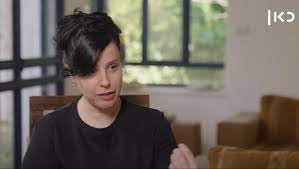
Orit Navon

Recently, I saw a video from one of the usually less serious performers/reporters (he did the watermelon video), where he’s sitting in what looks like a real therapy session, or a very close facsimile thereof, and both the reporter (Ehud Azriel Meir) and the therapist seem to be from the Religious Zionist community (roughly equivalent to Modern Orthodox in America – which you can tell from their crocheted kippot and casual clothes, as opposed to the more formal clothing and black hats worn by Haredim/ultra-orthodox). I’d seen a lot of videos from Ehud before; he did a whole series where he was supposedly sent to work with the Arabic language division at Kan to create educational videos about Jewish holidays and rituals, and each video in the series poked fun at all of the assumptions Jews and Muslims and Christians in Israel make about each other. It was silly and light, but also allowed for a pretty deep exploration of social conflicts Israelis grapple with on a daily basis. In general, Ehud’s videos are like this, characterized by humor and a willingness to show his own flaws and mistakes, but the video with the therapist had a much more serious tone than I was used to from him.

Ehud Azriel Meir

The therapy session starts with Ehud’s feelings of guilt at wanting to vote for someone other than the Religious Zionist candidate in the coming election. He believes that if he votes for “the other” candidate, he’s not only letting his own side down, he’s letting the other side win (though in Israel’s multi-party system there are always more than two options). This led to a discussion of the moment he started to feel some alienation from his own political party, which is also his religious community, way back in the 1990’s, when Prime Minister Yitzhak Rabin was assassinated. Before the assassination, Ehud, as a teenager, took part in a lot of the demonstrations against Rabin’s push for the Oslo Accords. He and his fellow Religious Zionists believed strongly that the accords would lead to more terrorism rather than to peace, and they were loud and vehement in their opinions, calling Rabin a traitor and a murderer. And then, Yigal Amir, also a Religious Zionist, shot and killed Rabin at a peace rally.

            For Ehud, Rabin’s murder was a moment of awakening. It truly devastated him that this man, who was like a father to him and to the country as a whole, had been killed by someone on “his side.” He had never considered the possibility that people were taking those screamed epithets literally, but when he and his friends tried to go to the vigils to mourn Rabin with the rest of Israel, they were turned away. And, still today, he resented that the secular Israelis blamed him for Rabin’s death, and he felt like it would be disloyal to his own group, and to himself, to vote with them on anything, even when he agreed with their policies.

The therapist pushed Ehud to acknowledge that his strong feelings around all of this might mean that he did feel somewhat responsible for Rabin’s murder, and that maybe he was uncomfortable in both the Religious and the secular worlds because he was still trying to avoid facing those feelings of guilt. Ehud bristled at that idea, but the therapist persisted, suggesting that in order for him to be at peace with having one foot in each camp, he needed to wrestle with the ways he himself believed that his actions long ago may have done harm, and to acknowledge that no matter how much he treasured his identity as a Religious Zionist, that wasn’t all of who he was.

            There was something really powerful for me in watching this usually very un-serious guy, now grumbling and uncomfortable, being willing to share his discomfort and uncertainty with the public, in case it might do some good. And his internal conflict resonated with me too, even more so because he used the words Gam ve Gam (Both/And) to describe his feeling of being both a Religious Zionist, and something else as well.

Whenever I start a new semester of online Hebrew classes, I’m asked if I prefer my name to be pronounced the English way or the Hebrew way, and I always say Gam ve Gam, both because I grew up going to Jewish day schools where half the day I was one and half the day I was the other, but also because the feeling of having different parts of me that fit in with different groups is a big part of my everyday life. It can be really hard to live in the Both/And. I’m never sure if I should stand with one foot in each camp, or hop from one side to the other, or stand in the middle all by myself. More often than not, I feel like I have to hide parts of myself, or act in ways that feel wrong to me in order to fit in.

“I like both chicken treats AND Greenies.”

            Watching this video reminded me of the traditional Ashamnu prayer that we say during the Jewish high holidays each year, where we pound our chests and admit to all of the possible sins that may have been done by a member of our community. That level of exaggerated responsibility has always bothered me, because I work so hard to make sure I do no harm, and it doesn’t seem fair that I should have to take responsibility for Joe Schmo over there who couldn’t care less who he hurts. It’s not even clear which community the prayer is referring to: does it include all Jews? All Jews on Long Island? All human beings on earth?

But now I wonder if the prayer is trying to get at the collective guilt we tend to feel when someone from our own political party, or tribe, or family, does something wrong. Even if we are not directly responsible for an evil act, we may have played a role in creating the conditions for that evil act to take place; or maybe our strongly held beliefs led us to encourage someone in the direction that led them astray; or maybe we were silent when we knew we should speak up, because we were afraid of being kicked out of the group; or maybe we felt responsible simply because outsiders told us that we were responsible, because they see our group as a single entity rather than a collection of individuals.

Once a year, this prayer gives us the opportunity to acknowledge those complex feelings of communal guilt, and reminds us that we need to recognize the impact we can have on the people around us, whether we intend that impact or not. And maybe most of all, the prayer reminds us that even when we disagree with our fellow community members, and speak up against them, we are still part of that community and that community is still a part of us.

I had a Creative Non-fiction teacher back in graduate school who told us that in order to write a good essay (for her class, at least), we needed to write about two seemingly unrelated subjects at once. For example, if you’re writing about pizza, you could also write about existential philosophy; or if you are writing about fashion, you could also look back at a memory from a childhood dance class, or a nature walk, or a chess game. Because, she said, the most interesting material comes from the way those two unrelated topics brush up against each other and create something new. And I think that’s true of more than just a good essay. When I live my life in both A and B (and often in C and D and E as well), the friction that comes from those mashups creates a lot of sparks, and what would our lives be like without all of those sparks to help light the way forward?

“You said pizza. I didn’t hear anything after that.”

If you haven’t had a chance yet, please check out my novel, Yeshiva Girl, on Amazon. And if you feel called to write a review of the book, on Amazon, or anywhere else, I’d be honored.

            Yeshiva Girl is about a Jewish teenager on Long Island, named Isabel, though her father calls her Jezebel. Her father has been accused of inappropriate sexual behavior with one of his students, which he denies, but Izzy implicitly believes it’s true. As a result of his problems, her father sends her to a co-ed Orthodox yeshiva for tenth grade, out of the blue, and Izzy and her mother can’t figure out how to prevent it. At Yeshiva, though, Izzy finds that religious people are much more complicated than she had expected. Some, like her father, may use religion as a place to hide, but others search for and find comfort, and community, and even enlightenment. The question is, what will Izzy find?


You Can’t Do What You Can’t Do

            Sometime over the winter, one of the rabbis at my synagogue announced that there would be a week-long volunteer trip to Israel in August, for teenagers and adults, and, oh yeah, they were applying for a grant to subsidize half the cost of the trip.

            That was all the information available at the time, but I already knew I wanted to go, desperately. I fought against the loud voice in my head telling me that going to Israel during the hottest month of the year, and volunteering, most likely outdoors, would be impossible for me, because the idea of going to Israel with people I knew, and being able to learn more about the situation on the ground, and to be of use, at an affordable price, just seemed like the answer to a lot of my prayers.

            So, I started to prepare myself. I wrote out a long list of what I’d need to bring with me (meds, sunblock, water bottle, adapters for the electricity, sim card for the phone, a week’s worth of clothes, Icy Hot patches, extra pain meds, etc.), and I wrote through all of the reasons not to go (fear of the effect of the heat on my autoimmune symptoms, fear of being lonely, fear of pain and exhaustion, fear that something would happen to Mom or Tzipporah while I was gone, fear that I would be too shy to use my Hebrew, fear of feeling bored, or trapped, or disappointed, or confused, etc.). And then I wrote out as many ideas as I could think of for how to deal with those fears.

“Wait, what’s going to happen to ME?!

But despite all of my efforts, I couldn’t plan for the trip until I knew exactly what the trip would entail. So, I reached out to the rabbi with my concerns (how much time would be spent outdoors, would the volunteering activities be things I could actually do, would there be rest periods for recovery, etc.), and she sent me the planned itinerary, with the proviso that, because all of the volunteering locations were small and relatively new, there wouldn’t be any room for adaptations.

And it looked amazing! They would barely be staying in one place for more than a day, traveling to the north and the south and in between, meeting people who were rebuilding in the north after a year of bombing from Hezbollah, and meeting Israelis of all religious backgrounds working to help each other, and meeting families of those who were killed on October seventh, and families of hostages, and Palestinian citizens of Israel, and helping rebuild the agriculture sector in the south that was impacted both by October seventh and by so many men being pulled into the army reserves and out of the fields. There was one afternoon set aside for potential beach time, but other than that, free time didn’t exist.

            I was in awe of the opportunity to meet so many different people working in so many different parts of Israeli society, and the more I read, the more I wanted to go. But no matter how I tried to move things around in my mind, and research all of the sites and turn the pages this way and that, it became clear that I would barely survive day one, let alone a whole week. Except, a big part of me was still in denial, imagining that if I just spent the next few months in physical therapy, and had a miraculous recovery from all of my health issues before August, and maybe found myself a full-body airconditioned suit to wear, I’d be okay.

            The tour guide who would be leading the trip (and who had been leading bi-weekly zooms for us since October seventh, to help us understand how Israelis were reacting to the Hamas attack and the ensuing war), came to the synagogue for an in-person visit leading up to  registration for the trip. I sat in the sanctuary and listened to his impassioned thoughts on the current political turmoil in Israel, and the moral quandaries of the war, and the grief and anger around the hostages still trapped in Gaza, and the communal efforts to support those who were struggling, and I could envision myself in Israel, marching for the hostages, and marching for democracy. In my imagination I could walk for miles, in the heat, singing and calling out at the top of my lungs, even though I’ve never been able to do anything like that here at home.

At one point in the evening, when I was sitting next to the older rabbi from our congregation, who had either led or participated in every previous synagogue trip to Israel, and who had marched in many protests over the years, I told him how much I wanted to go on this trip, and he told me that he would not be going because it would be too much for him. “But, but doesn’t it look amazing?!” I asked, and he shrugged and said, “You can’t do what you can’t do. There will be other trips.”

            And the bubble burst. I knew he was right, and that he was speaking as much to my situation as to his, whether he meant to or not. Of course I couldn’t go on this trip, and it felt awful to have to know that; just like it feels awful every time I have to accept a reality I don’t like. You would think I’d be more practiced at handling disappointment by now, but I suck at it every single time.

            I still made a point of applying for a new passport though (after years of putting it off), just in case, and I kept my packing list and my research on the different volunteering sites, and I continued to add hundreds of Israel-related videos to my YouTube watchlist to fill out my understanding of the culture and the people. One day, hopefully not too far in the future, the right opportunity to go to Israel will come up, and in the meantime I will keep doing the work I am capable of doing so that I’m ready to go when the time comes.

“Puppy, cover my ears!”

If you haven’t had a chance yet, please check out my novel, Yeshiva Girl, on Amazon. And if you feel called to write a review of the book, on Amazon, or anywhere else, I’d be honored.

            Yeshiva Girl is about a Jewish teenager on Long Island, named Isabel, though her father calls her Jezebel. Her father has been accused of inappropriate sexual behavior with one of his students, which he denies, but Izzy implicitly believes it’s true. As a result of his problems, her father sends her to a co-ed Orthodox yeshiva for tenth grade, out of the blue, and Izzy and her mother can’t figure out how to prevent it. At Yeshiva, though, Izzy finds that religious people are much more complicated than she had expected. Some, like her father, may use religion as a place to hide, but others search for and find comfort, and community, and even enlightenment. The question is, what will Izzy find?
Hebrew Practice Groups

            At our first professional development of the year, we were asked which sound most characterized our summer, and I realized that mine was laughter, because the laughter in my online Hebrew class this summer was constant, even when we were on mute and could only see each other’s laughing faces. We became a tight knit group, with our young Israeli teacher, able to cover all of the emotional ground that came our way, without ever getting too depressed, because we knew we would be laughing again soon.

            But actually, I spent even more time in Hebrew practice groups this summer than in the class itself, because I had the time and because I finally felt like I could handle the social anxiety that comes with meeting so many strangers and making mistakes in front of them. It was all under the safe canopy of the same online Hebrew language program as my class, but in the practice groups I was meeting dozens of people from different Hebrew levels, and time zones, and ages and cultures.

            There are so many strange topics for discussion in the practice groups. Of course there are the standards: favorite food, favorite movie, what would you bring to a desert island. But then they start to get creative: what’s the weirdest food you’ve ever eaten (Ptcha – calf’s foot jelly); how would you solve global warming? (teach everyone how to fly: Laoof, like a bird, instead of Latoos, on a plane); how many languages can you speak (this one gets very competitive, and more than a few people have tried to count Spanish because they know how to say “Hola.”)

“I can teach you how to fly, if you want.”

            But we are always free to talk about something else in the breakout rooms, as long as we say it in Hebrew, so I’ve had long conversations about my dogs, or teaching, or growing up Jewish on Long Island. And if we’re pretty sure the teacher isn’t about to pop into the breakout room, we can discuss our favorite and least favorite teachers. You’d be amazed how diligently we can stick to Hebrew in the midst of a good gossip session. Because, you know, we’re studying here. We take it very seriously.

            The way the teachers lurk in the breakout rooms is always a topic of conversation. First of all, because they just appear and disappear without warning, like spies. But also, they keep their cameras off, as if we’re supposed to pretend they’re not really there. So, if I make a point of saying hello to the other students in the breakout room and don’t specifically say hello to the teacher, a disembodied voice might say, “Whatever, I’m not here, just ignore me,” which means, Hey, how dare you ignore me!

            Sometimes we’ll talk directly to the teacher – or to the box on the screen with the school logo on it – and ask for the Hebrew word for this or that, and the teacher will pop up on screen to answer “in person.” One time, a friend of mine asked her question, got her answer, and then said, “okay, you can go back into your little box now.”

            We get to meet a lot of teachers in the practice groups and see what their styles are – how they do corrections, how rigidly (or not) they follow their lesson plans, whether or not they have a sense of humor – and I’ve been able to get a much better idea of what works for me and what doesn’t, so that when a teacher’s style starts to get on my nerves, or leaves me feeling stupid, I’m less likely to assume it’s my fault (but only a little less likely).

            Our young Israeli teachers have also introduced us to something called pitzuchim – which literally translates to cracking nuts or seeds, but is used in Hebrew to refer to the way Israelis are always trying to figure out where they might know each other from (among American Jews this is called Jewish geography). It turns out that a lot of the teachers and students in the program have connections, through second cousins or long lost neighbors or who knows what else. So far, though, I have cracked no nuts or seeds on these zooms, which is kind of disappointing. Getting to Israel would be so much easier if I discovered a long lost wealthy relative with an empty apartment by the beach.

(Not my picture)

            This time spent in breakout rooms used to be the most stressful part of practice groups for me, and the reason why I avoided them so assiduously for years, but now, after the first few twinges of anxiety, I’ve come to really enjoy hearing everyone’s stories, and I’m less self-conscious about my broken Hebrew (though I still feel grumpy each time I make a mistake, which happens often).

            The most stressful part for me now is when we have to translate sentences from English to Hebrew, often using words I haven’t practiced recently (because I’m visiting practice groups at different levels from my own); but I’m getting used to laughing at my mistakes, and I’ve noticed that when I screw up, and laugh at myself, other people start to relax about their own mistakes. It’s almost like I’m doing a service.

            In some of the practice groups, after we go over some grammar from previous levels, we’ll read short articles together, or even just headlines, from online Hebrew language newspapers – often about food or travel or popular culture, so we can learn words we wouldn’t come across in class, like how to say “laundering money” in Hebrew. The words that are hardest to read in these articles are often borrowed from other languages. So, more often than not, our Israeli teachers will start to giggle when we can’t figure out how to pronounce “Mexico,”when it’s written in Hebrew letters.   

One of the lowest stress exercises that we do in practice group – though I can make anything feel stressful without really trying – is when the teacher puts an article on the screen and instead of asking us to read, and, God forbid, translate it, we just have to find one word at a time. It reminds me of being in first grade or so and realizing that there were English words I could just recognize on the page, without needing to sound them out, because they had become so familiar to me just by their shape.

            As a result of all of this time in the practice groups, I sometimes hear myself speaking in Hebrew, without having planned what to say ahead of time; the words just come out of my mouth, and I kind of look around the room, wondering who said that.

            And, really, during a summer where, aside from Mom, most of my in-person human interactions were at supermarkets or doctors’ offices, these practice groups gave me the chance to meet and chat with and learn from dozens of real people, who are fascinating and funny and weird and challenging. It’s still strange to me how real a community can feel, even when it only exists online; but in a way, the boundaries created by the computer (of time, and purpose, and mute buttons) creates a sense of safety that allows me to say what I really mean more often. Now, if only I could translate those safe boundaries into the real world…

“Pfft. Who needs the real world?”

If you haven’t had a chance yet, please check out my novel, Yeshiva Girl, on Amazon. And if you feel called to write a review of the book, on Amazon, or anywhere else, I’d be honored.

            Yeshiva Girl is about a Jewish teenager on Long Island, named Isabel, though her father calls her Jezebel. Her father has been accused of inappropriate sexual behavior with one of his students, which he denies, but Izzy implicitly believes it’s true. As a result of his problems, her father sends her to a co-ed Orthodox yeshiva for tenth grade, out of the blue, and Izzy and her mother can’t figure out how to prevent it. At Yeshiva, though, Izzy finds that religious people are much more complicated than she had expected. Some, like her father, may use religion as a place to hide, but others search for and find comfort, and community, and even enlightenment. The question is, what will Izzy find?

I Am Not Alone


               In my adventures through Israeli music I’ve found one song title coming up over and over again: Lo Levad, or, Not alone.
               At first, I thought they must all be covers of the same song, because Israeli music is filled with covers and mash ups and duets, in a way that makes it feel like the whole country is one big Glee club. But when I listened to each recording, I realized that, no, they were all different songs, with different lyrics and musical styles and intentions. 
               Since loneliness is a feeling I’m very familiar with, I wanted to understand why Israel in particular would have so many songs on this topic, not just referenced in the lyrics but in the titles themselves. So, I chose three songs that I found particularly powerful, maybe only because they are “my” kind of music, to examine further.
Lo Levad – Jane Bordeaux https://youtu.be/H_gMtQ7BTo4?si=Obq-yjaSAL1Ry2yb
 
               Jane Bordeaux’s Lo Levad (written by Doron Talmon) was posted on YouTube soon after October 7th and is set at a kibbutz overrun by Hamas. A lone, burned tree is the first and enduring image of the song, but the roots of the tree are still strong, because of the people who are coming together to remember those they lost, and to rebuild. The melody is sad, but the message of community coming together is hopeful, and that melancholy contrast lingers long after the song is over. It’s not a big, banging rock song, or a cry for help; maybe it’s more like a folk song, the kind of thing you’d sing at a campfire, after a long day of cleaning up or picking clementines, to remind yourself that the effort is worth it. The basic message of Jane Bordeaux’s Lo Levad: some limbs of the tree may have been burned, but the roots are strong and with help the tree will heal and grow again.
 
Lo Levad – Aviv Alush and Omer Adam with Veteyn Chelkaynu https://youtu.be/EiYoDi7IwFQ?si=vX4tXZO1_EZxLzT-
               The second Lo Levad I chose was posted just before October 7th this year, and is performed by Aviv Alush and Omer Adam, and written by a collective of artists called Veteyn Chelkaynu, as part of a yearly project leading up to the Jewish high holidays, to inspire secular Israelis to return to religious study in some small way. The message of this Lo Levad is that you can always go home again, by which they mean return to God and to Torah (the Hebrew bible), which is very much in sync with the message of Rosh Hashanah, and the month of Elul that leads up to it. This is my favorite of all of the Lo Levad songs I’ve heard, and did the most to genuinely make me feel less alone each time I heard it, maybe because the idea of prayer and study, as part of a community, actually does resonate for me, a lot; though I wouldn’t limit it to religious study, because in my experience almost any group studying together, or singing together, and willing to acknowledge weakness and the need for comfort, creates this same powerful energy. I also like the contrast of the two voices, one gruff (Aviv Alush, a popular Israeli actor) and one sweet (Omer Adam, maybe the most famous and certainly the most prolific of Israel’s singers), and I like that in both the lyrics and the music, this song champions both crying out for help and reaching out to help someone else; there’s no sense that one role has more value or respect than the other. The basic message of Aviv Alush and Omer Adam’s Lo Levad: life is a difficult journey for everyone, with lots of choices along the way, but you don’t have to go on this journey alone, and you can find your way home, with help.
Lo Levad – Hanan Ben Ari https://youtu.be/6G_1fUcExJY?si=AB3rwHmRzwZDhqB3
               The third Lo Levad I chose is from Hanan Ben Ari (co-written by Roi Chasan), a popular Israeli singer/songwriter who sings a kind of pop/religious hybrid that really seems to crossover well. His Lo Levad, which is actually from seven years ago, is anthemic, built like an uphill climb, both in the music and in the lyrics (or what I understand of them, because the Hebrew here was hard for me in certain places). It’s written in third person, so it has that distance of speaking about someone else’s pain (even though it could be about him, who knows), and there’s a choir that jumps in when the song builds. The basic message of Hanan Ben Ari’s Lo Levad: even if you fall into the dark cavernous pit of loneliness, you can find the light and even the wings to fly.
               Together, all of these songs feel like puzzle pieces in the larger picture of how loneliness feels and how we try to combat it. Loneliness is certainly not unique to Israelis, but maybe their willingness to acknowledge it, and their focus on combatting it in community fits the Israeli ethos in particular. In the United States, where our most insistent value is independence, we have mixed feelings about acknowledging loneliness as a problem. We, maybe, see loneliness as a necessary price for the kind of rugged individualism we are supposed to strive for. But in Israel, where collectivist kibbutzim played such a big role in its beginnings, and mandatory army service brings people together from all walks of life, community is the key to survival.
               The loneliness theme also resonates in the physical isolation that is inherent in where Israel is located in the world, surrounded by Muslim majority countries that have, historically, seen Israel as a cancer that needs to be excised; and it responates with the long history of Jewish wandering that has led to being seen as the other by the majority populations of pretty much every place in the world.
               Wherever the loneliness comes from, though, it’s a relief to have it expressed, in music and in words, in so many ways; just the chance to hear about someone else’s struggle, and their attempts to find comfort, helps me fight off at least the bitterest edges of the loneliness.
               I didn’t include translations for these songs, because I wasn’t happy with my inability to really capture the magic of the words, and because I think it’s the music that is most powerful in these songs. There are, of course, other songs that have helped push away the loneliness, even when loneliness wasn’t even mentioned in the titles:
               Shleimim/Complete is performed by Idan Rafael Haviv (written by Avi Ohayon, Akiva Turgeman, and Matan Dror) and is a gentle love song about the kind of love that grows with every year together. https://youtu.be/kRy0xSsly_o?si=DKlSPPCyykkSRcdU
               Am Echad/One nation is written by Eli Keshet, Ben Tzur, and Omri Sasson and performed by a bunch of different Israeli musicians, and it’s a call for national unity in response to the current war, but also manages to capture the sweetness of coming together, even in hard times. https://youtu.be/u7CeOuIrxBM?si=8dtFFim9SZTnF9Bk
               Im Hayah Lanu Zman/If we had time, performed by Elai Botner and Noam Kleinstein and written by Elai Botner and Oren Jacoby is a re-recording of a song from a movie I never saw, about a different war, but Noam Kleinstein’s voice, even if I never understood the words, cracks me open every time I hear this song. https://youtu.be/mwPAlYxqLqE?si=uXKDfSQDW7xHKIXD
               As usual, I’ve been reading and listening to lots of voices about the war, and I found two people who were especially helpful in explaining the difference between the media coverage of the war in Israel and internationally: 

Einat Wilf with Eylon Levy – https://youtu.be/mHZyuposz3I?si=1rR7z-agkbHMt09o

Matti Friedman with Dan Senor – https://youtu.be/hZ3JGq5dxEE?si=I46SXBRex5B1ThRF

 
               It still feels pretty lonely to be Jewish right now, but all of these resources have helped in different ways, and writing the blog and hearing from my readers and fellow bloggers, helps immensely. I don’t need everyone to see things the same way I do, but I do need to feel like I’m part of the picture, part of the community of voices that are hearing and being heard.
               Thank you for helping me feel less alone.
 

If you haven’t had a chance yet, please check out my Young Adult novel, Yeshiva Girl, on Amazon. And if you feel called to write a review of the book, on Amazon, or anywhere else, I’d be honored.

            Yeshiva Girl is about a Jewish teenager on Long Island, named Isabel, though her father calls her Jezebel. Her father has been accused of inappropriate sexual behavior with one of his students, which he denies, but Izzy implicitly believes it’s true. As a result of his problems, her father sends her to a co-ed Orthodox yeshiva for tenth grade, out of the blue, and Izzy and her mother can’t figure out how to prevent it. At Yeshiva, though, Izzy finds that religious people are much more complicated than she had expected. Some, like her father, may use religion as a place to hide, but others search for and find comfort, and community, and even enlightenment. The question is, what will Izzy find?


The B’nei Mitzvah

            My first students ever in synagogue school are now old enough to be getting ready for their B’nei Mitzvah, the ritual celebration of leading a prayer service on turning thirteen to mark becoming a full member of the community. I haven’t seen much of these kinds so far this year, because they come to school just as I’m leaving for the day, so I only glimpse them here or there, or hear about them from their younger siblings. I don’t even know if they remember me (though, because they were my first class, they probably remember the candy I used to use to bribe them into paying attention). When I saw them last year, the boys still looked mostly the same and the girls looked ten years older, but I don’t know if they’ve changed in other ways: if they are calmer or angrier, sadder or happier, more cautious or more curious. I don’t know if they’ve learned everything they need to learn for their B’nei Mitzvah services or if they’re struggling. I don’t even know if they are still connected to each other the way they used to be or if they’ve grown apart.

            Last year, when I started to realize that this milestone was coming up, I had all kinds of plans to go to every single B’nei Mitzvah service, two and a half hours on consecutive Saturday mornings for months, to show my support (and not just to share in the snacks afterward). But now, because of my health, that doesn’t feel possible. The idea of getting up early enough to be at the synagogue by 9:45 AM, and standing and praying and socializing for hours, week after week, just seems so unlikely. But maybe I can make a commitment to go to each of their Friday Night services in person, instead of just on Zoom.

“But I love watching on Zoom!”

            At our synagogue, we start celebrating the B’nei Mitzvah at the communal Friday night services the night before the big day, where the kids lead a few important prayers and tell us about their mitzvah (service) projects, like walking dogs at the local animal shelter, or raising money for school supplies for underprivileged kids, or coaching developmentally disabled kids in soccer, or anything else that interests them and feels doable for a thirteen year old, with some help. The parents also go up and tell us about their children through a collection of books they’ve chosen as gifts – books connected to both being Jewish and loving sports, or cooking, or history, or art, or theater. It’s a chance for the rest of the community to celebrate with the family, and get to know them better, especially if we’ve never met them before.

“So where are my books?”

            Right now, though, even that commitment feels like more than I can handle. But it’s really important to me to be there, in person, where my former students can see me, and their other teachers, and know that we care about them and their journeys and their futures. I remember my own Bat Mitzvah so vividly and how most of my religious classmates couldn’t be there because it was on Shabbat and they couldn’t travel. And I remember how the rabbis at my orthodox Jewish day school disapproved of a girl leading services at all. It would have been so validating to have had all of those people there in the room with me, to see what I’d accomplished and to see what I could become. It would have meant the world to me.

            So I have until March to figure out how to make those Friday nights possible. Maybe some of my upcoming doctor visits will lead to progress in my health, or if that doesn’t pan out, maybe I can just plan to rest all day on Fridays, with no errands, no appointments, and no lesson planning, in order to have energy left at the end of the day to get to the synagogue in person. Wish me luck!

“Harrumph.”

If you haven’t had a chance yet, please check out my Young Adult novel, Yeshiva Girl, on Amazon. And if you feel called to write a review of the book, on Amazon, or anywhere else, I’d be honored.

            Yeshiva Girl is about a Jewish teenager on Long Island, named Isabel, though her father calls her Jezebel. Her father has been accused of inappropriate sexual behavior with one of his students, which he denies, but Izzy implicitly believes it’s true. As a result of his problems, her father sends her to a co-ed Orthodox yeshiva for tenth grade, out of the blue, and Izzy and her mother can’t figure out how to prevent it. At Yeshiva, though, Izzy finds that religious people are much more complicated than she had expected. Some, like her father, may use religion as a place to hide, but others search for and find comfort, and community, and even enlightenment. The question is, what will Izzy find?

The High Holidays

            I made it through the Jewish high holidays. It was touch and go there for a while, because I couldn’t go to the last few choir rehearsals, and because three of the other synagogue school teachers got Covid at the same time, including the Cantor! So I was relying heavily on my KN95 mask to get me through.

            I made sure to wear my sneakers (because there’s a lot of standing at the high holiday services, especially on Yom Kippur), and I practiced the music as much as possible on my own, and I even started to do breathing exercises (there’s an app for that!), to build up my breath capacity after months of not singing much at all.

“I breathe all the time without an app, Mommy.”

            The surprising thing was how much fun it was to sing with the choir again. I’d forgotten that it was more than just work. When, after missing Rosh Hashana with Covid, the Cantor made his triumphant return for Yom Kippur, it was truly joyous to hear him sing again, and to be able to sing along with all of the tunes the choir doesn’t lead, and realize how much of the music that we only hear once a year is actually familiar and comforting and really powerful.

            It was fun to be with a crowd again; to have so many people in one place, at one time, experiencing the same things, hearing the same stories and singing the same songs and laughing at the same jokes, and it was wonderful to see the children of the congregation (many of whom have been my students over the past few years) go up to the bima and take pride in opening the ark, where the Torah scrolls are kept, but even more so at just being seen.

            The high holidays are still a lot of work, don’t get me wrong. And waking up early, and dressing up, and singing and praying and standing and sitting, over and over and over again, was grueling. And the dogs really hated the constant coming and going (mostly the going), especially when we had more than one service to go to in a single day.

“Harrumph.”

            But it was worth it. Beforehand, I was so focused on how hard it would all be, and how much pain I would be in, and how tired I would get, that I forgot how extraordinary it can feel to be surrounded by a community I truly like, and share history with, and can sing with, and even sometimes dance with.

            I’m sure I will forget all of this again by next summer, when it’s time to rehearse with the choir again and build up to the high holiday services again. I’ll probably spend hours, and days, and weeks, dreading the whole thing and resenting the choir rehearsals and worrying about what to wear, but so far, I can still feel the joy, and it’s wonderful. There are so many difficult things in life that really don’t feel worth all of the effort and pain and anxiety; but some things, like this, are totally worth the effort. Thank God!

“Sleep is always worth the effort.”

If you haven’t had a chance yet, please check out my Young Adult novel, Yeshiva Girl, on Amazon. And if you feel called to write a review of the book, on Amazon, or anywhere else, I’d be honored.

            Yeshiva Girl is about a Jewish teenager on Long Island, named Isabel, though her father calls her Jezebel. Her father has been accused of inappropriate sexual behavior with one of his students, which he denies, but Izzy implicitly believes it’s true. As a result of his problems, her father sends her to a co-ed Orthodox yeshiva for tenth grade, out of the blue, and Izzy and her mother can’t figure out how to prevent it. At Yeshiva, though, Izzy finds that religious people are much more complicated than she had expected. Some, like her father, may use religion as a place to hide, but others search for and find comfort, and community, and even enlightenment. The question is, what will Izzy find?

Ushpizin

            I know, it sounds like I just sneezed on you, but Ushpizin is an Aramaic word that means “guests.” It refers to a Jewish custom, during the holiday of Sukkot (which we are in now), where we are supposed to not just build a temporary hut/booth outdoors and invite real guests to eat with us, but also invite our ancestors. I knew about the idea of inviting friends to eat in the sukkah, and about our patriarch Abraham’s penchant for inviting dusty strangers into his tent, but I didn’t know about the Ushpizin ceremony until recently.

“Did you say Pee?”

            According to tradition, each night a different exalted guest enters the sukkah, and each of the ushpizin has a unique lesson to teach us based on the Sefirot. The Sefirot, translated as attributes, emanations, or illuminations of God’s infinite light, are seen as the channels through which the Divine creative life force is revealed to humankind (according to Kabbalah). The traditional Ushpizin are meant to represent the “seven shepherds of Israel”: Abraham, Isaac, Jacob, Moses, Aaron, Joseph and David. Some streams of Judaism also recognize a set of seven female shepherds of Israel, called Ushpizot (using the Modern Hebrew feminine pluralization), or Ushpizata (in reconstructed Aramaic).

            The custom of Ushpizin was established by the Kabbalists in the sixteenth century, and while there’s something a little bit woo-woo about the inviting-dead-people-to-eat-with-you thing, there’s also something comforting about it. It reminds me of how the past Jedi masters returned to support new Jedis in the Star Wars movies, and how Harry Potter got to see his parents, and Dumbledore, when he really needed their support, even though they were gone.

            Especially now, when we can’t really invite our friends and neighbors to eat with us, there’s something magical about being able to invite our ancestors to sit with us instead. But, of course, I would prefer to come up with my own list of guests, instead of being stuck with the biblical characters each night.

            For Day One the divine characteristic is Chesed, usually translated as loving kindness, but generally meaning generosity, compassion, and maybe something like the unconditional love of grandparents. The examples in the Reconstructionist prayer book are Abraham and Sarah, but I would choose my grandfather, for his humor and his good conversation, and most of all for how clearly he loved us. I’d invite him every night, if he would come.

“Can I come too?”

            For Day two, the quality is Gevurah, meaning strength, discipline, and adherence to the law. The examples given are Isaac and Rebecca for some reason, but I think I’d invite Ruth Bader Ginsburg for day two.

            For day three the divine quality is Tiferet, or beauty, harmony, and the ability to see the whole picture. The examples given are Jacob and Leah, which makes no sense to me. Neither of them was known for their beauty, as far as I remember. And Jacob stole his brother’s birthright, while Leah stole her sister’s husband, so, not especially harmonious either. I’d like to pick an artist for day three, but I don’t know which one to choose.

“Oooh! Pick me! Pick me!”

For day fourthe characteristic isNetzach, meaning patience, endurance, persistence, and the willingness to demand justice, even from God. The examples given are Moses and Chanah, and though we all know about Moses persisting in his fight to convince Pharaoh to free the Israelites from bondage, Chanah, or Hannah, is more obscure. She is one of the many women in the bible who struggles with infertility (which was a serious affliction in a society where women were only seen as valuable if they could provide children), and she prays to God to give her a son, promising to dedicate his life to the service of God. She ends up becoming the mother of the prophet Samuel (in the first book of Samuel), and when she hands him over to the high priest she is rewarded with the ability to give birth to five more children. So both Moses and Chanah are good examples of persistence, and worthy of attention, but really, I’d rather have a second visit with Ruth Bader Ginsburg for Netzach, to give me some insight into what it took to fight for women’s rights to be considered valuable whether they were wives and mothers or not. Really, someday, I’d like to be someone else’s idea of Netzach myself.  

For day five the characteristic to celebrate is Hod, or holiness with humility, someone who is powerful but not always announcing her strength. The examples given are Aaron and Miriam, and I think I would like to spend some time with Miriam, if only to get to know her better. She doesn’t get much air time in the Torah.

For day six the divine quality is Tzedek, meaning righteousness and self-sacrifice, and the examples given are Joseph and Esther, though each of them actually received quite a lot of earthly riches for their sacrifices. An alternative for day six is Yesod, meaning “foundation,” with a focus on investing in the foundations of our world and creating connections between people. And that sounds like a parent to me. Like my Mom.

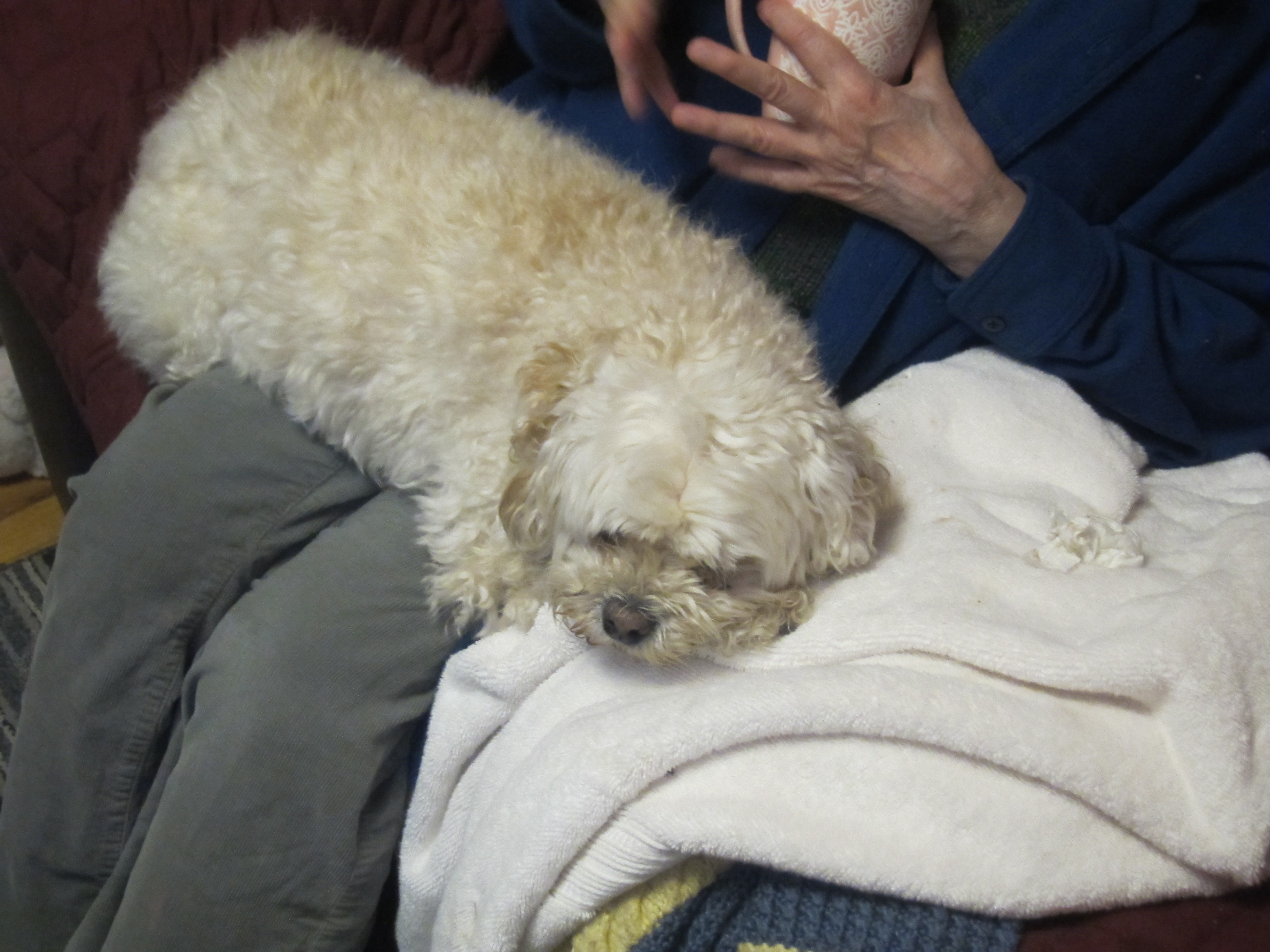
Cricket’s home base – Grandma’s lap.

For day seven, the final divine characteristic is Malchut: sovereignty, leadership and sensitivity to the needs of others. The examples are David and Rachel, and David actually makes sense for kingship, though his sensitivity to the needs of others is questionable. I’d like to meet a leader, or a president, who could lead with sensitivity and compassion for her people. Someone who could give me hope for the future.

There is a lovely idea in the Talmud that all Jews should sit in one sukkah together, living together under a shelter of peace, even if we live across the world from each other, or have different beliefs and different life circumstances. I’d like to think we can expand this concept to all of humanity; that we should act as if we all live under the same roof, because, really, we do.

            There’s a line in the Ushpizin ceremony in the Reconstructionist prayer book that really works for me: May this sukkah, vulnerable to sun and wind and rain, teach us that real peace comes not from an external structure, but from the strength of the community that gathers within.

            May we all feel that strength, within us and between us, even as we live in our own vulnerable bodies, minds, homes, and countries.

If you haven’t had a chance yet, please check out my Young Adult novel, Yeshiva Girl, on Amazon. And if you feel called to write a review of the book, on Amazon, or anywhere else, I’d be honored.

            Yeshiva Girl is about a Jewish teenager on Long Island, named Isabel, though her father calls her Jezebel. Her father has been accused of inappropriate sexual behavior with one of his students, which he denies, but Izzy implicitly believes it’s true. As a result of his problems, her father sends her to a co-ed Orthodox yeshiva for tenth grade, out of the blue, and Izzy and her mother can’t figure out how to prevent it. At Yeshiva, though, Izzy finds that religious people are much more complicated than she had expected. Some, like her father, may use religion as a place to hide, but others search for and find comfort, and community, and even enlightenment. The question is, what will Izzy find?

The Aftermath of Childhood Abuse


In order to have a successful life, it’s not enough to be smart and talented, you have to be able to function, every day, without having three panic attacks before lunch. I was certain that, twenty-five years into therapy, I would be married, with children, and published multiple times. I wouldn’t have made it through the first ten years of therapy if I’d known that I’d still be struggling with forward motion in year twenty five. But this is where I’m at, and this is the best I’ve been able to do, despite all of that promise, because of childhood sexual abuse.

I was the kid that teachers loved and never worried about. Rachel will do fine at whatever she chooses to do. Rachel is smart and responsible and hardworking and never needs help. They didn’t consider my social anxiety, or crippling depression, or the endless fragmentation of my mind as a problem, because even with all of that I still did well at school. But I didn’t want to, and that was the killer. I did not want to wake up each morning. I did not want to meet new people, or go to parties, or get a job, or choose a major, or whatever each next step was supposed to be.

grumpy cricket

“This is a difficult topic, Mommy.”


I am tired of hearing about how resilient everyone else is, and how well they’re doing, despite this and that and the other thing. It implies that we all had the same obstacles and everyone else is just better than me at overcoming them. But the fact is, if I had the same life experiences as I’ve had, without the great good fortune of intelligence and talent, and a Mom who loves me, and a therapist who has been there for me since I was nineteen, I would not be here. I would have walked in front of a bus, or swallowed a bottle of pills, a hundred times by now. It’s important to know that, and not to be smug about my successes, and not to be so quick to judge others for their lack of success.

IMG_0926

“I’m here for you, Cricket.”

The percentage of substance abusers with child abuse histories is very high, same with prison inmates, and patients in mental hospitals, but I feel like we choose, as a society, not to know these things. We choose to ignore our good fortune when we have it, and we choose to take credit for all of our successes, despite the help we’ve received along the way. We imagine that people are successful because of their intelligence and hard work alone, and therefore those who are unsuccessful must be lazy and stupid.

Lately we’ve been talking more about privilege – white privilege, male privilege – but we forget the less obvious forms of privilege; being safe in your own home, and being loved and nurtured by your family, and having the support you need when you have to face big and small challenges along the way, are huge privileges that many children never experience.

I remember watching episodes of the Oprah Winfrey Show, years ago, when she would celebrate kids who had survived war and starvation and abuse and got into Harvard anyway, or started a successful business, or saved the world in some way. And it made me angry, one, because I could never do any of that, and two, because most of the kids who went through those same circumstances wouldn’t be able to impress anyone and win the attention and rewards they would need in order to survive. They would have the same residue of pain and trauma, without any help to get them through, or anyone to celebrate their small achievements along the way.

IMG_0913

“I love to celebrate!”

Everyone wants to know the secrets of the resilient child, but resilience has more to do with how we take care of and support these children than with their own inherent qualities. Their strength, or weakness, comes mostly from us. If they fail, it’s because we didn’t hold them up. We keep forgetting this. We want to celebrate, and vilify, the individual, if only so that we don’t have to take responsibility for each other. But it’s an illusion. We are intertwined whether we acknowledge it or not, and we pay the price for the suffering of others, whether we caused it ourselves or simply chose to ignore it.

Cricket and her special friend 001

Platypus knows that we all need help.

If you haven’t had a chance yet, please check out my Amazon page and consider ordering the Kindle or Paperback version (or both!) of Yeshiva Girl. And if you feel called to write a review of the book on Amazon, or anywhere else, I’d be honored.

Yeshiva Girl is about a Jewish girl on Long Island named Izzy. Her father has been accused of inappropriate sexual behavior with one of his students, which he denies, but Izzy implicitly believes is true. Izzy’s father decides to send her to a co-ed Orthodox yeshiva for tenth grade, out of the blue, as if she’s the one who needs to be fixed. Izzy, in pain and looking for people she can trust, finds that religious people are much more complicated than she had expected. Some, like her father, may use religion as a place to hide, but others search for and find comfort, and community, and even enlightenment. The question is, what will Izzy find?



Healer of the Broken Hearted


We had a solidarity service at my synagogue last Sunday, in the aftermath of the shootings at the Tree of Life synagogue in Pittsburgh. Four synagogues came together in one building, and by the time Mom and I arrived, twenty minutes before the service started, there was no parking left. People had to stand along the sides of the sanctuary after all of the seats had been filled. The clergy of all four synagogues led the service, with readings by the rabbis and songs by the cantors. There was an enormous amount of crying, but I couldn’t cry. The music was beautiful. The presence of clergy from all of the local Christian denominations was meaningful (the local mosque was planning another service for the following day). But the words didn’t reach me. I just wanted to find comfort, and to feel something, but I couldn’t feel anything.

Maybe if I could have brought Cricket and Ellie with me, things would have been different; maybe if we didn’t have to feel such a sense of relief at seeing the police officers lined up in front of the synagogue to protect us; maybe if it were just small service, with my fellow congregants, on a Friday night. I don’t know. Maybe if there hadn’t been so much violence leading up to the shootings, with two black shoppers targeted in a supermarket, and pipe bombs in the mail, and church shootings, and terrorist attacks in other countries and in our own. We can barely breathe between horrific events, let alone mourn.

IMG_0570

We’re all exhausted.

I keep swinging between anger, disbelief, fear, and confusion. At the solidarity service at my synagogue, the focus was on taking action against guns, which of course I agree with, but I can’t see that going anywhere now, any more than it has every single time this issue has come up after mass shootings in the past few years. More than a few years now. We can vote, certainly. We can stand in solidarity with the other victims of mass shootings, and against racist and anti-Semitic violence. But then what?

It turns out that one of the three congregations housed in the Tree of Life synagogue was also a Reconstructionist group, and they had celebrated Refugee Shabbat, as we did in my own synagogue, a few weeks ago. The shooter had found a list of the synagogues that participated in Refugee Shabbat, including my own, and that’s where he got the address for the Tree of Life synagogue, and that was the final straw in deciding which Jews to kill.

The subject of HIAS, the Hebrew Immigrant Aid Society, has come up a number of times lately at my synagogue. There was actually an educational seminar about HIAS planned for Sunday. And then Saturday came, and a man decided to kill Jews at prayer, supposedly because Jews, through HIAS, are to blame for inviting refugees to “invade” our country. To be clear, HIAS does not choose who comes into the country, it works with the state department, along with many other organizations, to help new immigrants integrate into their new communities. If I had to leave my own country and seek safety elsewhere, I would like to believe that there would be an organization like HIAS there, to help me settle in and feel welcome.

One of the songs from the Solidarity Service on Sunday at my synagogue was “Healer of the Broken Hearted,” or in Hebrew, Harofei lishvurei lev. According to my rabbi, the image of a doctor in the Hebrew Bible always refers to God, mostly because every heroic role in the Hebrew Bible belongs to God, the ultimate multiple personality. But this is the image of God that I like best: the comforter, the healer, the one who sees that we are suffering and takes our pain seriously.

Healer of the broken hearted

            Binder of our wounds

            Counter of uncountable stars

            You know who we are

            Hallelujah.”


This week has felt strange: fragmented and confusing. I wanted to be at Synagogue, and I wanted to hide away at home. I needed to watch the news, and I hated to watch the news. And then there was a hashtag encouraging everyone, Jews and non-Jews, to come to Shabbat services. This week’s Friday night service at my synagogue was going to be a Family Service (kid-friendly, loud, and short), but I decided to go anyway. The sanctuary was packed again, and the music was great again, and the neighboring churches sent their clergy to add their words of support again, but it was more than that.

Maybe it was because a few more days had passed since the shootings, or because all of the children in the room changed the atmosphere in the room to something like joy. There was one little girl doing interpretive dance (including cartwheels and high kicks) down the far left aisle, and the five member kids’ choir remembered most of their songs, and the Bat Mitzvah girl ignored the tragedy in the air to celebrate her special day with her family. It didn’t hurt that there was cake after the service, with pink cupcakes and chocolate covered pretzels and an enormous amount of chocolate frosting.

IMG_0554

“Frosting?”


But, in the end, it’s always the music. On Friday nights at my synagogue we often exchange one of the traditional prayers (Ahavat Olam) for an alternative version, written by Rami Shapiro:

We are loved by an unending love.
We are embraced by arms that find us
even when we are hidden from ourselves.

We are touched by fingers that soothe us
even when we are too proud for soothing.
We are counseled by voices that guide us
even when we are too embittered to hear.
We are loved by an unending love.

We are supported by hands that uplift us
even in the midst of a fall.
We are urged on by eyes that meet us
even when we are too weak for meeting.
We are loved by an unending love.

Embraced, touched, soothed, and counseled

ours are the arms, the fingers, the voices;
ours are the hands, the eyes, the smiles;
We are loved by an unending love.

Even if we can’t envision God as the healer of our wounds, we have something more

concrete to rely on: community. We have the power to see each other, and heal each other. Among all of the roles we can play in each other’s lives, this is one of my favorites.

Hallelujah.


001


Reconstructing Judaism


My synagogue belongs to a small branch of Judaism called Reconstructionism. I think there are something like a hundred Reconstructionist congregations, and three hundred and fifty Reconstructionist rabbis, in North America, so it is a small, but not invisible movement. I’ve never quite considered myself a Reconstructionist Jew, though, the way some people identify as Modern Orthodox or Reform or Conservative. I’ve only belonged to this synagogue for six years now, so it’s more that I like my congregation in particular. I still just consider myself Jewish, without a specifier.

I like that the Reconstructionists emphasize that we can make our own choices, about what to believe and how to practice, instead of having to go to the rabbi for his or her dictum. I like that the Reconstructionist movement ordained one of the first female rabbis (way back when), and celebrated the first official bat mitzvah (even further back), two things that are now common place in liberal Judaism. But I get overwhelmed by the social activism, or Tikun Olam, that is emphasized daily at my synagogue. It’s hard to watch eighty year olds go on protest march after protest march and retain any sense of self-respect when I say that I can’t go, or don’t even want to.

I was not educated by Reconstructionists as a child. I went to a Conservative day school and sleep away camp, and then to a Modern Orthodox junior high and high school. Pressure came from every direction, to fit in, rather than to choose for myself or think for myself. And it took a long time for me to find a synagogue, as an adult, where I felt comfortable just as myself. I like that I can choose to get involved in the things that fit me, like Friday night services and discussions, and avoid the things that don’t fit me, like committees, or getting on a bus to Albany to try to convince politicians to change laws. And really, until they accept dogs on these marches and trips, why would Cricket ever let me go without her?

IMG_1829

“Don’t leave me!”

My graduate program in social work has a (very) activist bent as well, so I get a lot of pressure from certain teachers to pursue societal change, rather than to focus on individual people and hearing their stories (which is my favorite part of social work). The fact is, I don’t want to convince people of things; I want to know them, and I want them to know me. And if that changes something for each of us, so much the better.

All of this came up recently because a couple of speakers from the Reconstructionist movement came to speak to my congregation on a Friday night. I was hoping for some wisdom and inspiration, but instead they talked about branding, and the need for more resources from us (money and time, two things I don’t have). It was exhausting, and alienating, and I had to work very hard not to walk out. Cricket would have been barking her head off if she’d been invited to the service, which may explain why she, and her doggy cohort, was not invited.

IMG_0876.JPG

“I don’t know what you’re talking about, Mommy. I’m a good girl.”

For legal reasons that I still don’t understand, the leadership of the Reconstructionist movement had to change its official name this year, and they came up with Reconstructing Judaism. One of the speakers told us, defensively (because they’ve heard a lot of pushback), that it’s a great name because it’s a verb and implies action. And I felt like she was saying that being a Reconstructionist is an activity rather than an identity.

We are Jew-ing instead of Jewish.

But, what if I’m not up to Jew-ing one day? What if I’m tired and need a nap, does that mean I lose my identity? I don’t want to be told that my belonging to a community depends on the activities other people want me to do; that’s the same kind of rigidity I experienced growing up with Orthodoxy, just with a new set of rituals.

So maybe I will just remain a Jew, without a specifier. The fact is, I don’t mind doing the daily work of reconstructing my own version of Judaism, at my own pace, and based on my own feelings and beliefs. I just don’t want to be told that we all want, and think, and do, the same things; or that we should, if we want to belong. That’s not reconstructing Judaism, that’s reconstructing me to fit into Judaism. And I’m not okay with that.

Cricket thinks it’s ridiculous too. No one tells Cricket who to be.

IMG_0237

“No one tells me what to do, Mommy. No one.”