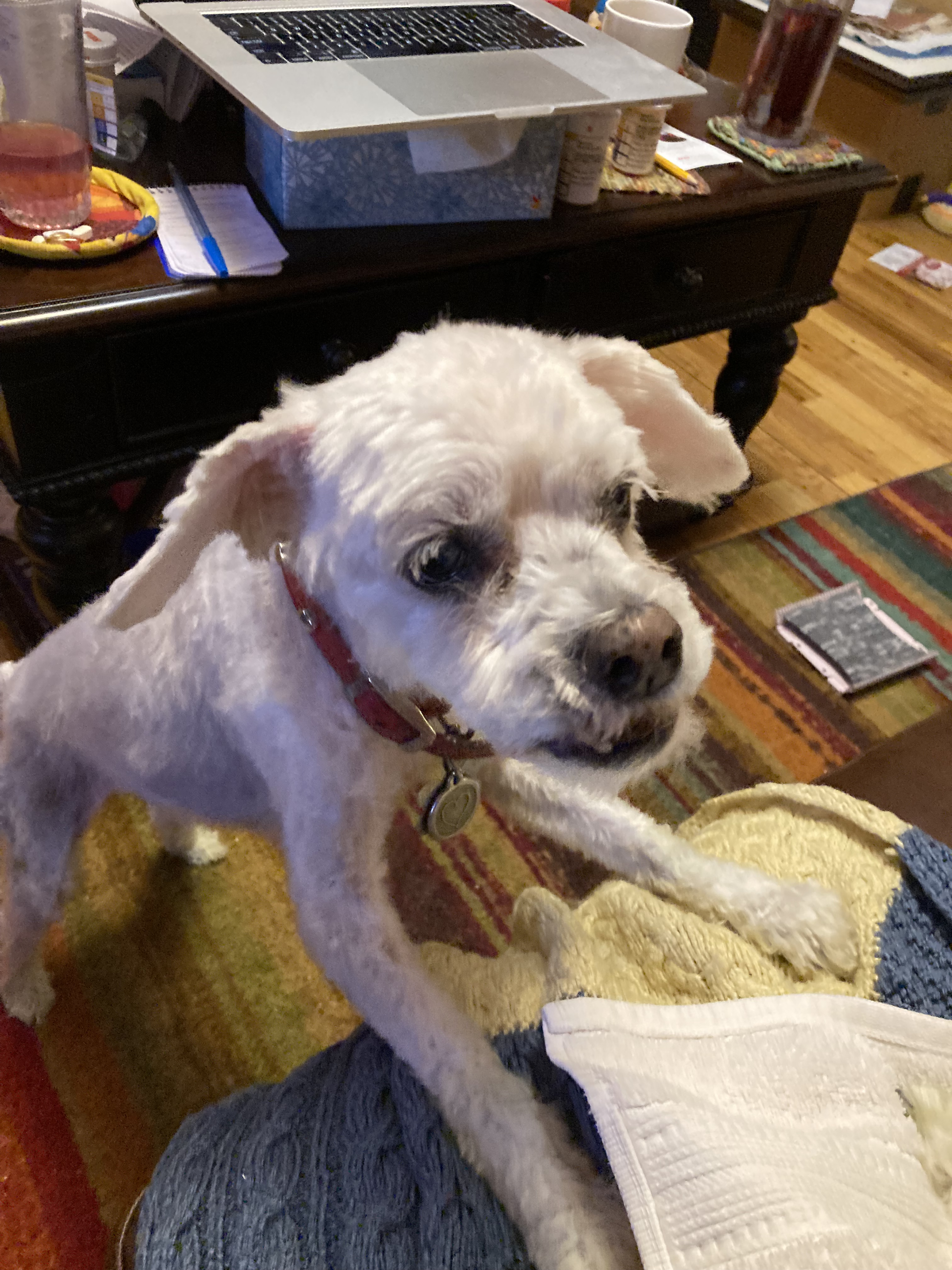
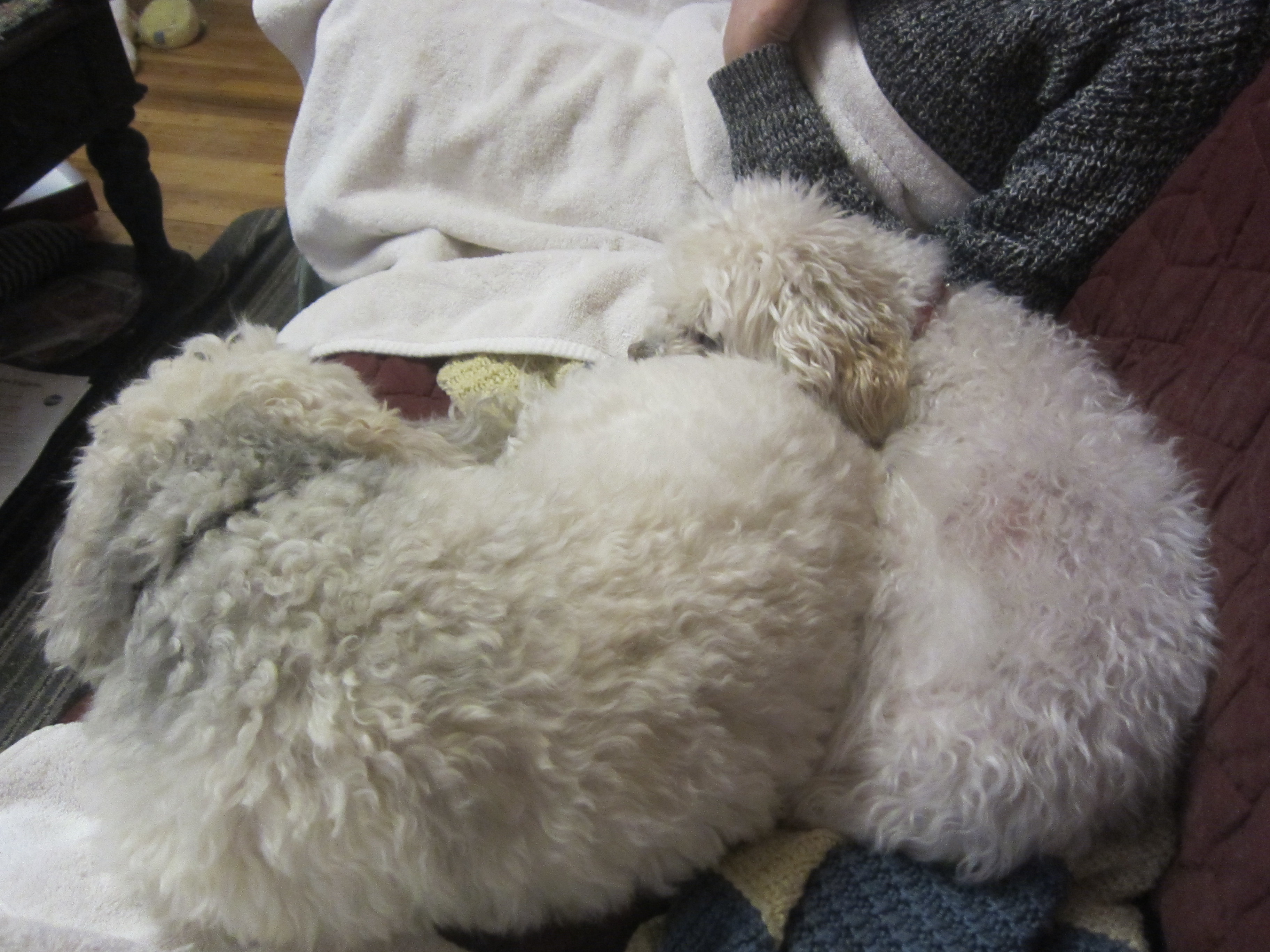
Tag Archives: dogs

The B’nei Mitzvah

            My first students ever in synagogue school are now old enough to be getting ready for their B’nei Mitzvah, the ritual celebration of leading a prayer service on turning thirteen to mark becoming a full member of the community. I haven’t seen much of these kinds so far this year, because they come to school just as I’m leaving for the day, so I only glimpse them here or there, or hear about them from their younger siblings. I don’t even know if they remember me (though, because they were my first class, they probably remember the candy I used to use to bribe them into paying attention). When I saw them last year, the boys still looked mostly the same and the girls looked ten years older, but I don’t know if they’ve changed in other ways: if they are calmer or angrier, sadder or happier, more cautious or more curious. I don’t know if they’ve learned everything they need to learn for their B’nei Mitzvah services or if they’re struggling. I don’t even know if they are still connected to each other the way they used to be or if they’ve grown apart.

            Last year, when I started to realize that this milestone was coming up, I had all kinds of plans to go to every single B’nei Mitzvah service, two and a half hours on consecutive Saturday mornings for months, to show my support (and not just to share in the snacks afterward). But now, because of my health, that doesn’t feel possible. The idea of getting up early enough to be at the synagogue by 9:45 AM, and standing and praying and socializing for hours, week after week, just seems so unlikely. But maybe I can make a commitment to go to each of their Friday Night services in person, instead of just on Zoom.

“But I love watching on Zoom!”

            At our synagogue, we start celebrating the B’nei Mitzvah at the communal Friday night services the night before the big day, where the kids lead a few important prayers and tell us about their mitzvah (service) projects, like walking dogs at the local animal shelter, or raising money for school supplies for underprivileged kids, or coaching developmentally disabled kids in soccer, or anything else that interests them and feels doable for a thirteen year old, with some help. The parents also go up and tell us about their children through a collection of books they’ve chosen as gifts – books connected to both being Jewish and loving sports, or cooking, or history, or art, or theater. It’s a chance for the rest of the community to celebrate with the family, and get to know them better, especially if we’ve never met them before.

“So where are my books?”

            Right now, though, even that commitment feels like more than I can handle. But it’s really important to me to be there, in person, where my former students can see me, and their other teachers, and know that we care about them and their journeys and their futures. I remember my own Bat Mitzvah so vividly and how most of my religious classmates couldn’t be there because it was on Shabbat and they couldn’t travel. And I remember how the rabbis at my orthodox Jewish day school disapproved of a girl leading services at all. It would have been so validating to have had all of those people there in the room with me, to see what I’d accomplished and to see what I could become. It would have meant the world to me.

            So I have until March to figure out how to make those Friday nights possible. Maybe some of my upcoming doctor visits will lead to progress in my health, or if that doesn’t pan out, maybe I can just plan to rest all day on Fridays, with no errands, no appointments, and no lesson planning, in order to have energy left at the end of the day to get to the synagogue in person. Wish me luck!

“Harrumph.”

If you haven’t had a chance yet, please check out my Young Adult novel, Yeshiva Girl, on Amazon. And if you feel called to write a review of the book, on Amazon, or anywhere else, I’d be honored.

            Yeshiva Girl is about a Jewish teenager on Long Island, named Isabel, though her father calls her Jezebel. Her father has been accused of inappropriate sexual behavior with one of his students, which he denies, but Izzy implicitly believes it’s true. As a result of his problems, her father sends her to a co-ed Orthodox yeshiva for tenth grade, out of the blue, and Izzy and her mother can’t figure out how to prevent it. At Yeshiva, though, Izzy finds that religious people are much more complicated than she had expected. Some, like her father, may use religion as a place to hide, but others search for and find comfort, and community, and even enlightenment. The question is, what will Izzy find?


What Were the Rabbis Thinking?

            In Bible Study, a few weeks ago, we read one of the multiple mentions of the prohibition against boiling a kid in its mother’s milk, and it hit me, once again, what a strange law that is. First, because who would even think to do such a thing? And second, why did the rabbis interpret that line to mean don’t eat meat with milk at all?

            In the research for my Jews Around the World curriculum, for my synagogue school students, I found out that Ethiopians Jews, who went into exile before the Talmud was written, interpreted the prohibition against boiling a kid in its mother’s milk to mean don’t eat a young goat until after it has been weaned. And that made so much more sense to me! It made the dietary laws resonate with the lesson Abraham learned in Genesis: that it was no longer cool to sacrifice your children to the gods, or even to the God.

“Humans are weird.”

            One explanation given for the original prohibition against boiling a kid in its mother’s milk, is that the pagans who lived near the Ancient Israelites would literally boil a young goat in its mother’s milk as a fertility ritual to encourage better harvests, and the Israelites, in order to avoid the temptation of being like the pagans, were prohibited from doing that ritual in particular.

            Another explanation I read recently was that “do not boil a kid in its mother’s milk” was an idiom of the day, that we no longer understand out of context, that meant: don’t mix the newest and best of the harvest with last year’s leftovers, because the first fruits, of the harvest and of the womb, were traditionally treated as special.

“Does being first adopted count as special?”

            None of this was discussed back in my eighth grade Jewish law class in Yeshiva, in large part because the prohibition against eating milk and meat together was so taken for granted that it wouldn’t have occurred to any of us to ask where it came from. And it has become such a point of identity for many Jews, second only to avoiding pigs and shellfish, that no matter what the source of the law, changing it now would feel like cutting ties with our ancestors.

“Like when you tell me not to chase squirrels?”

            We don’t really know when the Israelites adopted the stricter prohibition against eating milk and meat together (as opposed to not boiling a kid in its mother’s milk, or not eating a goat until it has been weaned), because even though the stricter prohibition was first written down in the second century of the Common Era, the tradition says that the rabbis were collecting the wisdom that had existed for generations, finally seeing the need to write it down because the Israelites had been exiled from the land of Israel and scattered around the world. We do know that the rabbis who wrote the Talmud liked to create a fence around a fence around the law, to avoid even accidental sins, so they may have seen the blanket rule against mixing any milk with any meat as a necessary safeguard once they could no longer be sure which goat had provided their meat or their milk.

“I hate fences. I like freedom!”

The prohibition against mixing meat and milk would have been much easier to maintain in the ancient world, though, because the Israelites were sacrificing their goats and sheep and cows at the Temple maybe three times a year, if that. They weren’t going to the supermarket for meat every week, so the temptation to sprinkle some parmesan on their meatballs and spaghetti wouldn’t have come up very often, either in Ancient Israel, or when the rabbis were finalizing the Talmud in the first few centuries of the Common Era. Maybe if the Rabbis had been able to envision our lives today they would have gone with the Ethiopian interpretation way back when, or just stuck with the literal meaning of the law, which would have become as irrelevant as many other laws in the Hebrew Bible once the Jews were exiled from the land of Israel and could no longer make sacrifices at the Temple in Jerusalem. But who knows, the rabbis were an obsessive bunch and they liked to create complicated rules for just about everything, so they may have stuck to their guns even if they could have seen the difficulties Jews would face in the future.

            The rabbis also had a mandate to continue the Israelite tradition of using rituals and laws to keep the Jewish people separate from their neighbors, in order to maintain their belief in one God, and having such different eating habits could certainly keep people separated from each other. I have a notebook full of the rabbis’ strictures from my eighth grade Jewish Law class, where I learned that most of what we did at my house wasn’t kosher enough, and therefore I could never invite my school friends over, so I know how well it works.

There are Jews who ignore all of these rules and traditions as out of date and unnecessary, and others who think that these strict rules around food are meant to ritualize eating and therefore infuse it with holiness. Others say that the kashrut laws in general were specifically created to make it difficult to eat meat, so that we would avoid that temptation as much as possible, and there are yet others who say that the rules make no sense, but you should still follow them anyway, because…God.

“You mean, because I said so!”

            Often we search for logical reasons to do the things that have emotional meaning for us, and at this point in my life it would feel more meaningful to avoid eating lamb, or kid, or veal, than to avoid eating a cheeseburger. But it’s possible that if my grandfather, who loved being Jewish and felt strongly about keeping kosher, were still alive, the act of carefully waiting hours after eating brisket before even thinking about a bowl of mint chocolate chip ice cream would have more meaning for me, because it would strengthen my connection with him. I don’t know. A lot of the rules still grate on me, as triggers for bad memories from my childhood and adolescence with my father. But feelings can change over time. Who knows what the future will bring?

“Chicken Parmesan?”

If you haven’t had a chance yet, please check out my Young Adult novel, Yeshiva Girl, on Amazon. And if you feel called to write a review of the book, on Amazon, or anywhere else, I’d be honored.

            Yeshiva Girl is about a Jewish teenager on Long Island, named Isabel, though her father calls her Jezebel. Her father has been accused of inappropriate sexual behavior with one of his students, which he denies, but Izzy implicitly believes it’s true. As a result of his problems, her father sends her to a co-ed Orthodox yeshiva for tenth grade, out of the blue, and Izzy and her mother can’t figure out how to prevent it. At Yeshiva, though, Izzy finds that religious people are much more complicated than she had expected. Some, like her father, may use religion as a place to hide, but others search for and find comfort, and community, and even enlightenment. The question is, what will Izzy find?

The Ways of Waze

            My best friend from high school came in from Israel for a family visit recently, and my only job was to find a way to get to where she was staying in order to catch up. It seems like it should be easy to get from one part of Long Island to another, to see an old friend I rarely get to see, but I’m me, so…

“Uh oh.”

            I downloaded WAZE on my phone, per Mom’s instructions, and also printed out a hard copy of the directions from Google Maps to study ahead of time. I’d managed a trip out to the Far Rockaway area a couple of years ago without WAZE, for a visit with the same friend, but it’s a route I rarely drive and I wanted to be prepared.

            And then I had a flare, or a worsening of my symptoms, or whatever I’m supposed to call it. My symptoms have been bad for a while now (exhaustion, pain, brain fog, Psoriasis and Lichen Planus outbreaks, walking trouble, breathing trouble, headaches, etc.), but on the Thursday before the visit things got even worse, to the point where Mom had to drive me to and from work to avoid a possible disaster on the road.

“I can’t watch.”

            I still thought the flare would pass by the day of the visit, though, and I avoided anything stressful or difficult in the days leading up to it, in hopes of recovering in time. But when I got up that Sunday morning, I knew I couldn’t do the drive; I could barely figure out how to open WAZE on my phone and make the directions appear. So Mom volunteered to drive me.

            It’s embarrassing to be an adult who needs her Mom to drive her to a get together, or to what my students would call “a play date,” but it was either be embarrassed or miss the visit altogether.

            Mom and I had both programmed our phones for the route, out of an abundance of caution and anxiety, so even after we’d decided to just use my phone, held aloft in the passenger seat so I could repeat the directions as many times as necessary to avoid missing our exits, Mom’s phone kept talking, in an echo. I finally figured out how to shut down her phone completely in order to make the echoing stop (later I realized that I could just have pressed stop on the WAZE screen, but, as I said, brain fog).

            We still had a hard time following the directions, of course, missing a few turns here and there, and then WAZE told us about a hazard up ahead, too late for us to turn around and change the route, and we found ourselves driving through a lake in the middle of the road. The car swam for twenty feet or so before getting to dry road on the other side, but it survived again.

            In my job as holder of the phone, I also discovered that WAZE likes to put little smiley faced icons all over the screen, which look suspiciously like the hidden pictures in one of my phone apps that I’m trained to tap with my finger until they are all removed and I win lots of points. I was just barely able to stop myself from pressing all the icons, so I have no idea what would have happened to the directions if I’d given in. We’d probably have ended up in Brooklyn.

            But we managed to get to our destination on time and safely, and it was a joy to see my friend again. Mom dropped us off at a coffee place to chat and then spent the next two hours on her own, taking pictures of big rocks and collecting shells at the beach, and then we dropped my friend off back at her sister’s house, with lots of hugs, and started up the WAZE again, a little more hopeful that the drive home would be uneventful. And despite some interesting “short cuts,” leading us behind factories and through one way roads that seemed more like driveways (probably to avoid the lake in the road), we made it safely home to the dogs, just in time for their afternoon walk.

            Ellie was thrilled to see us and zoomed around the yard in circles and figure eights, with breaks to come back and give us hugs and kisses, and Cricket spent her time sniffing scientifically at small patches of grass, searching for messages from her friend Kevin, the mini Golden Doodle, and looking longingly at the steps in front of his building, to no avail.

“He peed here. I know it!”

            And then we were back inside, home, with WAZE silenced and no more left turns to make across traffic, and I was relieved. The fact is, I was incredibly lucky to have Mom there to drive me, and WAZE to help us get there safely, and a good friend to meet with and catch up on all of the life events that can’t be shared in a text. Life has so many moving parts, with so many hazards along the way, but every once in a while the puzzle pieces actually come together. And it’s wonderful!

Home.

If you haven’t had a chance yet, please check out my Young Adult novel, Yeshiva Girl, on Amazon. And if you feel called to write a review of the book, on Amazon, or anywhere else, I’d be honored.

            Yeshiva Girl is about a Jewish teenager on Long Island, named Isabel, though her father calls her Jezebel. Her father has been accused of inappropriate sexual behavior with one of his students, which he denies, but Izzy implicitly believes it’s true. As a result of his problems, her father sends her to a co-ed Orthodox yeshiva for tenth grade, out of the blue, and Izzy and her mother can’t figure out how to prevent it. At Yeshiva, though, Izzy finds that religious people are much more complicated than she had expected. Some, like her father, may use religion as a place to hide, but others search for and find comfort, and community, and even enlightenment. The question is, what will Izzy find?

All Those Cooking Shows

            I’ve been watching a lot of cooking shows lately (mostly in Hebrew, as language practice) but I haven’t been doing much cooking, to Cricket’s great frustration. I am a messy cook, and as I chop, many pieces of red pepper and carrot and sometimes even chicken land on the floor right in front of her, where she is, conveniently, waiting. Instead, I am microwaving frozen meals, and all she can do is fight with her sister for the leftover sauce in the bowl (Cricket always wins).

“It’s all mine!”

            It’s not that the cooking shows aren’t inspiring. In fact, I feel like I should be making long lists of ingredients to search for, and printing out recipes for Shakshuka with eggplant and Kibbeh, or five kinds of Chummus, and instead I’m eating oatmeal for breakfast, and peanut butter and jelly sandwiches for lunch, and anything I can warm up from the freezer for dinner (unless I’m lucky and Mom does the cooking, but she is not a messy cook, sorry Cricket).

“Harrumph.”

            I should at least be ordering out from Wild Fig (a Turkish restaurant with multiple locations nearby), or buying readymade Falafel or Bourekas from the international supermarket, but I’m not doing either one, and I’m not sure why.

            My first theory for why I was struggling was that most of the recipes, like the shows, are in Hebrew and measure in grams, which makes them largely incomprehensible. So I went online to look for similar recipes in English and found a treasure trove on Jamie Gellar’s site (she’s an orthodox, kosher cook who covers a wide range of styles of cooking, including Israeli).

But now I have a pile of new recipes that I have no energy to make.

            I don’t think it’s depression that’s holding me back, if only because once I take my afternoon (or morning) nap my moods are pretty good, even if my energy level still stinks. But there’s something about knowing how little energy I’m likely to have tomorrow, or next week, that has changed my calculations for what kinds of plans to make, if any.

“Plan to take a nap.”

            I’d like to believe that I’ll be able to do some cooking over the summer, when I won’t need all of my energy for teaching, but there’s also a long list of writing projects and exercise goals and doctor visits and household tasks that I need to catch up on over the summer, and even then, we don’t have air-conditioning in the kitchen to make it bearable, just a fan that tends to read between 80 and 95 degrees all summer long.

But I keep watching these cooking shows and wishing I could just walk down the hall to the kitchen and make an Israeli salad, or bake my own pitas on the top of the stove. I need to believe that something will improve soon so that I’ll be able to use all of this inspiration to actually make plans and follow through on them, or else I’m afraid I’ll get so stuck in my reality that I’ll forget how to hope for more.

Some links:

From Jamie Geller – Machane Yehuda Recipes (in English) (10 min.) https://youtu.be/lgjdy7VQJ0I

From Piece of Hebrew (with English subtitles) A SABICH recipe (14:18) https://youtu.be/nY29TRUh_MY

From Anachnu Al HaMapit with chef Michael Solomonov in Philadelphia (mostly in English with Hebrew subtitles) (53:15)https://youtu.be/EH-WpezAOTg

If you haven’t had a chance yet, please check out my Young Adult novel, Yeshiva Girl, on Amazon. And if you feel called to write a review of the book, on Amazon, or anywhere else, I’d be honored.

            Yeshiva Girl is about a Jewish teenager on Long Island, named Isabel, though her father calls her Jezebel. Her father has been accused of inappropriate sexual behavior with one of his students, which he denies, but Izzy implicitly believes it’s true. As a result of his problems, her father sends her to a co-ed Orthodox yeshiva for tenth grade, out of the blue, and Izzy and her mother can’t figure out how to prevent it. At Yeshiva, though, Izzy finds that religious people are much more complicated than she had expected. Some, like her father, may use religion as a place to hide, but others search for and find comfort, and community, and even enlightenment. The question is, what will Izzy find?

Living at the Dentist’s office

            Lately I’ve been living at the dentist’s office, or the oral surgeon’s, depending on the week. First there were regular checkups to see how I was healing from this summer’s oral surgery, and then at about the three month mark a crack appeared in the temporary upper teeth, not visible on the outside, and, luckily, the oral surgeon had been testing out his own 3D printer this fall and made a second version of my temporary device, so it was available to be switched out for the cracked one. And after that, I had to start the process of going from a temporary implant to a permanent one, which means molds and try-ons and who knows what else.

            But in the meantime, I also had regular cleanings, and more extractions, because my bottom teeth were jealous of all of the attention the upper teeth had gotten, and I had to get a temporary tooth, called a flipper, to fill the empty space up front, so now I have to be even more careful about what I eat, so I don’t accidentally pull out the flipper and swallow it with my dinner.

“That doesn’t sound yummy at all.”

            I wish this was all as entertaining in real life as it looks on paper.

The bone and gum loss in my mouth is so premature and seems to be a big honking clue that there is some underlying systematic disease process at work in my body, but no one can explain it or tie it to a specific diagnosis. So I continue to lose my teeth, and I continue to get more and more exhausted, and nothing I try seems to be able to slow this process down, let alone reverse the damage already done.

            I’ve also had to go for blood tests, and a mammogram, and a gynecological checkup, and there’s the oral pathologist and the primary care doctor and the gastroenterologist coming up, and, of course, the continuing dental visits.

And I’m tired. I’m tired of having to spend money on my teeth, and on tests and supplements, and I’m tired of having to spend so much energy and time going to doctors and researching potential diseases and treatments, without success.

            My nutritionist mentioned that someone she knows, with similar autoimmune issues to mine, had some success with Low Dose Naltrexone (the regular dose, which is prescribed to interrupt opioid addiction, is covered by insurance, but the low dose is an off label use and therefore only available at a compounding pharmacy, and therefore not covered), so now I’m doing research online and asking my various doctors what they know about that. But I’m worried that either the doctors won’t prescribe it, or that they will and then I’ll spend more money and time on yet another possible solution and get no improvement.

And in the meantime, my micro-part-time job is getting harder to manage, and when, on top of that, an emergency comes up: like the smell of gas in the building (leading nine members of the fire department to stomp into my apartment, silencing even Cricket, and then they turned off the gas for the whole building, for two weeks, while they checked the connections in every apartment), or the toilet leaking into the apartment below us (leading to a new wax ring and therefore a new toilet and new tiling because our toilet had been set in place with concrete, for some reason), the resulting invasion of workmen makes life even harder.

“Oy.”

            But, Mom has been doing better, and has had a string of good luck with new doctors who seem to know what they’re doing and care what she has to say. And the dogs both passed their yearly checkups with flying colors, and Ellie survived yet another dental cleaning and now has fresh clean breath, and I still love my work, and have tons of good things to watch on TV, and good books to read, and good food to eat…

            And I feel like I should be celebrating all of this good fortune, but I don’t have the energy. So I keep trying new probiotics, in case the gut microbiome is the source of all disease (as Facebook keeps telling me), and I keep trying new breathing exercises and yoga poses and guided meditations, in case a calm mind really is a healthy mind (again, Facebook), and I hug the puppies, and I take my naps, and I read my mysteries. Because what else can I do?

“Bark. At everyone.”

If you haven’t had a chance yet, please check out my Young Adult novel, Yeshiva Girl, on Amazon. And if you feel called to write a review of the book, on Amazon, or anywhere else, I’d be honored.

            Yeshiva Girl is about a Jewish teenager on Long Island, named Isabel, though her father calls her Jezebel. Her father has been accused of inappropriate sexual behavior with one of his students, which he denies, but Izzy implicitly believes it’s true. As a result of his problems, her father sends her to a co-ed Orthodox yeshiva for tenth grade, out of the blue, and Izzy and her mother can’t figure out how to prevent it. At Yeshiva, though, Izzy finds that religious people are much more complicated than she had expected. Some, like her father, may use religion as a place to hide, but others search for and find comfort, and community, and even enlightenment. The question is, what will Izzy find?

Piece of Hebrew/Piece of French

            I recently found a YouTube channel called Piece of Hebrew and I’m a little bit addicted. I’ve been making YouTube lists for everything lately, for videos about Jewish history and Israel for the teenagers at my synagogue, for guided meditation and exercise videos for me, for Hebrew language shows of all kinds for me (and for any of my students who eventually want to improve their Hebrew). And each time I find one good thing, I find ten more that are sort of on topic, or not really, like videos to add background to my Jews around the World curriculum (there were a ton of virtual tours during Covid), and videos to help people plan trips to Israel (I found a really good Israeli tour guide whose videos are helpful and entertaining), and, of course, as soon as we watch a new show in my online Hebrew class I have to go to YouTube to see if I can find more episodes (there’s a great series about Israeli chefs in cities around the world and a bunch of the episodes are on YouTube, with Hebrew subtitles).

“We’re never going outside again.”

            So, somewhere in there I found the Piece of Hebrew videos, hosted by an Israeli Hebrew teacher named Doron, where he talks about Israeli musicians and TV shows and movies, all in Intermediate level Hebrew with English subtitles. And then I watched some episodes that included Elsa, his live in girlfriend who made Aliyah to Israel four years ago from France and became fluent in Hebrew, and then I found out that she has her own YouTube channel called Piece of French, which is in intermediate and advanced French and all about her life in Israel, and in France, and on vacation, and with her family.

            So now I have five or six pages of links to videos, all of which I want to watch right now. Part of the fun is getting to know the two of them and their dog, Bilhah, and how they met, and how and why they started their channels, and then what their lives are like in Israel on a daily basis: with videos on gardening and shopping and camping and whining about random things, all in French or Hebrew, with English subtitles.

“Does Bilhah bark in Modern or Biblical Hebrew?”

            My current online Hebrew teacher was even mentioned in one of Doron’s videos, listing his five favorite Israeli female singers, which probably encouraged me to watch more videos early on, now that I think about it.

            Of course, now I feel like I’m way too far behind in my French, much farther behind than I thought I was, and I worry that I’m not far enough ahead in Hebrew either, and I should be watching these videos for hours every day to improve. And I’m already overwhelmed with my actual work, and trying to figure out how to get everything done between naps, which is probably why I got so deep into the YouTube videos in the first place, because I could watch them on my phone, lying down.

“We love nap time.”

            It’s so nice that the world has adapted to my chronic exhaustion by providing so much passive entertainment, but I wish I could be well enough to actually go to France and Israel (and Italy and Spain and Japan…) and see everything firsthand. Especially the food. I’d really, really like to taste all of the food for myself.

“Me too!”

If you haven’t had a chance yet, please check out my Young Adult novel, Yeshiva Girl, on Amazon. And if you feel called to write a review of the book, on Amazon, or anywhere else, I’d be honored.

            Yeshiva Girl is about a Jewish teenager on Long Island, named Isabel, though her father calls her Jezebel. Her father has been accused of inappropriate sexual behavior with one of his students, which he denies, but Izzy implicitly believes it’s true. As a result of his problems, her father sends her to a co-ed Orthodox yeshiva for tenth grade, out of the blue, and Izzy and her mother can’t figure out how to prevent it. At Yeshiva, though, Izzy finds that religious people are much more complicated than she had expected. Some, like her father, may use religion as a place to hide, but others search for and find comfort, and community, and even enlightenment. The question is, what will Izzy find?

My New Friend Roku

            For my birthday this year, my mom offered to figure out how to add streaming to our regular TV, so that we could finally get Netflix and find out what everyone’s been talking about. Up to now we’ve only been able to watch streaming channels (like Hoopla and Kanopy, which we get free from our library) on our computers or phones, so it didn’t seem worth the extra expense to pay for Netflix. But Mom was determined to try, and she ordered a Roku device, and spent two very frustrating days setting it up (I would have given up in two seconds) until it was all connected and working. Then my brother got me a few streaming channels for my birthday, so now we have Netflix and Britbox and Roku’s free movies on top of the two streaming services from our library. And then there are the channels I’m supposed to be able to move over from cable into streaming, so that the shows will be available whenever I want instead of just when they are scheduled, but I’m not sure my brain has the bandwidth to figure out how to make that happen, and I’m already overwhelmed with so many options I can barely see straight.

“We’re exhausted too.”

            It took us forever to look into a device to add streaming to our TV, mostly because I was sure it would be expensive, and require a smart TV, and add ten times more stress to my life; just like I waited forever to switch from my flip phone to a smart phone, because I was overwhelmed with all of the new skills I’d have to learn, and all of the decisions I’d have to make. But my smart phone has turned into a wonderful companion, and I think the Roku will probably be the same, eventually.

            My first priority when the Roku was connected, and Netflix was added, was to start watching Shtissel – an Israeli TV show about an ultra-orthodox family in Jerusalem. I’d seen two episodes a few years ago, on YouTube, with only Hebrew subtitles, so now I could watch the whole series, with English subtitles to fill in the gaps where my Hebrew and Yiddish skills failed me. But as soon as I went looking for Shtissel, I found a ton of shows people have been recommending for years, and I had to fill up my watchlist before I could focus on watching any actual shows.

            Then I went through Britbox and ended up putting most of those shows on my watchlist too – because I’m a sucker for a British mystery, but also because even on the large screen I can barely read the show descriptions, so I added a lot of shows without really knowing what they’d be about, just assuming it’s a British mystery, so it has to be good. We’ll see how that goes.

“You can never assume!”

            Of course, now I’m eyeing those channels I don’t have yet (apple+, Prime Video, Hulu, etc.) because I keep seeing ads for shows I can’t access, and it is insanely frustrating, and then I  get overwhelmed with all of the options, and wish I could go back to only having two hundred or so channels to choose from.

“Is there a squirrel channel?”

            But I am, gradually, getting used to all of this. I’ve even learned how to juggle the three TV remotes we need now, one for cable, one for Roku, and one to switch back and forth from Roku to cable.

            My mom, who got all of this set up, says she is flummoxed by the three remotes, and all of the options, and leaves it to me to make the decisions about what to watch and when. She tells me that the Roku was a present for me, not for her, so she will happily watch whatever I choose. But I know that, eventually, she will find a streaming channel devoted entirely to quilting or photography, and I will be unable to convince her to hand back the remote controls, so I am doing my best to get on board and watch all of the shows I like now, before it’s too late.

“Don’t let her do it! She already sews too much!”

If you haven’t had a chance yet, please check out my Young Adult novel, Yeshiva Girl, on Amazon. And if you feel called to write a review of the book, on Amazon, or anywhere else, I’d be honored.

            Yeshiva Girl is about a Jewish teenager on Long Island, named Isabel, though her father calls her Jezebel. Her father has been accused of inappropriate sexual behavior with one of his students, which he denies, but Izzy implicitly believes it’s true. As a result of his problems, her father sends her to a co-ed Orthodox yeshiva for tenth grade, out of the blue, and Izzy and her mother can’t figure out how to prevent it. At Yeshiva, though, Izzy finds that religious people are much more complicated than she had expected. Some, like her father, may use religion as a place to hide, but others search for and find comfort, and community, and even enlightenment. The question is, what will Izzy find?

The Comfort of the Chanukah Lights

            The word Chanukah means dedication, and refers to the rededication of the Temple in Jerusalem, in the 2nd century BCE, after it had been won back from the Seleucid Greeks. So, to get my synagogue school students into the spirit of the holiday, we created a Human Chanukiah (complete with dance moves to represent each candle being lit), and I asked each of them what they wanted to dedicate themselves to this year, for Chanukah, or, given the time of year, for the New Year. And for the most part, they wanted to dedicate themselves to fun things: like sports, and candy, and getting more presents, and playing with their friends. Not one of them said they wanted to dedicate themselves to getting good grades, or doing their homework, or eating healthier food; they just wanted to live in the moment and live well, on their own terms.

“Sounds good to me.”

            I keep forgetting how much wisdom the kids have to share with us. As a teacher, I keep judging myself by my success at getting them to focus on Hebrew and prayers, and being good and generous and charitable, but that’s not what they want most for themselves. Just because their parents want them to do well in school, and be good at sports, and end up in successful careers that earn them enough money to send their own kids to synagogue school, that doesn’t mean that that’s what motivates the kids to get up each morning. And I think the most important thing I can do for them is to focus on what they really want and who they really are, so they know that they matter to the people around them. Because if, someday, they feel motivated to work hard and be kind and accomplish great things for society, it needs to come from their own values and feelings and beliefs, and not just from the hope of pleasing other people. When things get hard, which they always do, the thing that will keep them going in the midst of all of that work is the ability to find joy and meaning in who they actually are, and the light they have inside of them.

Miss Ellie, full of light

            I struggle with this all the time, because I keep getting confused about whose goals I should be working towards, mine, or the people who are judging my accomplishments or lack thereof. And I thought about this a lot this past week when I heard that Stephen “Twitch” Boss, a dancer and judge from So You Think You Can Dance and DJ on The Ellen Show, had killed himself, at age forty, leaving behind a wife and three children. I don’t know why he did it. There seems to have been a suicide note mentioning past challenges, but I don’t know if that made things clear to his family and close friends or if it was too vague even for them to understand. So, of course, I’ve been trying to process the loss in my own way.

            I felt a lot of different things at the news: disbelief, of course, because he was such a passionate, charming, talented, and seemingly happy person; grief, because even though I never met him, his dancing and his humor and his kindness and his patience with other people all made him seem like someone I’d want to know; anger, at him, for choosing to go and not to continue to share his love and talent and light with us; sadness, at how much pain he must have been in to see suicide as the only answer, and to so completely prevent anyone from stopping him once he’d decided to die; and anger again, that he had a gun, because guns are the most efficient way to kill yourself, and maybe if he’d used another method he could have been reached in time to receive the life-saving help he didn’t know how to ask for; and then I felt fear, that if he could be overcome by his darkest emotions, despite all of his talent and love and resources and friends, what’s going to save me if I fall into the deep dark again? And then I felt survivor’s guilt, for being so lucky as to have found the right kind of support, and medication, and therapy, to not be in the place he was in.

I’ve been comforted by how many people loved him, and cared about him, and were deeply impacted by his death. Grief is easier to bear when it’s shared, and when the value of the lost one is so completely acknowledged and understood.

            And I’ve also seen a lot of posts and videos on social media professing knowledge about why he killed himself, looking for clues and conspiracies or people to blame. It’s his wife’s fault, or Ellen DeGeneres’ fault, or he was in a financial hole because someone cheated him, or he didn’t kill himself, he was murdered. And I understand the impulse, the need, to make sense of a loss that is so hard to accept. I want something to grab hold of too. I want an explanation. Most of all I want it to not have happened. Even if he never danced again or never showed himself in the public eye, it would be better to be able to think of him as alive, and living the life he wanted for himself.

But I’ve also been watching his old dance routines on YouTube, and I can’t help wishing that he could have been given more opportunities to share his gifts, more time on stage and screen, more time with great choreographers. His dancing reminded me of Gene Kelly, with the charismatic full body presence he had, and the humor and warmth and energy that filled every step, and I could picture him in those MGM musicals, dancing on the ceilings and singing in the rain, because he was the kind of leading man you could believe in, and love, and root for. And he was a dancer who could capture your heart no matter what style of dance he tried. But maybe that’s just me wishing for things for him that he didn’t want for himself.

            What I want to learn from his death, and what I want to make sure my students know, is that even when you don’t achieve all of the goals you set for yourself, or the goals others set for you, you still matter and you still deserve to take up space in the world. And if you can hold onto who you really are, and the things that bring you joy, that can be what brings you back from the brink when the darkness sneaks up and tries to convince you that life isn’t worth living anymore. We all deserve joy, and love, and time to play with our friends, and all of the presents we want, even if we can’t always get those things.

            After a Jewish funeral, and then yearly on the anniversary of the death, Jews light a memorial candle, a yahrzeit candle, that is meant to last twenty four hours, to mark the memory of the loved one and the light they brought to the world, and I feel like Chanukah, with its eight days of light, came at just the right time to support me through the loss of Twitch and his light; eight days of manufactured light, to fill the void left by the passing of his natural bright light. It’s a small comfort, a metaphorical comfort, but it is real.

            I feel so lucky that Twitch existed and had a platform to share his light for as long as he was able. I wished for more for him, and from him, but what a gift he already was! I hope that his friends can bring light into the lives of his wife and children, and his mother and grandfather, for as long as they need it in order to get to a place where their own light can shine again, and when the memory of Twitch can bring them more light than grief.

            Zichrono livracha, may his memory be a blessing.

Here are some clips to watch, if you want to share some of the light Twitch brought to the world:

Katee and Twitch – Mercy - https://youtu.be/nhrxfHCtMJA
Alex and Twitch – Outta Your Mind - https://youtu.be/TLtSfYX8tJk
Kherington & Twitch - Dreaming With a Broken Heart - https://youtu.be/cufPoqE21ko
Sasha and Twitch - Misty Blue - https://youtu.be/l4cbpCs_E9g
SYTYCD Stephen "Twitch" Boss solos - https://youtu.be/3KlCG9OpWNM
Twitch and Allison dance to "Bebot" by the Black Eyed Peas - https://youtu.be/giqyscyp9XY

If you haven’t had a chance yet, please check out my Young Adult novel, Yeshiva Girl, on Amazon. And if you feel called to write a review of the book, on Amazon, or anywhere else, I’d be honored.

            Yeshiva Girl is about a Jewish teenager on Long Island, named Isabel, though her father calls her Jezebel. Her father has been accused of inappropriate sexual behavior with one of his students, which he denies, but Izzy implicitly believes it’s true. As a result of his problems, her father sends her to a co-ed Orthodox yeshiva for tenth grade, out of the blue, and Izzy and her mother can’t figure out how to prevent it. At Yeshiva, though, Izzy finds that religious people are much more complicated than she had expected. Some, like her father, may use religion as a place to hide, but others search for and find comfort, and community, and even enlightenment. The question is, what will Izzy find?

The Power of Magical Thinking

            In this season of miracles (for Hanukah) and magic (for Christmas) I’m always inspired, and a little bit confused, about what’s possible and what’s not. I don’t think Santa is going to come down my chimney, wearing a blue suit covered in Stars of David, with a bag of presents just for me; if only because I don’t have a chimney of my own. And I don’t think my Chanukiah (a menorah with an extra candle for Chanukah) is going to stay lit for eight days; in fact, I’ve never had candles that lasted more than half an hour at a time. But there’s something in the air, and in the lights and presents and TV movies and special foods and decorations, that makes it feel like anything is possible.

“Can we plant chicken trees this year?”

            I don’t really believe in magic, though I really, really, want to, but I’m intrigued by it and by all of the things we’ve called magic in the past that turned out to have understandable, if complicated, causes.

            Recently, my rabbi talked about how, when the ancient Israelites first entered the Land of Canaan, the Canaanites taught them all of the latest agricultural science, including the rule that you should only make unleavened bread in the spring, so that all of the leavening (AKA fertility) could go to the land itself. As a result, we have a Jewish holiday each spring which features unleavened bread, or matzah (at some point, the holiday of unleavened bread was combined with the celebration of the Exodus from Egypt, to become the single week long holiday of Passover). Over time we gave new meaning to the ritual of eating unleavened bread in the spring, combining it with the memory of the way the Israelites had to escape from Egypt quickly and therefore had no time to let their bread rise, but the ritual is the same and its source is a belief in sympathetic magic.

“Matzah does not count as food.

Sympathetic magic is magic that derives its power from a connection between similar objects, like a voodoo doll, with a lock of the enemy’s hair on the doll to create a link, so that whatever happens to the doll happens to the enemy. You don’t have to believe that this is magic in order to understand the metaphoric value of a ritual like this: the voodoo doll creates a catharsis, so that an individual can cause harm to a lookalike doll instead of going out and physically harming their enemy, allowing the person to work through their pain, and the fantasy of killing the other, without actually hurting someone else or putting themselves in danger. Isn’t that an incredibly powerful, and even magical, thing for a ritual to be able to do?

The Jewish ritual of Tashlich, where we throw our sins into the water (in the form of bread or birdseed) on Rosh Hashanah, has power because it offers us the chance to feel unburdened, as if we’ve really released a weight from our lives. It’s similar to the therapeutic practice of having a patient who has lost a limb use a mirror to create the illusion of two healthy limbs, so that she is then able to relax the muscles and nerve endings leading to the missing limb, creating real change in the body as the result of an illusion.

Some sympathetic magic hasn’t aged quite as well, like using herbs with yellow sap to cure jaundice, or eating walnuts to strengthen the brain (because walnuts look like miniature brains), or drinking red beet juice to benefit the blood. And yet, at the time that these cures were used they must have seemed like powerful magic, or even the science of the day.

            And that makes me wonder, what if the ideas we call magical thinking are simply hypotheses we’ve come up with over time to explain phenomena we don’t yet understand? When there is proof that a hypothesis is wrong then it would be delusional to continue to hold onto that theory, like eating walnuts because they look like brains rather than because of their actual nutrients, but when there is no means to prove or disprove a hypothesis then is it really so unreasonable to hold onto these magical ideas if they offer us comfort?

            Another example of sympathetic magic that resonates for me is the horcruxes from Harry Potter, where part of the person has been transferred into an object, and therefore the person can’t be killed until the object is destroyed. J.K. Rowling made this concrete in her books, to prolong the life of Voldemort and make him that much more dangerous, but don’t we often use works of art, or clothing, or photographs, to represent our connection to the person who owned them, allowing us to feel their presence even when they are gone?

Miss Butterfly
Miss Dina

            There’s a reason why the Harry Potter books were so successful with adults, as well as with children: because the magical logic resonates. Magic is a powerful metaphor for the things we struggle to give full weight in our emotional lives. It is often used in fantasy stories and superhero movies to bring hard-to-explain feelings to the surface, like the Dementors in Harry Potter who represent the unbearable feelings of grief in physical form, so that they can be seen and fought off. Or like Superman’s one weakness being kryptonite, because it is the raw material of his home planet; this is powerful sympathetic magic and deep psychological truth all at once.

In Harry Potter, Voldemort’s name was replaced with he-who-must-not-be-named, because they believed that saying his name would make him appear, and we have this in Judaism too. We are never supposed to say the “true” name of God, the unpronounceable four letter name in the Torah – the Tetragrammaton – that some pronounce as Yahweh, and we are supposed to save the other names of God only for prayers and blessings, because we’re not supposed to say God’s name in vain, or for no meaningful purpose. All of this is because we recognize that words have power: to create, to shame, to guide, to honor, to express love.

            There are lots of things that I don’t believe in literally that bring me comfort and allow me to keep going, even when reality is deeply disappointing, and I think that’s often the purpose of magic, and religion too. And sometimes, inexplicably, the magic works: a call comes just when you prayed for it, you wish on a star and the wish comes true, or you get a feeling about someone you love far away, and it turns out to be true. Maybe it’s a coincidence, or an educated guess based on deep knowledge of the other person, but it feels magical, as in, unexplained and powerful. And who’s to say it’s not? Especially at this time of year.

“If we put our heads together and think hard, maybe the chicken will come!”

If you haven’t had a chance yet, please check out my Young Adult novel, Yeshiva Girl, on Amazon. And if you feel called to write a review of the book, on Amazon, or anywhere else, I’d be honored.

            Yeshiva Girl is about a Jewish teenager on Long Island, named Isabel, though her father calls her Jezebel. Her father has been accused of inappropriate sexual behavior with one of his students, which he denies, but Izzy implicitly believes it’s true. As a result of his problems, her father sends her to a co-ed Orthodox yeshiva for tenth grade, out of the blue, and Izzy and her mother can’t figure out how to prevent it. At Yeshiva, though, Izzy finds that religious people are much more complicated than she had expected. Some, like her father, may use religion as a place to hide, but others search for and find comfort, and community, and even enlightenment. The question is, what will Izzy find?         

Shabbat is sort of like Christmas once a week

Each year, my synagogue school class has to sing two prayers at a Friday night service, one about the requirement to celebrate Shabbat (the Sabbath), and one hoping for peace (there are many, many prayers hoping for peace, even within a single service). And each year I look at those prayers again, through the eyes of my new class, or through the lens of my ever-changing experience of my own life, and I see new things. This year, after watching dozens of Christmas movies, even before Thanksgiving, I started to think about how celebrating Shabbat is like having Christmas once a week (though when I tried this idea out on my students, they rolled their eyes and said, but we don’t get presents on Shabbat!).

“Where are our presents?”

Shabbat, as the day of rest each week, is, for Jews, about taking a time out to think about how your life is going, and being with family and friends, and singing familiar songs, and eating familiar foods, often to excess, and focusing on joy and connection and comfort instead of on accomplishment and being busy. And those are the goals at the heart of most of the Christmas movies I watch too – along with all of the romance and silly subplots and misunderstandings, of course. Each movie, in the end, is about the search for a version of joy and comfort and love that fits the individual characters in that story. There’s also a lot of family drama, and rigid rules to overcome, and the race to get everything done in time, and awkward socializing, and odd food you don’t really want to eat, just like on Shabbat.

“What’s this food I don’t want to eat?”

It’s possible that I’m just seeing this comparison between Shabbat and Christmas as an excuse for the many many Christmas movies I watch each year, but I think it’s also the reason why I watch the movies in the first place: each one, or at least each of the good ones, is a chance for my soul to reset and refill with hope and wonder, so that I can get through the difficulties of the rest of my life.

When the kids learn the prayers in class they have to do a lot of talking, and writing and drawing, about what they want their own versions of Shabbat to be, and, inevitably at least one of my students tells me that she shouldn’t have to do the work because her family doesn’t celebrate Shabbat, because they don’t celebrate it in the traditional ways. And I tell the kids that, even though I don’t always celebrate Shabbat with all of the rituals, I’ve been able to take things from the tradition that work for me and add my own ideas in order to reach the goal of connection and rest. Shabbat is a weekly holiday of aspiration, as much as of ritual; it’s about finding a way to fill your soul so that you can get through the rest of the week feeling whole, instead of fragmented or out of whack. And really, anything you can do to fill your soul is like your own version of Shabbat. Maybe you meditate or do yoga, maybe you spend time with friends and reconnect with the version of yourself that you can’t be at school or work, or maybe you spend time reading, or talking to your family, or playing board games, or making art, so that you can take a deep breath and feel like yourself again before going back out into the world and doing what’s required of you. To which most of my students roll their eyes, of course.

But I really believe in the power of using Shabbat as a lesson for our lives as well as making it a special day of the week, and the dogs, as always, are great role models for this. For example, I think the dogs have their own mini-Shabbat each time they go outside (unless Kevin is outside, in which case Ellie runs back to our door to wait for us while Cricket plays out her romantic comedy). Even on a bad weather day (though not in the rain), the dogs sniff all of the messages from their friends and neighbors, and they listen to the sounds of the birds and trains and children and buses, and they run and play and scout out good places to pee, and then they go back inside rejuvenated and ready for their next nap. Although, I think Cricket and Ellie would agree with my students that all of this Shabbat stuff would be made much better with presents, preferably food-related. And I can’t disagree.

“We need presents!”

If you haven’t had a chance yet, please check out my Young Adult novel, Yeshiva Girl, on Amazon. And if you feel called to write a review of the book, on Amazon, or anywhere else, I’d be honored.

            Yeshiva Girl is about a Jewish teenager on Long Island, named Isabel, though her father calls her Jezebel. Her father has been accused of inappropriate sexual behavior with one of his students, which he denies, but Izzy implicitly believes it’s true. As a result of his problems, her father sends her to a co-ed Orthodox yeshiva for tenth grade, out of the blue, and Izzy and her mother can’t figure out how to prevent it. At Yeshiva, though, Izzy finds that religious people are much more complicated than she had expected. Some, like her father, may use religion as a place to hide, but others search for and find comfort, and community, and even enlightenment. The question is, what will Izzy find?