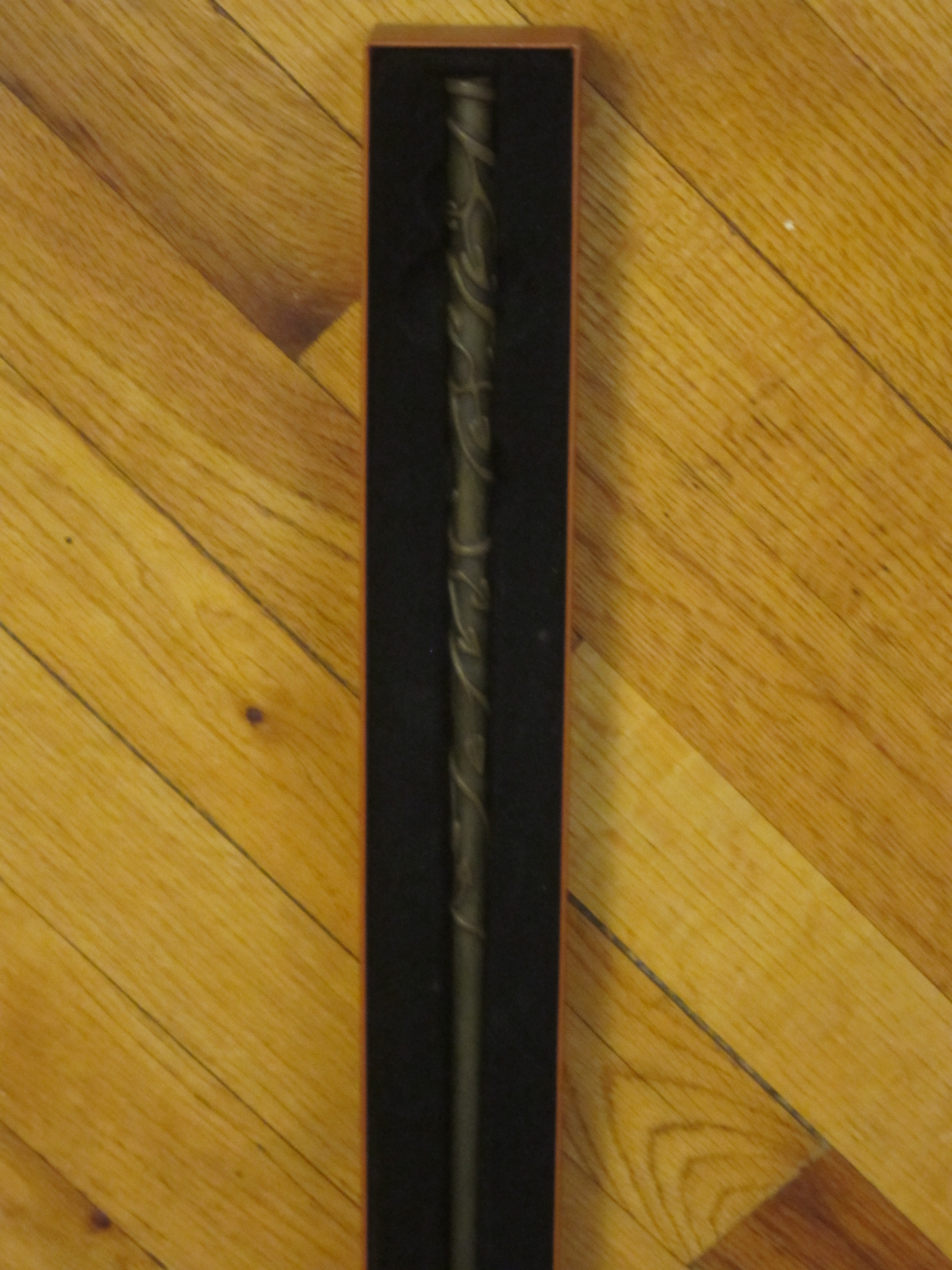
A good friend of mine sent me an unexpected early birthday present. She’d posted tons of pictures of her summer trip with her son to Universal Studios in California, but it turns out she left out the picture of the replica of Hermione’s magic wand she bought for me at the Harry Potter store.
I had no idea this was coming. She’d sent me surprise care packages early in the summer to help me through my second oral surgery, but I’m still not used to this kind of care, so when I opened this package and found the long box with a wand nestled inside, as if it had come directly from Ollivander’s wand shop, I was speechless and struggled even to take it all in..
My first thought when I finally held the wand in my hand was that I should point it at Ellie’s heart – to heal her. I know it doesn’t work that way, but not so deep inside of me there’s a little girl who wants to believe in magic and really doesn’t want to lose another family member so soon, or ever. My next thought was of how, during my first year teaching synagogue school, I brought the kids pretzel sticks and showed them how to use them as magic wands, as part of a lesson on prayer, as a way to emphasize the power of words to create our reality.
My next thought was that I really needed to try some spells, not only because I wanted to believe they could work, but to see if I could create some healing ritual, some way to remind myself that I’m really not so alone. I went online and googled “Hermione’s Spells” and found a long list of the spells she’d performed throughout the books and the movies. She had spells to open doors and fill a cup with water and disarm an enemy and freeze someone in place. She used practical spells, like making Harry’s glasses impervious to rain, or creating a fire to cook with, and powerful spells, like confusing enemies or making them forget what they’d just experienced. She used her words to cause harm, and to protect, and even to knit small hats for house elves, but I couldn’t find a spell to heal heartbreak, or anything I could use to stop Ellie from dying, or to bring peace to Israel and the Palestinians. I guess even Hermione wouldn’t presume to have that kind of power.
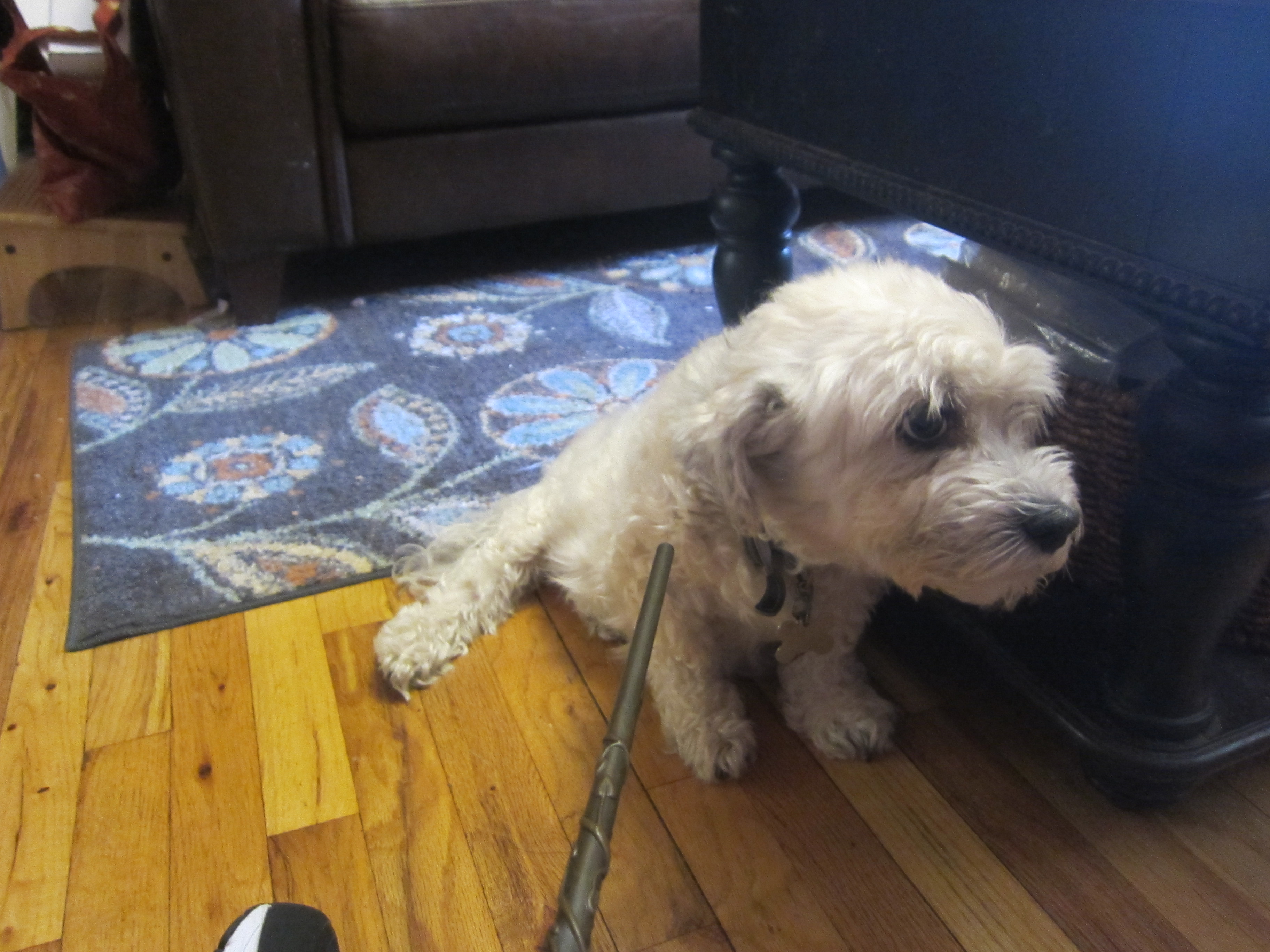
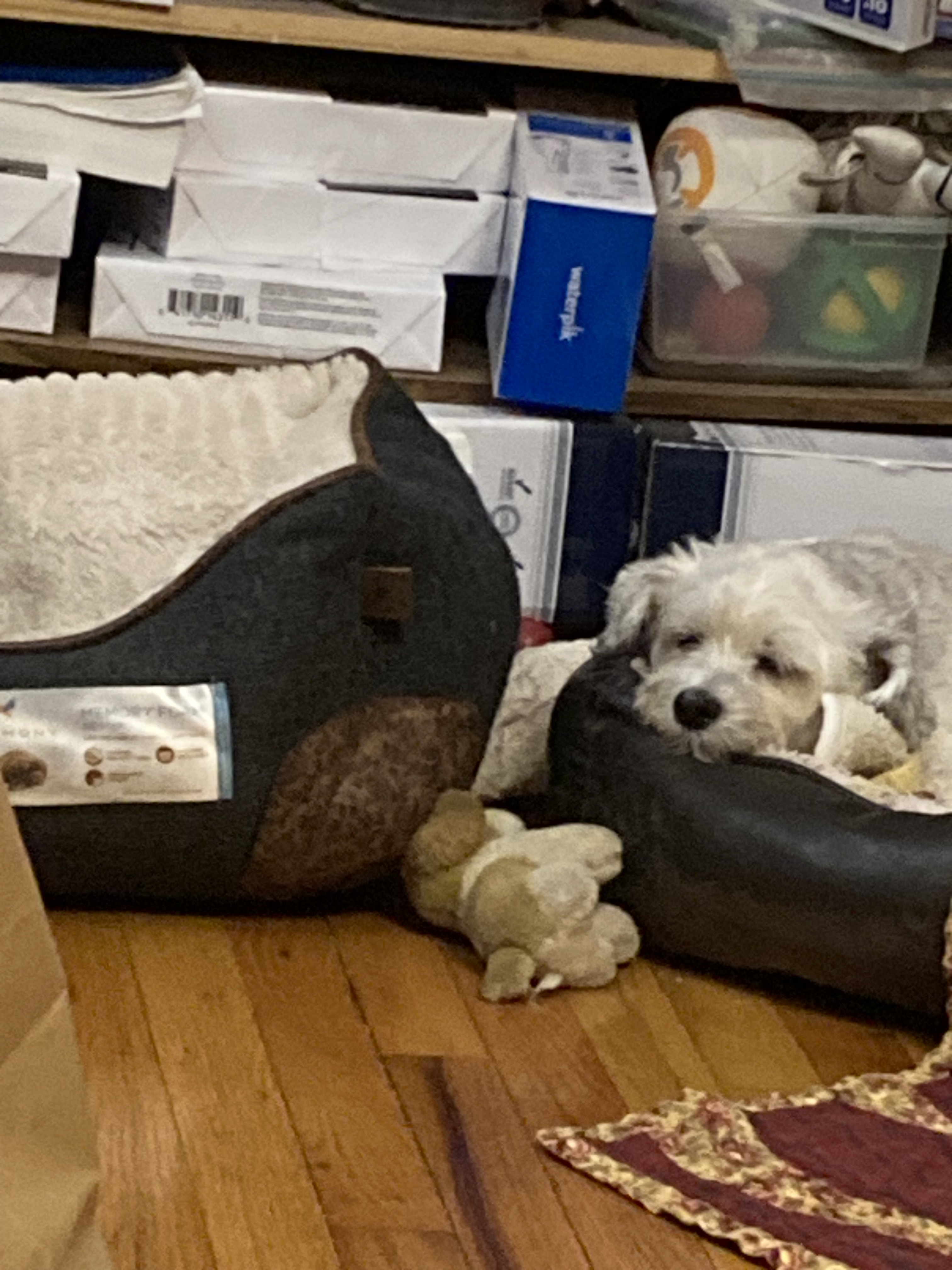
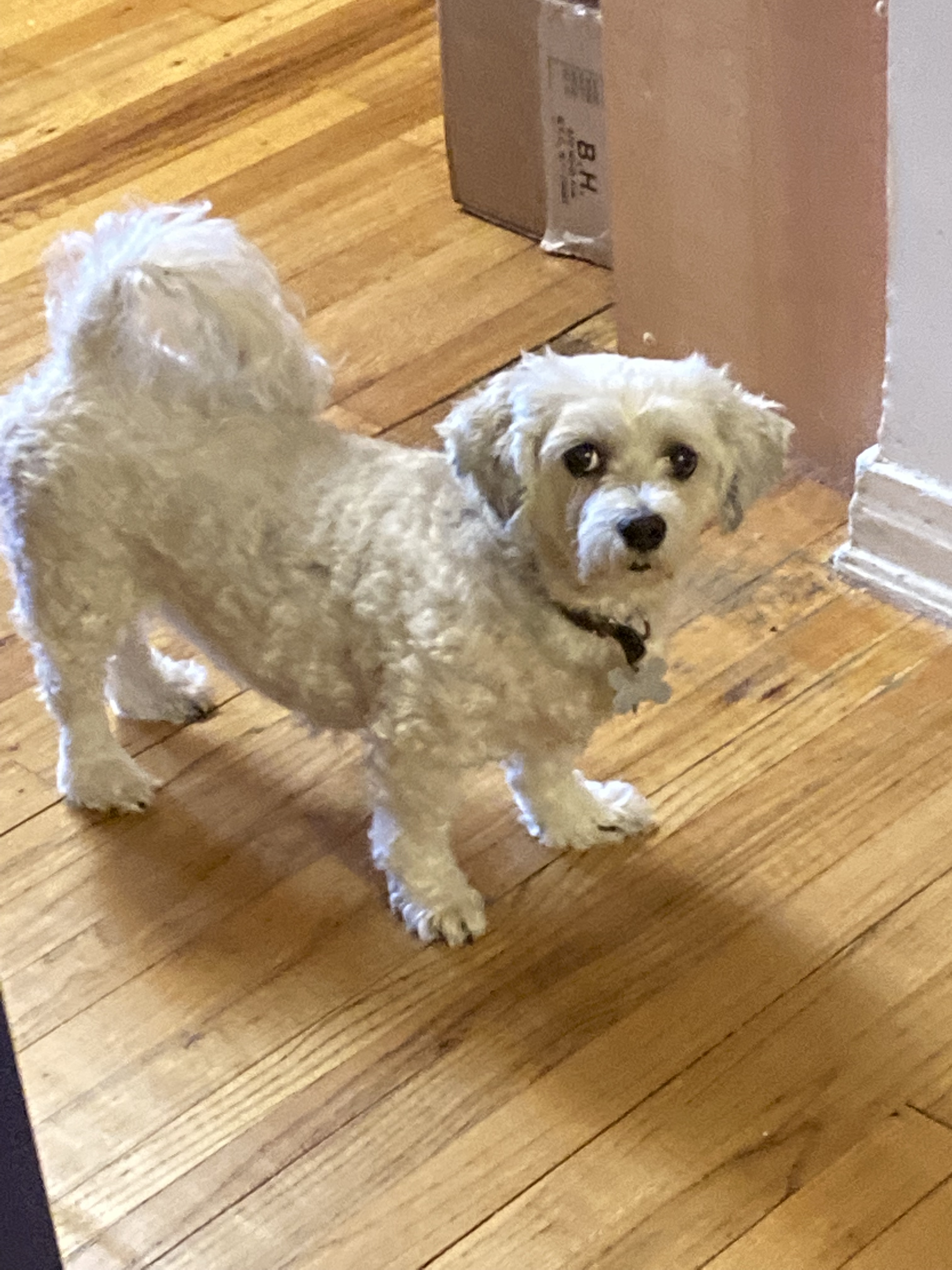
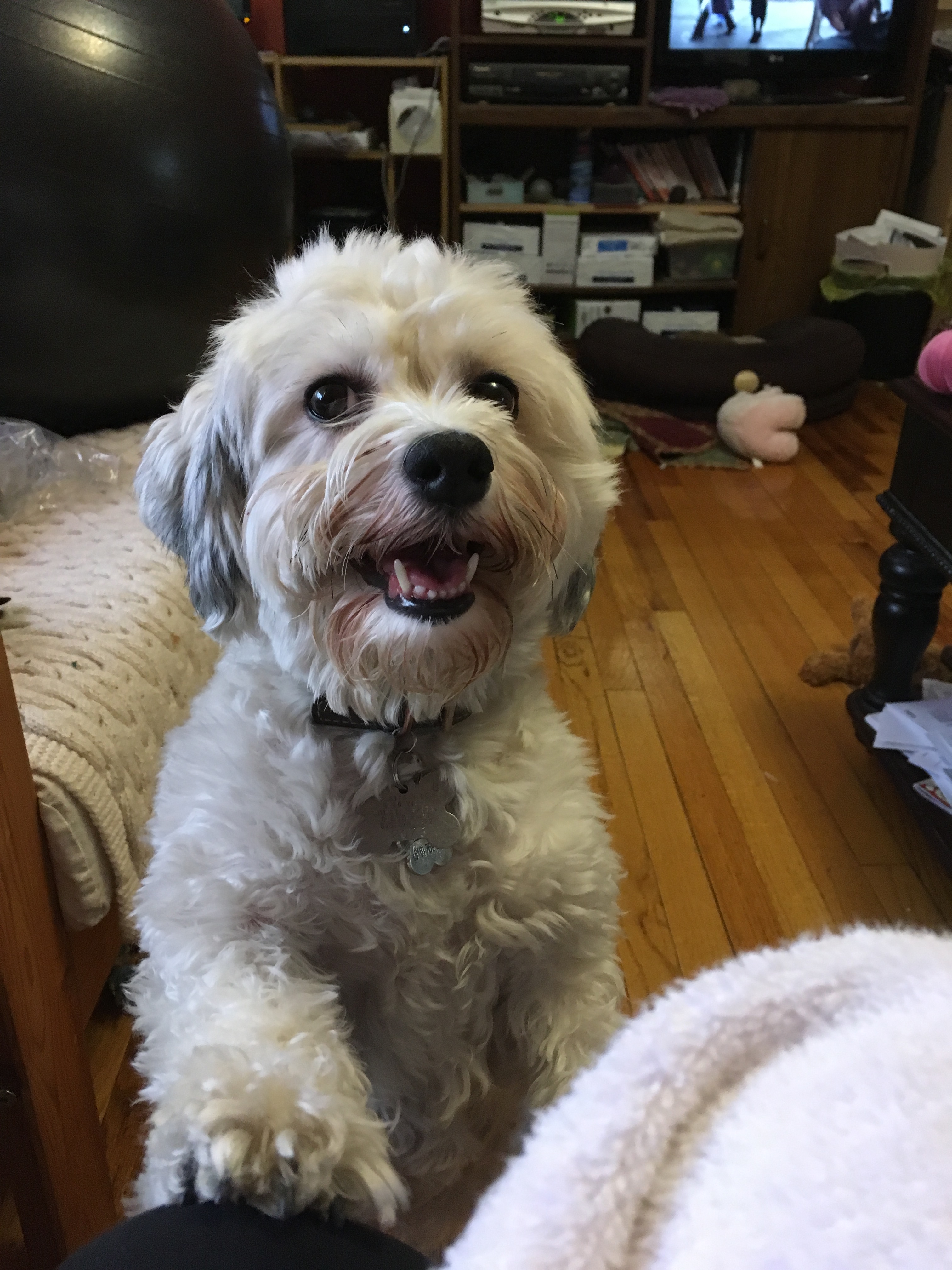
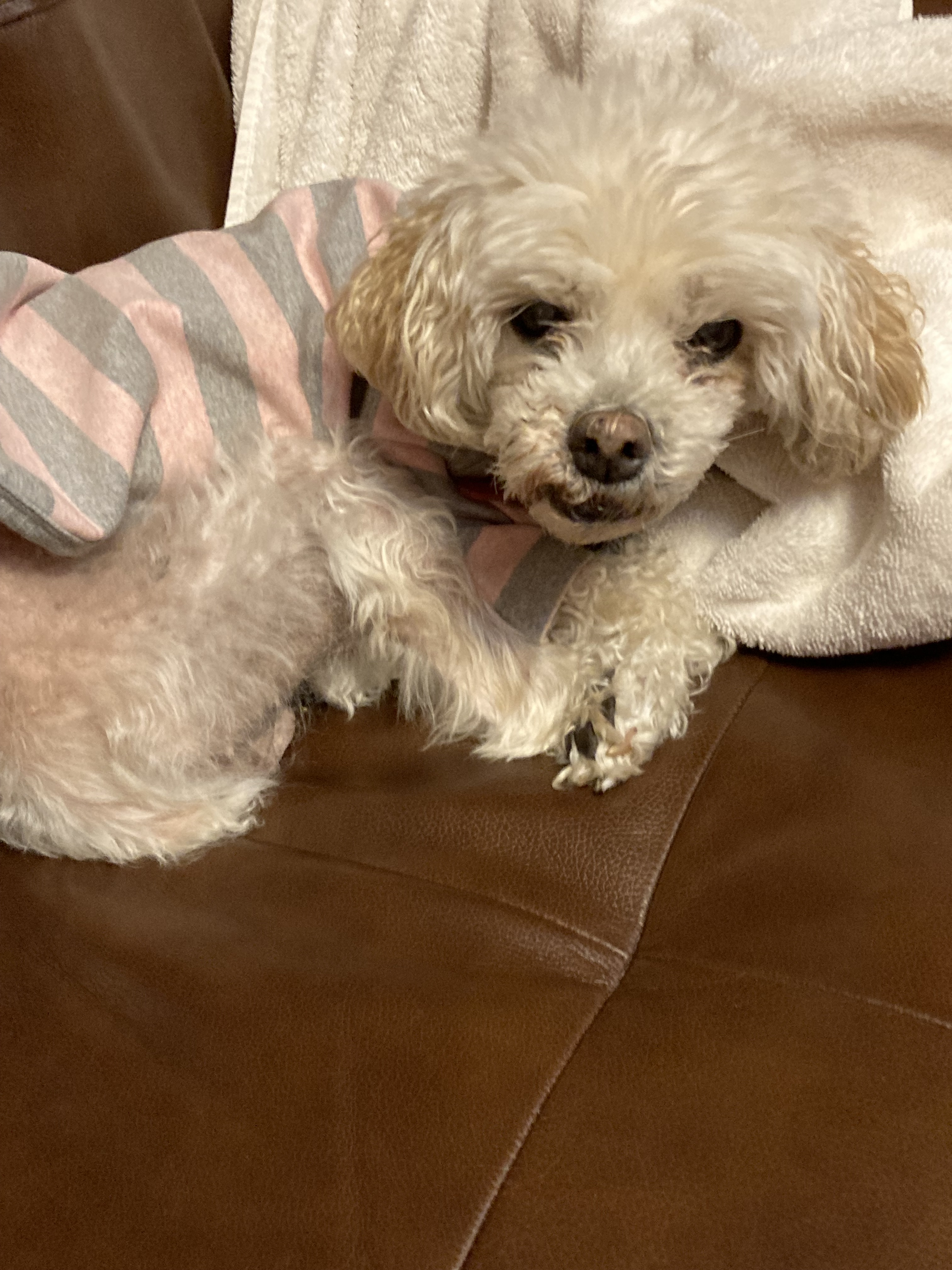
I’m pretty sure that Ellie spends a lot of her time, when she’s sitting in front of the bookcase that holds her treats, whispering her own version of the summoning charm, hoping that chicken treats will start to fly directly into her mouth. Maybe if she had her own wand those summoning charms would really work. I wish that for her, and for me. I think we could all use a little more magic in our lives.
If you haven’t had a chance yet, please check out my Young Adult novel, Yeshiva Girl, on Amazon. And if you feel called to write a review of the book, on Amazon, or anywhere else, I’d be honored.
Yeshiva Girl is about a Jewish teenager on Long Island, named Isabel, though her father calls her Jezebel. Her father has been accused of inappropriate sexual behavior with one of his students, which he denies, but Izzy implicitly believes it’s true. As a result of his problems, her father sends her to a co-ed Orthodox yeshiva for tenth grade, out of the blue, and Izzy and her mother can’t figure out how to prevent it. At Yeshiva, though, Izzy finds that religious people are much more complicated than she had expected. Some, like her father, may use religion as a place to hide, but others search for and find comfort, and community, and even enlightenment. The question is, what will Izzy find?
I spent more than two years working on Intuitive Eating being superconscious of hunger and fullness levels and fighting with myself to stick to smaller portions, but after three months of gradually raising the dose of Ozempic, I realized that, beyond weight loss, Ozempic has made Intuitive Eating much easier. Now I can eat half of my breakfast and put the rest aside for later, without thinking about it or arguing with myself. Is this what normal people feel like around food? Because I still enjoy eating, and I still have cravings for this or that, but it’s just not overwhelming anymore.
“Chicken!”
So, of course, as soon as I was fully on board with Ozempic, and ready to go up to the optimal dose of 2 mg a week, I found out that I wasn’t immune to the Ozempic shortage.
The pharmacy had had no trouble getting the lower doses, so as I got used to a faint sense of nausea and more sensitivity to acidic foods, there was no stress around getting the weekly .25 mg, .5mg, and 1 mg doses. But it turned out that I should have become aware of the shortage when my doctor moved me up to 1 mg a week, because my pharmacy didn’t fill that prescription. Except I didn’t notice, because I still had three boxes of the lower dose pens, so I just took two .5 mg shots to make up the 1 mg dose, assuming that’s what I was supposed to do. So when the doctor raised my dose to the full 2 mg, and told me that there might be difficulty getting it, I was surprised to hear it. She told me that if the pharmacy couldn’t get the higher dose I should just stay at 1 mg. I didn’t hear anything from my pharmacy after the 2 mg dose had been called in, so when I went in to pick up a few other refills I asked for the 2 mg prescription of Ozempic and the kid at the counter sent me over to the pharmacist for the bad news. Not only couldn’t they get the 2 mg dose, they couldn’t get the 1 mg dose, and couldn’t give me the available smaller doses to make up the higher dose (I guess it’s an insurance thing). He said they would let me know if a supply of either the 1 mg or 2 mg dose came in, but he had no idea when, or if, it would.
I called the doctor’s office to let her know about the problem and to ask if there was another medication she could switch me to, and the secretary, who’d heard it all before, said no, just call around to different pharmacies until you find one with a supply of Ozempic, and then call us back and we’ll send a new prescription.
I still had 1.5 mg left at home, so I made plans to make it last two weeks, taking .75 mg each week, and crossing my fingers that the pharmacy would come through by then; because I didn’t want to have to call a million pharmacies, and then call the doctor’s office each time someone said they might have an extra dose for me; but also because I couldn’t quite believe that it was an emergency. I couldn’t believe that my doctor would have started me on Ozempic if there was a real, even reliable, chance that I wouldn’t be able to keep taking it after the first few months. That just seemed crazy.
When I told my nutritionist, and my therapist, and Mom, that my plan was just to wait, they said absolutely not. You must be more proactive! You must keep calling and running around to get this medication that is actually helping you! But I couldn’t do it. I felt like a black hole was opening up under my feet at even the thought of chasing down Ozempic doses across Long Island. I couldn’t even put into words why it felt so awful, but I’m pretty sure I made sad puppy dog eyes, just like Ellie, because Mom volunteered to call around for me. She found a big pharmacy a few towns away that was expecting to get a shipment after the weekend. All I had to do, they said, was call my doctor for the prescription on Monday morning and it would all be fine.
So on Monday morning I called my doctor’s office and the secretary said that the doctor would call in the prescription. I called the pharmacy every few hours to see if they had filled the prescription, but each time the automated operator said they didn’t have my name and number in their system yet and I should call back later. After eight PM, when I’d given up, Mom called one more time and got the notification that my prescription had been filled and a four week supply of the 2 mg dose of Ozempic would be waiting for me in the morning. I was so relieved, and so exhausted just thinking about having to go through this again in a month.
I was still up at one thirty in the morning, anxious and preoccupied about Ellie’s health and the war in Israel and Gaza, and trying to read a mystery to distract myself. I’d finished yet another chapter and decided to check my email for a break, and that’s when I found the notification from the new pharmacy saying they had run out of Ozempic and couldn’t predict when they would get the next shipment in.
“Oy.”
I don’t know exactly what happened. Maybe there was enough Ozempic at eight o’clock, when they put it into the computer, but by the time the pharmacy had closed an hour later it was all gone. Or maybe someone stole a box of Ozempic out of the back door after midnight. But it was starting to seem like Ozempic was being doled out on a first-come-first-serve basis, or some sort of Hunger-Games-style competition with no rules at all.
I’m not good at fighting for what I need, or racing to get places faster than someone else. Even the thought of competing for scarce resources exhausts me down to the bones. I’ve spent so many years trying to manage my weight, and spending enormous amounts of money and time on diets and nutritionists and programs and apps and on and on. And I’ve spent so many years being criticized by doctors for not being at the right weight, and for not trying hard enough, and finally there’s a medication that actually seems to be helping me, but I struggle with the idea that I should get something when someone else needs or wants it too. I don’t believe that I should be the first on anyone’s list to get Ozempic when people with type two diabetes, the original patients the drug was made for, are struggling to get their medication. I can’t make an argument for why I should get what I want in a way that convinces me, let alone anyone else.
For days, this huge, raw, unhealed wound full of self-loathing and hopelessness opened up and practically swallowed me whole, and I just wanted to cover it with duct tape and wait for the Ozempic shortage to end on its own. But, gradually, the weight of it started to recede, just enough for me to be able to hear Mom say that someone at our regular pharmacy had suggested calling independent pharmacies in the area, instead of the big name ones.
I dragged myself over to the computer and googled independent pharmacies near me. I made a list of about ten places, including the one down the block that had been closed for a long time but was supposed to reopen under new management any day. But making the list was the most I could manage at that point, especially at ten o’clock at night, and I planned to start calling another day, when I’d built up another dose of hope.
The next day we had to take Ellie for another echocardiogram to see how she was doing on her meds. They raised the dose of one of her medications and said to bring her back in four months, which felt more hopeful than at our last vet visit; and then I had to go teach, and as I was leaving Mom said, do you want me to make those calls for you?
Of course I do, Mommy!!!!!
By the time I got home from teaching, all I needed to do was send a picture of my insurance card to the just-re-opened pharmacy down the block and they said they would have a four week supply of the 1 mg dose of Ozempic ready for me the next day. I wasn’t sure I believed it, though. I had to wait until the phone call came the next morning and we drove over and became the first customers to pick up a prescription from the newly opened family run pharmacy (all three staff members standing behind the desk smiling at me).
I have no idea what will happen in four weeks when I need a refill, and I have no idea if I will ever be able to go up to the 2 mg dose, and I don’t know what lesson to learn from this. Have faith in humanity? Support local small businesses? Trust that even deeply felt, unbearable hopelessness will eventually pass? Let Mommy handle everything?
I don’t really understand why a small pharmacy was able to get the 1 mg dose of Ozempic when my big chain store couldn’t get it; and I don’t understand why the second big chain store was able to get the un-gettable 2 mg dose, or where it went between the time they told me they’d filled my prescription and the time they told me they couldn’t.
But I do understand why Ozempic is so popular with so many people, in a world where even an extra five pounds is counted against a person’s character, and doctors believe that extra weight is the cause of all disease, even when it’s not.
I wish I didn’t need to take this medication. I wish my body could self-regulate to the perfect weight without any intervention. I wish I didn’t need any medication at all: for pain, for depression, for a faulty thyroid, for high blood pressure, or for my weight. But I do. And I’m afraid this whole thing is going to happen again, and again, and I don’t know that I will be any more prepared to manage the waves of emotion next time. But for now, I have my medication, and Ellie has her medication, and we both have my Mom nearby for support when we get overwhelmed.
As for anything else, we’ll just have to take it day by day, because thinking ahead is too freakin’ hard right now.
“It’s nap time, Mommy.”
If you haven’t had a chance yet, please check out my Young Adult novel, Yeshiva Girl, on Amazon. And if you feel called to write a review of the book, on Amazon, or anywhere else, I’d be honored.
Yeshiva Girl is about a Jewish teenager on Long Island, named Isabel, though her father calls her Jezebel. Her father has been accused of inappropriate sexual behavior with one of his students, which he denies, but Izzy implicitly believes it’s true. As a result of his problems, her father sends her to a co-ed Orthodox yeshiva for tenth grade, out of the blue, and Izzy and her mother can’t figure out how to prevent it. At Yeshiva, though, Izzy finds that religious people are much more complicated than she had expected. Some, like her father, may use religion as a place to hide, but others search for and find comfort, and community, and even enlightenment. The question is, what will Izzy find?
I have been trying to write my thoughts on this for weeks, but I’ve been afraid of getting things wrong, or of bringing down anger from any and all directions. I have a fourteen page draft of a blog post that seems more like a thesis than a personal essay, but I’m not an expert on the history of Israel, or military tactics, or academic jargon, or even anti-Semitism; I care about those things, and am impacted by them, but other people will do a much better job of holding forth on those subjects than I ever could.
“Don’t look at me.”
What I can write about is how it has felt to watch the news lately, and be on social media, being told by so many people what I should think, or do, or say in the aftermath of the Hamas attack on Israel on October 7th, a day after the fiftieth anniversary of the Yom Kippur war. I don’t believe that Jews, or Israel, should be immune to criticism; I also don’t believe that Hamas is anything but a terrorist group (calling them a liberation group suggests a real misunderstanding both of their mission and of how they have governed Gaza for the past decade and a half). What I know for myself is that hearing about the massacres on October 7th made me worry about family and friends in Israel, but watching the gradually more toxic responses around the world, and especially on American college campuses, has been frightening. I thought for sure that the chants of “from the river to the sea,” which is a demand for the eradication of the State of Israel and its current population of more than eight million Jews, plus two million non-Jews, would convince people that this pro-Hamas reaction is morally wrong, but that hasn’t happened. I thought it was the norm to recognize the difference between Hamas and Palestinians in general, and that everyone knew the difference between Israelis living within the internationally accepted borders of Israel (like the ones who were massacred and kidnapped), and Jewish settlers in the West Bank, but no. In fact, a lot of the terminology being thrown around about Israel (colonialist, apartheid, genocide) has become mainstream in a way I never expected. Social media is powerful in creating false narratives, and even more successful in advancing partial narratives that are misleading.
An enormous number of Israelis who spent the past year protesting against Benjamin Netanyahu’s far right government and its attempts to peel away layers of democracy are now fighting for their country’s survival, both in the military and in thousands of volunteer efforts to help the survivors from the south, who had to escape Hamas and Islamic Jihad rockets, and evacuees from the north, escaping Hezbollah rockets. I am proud of how quickly Israelis were able to find their way forward, and worried about the choices of the military and the government, and frightened by the lack of critical thinking and journalistic ethics that seem to abound right now when facts would be really helpful. I am proud of the Haredi (ultra-orthodox) Jews in Israel who are joining the army for this war, despite a very contentious law that allows them to avoid military service in favor of study, and I’m angry at some Jewish settlers in the West Bank who think they have a religious right to hurt their Palestinian neighbors.
But I can’t fix any of those things. I cannot vote in Israel, and I can’t call every reporter who takes Hamas’ word without evidence and remind them that that’s just stupid. I can only be here, living my own little life in New York, and sending prayers to my family and friends who really need it right now.
“I pray all the time, Mommy.”
At my synagogue, on Long Island, we’ve spent a lot of time talking about how we find comfort right now, since that’s really all we can control. We’ve had speak ups, to share our grief and confused feelings, and vigils, for the survivors and the dead and the missing and all those on the ground who are still in danger. One of the rabbis from my synagogue joined a group of New York rabbis for a short trip to Israel, to show solidarity and to learn more about what’s going on. I think, right now, many American Jews, because we are further away from the danger and, in most cases, experiencing less direct trauma, are wishing for ways to reach peace. But we, I, have no idea what the military realities are, and what it will take to make Israelis safe again. I refuse to tell Israel what they should do, though, of course, I have questions.
I have a lot of trouble with people who equate the horror of a massacre perpetrated on civilians and a war conducted, or at least trying to be conducted, under the set rules of war.
My focus has been on finding podcasts and articles that can help me understand more of what it feels like to be in Israel right now, so that I can be more empathetic, and to reassure me that Israel is a real place and not this cardboard cutout of evil that often gets portrayed by Pro-Palestinian activists on American college campuses.
Israel Story, a great podcast in English that shares stories from all segments of Israeli society, has been posting short interviews with Israelis in different sectors during the current war. In the past, Israel Story has covered many Palestinian stories with empathy and clarity, humanizing and coloring in details of lives we often don’t get to hear about. The archives are full of those stories, but right now the most powerful of the short interviews I’ve heard was with a father who rescued his teenage son from the music festival in the South of Israel after the massacre had begun. www.israelstory.org/episode/sivan-avnery/ I’ve also been listening to podcasts from a school in Jerusalem called the Shalom Hartman Institute which has done a lot of work bringing together religious and secular, American and Israeli, and finding ways to have difficult conversations that are productive and even inspiring. I also watched a webinar interview with Yehuda Kurtzer, the president of the Institute in North America, that addressed what it feels like in Israel right now, and how liberal American Jews are dealing with the current news environment. https://youtu.be/Glia_tSZqmo?si=g3Fr8T4XR_D7Qkwk
I go to Kveller and Nosher and My Jewish Learning for a break from the news and a chance to remember that there is still Jewish joy and silliness, and comfort food, and so much to learn about being Jewish that has nothing to do with politics or war.
But most of all I go to music. I have a ridiculously long Israeli music playlist on Spotify filled with music from Ishai Ribo and Hanan Ben Ari and Yuval Dayan and Keren Peles and Jane Bordeaux and Ofra Haza and Arik Einstein and David Broza and Hadag Nachash and Hatikva 6, and I keep finding more musicians and more music to remind me that there is more to Israel than this war.
So that’s where I’m at right now. I’m still trying to write out my thoughts on the war itself, and the history that led to it, mostly for my own clarification, but the rest of the time I’m taking a lot of deep breaths, and listening to voices across the spectrum, when I’m up to it, and listening to music when I’m not.
I wish everyone Besorot Tovot, good news to come, and comfort and understanding until that time comes.
“Paws crossed.”
If you haven’t had a chance yet, please check out my Young Adult novel, Yeshiva Girl, on Amazon. And if you feel called to write a review of the book, on Amazon, or anywhere else, I’d be honored.
Yeshiva Girl is about a Jewish teenager on Long Island, named Isabel, though her father calls her Jezebel. Her father has been accused of inappropriate sexual behavior with one of his students, which he denies, but Izzy implicitly believes it’s true. As a result of his problems, her father sends her to a co-ed Orthodox yeshiva for tenth grade, out of the blue, and Izzy and her mother can’t figure out how to prevent it. At Yeshiva, though, Izzy finds that religious people are much more complicated than she had expected. Some, like her father, may use religion as a place to hide, but others search for and find comfort, and community, and even enlightenment. The question is, what will Izzy find?
In the midst of Cricket’s terminal illness, we were also dealing with very bad news about Ellie’s heart: it was two times the size it should have been, and surrounded by fluid that shouldn’t be there. She would need to take four new medications, twice a day, and we’d need to find a diet for her that was both low in sodium and tasty enough to get her to take all of her meds. But it just didn’t seem possible to me that Ellie could be so sick, not while Cricket was busy dying.
Sisters forever
A week before Cricket’s death, we took Ellie back to the vet, because she had been coughing more than usual and we wanted to make sure we were doing everything possible to keep her with us. A new x-ray showed that her heart was still twice the normal size, and that there was still some fluid around it, so the vet raised the dose of her diuretic and told us to come back in two weeks for a blood test. The coughing stopped for a few days, but after Cricket’s death Ellie had more of the fainting attacks that had sent us to the vet in the first place, months earlier, losing control over her legs and flopping down on her chest.
In the car on the way to the vet for the follow up blood test, Ellie was even more nervous and agitated than usual, and we wondered if she was thinking of Cricket, and how Cricket hadn’t come home from her last trip to the vet. Standing in the same examination room where Cricket had taken her last breath, the vet took Ellie’s blood and suggested another echo sometime soon, to see if issues had progressed into her lungs. I had a whole list, at home, of questions I’d planned to ask and medication refill requests, but I couldn’t remember any of it. Eventually, because she was giving me her sad puppy eyes, I remembered to tell the vet that Ellie had become a very picky eater recently, wanting only the special foods (chicken treats, greenies, chicken liver, fresh cooked chicken) instead of the well-rounded, low-sodium diet we were trying to give her. And the vet turned back from the computer screen, where he’d been updating her chart, and said “treat her like a make-a-wish kid, and give her anything she wants.”
“Anything?”
I didn’t curse at him, out loud. I just stood there, forgetting to ask for the refills or anything else. He recommended a brand of healthy treats from the pet supply store next door that might help Ellie eat her good-for-her food, and then we paid our latest bill and went next door for the treats and then went home, to Ellie’s great relief.
The new treats went over well enough, though Ellie now believes she should be hand fed each meal. And then, within a few days of her vet visit we noticed blood spots on her wee wee pad and I freaked out. We had to follow her around with a ladle to get a pee sample, but in a few days we found out that she had a urinary tract infection, which was much better than the ten other imaginary diagnoses that were spinning around in my head. The vet put her on anti-biotics, which made her even more exhausted at first, but eventually started to make her feel better.
In the middle of worrying about Ellie, and grieving over Cricket, we had a moment of joy. Out of nowhere one night, despite still refusing to eat her regular food, Ellie begged for some of Mom’s dinner, a piece of red pepper, a few pieces of broccoli, and then pumpkin bread, all foods that Ellie generally ignored, but Cricket had always loved. Maybe she was just craving something different because of her illness, but it seemed to us like she was channeling her sister and bringing her back to us for a moment.
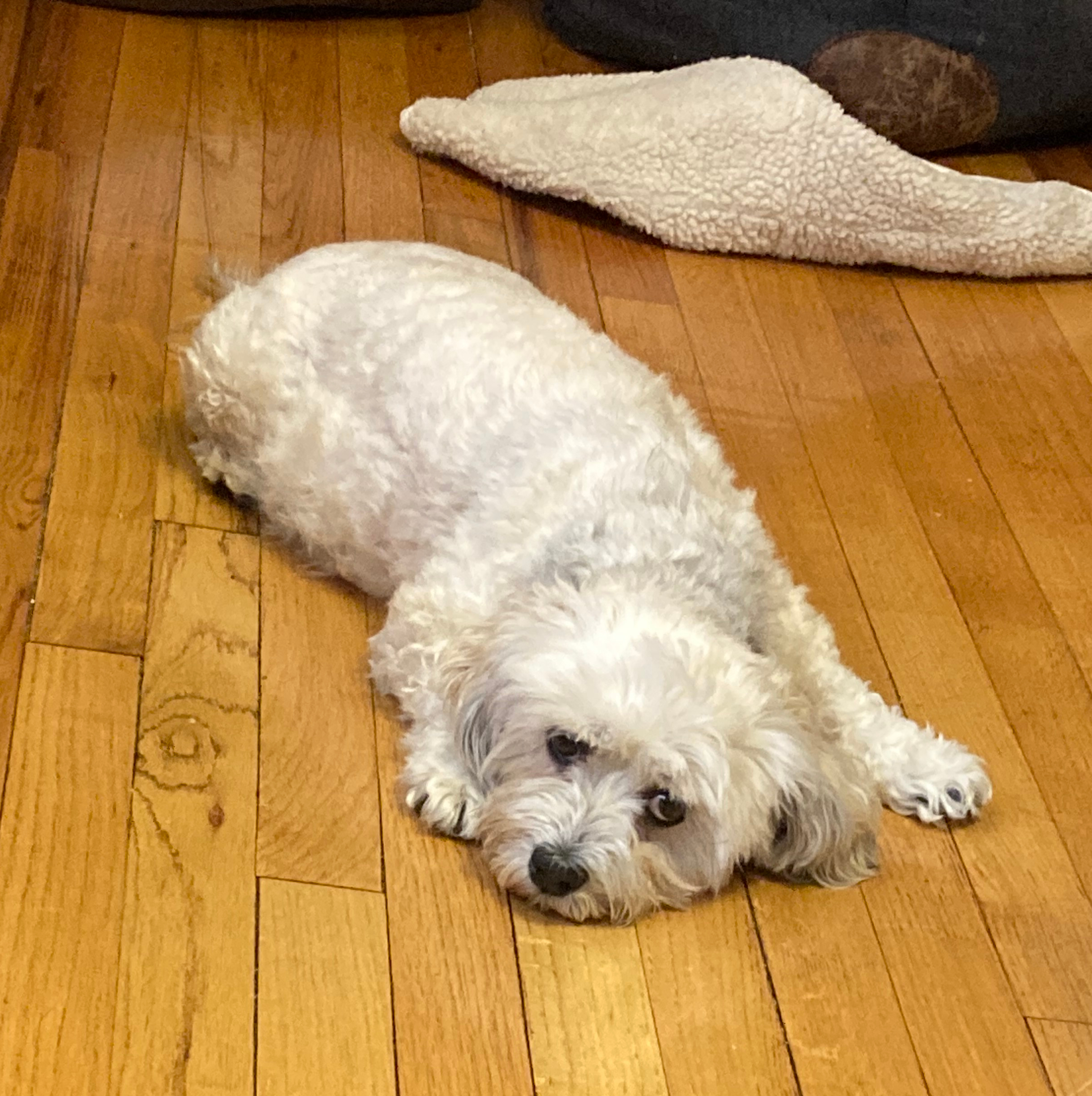
Ellie still looks for her sister around every corner, almost as if she expects Cricket to pull a “Gotcha” on her at any moment, and I look for Cricket too, imagining that she’s just sleeping and that’s why the apartment is so quiet. I’m still in the numb phase of grief, unable to take it in for more than a few minutes at a time. And, in the midst of that grief, I just can’t think of Ellie as having only another six months to a year, which is what the vet predicted when he first told us about her heart, months ago now. I like to tell myself that the vet never expected Cricket to live as long, or as well, as she did, so what does he know? Except, Ellie isn’t Cricket. Ellie had to use up a lot of her spirit surviving her first four and a half years as a breeding mama, and I can’t expect her to fight for more time the way Cricket did. Instead, I want God, or the universe, or veterinary medicine to intervene and give her the extra years she deserves; and I’m pissed off, beyond words, that that probably won’t happen.
But for now, we still have Ellie with us, and she’s recovering from her UTI and getting some bounce back in her step, and asking for cuddles and treats and looking askance at our continued attempts to feed her the “healthy” food.
“Pot roast? Chicken?”
It’s cruel that my sweet, loving, almost nine-year-old Ellie is going to die too soon, from an oversized heart, of all things. Butterfly, Cricket’s first rescue sister, had the same heart issues (along with a few others, caused mainly by her eight years as a breeding dog at a puppy mill), and the same sweetness as Ellie, and she lived to almost thirteen years of age despite all of it. But the vet says Ellie’s heart disease is more serious and more advanced and there’s nothing we can do, other than what we are already doing. I know he means well and wants us to be prepared, but right now the thing I want most in the world is for the doctor to be wrong.
“Doctors are always wrong. It’s a rule.”
If you haven’t had a chance yet, please check out my Young Adult novel, Yeshiva Girl, on Amazon. And if you feel called to write a review of the book, on Amazon, or anywhere else, I’d be honored.
Yeshiva Girl is about a Jewish teenager on Long Island, named Isabel, though her father calls her Jezebel. Her father has been accused of inappropriate sexual behavior with one of his students, which he denies, but Izzy implicitly believes it’s true. As a result of his problems, her father sends her to a co-ed Orthodox yeshiva for tenth grade, out of the blue, and Izzy and her mother can’t figure out how to prevent it. At Yeshiva, though, Izzy finds that religious people are much more complicated than she had expected. Some, like her father, may use religion as a place to hide, but others search for and find comfort, and community, and even enlightenment. The question is, what will Izzy find?
I’ve been re-watching a show called Cold Case on the Roku streaming channel. When I saw it on there a few months ago I remembered feeling safe in the hands of the writers and actors on the show, so when I needed reassurance, with the grief of losing Cricket and watching the recent events unfold in Israel, I started watching the episodes from the beginning, often instead of watching the news.
The magical Cricket
The premise of Cold Case is that this particular Philadelphia homicide squad focuses on cases that have been left unsolved for years, even decades. More often than not, the storylines hold secrets that couldn’t have been told in their own time, either because of the prejudices of the day or the inability of the traumatized people involved to speak up. Music helps to set each episode at a particular place and time, and we see the scenes play out both in the past and the present to bring the story to life, but the real power of the show is in the way the detectives genuinely care about what happened to these people, even so many years later, as if they really believe that every life matters and every story deserves to be told.
I remember so many times in graduate school, both for writing and for social work, when the lesson was the opposite: that no one life really matters that much. In social work, the focus was on the collective – the family, community, institution, etc. – as opposed to the individual. And in writing workshops it was all about the beauty or cleverness of the writing, or the complexity of the plot or the nuances of the sentence structure or variety of descriptions; there was a lot of active disrespect for people whose telling of their own stories was still raw or full of emotion, and there was even more anger at people who wanted to tell stories that “have all been told before,” which often referred to stories about rape, sexual abuse, domestic violence, and eating disorders, not coincidentally stories that are often told by women.
“What?!”
But on Cold Case every story matters. It matters what happened to a young woman who dressed as a man during prohibition; and it matters what happened to an autistic boys’ parents, even if he can’t tell his story in words; and it matters who shot a little black girl on the playground, and how a teenage boy who was thought to be a criminal was killed on a rooftop. It matters who loved who, and what went wrong and why. It has been such a relief to sit on the couch with Mom and Ellie and watch this show and feel that our sympathy can be unlimited, and that there are endless stories that can and should be told.
I don’t think I recognized, when I watched this show the first time around, more than fifteen years ago, that it resonated so deeply with my own story; my childhood has often felt like a cold case, moldering in a file box somewhere. So much of the drama of my adult life has resulted from a crime that never received justice, and I’ve had to fight off the insistence (from others but also from within myself) that my story doesn’t deserve the attention I give to it, and that what happens to me, or people like me, is inconsequential. I still speak up because I know that there is healing in being seen and heard, but the fight has been exhausting. Except, when I watch the detectives connecting with each victim, through their own troubled lives, I feel reassured that they would have cared about what happened to me too. And for a few hours at a time, I don’t have to fight, because I know I matter; I know that we all matter.
“I matter too. Right, Mommy?”
If you haven’t had a chance yet, please check out my Young Adult novel, Yeshiva Girl, on Amazon. And if you feel called to write a review of the book, on Amazon, or anywhere else, I’d be honored.
Yeshiva Girl is about a Jewish teenager on Long Island, named Isabel, though her father calls her Jezebel. Her father has been accused of inappropriate sexual behavior with one of his students, which he denies, but Izzy implicitly believes it’s true. As a result of his problems, her father sends her to a co-ed Orthodox yeshiva for tenth grade, out of the blue, and Izzy and her mother can’t figure out how to prevent it. At Yeshiva, though, Izzy finds that religious people are much more complicated than she had expected. Some, like her father, may use religion as a place to hide, but others search for and find comfort, and community, and even enlightenment. The question is, what will Izzy find?
This past Monday morning, after watching her decline throughout the weekend, we brought Cricket to the vet to end her life. She was sixteen years, two months and three and a half weeks old.
So many times over the past weeks and months we had thought Cricket was nearing the end, and we told ourselves that if she was in the same state in the morning we’d take her to the vet and put her to sleep. Almost every time, Ellie would sleep in Mom’s room overnight, instead of mine, watching over her sister, but when morning came, Cricket would wake up ready to try again; demanding to try again.
Except, in the last few weeks, each time Cricket bounced back, she was a little shakier and a little more uncertain than the time before. We held onto what the vet had said, that if she didn’t eat for three days she was suffering, as our guide, because we didn’t want her to suffer, but we also didn’t want to cut short her life, even a day sooner than necessary.
She still needed the ACE (doggy valium) in order to tolerate her daily subcutaneous fluids (I still have the bite marks from the few times I tried to do it without the ACE, even in her last week), and I was able to take advantage of her time on the ACE to do some grooming that she would never have allowed otherwise: making sure she was clean, and could see as clearly as her foggy eyes would allow, and could grip the floor with her feet, even if she didn’t have perfect control of her legs.
So many people who would never think of assisted suicide for a family member, think it is the only compassionate thing to do for a pet, and I see their point, and even agree with it most of the time, but each time someone hinted to me that it was time to let Cricket go, I disagreed. Dogs can’t speak the way we can, but after sixteen years I knew Cricket, and I knew she wanted to stay as long as possible and she wouldn’t appreciate us making that decision for her, even if it was made with love and compassion and a wish to save her from further pain. But also, however much I want to believe in the Rainbow Bridge, and heaven, and the persistence of the soul beyond the body, I know that death is final. Even if there is something that persists after death, it’s not the same as the life we know.
And I kept thinking of Dina, our lab mix who died at sixteen years and two months of age. Dina couldn’t hold herself up anymore by her last day, but she was still eating, folding herself around her bowl of food. At the time, the decision to let her go was made because Mom was going away to New Zealand for a few weeks and I would be left alone to care for a dog who couldn’t see or hear and was crying in pain. But it still felt too early. If Mom hadn’t been leaving, we wouldn’t have gone to the vet on that particular day. We would have waited. It may have only been one or two more days, or a week, but I felt guilty for that decision. I still don’t know if it would have been right or wrong to wait longer. Maybe there’s no right or wrong in this.
Dina
Our goal with Cricket was to make her as comfortable as possible; to maximize her happiness and minimize her pain. The prolonged hospice period was hardest on Mom, because Cricket insisted on sleeping next to her Grandma, and if she couldn’t wake up in time to get to the floor, she’d pee on Mom’s bed (we had a special set up to protect the bedding, with a wee wee pad and towels and mats, but it wasn’t always enough). But even with all of that, Mom didn’t want to let her go either. So we waited, and we did our best. We spent a lot more time holding her, and wrapping her in towels and blankets to keep her cozy. Her bones were sharp under her warm t-shirts, but we worked hard to hear everything Cricket was saying, about what she wanted, and what she could tolerate.
At a faculty meeting for synagogue school, the week before Cricket died, we did an exercise for the holiday of Sukkot where we passed the Etrog (the citron that’s used as one of the four species for the holiday) around the room. The Etrog, this oversized, lumpy cousin of a lemon, is said to represent the heart, so each of us was asked to hold the Etrog to our chests and say what we were holding close to our hearts right then – a goal, a person, a moment of joy, a realization, etc. – and I said Cricket, I’m holding my dying dog to my heart, and then I went home and literally held her next to my heart for hours.
That night, or the next, when we carried Cricket outside to join Ellie for her evening walk, her friend Kevin, the mini-Goldendoodle, heard us and came running, and Cricket’s little tail wagged and wagged, and she pushed herself to walk faster to get to him, to follow him, to sniff him. After a little while she got worn out and came over to rest by my leg, to let me know she was ready to go back inside; but just seeing her with him, perking up and finding joy in his presence again even for a few minutes, reassured me that we were doing right by her.
And then, a few days later, she stopped eating, and then she stopped drinking. She couldn’t stand up on her own anymore, even though she desperately wanted to, and we knew it was time. Her life was so full and rich and complicated and true, and she gave us every last drop of herself and squeezed everything she could out of her one life, but it still felt too soon to let go. Maybe it always will.
When we came home from the vet, I started to clean: doing load after load of laundry, picking up the wee wee pad path, folding Cricket’s t-shirts and sweaters and putting them away in the closet. And the apartment felt so quiet without her; so big and empty. But then there was Ellie. She was confused, sniffing the places where her sister should have been, looking to us for an explanation, and then climbing up onto the couch for comfort, keeping us close to her so she wouldn’t lose anyone else.
Lonely Ellie
It will take all of us some time to get used to a world without Cricket. It doesn’t seem real, or even possible, that she’s gone. I think part of me believed that Cricket would live forever, because she wanted to, and because her spirit was so indomitable. The idea that she, like all of us, was mortal, just feels impossible. Her presence is everywhere is our lives, and her absence is everywhere too. But I take great comfort in the knowledge that she knew, all her life, no matter what, that she was loved.
Cricket’s indomitable spirit
If you haven’t had a chance yet, please check out my Young Adult novel, Yeshiva Girl, on Amazon. And if you feel called to write a review of the book, on Amazon, or anywhere else, I’d be honored.
Yeshiva Girl is about a Jewish teenager on Long Island, named Isabel, though her father calls her Jezebel. Her father has been accused of inappropriate sexual behavior with one of his students, which he denies, but Izzy implicitly believes it’s true. As a result of his problems, her father sends her to a co-ed Orthodox yeshiva for tenth grade, out of the blue, and Izzy and her mother can’t figure out how to prevent it. At Yeshiva, though, Izzy finds that religious people are much more complicated than she had expected. Some, like her father, may use religion as a place to hide, but others search for and find comfort, and community, and even enlightenment. The question is, what will Izzy find?
(This post was written before today’s attack on Israel by Hamas. I have no words, except to say that I’m sending love and prayers to family, friends, teachers and classmates in Israel right now. I will leave it to politicians and journalists to describe what is happening on the ground, but I decided to post this essay, about the joy of teaching Judaism to Jewish children, because that joy is a big part of what keeps me going and I hope it helps others too.)
This year for my synagogue school elective, I’m teaching Yiddish, sort of. More like I’m teaching the kids some of the Yiddish words that have become popular among American Jews, so they can feel like they are part of the club when people around them are kvetching (complaining, whining) and kibbitzing (chatting, gossiping) and kvelling (expressing great pleasure and pride in someone else’s achievements) over a nosh (a snack) of bagels and lox.
“I like to nosh!”
The hardest part of planning the class was trying to limit the number of words I would teach them. I mean, you have to do verklempt (choked up with emotion) and schlep (drag something, or drag yourself somewhere) and chutzpah, but how can you leave out farshtunkene (stinking, rotten, contemptible) or bupkes (nothing, literally “goat droppings”)?
At first, I thought I would use video clips of famous comedy routines or movie scenes to help them get a feel for how the words are said, but most of the clips were way too grown up in content, or so chock full of Yiddish words that the kids would have been overwhelmed. So I decided to go with theme days, and have the kids tell their own stories using Yiddish words on that theme. For Chutzpah Day, I decided to leave it at just the one word, because everyone has chutzpah stories: times when they had the chutzpah to speak up or take action, times when they didn’t have the chutzpah to do something they wanted to do, and plenty of times when someone else had the chutzpah to do something crazy nearby. And for Oy Vey Day, of course, we start with Oy Vey, the classic expression of dismay and then plotz (exploding or fainting with emotion) and shpilkes (restlessness, or “sitting on pins”), which pretty much every child in synagogue school experiences everyday.
“Oy Vey.”
But I started with Kvetch Day, because I knew the kids would have a ton of complaints that they needed to get out, and the chance to vent, while saying funny words that make you spit or cough, is priceless. They go through so much tzuris (troubles, worries, suffering) in their daily lives, and there are so many times when brothers or sisters are nudniks, interfering with games or bothering them endlessly, and of course when your friend gets a new iPhone for Hanukah and you get socks, which is worse than bupkes, it stings.
“Every day is a Kvetch day.”
My own adventures in Yiddish have been meaningful to me, which is why I wanted to bring it to the kids, at least in a lighthearted way. The language itself is a history of where Jews lived over a thousand years, picking up new words from each new town and city they lived in, a lot from medieval German, but also from Polish and Russian, and plenty from Hebrew itself.
I wish I knew more about Ladino, the language of Jews from the Iberian Peninsula, who had to leave during and after the Spanish Inquisition. Ladino is based on an old version of Spanish, mixed with Hebrew, and just like Yiddish, picked up words as the people who spoke it traveled to new homes in Amsterdam, and South America and the Ottoman Empire, again with Hebrew laced through it like the blue thread woven through the tzitzit.
There are so many other Jewish languages, from all the different places where Jews have lived, because the Hebrew from prayer and study bled into the language of the market place automatically as they lived their daily lives.
We’re living through a period, now, where diversity is celebrated, and it’s ok, with most people, that Jews often maintain their own customs and languages as well as becoming full-fledged members of the communities where they live. But historically, that wasn’t the case. Even when Jewish separateness was enforced by the local governments, keeping Jews out of certain neighborhoods and professions, it still bothered the locals that the Jews had their own ways of living, and their own languages in which to do it, because you never knew what they were saying to each other.
But right now, when everyone is allowed to celebrate their unique cultures, of food and music and language and fashion, Jews are feeling freer to celebrate it too, and to celebrate all of the different cultures that have been woven through Judaism over the millennia. There are tons of cookbooks for Jewish foods from the Middle East and Eastern Europe and South America and North America, and Jewish families on Long Island are eating foods from Morocco and Jamaica and Russia and Ethiopia at their Passover Seders, as a way to honor the diversity of the Jewish people, and because they’re really yummy.
What I want most for my students is that they will gradually grow their idea of what it means to be Jewish, so they aren’t limited to what they see in their own communities on Long Island, but can also see that Judaism has existed and transformed over and over again in a million different forms, and therefore there will always be room for them to bring their own unique ideas to the table. And I want them to know that their own stories are just as important as Abraham and Isaac and Jacob’s and Tevye and Herzl and Golda’s. I especially want them to know that the Jewish people have always been complainers, and have grown and changed and lived good and interesting lives as a result of having their say. I want them to know that their voices are to be celebrated and heard, no matter how much phlegm they cough up along the way.
“Nu, we’re listening.”
If you haven’t had a chance yet, please check out my Young Adult novel, Yeshiva Girl, on Amazon. And if you feel called to write a review of the book, on Amazon, or anywhere else, I’d be honored.
Yeshiva Girl is about a Jewish teenager on Long Island, named Isabel, though her father calls her Jezebel. Her father has been accused of inappropriate sexual behavior with one of his students, which he denies, but Izzy implicitly believes it’s true. As a result of his problems, her father sends her to a co-ed Orthodox yeshiva for tenth grade, out of the blue, and Izzy and her mother can’t figure out how to prevent it. At Yeshiva, though, Izzy finds that religious people are much more complicated than she had expected. Some, like her father, may use religion as a place to hide, but others search for and find comfort, and community, and even enlightenment. The question is, what will Izzy find?
Over the Jewish high holidays I noticed all over again how many women in my congregation wear a tallit, a Jewish prayer shawl. I grew up at a time when it was rare for women to wear a tallit, and rare for women to become rabbis and cantors, though there were some. At summer camp there were one or two women who wore a tallit (and a kippah and tefillin), but they were outliers. I had my Bat Mitzvah at thirteen and led the service and read from the Torah, but I wore a nice dress, blue I think, and no tallit.
“When do I get to have a Bat Mitzvah?”
A tallit, or Tallit Gadol, is worn over the shoulders at morning prayer services (and one evening service per year, on the eve of Yom Kippur), as opposed to the tallit kattan, worn by boys and men under their clothes. There are fringes at the four corners of the tallit, called tzitzit, each made of eight or so strings held together with four knots, with one blue thread. Most synagogues have extra tallitot (the plural of tallit) and kippot (the plural of kippah, or skullcap), outside the sanctuary for those who don’t have their own.
Tallit Gadol (not my picture)
Tallit Kattan (not my picture)
In Rabbinic Judaism, women are not obligated to wear a tallit, but Orthodox Judaism actually forbids women from wearing them, and growing up, this prohibition was front and center for me at my orthodox Jewish day school. The rabbis told us that men needed these reminders more than women did, and anyway, women would be too busy taking care of the children to get to synagogue for services on a regular basis. They explained the prohibition against women wearing tallitot as part of the prohibition against women wearing men’s clothes, which they took seriously in our school, where girls were forbidden from wearing pants. Despite my frustration with their patronizing logic, I still never thought of taking on the obligation of wearing a tallit myself.
The female rabbi at my synagogue today, though, wears a tallit, and many women in our congregation wear not only a tallit but also a kippah, traditionally the men’s head covering. We’ve had generations of Bat Mitzvah girls and adult Bat Mitzvah groups at our congregation now, so that women of all ages have gone through the process of choosing their own tallitot to fit their personalities and feel welcomed as equal members of the Jewish people. I like so many of the women’s tallitot that I’ve seen, in pinks and reds and purples, with beautiful designs and embroidery, and I love the idea that women are seen as just as important as men to the maintenance of the community. I even have my grandfather’s tallit in a cabinet, because it matters to me, but I’ve never worn it, and I’m not sure why.
A Women’s Tallit (not my picture)
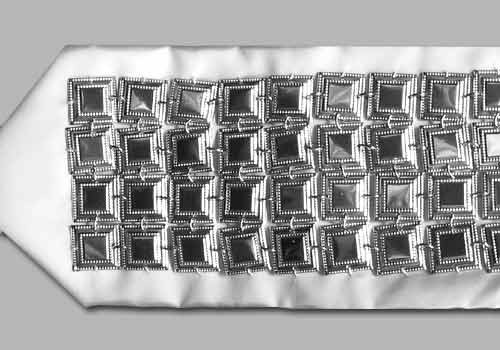
Maybe it’s just habit, after years of not wearing one; or maybe it’s because of the obligations and commitment it represents, and I’m not ready to take that on; or maybe it’s my father. I loved my father’s tallit. It was the size of a beach towel, with thick black stripes and sterling silver squares covering the atarah, or yoke, of the tallit. It was like a huge tent that could be folded over at the shoulders to give him wings, or spread over his head so he could disappear underneath it into his own personal relationship with God. I think that any tallit I might try to wear, no matter how feminine, or light, would feel like draping the power of my father over my head, and I know in my bones that instead of making me feel safe, it would suffocate me.
A Sterling Silver Atarah (not my picture)
There are so many things like this, still, in my life, so many relics of the past that I have tried to re-value and scrub clean of their old associations. I have overcome a lot of them, through hard work, but the prevailing notion that anything is possible and all wounds can be healed, just doesn’t ring true for me. Early on in therapy I truly believed I could have a normal life, eventually, if I just put in the work, but now I know that, for me, there are some milestones that will never happen, and some wounds that will never heal, and the scars will be a part of me for the rest of my life. So far, this inability to take on the yoke of Torah, the obligation of daily rituals like wearing a tallit, is one of those unhealed wounds. It’s still possible that, one day, there will be comfort in wearing a tallit of my own, where I can create my own cocoon of time with God, but I’m not there yet.
But there is comfort in seeing so many women around me embracing their beautiful tallitot, and wearing them with pride and ease. On Yom Kippur, the longest day of the Jewish liturgical year, tallitot are worn starting from Kol Nidre, the evening service, through the next morning and afternoon and on through Neilah, the final service of the long day, at sunset. And multiple times during that long day we sing the Yevarechecha, the priest’s prayer, repurposed as a prayer for community. We drape our arms over the people on either side of us, many using their tallitot to wrap their neighbors and loved ones in a communal tent of peace. And it really is beautiful.
“I should have my own tallit, Mommy.”
If you haven’t had a chance yet, please check out my Young Adult novel, Yeshiva Girl, on Amazon. And if you feel called to write a review of the book, on Amazon, or anywhere else, I’d be honored.
Yeshiva Girl is about a Jewish teenager on Long Island, named Isabel, though her father calls her Jezebel. Her father has been accused of inappropriate sexual behavior with one of his students, which he denies, but Izzy implicitly believes it’s true. As a result of his problems, her father sends her to a co-ed Orthodox yeshiva for tenth grade, out of the blue, and Izzy and her mother can’t figure out how to prevent it. At Yeshiva, though, Izzy finds that religious people are much more complicated than she had expected. Some, like her father, may use religion as a place to hide, but others search for and find comfort, and community, and even enlightenment. The question is, what will Izzy find?
I was dreading Rosh Hashanah. I was already exhausted from the first week back teaching synagogue school, and I hadn’t even tried on my High Holiday clothes from the year before, just crossing my fingers that they still fit. I’d survived the two hour choir rehearsal in the midst of the crazy first week of school, but just barely, and I still had to go to the vet for Cricket’s fluids and Ellie’s heart meds, and do the food shopping, and at the last minute, we had to do three loads of laundry because Cricket had peed on everything, and by the time we were done I had just enough time to take a shower and get dressed in order to get to the synagogue on time.
“All your fault.”
Almost as soon as I sat down in the choir seats, the senior rabbi came over to tell me I would be doing the second reading – a Mary Oliver poem about her dog. I hadn’t seen the rabbi in person in a while, because I’d been going to services online, so I guess this was his first chance to tell me that he wanted me to read this poem – though I do have email, and a phone. I mentioned that it would be difficult for me to get to the Bima from the choir seats, especially in between songs, and he turned to my mom and complained about how much people like to complain.
I didn’t know exactly when my reading would come up, just that it would be relatively soon. Maybe. And that I couldn’t say no.
The choir was busy for the first part of the service, rarely sitting down. I’d forgotten how much standing was involved in singing with the choir because we were allowed to sit during rehearsals, and then I heard the junior rabbi give the intro for the poem I was going to read, so I put down my music and scooted past Mom and found my way down the aisle and up the stairs to the podium, and I read about Percy, the loving dog who looks up at his person as if she is everything.
As soon as I was done reading, I had to hurry back to the choir section for the next song, but I felt, in that moment, the reason why I kept saying yes – to singing, to rehearsing, to reading in public, to teaching and exhausting myself – it feels really good to be part of a community, and to be known. Because not only the rabbis, but many of the other people in the room knew why I’d been chosen to read that particular poem. And they knew that I sang with the choir and they knew that I taught in the synagogue school, and they knew my Mom and her photography and quilt work and asked after her when she wasn’t there. They may not all have known how hard it was for me to do all of it, but they saw me, and cared about me, and congratulated me, and it felt good.
I always dread the high holidays, knowing the work involved and how self-conscious I’ll feel going up on the podium and dressing up and singing into microphones, and all of the extra-long services one after the other after the other. And I always forget how meaningful it is, and how satisfying it is, to be surrounded by so many people sharing the same experience.
There are, of course, times when I feel like I don’t belong, and when I feel like parts of me are invisible. During the Torah service, for example, our community calls up groups of congregants for the honors instead of calling up individuals, and they’re all in life-cycle related categories: everyone who will be driving a car in the next year; everyone who is newly married or celebrating an important anniversary; everyone with a new baby or grandbaby.
There are also categories that could apply to me; I’m dreading the time when I can go up for the first Aliyah on Rosh Hashanah, for those who have lost a loved one in the past year. But mostly I feel this otherness, endlessly, because to be a member of the Jewish community often means to focus on the family as the unit of measurement, and I don’t really fit. There’s no Aliyah for people who had to go to more than ten doctors’ appointments in the past year, or people who are pre-emptively grieving the loss of a senior dog, or people who want to do more with their lives, but can’t.
In a way, I prefer the darkness of Yom Kippur: the focus on what has been difficult and painful over the past year; the focus on what we regret. It’s not that I want to revel in the pain, but there’s relief in knowing that everyone is sitting a second longer than usual with what went wrong, and what was missing, instead of focusing solely on the Instagram-ready celebrations.
But I made it through the marathon of Rosh Hashanah services, even forcing myself out to Tashlich on the afternoon of the first day of the holiday, when our community has its dog-friendly service out by the water, where we sing and throw away our sins (even the babies seem to revel in throwing their sins, in the shape of bird seed, out to the ducks), and meet all of the canine members of the community who’ve been out of view, but still there with us in spirit, over the past year.
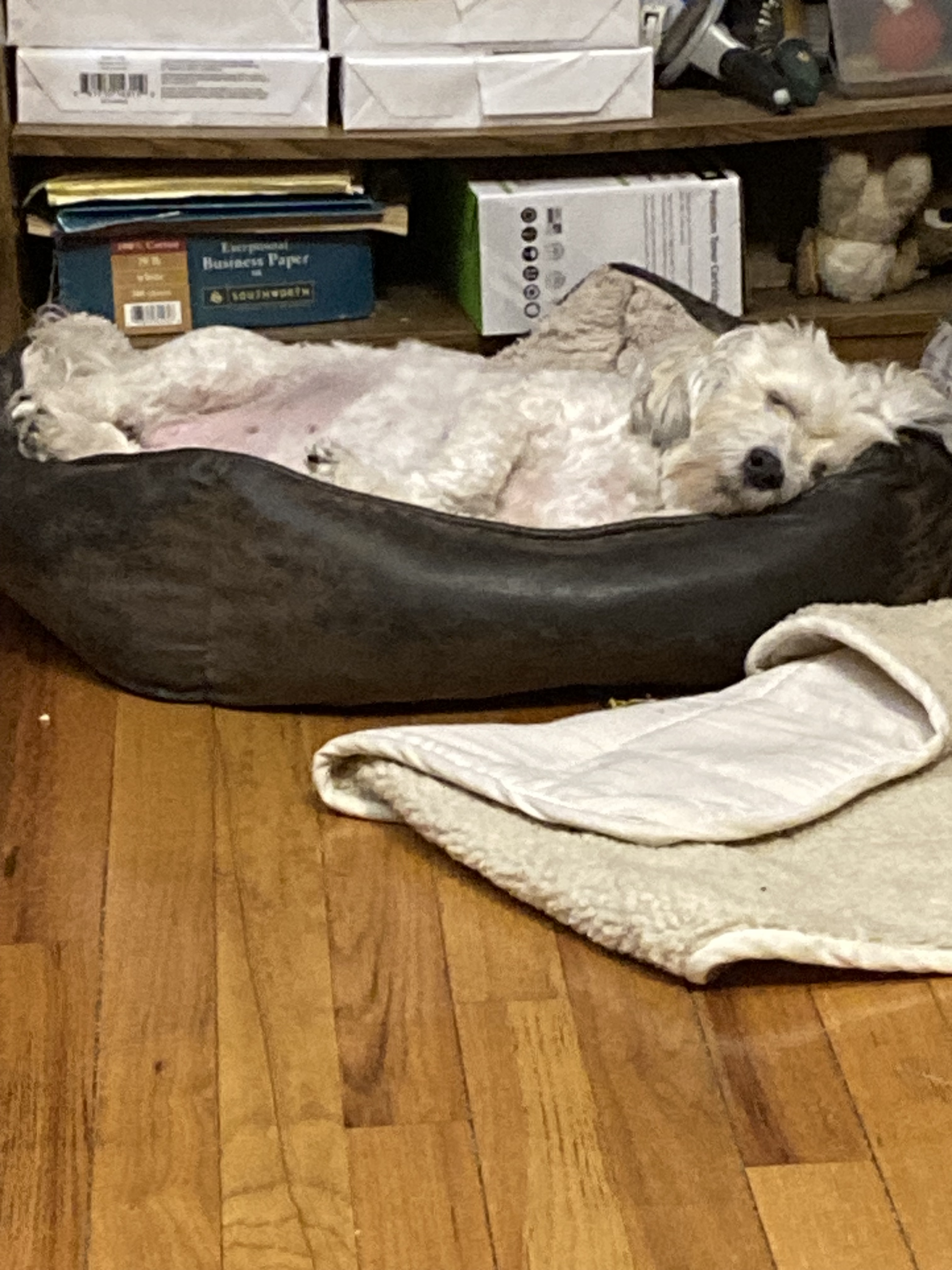
“I don’t mind napping while you go to shul.”
I pushed myself to go to the outdoor service because I wanted Cricket to be there one more time. She’s never been the most outgoing or friendly dog, and she wasn’t feeling all that well on that day in particular, but I wanted her to know that she was still part of our community, still known and seen and loved.
And even if it’s hard to live up to the work of being in community, even if sometimes it feels like more than I can do, there are also moments when it all comes together and my sixteen year old dog, and I, know we belong.
If you haven’t had a chance yet, please check out my Young Adult novel, Yeshiva Girl, on Amazon. And if you feel called to write a review of the book, on Amazon, or anywhere else, I’d be honored.
Yeshiva Girl is about a Jewish teenager on Long Island, named Isabel, though her father calls her Jezebel. Her father has been accused of inappropriate sexual behavior with one of his students, which he denies, but Izzy implicitly believes it’s true. As a result of his problems, her father sends her to a co-ed Orthodox yeshiva for tenth grade, out of the blue, and Izzy and her mother can’t figure out how to prevent it. At Yeshiva, though, Izzy finds that religious people are much more complicated than she had expected. Some, like her father, may use religion as a place to hide, but others search for and find comfort, and community, and even enlightenment. The question is, what will Izzy find?
If I had the energy, I would go back to Ikea for more bookcases, to line the walls of my room, and the living room, and maybe the hallway and the dining room too, and then I’d fill them all with books.
If I had the energy, I would go back to school to become a rabbi, or a cantor, or at least a Jewish studies professor.
If I had the energy I would go for long walks in different places every day, sniffing the smells and breathing the air and listening to all of the sounds, like Cricket and Ellie like to do.
“Walkies?!”
If I had the energy I would finish writing the novels I’ve started, no matter how many revisions it takes or how much time I’d have to spend fighting my internal demons, and I would keep reminding myself that writing the book is the important thing, even if no one ever reads it.
If I had the energy I would live on a farm, with horses and sheep and alpacas and one of every kind of dog in the world!
“Other dogs?!”
If I had the energy, I would go back to ice skating and tennis and learn how to just love what I can do and not always compare my abilities to the people who do these things at the highest levels.
If I had the energy I would make dinner every night, learning new and complicated recipes for meals that I would love to eat.
If I had the energy I would travel across Israel, and then across the United States, and then across Europe and then Asia, learning new things and eating new foods and meeting new people.
If I had the energy, I would go back to school for a PsyD, and train with people I admire, and become a child psychologist so I could help the kids I don’t know how to help now.
If I had the energy I would write memoirs and mysteries and musicals; I would write down everything I know and every question I have, and then I would read and study and ask and interview until all of my questions were answered, and then I’d start all over again with new questions.
If I had the energy I would practice guitar and piano every day, and then learn how to play the violin, and the drums.
“That would be loud.”
If I had the energy I would do the gardening and the landscaping at the co-op so that no one would ever cut one more branch off of one more pawpaw tree.
But to be fair, if I had all of that energy, I would be overwhelmed, with too much to do and no idea how to decide which of my priorities should go first, and not enough time or money to do it all anyway. Because there are so many versions of me in my imagination, and they all keep competing for what little time and energy and focus I actually have. And even now, when the amount of energy I have in any given day has dwindled down to something incredibly small, I still can’t focus enough to fill that time well and accomplish the things that should be possible, because I spend so much time arguing with myself, unable to stick to one version of me, even for a day, even for an hour.
So maybe it’s okay that I don’t have the energy to do everything my imagination can come up with, because that would be too much to fit into any one life. And most likely, if I had more energy, I would have an even longer, more unreasonable list of things to do, and the same feeling of failure to live with.
Maybe the goal is to accept the amount of energy I have today, and hope for more for tomorrow, and be kinder to myself about the limits, to my energy and my focus and my decision making skills,…but I should definitely get over to Ikea to get those bookcases one of these days.
“Bookcases are where you store chicken treats, right?”
If you haven’t had a chance yet, please check out my Young Adult novel, Yeshiva Girl, on Amazon. And if you feel called to write a review of the book, on Amazon, or anywhere else, I’d be honored.
Yeshiva Girl is about a Jewish teenager on Long Island, named Isabel, though her father calls her Jezebel. Her father has been accused of inappropriate sexual behavior with one of his students, which he denies, but Izzy implicitly believes it’s true. As a result of his problems, her father sends her to a co-ed Orthodox yeshiva for tenth grade, out of the blue, and Izzy and her mother can’t figure out how to prevent it. At Yeshiva, though, Izzy finds that religious people are much more complicated than she had expected. Some, like her father, may use religion as a place to hide, but others search for and find comfort, and community, and even enlightenment. The question is, what will Izzy find?

















 rachelmankowitz