Tag Archives: zoom

Seeing My Psychiatrist on Zoom

            Every three months or so, I see my psychiatrist for a few minutes on zoom (or Doxy, actually, a platform specifically for medical appointments), because he decided not to go back to in-person visits after Covid. He asks me how I’m doing with my antidepressant medications, and I say “fine,” and he takes notes and refills my prescriptions and makes a new appointment for three months in the future, and then we’re done. Of course, there have been times when I didn’t say I was fine, and he raised the dose of one or the other of my medications, which led to a one month follow up instead of a three month follow up, but for the most part, everything has been stable for quite a while. To fill out the four- or five-minute appointment, we tend to chat about my teaching, or my other doctors and the new medications they’ve added to my regimen, but for the most part, he asks me if I think I need to raise the dose of my meds, and I say no, and we wish each other well. But at my latest appointment, when I said a variation of my usual “I’m fine,” he said, “but what does that mean?” and I didn’t know how to answer.

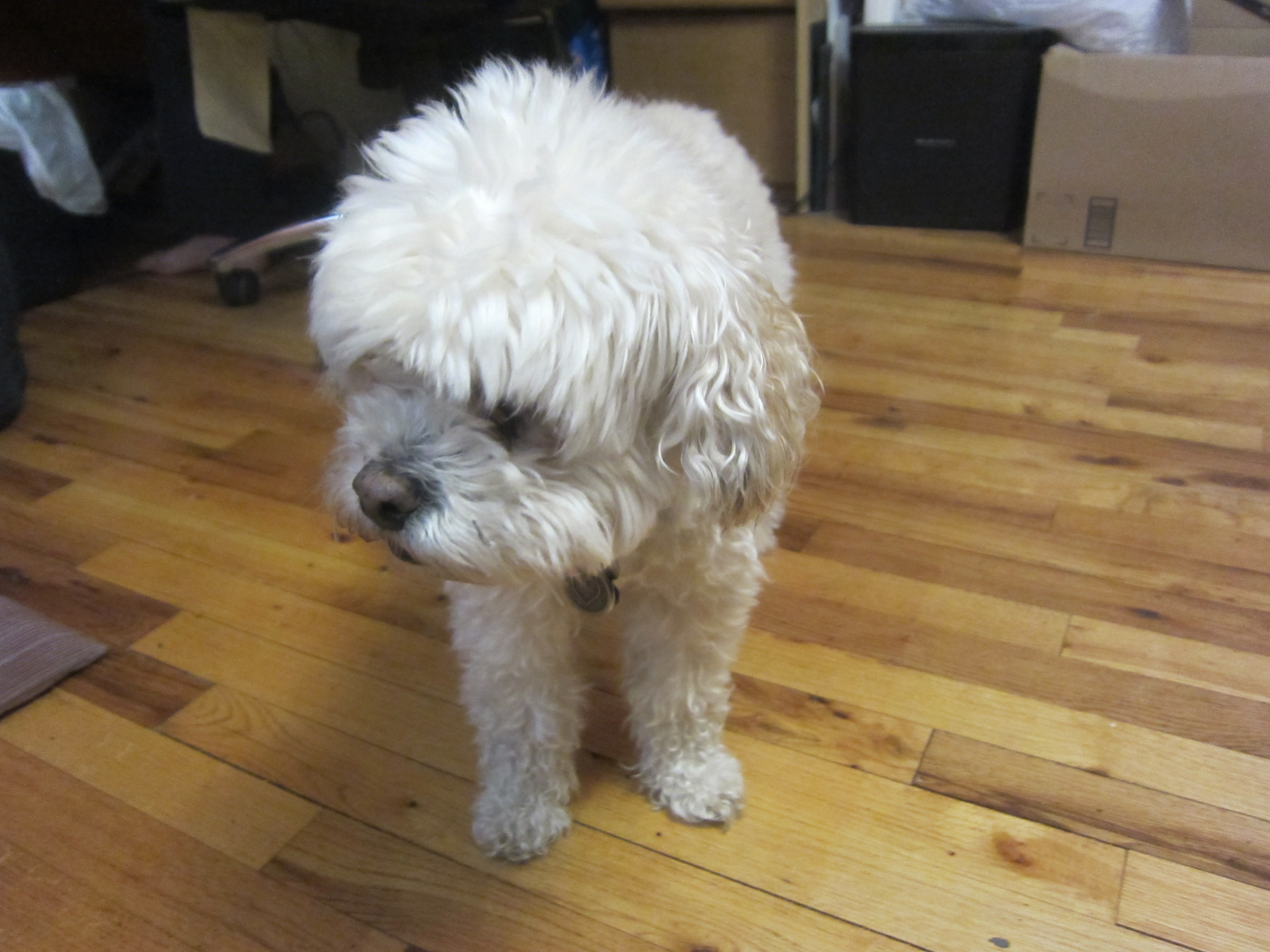
“Do you ever talk about me?”

            In the end, I must have said something reassuring, because he kept everything the same and we made the usual appointment for three months in the future, but when I closed my laptop, I wasn’t sure if “I’m fine,” was really the truth, or just something I’ve gotten used to saying. I don’t remember if I was more willing to go into details back when I actually had to leave the house for those five-minute session every three months, but there’s definitely something about the virtual appointments that encourages me to keep it simple.

            The fact is, I don’t really know if I’m on enough anti-depressant medication, or the right medication. I have no idea if this is the best my mental health can be, or if there are medications or other treatments that could make things better. The few times I’ve been willing to risk changing my medication were when I was feeling so awful that I wasn’t sure I’d be able to function otherwise.

            Antidepressant medications are a mystery, and not just to me. Doctors still don’t really understand why they work, or why one medication works for one person and not for another. It’s a lot of trial and error and guesswork, and a little too much Russian roulette for my liking. When I was first trying medications, years ago, the doctors would try a few from each family of drugs, and I had to spend weeks, and even months, dealing with weird side effects while waiting to see if something positive would happen. There was one medication that the psychiatrist (a different one) insisted on trying even though it was meant for bipolar disorder, which I don’t have, and within 24 hours I felt like I was going to jump out of a window, or at least scream until my head exploded, and I refused to take another dose. The doctor didn’t seem to think my reaction to the meds was all that bad, and he wanted me to stick with it for a least a few more weeks to see what would happen, but I felt strongly that I shouldn’t be taking a medication that made me want to kill myself and he reluctantly moved on to another class of drugs.

            Psychiatrists, and other doctors who prescribe these medications, also tend to be unusually terrible at diagnosis, because there is almost no consistency in how different doctors interpret the words of the DSM (Diagnostic and Statistical Manual of Mental Disorders), and the words used in the DSM are generally unrelated to the way patients actually experience and describe their own symptoms. Sometimes it feels like the doctors are waiting for certain magic words to be said, and don’t know what to make of the metaphors, sentence fragments, and shrugs that real people use to describe how they feel.

            To be fair, medical doctors are just as terrible at diagnosis when they don’t have hard and fast results (from blood tests or scans) to determine what’s going on inside. The pain medication I’ve been on for maybe fifteen years now (after trying a lot of different drugs meant for any number of different diagnoses) has only ever reduced the pain by half, and usually less than that; and the same is true of the psych meds: if they reduce my symptoms by half, that’s a good day.

            In an ideal world, I would sit down with each of my doctors and describe in detail how I feel (what hurts, how it hurts, what I’m struggling with, and what I’ve tried) and be answered with curiosity, understanding, respect and investigative questions to help me pinpoint and articulate my symptoms as clearly as possible. But, to be honest, that has never, ever happened. I have certainly attempted it, with dozens of doctors, but they tend not to hear what I’m saying over the noise of their own assumptions, and it ends up being easier to keep things short.

            I’ve been on my current anti-depressant medications for more than ten years now, and while they have caused weight gain and nervous system disruptions and a bunch of other side effects, they allow me to function most days, and they give me the leeway to do the therapy work that helps me move forward. And for me, to be able to say on an average day that I am fine, that I am not in a panic spiral or falling into depression or obsessing over this or that awful thing coming up in my life, is huge. It allows me to live my life each day and accomplish some of the things that matter to me, and experience joy, and even do the laundry. It may not be miraculous, but, at the very least, it qualifies as fine.
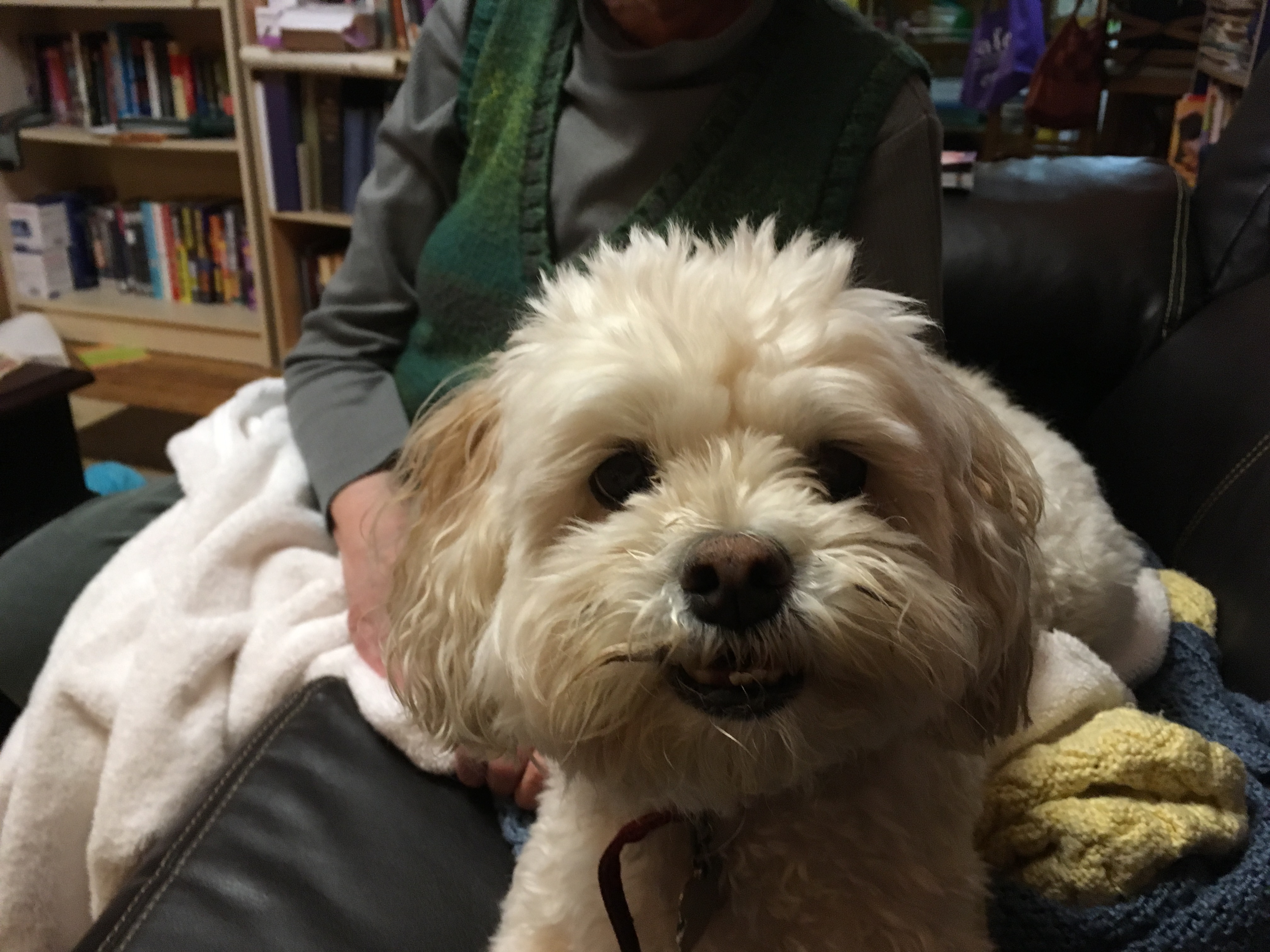
“Have you tried chicken treats? They really work for me.”

If you haven’t had a chance yet, please check out my novel, Yeshiva Girl, on Amazon. And if you feel called to write a review of the book, on Amazon, or anywhere else, I’d be honored.

            Yeshiva Girl is about a Jewish teenager on Long Island, named Isabel, though her father calls her Jezebel. Her father has been accused of inappropriate sexual behavior with one of his students, which he denies, but Izzy implicitly believes it’s true. As a result of his problems, her father sends her to a co-ed Orthodox yeshiva for tenth grade, out of the blue, and Izzy and her mother can’t figure out how to prevent it. At Yeshiva, though, Izzy finds that religious people are much more complicated than she had expected. Some, like her father, may use religion as a place to hide, but others search for and find comfort, and community, and even enlightenment. The question is, what will Izzy find?
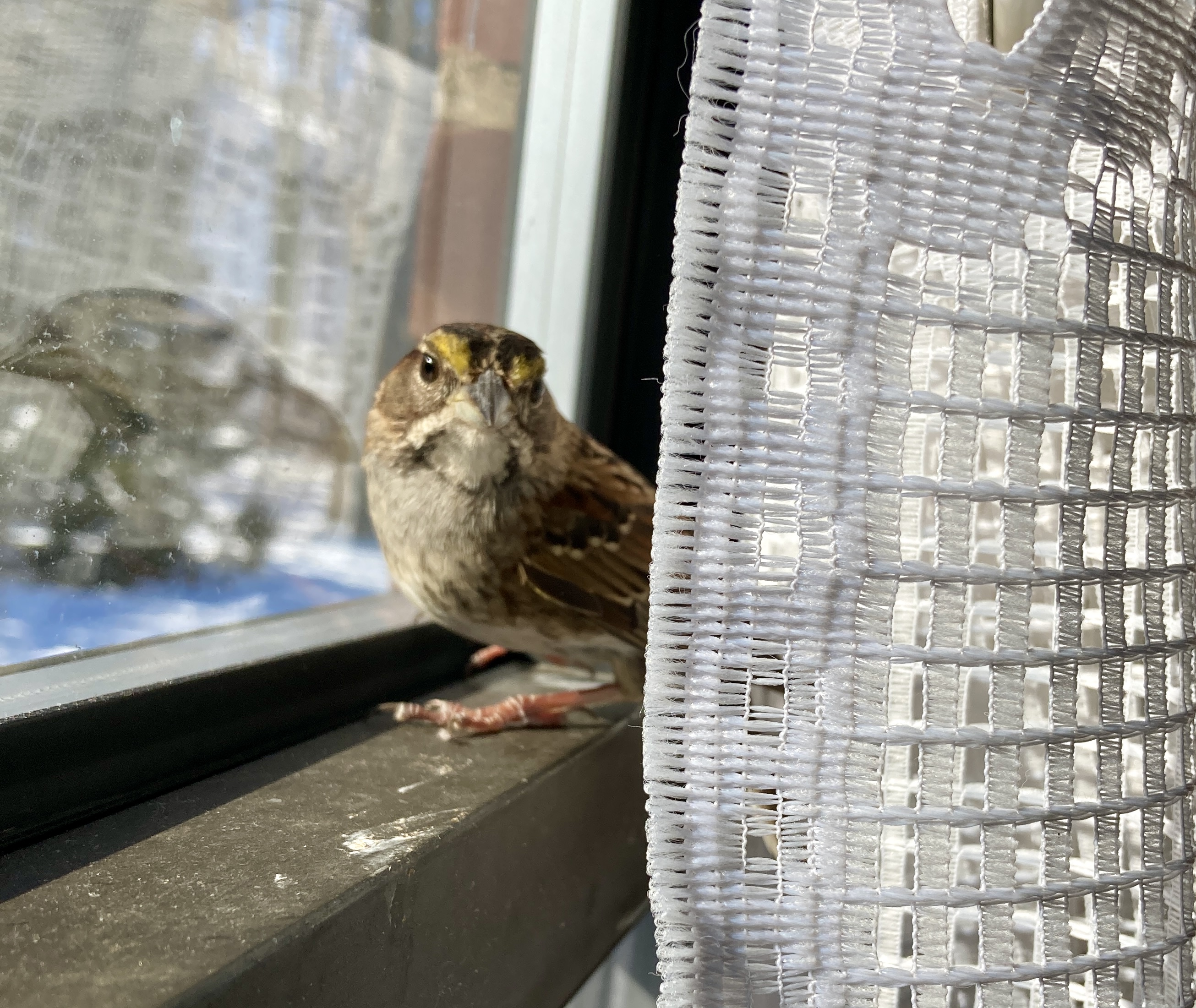

Hebrew Practice Groups

            At our first professional development of the year, we were asked which sound most characterized our summer, and I realized that mine was laughter, because the laughter in my online Hebrew class this summer was constant, even when we were on mute and could only see each other’s laughing faces. We became a tight knit group, with our young Israeli teacher, able to cover all of the emotional ground that came our way, without ever getting too depressed, because we knew we would be laughing again soon.

            But actually, I spent even more time in Hebrew practice groups this summer than in the class itself, because I had the time and because I finally felt like I could handle the social anxiety that comes with meeting so many strangers and making mistakes in front of them. It was all under the safe canopy of the same online Hebrew language program as my class, but in the practice groups I was meeting dozens of people from different Hebrew levels, and time zones, and ages and cultures.

            There are so many strange topics for discussion in the practice groups. Of course there are the standards: favorite food, favorite movie, what would you bring to a desert island. But then they start to get creative: what’s the weirdest food you’ve ever eaten (Ptcha – calf’s foot jelly); how would you solve global warming? (teach everyone how to fly: Laoof, like a bird, instead of Latoos, on a plane); how many languages can you speak (this one gets very competitive, and more than a few people have tried to count Spanish because they know how to say “Hola.”)

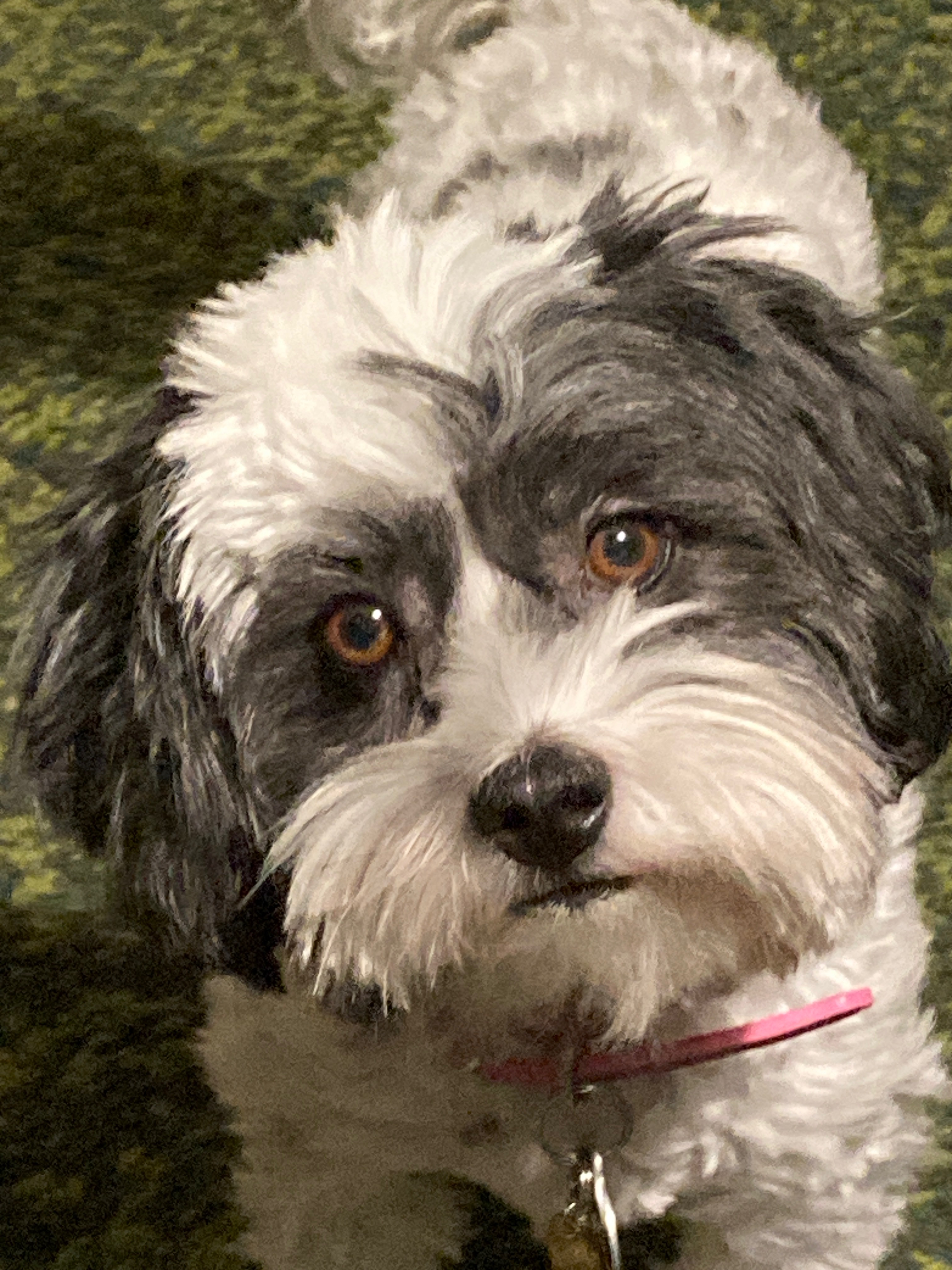
“I can teach you how to fly, if you want.”

            But we are always free to talk about something else in the breakout rooms, as long as we say it in Hebrew, so I’ve had long conversations about my dogs, or teaching, or growing up Jewish on Long Island. And if we’re pretty sure the teacher isn’t about to pop into the breakout room, we can discuss our favorite and least favorite teachers. You’d be amazed how diligently we can stick to Hebrew in the midst of a good gossip session. Because, you know, we’re studying here. We take it very seriously.

            The way the teachers lurk in the breakout rooms is always a topic of conversation. First of all, because they just appear and disappear without warning, like spies. But also, they keep their cameras off, as if we’re supposed to pretend they’re not really there. So, if I make a point of saying hello to the other students in the breakout room and don’t specifically say hello to the teacher, a disembodied voice might say, “Whatever, I’m not here, just ignore me,” which means, Hey, how dare you ignore me!

            Sometimes we’ll talk directly to the teacher – or to the box on the screen with the school logo on it – and ask for the Hebrew word for this or that, and the teacher will pop up on screen to answer “in person.” One time, a friend of mine asked her question, got her answer, and then said, “okay, you can go back into your little box now.”

            We get to meet a lot of teachers in the practice groups and see what their styles are – how they do corrections, how rigidly (or not) they follow their lesson plans, whether or not they have a sense of humor – and I’ve been able to get a much better idea of what works for me and what doesn’t, so that when a teacher’s style starts to get on my nerves, or leaves me feeling stupid, I’m less likely to assume it’s my fault (but only a little less likely).

            Our young Israeli teachers have also introduced us to something called pitzuchim – which literally translates to cracking nuts or seeds, but is used in Hebrew to refer to the way Israelis are always trying to figure out where they might know each other from (among American Jews this is called Jewish geography). It turns out that a lot of the teachers and students in the program have connections, through second cousins or long lost neighbors or who knows what else. So far, though, I have cracked no nuts or seeds on these zooms, which is kind of disappointing. Getting to Israel would be so much easier if I discovered a long lost wealthy relative with an empty apartment by the beach.

(Not my picture)

            This time spent in breakout rooms used to be the most stressful part of practice groups for me, and the reason why I avoided them so assiduously for years, but now, after the first few twinges of anxiety, I’ve come to really enjoy hearing everyone’s stories, and I’m less self-conscious about my broken Hebrew (though I still feel grumpy each time I make a mistake, which happens often).

            The most stressful part for me now is when we have to translate sentences from English to Hebrew, often using words I haven’t practiced recently (because I’m visiting practice groups at different levels from my own); but I’m getting used to laughing at my mistakes, and I’ve noticed that when I screw up, and laugh at myself, other people start to relax about their own mistakes. It’s almost like I’m doing a service.

            In some of the practice groups, after we go over some grammar from previous levels, we’ll read short articles together, or even just headlines, from online Hebrew language newspapers – often about food or travel or popular culture, so we can learn words we wouldn’t come across in class, like how to say “laundering money” in Hebrew. The words that are hardest to read in these articles are often borrowed from other languages. So, more often than not, our Israeli teachers will start to giggle when we can’t figure out how to pronounce “Mexico,”when it’s written in Hebrew letters.   

One of the lowest stress exercises that we do in practice group – though I can make anything feel stressful without really trying – is when the teacher puts an article on the screen and instead of asking us to read, and, God forbid, translate it, we just have to find one word at a time. It reminds me of being in first grade or so and realizing that there were English words I could just recognize on the page, without needing to sound them out, because they had become so familiar to me just by their shape.

            As a result of all of this time in the practice groups, I sometimes hear myself speaking in Hebrew, without having planned what to say ahead of time; the words just come out of my mouth, and I kind of look around the room, wondering who said that.

            And, really, during a summer where, aside from Mom, most of my in-person human interactions were at supermarkets or doctors’ offices, these practice groups gave me the chance to meet and chat with and learn from dozens of real people, who are fascinating and funny and weird and challenging. It’s still strange to me how real a community can feel, even when it only exists online; but in a way, the boundaries created by the computer (of time, and purpose, and mute buttons) creates a sense of safety that allows me to say what I really mean more often. Now, if only I could translate those safe boundaries into the real world…

“Pfft. Who needs the real world?”

If you haven’t had a chance yet, please check out my novel, Yeshiva Girl, on Amazon. And if you feel called to write a review of the book, on Amazon, or anywhere else, I’d be honored.

            Yeshiva Girl is about a Jewish teenager on Long Island, named Isabel, though her father calls her Jezebel. Her father has been accused of inappropriate sexual behavior with one of his students, which he denies, but Izzy implicitly believes it’s true. As a result of his problems, her father sends her to a co-ed Orthodox yeshiva for tenth grade, out of the blue, and Izzy and her mother can’t figure out how to prevent it. At Yeshiva, though, Izzy finds that religious people are much more complicated than she had expected. Some, like her father, may use religion as a place to hide, but others search for and find comfort, and community, and even enlightenment. The question is, what will Izzy find?

Back in Hebrew Class

            I’m back in my online Hebrew classes and it is such a relief. I didn’t realize how much I missed this imaginary place, this zoom class that exists somewhere outside of space and which I can get to without leaving my apartment. After almost a year away – and such a year – I feel so much gratitude to be back.

            Up until the moment class started, though, I wasn’t sure how I would feel. I was already feeling guilty for spending the money on this instead of on ten other things that seemed more important, and I felt needy and silly for wanting to be taught instead of teaching, and I felt ridiculous for not having been to Israel yet after so many years of wanting to go.

            And then, because I was out of practice with the time difference between New York and Israel, I thought the class started at 2:30 PM and was surprised when I checked my email and found out that the class had already started, at 1:30, and I was late. I still had to set up my computer and brush my hair and change my shirt (I wear my pajamas all day every day when I’m not at work) and log into the new learning system the school had created while I was away, and by the time I finally popped up on screen I was fifteen minutes late.

            But I was fine. No, better than fine.

            The class (or the screen) was full and there were some familiar faces, but mostly the faces were new to me, including the teacher. And yet I was able to keep up, and my Hebrew was much closer to the tip of my tongue than I’d feared. We didn’t talk about the news, much, instead we focused on the things we could control, like how to be kind and generous with each other and leave room for making mistakes. I’m a big fan of being treated like a big puppy dog when I make mistakes, instead of hit over the head with a hammer.

“No ouchies for me!”

            During my first week back in class I went to every practice group I could get to, which ended up being more than I’d gone to in the two years I’d spent in the program before. I wanted to challenge myself, socially and with my Hebrew, to get back into the stream as quickly as possible. And I didn’t realize until afterwards how easy it was, compared to even a year ago, to manage the social anxiety and fear of the unknown that comes with the practice groups – especially in week one when I had no idea who my teachers or fellow classmates would be. In our regular classes things are more predictable: you get a class list ahead of time, and an introduction from your teacher, and that’s your group for the semester. But in practice groups we’re dropped into breakout rooms with random strangers to discuss random topics and then we’re being tested on things we’ve learned in previous semesters, generally using vocabulary I forgot long ago.

I don’t think I’ll be able to do this many groups every week, both because I have doctors’ appointments coming up and other things I need to get done this summer, but I’d really like to work harder this summer than in the past and push myself and my Hebrew as far as possible.

            Except, despite all of the progress I’ve made on my mental health, somewhere around the third or fourth practice group the negative voices in my head returned: Why am I such a loser that I have to pay people to spend time with me and laugh at my jokes, why is everyone else so much more impressive and successful than me, why does everyone else get to be married and have children and travel around the world and have so much more energy and good health than me?

            I’m not sure why the negative voices were on pause for the first few days, but at least that gave me a few moments to revel in the joy of being back in class. But then the avalanche of pain made me realize that this was probably why I’d decided to stop taking classes last year. I thought, at the time, that I had run out of ambition to learn more Hebrew, but I think it was more that the classes were bringing up too much internal noise that I couldn’t handle and couldn’t drown out.

            The anxiety I used to be so focused on, around making mistakes and saying the wrong thing, seems to have been hiding a much deeper pool of anxiety around all of the things I want to have in my life and believe I can’t have. Being in class seems to bring up so much longing – to go to Israel, to have more friends, to be more successful in my career, and to be in love – and when all of that longing comes up to the surface, my deeply felt belief is that none of that is possible for me.

            In the past, when these feelings overwhelmed me, my answer was to turn off the faucet altogether, usually without realizing what I was doing. But now, it seems like my brain is telling me that I am ready for more, or should be, and therefore it’s time to let me know that I want more; but I still feel like the things I long for are impossible, and I don’t know why my brain believes I’m closer to ready.

            So, in the midst of seeing real progress, and feeling real joy, I’m also feeling awful at the same time, and it sucks. I’m so frustrated by how long it takes to make progress in my life, and how often I have to stomp the brakes to avoid falling off cliffs that seem to come out of nowhere. I wish I knew how long each step forward would take, and which goals would actually be reachable, because then I could plot it all out on a calendar and be comforted that it’s all going to happen when it needs to happen; but instead I have no idea what will be possible next week, let alone next year.

            My brain remains mysterious to me, and I don’t understand what it is about Hebrew in particular that has opened this door for me, but I am committed to continuing to go forward in whichever ways feel possible. So I will make as much of this summer of Hebrew as possible, enjoying the laughter and the challenges and the friendships, and I will also try to make sense of the pain and confusion that come along with them. And I will keep trying to remind myself that this is what progress looks like and feels like, for me, even if I wish it could be different.

“Hiding is always a good idea.”

If you haven’t had a chance yet, please check out my Young Adult novel, Yeshiva Girl, on Amazon. And if you feel called to write a review of the book, on Amazon, or anywhere else, I’d be honored.

            Yeshiva Girl is about a Jewish teenager on Long Island, named Isabel, though her father calls her Jezebel. Her father has been accused of inappropriate sexual behavior with one of his students, which he denies, but Izzy implicitly believes it’s true. As a result of his problems, her father sends her to a co-ed Orthodox yeshiva for tenth grade, out of the blue, and Izzy and her mother can’t figure out how to prevent it. At Yeshiva, though, Izzy finds that religious people are much more complicated than she had expected. Some, like her father, may use religion as a place to hide, but others search for and find comfort, and community, and even enlightenment. The question is, what will Izzy find?

Our Israeli Tour Guide

            Since the Israel/Hamas war started, our congregation has looked for as many ways as possible to help us express all of our mixed feelings and get educated about what’s going on and how it impacts our Jewish lives in the United States. Recently, since tourism has all but stopped in Israel, the Israeli tour guide who led the synagogue’s last few trips to Israel has been doing zooms for us once a week, way too early on Sunday mornings, to give our congregation a connection to an Israeli point of view.

            The Israeli tour guide knows a lot of my fellow congregants from the trips, and they know him, but he was mostly a stranger to me. Except, when he saw my name on the screen he said he almost cried, because his mother’s family were Mankowitzes too. I have no idea if we are actually related, because I’ve found a few different Mankowitz families on Facebook over the years who have been scattered around the world, but it was nice to feel that connection. I’ve never been able to afford to go on our synagogue’s trips to Israel, but I’ve seen pictures and heard stories and felt the pangs of jealousy.

            One of the first things our tour guide told us was that, despite the danger he and his children and grandchildren face in Israel right now, he is grateful not to be in the US or Europe, where anti-Semitism has been making a roaring comeback. Instead, he’s surrounded by people who understand the existential threat to Jewish life, and the danger of living in such close proximity to a terrorist organization, and he doesn’t have to explain his complex feelings of grief and anger and empathy and fear, because his neighbors are feeling all of the same things.

            They can see the same things we are seeing on social media, where some people are calling Hamas “freedom fighters” and denying the reality of rape and murder on October 7th. They too are hearing the UN be unwilling to condemn Hamas, and the International Red Cross say they can’t do anything to check on the wellbeing of the hostages in Gaza. And they can see Hamas’ lies being taken as truth by so many, even after evidence to the contrary has been presented, both by Israel and the United States government. And just like us, they are hearing Jews being called Nazis and vermin and being accused of genocide, and seeing huge protests calling for ceasefires, even during the temporary ceasefire, where people who have to know that Hamas will never stop attacking Israel are demanding that Israel stop fighting back.

            The recent accidental killing of three hostages by the IDF, who mistook them for terrorists despite waving white flags, broke so many hearts in Israel and opened the door, a crack, to questioning the tactics of this war and if it will really bring the hostages home. Though I don’t know if the Israelis are questioning the efficacy of the airstrikes the way Americans are.       I saw a report that said more than half of Israel’s airstrikes were made with “dumb bombs,” and I’m not a military expert but I assume that means that US critics believe Israel could be using “smarter” bombs that are able to be more carefully targeted and less likely to cause civilian casualties and collateral damage. If that’s true, I want to know why the IDF has chosen the strategy they’ve chosen. If they are capable of limiting collateral damage, why wouldn’t they do that? If they’re not capable of limiting collateral damage, why are their friends suggesting it’s possible?

            I want to believe that the Israeli military is doing everything possible to limit civilian deaths and injuries, because I see them warning civilians to leave targeted buildings, and setting up safe escape routes, and bringing in humanitarian aid. But then why are whole families dying in Gaza? And journalists? And aid workers? These are my questions, and I don’t have the answers. Part of the problem is that there are no international journalists in Gaza right now. There are Israeli journalists embedded with the IDF and there are Gazan journalists, but none of the images coming out of Gaza show Hamas militants, and certainly don’t show Hamas fighters in the act of fighting. It’s as if they are invisible. And maybe they are, because they are in the tunnels, but the images from this war are incomplete, and the reporting of facts is incomplete and that leaves a lot of people retreating to their safe corners and believing what they want to believe is true, rather than being able to judge for themselves.

            The almost unanimous calls for ceasefire from the United Nations General Assembly, despite the fact that Hamas refuses to return the rest of the hostages and has never stopped sending rockets into Israel, and has been stealing humanitarian aid and preventing the escape of civilians, confuses me. Is the rest of the world ignoring the existence of Hamas and seeing Israel invade Gaza with only civilians as their targets? Because if that’s what people believe, I can understand why they would demand a ceasefire from Israel alone. I just don’t know why the world would believe that.

            With all of the noise in the outside world, our once a week zooms have been a respite. Our tour guide has children serving in the army, and so do most of his left-leaning friends in Israel, and he has grandchildren who could easily have been killed or taken hostage on October 7th, but he remains a progressive, believing in equal rights for Arabs and Israelis, and women and LGBTQ people. But his liberal point of view is informed by his service in the Israeli army and his knowledge of the many peace deals that have been attempted and have fallen apart over the past seventy five years.

            He is as frustrated as we are by the settlers in the West Bank who keep attacking Palestinians, and he is as disillusioned as we are, no, more, by the current government of Israel and its anti-democratic leanings. He, like so many Israelis, has dreamt of peaceful coexistence with the Palestinian people for so long, looking for reliable partners to live side by side with, but they know that that has never been the goal of Hamas or Islamic Jihad.

            So I dutifully set my alarm clock each Saturday night, and try to remember to brush my hair in the morning before logging onto the zoom, and I listen to our Israeli tour guide lead us through the latest events in the news and how Israelis like him are experiencing them on the ground: like the incredible relief of seeing the first hostages come home; and the joy of finally being able to laugh again, even for a moment; and the horror of the IDF accidentally killing three hostages; and the frustration when the hostage negotiations broke down; and the reassurance of knowing that so many Israelis are working together to take care of the evacuees from the north and the south of Israel who had to leave with barely the clothes on their backs amidst rocket fire from Hamas and Hezbollah. 

            Recently, a young college student from our congregation came to the weekly zoom to tell us what it feels like to be a Zionist on campus who is also sympathetic to the pain of the Palestinians. She said that everyone on campus seems to have chosen sides and if you are not completely in one camp or the other it can be very lonely, but she has friends in every group and is doing her best to see the complexity of the disagreements and hold onto her empathy and connection even when those emotions are overwhelming. We were all crying, listening to her, but also feeling really hopeful because her ability to hold on to her own identity and point of view while also respecting and even loving people who disagree with her is a powerful thing.

There’s this funny thing about Israelis where it seems like everyone calls everyone else by their first name, or by their nickname, whether they know each other or not. Everyone is “brother,” and all of the hostages belong to everyone’s families, even when some members of the family, like Bibi, are deeply infuriating and would never be invited to Friday night dinner. And I have to admit that I don’t feel that way about the American Jewish community; we are much more spread out and divided than Israelis, or at least that’s how it feels to me. But I keep looking for ways to connect, and to feel less alone with my grief and fear and confusion over what’s true and what’s possible in the future. My hope is that the large majority of American Jews who both care about Israel and about liberal values can find a way forward, together with non-Jews who care about the same things.

As always, there have been a few articles and videos and songs that have given me hope:

            Identity/Crisis: Believe Israeli Woman https://podcasts.apple.com/us/podcast/identity-crisis/id1500168597?i=1000639057794

                An Interview with a Druze/Israeli Reporter www.israelstory.org/episode/riyad-ali/

      An Arab Israeli survivor of the October 7th attack: https://www.facebook.com/share/yjXk5jQtd33ZWhkA/?mibextid=WC7FNe
            Three Children Released From Hamas Captivity Are Reunited With Their Dog               https://youtu.be/_HqWdRwiv4Y?si=payDYwDNzfQGaHdO
            Matisyahu’s One Day: https://youtu.be/WRmBChQjZPs?si=m4PG---Zhwleg9wI
            Matisyahu’s One Day sung by 3,000 Muslims and Jews in Haifa, 2018: https://youtu.be/ZPBjAfmgC-g?si=GOvgbBNIyqf-jYLg
Ellie, forever in our hearts.

If you haven’t had a chance yet, please check out my Young Adult novel, Yeshiva Girl, on Amazon. And if you feel called to write a review of the book, on Amazon, or anywhere else, I’d be honored.

            Yeshiva Girl is about a Jewish teenager on Long Island, named Isabel, though her father calls her Jezebel. Her father has been accused of inappropriate sexual behavior with one of his students, which he denies, but Izzy implicitly believes it’s true. As a result of his problems, her father sends her to a co-ed Orthodox yeshiva for tenth grade, out of the blue, and Izzy and her mother can’t figure out how to prevent it. At Yeshiva, though, Izzy finds that religious people are much more complicated than she had expected. Some, like her father, may use religion as a place to hide, but others search for and find comfort, and community, and even enlightenment. The question is, what will Izzy find?

My Latest Symptom

            The most recent embarrassing symptom of my autoimmune/connective tissue/who-knows-what disorder was a wound on my lip that refused to heal. Actually two. The first one was on the right side of my lower lip and lasted at least three weeks, and as soon as it healed another one opened up on the left side. I can’t even explain the frustration I felt when, after less than a day with actual normal skin, a new wound opened up.

“You looked really weird, Mommy.”

            This would have been fine, though, if every time I was in the view of other human beings I was wearing a face mask, but I teach online once a week, and take a Hebrew class online twice a week, and I was supposed to record another choir video, so it was been an exercise in holding my head at funny angles, rejiggering the lights, and trying not to feel embarrassed when my still bleeding lip, or any of the many different scabbing stages, were visible. Only one of my students mentioned it, and I’m assuming that everyone else was either being polite or not actually paying attention to me (which is more likely).

“Were you saying something?”

            The oral pathologist said the lip wounds were probably caused by a combination of the Lichen Planus (an autoimmune disease that impacts the inside of my mouth and also my lower lip for some reason), and the way the face masks keep moisture in, and the steroid gel I have to use to control the Lichen Planus (which barely works, but successfully thins my skin). He wasn’t concerned, though. He was also unconcerned that there was an ulceration on the side of my tongue, and raw red skin on the inside of each cheek, and gum irritation that will lead to more and more problems in the future (his nurse joked that I should save my money for all of the dental work I will need – Ha ha! So funny!), all of which has made eating a painful experience for quite a while now. But other than that, sure, no big deal.

            The thing is, if I could just be sanguine about my symptoms and accept them as a passing experience, maybe I’d be okay. But instead, I end up feeling like these symptoms are proof that I am a disgusting and unlovable creature. I feel like a throwback to biblical times, when Miriam (the sister of Moses and Aaron) was punished with a skin disease for being a gossip. I’ve been putting off teaching my synagogue school students about Tzara’at – the skin disease Miriam, and others, were supposedly punished with for their “bad speech,” because I really don’t want to risk them thinking this lip thing is going to happen to them too. And, really, I don’t want to risk convincing myself that there’s something to that argument. I mean, if gossip caused skin disease none of us would have any skin left!

“What?!”

            As soon as my lip healed – mostly – I rushed to do my choir recordings before a new wound could open up, and I made it with one day to spare before the deadline (I really did not want to explain why I would need more time). And instead of worrying about my lip, I was able to worry about the glare on my glasses, and the break in my voice when I had to move from the lower notes to the higher notes, and the flyaway hairs escaping from all sides of my ponytail, etc., which was a relief.

            I don’t know what my next weird symptom might be, because it’s generally unpredictable, and I’m not so evolved as a human being that I can be blasé about symptoms that impact how I look. But for now, I’m going to make the most of the feeling of freedom that comes from being able to turn my head from side to side while I’m on screen, and eat salty food without fear of excruciating pain, and knowing that if I fall into the depths of despair in the next few days it will be about something other than how I look on Zoom.

“I think I look pretty good.”

If you haven’t had a chance yet, please check out my Young Adult novel, Yeshiva Girl, on Amazon. And if you feel called to write a review of the book, on Amazon, or anywhere else, I’d be honored.

            Yeshiva Girl is about a Jewish teenager on Long Island, named Isabel, though her father calls her Jezebel. Her father has been accused of inappropriate sexual behavior with one of his students, which he denies, but Izzy implicitly believes it’s true. As a result of his problems, her father sends her to a co-ed Orthodox yeshiva for tenth grade, out of the blue, and Izzy and her mother can’t figure out how to prevent it. At Yeshiva, though, Izzy finds that religious people are much more complicated than she had expected. Some, like her father, may use religion as a place to hide, but others search for and find comfort, and community, and even enlightenment. The question is, what will Izzy find?

The Hebrew Class, Continued

            The night before my online Hebrew class started, I suddenly got anxious. I had the link to the class ready, and the WhatsApp group set up on my phone, but I still wasn’t sure what to expect. I had nightmares that night about racing around Long Island trying to get to my class on time, and, of course, continually missing the class. And when I woke up, the anxieties just multiplied. What if the class was too hard? Or too easy? What if I didn’t like the teacher? Or my classmates? What if I couldn’t stay focused for 90 minutes at a time? What if there were too many students in the class and it was too easy to fade into the background? Or what if there were too few students and I felt like I was being watched and judged the whole time? What if the teaching method overwhelmed me? Or I forgot all of my Hebrew? Or I got bored? Or I was already exhausted by the time the class started and couldn’t keep my eyes open?

Huh?”

            The hours leading up to the class dragged by, and I couldn’t concentrate on anything except the endless worries. But, when I sat down in front of my computer and logged into class, it was fine. There were ten students, not too few or too many, and the teacher was friendly; she made sure everyone could participate and she repeated conjugations and sentences as many times as necessary for us to catch on. The class felt a little bit easy, but that was a relief for day one. The only real problem was trying to figure out the tech (I didn’t understand how to use the WhatsApp group or the Quizlet flashcards), but I survived, and the nightmares went away.

Sweet Dreams

            The second class, a few days later, was more challenging and moved faster, and I started to feel like a spigot was opening up in my brain and my long dormant Hebrew vocabulary was starting to flow again. Except, I felt kind of bad about how easy it all was, as if I’d taken the easy way out by accepting the level I’d been put in, instead of challenging myself to go into the next level up. And I felt lazy for not pushing myself to study more between classes, or watch more movies in Hebrew, or seek out random Israelis to talk to.

            The thing is, I still forget words in Hebrew that I should know, like the word for “to study,” or I confuse the conjugations for You (f) and She. And I feel the squeeze in my gut, and the beginning of humiliation that after all these years I still can’t master Hebrew. And then there’s this old feeling, where I worry that I’m showing off too much and that if I make a stupid mistake my classmates and my teacher will say, Gotcha, you’re not so great after all. But, actually, that hasn’t happened in this class, at all.

            Even in the practice groups, on different days, with different teachers and classmates, the overall vibe is eager but non-judgmental; everyone is trying and everyone is making mistakes and it’s kind of great.

“Yeah!”

            We spend a lot of time in our class just repeating the words the teacher gives to us, both asking the set questions and giving the set responses in turn; so not only are we saying the words, but we’re hearing them over and over, creating a sort of muscle memory for common phrases.

            My favorite thing is how much we’re learning about the Tel Avivians who created the class materials through the sentences they have us saying. We learn how to say: my back hurts, my teeth hurt, or my legs hurt because I was walking all day; I didn’t get to it because I had a crazy day; I missed the party because the traffic was crazy; and I’m tired because I work all day every day including the weekend. You can get a pretty good idea of a culture from the kinds of things they teach newcomers how to say.

“Woof.”

One of my favorite new phrases is Al HaPanim which translates as “on the face,” or “falling on my face” which basically means, I feel terrible. I definitely want to teach that one to my synagogue school students. By the time they get to class, after a full day at regular school, they really, really love to complain; why not give them a chance to do it in Hebrew?!

            My social anxiety is still an issue. I feel embarrassed when I have to make conversation about my life and my answers sound childish or uncool. I’m also self-conscious about the way I look on screen, especially because my living room is warm in the summer, even with the air conditioner on (it’s a big room and the air conditioner is far away from my desk), so I get kind of sweaty. Ideally, I would be the kind of person who blow dries her hair and puts on make-up before every class, but I am not, so my hair is usually up in a ponytail and my bangs are either stuck to my forehead or floating in the air willy nilly. So be it.

“MY hair looks fine.”

            I still get anxious before every class, of course, and I still hurry up and do my homework right away out of fear that I’ll forget everything I learned within minutes. I’m still me; but I’m trying. And even when I’m anxious or overwhelmed, learning Hebrew still seems to fill up an important place in my heart where my kindergarten self is always hungry for more; so it’s worth the trouble.

My hope is that all of this practice speaking Hebrew, and making mistakes and moving on anyway, will help create circuits in my brain that will be useful in other parts of my life as well. That’s always the goal – that each time I challenge myself to learn something new I’m actually healing my brain, and becoming more fully myself.

“Like me!”

If you haven’t had a chance yet, please check out my Young Adult novel, Yeshiva Girl, on Amazon. And if you feel called to write a review of the book, on Amazon, or anywhere else, I’d be honored.

            Yeshiva Girl is about a Jewish teenager on Long Island, named Isabel, though her father calls her Jezebel. Her father has been accused of inappropriate sexual behavior with one of his students, which he denies, but Izzy implicitly believes it’s true. As a result of his problems, her father sends her to a co-ed Orthodox yeshiva for tenth grade, out of the blue, and Izzy and her mother can’t figure out how to prevent it. At Yeshiva, though, Izzy finds that religious people are much more complicated than she had expected. Some, like her father, may use religion as a place to hide, but others search for and find comfort, and community, and even enlightenment. The question is, what will Izzy find?

The Choir is Back

            I recently found out that my synagogue’s choir will be singing in-person at High Holiday services in September. Up through most of June, we thought we’d be recording one or two more videos (to add to the collection we made last year) and using them for services – both online and on screens in the sanctuary. But with the changes to the protocols in New York, our plans have changed.

“Am I singing?”

            In-person choir performances mean rehearsals all summer, starting right away, and also early morning services for Rosh Hashanah and Yom Kippur – which I’m really not looking forward to. Instead of waking up late and eating breakfast and leisurely strolling with the dogs and then getting to synagogue for the 11:30 AM service, the way Mom and I used to do before I joined the choir, I will have to be up and dressed and ready to sing by 8:45 in the morning.

            I’d actually gotten pretty comfortable with the distance singing – making the videos and singing along to a voice in my ear – and now I will have to re-acclimate to four-part harmonies, and ignoring what someone else is singing (loudly, next to me).

“Grr.”

            I’m also anxious about what to wear for services, and which shoes to wear for all of the standing; and I’m worried that I won’t have enough time to get all of my planned writing done this summer, with my Hebrew classes and choir rehearsals and doctors’ appointments and on and on.

            Before the first choir rehearsal could take place, though, a former choir member (whose wife still sings with the choir) died, at age 95. It wasn’t unexpected, given his age and overall health, but it was still a shock. He was full of life, and jokes and opinions, and participated in all of our study sessions and services over zoom during Covid. Almost as soon as the congregational email went out, letting us know of his death, the Cantor wrote to the choir members to ask if we’d want to reschedule our first choir rehearsal and instead go as a group to the first night of Shiva, to sing for our friend. And we all agreed.

This was our first communal funeral since Covid began – the first time we could fill up the sanctuary and sit side by side to mourn one of our own. And it was very sweet. We were able to hear from the children and grandchildren of our lost friend, and share their memories and jokes and tears. And then at Shiva that night, the choir members gathered around his wife, arm in arm, to sing Oseh Shalom (a prayer for peace), which we sing together at the end of every choir rehearsal.

I’d forgotten the power of this, I think, in my fear of the social obligations that come with returning to an in-person world. And maybe I hadn’t even realized what a big part the choir played in these connections – these physical, in-person connections, where we sing to each other and come together.

Sometimes I worry that my social anxiety, and the holes in my social skills, mean that I can’t be a real part of a community, and can’t be a good friend. I worry that I don’t have the gregariousness or the generous instincts other people have by nature. But these are the times when I feel the power of ritual, of having a scaffolding to hold me up as I figure out how to be of use.

It shocks me every once in a while that I’ve found this community, and that I can find a place in it for myself, despite my fear of doing or saying the wrong thing. I’ve learned, slowly, over a long period of time, that everyone says or does the wrong thing sometimes, maybe even all the time, and the world doesn’t end as a result. I still keep a mental list of all of my gaffs and awkward encounters and missed opportunities, but I’ve also collected enough memories of others doing the same things that I’ve learned that it’s okay. We’ve survived a bad joke, or a social misstep, or an inappropriate story, or a missed connection thousands of times, and we are still here.

“How bad are these bad jokes?”

Community can be a fragile thing and requires a lot of work and commitment, and a willingness to speak up when you feel hurt, and to apologize when you are the one who hurts others; but I’ve learned that communities are the safety nets that keep us afloat when our jobs and families and friendship groups can’t quite catch us.

“I will always love you, Mommy!”

When Mom and I first joined the synagogue, nine years ago, I felt the power of going to Friday night services every week and hearing the list of people who had died over the past year, even though I didn’t recognize any of the names. I felt the sanctity in the idea that we mourn together; that these deaths matter to all of us and not just to the close relatives and friends. Over time, more of the names have become familiar, as people I knew, or the loved ones of people I knew, or people I’ve heard stories about from way-back-when have been added to the list. In a way, it feels like an honor to be able to help create a container for the grief, to be able to take on a small part of the weight of memory for someone else, knowing they will do the same for me.

So, I will listen for my friend’s name every week for the next year, and remember how much he valued this community and would want it to survive after his death, if only so we can continue to tell his stories to the next generation. And, as long as the current vaccinations can keep the Delta variant at bay, I will try to embrace the shorter than usual choir rehearsal period, and the earlier-than-heck morning services, because being an active part of this community means that I can help create a safe container for so many different feelings, including joy.

If you haven’t had a chance yet, please check out my Young Adult novel, Yeshiva Girl, on Amazon. And if you feel called to write a review of the book, on Amazon, or anywhere else, I’d be honored.

            Yeshiva Girl is about a Jewish teenager on Long Island, named Isabel, though her father calls her Jezebel. Her father has been accused of inappropriate sexual behavior with one of his students, which he denies, but Izzy implicitly believes it’s true. As a result of his problems, her father sends her to a co-ed Orthodox yeshiva for tenth grade, out of the blue, and Izzy and her mother can’t figure out how to prevent it. At Yeshiva, though, Izzy finds that religious people are much more complicated than she had expected. Some, like her father, may use religion as a place to hide, but others search for and find comfort, and community, and even enlightenment. The question is, what will Izzy find?

The Hebrew Class

            My first fear about taking an online Hebrew conversation class this summer was the half hour Zoom interview and assessment I’d have to get through first. I was afraid I’d be convinced to spend more money than I wanted to spend, because my social anxiety would kick in and get me to agree to terms I wasn’t okay with, just to please the interviewer. But as one of my readers recently pointed out, Duolingo can only take you so far, and I really wanted to overcome my fear of speaking Hebrew (or any of my other foreign languages) out loud. My hope was that pushing my boundaries in this way would help me make progress in my life overall, but I also just wanted to become more fluent in Hebrew; it’s been a life-long dream.

         “I dream of chicken.”

   I was nervous about the interview for days ahead of time, and tried to think of every excuse to skip it, but in the end I forced myself to sit in front of my computer and click the Zoom link.

            First there was an initial greeter, a young Israeli guy who smiled at me and asked about my background in Hebrew and where I lived and if it was anywhere near the Five Towns (it depends on what you mean by “near.”) And then he sent me off to a breakout room to meet with a teacher for an assessment. The teacher was another young Israeli guy who smiled at me and asked me about my background in Hebrew. I thought I was supposed to answer him in Hebrew, since he was assessing me, but it was a struggle to find the words and he said I could use English to start with. Eventually, though, he started asking me to translate things, and answer questions in Hebrew, and then he had me repeating phrases in rapid fire scripted conversations. When I had trouble hearing him a few times early on we both assumed that the problem was coming from his computer, and he was apologetic and tried everything he could think of to fix the problem. Some things seemed to help for a short period of time, but then the problem would come back, and go away, and come back. We doggedly made it through the whole interview, though, and he told me that I’d be at the third level, out of eight. He told me that I’d be a little advanced at the beginning of the class, but it would be good for me to get a chance to build my confidence, rather than feeling too challenged right away.

I had to remind myself that the levels he was talking about were Israeli levels; being a good Hebrew student in America is not the same as being an Israeli native speaker. But it still hurt my pride.

“Harrumph.”          

  Anyway, then I was sent to the third young Israeli guy who smiled at me and asked about my background in Hebrew and then gave me an overview of the program, including the costs and class schedules. When I had trouble hearing him he said that the problem was coming from my side, and it turned out that he was right. I pressed every button I could think of and then unplugged my headphones, just to see if that would change anything, and the problem went away. I’d never had problems with those headphones before, so I hadn’t even thought of them when I was having my assessment with the teacher, but discovering that the problem had been coming from me all along sent me into a shame spiral. That poor guy had worked so hard to fix a problem he had no control over, and it was my fault. I get into shame spirals very easily, and I was already feeling guilty about not being more advanced in Hebrew, and for being uneasy with all of the young male energy, and for just being so uncool. But I was able to keep my head up and when the third young Israeli guy tried to convince me to sign up for a year of classes at a time, saying there would be discounts for each added semester, I was able to politely and firmly say No, I only want to sign up for one class right now. Even so, the cost of the class was more than I’d expected, and I felt guilty for spending so much of my salary from synagogue school learning advanced Hebrew that I wouldn’t really need in order to teach my beginner classes.

And yet, I decided to take the class anyway, because I really really wanted to. There would be two one-and-a-half hour sessions per week, for ten weeks, plus up to four hours a week of more casual conversational zooms for practice. There was also something about What’s App and Facebook, but at a certain point I wasn’t able to take in any more information. It was a relief when the Zoom was over and I could shut off my computer and take a breath, but almost immediately the shame spiral sped up and I went over and over my internal transcript of the conversations and worried that I’d said and done a million things wrong, especially signing up for the class at all.

  “You could have bought more chicken treats, Mommy.”       

   When I got the follow up emails, reiterating all of the information, there was also a video explaining how they used What’s App in their program (which was helpful because I’ve never used What’s App in my life), and even better, the teacher in the video was female. The tidal wave of young male energy on the Zoom had clearly been more overwhelming than I’d realized, because seeing a relatable woman, not my age but not twenty-two either, was an incredible relief.

            Why do I want to do this now? Because teaching synagogue school has been reminding me of how much I loved learning Hebrew growing up, and how much more I want to learn; and because I want to push myself to build my social skills, and my tolerance for being uncomfortable. But there’s also the extra push of the recent situation between Israel and Hamas, and even more so the media and social media reactions to it.

            I’m not an Israeli, and I have no plans to move to Israel, but the existence of a Jewish state has always been important to me. Israel is the only place in the world with a Jewish majority population and where Jewish holidays are celebrated as state holidays. In the United States, Christian holidays are the default holidays for school vacations and days off from work and national celebrations, etc., but in Israel, being Jewish is the default. It’s kind of like being a Trekky and going to a Star Trek convention, and suddenly you’re not a weirdo anymore. Or at least not the only one. Just knowing that a place like Israel exists makes me feel more acceptable for who I am.

            But a lot of the barbs thrown on social media recently have been questioning Israel’s right to exist at all, and have used many old anti-Semitic tropes and even outright support of the Holocaust in their arguments for why the country should be wiped off the map. As a result, anti-Semitic attacks in real life, in America and Europe, have increased, on top of the four years of rising anti-Semitic incidents during the Trump era.

            I can’t fix anti-Semitism. And I can’t fix the problems in Gaza and Israel and the West Bank. But I have had a lot of feelings about all of it, and the answer for me has been to deepen my understanding of Israel and the people who live there. There has been solace in spending time in Jewish spaces and reading articles from many different perspectives, and listening to Israeli music, and remembering my childhood joy when I first learned about the State of Israel.

            So, I’m going to take this very scary online Hebrew conversation class, and try to build my tolerance for things that are uncomfortable: like grammar, and making mistakes in public, and talking to people I disagree with. Because all of my reading and listening and thinking and remembering has left me believing that Israel is strong enough to withstand the criticism, and to correct her mistakes and accept multiple viewpoints in order to find a new way forward. Just like me.

“That sounds exhausting. We’ll just wait here.”

If you haven’t had a chance yet, please check out my Young Adult novel, Yeshiva Girl, on Amazon. And if you feel called to write a review of the book, on Amazon, or anywhere else, I’d be honored.

            Yeshiva Girl is about a Jewish teenager on Long Island, named Isabel, though her father calls her Jezebel. Her father has been accused of inappropriate sexual behavior with one of his students, which he denies, but Izzy implicitly believes it’s true. As a result of his problems, her father sends her to a co-ed Orthodox yeshiva for tenth grade, out of the blue, and Izzy and her mother can’t figure out how to prevent it. At Yeshiva, though, Izzy finds that religious people are much more complicated than she had expected. Some, like her father, may use religion as a place to hide, but others search for and find comfort, and community, and even enlightenment. The question is, what will Izzy find?

Reading about Pawpaws

            A few weeks ago I had the opportunity to read one of my essays out loud to a Mutual Support Zoom for my synagogue. We’ve been doing these all year, as a way to keep each other company and to get to know our fellow congregants during Covid. We’re winding up the series now, since most of the regulars have been vaccinated and are returning, slowly, to in-person events, and this was my last chance to take a risk and add my voice to the mix.

“When do I get to talk?”

The theme of this particular Zoom was trees, probably the third or fourth on that theme, because with all of the time we’ve been spending at home for the past year nature has caught everyone’s attention more fully than before. People have been presenting photographs and quilts and poems on trees, and experts have been called in to speak about the science of trees and the care and feeding of trees. When I was asked if I had anything to contribute on the subject, I thought about my pawpaw trees. They have grown with me, and surprised me, and devastated me for a long time now, and I realized that this was something I wanted to share. It didn’t hurt that I had an essay ready to go, freshly rejected from various literary magazines.

“Harrumph.”

            I haven’t done a public reading of my work in a long time, and in the past, I have found them overwhelming. At the graduate reading for my MFA in Fiction I was so anxious that I started crying at the podium, which made it much harder to see the papers in front of me, though I made it through, eventually.

            This reading went a lot better than that one; maybe because it was a small group of familiar faces, or because in the intervening years I’ve had a lot of practice reading other people’s work out loud and teaching in front of a class. I don’t know. It was certainly helpful to have my pawpaw friends there to keep me company, in spirit. Whatever made the difference, this time I actually enjoyed reading my work to an audience. And I think I even did a good job of it (which, given my propensity to self-criticism is saying a lot).

            I don’t know where this leads me, but it felt like a big step forward, because it’s a sign that, maybe, despite all of my fears, I’m getting better at pursuing the things I love. Wouldn’t that be wonderful?

“Yes!”

            So here’s the essay I read to those fifteen kind people. I hope you like it.

A Pawpaw Story

            Almost fourteen years ago now, I ordered a box of Pawpaws at a friend’s suggestion. They arrived in September, each fruit wrapped in newspaper because they are so fragile and easily bruised. Pawpaws are custardy sweet, and the flesh has to be eaten with a spoon, not peeled like an orange, or sliced like an apple, or bitten straight into like a strawberry. They are filled with a row of almond shaped seeds that you have to dig out, or suck on, to get the flesh that clings stubbornly to them. It’s work.  The Pawpaw season is very short and the fruit rots within days, so if you order a box (usually from Ohio) you need to eat them, or freeze them, fast.

             Some say pawpaws are too sweet, or too funny looking, or too smelly, but, I discovered, pawpaws are just right for me.

Pawpaw fruit (not my picture)

            We saved the seeds in the freezer, like the instructions said to do (pawpaw growers are, by their very nature, proselytizers), and at the end of the winter, Mom and I planted the seeds in big ceramic pots in the kitchen, next to the window sill, with the pots wrapped in scarves because there was still a bit of a chill left in the air. And then, like the Talmudic sages said the angels do for every blade of grass, I stood over the pots and whispered, “Grow, Grow.”

            And they did grow. The seedlings were tall, and full of personality, and five or six of them even survived long enough to be planted outdoors once the weather was warm enough. We kept them in their pots at first, though, so that they could come back inside if they needed to.

            Three, maybe four, survived the first year and grew into saplings, gradually growing taller, as their leaves extended out like shiny green fans. For years, their leaves paled to yellow in the fall, disappeared for the winter, and reappeared in the spring.

            We had to dig the three surviving trees up and replant them five years later, when we moved. And one suffered a horrible gardening accident when the maintenance men were working higher up on the retaining wall and tossing small trees downhill. But the other two Pawpaw trees survived, now carefully marked, and settled into their new surroundings. They continued to grow, year after year, getting taller, and healthier, but there was no fruit yet, not even a flower.

            We got impatient and ordered two new baby trees, because a Pawpaw expert told us we needed to have at least two trees in close proximity in order for fertilization to occur, and the two we had were too far apart. But the baby trees were crushed in the shipping process and never really recovered, though we watched over them hopefully for a season.

Finally, after eleven years, my two Pawpaw trees started to flower. The flowers were small, and a deep burgundy brown color, but pretty quickly they dried up and flew away, and the leaves turned yellow again and the trees went to sleep again for another winter.

            The following year, the flowers came back bigger and brighter, and there were more of them, and they were filled with enough powdery, sticky pollen that we were able to transfer it from the flowers of one tree to the flowers of the other, by Q-tip, and hope for fruit. A tiny cluster of baby fruit showed up a while later, and even though it only survived for a week, we were hopeful that maybe in another year, after another season of flowering, the trees would be ready to fruit for real.

A pawpaw flower

            Twelve years may seem too long to wait for a piece of fruit, but to me the wait was sort of the point.

            And then, about a month later, disaster struck, of the human kind. I was napping during the day, as I often do, and Mom was in the living room working on a quilt. Somehow she heard a sound over the thumping of the old sewing machine, maybe the crying out of a dying tree had a particular power. I heard a scream, and a door slam, and then my dogs came to get me, but they couldn’t tell me what was wrong. I waited, worried about that scream and the horror it foretold. I could only imagine the death and destruction, the multiple apocalyptic events held in that scream. When Mom finally returned, ringing the doorbell, because she’d forgotten her key, she told me that the new gardeners had killed one of the pawpaw trees, and she’d reached them just in time to save the second one.

I didn’t understand. The pawpaw trees were over fifteen feet tall by then, and no longer wearing the blue tape they’d worn years earlier to mark them as special, because after seven years on the property they didn’t seem at risk anymore. Mom said she’d had to drag the murdered Pawpaw tree into the woods herself, for burial. But, why? The gardeners told her that they’d had to cut everything back in order to mow the lawn in straight lines. But not a tree, she’d screamed at them, you could have trimmed some of the branches if they were in your way, but who cuts down a tree in order to mow a lawn?

            The violence of it felt real to me, not metaphorical. When I finally went outside, the stump of the dead tree stuck up out of the retaining wall, looking wet, almost bloody. Obscene.

            Within minutes, Mom was googling for advice. She wondered if we could re-plant the amputated branches, or order pollen from another pawpaw tree to be sent to us each year, in order to fertilize our lone tree and maybe, finally, produce fruit.

            But I sat still, undone, convinced that you can’t un-chop a tree.

            Weeks passed. We dressed the lone pawpaw tree in a colorful bowtie, to protect it from future gardeners, and I whispered to it daily, to keep it from dying of loneliness.

            And then Mom called me to look at something in the retaining wall, in the area of the dead tree stump. I thought maybe she would show me more of her re-growth experiments, expecting me to be excited and invested, when all I could feel was the deadness of everything. Instead, she showed me pawpaw leaves, living and breathing on two long stalks, half green and half brown, and wobbly from very recent growth, growing out of the dirt two feet from the dead stump. We had not planted new Pawpaw seeds, or even noticed any random Pawpaw trees planting themselves under the mass of other trees and bushes in the retaining wall, but there they were. It just seemed so unlikely, to me, that Pawpaw trees could have created themselves, without any help, just when we needed them most.

            I picked one of the leaves to bring over to the big Pawpaw tree to compare. But I still felt skeptical, because that’s my automatic response to most things. It can’t be true, especially if I want it to be true. Mom pointed out the unique quilting design on the leaves, unlike any other leaves nearby, and the shine on the baby leaves, which I’d seen many times myself when our Pawpaws came back to life each spring.

            A few days later, Mom went back to the same spot, to make sure the Pawpaw stalks were still there, and not just a mirage made out of grief, and she found another, much smaller, Pawpaw sapling, maybe just a few weeks old. And she kept going back, and searching more carefully, and finding more Pawpaws, sprouting everywhere like a tiny village growing from the roots of the seemingly, but not really, dead tree.

            And I had to accept that my skepticism, my pessimism, was wrong. Sometimes the things we want most really do happen; sometimes trees can re-create themselves. From the beginning, I thought that Mom and I would put in endless years of effort for no real reward, because that’s just the way of things. But there they were, a forest of pawpaws coming to life all around me, trying to tell me that trees are living things, and deep in their roots they are desperate to survive, just like us. And sometimes, despite everything, we grow.

The pawpaw tree in autumn.

If you haven’t had a chance yet, please check out my Young Adult novel, Yeshiva Girl, on Amazon. And if you feel called to write a review of the book, on Amazon, or anywhere else, I’d be honored.

            Yeshiva Girl is about a Jewish teenager on Long Island, named Isabel, though her father calls her Jezebel. Her father has been accused of inappropriate sexual behavior with one of his students, which he denies, but Izzy implicitly believes it’s true. As a result of his problems, her father sends her to a co-ed Orthodox yeshiva for tenth grade, out of the blue, and Izzy and her mother can’t figure out how to prevent it. At Yeshiva, though, Izzy finds that religious people are much more complicated than she had expected. Some, like her father, may use religion as a place to hide, but others search for and find comfort, and community, and even enlightenment. The question is, what will Izzy find?

The Other Door

            Since the beginning of the Covid shutdown last March, the clergy at my synagogue have been hosting zooms to discuss both serious and unserious topics, to maintain our social connections from home. Sometimes I can’t make it to a session with the Rabbi or the Cantor, but it’s reassuring to know they’re always there and always coming up with something interesting to talk about. Ellie comes to every zoom, sitting on my lap, while Cricket sleeps in her bed next to me.

The one time Cricket came to Zoom

A few weeks ago, at one of our clergy connections, the Cantor was asking us how our idea of time has changed during the pandemic. He looked into references to time in biblical and Talmudic sources, but to me it seemed obvious, as in so many other areas, that dogs are the secret to mental health in general and to structuring time in particular; having to take the dogs out four times a day – marking breakfast, lunch, dinner, and bedtime – has kept me on a regular schedule all year, despite not always remembering which day it is.

“I’m ready to go again!”

            The dogs even make sure we stay aware of the seasons, because they don’t believe in skipping walks on cold days or rainy days or hot days. In reality, they do have preferences, but until they get to the front door and see and feel the weather for themselves, they are always confident that it’s beautiful outside. Often, when I open the door and the front steps are covered with snow, or rain and wind are aiming themselves straight at us, the dogs look up at me as if I’ve betrayed them, I told the group, and the Cantor said, yes, they want the other door.

What?!

Our cantor is a big fan of science fiction, so he would be the one to see that connection, but it sounded so right.

Is it possible that my dogs actually believe that I am choosing this snowy/rainy/windy world on purpose, just to annoy them? Of course it’s possible! They want the door that opens to the outside world that’s warm and smelly and rich with sounds, none of this weather business, and they are convinced that I could get that for them, if I wanted to. Mean Mommy.

“That’s my line.”

            Of course, this idea sent me cruising down a rabbit hole and I mostly missed the rest of the discussion about the nature of time. I was too preoccupied with the possibility that we could choose a different door and get a different world. If it were possible, would I choose the door to our world, or to somewhere else? I don’t know. There’s something reassuring about not having a choice, and having to make do with what reality brings. I love the Harry Potter books, and the idea of magic wands and magic words, but, too much magic could mean that there would be no rules and no consequences to our actions, or to anyone else’s. How would we learn how to adapt to other people and take responsibility for our behavior, if when one world gets tough we could just choose another door? Would there be infinite other doors? How would we know which one to choose? If we could choose the more pleasant, easy world, would that lead to a happier life?

            It’s a truism that reality is stranger than fiction, and often more frustrating and chaotic, but it can also be more interesting and definitely more varied than what we could imagine for ourselves. The desire for alternative facts, and the belief that all news is fake if it’s not what we want to hear, have become prominent (again) over the past few years. And I understand it. I understand finding reality overwhelming and incomprehensible and wanting it to be something different, something more comfortable and less challenging.

            But isn’t that what fiction is for? We get to read and write stories about what’s behind that other door, as a way to escape reality, but also as a way to reshape how we understand our realities, and find ways to cope with them, and tame their chaos. When we return to the real world from the fictional one we can feel rejuvenated, and use the knowledge and insight we’ve gained from our trip through that other door to make our real lives better.

            This is just a thought experiment, unless you know something about alternate dimensions existing in our world that I am not privy to. But sometimes it helps to think through these impossibilities, like if we’d choose to live forever, or what we’d do if we won the lottery, in order to appreciate the value of the world we actually have.

            Except, does this thought experiment really lead to more contentment with the here and now? I wonder if Cricket and Ellie would find such joy in a breezy spring day, full of smells and sounds to explore, if that’s what they experienced every day. And I think, probably yes.

            But we’ll never know for sure. Right?

If you haven’t had a chance yet, please check out my Young Adult novel, Yeshiva Girl, on Amazon. And if you feel called to write a review of the book, on Amazon, or anywhere else, I’d be honored.

            Yeshiva Girl is about a Jewish teenager on Long Island, named Isabel, though her father calls her Jezebel. Her father has been accused of inappropriate sexual behavior with one of his students, which he denies, but Izzy implicitly believes it’s true. As a result of his problems, her father sends her to a co-ed Orthodox yeshiva for tenth grade, out of the blue, and Izzy and her mother can’t figure out how to prevent it. At Yeshiva, though, Izzy finds that religious people are much more complicated than she had expected. Some, like her father, may use religion as a place to hide, but others search for and find comfort, and community, and even enlightenment. The question is, what will Izzy find?