Monthly Archives: July 2026

Hearing My Own Voice

            As a rule, I’m more comfortable writing letters (or emails or texts) than trying to tell someone what I think face to face, because even when I prepare ahead of time, and write down all of my thoughts, and study the bullet points over and over again, my mind still goes blank when faced with someone else’s plan for the conversation. Part of the problem is that I can see when they don’t understand me (in writing, I don’t find that out until later), but even more than that, I get intimidated by people who radiate confidence, whether that confidence is warranted or not. I’ve never had a talent for certainty, even though I have plenty of opinions, and the shining star of someone else’s confidence tends to dazzle me into silence.

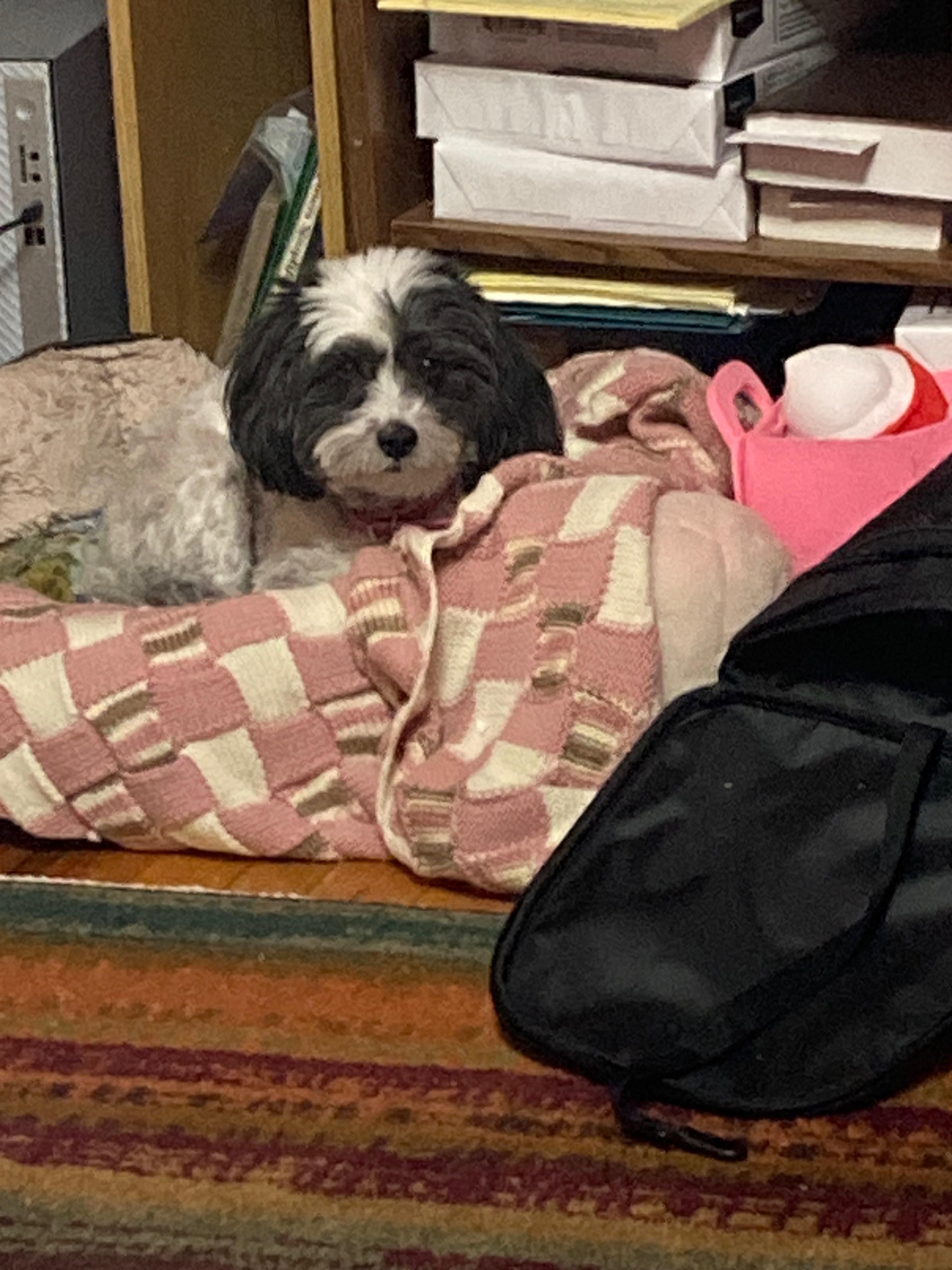
“Do I look confident to you?”

            Even when I’m alone, though, I still struggle to hold onto my own thoughts in the face of so many impatient internal interruptions: But you should have done this already! But you’re taking too long! But why is everyone else so far ahead of you?! I can barely finish one sentence without the “But, but, but” voice butting in. That voice insists that it knows the world better than I do, and knows who I should be in every situation, and it gets louder and louder if I dare to ignore it. The problem is, I created this internal voice myself, in therapy, modeling it on my long-term therapist’s voice. I had automatically internalized my father’s deep baritone telling me that I was stupid and selfish and the cause of all evil, so when I started therapy I needed a strong voice to help fight it off, and Mom’s gentle voice, encouraging me to say more, to sing more, to dance more, wasn’t loud enough to shout him down. I was relieved to be able to mimic my therapist’s confidence, in herself and in me, to keep my father at bay. But, somewhere along the way, the inner voice that was supposed to be protecting me started to cause harm. It never turned mean or abusive, but it started to get impatient with me, insisting that I should be able to do more than I could, and demanding that I march to a more predictable rhythm than my natural sway. Each time I thought that I’d found my footing on the skinny balance beam of “I know what I’m talking about,” that internal voice would break in and tell me that I was wrong and I’d fall to the floor in a jumble of arms and legs. It took me way too long to realize that this was happening, and even longer to believe that I could do something to change it.

            I haven’t fixed it all yet, of course. I just know that the next task is to replace that voice with something more my own, even though, most days, trying to ignore the critical voice makes me feel like I’m standing in the middle of a thunderstorm and trying to ignore the rain. My own voice is still pretty easily drowned out, but I’m hoping that, at this point, I’ve slayed enough of my dragons that I no longer need a big, booming voice to fight my battles for me. And maybe, just maybe, I can give my own voice the chance to grow into whatever it was meant to be from the beginning.

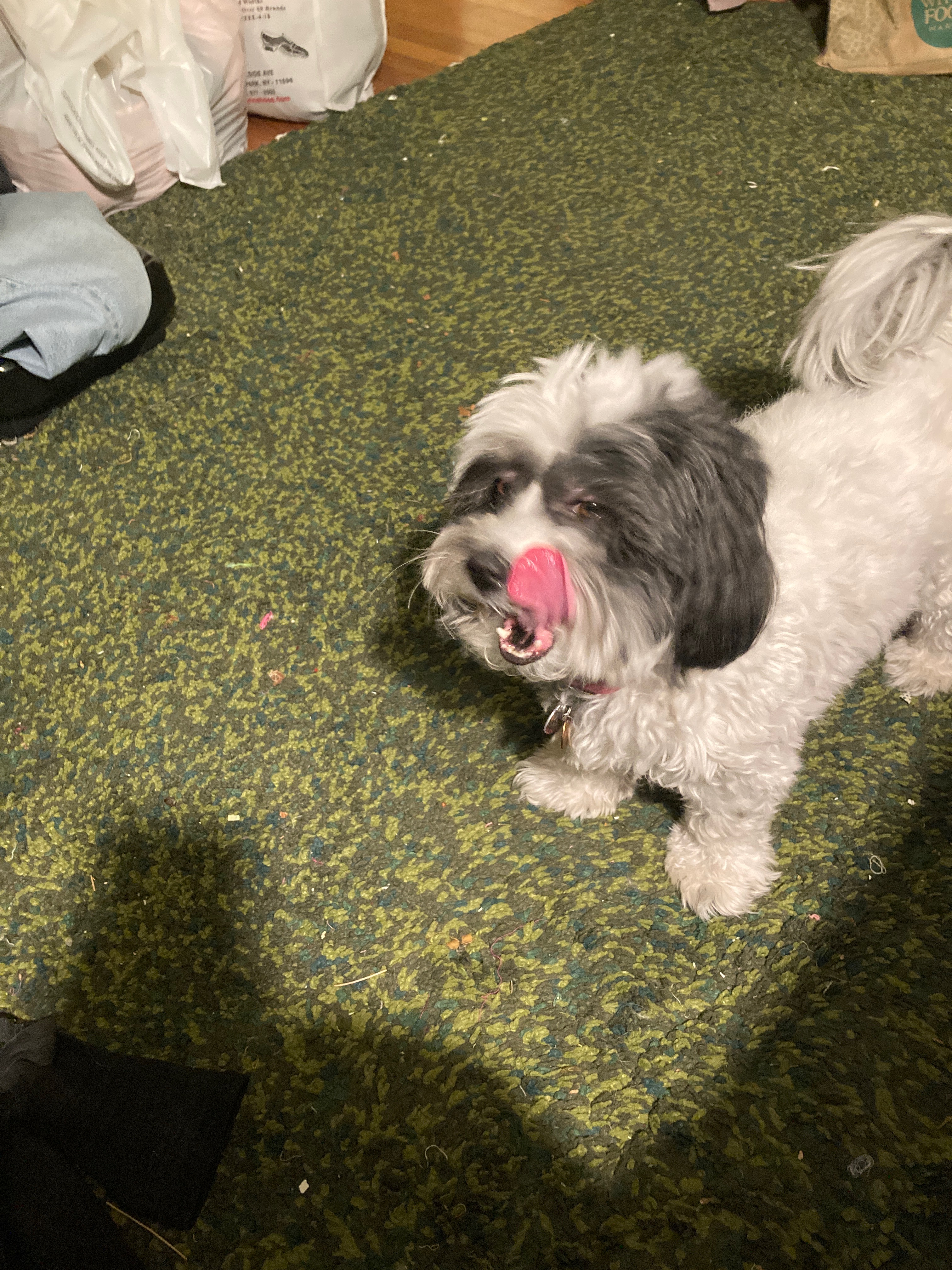
“I hear a voice saying that the puppy dog needs more chicken treats. Can you hear it?”

If you haven’t had a chance yet, please check out my novel, Yeshiva Girl, on Amazon. And if you feel called to write a review of the book, on Amazon, or anywhere else, I’d be honored.

            Yeshiva Girl is about a Jewish teenager on Long Island, named Isabel, though her father calls her Jezebel. Her father has been accused of inappropriate sexual behavior with one of his students, which he denies, but Izzy implicitly believes it’s true. As a result of his problems, her father sends her to a co-ed Orthodox yeshiva for tenth grade, out of the blue, and Izzy and her mother can’t figure out how to prevent it. At Yeshiva, though, Izzy finds that religious people are much more complicated than she had expected. Some, like her father, may use religion as a place to hide, but others search for and find comfort, and community, and even enlightenment. The question is, what will Izzy find?

The Heat Wave

            We had our first heat wave of the summer last week, but I’d seen the previews on Zoom, because two of my online Hebrew classmates live in Switzerland and Germany and they were suffering from the unrelenting, un-air-conditioned heat. Watching them on screen brought back memories of visiting my aunt in Paris, when I first discovered that Europeans don’t really believe in air conditioning. I spent those ten days in Paris, in August, desperately searching for ice cream and trying not to sweat to death. They tell me that heat intolerance is a side effect of my various autoimmune disorders, which is better than what I tell myself, which is that it’s a character flaw. Good people can stand the heat. Good people don’t need to hug their air conditioners for dear life all summer long.

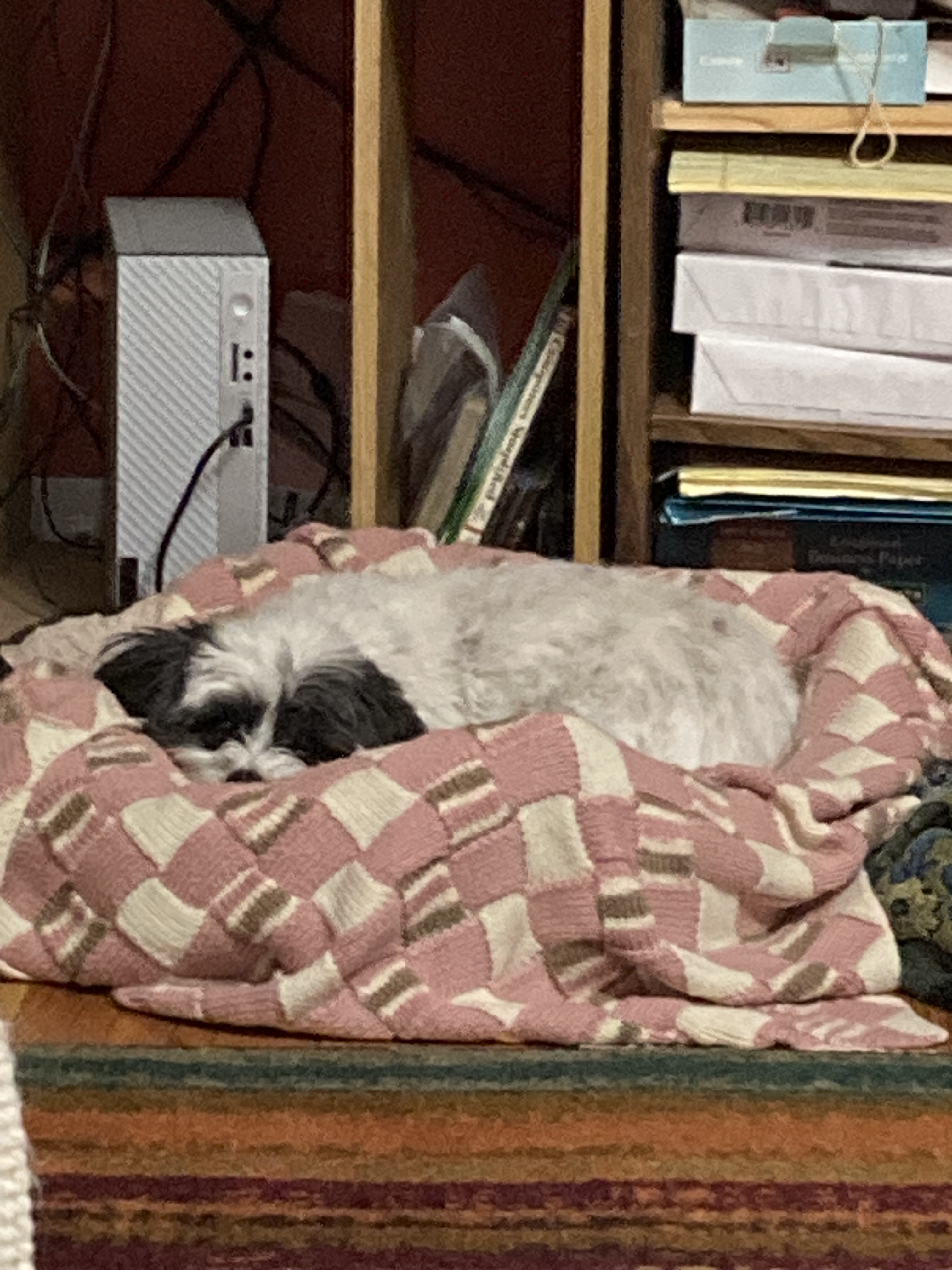
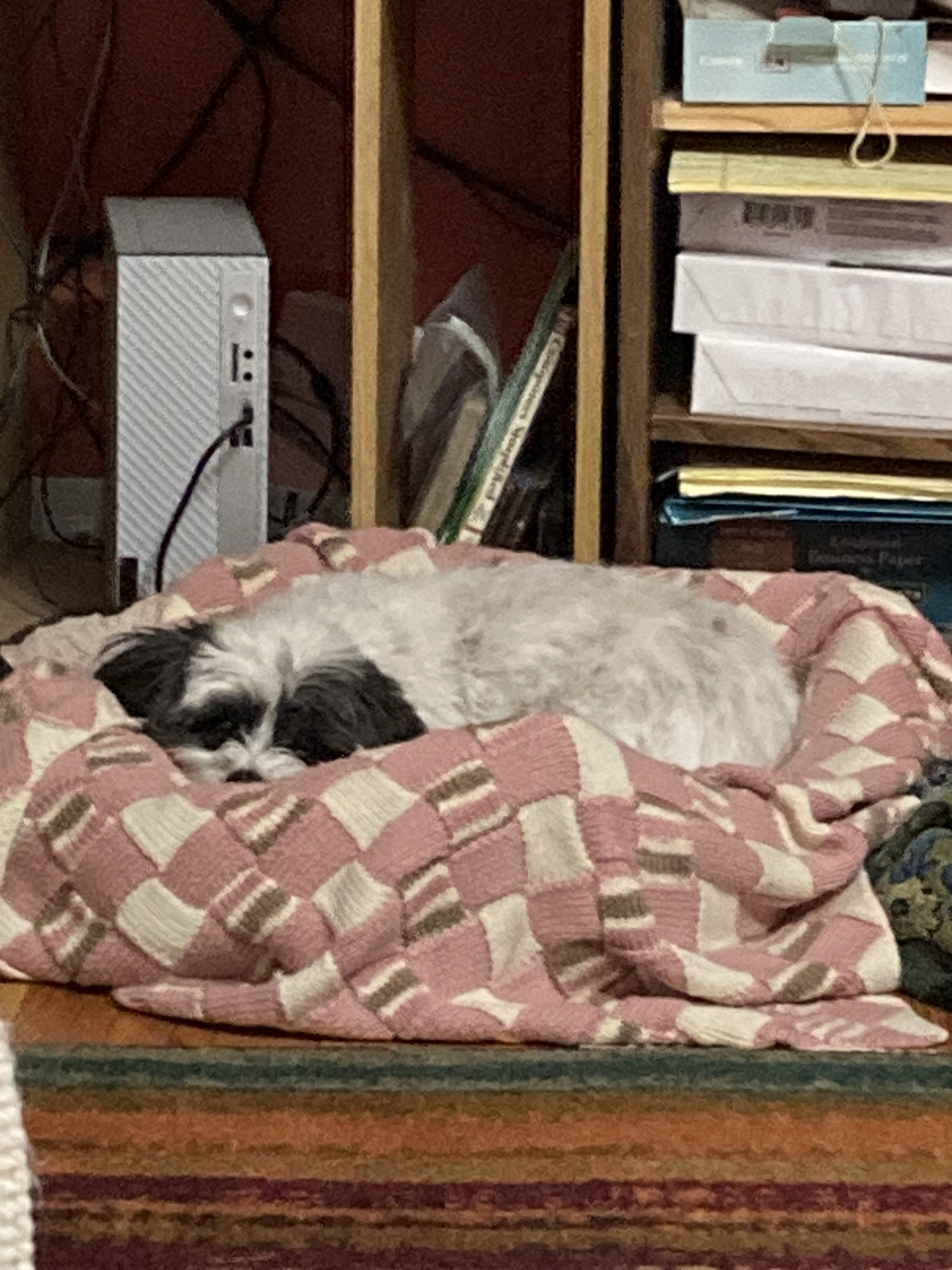
When the heat wave finally came to Long Island last week, though, it turned out that the air conditioner in my bedroom wasn’t up to the job, especially when all of the other air conditioners on Long Island were on at the same time and the power company did brown outs to manage the demand. I spent one night trying to sleep in my room, listening to my poor air conditioner moan in pain every few minutes while I tossed and turned trying to find a cool spot, and then I brought my pillow and blanket into the living room and slept on the couch, directly under the big air conditioner. One side benefit of sleeping in the living room was that, every once in a while, I could look over and see Tzipporah sleeping comfortably in her bed across the room (she seems to be able to tolerate my presence as long as she thinks I’m asleep).

            I’ve lived through plenty of heat waves before, but this one seemed to hit me harder than usual. Even sitting right next to the big air conditioner, I could feel the pressure in the air squeezing my brain and weighing down my limbs like concrete. I struggled to move, or even think, and for a few days I didn’t even try to accomplish anything.

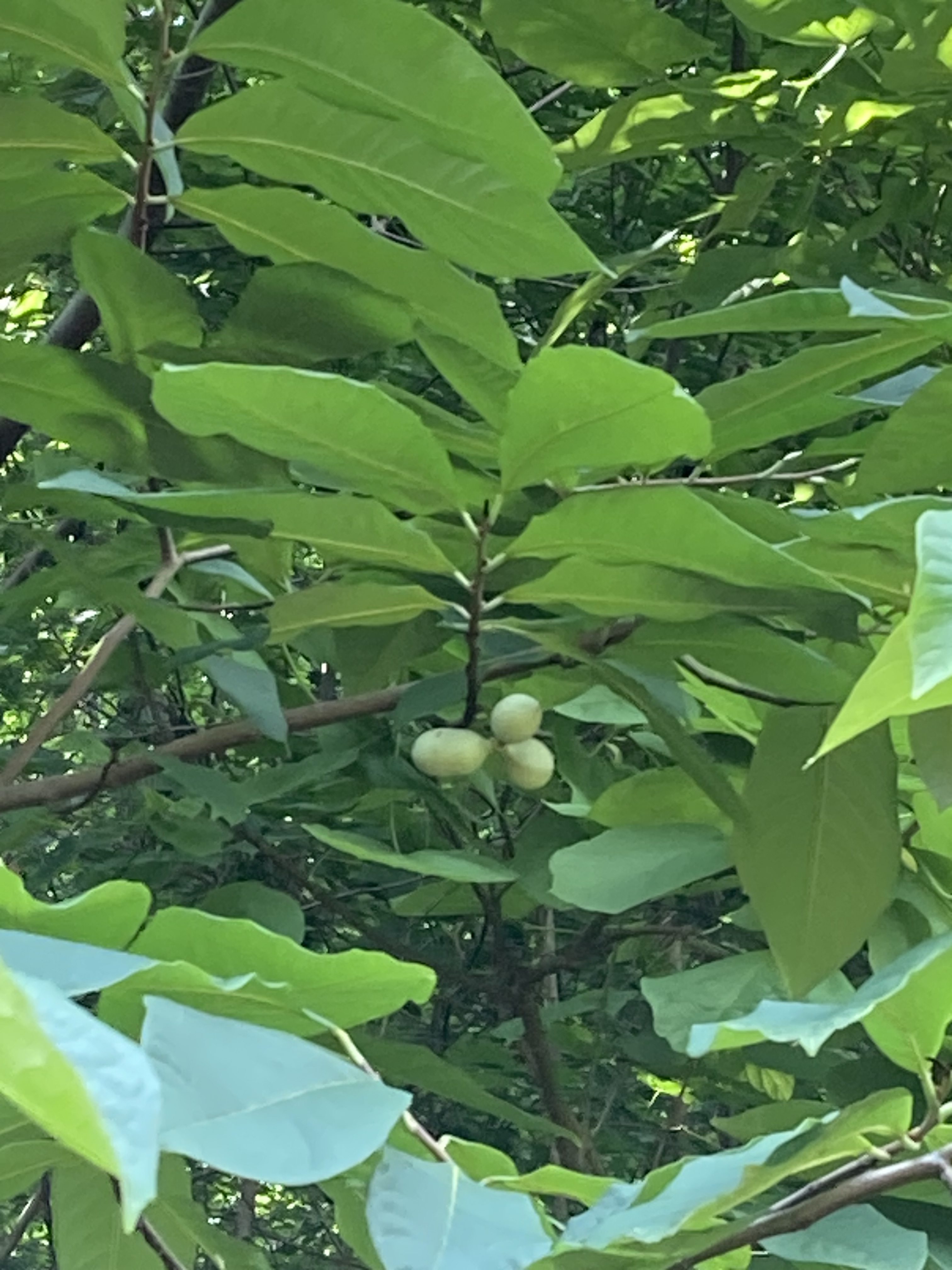
            Once the heat broke, though, I was able to go outside and visit my pawpaw tree, to see how he’d fared in the heat. Was it last year that the few fruits the tree was able to produce were eaten up by the birds? I can’t remember. So far, this summer’s fruit is having better luck, and for the first time we even have a three-fer, three pawpaws on one stem. There’s something about this tree that resonates with me. It struggles to produce fruit, and stay upright, but every summer, no matter how much failure or success it had the year before, it takes the risk to grow again. My familiar.

            Thank you, Monsieur le Pawpaw, for giving me hope when I struggle to find it for myself. Keep growing!

If you haven’t had a chance yet, please check out my novel, Yeshiva Girl, on Amazon. And if you feel called to write a review of the book, on Amazon, or anywhere else, I’d be honored.

            Yeshiva Girl is about a Jewish teenager on Long Island, named Isabel, though her father calls her Jezebel. Her father has been accused of inappropriate sexual behavior with one of his students, which he denies, but Izzy implicitly believes it’s true. As a result of his problems, her father sends her to a co-ed Orthodox yeshiva for tenth grade, out of the blue, and Izzy and her mother can’t figure out how to prevent it. At Yeshiva, though, Izzy finds that religious people are much more complicated than she had expected. Some, like her father, may use religion as a place to hide, but others search for and find comfort, and community, and even enlightenment. The question is, what will Izzy find?
Slow Progress

            As the Percocet depression gradually dissipated (with a short foray into antibiotic depression, when my cheek puffed up from a possible infection and my doctor’s partner, who I’d never met before, put me on a really strong antibiotic that was maybe overkill), I slowly started to get back to a regular routine: organizing the pile of clothes draped over my semi-recumbent bike, looking through all of the notebooks on my bedside table, and starting prep work for my next novel. I thought I would be doing at least one macaroni song per week by now too (writing new lyrics to an existing song, as a way to get used to song structure and try out an activity for my students), but I keep losing my nerve and going back to the research stage hoping to re-find my nerve.

“Harrumph.”

Getting back to voice practice was also a process. I started with humming at first, afraid to open my mouth and risk re-opening the barely healed stitches, but now I’m back to doing the full session of vocal exercises and song experiments, lip trills and all. I can’t imagine what people passing my window must be thinking, with all of that “Ha ma ma” and “Kee kay kah koh koo” and “Videe videe vee” and “Doo vah doo.” I try not to think about it too much. I was even able to go to the first choir practice of the year (also the only one of the summer). I can’t tell if my tone has improved, but I didn’t run out of air or struggle to reach a note for the full hour and a half, so something might be working.

            Unfortunately, I’m also back to watching the news. I really should know better, but I keep worrying that the world is going to collapse overnight and I’ll be the last one to know, and the last one to get to the supermarket for my share of the toilet paper and canned beans. The rising antisemitism has been snowballing lately, with Trump throwing Israel under the bus in his Iran deal, and the new mayor of New York city calling AIPAC (the American political action committee that advocates for Israel) “monsters.” If he were calling all political action committees that spend money on American elections, “monsters,” I might have been able to discount it, but that’s not what he said. AIPAC has become one of the best-known PACs, not because it spends the most money, or because it’s the most powerful or the most successful, but because it supports Israel, and Israel seems to have become a dirty word. Mamdani, who makes a point of saying that he has lots of Jewish friends and supports the many Jews who live in New York city, campaigned on his anti-Israel views; not just anti-the-current-government-of-Israel, or their decisions around the war, but anti the existence of a Jewish state at all. I’m not sure where he thinks the line is between the Jews he likes and the Jews he can’t stand, but I’m pretty sure I know which side of the line I’m on. And now he’s successfully supporting candidates who are even more virulently antisemitic than he is (or at least than he openly acknowledges), and the Democratic party seems to be going along with him.

For my sanity, I’ve been watching recordings of the Harry Styles concerts on YouTube, first in Amsterdam and now in London, if only to see what he wore at the latest show (I’m not a fan of the short shorts, but the shirts and ties are very cool). It’s hard to hear his voice in the clips from Wembley Stadium, but he did a one-night concert with an orchestra, as part of his Meltdown festival in London, and sang a cover of Simon and Garfunkel’s Bridge Over Troubled Waters that was truly beautiful. I’m not the right audience for the synthesizer distortions on his new songs, or the way he runs laps around the stage (because I can’t relate to having that much energy), but when he sits down at the piano to sing, I’m there.

One day I’d love to write a song that captures something I can’t express in any way other than music, but for now it feels like there’s a lion standing guard by the gate, warning me away. In the meantime, I’m finding comfort in other people’s music, and in checking in on Harry Styles’ latest fashion choices, and even in singing along.  

Harry Styles & Jules Buckley Orchestra – Bridge Over Troubled Water – https://youtu.be/dO7zAwhaQbM?si=39jREgLWB2-eQolV

If you haven’t had a chance yet, please check out my novel, Yeshiva Girl, on Amazon. And if you feel called to write a review of the book, on Amazon, or anywhere else, I’d be honored.

            Yeshiva Girl is about a Jewish teenager on Long Island, named Isabel, though her father calls her Jezebel. Her father has been accused of inappropriate sexual behavior with one of his students, which he denies, but Izzy implicitly believes it’s true. As a result of his problems, her father sends her to a co-ed Orthodox yeshiva for tenth grade, out of the blue, and Izzy and her mother can’t figure out how to prevent it. At Yeshiva, though, Izzy finds that religious people are much more complicated than she had expected. Some, like her father, may use religion as a place to hide, but others search for and find comfort, and community, and even enlightenment. The question is, what will Izzy find?