For some reason, I’ve been reluctant to share my latest writing project on the blog. I’ve shared all kinds of poems on here, even in Hebrew, but this one felt different. Last year, after I finished a blog post about hearing the cantor at my synagogue sing the Shma Koleinu on Yom Kippur, I started to work on my own variation on the prayer. I wanted to capture whatever it was that had come through the cantor’s voice, and that I hadn’t seen in the words of the prayer itself, either in the original Hebrew or in the English translation. Shma Koleinu means “Hear Our Voice,” and it’s a direct plea to God: “Spare us and have compassion on us and accept our prayers in mercy and with favor.” The version sung on the high holidays keeps going: “Turn us back to You, Oh Lord, and we will return; renew our days as of old. Do not cast us away from Your presence, and do not take Your holy spirit from us. Do not cast us off in the time of old age; when our strength fails, do not forsake us.” Which, honestly, sounds kind of scary and hard to relate to.
It took me eight or nine months, and a lot of editing and rewriting and banging my head against the wall of trying to write a poem until I decided prose was good enough, but I still wasn’t sure if the piece was any good. I decided to ask my rabbi to read it for me, to see if he could tell me where I was going wrong. Days passed with no word and I thought he was avoiding me because the writing was so bad, but it turned out he had just lost the copy I’d given him, so I sent the file by email and held my breath again. And then he called me. He didn’t say, “Oh my goodness, Rachel, you are a genius!” Instead, he bypassed praise and critique altogether and asked if he could use it as a reading for Yom Kippur. I kept waiting for him to tell me what had to be rewritten, where I’d been presumptuous or silly or inarticulate, but all he said was, “We’ll put it at the end of the Kol Nidre service, because there’s no room for it before the actual Shma Koleinu.” And then he warned me that my piece would be seen by people outside of our congregation too, because he shares his reading supplements with other rabbis, and I wasn’t sure what to make of the fact that it was a warning, rather than an oh-by-the-way.
I’m one of the regular proofreaders for the reading supplement each year, so I’m very familiar with the range of writers he relies on, and that most of the works he pulls from have been published somewhere else first. We have a few poets in our congregation whose work has been included in the reading supplements, but again, their work has generally been published in other places first, and I was very much aware that mine had not. I was scared that he was including my reading out of pity, and not telling me all of the ways it sucked, because he’s a nice man (when he wants to be). But after a particularly brutal year of rejections, I really just wanted to be heard, and I was willing to fall on my face for the privilege.
I still had months to contemplate my upcoming public humiliation, though, and plenty of time to proofread the more polished readings that would come before and after mine. I was also recovering from dental surgery, and adjusting to weight loss and new clothes, and working through vocal exercises to try to improve my voice in time to sing with the choir at the high holidays. And then time sped up again, the way it does every September, with choir rehearsals and professional development and the beginning of the school year, and I struggled with the packed schedule and yet more doctor’s appointments, but finally, I made it to the evening service that ushers in Yom Kippur, Kol Nidre, and after standing and singing with the choir for two hours or so, it was time for my reading.
And it went well. I didn’t trip in front of the whole congregation (which had been one of my fears, after a summer full of dizzy spells), and I didn’t choke on my words, and when the service was over a lot of people came over to congratulate me and said really nice things about my writing. But I still felt uneasy, and undeserving, and part of me wanted to curl back up inside my shell, as if the reading had been one more failure to add to my long list. I kept putting off writing about it or sharing it on here, but I couldn’t explain to myself why. I still can’t. Maybe, it’s easier to share my frustrations and humiliations than it is to sit, even for a moment, with a success. I guess I worry that congratulating myself on even a small success will invite all of the demons in the universe to attack me. But recently, I realized that I’m still willing to jump off the scary cliff and risk a hard landing in order to be heard, I just needed to hibernate for a little while first. So, two months later, I’m finally posting my variation on the Shma Koleinu prayer from the high holiday services, and I’m taking a deep breath and hoarding all of the chocolate I can find in the kitchen, just in case.
Hear Our Voice – A Variation on Shma Koleinu
(by Rachel Mankowitz)
We call out to you God, hoping that you are not the God of the Hebrew Bible, fickle and ready to kill us at any moment, or Aristotle’s Unmoved Mover, indifferent to our suffering. We’d like to see you through Spinoza’s eyes, infused in every leaf and grain of sand, or Buber’s, in all of the interactions between us, but we’re not even sure if we are calling out to you, God, or just calling out to ourselves, expecting answers that won’t come.
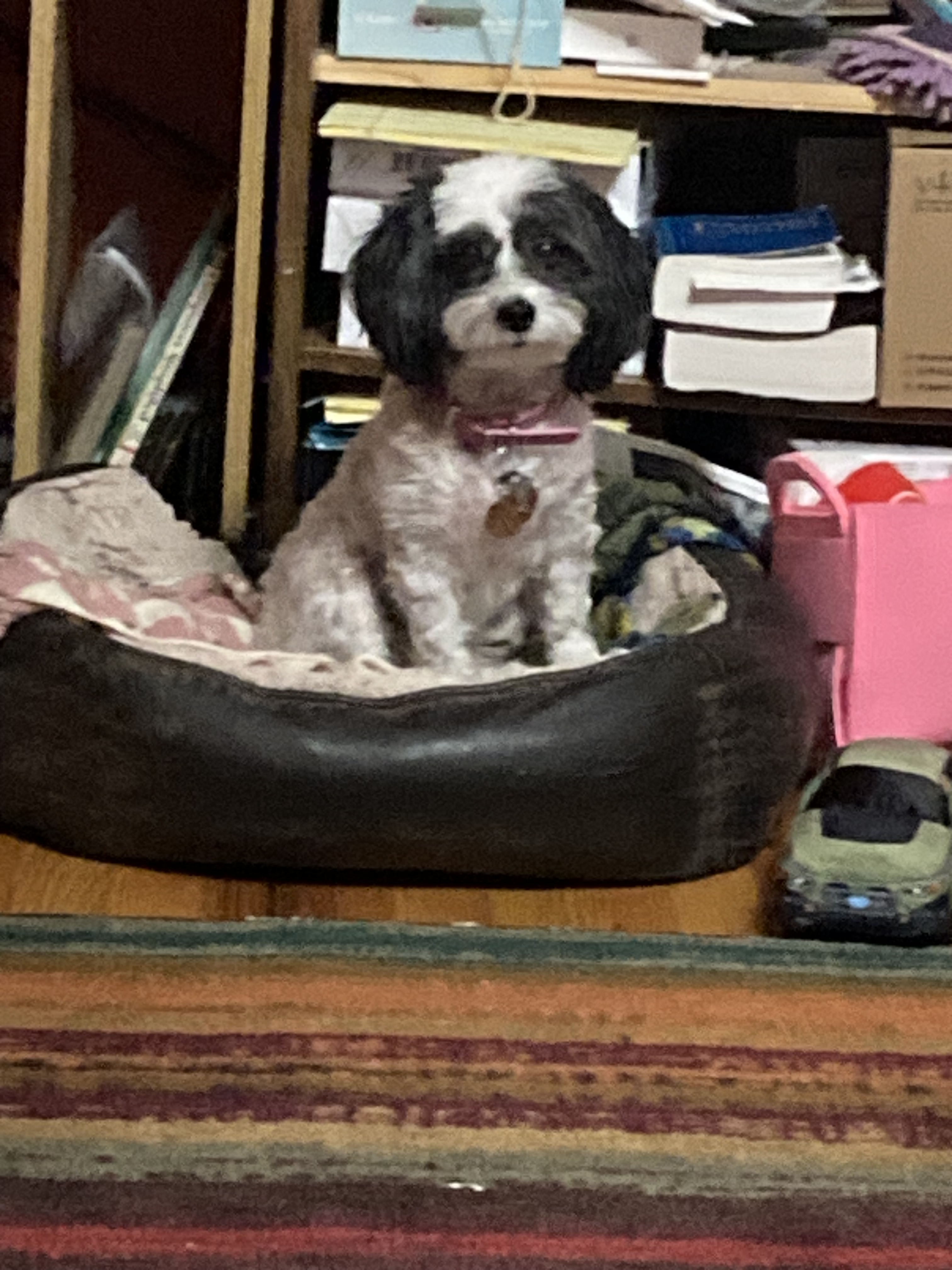
We listen to the echoes of our ancestors through the shofar blasts, as they teach us how to march across deserts, whether or not water will appear, and how to walk across seas, whether or not we will ever reach dry land, and how to climb mountains, never knowing if the ram will appear in time to replace us on the altar. And we wonder if these stories still belong to us, or include us, and yet we continue to pray. Maybe once a year, or once a week, or every day, we remind ourselves not to be silent even though we’re scared, even when we’re sure no one is listening, and even when each word sticks in our throats like peanut butter on a dog’s tongue.
Sometimes we feel like part of our community, and sometimes we look at each other like spiky-tailed aliens in disguise, and yet we continue to pray. Sometimes our voices break because the pain is so deep and our longing is beyond words, and still we pray, each of us hoping that someone will finally hear what is hidden behind our words, and in the spaces in between.
We sing to you, God, because singing together reminds us that we are part of a single fabric, ripped in places, threadbare in others, but still attached, and we sing to you because we know that even you, God, can only be whole when you are with us, just as we can only find our holiness by reaching out to you, as one.
If you haven’t had a chance yet, please check out my novel, Yeshiva Girl, on Amazon. And if you feel called to write a review of the book, on Amazon, or anywhere else, I’d be honored.
Yeshiva Girl is about a Jewish teenager on Long Island, named Isabel, though her father calls her Jezebel. Her father has been accused of inappropriate sexual behavior with one of his students, which he denies, but Izzy implicitly believes it’s true. As a result of his problems, her father sends her to a co-ed Orthodox yeshiva for tenth grade, out of the blue, and Izzy and her mother can’t figure out how to prevent it. At Yeshiva, though, Izzy finds that religious people are much more complicated than she had expected. Some, like her father, may use religion as a place to hide, but others search for and find comfort, and community, and even enlightenment. The question is, what will Izzy find?


‘and still we pray’ ‘but still attached’–Wonderful, Rachel. We start out unsteady but find our footing. I am so happy and proud for you that this is being seen by others, not just your congregation. Congratulations, Rachel!
Thank you!
Congratulations Rachel. Your prayer was very moving, and it’s wonderful that a wider audience will now get to hear it.
Thank you!
You have good reason to be thankful for your elegant, coherent way with words. It is a gift that deserves to be shared.
Thank you!
This is beautiful in its honesty and in its balancing of the breadth of ages and the immediate personal present.
Thank you for your courage in sharing it with your community and, now, with us.
Thank you so much!
Rachel, your prayer really touched me- it’s so beautiful and relatable- I’m so glad you shared. You have a beautiful gift. V
Thank you so much!
I am afraid to comment here anymore because I don’t ever see me comments if i make any, so i figure you delete them, or have blocked me, but this is beautiful, and human, and holy. Thank you for sharing this.
Thank you so much! I don’t think I’ve ever deleted comments from you. I do that pretty rarely, in general. I much prefer to hear all of the different voices I can. Please know that you are welcome here.
What an extraordinarily wonderful post. Bravo!
Thank you so much!
A wonderful post Rachel. The best writers have humility, because they care about what they write. Happy Sunday. Allan
Thank you!
Thank you, Rachel, for your courage in writing and sharing this beautiful prayer. I love when people adapt, update and personalize others’ prayers/psalms. I especially love the familiar image of words sticking in our throats “like peanut butter on a dog’s tongue.” That made me smile because I can see the dogs I care for and how they love peanut butter and yet struggle to get it down–stuck in that in-between place. Beautifully written.
Thank you so much!
I see you enjoy my pug pics. They like sleeping and the garden.
How lovely for your piece to be included Rachel.
I felt very lucky!
This is wonderful, Rachel! Thanks for sharing it here.
Thank you!
Congratulations Rachel, this is beautiful! Thank you so much for sharing.
Thank you so much!
Wonderful!
Thank you!
Oh, my, Rachel! You have certainly found your voice. I foresee your prayer resonating farther than you may ever have imagined possible.
And you showed courage to present it—and to follow through to make sure you delivered it.
A big step—artistically, religiously, and in personal growth.
Brava!
Thank you so much!
Well done! Both the completion of the poem/writing and having the guts to get up there and share it. This is awesome!
Thank you so much!
Wow, Rachel. This whole thing took a lot of bravery. First, asking your Rabbi, then actually reading it yourself in front of the entire congregation. And then, sharing it with all of your readers. Not only was what you wrote an amazing mixture of old and new, but the entire process took you farther than you every thought!
Thank you so much!
This is your true voice, and it’s lovely. Thank you for sharing.
P.S. As my daddy used to say, he who tooteth not his own horn, the same shall not be tooteth.
My dad would have loved your prayer.
Thank you!!!!!
Your variation is really very good. I liked that you write us calling out to God rather than begging to be heard. You empower humankind, making us more an equal to God (in a way) as opposed to simple supplicants. To hope we’re calling out to a God who is not the God of the Hebrew Bible is bold (and will keep this variation from being part of the liturgy in some synagogues, but that’s a good thing!), and writing as if we never left, or fell away, from our belief and are in need of return is beautiful. I can understand why you hesitated to share this and I’m happy you finally did. I enjoyed reading it very much. Enjoy the chocolate as well as the pride you deserve from writing this.
Thank you!!!!
I love this because it is specific for today’s worries and it speaks to the way I think. Thank you for sharing it.
Thank you so much!
Touching and beautiful. You are an amazing writer and communicator. May the Lord God continue His rich blessings on you and your life.
Thank you so much!