I started wearing glasses in second grade, when I finally realized that the teacher was writing actual words and numbers on the board and not just doodling. By fourth grade, I had to wear the glasses all the time. I tried contact lenses when I was a teenager, after realizing that getting hit in the face with a volleyball hurts more with glasses on, but I never really got used to the contact lenses and eventually gave them up. Since then, I really only take my glasses off to go to sleep or take shower (and there really should be windshield wipers for glasses by now). At some point, I developed intermittent exotropia (part-time crossed vision) and farsightedness, but the prisms and bifocals I tried made me nauseous, so I learned to accept a little bit of blur in my life. And I’m not blind without my glasses. If I forget to put them on first thing in the morning I don’t, usually, bump into walls or trip over a puppy dog.
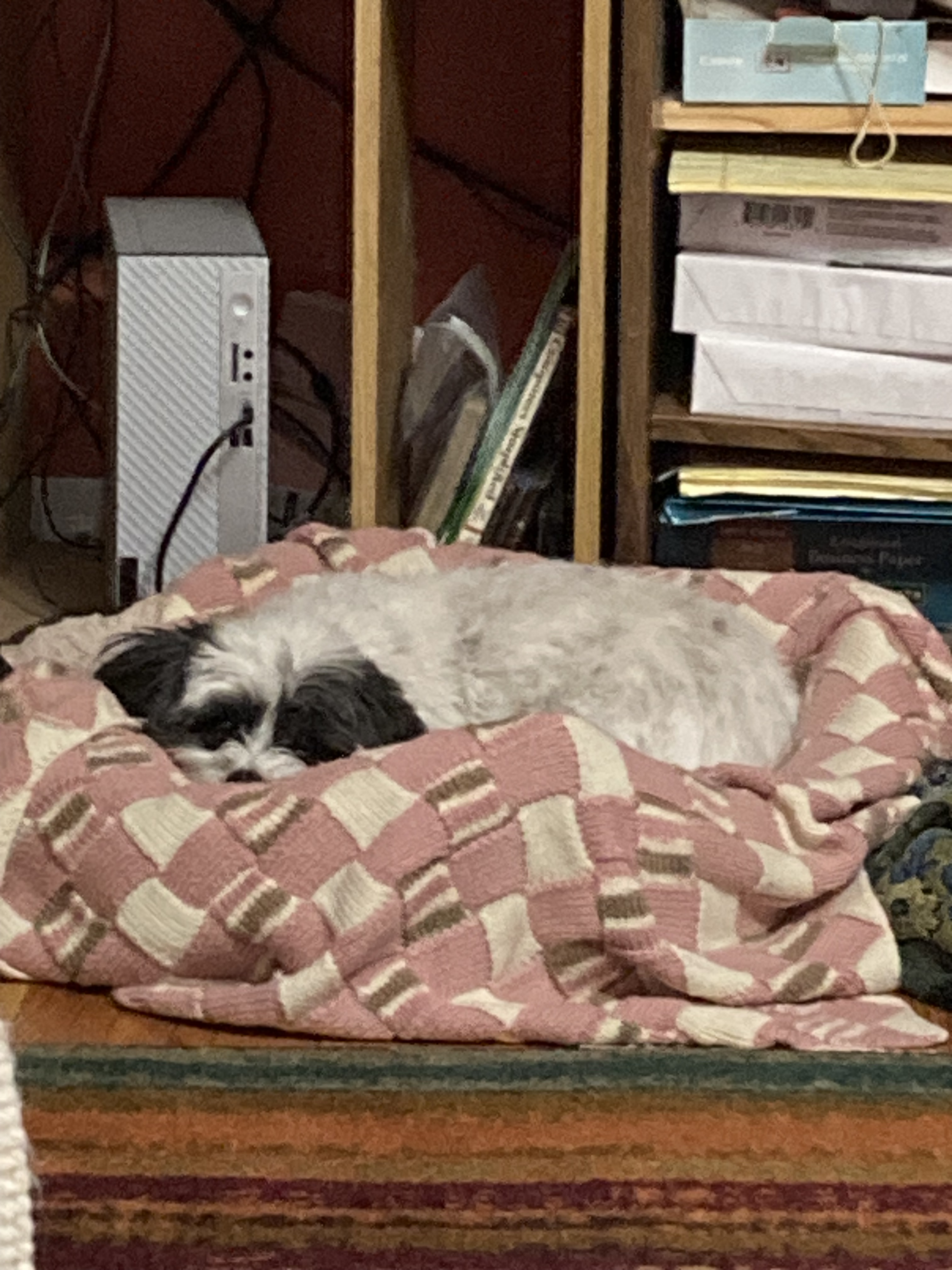
But recently, I’ve noticed something strange. Sometimes, when I first wake up, before I put my glasses on, I see things that aren’t really there. Like the big white dog at the end of the bed, which turned out to be my laundry bag (I was too lazy to put the clothes away the night before), or the black column that seemed to shimmer and maybe opened a portal to another universe, which turned out to be my half open closet and a black shirt. It’s as if some part of my brain has decided to decipher the blurry images instead of accepting the blur, despite incomplete visual information.
One morning, I woke up to a huge dragonfly hovering over my bed. I could hear it buzzing like a tiny helicopter, and then I put on my glasses and the whole thing, noise and all, disappeared. There wasn’t even a shadow or a crack in the ceiling to explain what I’d seen, and the only buzz-adjacent sound was my very loud air conditioner, which had never reminded me of a dragonfly in the past.
I’m afraid to google this and find out it’s a symptom of yet another incurable disease, so for now I’m just trying to remind myself that it’s unlikely that a house elf is hovering over my dresser (Jewelry box), or that a faceless stranger is standing by my bookcase (exercise bike). So far, each time I’ve imagined something impossible, I’ve been able to put on my glasses and watch it disappear. Which, to be honest, is kind of sad. I really miss that big white dog. He seemed very nice.
If you haven’t had a chance yet, please check out my novel, Yeshiva Girl, on Amazon. And if you feel called to write a review of the book, on Amazon, or anywhere else, I’d be honored.
Yeshiva Girl is about a Jewish teenager on Long Island, named Isabel, though her father calls her Jezebel. Her father has been accused of inappropriate sexual behavior with one of his students, which he denies, but Izzy implicitly believes it’s true. As a result of his problems, her father sends her to a co-ed Orthodox yeshiva for tenth grade, out of the blue, and Izzy and her mother can’t figure out how to prevent it. At Yeshiva, though, Izzy finds that religious people are much more complicated than she had expected. Some, like her father, may use religion as a place to hide, but others search for and find comfort, and community, and even enlightenment. The question is, what will Izzy find?