Tag Archives: memoir

Tzipporah Loves her Bed

            For Tzipporah, it seems, bed is life. When we come back to the apartment, from a visit to the vet or a visit to the backyard, she tries desperately to jump out of my arms, and once she hits the ground she runs straight to her bed. Safe. Once she’s recovered from her outing, though, she relaxes: stretching out, rolling on her back, sticking out her tongue, and dangling her head over the side of the bed.  

But now, seven or eight weeks into having her with us, we’re getting worried that she only feels safe in her bed, and everything else is lava. When we are all together in the living room, she rarely leaves her bed; it’s only when the humans leave the room that Tzipporah is willing to walk away from her safe place for more than a second. There have been times when, seemingly, she hasn’t left her bed for half the day, not even to pee or get a drink of water from the kitchen. At night, though, she tends to wander around the apartment, investigating her new home, but when she sees any movement from the supposed-to-be-sleeping humans, she runs back to the living room and straight to her bed.

When she first came home, it wasn’t like this, she would sleep on the rug in her grandma’s room, or on the cushions in my room, or in her bed in the kitchen, or in either one of the dog beds in the living room, moving from one sleepy place to another throughout the day and night. So, I put wee wee pads in every room, and the hallway, to give her the best chance to learn that pee goes on the wee wee pad and not the rugs. When she peed near any of the wee wee pads, I would sop up the pee, place the wet paper towels on the wee wee pad, and then move the wee wee pad closer to the spot where she’d peed. And she would then, maybe half the time, start peeing on the wee wee pad instead. But as the weeks have passed, she has gradually decided on the living room as her home base, and on the one dog bed she likes best, and I’ve been able to remove the other wee wee pads one by one, and focus more on rewarding her for peeing and pooping on the wee wee pad in the living room, with some success.

Basically, she was doing well, but I started to get anxious about her bed-o-philia and worried I wasn’t doing enough to help her make progress, leaving her to calcify in her bed.

            So, given her only-dog status, and my fears about her fears, I ordered a heartbeat puppy (a stuffed animal with an insert in the belly that mimics a heartbeat), and Tzipporah took to it right away, snuggling with it in her bed. When Mom wanted to see if Tzipporah could sit on the couch with us, to watch TV, I brought her and her heartbeat puppy (in her bed) to the couch, so she could feel as safe as possible in the new location. I tried to give her a treat while her bed was on the couch, but she was too anxious to eat it. After a little while, I returned her bed to its regular spot, and suddenly she noticed the chicken treat and ate it happily.

            She’s made a lot of progress, when I look back at where we started. She’s now willing to stay in the dog bed next to me when I sit at my computer, instead of running away to escape the scary human monster, the way she used to. And she’s been getting used to being petted, and even having her hair combed, as long as there are treats involved.

She surprised us by doing well when her first “strangers” (aka my aunt and cousin) visited the apartment, in large part because my cousin brought a bag of freshly cut cheese and chicken cubes for the occasion (there were also salami slices, but even though Tzipporah gave them a lick, she wasn’t sure how to eat them).

Tzipporah also, finally, had her second visit with Kevin, the mini golden doodle, after weeks of everyone hiding inside because of the cold weather. She was still terrified of being on the ground outside, but she tolerated being sniffed by Kevin, and then she sat on my lap while Kevin sat quietly next to us, and I petted him, and then let Tzipporah smell my hand, and then petted her. Over and over. It’s hard to know if my completely scientific experiment worked, but Kevin certainly enjoyed it.

She still doesn’t talk much; she only cries at night when she thinks she’s alone, and she has only barked once in her sleep, but it was a very light bark, more like a yip. On the other hand, she has become more and more expressive with her eyes, staring at us as dramatically as possible to let us know she could use more treats.

            The fact is, she is healing as fast as she can and becoming more herself every day. Really, it’s miraculous that Tzipporah feels safe anywhere, after four years in a cage in a puppy mill; that she can stretch out in her bed and show her belly, and not worry about being hurt, is a testament to how much she trusts us already. The only real problem here is my need for her to be all better right away. I have the same impatience with myself. I forget how much progress I’ve (we’ve) made, always focusing on how things should be, instead of recognizing the effort it took to get where we are. Maybe Tzipporah will be the one who finally teaches me how to celebrate how things really are, instead of always worrying about how things are supposed to be. Or maybe we’ll just bond over our shared love of treats (chicken for her and chocolate chip cookies for me) and be satisfied with that. We’ll see.

If you haven’t had a chance yet, please check out my novel, Yeshiva Girl, on Amazon. And if you feel called to write a review of the book, on Amazon, or anywhere else, I’d be honored.

            Yeshiva Girl is about a Jewish teenager on Long Island, named Isabel, though her father calls her Jezebel. Her father has been accused of inappropriate sexual behavior with one of his students, which he denies, but Izzy implicitly believes it’s true. As a result of his problems, her father sends her to a co-ed Orthodox yeshiva for tenth grade, out of the blue, and Izzy and her mother can’t figure out how to prevent it. At Yeshiva, though, Izzy finds that religious people are much more complicated than she had expected. Some, like her father, may use religion as a place to hide, but others search for and find comfort, and community, and even enlightenment. The question is, what will Izzy find?
Russian Nesting Dolls

            I don’t remember if I ever had a set of Matryoshka dolls (Russian nesting dolls) of my own when I was younger, but I definitely saw them and played with them somewhere along the way. There was something magical about how each doll hid another doll, and another, and another, except, there wasn’t much to do with these “dolls.” You couldn’t dress them up, or hug them, and none of them had roller skates (like my Ginny doll). And they were so static: their eyelids didn’t open and close, and their arms and legs didn’t move. And yet, they still drew my attention. I haven’t thought about those dolls very much over the years, but recently I saw a set of them on TV, and my first thought was that they would be a very helpful metaphor for the way we carry our old stories within us, even as we try to grow beyond them.

Traditional Russian nesting dolls (not my picture)
My Ginny doll is a reader.

            I was sure that everyone must see the same thing in them as I did, but when I went looking for more background on the dolls, I found out that everyone sees something a little different, depending on where they are in their lives and what lens they are looking through.

            Originally, the dolls were made as a children’s toy, in 1890, possibly inspired by a nesting doll from Japan, and they were meant to highlight Russian femininity, with the dolls wearing a sarafan, a long, shapeless traditional Russian peasant dress, and the figures inside representing her children, of both genders, with the smallest being a baby, made of a single piece of wood.

A smaller set (not my picture)

But somewhere along the way the dolls became a favorite souvenir for tourists, and then a way to represent famous Russian politicians, and how each generation of politicians was influenced by the ones who came before. Some people have even repurposed the dolls to represent complicated corporate structures used to avoid paying taxes, like shell companies.

Political Russian nesting dolls (not my picture)

But when I look at these dolls, I see myself, and the way each of my previous selves stays inside of me. My layers don’t peel off, like an onion, or slough off, like the skin of a snake; I hold onto everything, whether I want to or not. I would have thought, given all of that, that I would feel some relief at seeing each doll standing separately on its own “feet,” but instead, the separated dolls seem hollow to me, even forlorn. Despite the pain of holding onto the past, I feel stronger, and more fully myself, with all of my selves held together.

            And there’s something powerful about having a metaphor that I can see and touch and move around in space; because when all I have are words to help me organize my thoughts, the chaos can become overwhelming.

            When I went looking for images of Matryoshka dolls, I found all kinds of different sets – five doll sets and ten doll sets, people and animals, dolls that look exactly the same at each size, and dolls that are completely different from one another – but the most intriguing thing I found were blank sets of dolls that you can paint however you like. And it occurred to me that, if I had any artistic talent at all, which I don’t, it would be really meaningful to create the figures to represent my own layers, or the important people who have influenced me over time, to help me really see all of my pieces.

Animal nesting dolls (not my picture)
Blank nesting dolls (not my picture)

And then I thought about how I could use those blank doll sets with my students, to help them visualize how each generation influences the next, and how who they are today is connected to everyone who came before. And then I thought about the costs of all of the materials involved, and the difficulty of getting my boss on board, and then the work of explaining to the kids exactly what I was looking for, so they wouldn’t just paint all of the dolls as different sized poops; and then I fell into a black hole of self-recriminations about all of the ways I suck as a teacher, and a therapist, and a person overall.

And yet, despite the waterfall of thoughts and worries and self-loathing that washed over me, I still think the Matryoshka dolls have a lot to offer, though maybe they should come with a warning label: open at your own risk, objects inside may be a lot more complicated than you expect.

“Just like me!”

If you haven’t had a chance yet, please check out my novel, Yeshiva Girl, on Amazon. And if you feel called to write a review of the book, on Amazon, or anywhere else, I’d be honored.

            Yeshiva Girl is about a Jewish teenager on Long Island, named Isabel, though her father calls her Jezebel. Her father has been accused of inappropriate sexual behavior with one of his students, which he denies, but Izzy implicitly believes it’s true. As a result of his problems, her father sends her to a co-ed Orthodox yeshiva for tenth grade, out of the blue, and Izzy and her mother can’t figure out how to prevent it. At Yeshiva, though, Izzy finds that religious people are much more complicated than she had expected. Some, like her father, may use religion as a place to hide, but others search for and find comfort, and community, and even enlightenment. The question is, what will Izzy find?

Jacob and Israel

            At a recent Friday night service, because the Torah portion for the week was about our forefather Jacob wrestling with an angel of God, our rabbi told us that Jacob is renamed Israel because Israel means “to struggle with God and to prevail.” And my inner voice woke up and said, huh?

            My whole life I’d been taught that the name Israel means “to struggle with God.” Period. No prevailing included. The idea that to be Jewish means to welcome the struggle with God, and to always ask questions, without ever knowing if you will succeed or fail, or even focusing on success as a goal, has been essential to my sense of self as a Jew, and as a person overall. I don’t have to win, or be successful, in order to have a meaningful life; I just have to be willing to engage in the struggle.

            But here was the rabbi saying that, no, we struggle and we prevail, and that’s what makes us the People of Israel.

            So, of course, I had to look into this, and it turned out that we were both right. The traditional translation for the name Israel is “to struggle with God,” but when the angel tells Jacob about his new name, he says that Jacob is given this name because “he struggled with God and he prevailed.” So, the “prevailed” part of the name is silent, but implied.

            I still couldn’t wrap my head around this sea change in what it might mean to be part of the nation of Israel, aka Jewish. Aren’t we supposed to be the underdogs? Hasn’t that been our identity and our history for, I don’t know, two millennia? What would it mean to suddenly see myself as a member of a group that, supposedly, always prevails? And why do I find that idea so incredibly uncomfortable?

            I kept researching and was able to find an alternate translation for the name Israel: instead of “struggles with God” it could also mean “empowered by God.” But that translation felt even worse, because I’ve never felt empowered, by God or anyone else, and if my people is identified as those guys who are empowered by God, and I feel distinctly unempowered by God, doesn’t that make me an outsider even to my own group?

            Of course, it’s a tiny bit silly to get so caught up in an argument about the meaning of a name given to one of my ancestors three millennia in the past. But I think we all do this. Whether it’s identifying with a bible story, or with a more recent ancestor, or with the stories our families have told us about ourselves, we find our identities in the stories we are told and we are often reassured by the shape they give to our lives.

            I’m also thinking about this in relation to the current situation in the Middle East (if current implies the last century or so), where the stories of the Hebrew bible resonate not only with the Jews, and the Christians, but with the Muslims as well, who read their own retellings of stories from the Hebrew Bible in the Koran. It’s significant that Muslims traditionally see themselves as the descendants of Ishmael, the first-born son of Abraham in the Hebrew Bible, who is disinherited in favor of Isaac, his younger half-brother. In fact, this pattern of the older brother being disinherited in favor of the younger brother happens two times in a row, so it’s clearly a story that has resonated for a lot of people for a very long time. And in the second iteration, with the twins, Jacob and Esau, Jacob steals the blessing from his older brother, through trickery, rather than just benefiting from the prejudices of his parents, the way Isaac does.

            It is not a coincidence, then, that given events that could have been interpreted in multiple different ways, many Muslims interpreted the return of the Jews to the land of Israel, and the decision of the United Nations in 1948 to divide the land of Palestine between the Jews and the Arabs, as the Jews receiving a blessing they did not deserve, whether through trickery or prejudice. And the Jews, viewing history through the lens of Jacob, continue to see ourselves as the underdogs, fighting for our small share against a stronger brother, despite having grown in strength and influence along the way. Obviously, this isn’t the only lens through which we all see these conflicts; it’s much more like a kaleidoscope where our lens keeps changing every moment and any one perspective is hard to hold onto for long. But breaking out of our old biblical roles, in order to see each other as we actually are in the present, becomes even more difficult when we are obligated to read and re-read these same stories on a regular basis.

            It’s significant that, in those same stories, Esau becomes a successful landowner, despite seemingly losing his birthright to Jacob. In fact, when the brothers meet again, years later, Esau forgives his little brother, who is still struggling to forgive himself. That story is in there too, and could be a model for how to create a road towards peace. But for some reason, we remain stuck in the first half of the story. Or worse, we fall back into the earlier story, where neither Ishmael nor Isaac have much agency at all in creating their own life stories.

            It interests me that even though Jews see Abraham, Isaac, and Jacob, equally, as our forefathers, it’s only the children of Jacob (the Israelites, or the children of Israel) who eventually become the Jews. Why doesn’t Jewishness extend to both sons of Abraham? Why aren’t we all called Abrahamites? Why does the Hebrew Bible insist on telling us about these stories of family ruptures to help us understand who we are?

            There’s one more lesson in this story that seems relevant to me: when Abram and Sarai’s names are changed by God (each getting an H added, to symbolize the addition of God into their lives and selves), they become Abraham and Sarah, and their old names are never used again in the text. But after Jacob wrestles with the angel, and is renamed Israel, he is still called both Jacob and Israel in the text; both Jacob and Israel continue to exist, with neither one canceling out the other. And I can relate to that; I can relate to having internal conflicts, and being different at different times, and sometimes feeling empowered or imbued with God, and other times, not so much.

            I think these stories stay with us because we are never finished struggling with God, or with ourselves. We are never done with our past, or with the parts of ourselves who have struggled and failed in one way or another. The hope is that we can also make room for newer parts of ourselves, parts who have wrestled with God and prevailed, and found that there is something better, stronger, and sweeter on the other side.

“I like sweet things too. Like chicken.”

If you haven’t had a chance yet, please check out my novel, Yeshiva Girl, on Amazon. And if you feel called to write a review of the book, on Amazon, or anywhere else, I’d be honored.

            Yeshiva Girl is about a Jewish teenager on Long Island, named Isabel, though her father calls her Jezebel. Her father has been accused of inappropriate sexual behavior with one of his students, which he denies, but Izzy implicitly believes it’s true. As a result of his problems, her father sends her to a co-ed Orthodox yeshiva for tenth grade, out of the blue, and Izzy and her mother can’t figure out how to prevent it. At Yeshiva, though, Izzy finds that religious people are much more complicated than she had expected. Some, like her father, may use religion as a place to hide, but others search for and find comfort, and community, and even enlightenment. The question is, what will Izzy find?

The Paris Murders

            We watched what we thought was the first season of The Paris Murders on PBS last year, and I was intrigued enough to wonder if there were more seasons available, but the show wasn’t on any of the streaming services we got at the time, so I put the idea out of my mind, assuming PBS would eventually play another season. But then, recently, Mom had to buy something on Amazon that required a short-term subscription to Prime, and with her new prime membership came Prime Video, and inside of that, we found out that PBS Masterpiece was doing a seven-day free trial, and they had seven seasons of The Paris Murders.

            My first thought was that, of course, I could watch all seven seasons in seven days, but when it turned out that I was mistaken, because of work and sleep and other annoying things like that, we reluctantly decided to pay the fee for the month so we could watch the rest of the episodes (and then maybe watch them all again).

            And then, when I started to get close to the end of the series, I looked the show up online and it turned out that there were supposed to be ten seasons. For some reason, when PBS decided to air the French show Profilage, they changed the title to Paris Murders and started with season four, calling it season one. I have no idea why they did this, and now, having watched all seven available seasons, I am desperate to know what came before, but I have no idea where to find those first three seasons, or why PBS decided to disappear them. There are some mysteries in the series that I think must be hidden in those first three seasons, but also, I just miss the show and it would be a relief to have a few more seasons to wallow in.

            Part of the intrigue is also that I can find snippets of the earlier seasons in these weird video compilations on YouTube, put to music, so I can see hints of all of the storylines I missed, including a whole other character, but I have no idea what it all means.

            It’s important to say, somewhere in here, that Profilage is a crime show set in Paris, created by two women, and with an emphasis on crimes that impact women. There is a deep understanding in this show of how trauma (especially in childhood) impacts who you can become in the future, and the immense work it takes to create a liveable life in the aftermath.

            I always find it so difficult to relate to the shiny, glossy, successful surfaces people show to the world, in real life and especially on TV, where even police detectives are in full makeup in the middle of the night, so when I’m allowed to see through the cracks to the person underneath, and feel like this is a person who is really struggling and really trying to heal, the relief I feel is deep and lasting, even if its fiction.

            My biggest disappointment, though, while watching this clearly addictive series, was that in season four (really season seven in the original count), Chloe, the female lead, a criminologist with a, let’s say, quirky personality (or tormented, sweet, complicated, loveable, and mentally ill) decides to leave Paris (and the show), and her protégé, the much less lovable Adele, takes her place. It’s possible that getting to watch those first three seasons would fill up my Chloe tank, and help me appreciate her protégé a bit more, but without those three seasons, I’m in limbo.

            The actress who played Chloe (Odile Vuillemin) did an amazing job of capturing the physical awkwardness and social oddness of her character, while also being deeply loving and present with all of the other characters. She was especially good opposite Commander Rocher (Philippe Bas) who, unfortunately, lost some of his depth when she left the show (though he remained ridiculously good looking and reliable and an unreasonably good athlete, which makes for some amazing action scenes).

Basically, I got very, very attached to these characters, possibly because I tried to watch seven seasons in less than a week, but also because I saw something in Chloe, especially, that resonated with me. Her vulnerability, her brokenness, her willingness to show all of her emotions, no matter how unpretty they may have seemed to other people, reached me.  And I felt like there were things I could have learned from her, like a puppy mill rescue can follow a dog who’s lived in a home for a while, to figure out how everything works, and follow in their familiar footsteps.

“Would I have to share my chicken treats?”

            Chloe, with her fiery red hair, and sixties style outfits, and the heels, and the bags, doesn’t look or act anything like me, but I could feel what she was feeling. And I miss her.

            So, yeah, if anyone knows how someone in the United States can access the first three seasons of Profilage, please let me know.

            I’m also hoping that showing season four/season one of the show on PBS, and maybe building a new audience in the United States, will create enough interest to get the writers to consider bringing the show back, or creating something new to bring Odile Vuillemin and Philippe Bas back together again to work on more cases.

A girl can dream.

If you haven’t had a chance yet, please check out my novel, Yeshiva Girl, on Amazon. And if you feel called to write a review of the book, on Amazon, or anywhere else, I’d be honored.

            Yeshiva Girl is about a Jewish teenager on Long Island, named Isabel, though her father calls her Jezebel. Her father has been accused of inappropriate sexual behavior with one of his students, which he denies, but Izzy implicitly believes it’s true. As a result of his problems, her father sends her to a co-ed Orthodox yeshiva for tenth grade, out of the blue, and Izzy and her mother can’t figure out how to prevent it. At Yeshiva, though, Izzy finds that religious people are much more complicated than she had expected. Some, like her father, may use religion as a place to hide, but others search for and find comfort, and community, and even enlightenment. The question is, what will Izzy find?
The Naming of Tzipporah

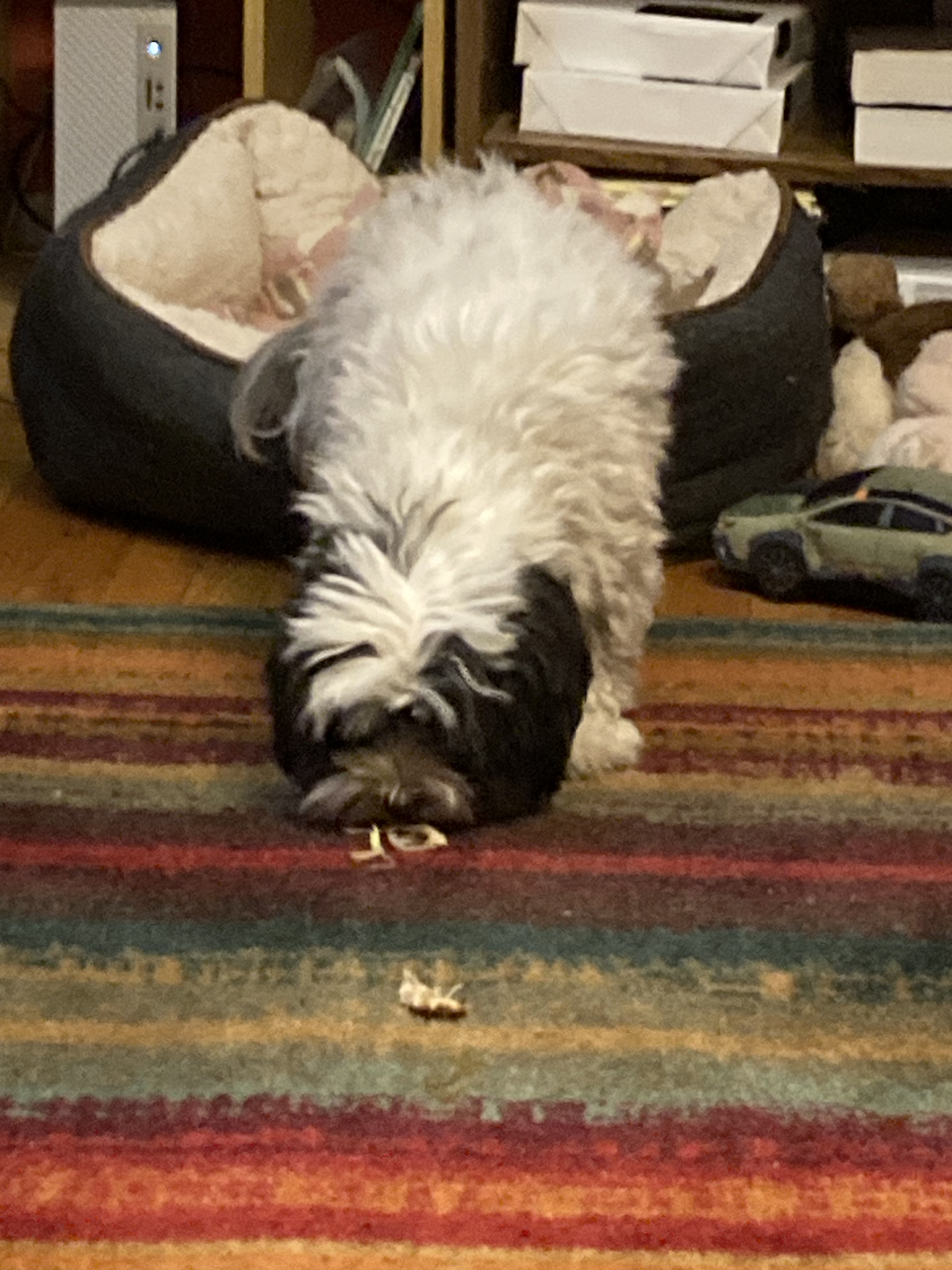
            The primary reasons why I chose the name Tzipporah for our new dog were the meaning of the name (bird), and the sound of it, but I was also thinking of Moses’s Wife Tzipporah in the Hebrew Bible. There was something about her that resonated for me, but I couldn’t quite remember what it was, so I decided to do a little bit of research.

“Why do I have to share a name? That doesn’t sound right.”

Tzipporah, in the Hebrew bible, was the daughter of a Midianite priest named Jethro (and Reuel and Hobab, for some reason). Jethro himself becomes important to the story after the Exodus from Egypt, when the Israelites are camped out at Mount Sinai and Moses needs help figuring out the nitty gritty of how to lead his new nation.

            But first, the beginning of the story: Moses runs away from Egypt (because he killed an Egyptian slave master who was striking a Jewish slave), and as he is passing through Midian he sits down to rest by a well. While there, he sees that Jethro’s daughters are being bullied by a group of shepherds. Moses steps in to help the girls get water for their flocks, and when they get home, Jethro tells them to invite Moses home for dinner, and then to stay, and then to marry his daughter Tzipporah.

The interesting bit comes later on, after Moses is called by God to save the Israelites from Egypt. Moses and Tzipporah and their sons are staying at a roadside inn, on their way to Egypt, when an angel of God comes to kill Moses (there’s no explanation in the text for why God wants to kill the man he just recruited, but, okay). Tzipporah decides that the only way to dissuade God from killing her husband is to circumcise her son Gershom, and then touch her husband’s leg with the bloody piece of skin (or to fling the foreskin at the angel, the text is unclear on this point). And, Moses is saved!

Putting aside the ick for a second, it’s fascinating to me that Tzipporah is the heroine of this story, rather than Moses. Moses does nothing to protect himself. Tzipporah, on the other hand, grabs a sharp stone and does precise surgery on her baby to save her husband. I read a commentary that says the reason God was so angry at Moses in the first place was because he had failed to circumcise his son by the 8th day, so Tzipporah was just doing the job Moses was supposed to have done earlier. But that seems like a lot of impatience, even for God. The interesting thing, to me, is that circumcising baby boys was seen as a way to protect them from evil spirits (blood in general is seen as a prophylactic against evil in the ancient world), so here’s Tzipporah using the same ritual as a way to protect her husband from God, as if God is playing the role of an evil spirit in this story.

The contradictions in the text, and the sense that we’re missing important details of the story, seem to be a feature rather than a bug in the Hebrew bible. A modern-day text would have had all of these contradictions edited away, and all of the missing details filled in, but instead we have this text that includes multiple versions of the same stories, with conflicting and confusing details that lead to wildly different interpretations; which, intentionally or not, allows each of us to reinterpret the text in our own way, and find layer upon layer of possible meanings.

            It’s this decidedly-lean-on-details aspect of the Hebrew bible that led the rabbis to write Midrash, or stories, to help us try to understand the lessons to be learned. That’s where we get some of the explanations for why Tzipporah was named Bird in the first place: maybe she was named after (or inspired by) the Egyptian Bird goddess, Isis, who also saved her husband’s life (in Egyptian mythology); or maybe she was named Bird simply because birds are beautiful and she is beautiful; or maybe she was named Bird because birds are the animal sacrifice used in the case of a house covered in leprosy, and Tzipporah cleansed her father’s house of idols, which is sort of like cleansing the house of leprosy (though I don’t remember anything in the story where Jethro gives up being a priest of Midian, or any of his idols, so…).

            Sometimes the commentators just come up with things because that’s the story they want to be true. Midrash was never added into the text of the Hebrew bible itself, and we are not supposed to confuse midrash with the text of the Hebrew bible, and yet, the way these stories are often taught to children, and remembered by adults like me, the line between what’s actually in the Hebrew bible itself and what was added by the rabbis in the midrash can become blurry.

            But, even with all of that, the text of the Hebrew bible seems pretty clear that Tzipporah is a fierce protector of her husband and children, and that she is very beautiful, and maybe that fierceness and beauty were what made the name seem right for my own Tzipporah. She survived four years in a puppy mill, and that alone takes a lot of grit, but then she came to a new home and was able to be curious and find new adventures, which suggests that she has a lot of spirit and bravery for such a little girl.

My hope for my own Tzipporah is that she continues to write her own midrash, her own fanciful stories, to create a new life, and that she never has to protect herself from an angel of God, or anyone else, so she can devote all of her fierceness to the goal of living a good life in her new home, and finding as much happiness as her little paws can hold.

If you haven’t had a chance yet, please check out my novel, Yeshiva Girl, on Amazon. And if you feel called to write a review of the book, on Amazon, or anywhere else, I’d be honored.

            Yeshiva Girl is about a Jewish teenager on Long Island, named Isabel, though her father calls her Jezebel. Her father has been accused of inappropriate sexual behavior with one of his students, which he denies, but Izzy implicitly believes it’s true. As a result of his problems, her father sends her to a co-ed Orthodox yeshiva for tenth grade, out of the blue, and Izzy and her mother can’t figure out how to prevent it. At Yeshiva, though, Izzy finds that religious people are much more complicated than she had expected. Some, like her father, may use religion as a place to hide, but others search for and find comfort, and community, and even enlightenment. The question is, what will Izzy find?

Tzipporah’s Midnight Cry

            A new pattern has emerged. Some time in the middle of the night, for three nights now, I have woken up to a plaintive cry. Each time, I have gone to look for Tzipporah, assuming the cry was hers, and found her standing in the middle of the living room, surrounded by stuffies, silent. I guess it’s possible that the cries have been coming from outside, from another animal, or even a person, but most likely it is from Tzipporah. The strange thing is that it is just one cry and that’s it, there’s no long sequence of cries, and no obvious behavior to go along with the cry.

            Tzipporah’s four years at the puppy mill are a mystery to me, but her terror gives me clues. Inside the apartment she has found safe spaces: she likes to switch from one dog bed to the other after a few hours, and then take a nap on the rug in Mom’s room, or on the cushion in my room, for variety; and she will let me pick up her whole bed and bring her into the kitchen at night, though she refuses to stay there; and she even lets me put her leash on and pick her up to take her outside, but once we’re outside she sits on the grass and shivers (even wearing a sweater), and when I try to pick her back up she pulls and jerks at the leash, bucking this way and that like a tiny unbroken horse.

            Despite all of this, Tzipporah seems to be progressing. She stretches out in her bed, and she even rolled onto her back a few times while I was in the room. She accepts food (chicken and peanut butter so far) directly from our hands, sometimes, and she makes eye contact much more than when she first came home. She doesn’t know how to play yet, but when I press on the belly of one of her stuffies and it squeaks, or barks, she listens carefully and leans in to sniff.

            But in two weeks, those ghost-like cries – as if she is just now testing her voice and is still afraid to be heard for long – are the only sounds she’s made.

            I know that she has started to heal, and that her life will continue to improve as she learns that she is safe now, but I don’t know what’s behind her bone deep fear, and I don’t know if it will ever go away. There’s something deeply healing, for me, in bringing home these special dogs and helping them find their way out of the darkness; but there is also, maybe, too much resonance in the realization that some hurts may never fully heal.

If you haven’t had a chance yet, please check out my novel, Yeshiva Girl, on Amazon. And if you feel called to write a review of the book, on Amazon, or anywhere else, I’d be honored.

            Yeshiva Girl is about a Jewish teenager on Long Island, named Isabel, though her father calls her Jezebel. Her father has been accused of inappropriate sexual behavior with one of his students, which he denies, but Izzy implicitly believes it’s true. As a result of his problems, her father sends her to a co-ed Orthodox yeshiva for tenth grade, out of the blue, and Izzy and her mother can’t figure out how to prevent it. At Yeshiva, though, Izzy finds that religious people are much more complicated than she had expected. Some, like her father, may use religion as a place to hide, but others search for and find comfort, and community, and even enlightenment. The question is, what will Izzy find?

Little Miss Someone Came Home

            She doesn’t love me, yet. I remember this feeling from when Ellie first came home, worried that she would never love me and I would never love her. I’m also having flashbacks to the night Ellie died, when she was struggling to breathe and asked to be put down on the floor, and so I did as she asked, and the next time I saw her she was dead. I worry that the new baby could be sick in some unforeseen way, and that I will wake up in the morning to find her dead. In a way, I think I’m feeling the parts of the grief I couldn’t stand feeling before. It’s not really a coincidence, but more of a blessing, that “someone” arrived a few days before the year anniversary (the Yahrzeit) of Ellie’s death.

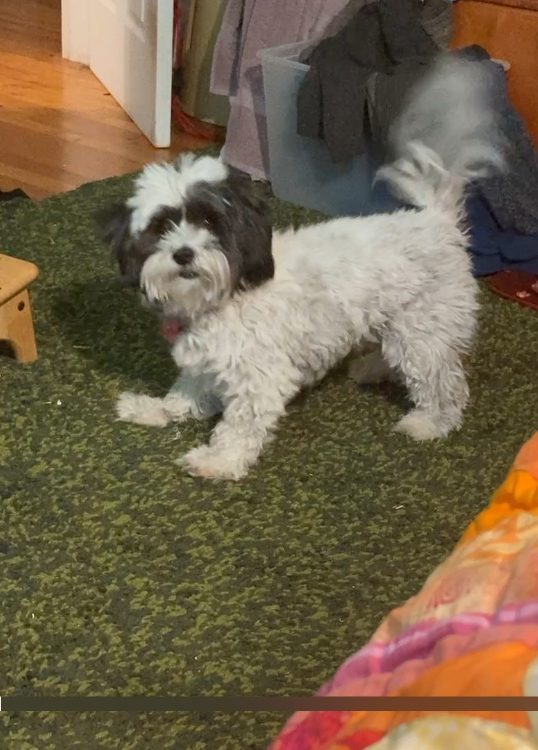
            “Someone” is a four-year-old Havanese, former breeding mama, just like Ellie, though with her black and white coloring, she doesn’t remind me of Ellie too much, thank God. She hasn’t barked at all yet, and for the first few days the only thing I could see in her eyes was fear. But as time has passed, I’ve seen more and more curiosity. She’s eating well, and pooping in all the wrong places, but they are healthy poops. She spends most of her time sleeping, as if she is beyond exhausted and needs to fill up a tank that has never really been filled before.

            Two weeks before we adopted her, she was driven up from a puppy mill in Missouri that had decided to “retire” a bunch of mamma dogs (I assume all of the puppies had already been sold). Mom had been calling the shelter (North Shore Animal League America, of Late Show with Stephen Colbert fame) for months, and then daily since news of the rescue of the little dogs. On the Tuesday before Thanksgiving, Mom was told that the dogs wouldn’t be ready for adoption until after Thanksgiving, but by Wednesday, adoption day was scheduled for Friday morning at ten (technically after Thanksgiving, but just barely). My brother and one of my nephews came along with us, because it was the only time they could come for a Thanksgiving visit, and because, you know, dogs. We weren’t the first ones online, but we weren’t the last either. For our entertainment, or just because, the shelter workers kept walking past the line of potential adopters with different dogs, including two Shiba Inu puppies who seemed to be dancing and doing a comedy act. At some point, one of the shelter workers came out to tell us to make two lines, one for dogs and one for cats, and no one moved. We were clearly all there waiting for the small dogs, and I was convinced that there would be no dogs left by the time we got inside.

            But thankfully, I was wrong.

            The way the shelter is set up, you have to walk through the long hallway of big dogs in order to get to the small dogs, in the hopes that someone will fall in love along the way and forget that they live in an apartment. 

When we got to the small dog room, the first dog I noticed was a ten-year-old miniature poodle who was standing on her back legs and demanding attention from everyone who walked by. The dogs were kept in little glass-fronted apartments, with description cards on each door describing the dog or dogs inside: age, breed, gender, health issues, and any specifications (good with kids, needs to be with other dogs, needs to be an only dog, etc.). There were already a bunch of adorable little dogs being held by various humans, seemingly claimed. Then we saw the two Shiba Inu puppies, playing and laughing together, and my nephew said he’d want one of them, if only he wasn’t still living in a college dorm. The two five-month-old Shiba Inu brothers were the exception, though, because most of the dogs were former breeding mamas, from age four to age twelve (I can’t even fathom why a puppy mill still had a twelve-year-old breeding dog). I felt dizzy and overwhelmed by the noise and chaos, but then I saw a six-year-old apricot and white miniature poodle, who looked way too much like Cricket for my comfort, and just behind her, in the same little apartment, was a black and white Havanese. The card said she was four years old and that her name was “Bandita.” Both of the dogs were sleeping, but I asked to see “Bandita” anyway.

            The reason for her name became clear right away, with her raccoon-like eye markings, and she looked terrified, but as soon as she was in my arms I was not willing to give her back. I was still curious about the other dogs in the room, of course, and started wondering if I could adopt two or three dogs at once, or if that would be selfish, given all of the other people still waiting in line. It took me just a minute or two to get the volunteer’s attention and tell her that we had chosen our new dog.

            And then came the paperwork. They had to take “Bandita” from me and put her in another room, so she wouldn’t be claimed by anyone else, and then we waited on line and were given a three-page form to fill out in pencil, and then we waited on line again to review it all with one of the shelter workers, in pen. They needed names and phone numbers for three references, and our vet, and the manager of the co-op where we live. They also wanted information about our previous dogs: health, training habits, living conditions, etc. The shelter worker passed over the fenced-in yard requirement quickly, thank God, and told us that at four years old, “Bandita” qualified for the same senior to senior program under which we’d adopted Butterfly ten years earlier, which meant that the already low adoption fee would be reduced again, down to $25, and any health care provided by the clinic at the shelter would be subsidized. And then we were sent away while they checked through all of our information, in order to decide if we were qualified to adopt a puppy mill survivor.

Miss Butterfly

            We sat at home for two hours waiting for the phone call, trying to distract ourselves, worried they’d find a reason to deny the adoption. In the meantime, I started thinking about names. I had promised myself I would give our next dog a Hebrew name, and my first thought was Tikvah, which means “hope.” But I was worried that calling her “hope” would put too much weight on her tiny shoulders, so I started researching Hebrew girl names: Aviva (spring), Ilana (young tree), Tzipporah (bird), Shir (song or poem), Yaffa (beautiful), Yofi (beauty), Dvash (honey), Rina (singing and joy), Osher (happiness), Adina (gentle), Dafna, Dahlia, Tiferet, Hadassah, and on and on.

            When we finally got the call that “Bandita” was ours, I was thrilled! I didn’t expect to be so happy. I thought I would only feel relieved, or even trepidatious, but I was giddy. It was puppy time!!!

            When we got back to the shelter, all of the parking spots within six blocks were taken by other potential adopters, so I dropped Mom at the front door and drove up the hill to find a spot on a side street.

            While I was parking, Mom signed us up for pet insurance that would cover 80% of her health care, no matter where we chose to take her, and by the time I arrived it was time to read and sign a ton more paperwork, and visit with the vet tech to make sure we understood her health situation (spayed, still has a small scar, had a dental and would need one every year, would need two more vaccinations in two weeks), and then we were loaded up with gifts from the shelter’s corporate sponsors (a Swiffer wet jet, a bag of Rachel Rae dog food, and a dog toy from Subaru and one from a coffee company I didn’t recognize).

            There was so much to carry that I left Mom with the baby, to take an adoption picture and buy some wet dog food, while I dragged all of the loot back to the car. Mom and puppy were waiting for me when I returned, and then they were safely ensconced next to the Swiffer box in the back seat, and we made our way home.

            The first person we met in the back yard at the co-op was Kevin, the mini-goldendoodle who loved (and was very much loved by) Cricket, and he was very enthusiastic about sniffing the new dog and telling her all the news. She was, of course, terrified, of him, and of the grass, and of the leash, and of me, but she made a point of sniffing Kevin’s butt anyway.

            As soon as we got into the apartment, I sat down on the couch, still wearing my winter jacket, and held her on my chest for the next few hours, afraid to move. When I finally put her down on the floor (because I really had to go to the bathroom), she ran for the smallest hiding spot she could find, which turned out to be Mom’s garden kneeler, which was sitting on its side in a corner of the dining room. She peeked out from behind the bench of the kneeler and then curled up behind it, using it as a shield.

We’d thought we still had a pet gate in storage, and had planned to put her and her food and bed and wee wee pad in the kitchen, but without the pet gate we couldn’t reinforce the boundary, so even though she started her first night in her bed in the kitchen, she quickly found her way down the hall to a little round rug on Grandma’s bedroom floor, where she spent the rest of the first night.

Without the pet gate, trying to explain to her where to pee and poop has been difficult (or impossible), but she’s been making progress anyway. We take her outside a few times a day, even though she has no idea what to do out there and just sits on the grass, waiting to be picked up and brought back inside.

By Sunday morning, we’d narrowed the name choices down to Tzipporah, Tikvah and Shir (or Shira or Shiri), but I still couldn’t quite figure out who she was, and I was afraid of getting her name wrong, forever and ever amen.

            By Monday afternoon, she wasn’t shaking anymore, though she was still skittish when the humans came too close. Pretty quickly, she found the two dog beds, filled with Cricket and Ellie’s toys and blankets, and spent many hours making herself cozy in the midst of her sisters’ smells. We set up a cushion and blanket for her in my room., so she could feel safe and welcome there too, and she was beginning to venture further into the corners of the apartment, examining all of the smells and sounds and textures of her new world. She was starting to stretch out and try different sleeping spots and positions, instead of always being curled in a ball on the round rug in Mom’s room. She even started to look at us, and to continue eating while we were in the room. By then, I had narrowed the choices to Tikvah and Tzipporah. I was leaning more towards Tzipporah (bird), because the sound of it seemed to fit her, and because I could already see her yearning to fly. But I was still holding onto the idea of “hope,” for myself, and wasn’t quite ready to let it go.

            By midweek, when we lit the (vanilla scented) candle for Ellie’s Yahrzeit, and sat with that grief again, something had shifted inside of me and I decided that I was ready to let go of my expectations, and hopes, and “someone” finally became Tzipporah (Tzippy for short).      

Ellie’s Yahrzeit

Her fears are still prominent. She had an encounter with the vacuum cleaner the other day, a previously unknown evil, that sent her back to bed for half a day. She refused to crawl out from under her blankets for anything, even dinner. But we can already see a glimmer of her adventurous spirit hidden underneath the fear. Step by step, chicken treat by chicken treat, I hope that she will eventually decide that she was adopted by the right family, and she’ll discover that good things really are possible, especially love.

Tzipporah

If you haven’t had a chance yet, please check out my novel, Yeshiva Girl, on Amazon. And if you feel called to write a review of the book, on Amazon, or anywhere else, I’d be honored.

            Yeshiva Girl is about a Jewish teenager on Long Island, named Isabel, though her father calls her Jezebel. Her father has been accused of inappropriate sexual behavior with one of his students, which he denies, but Izzy implicitly believes it’s true. As a result of his problems, her father sends her to a co-ed Orthodox yeshiva for tenth grade, out of the blue, and Izzy and her mother can’t figure out how to prevent it. At Yeshiva, though, Izzy finds that religious people are much more complicated than she had expected. Some, like her father, may use religion as a place to hide, but others search for and find comfort, and community, and even enlightenment. The question is, what will Izzy find?

What is there to be thankful for this year?

            For some reason, Thanksgiving has never been my holiday. Maybe it’s because of that one extreme rabbi at my high school who called this secular American holiday a Shanda (a shame/a scandal), and yelled at us to avoid eating even one turkey sandwich; or maybe it’s because I can’t resonate with a holiday that’s all about gratitude when I’m used to Jewish holidays, where we grump at least as much as we celebrate; but most of all, it’s probably because the Thanksgiving-themed TV shows and movies I watched when I was growing up were all about the torture of family get-togethers, as opposed to the Christmas movies, which were full of romance and joy and candy and toys.

            As for the events of the day itself: I’m not a parade person, or a football person, or a dog show person; and I’m really, really not a turkey person.

            I saw a meme on Facebook recently that suggested we stop eating turkey for Thanksgiving and switch over to brisket, and while I’m sure it was created either by a Save-the-Turkeys group or by the Cattlemen-of-America, I wasn’t upset by the idea. Trying to cook even a small turkey for just me and Mom would mean eating turkey sandwiches for the next month, and even though I’ve been told that there are ways to cook a turkey to make it taste better, I’m pretty sure that’s just fantasy fiction.

            Of course, Thanksgiving’s big claim to fame, other than turkey and a now-controversial origin story, is that it’s a day for expressing gratitude (it may only be a coincidence that Thanksgiving comes a few weeks after election day each year, when people are still stewing over those results). And for me, Thanksgiving is a time when I feel compelled to remind people that there is such a thing as toxic positivity, and that forcing gratitude out of grumpy people is just cruel. But, of course, I am also extremely vulnerable to peer pressure, so I end up searching through my life for the things I can be grateful for every year anyway. So, this year:

            I’m glad that I was able to start writing poems again, and that I actually finished two drafts of my new novel (the third draft is taking its time); and I’m thrilled that I returned to online Hebrew classes this past summer with renewed joy and inspiration; and I’m grateful that I’m still able to teach, and that I have wonderful students again this year; and I’m grateful for my thoughtful friends and loving family.

But, of course, all of that hopeful, positive energy inevitably stirs up memories of all of the things I’m not grateful for: I keep getting older, and so does Mom; doctors still have no idea what’s wrong with me, but the copays keep coming in larger and larger doses; Israel is still at war and there are still 101 hostages being kept in Gaza (alive or dead, no one seems to know); and then there’s the fact that a majority of voters in the United States chose a predatory criminal as our president, despite mountains of evidence of his crimes, against our country, and against women in particular.

            So, yeah, it’s a mixed bag. My hope is that I will be able to survive the next month of teaching, by relying on Christmas movies and French murder mysteries to keep me going, and then I will be able to rest and recover over winter break. My plan, then, is to watch as little news as possible, and write as much as possible, and start the new year with my feet solidly on the ground and my heart filled with (some) hope.

            We’ll see how it goes.

p.s. Someone arrived the day after Thanksgiving and is waiting to be introduced to everyone. Next week.

If you haven’t had a chance yet, please check out my novel, Yeshiva Girl, on Amazon. And if you feel called to write a review of the book, on Amazon, or anywhere else, I’d be honored.

            Yeshiva Girl is about a Jewish teenager on Long Island, named Isabel, though her father calls her Jezebel. Her father has been accused of inappropriate sexual behavior with one of his students, which he denies, but Izzy implicitly believes it’s true. As a result of his problems, her father sends her to a co-ed Orthodox yeshiva for tenth grade, out of the blue, and Izzy and her mother can’t figure out how to prevent it. At Yeshiva, though, Izzy finds that religious people are much more complicated than she had expected. Some, like her father, may use religion as a place to hide, but others search for and find comfort, and community, and even enlightenment. The question is, what will Izzy find?

The Choir

In my head there is a large choir

full of cacophony

and also harmony, sometimes.

I have all kinds of voices in my choir,

from too high to too low,

from too loud to too quiet,

from chaotic to orderly,

and everything in between.

I’m still not used to singing with my choir.

I don’t know how to train it

or coordinate it

or control it the way it needs.

There is no one conductor.

There is no one composer.

And there is no silence.

But there are moments

that sound beautiful to me.

And there are notes that I am happy to hear,

even just once in my life.

Maybe one day,

soon or in the future,

my choir will be able to create the beauty

and the complexity

and the hope

that lives in my imagination.

That is my prayer.

המקהלה

בָּרֹאשׁ שֶׁלִי יֵשׁ מַקְהֵלָה

מְלֵאָה בְּקָקוֹפוֹנִיָה

וְגָם הַרמוֹנִיָה, לִפְעָמִים.

יֵשׁ לִי כֹּל מִינֵי קוֹלוֹת בָּמַקְהֵלָה שֶׁלִי,

מְגבוֹהוֹת מִדַי לְנְמוּכוֹת מִדַי,

מְחָזָק מִדַי עַד שָׁקֶט מִדַי,

מְכֵּאוֹטִי לְמְסוּדָר,

וְכֹּל מָה שְׁבֵּינֵיהֶם.

עוֹד לֹא הִתרָגָלתִי לָשִׁיר עִם הָמַקְהֵלָה שֶׁלִי.

אַנִי לֹא יוֹדַעַת אֵיך לְהִתאָמֵן אוֹתָה

אוֹ לְתָאֵם אוֹתָה

אוֹ לִשׁלוֹט בָּה כּמוֹ שְׁצָרִיך.

אֵין מְנָצָחָת אָחַת.

אֵין מָלחִינָה אָחָת.

וְאֵין שֶׁקֶט.

אָבָל יֵשׁ רְגָעִים

שְׁנִשׁמָעִים לִי יָפִים.

וְיֵשׁ צלִילִים שְׁטוֹבִים לִי לִשׁמוֹעַ,

אָפִילוּ רָק פָּעָם בָּחַיִים.

אוּלַי יוֹם אֶחָד,

בְּקָרוֹב אוֹ בָּעָתִיד,

הָמָקהֵלָה שֶׁלִי תוּכָל לִיצוֹר אֶת הָיוֹפִי

וְהָמוּרכַּבוּת

וְהָתִקוָוה

שְׁחַי עָכשַׁיו רָק בָּדִמיוֹן שֶׁלִי.

זוֹ הָתפִילָה שֶׁלִי.

If you haven’t had a chance yet, please check out my novel, Yeshiva Girl, on Amazon. And if you feel called to write a review of the book, on Amazon, or anywhere else, I’d be honored.

Yeshiva Girl is about a Jewish teenager on Long Island, named Isabel, though her father calls her Jezebel. Her father has been accused of inappropriate sexual behavior with one of his students, which he denies, but Izzy implicitly believes it’s true. As a result of his problems, her father sends her to a co-ed Orthodox yeshiva for tenth grade, out of the blue, and Izzy and her mother can’t figure out how to prevent it. At Yeshiva, though, Izzy finds that religious people are much more complicated than she had expected. Some, like her father, may use religion as a place to hide, but others search for and find comfort, and community, and even enlightenment. The question is, what will Izzy find?

Post-Election Malaise

            Each day since Donald Trump won the presidential election in the United States, I have been feeling worse and worse. At first, I was just surprised and couldn’t really take it in. I was prepared for the vote counting to take days, and I was prepared for court cases, and threats, and acts of violence, but I was not prepared for him to win.

            I think I forgot, or blocked out, a lot of his first term. I remembered enough to never want to go through it again, but I forgot the feeling of chaos that dominated the news cycle, where it felt like Trump was actively trolling us with his cabinet picks. This time around already seems more unhinged than last time (Matt Gaetz for Attorney General? RFK Jr. for Secretary of Health and Human Services?).

            I know there are people who want to think of this as just another election, where one side won and the other lost. And I know there will be a lot of minimization and denial in response to the fear that so many, including me, are feeling. But this isn’t normal. In response to Trump’s win, some young men decided to tell young women – Your body, my choice – as if it was a joke, or worse, as if they really believe that to be true.

            I feel this like a knife aimed at my throat and my belly and my heart, not like an intellectual puzzle to be worked out. I am worried, especially, because I rely on disability and Medicare to make my life possible, and I don’t know what impact this new administration will have on those programs. I also don’t know what will happen with student loans under Trump (mine were put into a form of forbearance under Biden, but the $10,000 left of my debt was not officially erased).

            And then there are the criminal cases against Trump that are being closed down by the Department of Justice, because once he is President again, he can’t be prosecuted for his crimes. And that will, certainly, embolden Trump in his extra-legal tendencies going forward, as will the supreme court’s wide-ranging decision on presidential immunity for acts done in office.

I grew up in a home run by an unpredictable, predatory, and manipulative man, and I am not feeling good about the next four years. I felt the calm of the Biden years in my bones, when there were days, and even weeks, when I didn’t have to think about politics at all, and I don’t know how my body and mind will respond to the return of the chaos.

            I wish, given all of this, that the Democratic party, and the pundits, would stop blaming each other for the loss, and instead focus on how to safeguard our rights as much as possible moving forward. There is room for analysis of what went wrong, and why, but not with the vitriol and self-righteousness that’s filling the airwaves at the moment. Some people believe that the Democratic party lost because it was too hoity toity, or because it didn’t come up with enough policies to help the working class, or it was too progressive, or too moderate, or didn’t reach out to men enough, or didn’t reach out to people of color enough. But my sense, then and now, was that people did the best they could with the understanding they had of the voting public at the time. They were just wrong.

            From what I could see, Donald Trump’s campaign set out to discourage people from voting: by creating distrust in government overall, by telling people that their votes wouldn’t make a difference, by cutting legal voters from the rolls at the last minute and limiting the number of polling places in populated areas, and by openly threatening that if people voted for the Democrats there would be violence in the streets. The fact is, Trump won this election with around the same number of votes he had in the last election, when he lost to Biden. His coalition didn’t grow. If he picked up a few new people (Arab and Latino men, for example), he lost others (former Republicans who saw the January 6th insurrection, or any number of other events, as the final straw.). But for some reason, none of the pundits want to acknowledge that what Donald Trump said and did actually impacted the outcome of the election; they’d rather blame Kamala Harris, or Joe Biden, or this or that miscalculation by someone else. But what if there was no Democratic candidate who could have beaten Trump at this moment in history? Can we tolerate knowing that?

            And now, with the reality of Donald Trump as our next president, are there lessons we could be learning about why his messages resonated so deeply with some people, and about how we can better meet those people where they are when explaining our goals in the future? Can we turn away from the back biting, blame, and guilt and consider some paths forward? There have been some thoughtful, and possibly helpful hypotheses for why Trump was able to win: some people say that the underlying cause of Trump’s win is the growth of the far-right media landscape, which often eschews main stream journalistic values (aka doesn’t care about validating facts before publishing them); some say that the problem is with the main stream media itself, which claims objectivity even though reporters often have their own unacknowledged biases; some say that our problem is a lack of education in civics, which would allow people to be better prepared to judge political actors for themselves, and also to feel some agency and confidence when engaging with our political system. All of these things sound possible to me, and all of them lay out paths forward for good work to be done by well-meaning, hard-working, and creative people.

            One of the things that bothered me, endlessly, in the lead up to election day, was the number of Democratic activists who believed they were accomplishing something by sending out postcards reminding people to vote (I received two or three of these, after I’d already voted by mail), or who went knocking on doors in neighborhoods where they didn’t actually live or know anyone personally (as if I would ever answer the door to a stranger, let alone listen to their political spiel). Busy work in politics, it seems to me, is just as much of a waste of time as it is in the classroom. And busy work that actively annoys people? That’s even worse.

            As a teacher, I believe in the power of education to create change, and as a writer I believe in the power of storytelling to reach people in ways that slogans can’t. For example, I learned more about LGBTQ issues, and took them in more fully, by watching TV shows and movies that humanized gay and trans people, than I ever learned from an ad campaign. Show me someone I can relate to, who is impacted by this or that societal wrong, and you have a much better chance of getting me involved than if you yell at me and insist that my views change to match yours, just because you say you’re right.

            I believe that we can make lasting societal change by investing our time and energy in telling those stories and allowing people to change their own minds, but it has been, admittedly, very hard to focus on those hopeful, long term paths forward in the face of the firehose of news about what’s coming next in the short term.

            What will happen to efforts to prevent climate change? Or to improve accountability among the police? Or with immigration? Will the Republicans finally put through the immigration bill they wrote with the Democrats last year, and then tanked when Trump told them he needed the border issue for the election? Or will they insist on changing the deal, but be unable to agree among themselves over what changes to make? Or will our immigration system remain an unmitigated disaster for the foreseeable future, just to give Republicans something to campaign on in 2026?

            When Trump’s promised Tariffs go into place, will some of his newfound voters regret their choice? Or will they believe the spin Trump puts on all of it (it must be Biden’s fault, you’re not seeing what you think you’re seeing, if you were stupid enough to be conned you deserve to be screwed – that was one of my father’s favorite mantras).

            And I assume tax cuts, for corporations and the super wealthy, will be a priority and will lead to all kinds of cuts in the social safety net, though it’s hard to know what the new congress will be able to pass, even with a Republican majority in the senate and the house, given the history of disagreements among the Republicans themselves. Trump will certainly be able to load the supreme court, though, and the rest of the federal court system, with young conservative judges who will determine the course of justice in this country for decades to come.

            I am frightened of Donald Trump, and of all of the things he has promised to do, and of all of the things he will do that I can’t predict, or even imagine. And I am afraid of how his second presidency will further darken our public discourse, and create even more fragmentation among us; but I want to believe that there are things we can do to prevent all of that, or at least some of it.

            As I learned way back when, and still believe, Democracy is the best of all of the imperfect systems of government that we have available to us, because it requires us to be more engaged with each other. It doesn’t require us all to agree; if anything, what it requires is for all of us to feel like we belong at the table, hashing out our differences and finding ways forward that we can all live with.

            I’ve found so much solace in writing this blog, and hearing from people who take the time to engage with me, or just to let me know they hear me and I am not alone. We all need that kind of connection and respect in our lives. We all need to hear and be heard, to feel seen and cared about, and to feel an obligation to someone other than ourselves that will keep us going even when our own inspiration and motivation is low.

We still have a Democracy today, even with Donald Trump’s openly authoritarian aspirations, and we need to make the most of it. We still have power, and responsibility, and we can still make sure that our voices are heard. It will be harder, and we (and definitely I) will have some awful days, but we are not alone in any of this. We can help each other get through to the other side, no matter who we voted for. If we choose to.

If you haven’t had a chance yet, please check out my novel, Yeshiva Girl, on Amazon. And if you feel called to write a review of the book, on Amazon, or anywhere else, I’d be honored.

            Yeshiva Girl is about a Jewish teenager on Long Island, named Isabel, though her father calls her Jezebel. Her father has been accused of inappropriate sexual behavior with one of his students, which he denies, but Izzy implicitly believes it’s true. As a result of his problems, her father sends her to a co-ed Orthodox yeshiva for tenth grade, out of the blue, and Izzy and her mother can’t figure out how to prevent it. At Yeshiva, though, Izzy finds that religious people are much more complicated than she had expected. Some, like her father, may use religion as a place to hide, but others search for and find comfort, and community, and even enlightenment. The question is, what will Izzy find?