Tag Archives: songwriting

How Not to Write a Song

            I wrote a set of lyrics, or a poem, or something, and I wanted to see if I could translate it into an actual song, at which point, of course, I forgot everything I’d ever known about music or writing. I went to Google to ask how to write a song and found page after page that boiled down to: set up the story in verse one, state the basic emotion of the song in the chorus, advance the story in verse two, and good luck. But shockingly, I still felt clueless about how to proceed. In general, when I write I just write, and the rhythm comes from the words themselves and from how often I need to stop and breathe. In order to write a song, though, I needed a more deliberate structure and I was still at a loss.
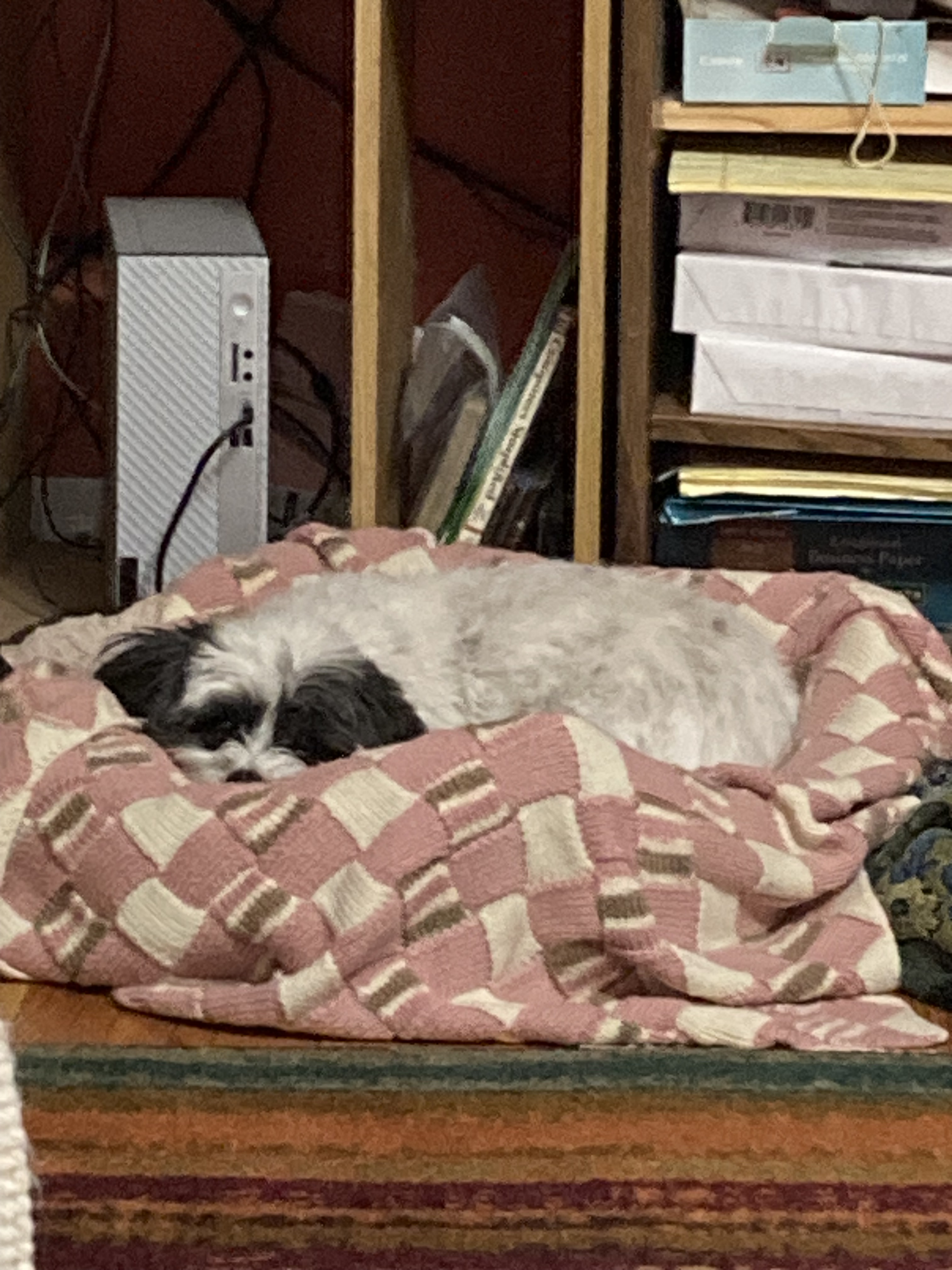
“Oy.”

So then I collected a YouTube list of songs that seemed well-structured (to me) and started listening to them to see if I could figure out how they worked. I listened to a lot of Mumford and Sons songs, like Awake My Soul and I Will Wait, and My Church and The Bones by Maren Morris, and Falling and Sweet Creature from Harry Styles, and songs from Regina Spektor and Van Morrison and Sarah Mclachlan and James Taylor and Nat King Cole. And what I noticed, after listening to dozens of songs and reminding myself to listen for rhyme and meter each time, wasn’t rhyme and meter. Instead, it was how I felt. Even when a song didn’t bother to finish telling its story, as long as there was one moment where I felt something or saw something or maybe even smelled something, the song felt successful.

            I also noticed that I really wanted to rewrite other people’s songs. I’d be singing along, feeling like this is my song, until a word or two would ring false and break the spell. For example, Kelly Clarkson’s song Mine is beautiful and heartbreaking and almost perfect, until she gets to the line “eternal sunshine of the spotless mind,” which feels like a foreign substance dropped in from popular culture rather than part of an organic whole. (I blame my rabbi for this tendency of mine to want to edit. He “adapts” poems and essays from established writers to fit his purposes throughout the year, and especially on the high holidays, when we need as much help from English as possible to try to understand the endless Hebrew liturgy. I mean, I was always like this, but now I have, like, God’s permission.)

             Anyway, with all of that in mind, I was even more uncertain about how to proceed. I was especially flummoxed by the need to rhyme, because it reminded me of having to buy a thesaurus in graduate school and being told there was always a “right” word for each purpose. But one of the things I learned from my long listening experiment was that rhyme schemes can help create a sense of anticipation, or inevitability, in a song, taking something that otherwise feels humdrum and making it almost magic. So, bravely, I looked through my existing lyrics and made a list of words I thought I could find rhymes for, and then I asked Google for rhymes (no more stupid thesaurus for me!)) and wrote down every possible word that resonated for me. At this point I was lost in a sea of words and even more overwhelmed than before, but I reminded myself that there’s always a way forward and I started freewriting every image I could think of for each word on my list.

If this is starting to sound like a ridiculous amount of work, especially with no guarantee that it would lead anywhere productive, I agree. But I can’t think of any other way forward. The gulf between “I want to write a song” and “I know how to write a song” feels so vast, it’s like trying to fly over an ocean without a plane, or a life preserver. And I’m still somewhere over the Atlantic at the moment, desperately flapping my wings. Wish me luck! 

“Good luck and chicken treats, Mommy!

If you haven’t had a chance yet, please check out my novel, Yeshiva Girl, on Amazon. And if you feel called to write a review of the book, on Amazon, or anywhere else, I’d be honored.

            Yeshiva Girl is about a Jewish teenager on Long Island, named Isabel, though her father calls her Jezebel. Her father has been accused of inappropriate sexual behavior with one of his students, which he denies, but Izzy implicitly believes it’s true. As a result of his problems, her father sends her to a co-ed Orthodox yeshiva for tenth grade, out of the blue, and Izzy and her mother can’t figure out how to prevent it. At Yeshiva, though, Izzy finds that religious people are much more complicated than she had expected. Some, like her father, may use religion as a place to hide, but others search for and find comfort, and community, and even enlightenment. The question is, what will Izzy find?


Writing Music

            As soon as I admitted to myself that I wanted to write a song, I stopped practicing the ukulele and the recorder. It wasn’t intentional, or even conscious, but when I look back, that’s the timing.

“I’m keeping it warm for you, Mommy.”

            I had been practicing three or four days a week at that point, not every day the way I’d promised myself but not too bad. And I’d been thinking about songwriting for a while, wondering what was stopping me, and wandering around the edges of the idea. And then, I think it was part of Holocaust Remembrance day at my synagogue, the Cantor shared songs with us during his Zoom, and showed us a version of  “Blessed is the Match” in Hebrew and English, based on a poem by Hannah Senesh, and, almost immediately, I wanted to rewrite it.

            Some background, Hannah Senesh was born in Hungary and immigrated to Palestine as a teenager. She joined the Haganah, the precursor to the Israeli army, and in March 1944, at age 23, she and others parachuted into Yugoslavia to assist with the rescue of Hungarian Jews who were being deported to concentration camps. She was caught by the Nazis, tortured and then killed by a firing squad. “Blessed is the Match” was written in Yugoslavia as she prepared for the rescue mission.

            This is the English translation the Cantor taught us:

            Blessed is the match, consumed in kindling flame.

Blessed is the flame that burns in the heart’s secret places.

Blessed is the heart that knows, for honors sake, to stop its beating.

Blessed is the match, consumed in kindling flame.

I went looking for other versions of the song, hoping to find something wonderful, so I wouldn’t have to do the work. I found a few versions, one that sounded like a march, and another that sounded like a dirge, and I was still annoyed by the vague and sentimental way the English sounded, as opposed to the original Hebrew, and I hated the saccharine and schmaltzy orchestrations. Don’t get me wrong, I like sentiment and sweetness, but not for this.

“I always like sweet stuff!”

I started working on a new translation that afternoon, looking up possible variations in Google Translate until I came up with a formulation that sounded close to the original Hebrew, at least to me. Except, then I had to match the rhythm and meter of the English to the Hebrew, because I wanted the song to be sung in both languages, and that process helped me understand where the vague and sentimental versions had come from in the first place; matching Hebrew and English rhythms is very hard, because Hebrew is so much more terse than English.

Anyway, this is what I came up with:

Blessed is the match that ignites a consuming flame.

Blessed is the match that burns in the depths of their hearts

Blessed are the hearts that know death is near and go on

Blessed is the match that ignites a consuming flame

“Blessed” isn’t really the right translation for the Hebrew word “Ashrei,” but the more accurate translation, of “grateful” or “happy,” feels misleading, or at least uncomfortable in this context, so I stuck with Blessed.

            I still wasn’t thrilled with my version, but I wanted to start thinking about the music. I wanted a simple, clear, melody. I wanted the melody to do a lot of the work that my translation couldn’t do; I wanted the melody to convey the conflict hiding in the lyrics.

“Ask me. I know about conflict.”

            Hannah Senesh’s poem rides a very thin line between suicidality and heroism; a line that needs to be delineated clearly when you are talking about freedom fighters or soldiers. How do you stand up and say that you are willing to put your life at risk, without also sounding like you want to die? How do you express a desire to save others, without pretending to a kind of complete altruism and selflessness that you don’t feel?

            The central image of the poem is of a match that willingly goes out, or knowingly risks going out, for the sake of others. And that image is both beautiful and horrifying; it’s a sacrifice that no one should have to make, and that no one should be asked to make, but it’s a sacrifice that some people will choose to make anyway, in order to save those they love. This is why I didn’t like the saccharine iterations, where the assumption is that you would feel complete happiness in dying for those you love, or the military march versions, which suggest that your patriotism will make you so single minded that you will lack any regrets. I wanted the darkness, and the fear, and the love, and generosity, to be in the music all at the same time. No pressure, though.

            I’m not sure yet why this poem resonated so deeply for me. I am not selfless, and I don’t dream of being a hero and sacrificing myself for others, but something compelled me to sit down and write music for the first time in forever, just to capture some resonance I couldn’t articulate in words.

“Have you ever tried barks instead of words?”

            But working on the music, and trying different combinations of notes, and trying to count syllables and quarter notes, and trying to remember which keys have which flats and sharps, all opened a wound that seems to have been sitting there, full of puss, for years. I’d managed to tap into a dark morass of feelings of worthlessness and stupidity and guilt and shame that I didn’t know were there.

            As a writer, a long time ago, I was able to find mentors to help me get past the endless rules and criticisms I found in school; I read Natalie Goldberg and Anne Lamott and others, and I used freewriting to get to what I wanted to say, instead of what other people found acceptable and impressive. It took a lot of work, and I still get stuck, but I found a path to go down. With music, though, I never found that path. I tried listening to classical music, and I studied voice and piano and guitar, and I really tried to understand what people were saying about how to do it all correctly, but the theories and the math and the rules never made sense to me.

            I have a notebook full of songs from my early teens, but at some point I got stuck and I couldn’t write one more measure. All I heard in my head was, You Don’t Understand Music, Your math is wrong, your harmonies are stupid, and you don’t even know what a chorus is.

            I’ve made a tentative return to practicing ukulele and recorder, though. And I even wrote a poem in Hebrew a couple of weeks ago (most of which came to me in a dream), but the unfinished draft of “Blessed is the Match, with its unmoored musical notes scares me too much. I’m afraid it will be awful, and wrong, and explode in my face if I look too closely.

            I asked Cricket and Ellie to look at the draft for me and, though they are not trained bomb sniffing dogs, and they didn’t notice anything explosive on the paper. But I still can’t look at it, or, God forbid, try to sing it, or sound it out on the keyboard on my phone. Instead I’m writing about it, or trying to, and doing my best to build a bridge, one word at a time, to make my way across this dangerous sea.

“Are we going swimming?”

If you haven’t had a chance yet, please check out my Young Adult novel, Yeshiva Girl, on Amazon. And if you feel called to write a review of the book, on Amazon, or anywhere else, I’d be honored.

            Yeshiva Girl is about a Jewish teenager on Long Island, named Isabel, though her father calls her Jezebel. Her father has been accused of inappropriate sexual behavior with one of his students, which he denies, but Izzy implicitly believes it’s true. As a result of his problems, her father sends her to a co-ed Orthodox yeshiva for tenth grade, out of the blue, and Izzy and her mother can’t figure out how to prevent it. At Yeshiva, though, Izzy finds that religious people are much more complicated than she had expected. Some, like her father, may use religion as a place to hide, but others search for and find comfort, and community, and even enlightenment. The question is, what will Izzy find?