Tag Archives: trauma

Israeli Standup Comedy

            One of the things I’ve been enjoying a lot lately in my online Hebrew classes is watching Israeli stand-up comedy routines. Even a year ago, I would have found it really difficult to follow what they were saying because they speak so quickly, but now, as long as the videos include subtitles in Hebrew, I can pretty much follow what’s going on. And I’ve found that I’m learning a lot about Israeli culture from these short videos on YouTube, because a comedian’s job is to comment on, and laugh at, all of pompous, ridiculous, or just plain wrong things the politicians, the media, and regular people are saying and doing every day.

“I prefer give-me-a-treat-comedy.”

            One of my favorite Israeli comedians is Giora Zinger. He and his family made Aliya (immigrated to Israel) from Ukraine when he was five or six years old (he has a whole bit about how he, and many other Jewish boys from the former Soviet Union, had to be circumcised when they arrived in Israel, and getting circumcised as a newborn is a completely different experience from getting circumcised when you are old enough to know what’s going on). A lot of his humor is about the cultural divide between his Ukrainian parents and the Israeli culture he grew up in. And his version of his mother’s accent, in Hebrew, is probably my favorite thing in his act, both because his version of his mother speaks much more slowly than most Israelis, so I can understand what she’s saying, and because his version of her says all of the things you’re not supposed to say out loud.
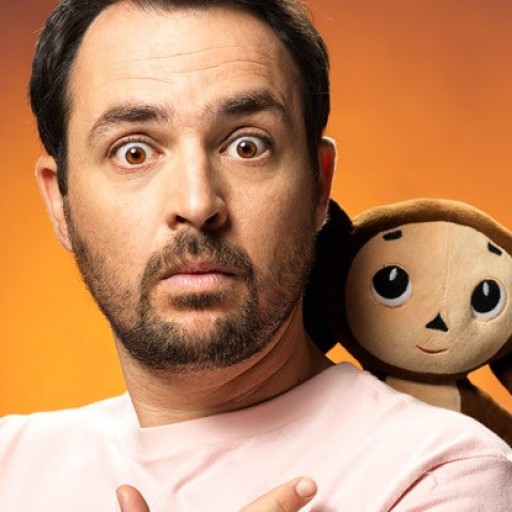
Giora Zinger

Israeli humor is, overall, less politically correct than American humor, so some comedians can come across as a little mean, but most of the time they are refreshingly honest and give me a lot of insight into how people in Israel really feel.

            Another comedian I started watching recently is Yuval HaGanan, which translates to Yuval the Nursery School Teacher, and his act comes straight out of his day job as a, yes, nursery school teacher. He does a lot of impressions of his three- and four-year-old students, sharing their responses to the war, or a death in the family, young love and, of course, poop. And, like Giora Zinger’s mother, they tend to tell it like it is. Yuval also talks about all of the times when he had no idea what he was supposed to say to the kids’ very direct questions and just went with whatever came out of his mouth, and I can relate.

Yuval HaGanan

            But my favorite Israeli comedian at the moment is Udi Kagan. His humor is often very silly, and filled with bodily noises, and jokes at his own expense, and at his failures as a husband and as a father and as an adult male in general. He is also a musician and often plays the piano and sings as part of his act. There was one video about re-hearing the Aerosmith song “I don’t want to miss a thing,” (from the movie Armageddon), years after it became a hit, and suddenly realizing how disturbing the lyrics are (I could stay awake just to hear you breathing…). He plays a lot with that space between Hebrew and English, where Israelis often find themselves, because they watch a lot of American TV, and listen to a lot of American music, and study English much more seriously in school than Americans study any second language.

Udi Kagan

            But the reason why he’s my favorite right now is because of a 20-minute clip that was recently posted on YouTube where he talked about suffering from PTSD after his army service, and how it came roaring back after the Hamas attacks on October seventh. In Israel they either say “PTSD,” in English, or they use the Hebrew translation of “Battle Shock,” which is an old term for PTSD, and maybe more to the point in this case. In the video, he talks about all of the ways he and his friends tried to ignore their symptoms, or mute them with drugs and alcohol, until he finally asked for help and started to get better. And something about his vulnerability, and silliness, and self-deprecating honesty, allowed the audience to really go there with him. And not just the in-person audience, because I’ve already seen a bunch of videos of young Israeli men responding to his performance and opening up about their own experiences with PTSD.

            I was getting frustrated that I couldn’t share these Israeli comedians with my friends and readers, because their acts are in Hebrew with only Hebrew subtitles, but when I went back to watch Udi Kagan’s “Battle Shock” video again, I found a version with English subtitles. None of his other videos, that I could find, had been translated, but maybe someone recognized that this one needed to be shared with as many people as possible.

            There are, of course, many other voices in Israeli comedy. There are even Israelis who perform in English, like Yohai Sponder, who has become a huge presence online (for the Jewish world at least) since October 7th. His broken English is a big part of his act, as is the giant star of David he wears around his neck. He’s not gentle and sweet like Udi or Yuval or Giora; he has the macho style that is more often identified with Israeli men. But a lot of Diaspora Jews have found comfort in his confidence, and his pride in being Jewish, in the face of the renewed wave of antisemitism.

There is still something amazing to me about the existence of a country, however small, where being Jewish is the norm, and therefore where the music and the art and the drama and the comedy all either come from a Jewish perspective or are in conversation with Jewish history, without apology. My hope is that this war will end soon, and the hostages are returned, and a road to peace with the Palestinians can be found, and that peace will make it possible for the lighter, softer side of Israelis to become more visible, both so people can see them more fully, and because I think Israelis have wisdom to share about resilience and how to find humor and love and hope even under difficult circumstances. 

Yohai Sponder (English): https://www.facebook.com/share/v/12Mb6a9ffdC/?mibextid=wwXIfr

Udi Kagan, “Battle Shock” (Hebrew with English subtitles): (previous link didn’t work, hopefully this one will) https://open.substack.com/pub/danielgordis/p/body-and-soul-remarkable-stories?utm_campaign=post&utm_medium=email

Another link from Sam256 (here’s a link to my translation that should work)

https://www.kapwing.com/videos/68b0dddfc7c3f67997512635

“Can you find me a version with bark-titles?”

If you haven’t had a chance yet, please check out my novel, Yeshiva Girl, on Amazon. And if you feel called to write a review of the book, on Amazon, or anywhere else, I’d be honored.

            Yeshiva Girl is about a Jewish teenager on Long Island, named Isabel, though her father calls her Jezebel. Her father has been accused of inappropriate sexual behavior with one of his students, which he denies, but Izzy implicitly believes it’s true. As a result of his problems, her father sends her to a co-ed Orthodox yeshiva for tenth grade, out of the blue, and Izzy and her mother can’t figure out how to prevent it. At Yeshiva, though, Izzy finds that religious people are much more complicated than she had expected. Some, like her father, may use religion as a place to hide, but others search for and find comfort, and community, and even enlightenment. The question is, what will Izzy find?


When Heroes Fly

            I decided to rewatch When Heroes Fly, a fantastic one season Israeli drama (with English subtitles), because I found out that it was about to leave Netflix in January. The first time I’d watched the show was for my online Hebrew class, almost two years ago, with Hebrew subtitles, but it was so vivid and powerful that I understood most of what was going on, despite missing a few words here and there (and everywhere).

            When Heroes Fly follows four guys in a reserves unit who lose their leader in war. Each one deals with the loss, and the trauma of war, in a different way, but the main character, Aviv, truly falls apart. He’s away getting help when his ex-girlfriend, Yaeli, goes on a trip to South America that he was supposed to go on with here, and, it seems, dies in a car accident.

            The mystery that has to be solved, years later, is whether Yaeli actually survived the accident after all, and if so, where is she, and does she want to be found? That’s the frame of the show, but the real drama is in how each of these four men work through their past mistakes and confront themselves and each other.

            What got to me the first time I watched this show was how completely Aviv’s character resonated for me – his inability to heal, despite so much effort and time, and his self-loathing, and how others judged him for being such a mess. His physical expressions of depression and self-loathing, and that sense of truly falling apart – that was me. Even two years ago, after a lifetime of therapy, it all still felt deeply true for me. And yet now, despite grieving both of my dogs, and still having “issues,” and still feeling frightened and incapable at times, I don’t feel that wracking whole body depression anymore. It’s been receding for a long time, but until I watched this show again I didn’t realize how long it’s been since that was my daily, and then weekly, and then monthly experience of life.

            Another thing I relate to, deeply, in this show is how much these friends need each other and yet can’t quite connect or hear each other through the fog of their own trauma responses. We want to believe that if we try hard enough and love hard enough we can fix anything, but sometimes our need to help is the problem, stopping us from seeing the real person in front of us who is in so much pain.

            A new character is introduced late in the series, an Israeli detective with her own deep trauma who has to find the four men and Yaeli as part of a larger case. But she isn’t cut off from her pain, or completely lost in it, she’s strong and broken at the same time. I want to be this woman, this strong, capable woman who is also deeply attached to herself and to reality. I get the feeling that a lot of people think I already am this women. I’m not, yet, but just seeing her on screen makes it seem more possible.

            But the biggest revelation for me in watching this show now is the impact of collective trauma, which goes beyond each individual’s experience of trauma, when they are all experiencing the trauma together. As an American Jew I can try to take an “objective” view on the current war, because my family isn’t running to shelters at any moment as rockets fall, and I’m not grieving a loved one who died in the massacre or was taken hostage, and no one in my family is a soldier in this war, risking their life every day. I am Jewish, but as an American Jew I have the privilege of not feeling the depth of the collective trauma that is tormenting Israelis, and Palestinians, as they try to figure out what happens next.

            When I watch the news and do my deep dives into the history to try and understand what I’m seeing, I still find much of it incomprehensible, because I can’t see it through their eyes; I can’t feel it in my body and know the darkness that prevents clear sight on things that, from here, seem obvious. I keep trying to understand anyway, and I try not to judge the decisions and opinions I can’t understand, because I know that people who are not under the influence of trauma think a lot of things should be possible that people within the trauma can’t fathom and can’t choose.

            Interestingly, while the English title of this show is When Heroes Fly, which suggests that these four men are clearly heroic, as if they are morally unambiguous and selfless and always know what to do, the title in Hebrew is For Her Heroes Fly, suggesting that heroic behavior has to come from somewhere, from some internal motivation, beyond the theoretical goodness and righteousness we keep expecting from our heroes. These are not men with infinite courage and a willingness to die for a cause; these are men who are willing to fight for the people they love.

            People want to believe that Israel only has a right to exist, that Jews only have a right to exist, because we are supposed to be a beacon of light to the nations; and some Jews try very hard to live up to that ideal, but most of us are just people, like everyone else. Requiring Israel to meet standards of behavior that no one else can live up to is unfair and inhumane.     No one gets through wars unscathed, and Israel has had to face war after war, and then terrorist act after terrorist act, throughout her short existence. Israeli soldiers, like all soldiers, are capable of mistakes in judgment and tactics and behavior. When three hostages were accidentally killed by the IDF, Israel had to deal with that reality, because Israel itself has inhuman expectations of its soldiers and its military, just like the world at large seems to have. Israel, this tiny country, with soldiers culled from all walks of life, drafted into service as teenagers, is meant to be a perfect military machine, capable of fighting tunnel warfare without making mistakes and hurting non-fighters, even when the Hamas fighters wear civilian clothes and embed in civilian neighborhoods and buildings. The Israeli soldiers who killed those three hostages, and the soldiers who have killed Palestinian civilians when aiming for Hamas, are all going to have to live the rest of their lives with that burden of guilt and failure, not out of choice but out of necessity, because they have to fight for the survival of their tiny country. The trauma that results will last a lifetime, and will alter everything that comes next.

We, on the outside of all of this, can have whatever hopes and dreams and judgements we want, but it is the people on the ground who will have to make it happen, and that means we have to accept who they are and what feels possible to them, as they carry this war, and every previous war, with them into the future.

If you haven’t had a chance yet, please check out my Young Adult novel, Yeshiva Girl, on Amazon. And if you feel called to write a review of the book, on Amazon, or anywhere else, I’d be honored.

            Yeshiva Girl is about a Jewish teenager on Long Island, named Isabel, though her father calls her Jezebel. Her father has been accused of inappropriate sexual behavior with one of his students, which he denies, but Izzy implicitly believes it’s true. As a result of his problems, her father sends her to a co-ed Orthodox yeshiva for tenth grade, out of the blue, and Izzy and her mother can’t figure out how to prevent it. At Yeshiva, though, Izzy finds that religious people are much more complicated than she had expected. Some, like her father, may use religion as a place to hide, but others search for and find comfort, and community, and even enlightenment. The question is, what will Izzy find?

Why Don’t I Wear a Tallit?

            Over the Jewish high holidays I noticed all over again how many women in my congregation wear a tallit, a Jewish prayer shawl. I grew up at a time when it was rare for women to wear a tallit, and rare for women to become rabbis and cantors, though there were some. At summer camp there were one or two women who wore a tallit (and a kippah and tefillin), but they were outliers. I had my Bat Mitzvah at thirteen and led the service and read from the Torah, but I wore a nice dress, blue I think, and no tallit.

“When do I get to have a Bat Mitzvah?”

            A tallit, or Tallit Gadol, is worn over the shoulders at morning prayer services (and one evening service per year, on the eve of Yom Kippur), as opposed to the tallit kattan, worn by boys and men under their clothes. There are fringes at the four corners of the tallit, called tzitzit, each made of eight or so strings held together with four knots, with one blue thread. Most synagogues have extra tallitot (the plural of tallit) and kippot (the plural of kippah, or skullcap), outside the sanctuary for those who don’t have their own.

Tallit Gadol (not my picture)
Tallit Kattan (not my picture)

            In Rabbinic Judaism, women are not obligated to wear a tallit, but Orthodox Judaism actually forbids women from wearing them, and growing up, this prohibition was front and center for me at my orthodox Jewish day school. The rabbis told us that men needed these reminders more than women did, and anyway, women would be too busy taking care of the children to get to synagogue for services on a regular basis. They explained the prohibition against women wearing tallitot as part of the prohibition against women wearing men’s clothes, which they took seriously in our school, where girls were forbidden from wearing pants. Despite my frustration with their patronizing logic, I still never thought of taking on the obligation of wearing a tallit myself.

            The female rabbi at my synagogue today, though, wears a tallit, and many women in our congregation wear not only a tallit but also a kippah, traditionally the men’s head covering. We’ve had generations of Bat Mitzvah girls and adult Bat Mitzvah groups at our congregation now, so that women of all ages have gone through the process of choosing their own tallitot to fit their personalities and feel welcomed as equal members of the Jewish people. I like so many of the women’s tallitot that I’ve seen, in pinks and reds and purples, with beautiful designs and embroidery, and I love the idea that women are seen as just as important as men to the maintenance of the community. I even have my grandfather’s tallit in a cabinet, because it matters to me, but I’ve never worn it, and I’m not sure why.

A Women’s Tallit (not my picture)

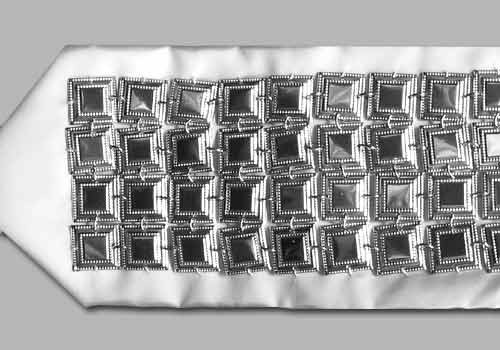
            Maybe it’s just habit, after years of not wearing one; or maybe it’s because of the obligations and commitment it represents, and I’m not ready to take that on; or maybe it’s my father. I loved my father’s tallit. It was the size of a beach towel, with thick black stripes and sterling silver squares covering the atarah, or yoke, of the tallit. It was like a huge tent that could be folded over at the shoulders to give him wings, or spread over his head so he could disappear underneath it into his own personal relationship with God. I think that any tallit I might try to wear, no matter how feminine, or light, would feel like draping the power of my father over my head, and I know in my bones that instead of making me feel safe, it would suffocate me.

A Sterling Silver Atarah (not my picture)

            There are so many things like this, still, in my life, so many relics of the past that I have tried to re-value and scrub clean of their old associations. I have overcome a lot of them, through hard work, but the prevailing notion that anything is possible and all wounds can be healed, just doesn’t ring true for me. Early on in therapy I truly believed I could have a normal life, eventually, if I just put in the work, but now I know that, for me, there are some milestones that will never happen, and some wounds that will never heal, and the scars will be a part of me for the rest of my life. So far, this inability to take on the yoke of Torah, the obligation of daily rituals like wearing a tallit, is one of those unhealed wounds. It’s still possible that, one day, there will be comfort in wearing a tallit of my own, where I can create my own cocoon of time with God, but I’m not there yet.

            But there is comfort in seeing so many women around me embracing their beautiful tallitot, and wearing them with pride and ease. On Yom Kippur, the longest day of the Jewish liturgical year, tallitot are worn starting from Kol Nidre, the evening service, through the next morning and afternoon and on through Neilah, the final service of the long day, at sunset. And multiple times during that long day we sing the Yevarechecha, the priest’s prayer, repurposed as a prayer for community. We drape our arms over the people on either side of us, many using their tallitot to wrap their neighbors and loved ones in a communal tent of peace. And it really is beautiful.

“I should have my own tallit, Mommy.”

If you haven’t had a chance yet, please check out my Young Adult novel, Yeshiva Girl, on Amazon. And if you feel called to write a review of the book, on Amazon, or anywhere else, I’d be honored.

            Yeshiva Girl is about a Jewish teenager on Long Island, named Isabel, though her father calls her Jezebel. Her father has been accused of inappropriate sexual behavior with one of his students, which he denies, but Izzy implicitly believes it’s true. As a result of his problems, her father sends her to a co-ed Orthodox yeshiva for tenth grade, out of the blue, and Izzy and her mother can’t figure out how to prevent it. At Yeshiva, though, Izzy finds that religious people are much more complicated than she had expected. Some, like her father, may use religion as a place to hide, but others search for and find comfort, and community, and even enlightenment. The question is, what will Izzy find?

Watching Therapy Videos

            Early in the school year I went searching for information on ADHD and Autism, to try to understand behaviors I was seeing in some of my students at synagogue school. I didn’t learn much about either diagnosis in my three and a half years in graduate school for social work, or even during the two years prior to that, when I was studying psychology in hopes of applying to a doctoral program in clinical psychology. And I certainly didn’t learn much about how to teach kids with those learning differences.

            I watched a lot of short, explanatory videos on ADHD and Autism that left too much unexplained and undescribed, and then I watched a lot of videos made by adults with ADHD and Autism who could describe the neurological differences they experienced, but still couldn’t give me, as a teacher, a clear idea of how to be helpful. And then I watched a bunch of videos about the blurry lines between ADHD, Autism, and trauma responses in children and adults, many of which validated my own experience of the mental health field, which is that there’s a lot we don’t know, but there are a lot of people who like to sound certain anyway, which is just annoying.

“So annoying.”

            But while I was looking into ADHD and Autism for my students, I kept finding videos that resonated with me, and I realized that I’ve been hitting a wall in therapy, in large part because the plans I had for my life have been derailed by my health issues and that has left even my therapist stymied as to how to help me. So even though the ADHD and Autism videos weren’t panning out, I thought I would keep looking though YouTube to see if I could find some ideas to try out in therapy, or even just ways to help me accept where I’m at and find some peace.

            I took a deep dive into the big names in Psychology, and especially in Trauma and Sensorimotor therapies and Attachment, thinking I must have missed some important ideas along the way that could have healed me by now, but I realized quickly that I’d heard all of it, and studied it, and parsed it for all of the helpful morsels of wisdom long ago. In almost thirty years of therapy, I realized, I’ve learned at least a doctorate’s worth of information/wisdom on the impact of trauma, even though I struggle to feel confident in what I know.

            But then I found a relatively young therapist/social worker named Patrick Teahan who had made a lot of videos about dealing with the impacts of a traumatic childhood in really down to earth, practical ways. And while he wasn’t telling me things that were new to me in theory, he had a way of talking, especially when sharing his own stories, that was validating and made me feel less alone. He shares a lot of concrete examples about what it feels like to have your sense of reality constantly challenged, and he’s able to describe situations and put things into words that often remain blurry for me.

            He can be a bit verbose at times, though not in an academic way, more like if a friend were telling you a story and kept interrupting himself to tell you about another aspect of the story, and then getting back to the main idea only to go off on another tangent. I decided to take notes when I watched his videos, to help me follow the main through lines of what he was saying, and to give myself permission to take the videos more seriously, and to take my time with them, because the real value I was getting was a sense of his basic kindness as he worked to remove the shame that comes with a difficult childhood and from the lifelong dysregulation it can cause.

            He works in a form of therapy I’d never heard of, called the Relationship Recovery Program, and I have no idea how commonly it’s practiced or where it’s practiced, but I like the way he seems to respect each person’s life story, and I like that he doesn’t profess to have all of the answers. Most of all I like his sense of hope, that with time and effort people can come out of therapy feeling better and seeing things more clearly than before.

            I haven’t watched all of his videos, but I have a long list of the ones I want to watch carefully, taking notes and absorbing the material without overwhelming myself too much. And whenever I watch one of his videos, YouTube recommends a handful of other videos on similar topics, with other therapists, and even if I don’t watch them right away, there’s this reassuring sense that they’ll be there for me, some day, when I need them.

            The biggest gift from all of this video research, though, has been the reminder of how much I already know, about myself, and my students, and how valuable it is to just be a witness to what others are going through and to validate their experiences instead of evaluating or diagnosing them. Attention and kindness really can help people heal. I just have to keep reminding myself of that.

“I’ll remind you!”

If you haven’t had a chance yet, please check out my Young Adult novel, Yeshiva Girl, on Amazon. And if you feel called to write a review of the book, on Amazon, or anywhere else, I’d be honored.

            Yeshiva Girl is about a Jewish teenager on Long Island, named Isabel, though her father calls her Jezebel. Her father has been accused of inappropriate sexual behavior with one of his students, which he denies, but Izzy implicitly believes it’s true. As a result of his problems, her father sends her to a co-ed Orthodox yeshiva for tenth grade, out of the blue, and Izzy and her mother can’t figure out how to prevent it. At Yeshiva, though, Izzy finds that religious people are much more complicated than she had expected. Some, like her father, may use religion as a place to hide, but others search for and find comfort, and community, and even enlightenment. The question is, what will Izzy find?

What the #@$% are Boundaries?

            My father created chaos in our house when I was little, intentionally and unintentionally, because it worked for him, but living in his house made me feel like the floor was going to drop out from underneath me at any moment. He resented closed doors, even though he wanted to keep his own door closed; and he used all of the bathrooms in the house, even when he could easily get to his own private bathroom in time, almost like a male dog marking his territory. He set the rules, and often broke them, and then yelled at us for breaking rules he’d never told us about. All of that has left me handicapped when I try to figure out what “normal” boundaries should be, and when I have the right to enforce them.

“I always enforce my boundaries. Preferably with my teeth!”

And when I realized, recently, how hard (impossible!) it was for me to set boundaries with my doctors, and limit the damage they could do with their comments about my weight and their minimization of my symptoms, I decided that I needed to do some more basic research on boundaries, and figure out what the hell they are.

            First and foremost, when I think of the word “boundaries,” I think of something like a fence or a wall, something solid and visible, but interpersonal boundaries aren’t supposed to be either. I think they’re supposed to be more like the semi-permeable cell membranes we learned about in High School Biology class, the ones that allow some molecules in and not others. But those molecules supposedly got through based on their size, rather than something more vague, and the cell walls were visible, at least under a microscope, and interpersonal boundaries just aren’t.

            Each article I’ve read seems to have a different idea of how to set interpersonal boundaries, and even what they’re good for. One said that boundaries are a way to set a clear line between what is me and what is not me. For example: my father’s feelings, needs, crimes, etc., are not my responsibility, no matter how many times he told me that they were. Another article focused on how boundaries are a way to determine which behaviors you will accept from other people, and which ones you won’t (though they didn’t explain how to not accept behaviors you don’t like, and the assumption that I can just walk away from a bad situation feels dismissive, of me). The articles also talked about different kinds of boundaries: physical, emotional, material (stuff), time, intellectual (this one was blurry to me), sexual, etc.

            My most obvious boundaries are the ones around my body, if only because my internal alarm system is so loud when my physical boundaries are crossed.

“Even I can hear it,”

I remember going to a new doctor when I was nineteen years old, probably transitioning from a pediatrician to my first official grown up doctor, and the nurse came into the exam room before I’d even met the new doctor and told me to take all of my clothes off and put on a paper robe. And I said, well, can I meet the doctor first, because I’m not comfortable taking off my clothes right now. I didn’t think I was being unreasonable at the time, or even setting a boundary, but the nurse got mad at me and brought in someone else from the office to yell at me and tell me I was being obstructive and if I didn’t take off my clothes I would not be allowed to see the doctor. So I jumped off the exam table and walked out. I didn’t choose to set a boundary, I just knew I physically couldn’t take my clothes off. I felt the boundary; though afterwards, of course, I felt guilty for being so immature and uncooperative.

            Covid’s social distancing and zoom meetings have been a godsend for me, because finally everyone else’s physical boundaries have had to be more like mine (no touching and at least three feet away, I don’t know anyone who managed the six foot distance), but I’ve also become more aware of how much less personal space other people seem to need or want, and I’m worried about how I will deal with that again once the Covid precautions end.

            I’m also a big fan of time boundaries – like the ones created by a forty-five minute session with my therapist, or an hour and a half limit for a class, but I’m not good at setting those time boundaries myself, like for phone calls or conversations that I wish were much shorter than they turn out to be.

“I think the phone should never ring.”

            I’ve been told, many times, that my boundaries are too rigid and keep me isolated from other people, but my rigid physical boundaries are there to protect me from my more blurry emotional boundaries: like my inability to recognize what’s my fault and what’s not, or what’s my responsibility and what isn’t, and my fear of telling people to stop hurting me when their weapons are words instead of hands.

            It seems like, in order to relax my rigid physical boundaries, I’ll need to learn how to say no to conversations I don’t want to have, and to believe that I have the right to my own feelings and beliefs and opinions even when someone else disagrees with me. But it all feels so uncomfortable. I struggle with navigating the gradual boundary crossings required for building friendships, because each small step closer to another person feels like I’m losing control over my boundaries completely.

I remember when we adopted Butterfly (an eight-year-old Lhasa Apso rescued from a puppy mill after many litters), and her boundaries almost glowed around her. When she was in the cage at the shelter, she was desperate for contact and outgoing, licking me through the bars of her cage, but as soon as she was taken out of the cage she was terrified and unsure where to look or what to do. She healed so much in the almost five years we had with her, but she never became like Cricket, who always needs to be physically attached to, preferably suffocating or pinning down, her people.

Miss Butterfly

Butterfly knew she had a home, and enough to eat, and a lot of love, but she was never quite sure that the people who were being kind to her one day would still be kind to her the day after that, and she seemed to wake up each morning needing to test the air, just to make sure her world hadn’t changed again. And that resonated with me. I still do that, unconsciously but consistently, every day, worrying that my good fortune is about to run out.

Ellie, who came to us from a home breeder, instead of a puppy mill, and was retired from breeding at age four instead of eight, is still unwilling to stand up to Cricket’s boundary crossings and bullying, choosing to walk away rather than fight. And I see myself in her too: the way I can be overly accommodating, at times, because I’m afraid of what will happen if I say no.

“Uh oh!”

            It’s interesting, though, that I am comfortable sharing so much of myself in my writing. It’s as if the writing itself acts as my most secure boundary, allowing me the time I need to choose what to share and what to keep to myself. If I could take a time out during a conversation, in real time, and think about what I want to say instead of saying the first thing that comes to mind, I’d feel a lot safer. But I haven’t figured out how to stop time, yet. It’s been a lifelong goal, though, and at this point I have about equal faith in my ability to develop magical powers as to figure out how to set healthy boundaries and enforce them.

“Could we have magical powers too?”

If you haven’t had a chance yet, please check out my Young Adult novel, Yeshiva Girl, on Amazon. And if you feel called to write a review of the book, on Amazon, or anywhere else, I’d be honored.

            Yeshiva Girl is about a Jewish teenager on Long Island, named Isabel, though her father calls her Jezebel. Her father has been accused of inappropriate sexual behavior with one of his students, which he denies, but Izzy implicitly believes it’s true. As a result of his problems, her father sends her to a co-ed Orthodox yeshiva for tenth grade, out of the blue, and Izzy and her mother can’t figure out how to prevent it. At Yeshiva, though, Izzy finds that religious people are much more complicated than she had expected. Some, like her father, may use religion as a place to hide, but others search for and find comfort, and community, and even enlightenment. The question is, what will Izzy find?

Intuitive Eating

            For my birthday this year, at my request, Mom got me an appointment with a nutritionist recommended by some of her friends who specializes in Intuitive Eating, rather than in creating meal plans or excluding certain foods. I’d found a book on this subject years ago, called When Food is Love by Geneen Roth. It was an exploration of how to teach yourself to feel your hunger cues, and trust your body to tell you what and when to eat. I could relate to so many of Geneen Roth’s stories about her own childhood eating issues and I was inspired by her journey to making peace with food, but I couldn’t translate her lessons into my own body and my own eating. I ended up going back to calorie counting, and then counting points, and then excluding categories of food altogether, and on and on. But it always stuck with me that, one day, I’d really like to be able to eat when I’m hungry and stop when I’m full.

“I’m never full.”

            My first visit with the nutritionist, on Zoom, was promising. She has experience working with people with trauma backgrounds and autoimmune disorders and a history of eating disorders, so nothing I said was shocking to her. And she was kind. Much kinder than I am to myself.

            I have been dieting since I was a kid, and I’ve had bouts of anorexia and binge eating and over-exercising and excessive dieting since then. My body is not built along the lines of the perfect American woman I see in magazines, or on TV, who is either taller than me with spindly bones or shorter than me with spindly bones. I am big boned. Even when I was anorexic and fainting from lack of nutrition, I could never get thin enough to fit into the skinny-girl clothes at the mall, because my bones stuck out. My mom was scared, because she saw that I was starving myself, but most other people thought I was just barely thin enough. Even my doctors weren’t concerned, though I was thirty pounds underweight for my frame, because they were looking at the wrong charts.

            The assumption behind every diet I’ve ever been on is that my body is wrong and bad and needs to be fixed, and I have believed that my whole life, but Intuitive Eating will require me to learn a new way of talking to myself, and I’m not sure I can do it. One of the first things the nutritionist told me was that I may have to accept my weight as it is; that people can lose weight with Intuitive Eating, but a lot will depend on what’s right for my body, not my expectations for my body. This is a hard thing to hear, because I feel certain that my body isn’t meant to be its current size, and that if I were a good enough person I would reach my ideal weight without effort.

“I’m perfect just the way I am.”

            I’m working on balancing out my meals, adding more protein to breakfast and more vegetables to lunch and more fat here and there, so that I feel full at the end of each meal. The nutritionist suggested that I replace the peanut butter powder in my overnight oats with real peanut butter, and the almond milk with Fairlife milk (high protein and lactose free). And she suggested making snacks ahead of time, like trail mix and bean salad, so that when I’m starving I won’t just reach for cookies.

“Did you say cookies?”

            But that’s the easy part. It’s sitting down and recognizing where I am on the hunger scale, from 0 (starving to death) to 10 (so full it’s unbearable) before and after each meal that’s getting me frustrated. I struggle to tell the difference between the kind of hunger I feel first thing in the morning, when my stomach is truly empty, and the hunger I feel after breakfast when I want to eat more but I don’t know why. I’m trying to honor my hunger, and eat when I think I need to eat, but it’s hard to differentiate between physical hunger and emotional hunger, or even my long-trained instincts to eat certain foods at certain times of the day. Keeping a hunger journal is forcing me to look more closely at why I’m eating, and what I’m feeling and thinking as I eat, and it is uncomfortable every time. I’m also afraid that moving away from the dieting mentality will lead to weight gain, because I believe that there are monsters inside of me and if I don’t set strict eating rules they will take over and make themselves visible to the outside world instead of just to me.

“Monsters?!!!!!!”

            My therapist is excited about this new eating project and has high hopes that the work will help me get in touch with deeper issues that I’ve been avoiding for too long. But I’m scared. What if I’m still not ready to deal with those feelings? What if overeating is the only thing that works to soothe the pain?

            After I cancelled my Weight Watchers membership, they sent me an email survey, asking if I’d be interested in a new plan with them that would involve being connected with doctors who could prescribe diet medications through Zoom, and that idea is sitting in the back of my mind, as a temptation and a get-out-of-jail-free card in case Intuitive Eating is too hard for me. But I hope I don’t fall into that trap again. I want to be at the point where I can accept myself as I am, and sit with my feelings when they are uncomfortable. I just don’t know if that’s possible. Yet.

If you haven’t had a chance yet, please check out my Young Adult novel, Yeshiva Girl, on Amazon. And if you feel called to write a review of the book, on Amazon, or anywhere else, I’d be honored.

            Yeshiva Girl is about a Jewish teenager on Long Island, named Isabel, though her father calls her Jezebel. Her father has been accused of inappropriate sexual behavior with one of his students, which he denies, but Izzy implicitly believes it’s true. As a result of his problems, her father sends her to a co-ed Orthodox yeshiva for tenth grade, out of the blue, and Izzy and her mother can’t figure out how to prevent it. At Yeshiva, though, Izzy finds that religious people are much more complicated than she had expected. Some, like her father, may use religion as a place to hide, but others search for and find comfort, and community, and even enlightenment. The question is, what will Izzy find?
Self-Storage

            I’ve been fascinated by the term “Self-Storage” for a long time. I would see the signs on the side of the highway as we drove to visit my brother’s family, and I’d wonder, why not just call it “storage?” “Self-storage” sounds so ominous, as if you are being asked to store your soul in a box.

“Huh?”

So, of course, I’ve been trying for years to plan out a science fiction story about a society where it’s possible to store your “self,” or parts of yourself, for varying periods of time. Maybe if you wanted to do a task that was disgusting to you, or that seemed immoral, you could store the moral part of yourself temporarily. Or if you were grieving and the pain was preventing you from moving forward with your life, you could store your emotional self for a few years, until you could get your life back on track.

            I picture self-storage as something that would be available mostly to people with money. For a smaller fee, maybe, you could remove single strands of thought, like the strands of memory Dumbledore kept in vials and revisited in his pensieve in the Harry Potter books. But those single thoughts would degrade more quickly and be lost more easily.

            And then there would be the danger of putting too much of yourself in storage at one time, and becoming someone so completely different that you couldn’t figure out how to return to yourself, or wouldn’t want to.

            And what would happen if you couldn’t pay your storage fees? Would your parts be sold to the highest bidder? Or destroyed?

“Don’t try it.”

            I think people might want to use self-storage to get through something grueling, like medical school or a prison term. Or after experiencing a traumatic event, like rape, or a natural disaster, like a flood or a bad presidency.

“Hmm.”

            Some self-storage places might offer therapy for the reintegration process, but of course that would only be affordable for the premium customers, and there would be a range of prices and qualities of storage available, depending on how much money you could spend. Maybe the cheaper places would use less effective drugs for the processes of removal and reinsertion of the self, or harsher chemicals for the storage of the self, which would make the self degrade more quickly. Some places would have expert self-removers who could do it safely and cleanly and without excess pain, and others would just use a rusty nail, or the equivalent, and leave you to manage the pain on your own.

“A rusty nail?!!!”

            The dangers would be many, of course, and you’d have to buy self-removal insurance, in case the technology went wrong or a clerical worker lost your “self” or confused it with someone else’s. There could also be side effects, though I don’t know what they would be.

“That doesn’t sound good.”

            The self-storage story would, of course, be an allegory for the damage we do to our personalities when we try to deny our memories, or our feelings, and do things that we don’t really want to do. Whether we use alcohol or drugs, or dissociation, or workaholism, or denial, or all of these things at once, our often well-meant attempts to separate ourselves from pain have unwanted side effects that can become life altering. But we are still, endlessly, drawn to these behaviors, because without them our pain often makes life unlivable.

            I think of the self-storage idea around the Holocaust, both because of the human experimentation the Nazis did on their victims, and because of the ways regular Germans, and so many others, were able to ignore the horror of the concentration camps, and all of the events that led up to the final solution, because they were told to think of Jews, gay people, Gypsies, and the disabled as not truly human. I also think about how the Holocaust survivors had to make it through life after the camps, forced to compartmentalize in order to function in the “normal” world. So many people had to squash their memories, of the horror, and of their lives before the horror, just to survive.

            I think of Butterfly, my rescue dog who survived eight years as a puppy mill mama and lived with the resulting medical and psychological wounds for her 4 ¾ years with us until she died. She blossomed and found joy and learned how to live as a real dog, but some parts of her were forever in hiding, unable to heal.

My Butterfly

Humans have a hard time accepting the reality of wounds that deep, and are forever looking for ways to remove the memories, and deny the pain, and to pretend life is universally good. But that need for easy answers takes a toll on us, and on society at large. If you put yourself, or your soul, in storage for too long, can you ever get it back?

If you haven’t had a chance yet, please check out my Young Adult novel, Yeshiva Girl, on Amazon. And if you feel called to write a review of the book, on Amazon, or anywhere else, I’d be honored.

            Yeshiva Girl is about a Jewish teenager on Long Island, named Isabel, though her father calls her Jezebel. Her father has been accused of inappropriate sexual behavior with one of his students, which he denies, but Izzy implicitly believes it’s true. As a result of his problems, her father sends her to a co-ed Orthodox yeshiva for tenth grade, out of the blue, and Izzy and her mother can’t figure out how to prevent it. At Yeshiva, though, Izzy finds that religious people are much more complicated than she had expected. Some, like her father, may use religion as a place to hide, but others search for and find comfort, and community, and even enlightenment. The question is, what will Izzy find?

A Sense of Time


Time feels like a game of Chutes and Ladders to me. On paper, time seems like it should be a linear sort of thing, with one hour following another in orderly progression, but sometimes I fall through a chute and I’m suddenly ten years old again and I have to work hard to climb back up to my forties and remember all of the events that came in between. I know too many people who slip and slide through time like this to think it’s unique to me, but the percentage of my time spent falling down chutes and climbing up ladders seems excessive. Trauma creates strange loops in our brains. We call them flashbacks, or regression, or dissociation, depending on how we experience the details of the thing, but they all have the same general effect of making time feel like an unreliable substance that refuses to stay solid and constant.

When it snows, memories of winters past pop up, but they don’t have solid picture frames around them announcing that they are moments from the past, or even descriptions in permanent marker telling me the exact date and time when it all occurred. In my mind I am both here in this moment, in my walk-the-dog shoes, stepping out onto the slushy walkway with Cricket and Ellie dragging me forward, and I am also eight years old in my pink snowsuit and boots, feeling like an over-stuffed sausage and too hot and too cold all at once.

004

“Wheeeeee!”

055

“I’ll wait here.”

And then I smell mildew and I’m back at Grandpa’s house in Chappaqua, looking at the pen and ink portraits in the laundry room, and the chute that carries the laundry down from the upstairs hallway. But really I’m thirty-something and living in half a house, in a town by the water, where the smell of seaweed blows through the windows. Wait, no, that’s not right. I’m forty-something and there’s no mildew smell at all, and I don’t live by the water anymore, and I’m not even sure I’m awake.

The image of the Chutes and Ladders game feels so visceral to me, as if I’m sliding down a red chute into the past or laboriously climbing up a silver ladder to get back to normal. But I wasn’t sure that my 3D memory of that childhood board game was even accurate, so I had to ask Google for help. According to Wikipedia, Chutes and Ladders is the American version of an English (and Canadian) board game called Snakes and Ladders, which itself is a variation on an ancient Indian game called Moksha Patam, filled with moral lessons based on the Karmic cycle. The English version adapted those lessons to teach children virtues like generosity and faith and humility, and to discourage vices like lust, anger, theft, and murder. And then the American version adapted the lessons again, to fit good and bad deeds that American kids could relate to, like saving a cat from a tree and eating healthy food, versus eating too many cookies and not doing chores.

I don’t remember any of that, and it’s possible that Wikipedia is lying to me, but I’m pretty sure the essentials are true, especially the fact that the game is a game of luck. The player doesn’t get to choose whether to do a good or bad deed, and therefore to receive the resulting reward or punishment. Scoring is all based on the roll of a die or the spin of a wheel. And that bothers me, because it’s too close to the truth.

Don’t get me wrong, I believe in the value of being a good person. I strive to be a kind and generous and open-hearted person, to hurt no one, or to hurt as few people as possible, and to help when I can. But I don’t actually believe that these virtues will add up to an easier life for me, or to a more successful life with more rewards. I don’t believe that we are always rewarded for good deeds, or punished for evil ones, though I wish we were. I do believe that our souls are impacted by our actions, but I know too many people who walk around with Swiss cheese souls and don’t seem to mind.

028

“Those people scare me, Mommy.”

This Chutes and Ladders metaphor started out as a way to describe the way my memory slips and slides through time, and how I struggle to maintain myself in the present tense, and yet the original meaning of the board game works for me too. Whether we act in good or evil ways is not about chance, but whether we are rewarded or punished is chance. And I resent that. I resent that the game of life has such unreliable rules, and that the rules don’t always fit my moral code.

I resent that evil acts can be perpetrated, on me, and on others, that create these chutes and ladders in our brains, and yet the punishment belongs to me, not to the perpetrator. I resent that the roll of the die can go against me, no matter how many good acts I perform, or how good of a person I try to be as I am slipping and sliding through time. But I still do the work. After every fall through a chute into the past I climb back up the ladder to the present, and maybe the reward is that the ladders actually exist at all, and that I can climb them; that I can always find my way back into the game and the chance for something better. The dogs always help me back to the present tense with their right-this-moment view of the world. They make every ladder easier to climb.

IMG_1035

“Where’s this ladder you speak of, and do we have to climb it too?”


If you haven’t had a chance yet, please check out my Young Adult novel, Yeshiva Girl, on Amazon. And if you feel called to write a review of the book, on Amazon, or anywhere else, I’d be honored.

Yeshiva Girl is about a Jewish teenager on Long Island, named Isabel, though her father calls her Jezebel. Her father has been accused of inappropriate sexual behavior with one of his students, which he denies, but Izzy implicitly believes it’s true. As a result of his problems, her father sends her to a co-ed Orthodox yeshiva for tenth grade, out of the blue, and Izzy and her mother can’t figure out how to prevent it. At Yeshiva, though, Izzy finds that religious people are much more complicated than she had expected. Some, like her father, may use religion as a place to hide, but others search for and find comfort, and community, and even enlightenment. The question is, what will Izzy find?

 

The Aftermath of Childhood Abuse


In order to have a successful life, it’s not enough to be smart and talented, you have to be able to function, every day, without having three panic attacks before lunch. I was certain that, twenty-five years into therapy, I would be married, with children, and published multiple times. I wouldn’t have made it through the first ten years of therapy if I’d known that I’d still be struggling with forward motion in year twenty five. But this is where I’m at, and this is the best I’ve been able to do, despite all of that promise, because of childhood sexual abuse.

I was the kid that teachers loved and never worried about. Rachel will do fine at whatever she chooses to do. Rachel is smart and responsible and hardworking and never needs help. They didn’t consider my social anxiety, or crippling depression, or the endless fragmentation of my mind as a problem, because even with all of that I still did well at school. But I didn’t want to, and that was the killer. I did not want to wake up each morning. I did not want to meet new people, or go to parties, or get a job, or choose a major, or whatever each next step was supposed to be.

grumpy cricket

“This is a difficult topic, Mommy.”


I am tired of hearing about how resilient everyone else is, and how well they’re doing, despite this and that and the other thing. It implies that we all had the same obstacles and everyone else is just better than me at overcoming them. But the fact is, if I had the same life experiences as I’ve had, without the great good fortune of intelligence and talent, and a Mom who loves me, and a therapist who has been there for me since I was nineteen, I would not be here. I would have walked in front of a bus, or swallowed a bottle of pills, a hundred times by now. It’s important to know that, and not to be smug about my successes, and not to be so quick to judge others for their lack of success.

IMG_0926

“I’m here for you, Cricket.”

The percentage of substance abusers with child abuse histories is very high, same with prison inmates, and patients in mental hospitals, but I feel like we choose, as a society, not to know these things. We choose to ignore our good fortune when we have it, and we choose to take credit for all of our successes, despite the help we’ve received along the way. We imagine that people are successful because of their intelligence and hard work alone, and therefore those who are unsuccessful must be lazy and stupid.

Lately we’ve been talking more about privilege – white privilege, male privilege – but we forget the less obvious forms of privilege; being safe in your own home, and being loved and nurtured by your family, and having the support you need when you have to face big and small challenges along the way, are huge privileges that many children never experience.

I remember watching episodes of the Oprah Winfrey Show, years ago, when she would celebrate kids who had survived war and starvation and abuse and got into Harvard anyway, or started a successful business, or saved the world in some way. And it made me angry, one, because I could never do any of that, and two, because most of the kids who went through those same circumstances wouldn’t be able to impress anyone and win the attention and rewards they would need in order to survive. They would have the same residue of pain and trauma, without any help to get them through, or anyone to celebrate their small achievements along the way.

IMG_0913

“I love to celebrate!”

Everyone wants to know the secrets of the resilient child, but resilience has more to do with how we take care of and support these children than with their own inherent qualities. Their strength, or weakness, comes mostly from us. If they fail, it’s because we didn’t hold them up. We keep forgetting this. We want to celebrate, and vilify, the individual, if only so that we don’t have to take responsibility for each other. But it’s an illusion. We are intertwined whether we acknowledge it or not, and we pay the price for the suffering of others, whether we caused it ourselves or simply chose to ignore it.

Cricket and her special friend 001

Platypus knows that we all need help.

If you haven’t had a chance yet, please check out my Amazon page and consider ordering the Kindle or Paperback version (or both!) of Yeshiva Girl. And if you feel called to write a review of the book on Amazon, or anywhere else, I’d be honored.

Yeshiva Girl is about a Jewish girl on Long Island named Izzy. Her father has been accused of inappropriate sexual behavior with one of his students, which he denies, but Izzy implicitly believes is true. Izzy’s father decides to send her to a co-ed Orthodox yeshiva for tenth grade, out of the blue, as if she’s the one who needs to be fixed. Izzy, in pain and looking for people she can trust, finds that religious people are much more complicated than she had expected. Some, like her father, may use religion as a place to hide, but others search for and find comfort, and community, and even enlightenment. The question is, what will Izzy find?