Recently I started to go through all of my clothes to see what still fits, and what might never fit again, and what’s ugly even if it fits me, but I keep interrupting the process out of fear that this is all premature, because I’m just going to gain all of the weight back next year, or the year after that, when I can’t afford to pay out of pocket for the Zepbound anymore. My doctor has already told me that even if my insurance eventually allows GLP-1 medications for weight loss, they probably won’t cover it for me, because I’ve already lost the weight and therefore I can’t prove that I need the medication. He tried vaguely to reassure me that it will be okay, because I won’t need to be on the medication for the rest of my life, but most of the current research says the opposite. And in the aftermath of that frustrating conversation, it occurred to me how little it really matters to my doctor if it turns out he’s wrong. It’s my money and my body and my health, and I’m the one who’s going to be dealing with the consequences.
I wish I had faith that going to a different doctor would lead to better care, or more compassion, but that has not been my experience. If anything, starting with a new doctor means having to argue over things I’ve already spent years proving, as if my long medical history doesn’t exist. I’ve been to so many doctors, and they’ve all been trained to disregard the symptoms reported by patients in favor of the hard data of blood tests and scans, even though time after time the tests turn out to have been wrong, or more often, incomplete, as medical knowledge progresses. This tendency of doctors to ignore or dismiss patient reports has, of course, led many people like me to look for answers elsewhere, especially online, where snake oil salesmen abound. The huge flood of unregulated medical information available online has become overwhelming, especially when the crowd, based vaguely on genuine research, decides that every symptom is clearly part of a single syndrome, except that the single diagnosis that covers everything keeps changing. For a while there, everyone had Epstein Barr virus, then Lyme disease, and then Fibromyalgia. And of course, we are all plagued by too much inflammation and need to avoid gluten and do lymphatic drainage exercises, for some reason. The latest trend is to diagnose everyone with some degree of Autism, and to connect Autism to every other known disease. The blurring of the lines between one disorder and another, and a tendency to ignore differences in intensity or frequency of symptoms, has made many serious diagnoses seem both ubiquitous and meaningless, but these theories are so tempting because we’re desperate to understand what’s going on and none of the experts seem to have answers.
For a long time, I assumed this was only happening to me, because doctors found me particularly hard to believe. I only understood how widespread this phenomenon was when I started to go to a whole new set of doctors with Mom over the last few years. After a lifetime of being treated like a sane person by whatever doctors she’d needed to consult, now that she had a list of confusing symptoms with no easily discovered answers, she was getting the same ghosting from her doctors that I’d been getting all along. When Mom, tentatively, offered an explanation for one of her symptoms, her doctor lectured us about how his wife had gone to their pediatrician and dared to suggest a diagnosis for what was going on with their young child. He seemed to expect my mother and I to agree with him that this was ludicrous behavior on his wife’s part, because patients should never imagine they know what’s happening before the doctor tells them. It didn’t seem to register with him that we were horrified by the way he was dismissing his wife’s concerns, and dismissing us by proxy.
Ideally, doctors would be trained to see the patient as their best partner in figuring out what’s going on in their own body, and doctors would also have easy access to resources to help support patients’ psychological, physical and financial needs, but instead most doctors work in isolation from one another and treat their patients like cars on an assembly line. If anything, the medical world has doubled down on its reliance on hard data, as if we are all just a series of numbers waiting to be deciphered.
I don’t understand why this is how medicine works in the United States today, but then again, I don’t understand a lot of things about how this country works. The fact is, I have a lot of sympathy for doctors who have to treat patients suffering from so many unknown diseases in a world where what we eat and how we live keeps changing so quickly that we can’t keep up with how it all impacts us. I don’t resent doctors for not knowing the answers to complicated questions, I resent them for not being curious, and for leaving us to do the research on our own without their extensive medical education to help us sort the reasonable from the ridiculous.
Given all of that, I’m probably going to keep a lot of clothes that don’t fit me anymore, just in case. And maybe I should start doing those lymphatic drainage exercises too. I mean, you never know.

If you haven’t had a chance yet, please check out my novel, Yeshiva Girl, on Amazon. And if you feel called to write a review of the book, on Amazon, or anywhere else, I’d be honored.
Yeshiva Girl is about a Jewish teenager on Long Island, named Isabel, though her father calls her Jezebel. Her father has been accused of inappropriate sexual behavior with one of his students, which he denies, but Izzy implicitly believes it’s true. As a result of his problems, her father sends her to a co-ed Orthodox yeshiva for tenth grade, out of the blue, and Izzy and her mother can’t figure out how to prevent it. At Yeshiva, though, Izzy finds that religious people are much more complicated than she had expected. Some, like her father, may use religion as a place to hide, but others search for and find comfort, and community, and even enlightenment. The question is, what will Izzy find?


Have you ever told a doctor what Google says about your symptoms? That requires a major eye roll on their part. 🙄
Oh boy! Not sure their eyes are gonna stay in their sockets after that.
Definitely don’t take printed copies of recent studies published at NIH.
Ha!
In the age of Web MD and ludicrous insurance company behavior, it’s easy to lose heart. It seems like medical and dental clinics have become marketing systems that are eager to sell us remedies. It’s easy to become cynical about the healthcare system in the US and rightly so.
It’s very frustrating.
walking’s good!
Practising medicine is a lot different now to when I started in the early 1990s. Everyone is better educated and more aware. Medical schools don’t seems to have kept up with the changes in society.
Hopefully that can change with time.
Oh my gosh, it sounds like you ripped this post right out of my life! Like you, I am a medical vampire too and don’t show up on any tests. I admire you for being self aware enough to ignore doctors’ dismissive comments. You are so right – you know your body better than anyone. ❤️
Have you looked into getting your medication from reputable pharmacies in Canada? That is what I plan to do when I no longer have insurance.
In the meantime, get a couple of plastic storage bins and store your old clothes by size. My neighbor does this because her weight fluctuates, and she is very happy to have what she needs onhand.
Sounds like a plan!
You are not alone. I have been on the weight wheel, for sure. FWIW, I keep my old clothes that don’t fit, because there are times when you might gain or lose a bit, or you want a loser fit, or even just something comfy for hanging in the house.
Thank you!
How frustrating. You expressed the right advice—”doctors would be trained to see the patient as their best partner in figuring out what’s going on in their own body”.
I remember my brother saying that he had one teacher in medical school who focused on how to take a history and she was great. But there was only one.
My doctor that I left behind when I moved really understood and treated me like a whole person. She was amazing. I explained what was going on and she worked with me on all kinds of challenges. I was allergic to things, having reactions on contact, she didn’t make me wait or suffer through. She HELPED me. She cared and gave me what I needed. I had a few rounds of steroid shots and then a reaction to that, she helped me get back into equilibrium. It was so hard to give that up!
Regarding the clothes, I had two sizes of shorts about 6 pairs in each size that I kept because ‘you never know.’ They were the same style from the Gap and had good pockets because pockets are a must! I brought all of them with me when I moved last summer but the bigger size was ridiculous and the smaller size was actually too big – especially when I put my phone in my pocket! Lol. I could only find one pair in a smaller size. One Pair! So this year, at the beginning of the season, I bought 5 new pairs of shorts and I took the largest size and gave them away because that seemed like a safe bet. For a month, I stared at the pile of unworn “middle” size sitting neatly waiting to be given away. I decided they could (hopefully) make someone’s summer better if I gave them away so I did and I took a bunch of shirts I never wear and gave those away too. Now I have 6 pairs in a size I hadn’t worn in a long time and if I ever need a different size, I’ll worry about it then. My body seems to have found a new landing place. Maybe yours will too.
Wow! I don’t think I’ve ever had a doctor like that. I had one who was curious and studying functional medicine on the side, but she left the practice to get married. Harrumph.
Everything about health care in the US sucks. I’m depressed to hear this about your and your mother’s doctors, but not very surprised.
I wish there were some way to fix it, but my confidence in American politics has waned over time.
Mine too. Mine too.
You are not alone. And btw, i read quite a few years back that part of doctor training is to understand that the patient will inevitably lie. 🙄 I don’t lie to my doctor – never have. Otherwise, what’s the point? If you lie, they can’t correctly diagnose you, so the theory goes. By some of the metrics my ENT doctor employs, I’m a hardcore alcoholic who eats spicy foods… and I do neither. Go figure. I am sorry for your experience.
Even if someone lies to the doctor, it would be for a very good reason. That in itself, should, I say should, but… alert the doctor to deeper turmoil.
Yeah, doctors aren’t really listening that carefully. It’s not their fault, they don’t have the time or the training, in general. I would never have survived medical school, the way my brother describes it.
Almost every medical show I see comments on how untrustworthy patients are, it’s maddening.
Doctors are the worst. Even PA’s are dismissive and clueless sometimes. I’ve had some truly horrible ones that have been seriously wrong and extremely disrespectful before. I finally found a dr. that is the absolute best, but he has recently semi-retired and now has a small set number of patients he sees online, for an annual fee. But since I have been going to him forever, I still see him online. Because, well, he is the best all around. He would listen to whatever you say, he’s extremely thourough, consults other docs when he’s not sure, and has no ego. I could go on, but I’m going to die when he decides to fully retire. I’ve had the same horrible docs you have before. I can’t stand doctors in general. I avoid them, except for him, at all costs. I am sending you hugs!!!
Thank you! It doesn’t seem fair that the good ones are so hard to find.
Um, they are impossible to find! Because there are barely any out there. Arrogant jerks!
Keep what you love and have it altered.
Luckily, my Mom is a good seamstress, so a lot of my clothes have already been altered. So much cheaper than having to buy new!
I admire your thinking on this.
Thank you!
2 of my adult children are having health issues. It’s ridiculous. They tell me what the doctors say and the momma bear in me says, ” oh I need to talk to this doctor.”
talk about eye roll!
There’s definitely something to be said for having a mama bear with you in the exam room.
This is so relatable! I’m sorry for all this frustration you are facing. That’s tough!
Thank you!
Honestly, as a woman with autoimmune diseases, it has been such a long struggle to find good doctors who are not dismissive know it alls who don’t listen to me. Most of my docs these days are younger women!
Interesting! If the younger doctors are listening then maybe the training really is changing.
Well said. I have had similar experiences w/ doctors, unfortunately.
It’s amazing how universal this is. I had no idea.
George Bernard Shaw wrote a play “the doctor’s dilemma” (1906); and little has changed except that there are far more people now who live longer (way past our “prime”); and so ‘need’ more care. Because of drugs, food, and medical interventions. At its crux the dilemma was about money versus need. And the doctor’s time. Who does he treat?
It is an impossible situation. I’ve run into it, too. Good luck and take care of yourself. My Psych-girl’s last message to me was, “don’t drink too much whiskey. ;-)”
Yes, definitely go for the chocolate instead!
Nah, Chocolate never was my preferred escape. Now, whiskey- that’s a truth serum. Which is no escape up until you drink to oblivion. Both have health consequences. Pick your poison? But doctors? What’s their escape? Overdose.
Hang in there. I LIKE reading your POV on “things”.
My last cardiologist began asking me if I was feeling better after getting me on medication, and before I could answer him he turned to my husband and said something like, “Better yet, what can you tell me about how your wife is doing?” and then he chatted with him for a while about how the husband is the best judge. I’m not sure why I was even there.
That is just bizarre! Fair to assume he is no longer your cardiologist?!
I get where you’re coming from, Rachel. My friend, who is closer than a sister, is experiencing the same thing. She has so many heredited diseases and offshoot ones, including a mostly paralized stomach! When one doctor retires or moves, the new one can’t seem to take it all in, and she has trouble getting the help she needs.
I hope you are able to stand up to the doctors and help them understand and realize that yes, this really is all going on.
I do my best to stand up to them, but it’s hard enough to get myself to go there in the first place, and sit in the waiting room for an hour or two. I bring my list with me, and a script if necessary, and then I hope for the best.
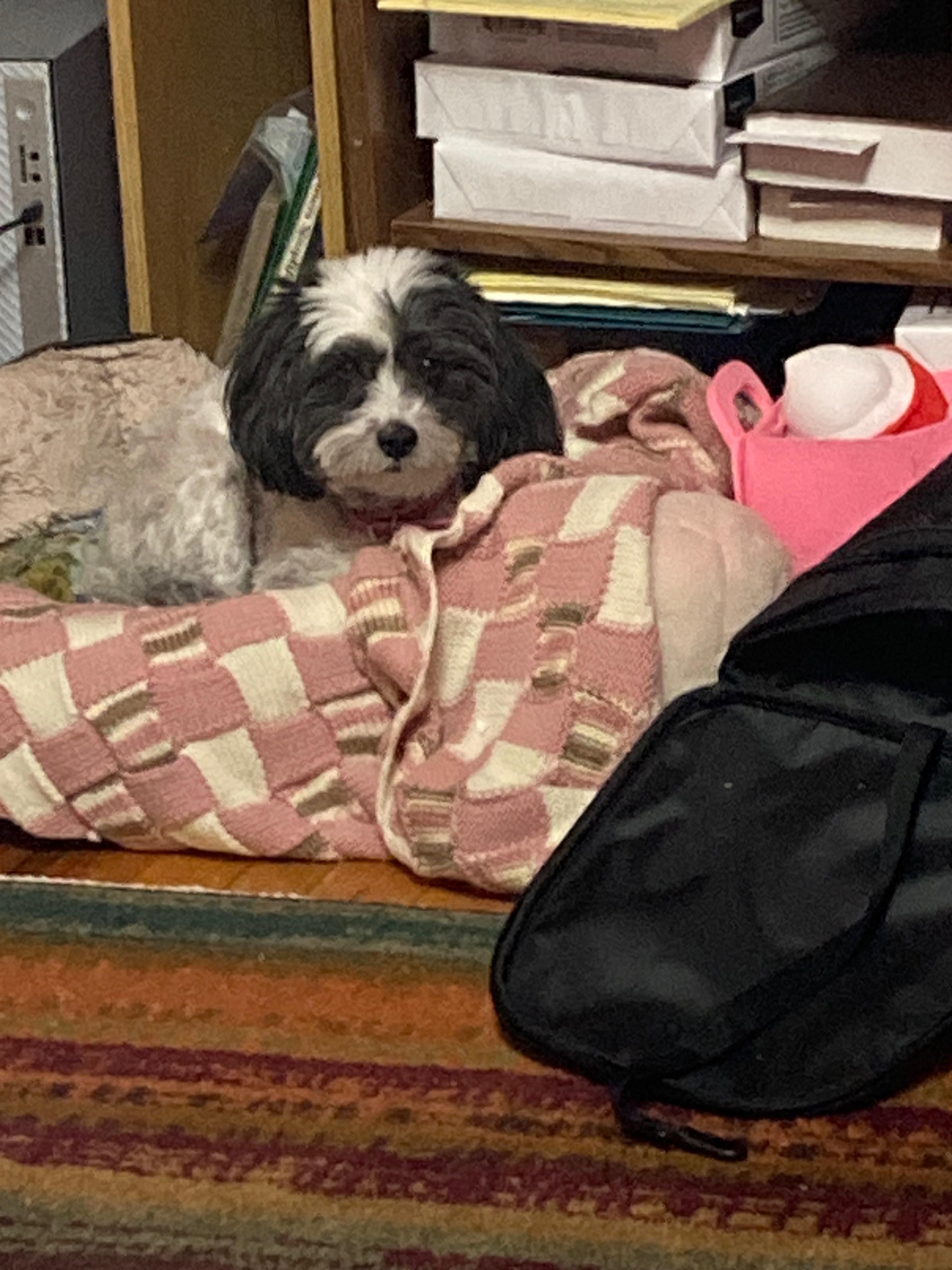
I can only appreciate the confusion over doctors. Our confusion, that is. I’ve been fortunate in that the cardiologist who operated one me for a while was a good listener and asker. Then she retired, which I guess doctors are allowed to do. The doctor I’ve met with recently has been good about giving us time to talk, at least that’s what happened in our last session. I deal, as you might deal, with a number of auxiliary folk and have appreciated their capacity to be concerned and their interest in having conversations. I guess I’m thinking that interaction is key in all this. Isn’t it? I think the maintenance question is not being done right by others with your situation with the medication that won’t get supported because you’re better. Shouldn’t staying better be the issue? I’m not having a heart attack right now but am glad I have medication to forestall that. So difficult to understand and support? I do hope you and puppy are having good times, too.
Thank you!
It’s funny you mentioned lymphatic drainage exercises because I just learned about that and I watched a video of a guy doing really weird, wiggly movements. I’m alone in the room and still felt self-conscious trying them so I’m going to wait until you try it and report back. Not too much pressure… I think the change with doctors treating patients like an assembly line has to do with insurance and the demands put on them. Years ago I’d go to the doctor and I’d get mad because he was always running 20-30 minutes because he took time to sit with patients and listen and talk. No one does that anymore. Doctors barely look at people anymore because they’re busy typing. This isn’t a slam against doctors because they obviously care about people or they wouldn’t be in the field, but it’s frustrating sometimes to be lumped in with all the normal people. I say to bet on yourself and get rid of the old clothes.
I tried some of the lymphatic drainage exercises and there was a lot of arm swinging, which is fine if you like that sort of thing.
If no one’s looking it’s ok.
I only see female docs because it didn’t seem like males had any clue about how our bodies work plus I didn’t like being pushed and prodded by them. Right off the bat, I told my current F doc that I consider she and I to be a team, that I know my body, and our job is to keep me as healthy as possible. She was a bit surprised cos all docs seem to suffer from a god complex, but we’ve settled into a meeting of the minds. I do know a lot about medical stuff and have enlightened her a few times, too so now, we have conversations and I don’t feel patronized. I’m not 100% sold on solely western med, but I have tried lymphatic drainage exercises and for whatever reason, I thought it was a waste of time. I’ve done it all, liver cleanses, amino acids, blah blah blah. I’m not sure any of it works, but I do like berberine drops.
I’ve had disappointing doctors of both sexes, but I like your way of setting the relationship on the right track from the beginning. What’s berberine?
Berberine is a plant compound used to help manage blood sugar, lower cholesterol, and support gut health. It’s extracted from plants like barberry and goldenseal. I don’t have high cholesterol but it’s also known as a natural GLP. I’m not sure about that hype but I like to try new things and added that to some other liver cleanse drops I use with milk thistle, etc. Liquid is best as it bypasses the stomach so causes less digestive irritation. I’ll bring all my supplements and ask doc what she thinks, mostly she says it won’t cause any harm but her favorites are magnesium and D3. I use a natural calcium because I refuse to have any injection that can cause spontaneous jaw fracture so she stopped asking me.
Spontaneous jaw fracture?!!!!!
There are individual and class action lawsuits.. That’s why most dentists ask if you’re on osteo meds before they’ll treat you. I research everything that I put in my body. Boniva (ibandronate), including intravenous injection forms, belongs to a class of medications called bisphosphonates. While these drugs help treat osteoporosis, they are rarely linked to a severe jaw condition known as osteonecrosis of the jaw (ONJ), which can occasionally lead to a pathologic or spontaneous jaw fracture if bone healing is severely compromised
Wow.
There are definitely problems with a lot of doctors nowadays. My wife saw five different doctors before finally finding the right one. Even though she needs to drive 45 minutes for her monthly visits, she is happy with the new doctor.
I’m impressed by her persistence!
She’s definitely persistent, even with prescriptions. She’ll keep asking doctors for different options until she finds one that works for her. I wish I could be like her.
Doctors are dicks, and they seem to have been taught to be that way. I may be foolish and delusional (yes, actually told that) to follow online trends, but those trends have helped me far more than any self-righteous healthcare professional ever did. And that’s all I care about.
I get it. Totally.
I think The ‘medical-industrial complex’ is also part of the problem, because it’s not like the old days, when you had one doctor who sees you every time and knows your whole medical history personally and whom you trust, it’s whoever is available in your network “for your convenience”. And they aren’t necessarily trained to understand how mental health connects with the physical health and vice versa, which complicates the diagnoses.
I’ve also noticed this similarly with the The corporatization of veterinary medicine (private equity firms and large corporations buying up veterinary practices) that means we’re losing small, independent vet offices. They treat you like a commodity to maximize profits because capitalism.
Insurance is also exacerbating the problem.
That is thoroughly depressing.
Sorry! At least you know that multiple doctor opinions make a big difference, and that they need to consider the whole picture to figure out your health!