Tag Archives: dogs

I want to swim

I have this idea, probably because it still feels vaguely like winter, that this summer I want to go swimming. I’ve barely gone swimming since I was a teenager, except maybe wading in once or twice at the beach. I got as far as buying a swimsuit, two times, but I couldn’t convince myself to wear them in public. Maybe if I’d lived in the era of bathing costumes for women, with ruffles and fabric covering the whole body, maybe then I could have gone swimming more often. But, still, maybe not.

bathing costumes

This is not my picture, but I wish it were


There’s something odd about a whole society expecting women, of all ages, to feel comfortable in skin tight Lycra, barely covering a third of the body. When did this happen? And why? There are certain adaptations available, like blouson tops, and skirts or swim shorts, but they mark you as overly modest and strange, if you wear them.

I had to swim every summer as a kid, at sleep away camp. And I couldn’t wear my t-shirt and shorts over my swimsuit when I went into the water, though I kept them on until the last possible second.

My fear of swimming is about more than how I look in a bathing suit, though. There’s also how I feel in a bathing suit – slimy, and trapped, and sick to my stomach. And then you get sandy, or covered in chlorine, or salt water, or sea weed. And really, who knows what’s in the water with you. And then there’s the breathing problem. I’ve always struggled to breathe correctly when I swim. I almost drowned a couple of times: once, when my father shoved me into the backyard pool fully dressed; and again when my father capsized our rented sailboat and I was caught under the hull.

I was also sexually abused in a swimming pool, as a little girl, by my friend’s older brother. So there’s that.

Given all of this, the mystery is why I would ever want to swim. But when summer comes and I’m choking from the heat and sweating to death, a pool starts to look good to me, and I feel left out and isolated. And I have this underlying belief that everything needs to be overcome, eventually, or else I’ve been wasting decades in therapy. Even though that’s really silly.

I’d rather swim in a pool than at the beach. A pool can be temperature controlled, and indoors, with clear water. And the ground can be level under your feet, depending on the pool. And you’re not trapped, because there are ladders out. But also, I don’t want to sit on the beach and get a tan. I don’t tan. I burn, or get sun poisoning. And I feel like a sheet of cookies left in the oven too long, after three minutes.

Ideally I would have my own pool, in my own backyard, and I could swim in whatever I wanted to wear at whatever time of day. I could have one of those enclosed pools with a glass ceiling in a building of its own. Like the old guys in the movie Cocoon.

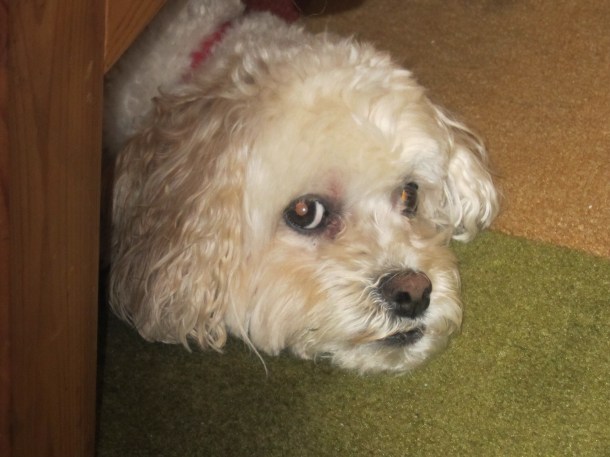
            I wonder what Cricket would think of an indoor pool. It’s possible that she’d see it as an enormous bathtub and run screaming back under her couch. But that’s more pool for me.

IMG_0136

“You can’t make me swim, Mommy.”

IMG_0137

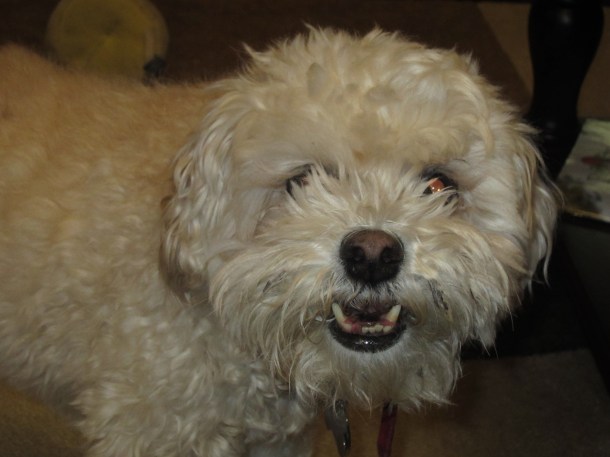
“No, really. You can’t make me.”

My Favorite Word is No

For most of my life, I’ve used the word “No” as a staple; like the pasta, rice, and potatoes of my social diet. I threw in Yeses very carefully and intentionally, like salt and pepper, or a sprinkle of Parmesan, for flavor.

001

“Did you say Parmesan?”

I have had to work very hard to add the word “Yes” into my vocabulary, because I tend to feel overwhelmed by the cascade caused by even one small yes. Saying yes to graduate school in social work has put me into an avalanche of situations and expectations that I can’t really say no to, because they were all included in that first yes.

033

“Saying no is much more fun!”

I know people who are much more comfortable with yeses, maybe because they have more faith that the universe won’t give them more than they can handle (I strenuously disagree), or because they have faith in their own ability to adapt to whatever comes (I definitely don’t have that).


I think my willingness to say “Yes” to more opportunities was instigated by all of the No’s I received: all of the rejections for my writing, rejections of friendship or love, failures to make progress in directions that mattered to me. I had to start saying “Yes” to things that might genuinely come to pass, even if they were not what I had imagined for myself.

002

Cricket hates when people say no to her.

I’ve said yes to going to doctors again, though that doesn’t feel great. I’ve said yes to dog-sitting and even bird-sitting, but not to adopting a new dog, not yet. I’ve said yes to all of the work I need to do for my master’s degree in social work, whether I like it or not, agree with it or not. I force myself to say “Yes” even when I desperately want to say no. And as a result, I feel less like myself, and less in touch with myself.


My instinct to say No was about retaining my independence, and my individuality. Saying “Yes” feels like an acceptance of the world as it is, and a loss of my hope that the world can be better. And yet, as I have learned to say “Yes” to more things, I have begun to feel more capable, and more likely to survive. I just hope that some of those yeses will transform into a life that I love. Someday.

006

Cricket is dubious.


Tai Chi

I have tried Tai Chi in the past and found it frustratingly slow and complicated and rage-inducing. But I’ve found that yoga encourages too much flexibility for my injury prone body of late, and I need to work on my balance and managing stress better, so I am trying Tai Chi again. It helps that I found five minute lessons on YouTube, with a very clear instructor (Leia Cohen). I like that she wears loose clothing instead of skin tight body suits like other exercise instructors, who seem to feel the need to advertise the effectiveness of their exercise routines, along with their clear genetic gifts.

Tai Chi is one of the only forms of exercise I’ve found that does not interest Cricket. Yoga inspired her to stretch and paw at me and bring me her toys. Sit ups and leg lifts were a clear signal that I wanted to scratch her back for twenty minutes at a time. But Tai Chi puts her to sleep.

004

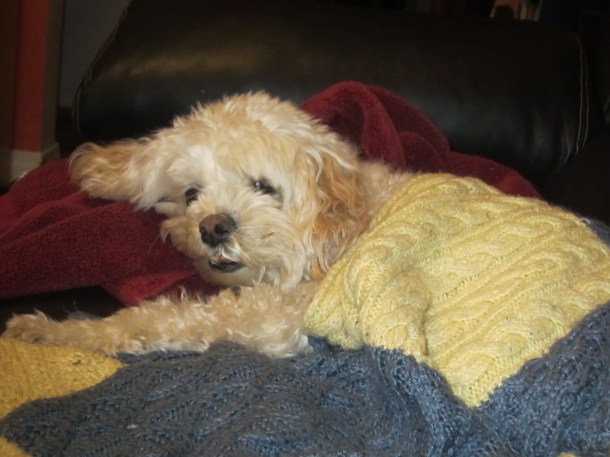
“I could use another blanket, Mommy.”

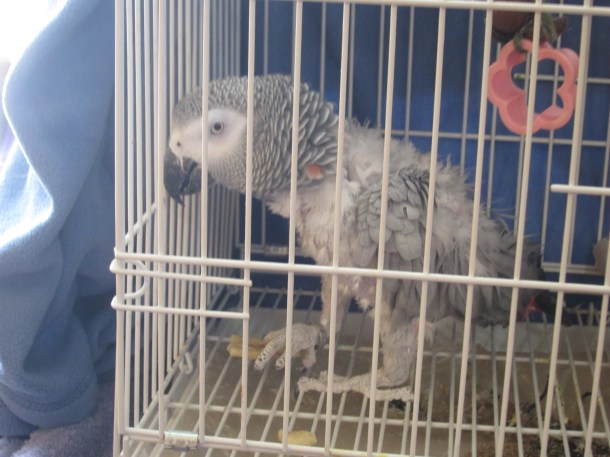
I had to stop the Tai Chi experiment for a couple of weeks while the two dogs (and the bird) were visiting. I was getting so much exercise from walking the dogs, and picking them up, and breaking up fights, but also it wasn’t safe to try to do Tai Chi in the living room with three small dogs weaving between my feet.

026

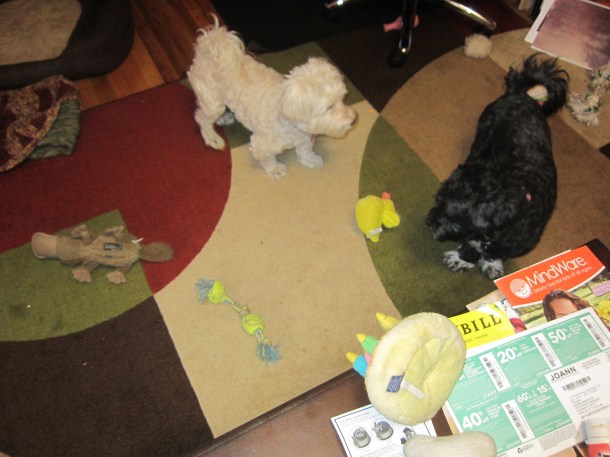
There really wasn’t any room for me on that floor.

020

Izzy did her version of Tai Chi with a banana chip.

But, a few days after they left, I started back up again, from the beginning, five minutes a day.

I’m not sure why it feels so difficult, or why five minutes seems like my limit. I’m not even sure if the limit is physical or emotional or spiritual. There’s physical pain involved in doing such slow movements, and being aware of each movement and how it feels in my body. There’s discomfort. Maybe that’s the more appropriate word for it. Tai Chi is supposed to be moving meditation, an attempt to center in the body and breath and find some calm. And maybe calm is uncomfortable for me, and attention to the body is uncomfortable.

All of my different aches and pains seem to get air time when I do Tai Chi, like a room full of senior citizens grumbling and groaning. I try to keep them on mute the rest of the time, with medication and distraction techniques, but Tai Chi seems to take me off mute.

My hope is that five minutes a day will lead me to ten minutes and eventually I will feel stronger and more centered, but I don’t know if this will work for me. All I can do is try.

051

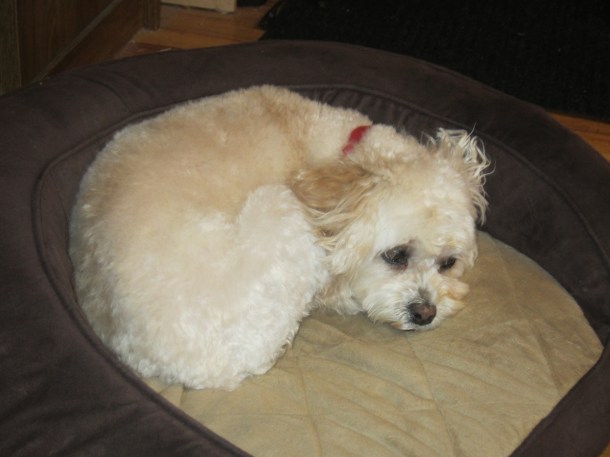
“You go ahead, Mommy. I’ll wait here.”

Passover, or, Cricket is Happy and Free


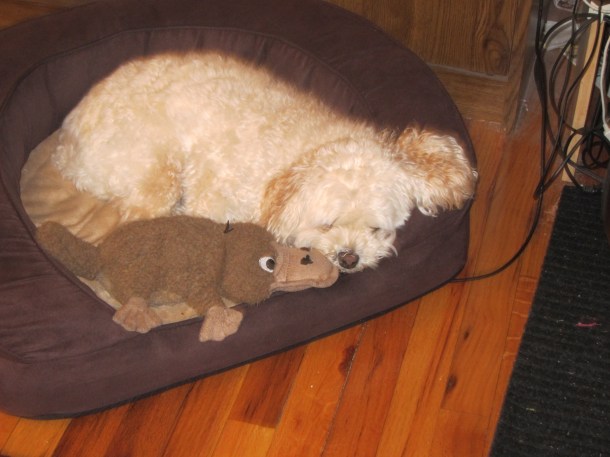
George and Zoe went home on Tuesday, and they were thrilled to be back in their own apartment, with their Mommy. When Mom and I got back home, and Cricket realized that the other dogs were not with us (especially after the ceremonial refilling of her bowl with kibble), she did a happy dance around the apartment with her Platypus toy in her mouth. She pooped up a storm for the next two days, either because the return to her regular food made a really big difference, or because she was hoarding poop until her adversaries left, and she could finally relax.

014

“We’re free, Platypus. We’re free.”

George had become more and more aggressive each day he stayed with us, trying to steal treats from Cricket, searching under her couch, and growling at her when she sat on Grandma’s lap and dared to act like the dog of the house. Even Zoe was starting to bark, though generally not at Cricket, more at the humans who kept forcing her to stick to her diet.


006

“This Grandma is mine.”

I had mixed feelings about bringing the dogs back to their own home, though, because I’d gotten attached, and because I worried that their Mom might not be up to taking care of them yet. But for Cricket’s sake, they needed to go home.

004

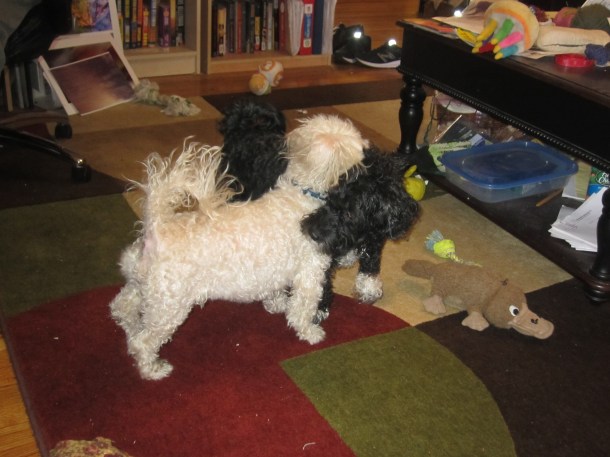
George and Zoe doing the doggy Tango.

004

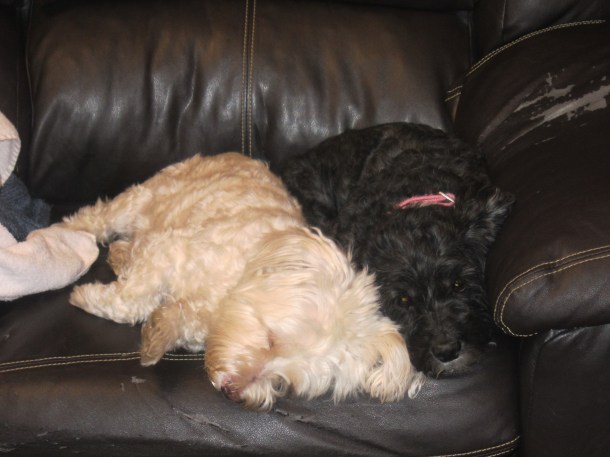
George and Zoe in a quiet moment.

Sometimes I feel like I’m drowning in all of my contradictory feelings; they seem to multiply over time, instead of streamlining the way I expect them to. For example, I have mixed feelings about Passover, and Jewish rituals in general. When I think of my Grandfather’s Seders, with the Maxwell House Hagaddah, and me, always the youngest, getting to sing the four questions, I feel like the holiday is warm and meaningful and full of light. But when I think of Passover at my own house growing up, I get tangled up in the family drama, and the weight of so many picayune rules.

The Seder is supposed to be about remembering the exodus from Egypt, and the struggle of going from slavery to freedom, and I think Cricket had her own Passover on Tuesday, when the other dogs left, and she’s still celebrating. But for myself, I think I’m still on the journey to freedom, still grieving Miss Butterfly, still working on graduate school, still not quite sure what the future will hold, or if I will be happy about it.

005

My Butterfly

I’m not going to a Seder for Passover this year. I could have asked a family from my synagogue for an invitation, or looked for a big Seder at a Jewish Community Center or another synagogue, but I didn’t do that. It’s all of those mixed feelings making me unsure what I really want to do, and maybe I just wanted to pretend Passover wasn’t going to arrive at all this year.

I wish I could rely on rituals to help me pinpoint the stages of my life, and the next steps I need to take, but for some reason I’m not matching up with the signposts lately, and I feel a bit unmoored and unsecured.

But Cricket is feeling great, and that’s not a small thing.

011

“Ah, sweet relief.”

Losing My Balance


So I was sitting at work, furiously taking notes, trying to collect every drop of information (this is what I’m like. My supervisor calls it taking “copious notes,” I call it being driven by a constant fear of failure). It’s easier to balance my notebook on my lap if my legs are crossed (the angle and the height created are ergonomically perfect for taking notes), but the downside is that I can lose feeling in the dangling foot every once in a while. Usually I notice it happening and bounce my foot on the floor for a while to wake it back up, but this one time I was extra distracted, and too busy taking notes, to even think of switching my legs at regular intervals to balance myself out.

And then my supervisor thought he heard a knock on the door and asked me to check it out. I, of course, said, “Of course,” and stood up. I noticed the numb foot right away, because I couldn’t quite tell if my foot was on the floor, or even underneath me, but I persisted and took another step, and then another.

I’m not sure exactly when the foot came out from under me, but I managed to hit the light switch on my way down, sprawling on the floor in front of clients. And I still couldn’t feel my foot.

I tried to bounce back up and laugh it off, but even the two steps back to my chair were a slow motion cringe-fest as my supervisor looked on. He went to check the door, and turn the lights back on, but then we all sat back down and pretended the whole incident had never happened, which was a blessing. I felt no pain (adrenaline is a wonderful thing, because I’m pretty sure my head hit the floor at some point), and went back to taking my copious notes, but I made sure to test out my feet every few minutes, especially before my next attempt at standing up.

I had two reactions to the whole thing: 1) I felt very silly and embarrassed, 2) I sort of liked the slow motion drama of the whole thing and the split second realization that I had just given myself a great story to tell. I think the second reaction won out.

It also made me think about why women cross their legs. Some part of it is automatic and anatomically prescribed, I’m sure. I feel more balanced with my legs crossed, and more ill at ease with my legs flat on the floor and pressed together. Another part of it is the training that tells you it’s more feminine and demure to cross your legs than to sit with your feet flat on the ground, “like a man.” Men can sit with their legs wide apart if they like. Women rarely do that. There’s something about modesty in there, and the history of skirt-wearing for women, but there’s more to it. Maybe self-protection. Maybe a signal that this woman is not advertising her sexuality, and is making sure to remain prim and proper.

The whole event also reminded me of the way my old dog, Dina, used to walk with her paws folded under her, when she was fourteen years old and experiencing neurological damage. She used to smile through it too, as if she was balanced perfectly on all four paws, and I found myself emulating her. And thinking of her.

dina dances

My Dina

I tend to feel off balance most of the time, literally and figuratively, and this was just a more dramatic example of it. And, really, I survived. No one laughed at me (that I know of), and no permanent damage was done. Maybe I need to take Dina’s lesson to heart: it doesn’t matter if you are balanced on all fours; it only matters if you are living your life the best way you can.

dina smilesdina stops to sniff

(By the way, Cricket completely disagrees on this one. She is all about dignity.)

012

“Yes, Mommy. I am.”


Old Hands


One night at synagogue, I was sitting behind a grandmother and granddaughter, ages 65 and 8, approximately. They were both impeccably dressed, hair specially done for the evening. They wouldn’t have been chosen for a greeting card, or a commercial, as the ideal of a warm and sensitive grandmother offering safety and sweetness and cookies to a patient loving child. They were more like an ad for a department store, selling stylish clothes for women of every age. But as I sat there, the little girl picked up her grandmother’s hand and began to investigate. There was that puffy vein on the back of Grandma’s hand and the little girl pressed on it with her thumb, and rolled it under the skin. Then she pinched, gently, some of the skin on Grandma’s hand, and pulled it up like a tent, and then massaged it back into place. Then she ran her fingers over the lines in the skin, and the bends at the finger joints.

All the while Grandma relaxed her hand and allowed the investigation to continue. She didn’t grab her hand away, or hiss at her granddaughter to stop it. There was something so full of love in this interaction, even more so than later on in the service when they wrapped their arms around each other during the standing prayer. And it all made me think. Older women are always made to feel decrepit for their aging skin. Moisturize! Try Crepe erase! Collagen, plastic surgery, face tape! But this woman’s hands were being lovingly explored, seen as one more fascinating thing about Grandma, not to be criticized or avoided, but to be touched and manipulated and loved because they belong to Grandma. As if the granddaughter was saying, these hands make me feel safe and attached. These hands belong to my grandmother and therefore they are beautiful.

Cricket and hand

Cricket and her own Grandma

We have all of these ideas about how a woman should look, and how her skin should feel, and what color her hair should be, and what size her body should be, but children know better. They believe that whatever you look like is beautiful, if you are the one they love. Everything about how you look and smell and sound reminds them of who you are, and how you feel about them. They want to touch you and see you, not a perfected image of you.

I think this is what we love about dogs too. They don’t care if our skin is tight or loose. They don’t care if we are fat or skinny or in between. They care if we love them, and pet them, and feed them. They love the sound of our voices and the smell of our skin.

IMG_1070

“My Grandma is beautiful.”

I want to remember this the next time I feel the need to berate myself for my body, my face, my clothes, or anything else imperfect about me, but I know, even as I write this down, that I am forgetting it, or forgetting to believe it.

037

“I’ll remind you, Mommy.”

The Parabola

I am the .1 percent that makes the parabola possible. I am that weirdo.

My doctor saw my blood pressure rising precipitously over a couple of months this fall and decided to put me on a blood pressure medication. I was too tired to argue. I’d hoped to avoid new medication trials, and new doctors, until the end of graduate school, but clearly the emergency lights were flashing, so I took the medication and a referral to a cardiologist.

At first I just felt dizzy and even more tired than usual and kind of nauseous, but my blood pressure was going down (I had to check it at home twice a day). I went to the cardiologist for a work up anyway, like the good obedient girl I am, and suffered through lots of tests, and history taking, and quizzical looks about my long term lack of a diagnosis for such a crazy list of odd and debilitating symptoms. Each test and appointment was physically exhausting, and then the cardiologist decided that I would need to see another pulmonologist, and another rheumatologist, and consider changing this or that medication that could be the culprit for my rising blood pressure (high dose NSAIDs in particular can raise blood pressure and I’ve been on one for years now).

002

“I’m exhausted just thinking about it.”

I wish I could act like Cricket does at her doctor visits, and bite and scratch and hide under tables, but it doesn’t go over as well with the doctors for humans. So I accepted the needles and the stickers and the probes and the treadmills, with all of the inherent humiliation of being treated like a science experiment, and I smiled and kept my mouth shut so I could get out as quickly as possible, limping down the hallway after one more person told me I seemed fine.

018

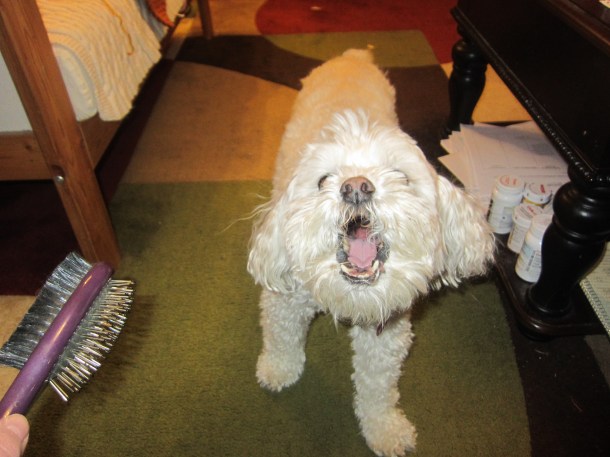
“No one can make me go to the doctor!”

And then, one morning, my lips were swollen to three times their normal size. They were itching and hurting and I thought there must be a secret hive of bees under my pillow, but no, it was an allergic reaction to the blood pressure medication. It’s a well-known reaction, though not well known to me, because doctors think that if they warn me about possible side effects I will decide to have all of them. The doctor took me off the medication and said we’d wait for the reaction to wear off before trying something else, with no advice on how to make the swelling go down, or a time frame for how long this would be going on. I sat in front of the TV with ice on my lips for hours so that I could be moderately presentable for a few hours at my internship, and then I came home and watched my lips blow up again. I took Benadryl at night, and daytime allergy meds during the day, but the swelling kept rising and falling unpredictably.

A week after the original allergic reaction, my lips blew up even bigger than before. We called the pharmacy and they said to go to an urgent care center and get an epi pen, to which I said Nooooooooooo, mostly because I didn’t want to have to get dressed and deal with people. We called the doctor, and he said to take Benadryl four times a day, which meant that I would be mostly unconscious until the allergic reaction wore out. So I did that. It took another week for my lips to resemble their previous selves, though they are still not quite back to normal. For quite a while there, I’m pretty sure people assumed I was getting collagen shots.

No one believes me when I tell them that I tend to have all of the side effects and few of the positive effects of medication, and have a habit of getting paradoxical responses to medication (biological medication meant to resolve psoriasis led to the skin flaying off of my fingers, seriously). No one believes me when I tell them that I am the patient that makes the bell curve possible. But I am that person.

Cricket paid no attention to any of it. She is immune to changes in how I look. She only notices when I change my clothes, because that’s what’s important to her. Pajamas are good, work clothes are evil, sneakers and jeans could be either/or.

IMG_0474

“Mommy can’t go anywhere without this.”

I have doctors’ appointments scheduled for the foreseeable future, and most likely more medication trials, and more exhaustion, and more people who think I’m being melodramatic until they realize that I’m just bizarre. None of this is normal. I’m not supposed to be exhausted and in pain all the time. I’m not supposed to have all kinds of weird auto immune reactions and connective tissue disorders. I’m not supposed to need so much pain medication that it leads to even more health problems that bring on even more medications. People my age are supposed to work full-time, raise children, and have social lives, not work their asses off just to make it through part time hours, with no energy left to do the food shopping.

Cricket thinks the problem is that I don’t spend enough time scratching her, and walking her, and if I devoted myself solely to those activities at least one of us would be happy.

IMG_1743

“When I’m happy, everyone is happy.”

I feel like I’m holding the parabola in place single handed lately, and there’s no Olympic medal for that. For every one who is safely in the middle of the parabola, with normal reactions to medications, and diseases that can be accurately diagnosed, you’re welcome.

The Great Dog Search


We started the great dog search before Christmas, because this seemed like the best way to use my vacation (as well as naps, lots and lots of naps). I was still experiencing occasional waves of grief over Miss Butterfly, but I felt a desperate need to at least try to find a second dog, someone small and gentle and loving. Cricket loves me, of course, but not like she loves her Grandma. She greets Grandma, and pines for Grandma, and guards Grandma, and, every once in a while, she comes over to visit with me.

IMG_0529_1

Cricket loves her Grandma

The first shelter we visited was about forty minutes away from where we live, with a friendly staff and separate buildings for different groups of dogs and cats. We walked through a hallway of barking dogs who were all a little, or a lot, too big for us, and then we met a Lhasa Apso. She was white-haired, eight years old, and had cataracts in her eyes, and it all made me stop breathing for a moment because she looked so much like Butterfly, with a bad haircut.

butterfly hair askew

But no one is as cute as my Butterfly was, even on a bad hair day

We left that building pretty quickly and were led over to the infirmary, where the little dogs were recovering from spay and neuter surgeries. There were Chihuahuas, a Pomeranian mix, a Dachshund mix, a senior Shih Tzu, and a Puggle. The Pom mix was adorable, but he snapped at the volunteer who opened his cage, so he wasn’t allowed out to meet us. Instead we visited with Ursula, a one-year-old Puggle. She was adorable, but we happened to have arrived just when the vet tech was filling Kongs with peanut butter, and Ursula was utterly distracted. Freed from her crate and on her own feet, she moseyed over to the tech, sat down, and gradually inched her butt closer and closer to the peanut butter. She was the right size, and terribly cute, but she barely looked at me. I felt like I should wait for some kind of spark, some flash of connection. Just being cute couldn’t be enough.

Of course, I felt guilty leaving her behind, even though the staff assured me that she’d be scooped up in minutes. There’s something awful about looking at abandoned dogs, and judging their looks and age and health and character, and then rejecting them as not the one. It makes me long for the days when I didn’t know about puppy mills, and could walk into a pet store and believe that beautiful puppies just grew on trees.

I built up the nerve to try again a few days later, and we decided to visit the shelter where we’d adopted Butterfly. They have an extensive medical program with subsidized care, so there was a safety net if I bonded with a dog who had some health problems. I’d seen a few small dogs on their website, some poodle mixes and dachshund and terrier types who all seemed around the right size and age to deal with Cricket. It was raining and cold, and we ran from the car with our hoods up to get to the adoptions building. But, because of renovations in progress, the adoptions had been moved to a smaller location, and the line of people waiting to see the dogs was outside and down the block. My emotions were still raw, with the guilt of leaving Ursula behind, and the gnawing pain of No-Butterfly, that the disrespect of making people wait outside in the freezing rain just to get a chance to fight over puppies enraged me. I knew the dogs would all be adopted, or fostered, or kept safe and warm and medically cared for, but I felt like the shelter was telling me that I didn’t deserve to be treated well. And I couldn’t accept that. Mom shrugged and followed me back to the car, and the day devolved from there into a huge pool of self-loathing and hopelessness that even chocolate couldn’t fix.

A few more days later, we heard about a shelter, more than an hour further out on the Island, where they had rescued a hundred small dogs from a hoarding situation. The website only had a few blurry pictures of the dogs in their original home, with no description of breeds or ages or health, but with a hundred dogs, we figured it was worth a try.

When we finally walked into the office, the woman at the front desk barely looked up from her computer and told us to look through the photo album on the desk. The pictures of the dogs were blurry and dark, with names under each picture, but no sexes or ages or descriptions. The first five names I mentioned had already been adopted, but then there was Twinkle. A volunteer brought him out and he was so much tinier than I’d expected. She put him in my arms and he shivered, in fear or cold, I don’t know which, but when I sat down and put him onto the bench next to me, he climbed back into my lap and held onto me. I looked into his eyes and he looked right back at me and then licked my nose. He could have been part Rat Terrier, part Chihuahua, part Schnauzer, but they had no idea. He loved the gentle scratches on his matted grey and brown and black coat. He was so much smaller than I was looking for, but I’d felt that spark, and it wasn’t going away. I asked the woman at the desk if she knew anything else about him, and she looked down at a sheet of paper next to her, and said, he’s nine years old. My heart broke. I’d promised myself, and Mom, that we wouldn’t get another senior dog, at least not this soon after Butterfly.

A volunteer came to take Twinkle back to his cage in the back, and I felt his absence immediately. Then someone turned on the lights in the little room next to us, and it was filled with more of the hundred dogs, but these were in the three to five year old age range. We were allowed to go in and sit with the dogs, still in their crates, and they very loudly asked to be let out. Some of them looked more Schnauzer-like, some more Dachshund-like, some with wiry red hair, and others with soft black hair, but they were all, obviously, related. We visited with a few of the dogs individually, and a staffer explained that the woman must have started out with a handful of strays, and then, since she didn’t spay or neuter, the family grew exponentially. They were an incest family. The dogs were all being adopted out to different families, but the backstory made me uncomfortable. The staffer told us that we’d have to bring Cricket in for a meet and greet, if we wanted to adopt one of the dogs (and no one else already had an application in on that dog), and then we’d have to bring the dog back to be spayed or neutered. They gave us the extensive adoption application and we left, to drive the long way home and think it over.

The trip home was, again, painful. All of the other dogs receded in my mind, except Twinkle. But Mom had serious concerns: not only was he a senior dog, but he’d spent nine years as an un-altered male in a house with no rules, and he might not understand that he couldn’t climb on Cricket; and we had no idea what health issues he might have, or how long he could be expected to live; and they had no subsidized medical program, and even if they did, we couldn’t drive more than an hour each way to make use of it.

I kept dreaming about Twinkle, though, and feeling sick at leaving him behind. I couldn’t figure out if the spark was because of his sweetness, or his neediness. I couldn’t separate out my healthy loving instincts from my possibly pathological ones, and I was overwhelmed. Mom hated watching me suffer, so back online she went, to see if there were any other dogs in the area. She found some prospects at another shelter we’d never heard of, about twenty five minutes away from home. This would be our fourth shelter in a very short period of time, but I was still on vacation, so off we went.

One of the dogs we liked was still available: a seven month old, black haired Miniature Poodle named Traveler. When we arrived and asked to see him, a handler took us to what seemed like someone’s living room, and then brought Traveler in on a leash. He had soft, curly black hair and big black eyes and he sniffed the whole room. I asked if I could sit on the floor with him, and within minutes he had brought over a tennis ball to play with, and started licking my face. When he got tired, he rested his head on my leg, tennis ball firmly in his mouth.

The handler warned us that we shouldn’t bond too much, because the application process would take a while, and the staff would decide who they thought was the best match for the dog, but I wasn’t worried. We filled out the two page application, including phone numbers for our vet, and three personal references, and lots of details about how we would raise the dog, and what our other dogs’ lives had been like, and on and on. In the car on the way home I was already planning the new toys we would buy, and the training classes we would take with Traveler, but I was also still thinking about Twinkle, and wishing I could have both of them. They would balance each other out, I said out loud, to which Mom said a big fat no.

Of course we didn’t get Traveler, but it took two weeks for the phone call to come telling us that he’d gone to another family. In the mean time I’d found out that Ursula and Twinkle had both found homes, and I was back in school and busy with work. I wondered if maybe the universe was telling me I wasn’t ready, but then the loneliness hit me again and I went back on Petfinder to look for more possibilities.

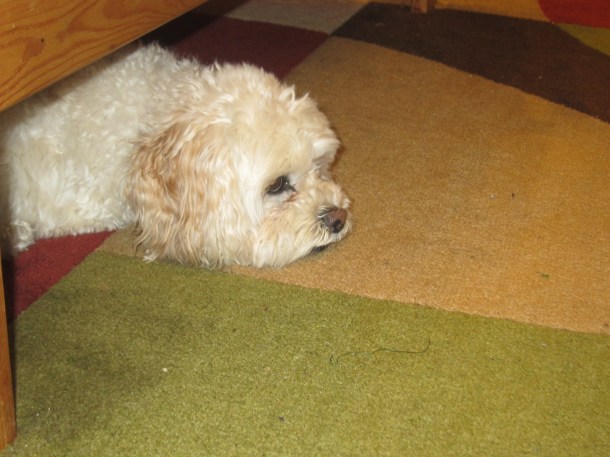
We brought Cricket with us to visit one dog at a PetSmart adoption event, but while the dog was adorable, he was completely uninterested in us, and barely even sniffed Cricket, which I took as a personal affront.
003

“Harrumph.”

I kept finding dogs at more and more shelters I’d never heard of, all over Long Island and in Queens and the Bronx and Brooklyn and Manhattan, but each rescue had their own application, and each one was more intrusive than the last. One rescue organization, in its online application, asked for a picture of your driver’s license and the names you use as aliases on social media. We applied for another dog in Queens, a black and white Maltese Shih-Tzu mix, but she was adopted before we could even finish the extensive application process.

We didn’t go through any of this when we adopted Miss Butterfly five years ago, because she happened to be eight years old, with health issues, and yet she was the one I wanted. Now that I want a younger, healthier dog, I see how competitive the Rescue market has become, and how much power the Rescues have to determine who qualifies as worthy. Adoption fees are much higher, applications are longer and more intrusive, and you’re still not guaranteed the dog you met and fell in love with, because someone else is, in the eyes of the Rescue’s staff, better suited to care for that particular dog.

In theory, this is progress. It means that people have learned to adopt, not shop, and fewer dogs are ending up in kill shelters; but it also leaves the power to decide who’s worthy of a dog in the hands of fewer people, people who have their own prejudices about what makes a good dog owner (able to afford higher adoption fees, owning a home with a fenced in yard, etc). I wonder if it’s like this across the country, or it’s specific to the northeastern US, or even just to Long Island.

It almost feels like it’s not worth the effort. I look at other people who walk into a pet store and leave with the exact puppy they were looking for, less than an hour later, or I think about Cricket’s breeder, who was friendly and responsible and raised the puppies in her home, with their Mom, and I wonder why I’ve committed to rescue a dog at all. But I know it’s because of Butterfly, and wanting no dog to have to go through what she did for her first eight years, producing puppies in a puppy mill. But all of these applications and rejections feel personal, and my inferiority complex, and guilt complex, and every other complex, is being kicked up like a dust storm that is going to choke me any day now.

I feel like I need twenty-four hour a day therapy to get through this process, or better yet a therapy dog, but Cricket doesn’t want the job. I have a sneaking suspicion that Cricket has been calling the Rescues to say, no, no, we’re not really interested. That would explain a lot.

012

“Who me?”

Learning German


A few weeks ago I went on my regular online search for a way to learn Yiddish. I keep looking for a program that will start where I am (at the beginning), and maybe give me some idea of why Yiddish seems to be filled with words I still feel too young to use. But none of the free language learning sites offer Yiddish, and the sites that charge a fee for each lesson are often too advanced for a beginner like me. Then I came across someone who suggested learning some Hebrew and German first, before starting one of the difficult Yiddish classes. So I added German to my Duolingo and Lingvist accounts, and tried to reassure Cricket that she would not have to learn yet another language along with me. She was not convinced.

001

“Je ne comprend pas.”

The first time I heard German words coming out of the speaker on my phone, though, I felt like I needed to lower the volume, to hide some hideous crime; I didn’t realize how emotionally loaded the German language would be for me. Like when they taught me the word for “work”: Arbeit. My mind automatically finished the sentence to Arbeit Macht Frei, “Work will make you free,” the motto on the gates to Auschwitz.

So many German words were familiar to me, even though I was sure I knew no German ahead of time. Some were familiar because they are pretty much the same in English, like perfekt for perfect, Haben for have, ist for is, etc. Some were familiar from the last names of so many Jews: Blume (flower), Berg (mountain), Stern (star), Baum (tree), Schreibe (write).

Essen and Fressen were also familiar words, because some time in my childhood my father tried to make a joke about people who eat like animals, and I didn’t get it, so he had to explain that Essen is eat, for people, and Fressen is eat, for animals. I don’t remember who he was trying to insult at the time. Schmutzig, for dirty, was familiar too, as in, you have some schmutz on your face. Then there was schmuck, which Duolingo said was the German word for “jewelry,” despite the fact that, for my whole life, I knew it as the Yiddish word for a part of the male anatomy.

One early discovery was that in the German language words can be capitalized in the middle of sentences. I used to get in a lot of trouble for throwing in unnecessary capital letters in High School English classes (this was back when assignments were handwritten, and not spell checked and grammar checked and emailed to the teacher). I realized that I may not have been making up my own rules out of thin air, as one teacher had suggested, and instead was just using the grammar rules of the wrong language.

I may have taken in more German than I’d realized in my childhood. My father did have a habit of speaking to our dog in his high school German, and I heard random Yiddish words whenever I was around older Jewish people (which was often), and I watched plenty of Holocaust and WWII movies over the years.

IMG_0560

“Ich bin ein Doberman Pinscher?”

It’s a funny thing. Politically, Germany has managed the aftermath of the Holocaust better than most other countries (certainly better than Poland, where they recently made it illegal to even suggest that Poland had any connection to the Holocaust). In Germany they educate their kids from an early age about what their grandparents and great grandparents did, and why it should never happen again. Yes, they still have neo-Nazis and white supremacists and fascists, but so does the United States. But despite all of that, I can just barely listen to a computerized voice speaking simple German words, and I’m still overwhelmed with words that remind me of things I wish I could forget.

I grew up with kids whose parents would never have bought a BMW or a Mercedes, because they were German-made cars, and Germans would benefit. I grew up with Holocaust survivors telling their stories, at school, and synagogue, and in books. This is my history. But maybe learning some German will help me come to more peace around this history, or at least help me to articulate what still resonates in my bones. One thing I know for sure is that German will give me a bridge to Yiddish, which is worth a lot to me.


IMG_0876

“Danke”

The Social Work Detective


I keep thinking about writing a mystery novel with a social worker as the protagonist. I never took a class in forensics or criminalistics (they weren’t offered at my schools), but I think one of the things that draws me to social work is the craving to be a detective; to find out the mystery of the person or family or couple sitting in front of me, telling me they have no idea what went wrong. My protagonist would be curious about everyone she meets, though, so I’d have to be careful to try to limit her focus to the people who are pertinent to the particular case at hand, or else the book will be never ending.

In real life, death and destruction, or any kind of physical pain or gore, horrifies me, but in a novel, murder calms me down. Maybe murder mysteries have the same paradoxical quality as Ritalin or caffeine: calming a hyperactive mind with a stimulant. The intensity of murder, in a novel, helps me to focus on one thing at a time, instead of on the thousands of priorities running through my mind: I need to lose weight, pay off my student loans, do my homework, find a second dog, get to work on time, keep up with friends, fix the world, and find the right outfit to wear on Thursday.

But would it be as calming to be the writer of the mystery instead of the reader? Would I have to do a ride along with the local police in order to get the details right? Would it be a cozy or a thriller? Would I have to kill off characters I like? Or worse, make one of my favorite characters into the murderer?

IMG_1860

Cricket, with the trowel, in the garden.

I don’t even know why I’m trying to plan a new novel right now, given all of the work I have to do for school. I feel swamped this year. The work seems harder and more all-encompassing, and the stakes seem to be higher too. But, it’s not so much that I want to write a mystery, it’s that my mind goes there on its own. Some part of my brain is always working on story ideas, and coming up with plot points and character names. Taking the time to put it all down on paper at least gives me some sense of order for these random thoughts, so that they don’t think they have to repeat themselves, endlessly, out of fear of being forgotten.

IMG_0510

“Listen to me!!!!!!”

The only thing I know for sure about my social work mystery is that there would have to be a dog in the book. This isn’t a social worker thing, just a me-thing. I would feel bereft trying to write a whole novel, or even a short story, without a dog in it. Cricket is auditioning for the role, but I’m worried she’d want to be the protagonist herself.

puppy in November 005

“I am always the star of the show.”