I don’t understand all of the people who were able to clean their houses top to bottom, switch over to Passover dishes, AND cook for 18 to 20 people, all before vacation even started. It makes no sense to have vacation during Passover if the house needs to be cleaned for Passover. There was no way I was going to have the energy to do spring cleaning (going through every cabinet, vacuuming every corner and under every piece of furniture, etc., etc.) when I was also working and trying to live up to my regular commitments. It was only when I got a week off – during Passover – that I had the time and energy to even start cleaning.
This is clearly a holiday for people who are more organized, and more energetic than I have ever been, or for people who can afford to go to specially prepared Passover hotels, where families can spend the whole week away and never have to clean their houses for Passover in the first place.
Having a week off from teaching allowed me to notice all of the things I had left undone during the school year, of course. And I finally forced myself to go through my drawer-of-papers, and realized that I hadn’t opened the damned thing since before Covid, except to shove more papers into it. Tzipporah stayed in her bed in the living room to avoid all of the chaos, and dust, and grumbling noises.

I managed to look through all of the clothes in my closet that don’t fit, but might someday, and the medical test results that were supposed to be edifying but weren’t, and all of the lesson plans that I didn’t have a chance to try for one reason or another, and it has been exhausting to look through all of the work I’ve done over the past few years, without much sense of accomplishment or progress to show for it. I tend to think of myself as lazy, because I haven’t reached the goals I’ve set for myself (successful author, diagnosis and treatment for medical issues, overcoming mental health difficulties, etc.), but the piles and piles of evidence tell me that I’ve worked very hard, no matter how little it shows in the outside world.
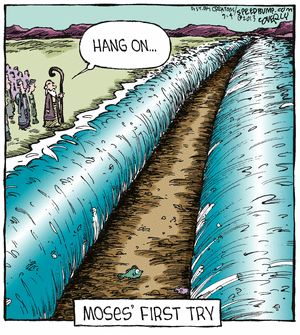
The heavy emphasis placed on Passover cleaning, or more specifically, cleaning out all of the random crumbs of bread and other leavening that have landed in the corners of our homes, belies the fact that the real purpose of Passover is to celebrate the exodus of the ancient Israelites from Egyptian slavery. The goal is to tell the story, in detail, and thereby to remember that it is possible to get out of the narrow places we are trapped in today and find true freedom. This is always a meaningful lesson, but especially right now in the United States, where our promised land is starting to feel a lot more like ancient Egypt. But even before this particular moment in history, I felt like even though I had escaped the narrow place of my childhood, my own personal Egypt, I am still wandering in the desert; and if God plans for this wandering stage to last forty years, like it did for my ancestors, then I still have a lot of wandering left to do.
Unfortunately, as my rabbi often tells us, the reason for the forty years in the desert was for the generation who had experienced slavery to die out, so that only those who had been born into freedom would enter the promised land. I worry that maybe that will be the case for me too, that the closest I will get to the promised land is these years of wandering and seeing that hope just over the hill, out of reach.
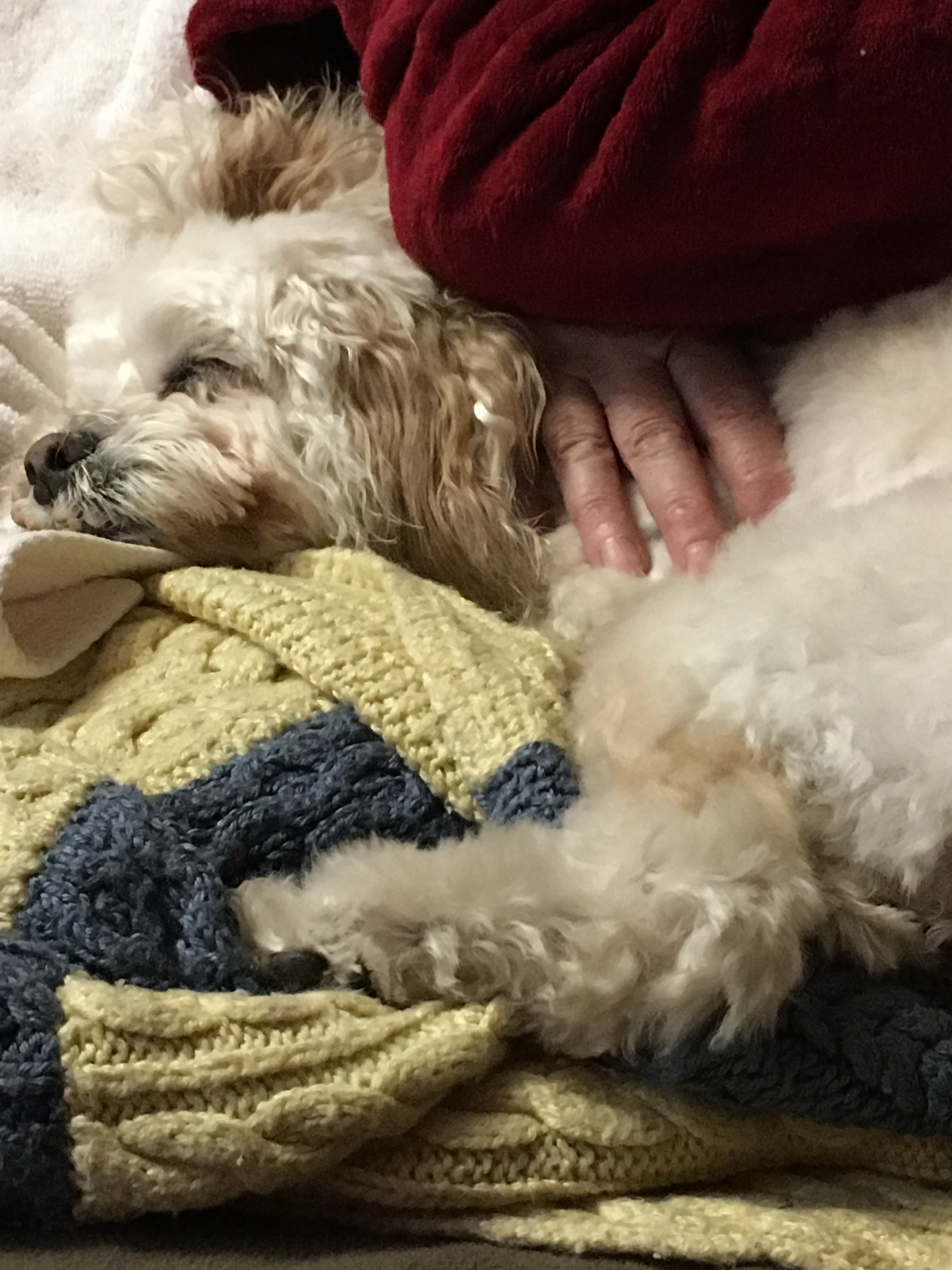
I look at Tzipporah, named after Moses’s wife in the Passover story, not incidentally, and I think she is in the same place as me; she is no longer in the narrow place (the puppy mill), but it seems to me that she is still wandering through the desert, trying to figure out how to feel free.
But now that I think about it, the story we read at the Passover seder each year isn’t really about entering the Promised land. In fact, we end each seder hoping to be in Jerusalem next year; meaning that, no matter where we are in our lives, or in the world, we have not yet reached the promised land. Maybe the real lesson is that everyone will find themselves in a narrow place, at some point in their life, and will need hope and help in order to escape, and even then, that exodus will feel much more like wandering in a desert than like reaching a promised land. And that’s okay. Because the process of standing up for our rights, and believing that we deserve better, and then wandering in the desert, in confusion, trying to figure out how to be free, is the point of the journey. And we go through the Passover seder every year as a way to teach ourselves that the wandering itself is meaningful, and worth all of the effort. No matter how much we might wish for an easier ending to the story.

If you haven’t had a chance yet, please check out my novel, Yeshiva Girl, on Amazon. And if you feel called to write a review of the book, on Amazon, or anywhere else, I’d be honored.
Yeshiva Girl is about a Jewish teenager on Long Island, named Isabel, though her father calls her Jezebel. Her father has been accused of inappropriate sexual behavior with one of his students, which he denies, but Izzy implicitly believes it’s true. As a result of his problems, her father sends her to a co-ed Orthodox yeshiva for tenth grade, out of the blue, and Izzy and her mother can’t figure out how to prevent it. At Yeshiva, though, Izzy finds that religious people are much more complicated than she had expected. Some, like her father, may use religion as a place to hide, but others search for and find comfort, and community, and even enlightenment. The question is, what will Izzy find?
























 rachelmankowitz