Tag Archives: religion

My Israel Trip: Shabbat in Israel

            Friday morning, day four of my trip to Israel, I woke up to my friend’s son practicing guitar and singing This Land Was Made for You and Me, because he’s been taking guitar lessons from a relative in the States. His other practice song was Skip to my Lou, and I’m pretty sure I have the same guitar book somewhere.

            It was already drizzling, which just reinforced the plan to stay close to home for the day. Our first plan was to go to a local ceremony naming a path in the city after a fallen soldier, but when we got to the school building where the ceremony was taking place, the crowd had already overflowed out of the auditorium, into the lobby and beyond. Reassured that the family would feel the community’s support, we sent our best wishes through neighbors, and walked back to the car, and on the way back across Modiin, my friend showed me the black fabric covering a new street sign that would tell the young man’s story. A large number of the young people in Modiin had served in the army during this war, either as regular army or in reserves, so these ceremonies were, unfortunately, not uncommon.

            One of the first things I’d mentioned to my friend when we started planning this trip, was that I wanted to go to a real Israeli supermarket at some point, so after we dropped her husband back at their apartment, we headed out to the local supermarket. The main shopping for the week had already been done, so we didn’t go to the big supermarket down the road, but this one reminded me of the little supermarket in my own neighborhood on Long Island, which happens to carry a lot of Israeli products. The only big differences were that the majority of brand names were written in Hebrew, even if the typestyle and packaging was the same as in the United States, and, next to the frozen chicken and turkey and ground beef, there was also a quarter of a goat. I don’t usually see goat at my supermarket, but maybe I haven’t been looking carefully enough.

            We made sure to pick up more of the fake Krembos, since they still didn’t have the real Strauss brand in stock, and then we got a few other staples: eggs, seltzer, crackers, etc., nothing too big because this shopping trip was mostly for research purposes.

            I’d either forgotten how outgoing my friend is, or I’d missed a lot, because I was amazed at how many people she seemed to know everywhere we went, and how easily she made conversation with people here and there and everywhere. She kept telling me that her older daughter is the social butterfly of the family, but clearly, she learned it from somewhere.

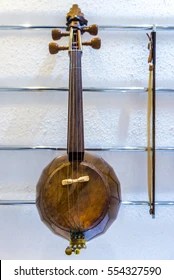
            After bringing the groceries home, our next event on the schedule was a small outdoor concert, part of a free music festival taking place that weekend in Modiin. The concert was billed as “Kabbalat Shabbat,” which is part of the traditional Friday night services, and it has become popular in Israel to bring religious and secular Jews together early on Friday afternoons, to sing together and welcome in Shabbat, before Shabbat officially begins. Doing it early in the day means that you can play instruments, which aren’t allowed in orthodox synagogues on Shabbat. Because of the rain, the concert was relocated to a school gymnasium, and we found seats near the front just as the show was starting. The small band was made up of four young men: a drummer, a guitarist, one guy on multiple woodwinds, and the bandleader, playing a Persian stringed instrument called a Kenchen that looked like a backwards sauté pan, with strings attached.
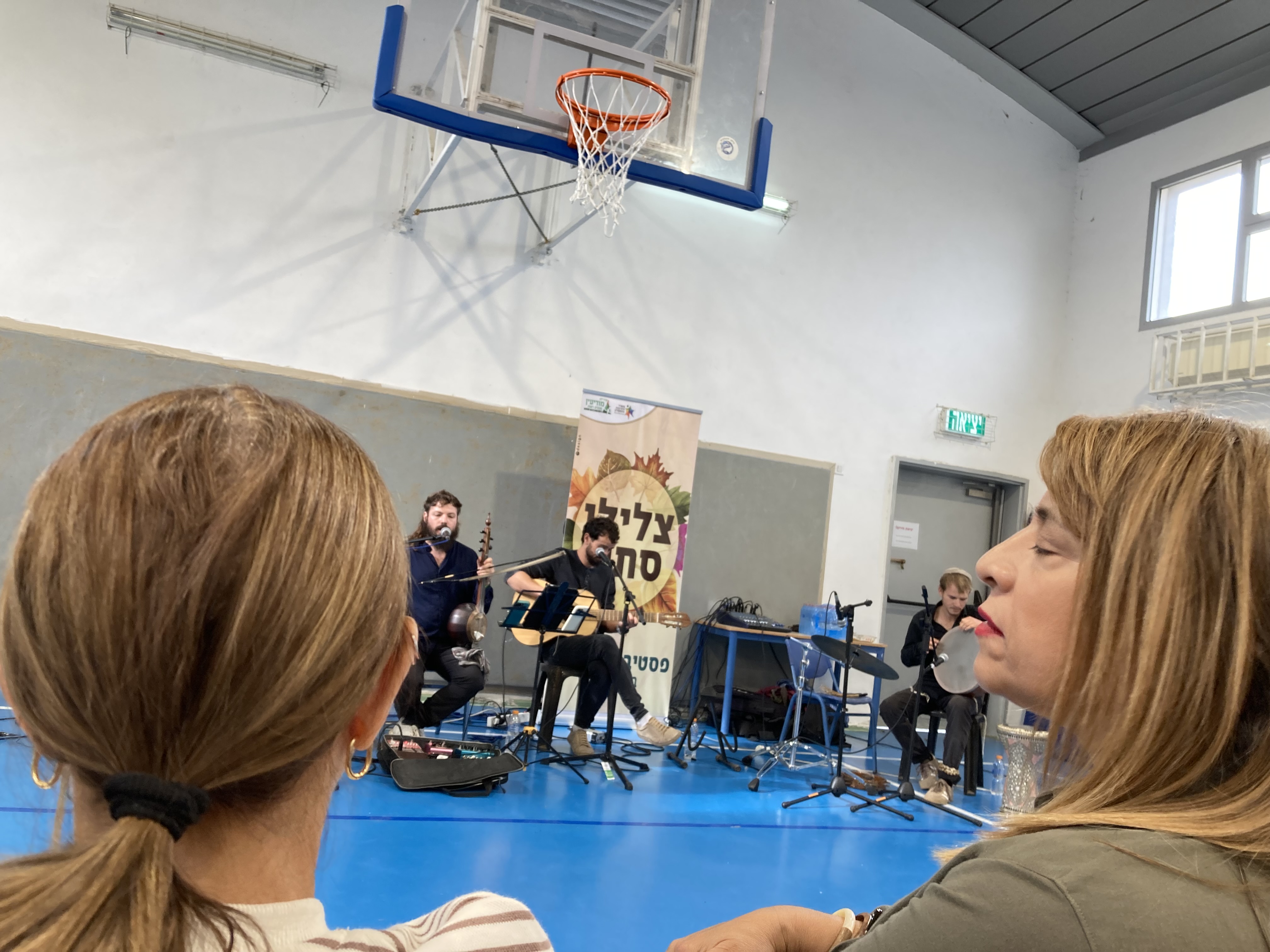
(I don’t know these two ladies, but they seemed to be enjoying the music as much as I was)
a closer look at a Kenchen, not my picture

            They played a few traditional Kabbalat Shabbat songs from the Friday night service first, songs that you would hear at almost any synagogue around the world, and then they branched out into Israeli songs with religious themes (songs from Chanan Ben Ari, and Akiva, and Meir Ariel), most of which I knew well and could sing along with. It felt surreal to be sitting in a gym in Israel, singing along with an Israeli crowd, and just like that moment in the Carmel Market when everyone sang and danced together, I felt the magic here too. The fact that the whole concert was in Hebrew, including the patter between the songs, might have been alienating a few years ago, but now, with all of the Hebrew classes and obsessive listening to Israeli music, it barely registered that I was in another country.

At the end of the concert, which came way too fast, my friend jumped up to thank the musicians and see if they knew some of the same people as her older son, a drummer and a sound engineer in training, but I hung back, as usual. I’ve always been in awe of musicians, especially since my attempts to learn piano and guitar (and ukulele and recorder) have not been very successful, so the idea of talking directly to these magical people was more than I could manage. I mean, I could travel across the world, and speak a foreign language, but making actual conversation was just pushing it.

            When we returned to the apartment, the cleaner was already there helping to get the house ready for Shabbat, and chatting to any and everyone in rapid-fire Hebrew, so I escaped to my room to hide, and/or to get myself ready for Shabbat. I tried to remember everything I’d learned from sleepovers way back when about how to manage in an orthodox house on Shabbat, about which lights to leave on (since you aren’t supposed to turn lights on or off during the holiday), and what to wear, and what to say, but I was sure I’d forgotten some of the rules along the way, and I was anxious and self-conscious and, basically, hiding out seemed like a reasonable choice.

            We’d planned to go to Friday night services at the synagogue around the corner, but what with getting the house and ourselves ready, my friend and I missed the Kabbalat Shabbat section of the service, which, given the concert we’d been to that afternoon, worked out just fine.

            It had been a long time since I’d been to a synagogue with a mechitza (a divider between the men’s section and the women’s section), and at their shul there were even separate doors to enter the men’s section and women’s sections, and I’m pretty sure I would have walked in the wrong one if I’d been on my own. A lot of the children in the congregation, boys and girls, were sitting with their fathers in the men’s section, but even so, it was hard to find any free seats in the women’s section. At my synagogue, we struggle to get a good crowd on a Friday night, unless there’s a special event going on, but here, on a regular Friday night, the whole town seemed to have shown up to pray, or at least to see and be seen.

            The rabbi gave a short talk, in Hebrew, and I was able to understand about 80% of what he said. My friend’s synagogue is filled with olim (immigrants) from English speaking countries, but the rabbi is Israeli, so even if most of the chatting among the congregants is in English, they’re all sufficiently fluent in Hebrew to understand and appreciate what the rabbi was saying. I also noticed that whereas at my synagogue everyone follows the cantor carefully, here they had lay people leading services, and since everyone knew the prayers so well they didn’t bother to sing in unison.

            When the service was over, we threaded our way through the sudden crowd, passing a few men with guns on our way out of the synagogue, regular congregants acting as de-facto security guards. It was hard to hear anyone in particular over the hum of neighbors wishing each other a Good Shabbos, but I followed my friend religiously, and was relieved when we found our way out of the crowd for the short walk home in the cool night air.

            We had the Israeli equivalent of a traditional Shabbat dinner, with chicken matzo ball soup and challah and grape juice (like we do in the States) and salatim (salads and spreads), very much not like we do it in the States. My friend’s husband, who made most of the salatim, insisted that I try the olive tapenade (I’m not an olive person), and the herring (bad memories of herring in cream sauce from my childhood), but my favorites were the chummus, and the roasted onion dip, and the eggplant. My Mom is allergic to eggplant, so I was reveling in the chance to try every different version of eggplant as a main part of the meal.

We stayed up late chatting, and watching my friend’s youngest daughter practice for her upcoming dance performance, and then run through every TikTok dance she could remember offhand, before going out to see her friends at the local park. There’s a degree of comfort and safety for kids in Israel that just doesn’t exist in New York. I’m sure things are different in different towns, and maybe Modiin is unique, but the idea that my mom would have been comfortable letting me walk over to the park to meet friends at ten o’clock at night, confident that I would be safe, just didn’t compute.

            I woke up relatively early the next morning, now that my jet lag was wearing off, but I was relieved that my friend and her daughter didn’t want to go to synagogue for morning services. We hung out in the living room, relaxing, until her husband came back from shul to help set the table for the weekly kiddish. They have a group of friends in their neighborhood who make kiddish together every Saturday after services, with snacks and grape juice and wine, and kibbitzing. The men gathered around the table (aka the food) to discuss American politics, even though only half of them are originally from America, and the women gathered on the couches to discuss just about anything but politics, thank you very much. I felt self-conscious in the one skirt I’d brought with me, but it helped that everyone showed up in various states of rain-soaked-ness, since it had started to pour outside. A bunch of the members of the kiddish group were also invited to (or hosting) the lunch we were going to, so the conversation continued through the short walk over to their neighbor’s house, and then at a long table set up down the center of the dining room, kids at one end and adults at the other. The discussion of politics morphed into a review of popular movies and TV and books, all in English, as we ate all of the delicious food spread out across the table (though the kids hogged the pickles, which was not very nice of them. Harrumph).

One of the topics of discussion was the relatively recent phenomenon among young modern orthodox Jews to get piercings and tattoos. We’d actually had discussions at my own synagogue about the old rumor that you couldn’t get buried in a Jewish cemetery if you had a tattoo or piercing, which turned out to be just a rumor, and we’d even read some of the rabbinic responsa (mostly written by modern orthodox rabbis) that said that as long as you’re not tattooing an image of a foreign god on your arm, you’re ok. I found out that, in Israel, often as a post army celebration, groups of soldiers will go out and get matching tattoos, or a helix, a cuff on the upper part of the ear. One of the men at the table said that his two sons, one finishing regular army service and the other finishing reserve duty, coincidentally both went and got a helix, on the same day, without having told each other ahead of time. My idea of what it meant to be orthodox was changing moment by moment, as I met each new person and realized that the existence of a Jewish State really did make room for a wider variety of religious expression.

I hit my socializing limit somewhere along the way, long before everyone else did (they’re better trained for this sort of thing), but everyone was friendly and welcoming and, given that orthodox Jews don’t watch TV or use the computer or phone on Shabbat, spending the time chatting with friends turned out to be a great way to fill the hours. In Israel, it was as if Shabbat was an essential part of their week, rather than an extra obligation, the way it tends to feel among liberal Jews in the U.S. The sense I got in Modiin, but also from things I’ve heard from secular Israelis, is that Shabbat in Israel is a whole vibe. Transportation is limited throughout the country from Friday night to Saturday night (though I think public transportation is still available in Haifa), but it’s more than just not having anywhere else to go: there’s a basic culture of taking the time to spend with friends and family on Shabbat that’s just taken for granted. Kids come home from the army or national service or college, or just from wherever they’re working and living during the week, to spend time with their parents and visit their friends. It’s something they can rely on and look forward to each week, no matter what else is going on in the world.

            Shabbat was over early, given the early sunset this time of year, so we’d made plans to see another friend of ours from high school who lived about thirty minutes away in a more religious area. I was anxious to see her, and self-conscious, worried she’d be annoyed at me for wearing my jeans, or that we’d have nothing in common anymore, but there was no reason for concern, because she was as sweet and bubbly and welcoming as she’d been in high school, and the three of us spent a really nice time going through our old yearbook, reminiscing about all of the people we could remember, and even the ones we couldn’t remember very well at all.

            And then, even though it was past my friend’s regular bed time, she decided that we would go to one more free concert. There was a cover band doing classic Israeli rock songs from the 70s and 80s at a small auditorium, and we found seats right up front by the speakers. Every Israeli member of the audience (aka not me) knew all of the songs by heart, and danced and sang along; and even though I only knew one of the songs (Yoya), the band was so good, and the energy was so infectious, that I found myself singing and dancing with everyone else, from the little children to the great grandparents. The songs seemed to capture a time in all of their lives that was simpler, and more hopeful, and the chance to travel back there with them felt like a gift.
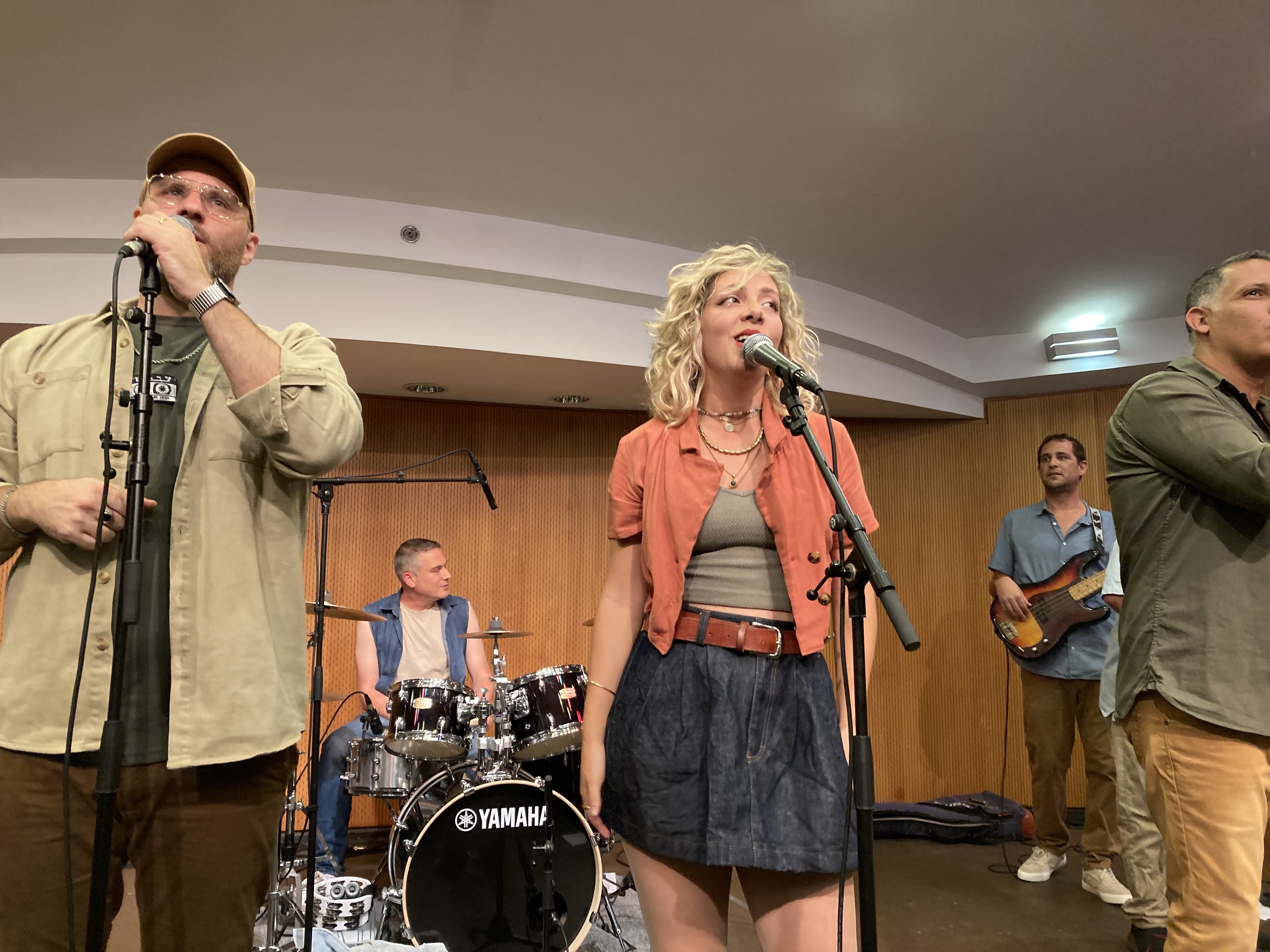
The Band

It was still raining a little bit by the time we left the concert, but we were buzzing with the joy of the whole thing and barely noticed the outside world. My friend often told me over the years that she felt like there was a big gulf between the people who grew up in Israel and those, like her, who had arrived as adults, because of the musical memories she’d missed out on; but this concert, and the whole trip so far, was making me think that a lot of that gap had begun to fill in over time.

I was exhausted from the long day of socializing, and the singing and the dancing, but also excited for the next day and the next adventure, knowing already that whatever it was would be worth the effort.
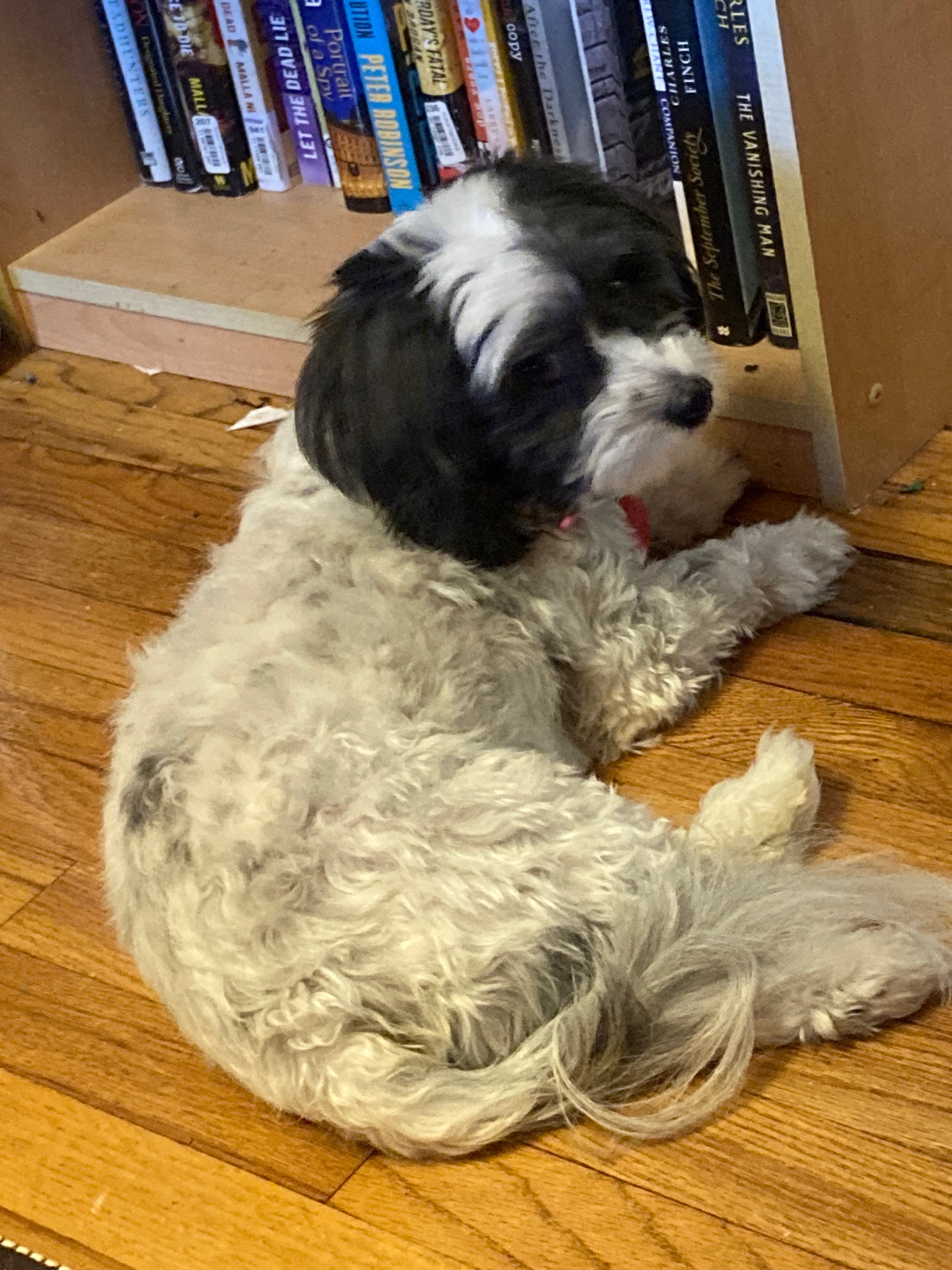
“Humans are exhausting.

Some music to try:

Yoya – https://youtu.be/B5xUiayK-Pc?si=8povEpYqVldozV2Q

Chanan Ben Ari – https://youtu.be/z27MZP_4P_U?si=4slADx6ZjXeUkRgA

Akiva – https://youtu.be/u3n2SLWQsXk?si=UPKkErUg5v3DwaJs

Meir Ariel – https://youtu.be/jnbJk3D5X5Q?si=HcQHAlEWbuV9slwT

If you haven’t had a chance yet, please check out my novel, Yeshiva Girl, on Amazon. And if you feel called to write a review of the book, on Amazon, or anywhere else, I’d be honored.

            Yeshiva Girl is about a Jewish teenager on Long Island, named Isabel, though her father calls her Jezebel. Her father has been accused of inappropriate sexual behavior with one of his students, which he denies, but Izzy implicitly believes it’s true. As a result of his problems, her father sends her to a co-ed Orthodox yeshiva for tenth grade, out of the blue, and Izzy and her mother can’t figure out how to prevent it. At Yeshiva, though, Izzy finds that religious people are much more complicated than she had expected. Some, like her father, may use religion as a place to hide, but others search for and find comfort, and community, and even enlightenment. The question is, what will Izzy find?

God as a Metaphor

            A few years ago, Rabbi Toba Spitzer came out with a book called God is Here: Reimagining the Divine, which delves into the metaphors we use to help us discover God. I haven’t finished reading the book, so don’t tell me how it ends, but what has stood out for me so far is how we rely on metaphor to give us a sense of who, what, and how God might be, just like we use metaphors to help us understand emotions and ideas that we can’t describe in any other way. These metaphors are often treated as literal descriptions by many religious people, as if we are watching a play about the world and God is playing all of the roles. And, to be honest, I don’t believe I can know God with any certainty, or that God is literally an anthropomorphic being. But there are metaphors for God that reach me on a deep level, and that seem to help me tap into the “God energy” within myself and/or in the world around me.

            The Toba Spitzer book has been sitting on my shelf for a while, filled with sticky notes and other place markers, because it is too rich to read all at once, but it came back to mind recently while I was listening to Ishay Ribo, a religious Israeli singer who has become very popular among religious and secular Israelis, and Jews around the world, for singing popular music that is full of metaphors for God, with lyrics that are often pulled directly from traditional Jewish prayers. It is surprising, and also not surprising, that his music has crossed over into the secular world, among people who would say that they are agnostic at best, and would scoff at the idea of an anthropomorphic God who actually intercedes in our lives. And yet, the music has meaning and power for them too. Why?

             I’ve always heard these metaphors for God in Jewish prayer: God as nature – wind, rain, tides, sun, moon, trees. God as warrior. God as provider. God as lover and beloved. God as teacher. God as judge, magistrate, accountant, social worker. God as rock, redeemer, savior. God as breath, spirit, life itself.

            But what I realized as I listened to these metaphors as they are used in Ishay Ribo’s songs, is that the metaphor is really about the nature of our relationship with God, rather than a way of describing God him/her/itself. If God is a Shepherd, then we are the wayward flock. If God is a king, then we are the dependent subjects. If God is a mother, we are her children in need of comfort and nurturance and protection. If God is the teacher, we are the students, looking for knowledge and wisdom. If God is the doctor, we are the patients in need of healing. The metaphor for God that we find most meaningful in any instance will depend on how we see ourselves in that moment, and what we are longing for that we can’t find elsewhere.

            I decided to do a deep dive into some of the songs, or at least use Google Translate to see what I’ve been singing along to all this time, and I found a lot of familiar metaphors for God. In one of Ishay Ribo’s songs, Tocho Retzuf Ahava (He is filled with love), he says of God: “He never turns a blind eye from the sheep of his pasture,” meaning, we are the wayward sheep longing to have someone keep us safe from harm, and especially from our own mistakes, like a shepherd would do with his flock. In another lyric, he sings, “Even when we’re broken vessels, we are still his precious vessels,” which really resonates for me. Whether we are thinking about God or not, the deep need to feel loved and cherished, especially when we feel broken, is something we all share. And then there’s the magic of God, or the alchemy ascribed to God’s power: “In the future [God] will give glory in exchange for ashes, the oil of joy will replace our grief, a shroud of glory will replace a heavy spirit.” Who doesn’t want to believe that God, or fate, or someone, will eventually step in and make things better. You don’t have to believe in God in order to long for that spark of hope when you’re feeling hopeless.

            In his song, LaShuv HaBaita (To Return Home), Ishay Ribo sings: “The time has come to wake up, to leave everything, to overcome, to return home,” and though I know, intellectually, that he is referring to a return to God and Jewish practice, the metaphor of returning home has power for me anyway. And the idea that, “Even if we’ve done something wrong, he forgives and pardons,” feels like a prayer for how the world, or our loved ones, will respond to us. And, “He reaches out a hand to help, and gives, with mercy, the power to correct and fix ourselves and return to him.” I don’t have to believe in an all-powerful God to be comforted by the image of someone who will help me help myself. And I don’t have to see that help as coming from God. I can replace God with friends, teachers, parents, and mentors, in my mind, and be just as comforted.

            I watched an interview with Ishay Ribo on YouTube recently, in Hebrew and without subtitles so I may have misunderstood, but the message I took from it was that he knows his music is reaching more than just believers in God and or orthodox Jews in particular, and that that’s intentional. The words he sings are meaningful to him because he’s using the language that comes most naturally to him, but he is expressing universal experiences of doubt, pain, anger, hope, longing, and joy. And if you want to call all of that God, fine, and if not, that’s fine too. To be fair, Ishay Ribo probably wouldn’t say it that way, exactly, but I think he would agree that it’s the connection between human beings that holds so much power in his songs, and in his singing.

If the energy that connects us is God, or just our own energies radiating outward, what does it matter, as long as we are, eventually, connected? These metaphors have lasted millennia and have held power for the people who have used them, because they help us to describe parts of our internal landscape that are otherwise left in shadow. The metaphors allow us to see and feel and talk about states of longing and pain and hope that otherwise are left unspoken, and that is why they are so healing.

It’s true that, at times, when I sing along to these songs, or take part in Jewish prayer services, I will notice a line about God as father or God as Shepherd and roll my eyes a little bit at the idea that God would literally be any or all of these things. But most of the time, I just close my eyes and feel deeply heard, and comforted, and seen. And I’m not alone.

Ishay Ribo and the Solomon Brothers, LaShuv HaBaita in English and Hebrew: https://youtu.be/WZ6HvzFh7js?si=F6AIRcWu1XOf3smL

Some of Ishay Ribo’s songs in Hebrew:

HaLev Sheli: https://youtu.be/6U_5KhaH6IM?si=Hl_wcxj0TVhKrMCR

LaShuv HaBaita: https://youtu.be/Y30pfWIQfoo?si=Ly0Wz1qWrltC5dzY

Tocho Retzuf Ahava: https://youtu.be/fQRgX3ivUKU?si=YcFnd-2El0GIzqpj

If you haven’t had a chance yet, please check out my novel, Yeshiva Girl, on Amazon. And if you feel called to write a review of the book, on Amazon, or anywhere else, I’d be honored.

            Yeshiva Girl is about a Jewish teenager on Long Island, named Isabel, though her father calls her Jezebel. Her father has been accused of inappropriate sexual behavior with one of his students, which he denies, but Izzy implicitly believes it’s true. As a result of his problems, her father sends her to a co-ed Orthodox yeshiva for tenth grade, out of the blue, and Izzy and her mother can’t figure out how to prevent it. At Yeshiva, though, Izzy finds that religious people are much more complicated than she had expected. Some, like her father, may use religion as a place to hide, but others search for and find comfort, and community, and even enlightenment. The question is, what will Izzy find?

Shiva is Scary

            A friend from my synagogue suffered a loss recently and, of course, I needed to go to her house for a Shiva visit. Traditionally, Shiva (which means “seven” in Hebrew) is the seven days of mourning after the funeral, when people bring food to the mourner’s home and stay for services so the mourner won’t have to leave their house in order to say the Mourner’s Kaddish in community. In our progressive synagogue the amount of time spent in Shiva is usually shorter, often only one or two days, because seven days of sitting is a lot, and because the short time period makes it easier to be sure the house will be full of guests each night, instead of having nights when no one but the rabbi shows up.

“If they offered chicken treats they’d get a crowd every day.”

            Shiva visits make me anxious though, especially if I get there too long before the evening service, and have a lot of free time to sit around and chat with the other visitors while waiting for a chance to speak to the mourners. There are people who are good at these sorts of things: people who know what food to bring, or if they should even bring food at all, and know what to say to the mourner, and where to sit, and how to offer help, and how to talk to whoever else is around. That is not me.

“Me neither.”

            I have social anxiety (along with Generalized Anxiety and Panic Disorder and a few hundred other things), so the idea of walking into a private house, full of mostly strangers, is already a big deal. There are also, usually, a lot of family members I don’t know, and friends and neighbors I’ve never met, and fellow congregants who I may have seen once or twice before, and I’m supposed to be able to navigate through the crowd, making polite conversation, until I reach the mourner to say, what? “I’m so sorry for your loss” is the most common and reliable thing to say, and I am sorry and it is a loss. But I tend to feel like I should suddenly be the most outgoing person on the planet, and ease the mourner’s grief in some brilliant way, and offer insight and comfort and support and …. I expect a lot of myself. I think that’s part of why being a social worker didn’t fit me. I often got home at the end of the day of field work with a long list of things I hadn’t accomplished, or didn’t understand, or couldn’t manage, or didn’t have time to do, and the guilt was unbearable.

            Given all of that, I felt a strong impulse to skip this Shiva visit altogether; to pull the covers over my head and pretend it wasn’t happening and that no one would miss me. And the fact is, no one would have criticized me, or even commented, if I hadn’t gone, but I knew I would feel awful, so I had to go.

            To make the visit more manageable I went as close as possible to the start of the evening service, to limit the chat time. The prayer service at Shiva is pretty short and is mostly there to facilitate the saying of the Mourner’s Kaddish, but even those few familiar prayers can be comforting in the midst of all of that grief and pain.

            In a regular service, at my synagogue, the Mourner’s Kaddish is said by those who are in mourning, or remembering a loss, and only the mourners will stand, but at Shiva we all stand, and we focus our attention on these particular mourners, in this particular house, rather than on mourners in general.

            I like that idea, because then, at least for the first week of mourning, you can think only of your own pain and loss, and know that others are thinking of you and praying with you; and only after that week do you go back to seeing yourself as part of the community of mourners, all mourning different losses.

            In the end, the Shiva visit went fine. The mourner hugged me as soon as I arrived, and when I asked about her loss she was able to tell me, and those around us, about the last days of her loved one’s life. She did all of the work; I just showed up, sat down, and listened. And I realized that I was proud of myself for just showing up. I didn’t change the world with the few words I said, but I was there for her and I said and did what I could. And that felt good.

If you haven’t had a chance yet, please check out my Young Adult novel, Yeshiva Girl, on Amazon. And if you feel called to write a review of the book, on Amazon, or anywhere else, I’d be honored.

            Yeshiva Girl is about a Jewish teenager on Long Island, named Isabel, though her father calls her Jezebel. Her father has been accused of inappropriate sexual behavior with one of his students, which he denies, but Izzy implicitly believes it’s true. As a result of his problems, her father sends her to a co-ed Orthodox yeshiva for tenth grade, out of the blue, and Izzy and her mother can’t figure out how to prevent it. At Yeshiva, though, Izzy finds that religious people are much more complicated than she had expected. Some, like her father, may use religion as a place to hide, but others search for and find comfort, and community, and even enlightenment. The question is, what will Izzy find?

The Power of Magical Thinking

            In this season of miracles (for Hanukah) and magic (for Christmas) I’m always inspired, and a little bit confused, about what’s possible and what’s not. I don’t think Santa is going to come down my chimney, wearing a blue suit covered in Stars of David, with a bag of presents just for me; if only because I don’t have a chimney of my own. And I don’t think my Chanukiah (a menorah with an extra candle for Chanukah) is going to stay lit for eight days; in fact, I’ve never had candles that lasted more than half an hour at a time. But there’s something in the air, and in the lights and presents and TV movies and special foods and decorations, that makes it feel like anything is possible.

“Can we plant chicken trees this year?”

            I don’t really believe in magic, though I really, really, want to, but I’m intrigued by it and by all of the things we’ve called magic in the past that turned out to have understandable, if complicated, causes.

            Recently, my rabbi talked about how, when the ancient Israelites first entered the Land of Canaan, the Canaanites taught them all of the latest agricultural science, including the rule that you should only make unleavened bread in the spring, so that all of the leavening (AKA fertility) could go to the land itself. As a result, we have a Jewish holiday each spring which features unleavened bread, or matzah (at some point, the holiday of unleavened bread was combined with the celebration of the Exodus from Egypt, to become the single week long holiday of Passover). Over time we gave new meaning to the ritual of eating unleavened bread in the spring, combining it with the memory of the way the Israelites had to escape from Egypt quickly and therefore had no time to let their bread rise, but the ritual is the same and its source is a belief in sympathetic magic.

“Matzah does not count as food.

Sympathetic magic is magic that derives its power from a connection between similar objects, like a voodoo doll, with a lock of the enemy’s hair on the doll to create a link, so that whatever happens to the doll happens to the enemy. You don’t have to believe that this is magic in order to understand the metaphoric value of a ritual like this: the voodoo doll creates a catharsis, so that an individual can cause harm to a lookalike doll instead of going out and physically harming their enemy, allowing the person to work through their pain, and the fantasy of killing the other, without actually hurting someone else or putting themselves in danger. Isn’t that an incredibly powerful, and even magical, thing for a ritual to be able to do?

The Jewish ritual of Tashlich, where we throw our sins into the water (in the form of bread or birdseed) on Rosh Hashanah, has power because it offers us the chance to feel unburdened, as if we’ve really released a weight from our lives. It’s similar to the therapeutic practice of having a patient who has lost a limb use a mirror to create the illusion of two healthy limbs, so that she is then able to relax the muscles and nerve endings leading to the missing limb, creating real change in the body as the result of an illusion.

Some sympathetic magic hasn’t aged quite as well, like using herbs with yellow sap to cure jaundice, or eating walnuts to strengthen the brain (because walnuts look like miniature brains), or drinking red beet juice to benefit the blood. And yet, at the time that these cures were used they must have seemed like powerful magic, or even the science of the day.

            And that makes me wonder, what if the ideas we call magical thinking are simply hypotheses we’ve come up with over time to explain phenomena we don’t yet understand? When there is proof that a hypothesis is wrong then it would be delusional to continue to hold onto that theory, like eating walnuts because they look like brains rather than because of their actual nutrients, but when there is no means to prove or disprove a hypothesis then is it really so unreasonable to hold onto these magical ideas if they offer us comfort?

            Another example of sympathetic magic that resonates for me is the horcruxes from Harry Potter, where part of the person has been transferred into an object, and therefore the person can’t be killed until the object is destroyed. J.K. Rowling made this concrete in her books, to prolong the life of Voldemort and make him that much more dangerous, but don’t we often use works of art, or clothing, or photographs, to represent our connection to the person who owned them, allowing us to feel their presence even when they are gone?

Miss Butterfly
Miss Dina

            There’s a reason why the Harry Potter books were so successful with adults, as well as with children: because the magical logic resonates. Magic is a powerful metaphor for the things we struggle to give full weight in our emotional lives. It is often used in fantasy stories and superhero movies to bring hard-to-explain feelings to the surface, like the Dementors in Harry Potter who represent the unbearable feelings of grief in physical form, so that they can be seen and fought off. Or like Superman’s one weakness being kryptonite, because it is the raw material of his home planet; this is powerful sympathetic magic and deep psychological truth all at once.

In Harry Potter, Voldemort’s name was replaced with he-who-must-not-be-named, because they believed that saying his name would make him appear, and we have this in Judaism too. We are never supposed to say the “true” name of God, the unpronounceable four letter name in the Torah – the Tetragrammaton – that some pronounce as Yahweh, and we are supposed to save the other names of God only for prayers and blessings, because we’re not supposed to say God’s name in vain, or for no meaningful purpose. All of this is because we recognize that words have power: to create, to shame, to guide, to honor, to express love.

            There are lots of things that I don’t believe in literally that bring me comfort and allow me to keep going, even when reality is deeply disappointing, and I think that’s often the purpose of magic, and religion too. And sometimes, inexplicably, the magic works: a call comes just when you prayed for it, you wish on a star and the wish comes true, or you get a feeling about someone you love far away, and it turns out to be true. Maybe it’s a coincidence, or an educated guess based on deep knowledge of the other person, but it feels magical, as in, unexplained and powerful. And who’s to say it’s not? Especially at this time of year.

“If we put our heads together and think hard, maybe the chicken will come!”

If you haven’t had a chance yet, please check out my Young Adult novel, Yeshiva Girl, on Amazon. And if you feel called to write a review of the book, on Amazon, or anywhere else, I’d be honored.

            Yeshiva Girl is about a Jewish teenager on Long Island, named Isabel, though her father calls her Jezebel. Her father has been accused of inappropriate sexual behavior with one of his students, which he denies, but Izzy implicitly believes it’s true. As a result of his problems, her father sends her to a co-ed Orthodox yeshiva for tenth grade, out of the blue, and Izzy and her mother can’t figure out how to prevent it. At Yeshiva, though, Izzy finds that religious people are much more complicated than she had expected. Some, like her father, may use religion as a place to hide, but others search for and find comfort, and community, and even enlightenment. The question is, what will Izzy find?         

Abraham the Father of Multitudes

            There’s a belief – that you are supposed to take on faith – that all of the books of the Hebrew Bible, and even the Oral Torah (the commentaries on the Hebrew Bible written later by the rabbis, called the Mishnah and the Gemara) were given by God at Mount Sinai, along with the Ten Commandments. According to Jewish dogma, in fact, the books of Genesis, Exodus, Leviticus, Numbers, and Deuteronomy were all written by Moses (and inspired by God) in about 1300 BCE. Unfortunately, it’s more likely that these stories were written and collected during the Babylonian exile, after the destruction of the first temple in 586 BCE, and a long time after the events described would have taken place.

            My Rabbi likes to say that the early stories in Genesis, pre-Abraham, are meant to be like Rudyard Kipling’s Just-so-stories, fables really, to explain the origins of things in our world. Why is childbirth painful? Why do we wear clothes? Why do we speak so many languages? Why are we scattered across the earth? And the answers were often adapted from what surrounding cultures had come up with to answer those same questions.

“Just so you know: dogs don’t wear clothes, and we all speak Woof.”

            There’s a well-founded theory, new to me but not new to biblical scholars, that everything before the story of the Exodus from Egypt, the central story of the Hebrew Bible, was written to make that Exodus more meaningful, and to explain why the Israelite tribes were able to escape slavery and enter freedom in the land of Israel. Others say that even the Exodus story itself is a fiction, created by a mixed group of tribes living in the land of Israel centuries later, to create a cohesive story of how they became a nation.

            This idea makes me feel seasick, as if the ground under my feet has been pulled away, but in another way it’s freeing. It allows me to see my ancestors, and these stories, as less concrete and more open to interpretation. There are reasons why every culture writes its own history, creating its own heroes and villains. Even the American story, so much more recent in history and therefore much easier to fact check, is full of exaggeration and idealization and interpretation meant to bolster certain values. This is what people do: we tell stories about our lives and our families. Some of these stories are even true, but many of them are meant to be symbolically true and to be emblematic of the life lessons we want to teach our children, rather than sticking strictly to the facts.

            And in the ancient world, history and chronology and literature were treated very differently than the way we treat them today. The idea that we fact check our stories at all would have seemed strange to them, and the idea that the science of a story would have to be correct would just seem silly. They didn’t care if the splitting of the Sea of Reeds was possible, just that it felt true to them.

“I never let facts get in my way.”

            Despite my endless questioning of the biblical authors, I always took it on faith that Abraham (and Isaac and Jacob) were real people. I assumed that the authors of the Hebrew Bible were mythologizing and interpreting every which way, in order to make these patriarchs seem more important and to make them stand for more than just individual people doing idiosyncratic things, but I assumed that at least some of the stories were based in fact. It never even occurred to me to wonder if Abraham himself was a fictional character, created by later generations, to validate cornerstones of the Israelite faith. Part of me even accepted that the mythological characters of Adam and Eve, and even Noah, were historical in some way. My questions, when I had them, were more often about the way the biblical authors interpreted events, editorializing and exaggerating to particular ends, rather than whether or not the events themselves had ever taken place.

            But, if the stories of the Hebrew Bible are fiction, why do the patriarchs, and especially Abraham, matter – so much so that three world religions see Abraham as their forefather?

            The name Abraham basically translates as Big Daddy, or father of multitudes. And yet, Abraham is a mess as a husband and a father, which makes him an interesting choice for patriarch. He’s certainly not a good role model, except, maybe, in his faith in God.

            So what is the point of this Abraham character? And why has he resonated with so many people for so long? We can ask that question whether we believe that God wrote the Hebrew Bible or that many different authors wrote it for their own different purposes, actually. Why has Abraham lived up to his title as the father of multitudes, inspiring so many people to believe in monotheism and this Yahweh version of God?

            The Hebrew Bible doesn’t present us with a paragon of goodness who is born knowing how to do everything right – no, Abraham is flawed, and makes terrible mistakes, even life threatening mistakes, in his misreading of what God wants from him.

            He learns.

            And God is with him every step of the way, not always cheering on his actions but trying to guide him and be with him as he makes his mistakes. Maybe his imperfection is what allows us to relate to him, and go on this journey with him, and believe that, maybe, we can have our own, similar, relationship to God.

“I’m imperfect too, and you love me anyway.”

            This is a God who will stick with you when you struggle, and continue to spur you on to be better, and give you second and third chances to learn. Isn’t that what we all want, really, to be supported along the way and not required to be perfect from the start, or even at the end, in order to earn that support?

            So, does it matter if these characters really existed thousands of years ago? Maybe it’s even more powerful to think that our ancestors were able to imagine these characters and their stories, and create this vision of God. I’m a fiction writer after all; I believe in the power of a good story, whether it’s factually true or not.

“Tell us another story, Mommy.”

If you haven’t had a chance yet, please check out my Young Adult novel, Yeshiva Girl, on Amazon. And if you feel called to write a review of the book, on Amazon, or anywhere else, I’d be honored.

            Yeshiva Girl is about a Jewish teenager on Long Island, named Isabel, though her father calls her Jezebel. Her father has been accused of inappropriate sexual behavior with one of his students, which he denies, but Izzy implicitly believes it’s true. As a result of his problems, her father sends her to a co-ed Orthodox yeshiva for tenth grade, out of the blue, and Izzy and her mother can’t figure out how to prevent it. At Yeshiva, though, Izzy finds that religious people are much more complicated than she had expected. Some, like her father, may use religion as a place to hide, but others search for and find comfort, and community, and even enlightenment. The question is, what will Izzy find?

The Mumble Grumble Prayers

            One of my jobs as a synagogue school teacher is to teach my students how to pray, but sometimes I worry that I’m the wrong person for the job. I grew up going to a Conservative Jewish day school, where half of each school day was spent on Hebrew language, and Jewish history and customs, and prayers. But I don’t remember actively learning the why behind the prayers. I learned how to sing the prayers, and which prayers and blessings to say when, but the Kavanah, the intention, was most often left for last, or for never.

The assumption, I think, was that little kids couldn’t understand the deeper meaning yet, but by seventh grade I’d switched over to an Orthodox school where there was a sudden descent into the mumble grumble form of prayer. We didn’t focus on the music of the prayers much anymore, instead we gave value to the words of the prayers, with a requirement to read or say every single word. The problem was that the girls were given very little time to say the morning prayers, and it was mumble grumble, or nothing. Even at my most fluent, I couldn’t have even skimmed the Hebrew of the prayers in the short time allotted to us, though many of my classmates were able to do it, and even seemed to feel something. In orthodoxy, our teachers told us, the belief was that if we did the right things, and read the right things, and said the right things, we would become good Jews, even if we never understood the why of any of it. But for me, that method didn’t work.

“Harrumph.”

 I’m only responsible for teaching the kids a few prayers each year in synagogue school, which gives us time to learn the tunes, and the words (often in transliteration), but most of all the intention behind each prayer, which meant that I needed to know what those were; and in some ways I had to start from scratch. I did my research and reading, but most of my learning came from going to services myself. At my synagogue we learn a lot of different versions of the prayers, to emphasize different ways of looking at the words and meaning, but even when we use the same version over and over, we often stop to read a poem or hear a story first, to shed new light on the purpose of the particular prayer. And that has given me a lot of material to share with the kids, but, more often than not, I ask the kids if they can explain it to me.

“Huh?”

For example, the Mishaberach is a prayer for wishing someone healing from physical or emotional pain, so we spend some time talking about how a prayer might be able to comfort us, or give us strength, even if we don’t believe that God is answering our wishes directly. And when we look at the words of the Ve’shamru, a prayer we say on Friday nights to remind us of the obligation to celebrate Shabbat, I’ll ask them why we might need, or want, a reminder in the form of a prayer every week, especially one that we say after the Sabbath has already started. And then we can look at the Modeh Ani, one of the weekday morning prayers, in which we thank God for letting us wake up in the morning, returning our souls to us after a night in God’s safe keeping (go ahead, try to teach that concept to children without accidentally referencing zombies, I dare you).

“Zombies?!”

A lot of this focus on creating meaning is due to the fact that most progressive Jews (Reform, Reconstructionist, Humanist, Conservative, etc.) don’t feel obligated to pray. In orthodoxy, you are supposed to accept the burden of obligation, in rituals, and daily behaviors, long before you ever learn the why behind the what, which is what makes mumble grumble prayer a help to them. In progressive Judaism the why always comes first, because many of the obligations have been made voluntary, which has its own risks.

Sometimes I worry that my synagogue school students are missing out by spending so little time on their Jewish education each week. I wouldn’t have been able to fill my brain with so much of the how of Judaism, and the history of Judaism, without half of each day of my childhood being set aside for learning how to be Jewish. And I feel lucky to have the background I have, and the wealth of information to tap into. My hope is that, in the time my students and I have together, they will learn to see the obligations of their religious community as more than worth the gifts they will get in return, especially because there are so many fewer obligations in Progressive Jewish life. And maybe this lighter touch will keep them from falling into the mumble grumble form of religion, where the obligations drown out the inspirations.

            In my ongoing search for ways help the kids to feel connected to the prayers, I went to a Zoom presentation by the founders of a musical group called the Nigunim Ensemble, based in Israel. They have created new versions of old prayers, incorporating chants and new rhythms from Arab, Persian, and popular Israeli music. Their message to our Zoom class was that the Jewish world can, and should, widen its ideas of prayer music, not only to include more people in our community, but to add more layers of emotion to the experience of prayer. And I was excited by all of the new sounds they were introducing to us, but for me, the message that came through most strongly was the sense of joy I heard in their voices. And I realized that not only singing good music, but singing in community, allows me to feel heard and accepted, as I am. And, when I feel heard by my community, I start to think that maybe God can hear me too.

“We can hear you, Mommy.”

If you haven’t had a chance yet, please check out my Young Adult novel, Yeshiva Girl, on Amazon. And if you feel called to write a review of the book, on Amazon, or anywhere else, I’d be honored.

            Yeshiva Girl is about a Jewish teenager on Long Island, named Isabel, though her father calls her Jezebel. Her father has been accused of inappropriate sexual behavior with one of his students, which he denies, but Izzy implicitly believes it’s true. As a result of his problems, her father sends her to a co-ed Orthodox yeshiva for tenth grade, out of the blue, and Izzy and her mother can’t figure out how to prevent it. At Yeshiva, though, Izzy finds that religious people are much more complicated than she had expected. Some, like her father, may use religion as a place to hide, but others search for and find comfort, and community, and even enlightenment. The question is, what will Izzy find?

Teaching Leviticus


For the next few months, I will be teaching a synagogue school class on Leviticus (Vayikra, in Hebrew), the third book of the Bible. It’s an odd book for children to study, with its focus on laws that applied in ancient temple times: laws for the Levites (the priests and their helpers) around purity and sacrifices and holiness. There’s also a section on dietary laws.

Cricket and bird

No, Cricket. You can’t eat the Canadian bird, even if she’s kosher.

But the fact is, the class will be based on a pre-set curriculum with very few actual quotes from the text, and much more focus on the ways these issues can be extrapolated into the modern lives of Jewish children. This makes a lot of sense. What’s the point of bogging down children’s minds with long passages, in Hebrew, about rules for priests who no longer exist? Judaism used to be a temple cult, with animal sacrifices, but long ago transformed into a synagogue and prayer-based religion.

Except, when I went to Jewish day school as a kid, we read everything, and we read it in both Hebrew and English, and it had an impact. We learned about “an eye for an eye” and that it should be translated to mean “money for an eye,” because the victim should be adequately compensated for the loss, rather than inflicting a similar loss on the perpetrator. We also learned about who’s responsible if someone’s ox falls into a pit on someone else’s property, and how punishments should vary based on whether a crime was intentional or accidental. It was, a little bit, like law school for ten year olds.

001

“That doesn’t sound like fun to me, Mommy.”

We also read the stories of the prophets in Hebrew, like a novel, without even bothering with the commentaries most of the time. Our Hebrew was pretty great, now that I look back on it.

I can’t say whether all of that was better or worse than what we do at the synagogue school; it’s just very different. My students still struggle to sound out words in Hebrew, confusing similar looking letters for one another, and struggling to remember which sound goes with which vowel sign. And the bible classes are meant to be taught in English. But I’d still like to infuse more of the Hebrew text into the process; not because it’s part of the set curriculum, but because I want them to know that there’s a connection between the lessons we’re learning in class and the Torah that we read with such awe during services in the sanctuary. We dress the scroll in velvet and silver, and we read it with a special silver pointer, from a parchment written by hand by a single scribe. I want them to hear the ancient Hebrew, and the strange melody of the chant, and to feel the connection to the past that makes it all feel so sacred and phantasmagorical to me.

I’m a little bit anxious about the transition to something so much more clearly planned out. This will be the only year, at least in synagogue school, that they study the book of Leviticus, so I can’t hop around and choose to teach whatever interests me at the moment as if I’m picking from a vast Chinese food menu, the way I do in the Hebrew class. There are important lessons here that won’t be addressed elsewhere and that will be helpful to them in preparing for their Jewish lives. But I’ve gotten used to the creativity of the Hebrew class, where we can spend fifteen minutes trying to shape the Hebrew letters with our bodies without feeling like we’re wasting time (I have one student who can do a bridge pose that looks exactly like the Hebrew letter Chet – it’s possible she has no spine).

045

“What letter am I, Mommy?”

It’s a balancing act, to bring the kids some of the magic that I feel, without overwhelming them with too much that is beyond their abilities for now. I need to make it fun, and relevant, and engaging, and useful to their daily lives, but I also don’t want it to feel so familiar that it loses its spark.

So, I need to study the lesson plans carefully, and study the book of Leviticus itself again, and try my best to teach my kids about holiness and where to find it in their lives, in their communities, and in themselves. And in dogs. There’s got to be room for the dogs in there somewhere.

IMG_0747

“There always has to be room for us.”

Wish me luck!


If you haven’t had a chance yet, please check out my Young Adult novel, Yeshiva Girl, on Amazon. And if you feel called to write a review of the book, on Amazon, or anywhere else, I’d be honored.

Yeshiva Girl is about a Jewish teenager on Long Island, named Isabel, though her father calls her Jezebel. Her father has been accused of inappropriate sexual behavior with one of his students, which he denies, but Izzy implicitly believes it’s true. As a result of his problems, her father sends her to a co-ed Orthodox yeshiva for tenth grade, out of the blue, and Izzy and her mother can’t figure out how to prevent it. At Yeshiva, though, Izzy finds that religious people are much more complicated than she had expected. Some, like her father, may use religion as a place to hide, but others search for and find comfort, and community, and even enlightenment. The question is, what will Izzy find?



A Summer of Singing


At the first official choir rehearsal for the Jewish High Holidays (Rosh Hashanah and Yom Kippur, starting Sunday night, September 29th), I received a loose-leaf full of music from the choir director. Most of the other choir members have been there for years (some for over thirty years), so while they mostly had to show up at rehearsals and sing, I had to take my loose-leaf home and study. Even the songs I thought I knew had to be relearned, because I was used to singing the melody with the congregation, and now I was singing the harmony with the other altos.

IMG_1035

“Do you really have to sing that again?”

The music kept repeating in my head all summer long. I knew my brain was doing this to be helpful, so that I could learn what I needed to learn in a hurry, but it meant that I was drowning in melancholy music for months. I couldn’t even escape it while I was sleeping.

The dogs are probably sick of hearing about repentance and atonement, but they seemed to like finally being able to participate in synagogue services, in their own way, in their own home. When the summer rehearsals started, I spent a lot of time being mute and grumpy, because I couldn’t sing along. But after months of studying I’ve learned most of the songs, and even figured out how not to be completely distracted by the other voices around me.

img_0510

Except for Cricket’s voice. That still distracts me.

Starting in September we had choir rehearsals once a week, and by then I knew most of the music, though some things were still beyond me, especially the songs where the altos just sing the oohs and ahhs in the background (it’s so hard to learn the music without words to hang the notes on!). There are a few pieces of music that still confound me, especially one that requires us to sing ten notes on one word, over and over again. I get three notes in and then shut my mouth and wait.

249

“I’ll sing for you, Mommy!”

Unfortunately, no one seems to have noticed all of the progress I’ve made, even though I make a point of singing out when I know what I’m doing. Maybe they think it was as easy for me to learn all of the music, or they forgot that I’m new to the choir altogether. I was kind of hoping for some praise; you now, gold star stickers to put on my loose-leaf, something like that. Maybe someday.

One very lucky break is that our temporary conductor is one of the altos, so she has been able to help us out with finding notes and some much needed attention. She also has her own interpretive dance style of conducting that’s really easy to follow, so that even when I’m looking down at the music and can only see out of the corner of my eye, I can understand what she’s telling us.

54 - wow, what's next

“I bet I could lead a choir!”

For the High Holidays, the choir will be sitting on a raised platform, in our newly redone sanctuary, and I am not looking forward to that. I’m used to being mostly invisible in the crowd at the high holidays, able to be grumpy or tired or whatever I am in relative obscurity. But this year I will be on public view, so I may have to put on a happy – or at least normal – face. This is also when I start to wish I’d lost more weight already, and bought a whole new wardrobe, and maybe had plastic surgery, because otherwise I just look like me. We don’t even get to wear robes to hide behind.

The biggest downside of being in the choir is that I can’t sit with Mom during the services. Hopefully she’ll be able to sit near the choir area, so that I can roll my eyes at her discreetly during the services. I think it might be frowned upon if I actually took out my cellphone to text my ongoing commentary during the services, but it might come to that. I mean, these are long services, and I have a lot to say!

017

“Do you? We never noticed.”

I’ve made some friends among the altos, though, so I should be able to nudge someone and whisper when something especially ridiculous happens. Which, of course, it will. With a new sound system, and echoing acoustics, and everyone stuffed together in one big room trying to express all of the repentance and atonement and misplaced guilt of a whole year, laughing fits are inevitable.

I wish you all a Shana Tovah U’Metukah (a good and sweet new year) with as much laughter as possible!

Happy New Year!

295


If you haven’t had a chance yet, please check out my Young Adult novel, Yeshiva Girl, on Amazon. And if you feel called to write a review of the book, on Amazon, or anywhere else, I’d be honored.

Yeshiva Girl is about a Jewish teenager on Long Island, named Isabel, though her father calls her Jezebel. Her father has been accused of inappropriate sexual behavior with one of his students, which he denies, but Izzy implicitly believes it’s true. As a result of his problems, her father sends her to a co-ed Orthodox yeshiva for tenth grade, out of the blue, and Izzy and her mother can’t figure out how to prevent it. At Yeshiva, though, Izzy finds that religious people are much more complicated than she had expected. Some, like her father, may use religion as a place to hide, but others search for and find comfort, and community, and even enlightenment. The question is, what will Izzy find?


Writing Our Own Blessings


There’s a long list of blessings in the Jewish tradition, most of which are over food. The official purpose of saying blessings in Judaism, according to Wikipedia, is to acknowledge God as the source of all blessings, and to transform everyday actions and occurrences into religious experiences. There are blessings on giving charity, and hearing thunder and seeing lightning, on smelling a fragrance, or seeing a rainbow (though that last one is focused on blessing the memory of the covenant between God and the Jewish People, which isn’t really what’s exciting about rainbows). There are blessings for seeing the ocean, or the blossoming of trees, or undergoing a medical procedure, or crossing an ocean, or being released from prison. There are blessings you’re supposed to say each morning, to thank God for straightening the bent, and releasing the bound, and opening the eyes of the blind, and “making me a man.” There is an alternate blessing for women to say, but, spoiler alert, it’s not equivalent to the blessing for men. There are blessings on seeing a miracle, and on receiving good or bad news, and then there’s the blessing thanking God for not making me a Goy (non-Jew), which I just refuse to say.

puppy in November 005

“Hey, what’s that about?”

My question is: are these existing blessings sufficient to fill our needs? Every blessing in the canon was written by a human being, at a certain time and for a certain purpose. If the blessings we say throughout the day impact how we feel about our lives, it only seems fair that we should have some control over what they will be. I want to feel empowered to say the blessings that mean something to me, today, and not be stuck repeating what generations of men have seen as worthy of gratitude.

First of all, I want to be able to alter existing blessings when they don’t work for me. For example, I would change the blessing over rainbows so that it focuses on the beauty of a rainbow, or on the hope that leprechauns and gold coins will appear at the end of it. And since I can’t say the thank-god-I’m-a-man blessing and I refuse to say the thank-god-I’m-not-a-Goy blessing, I need to find alternatives. Maybe, thank God people are all different so we don’t get bored with all of the sameness, or, thank God I am the specific person I am, whoever that may be.

puppy-in-october-017.jpg

“That sounds much better.”

I like the idea of spontaneously expressing gratitude when good things happen, even if those good things don’t fit into some universal pattern. Ellie might say Thank you God for giving me a mommy who knows that I want chicken right now. And Mom might say, Thank you, universe, for this little bird who landed on my window sill to eat the leftover matzah from Passover that the other birds ignored. And for me, Thank God I have enough pens and yellow narrow-ruled legal pads to write down all of my random thoughts.

157

“Did you say chicken?”

            I feel strongly, though, that we should be allowed to acknowledge that life is complicated, and that I can feel more than one thing at a time, without cancelling out the gratitude. I’d call these the “Thank you, but…” blessings, as in, Thank you, God, that I can still walk, even though my hips ache on rainy days, and I have to take pain killers and wear orthotics in all of my shoes; thank you for helping me tolerate people who disagree with me, even though they are still, clearly, wrong; thank you for giving me a nervous system that is extra sensitive to smells and sounds and feelings of all kinds, even though it makes me feel awful half the time; thank you for the joy I feel when I hear a bird singing outside my window, but, you know, it’s five o’clock in the morning and I’d rather be sleeping. And of course, thank you, God, for this piece of chocolate, but next time could you make it Godiva?

            I also want blessings that can acknowledge pain as part of my life: Thank you God for seeing me in my pain, accepting me as I am, and knowing that I am doing my best; thank you God for making it rain on a day when I feel like crying; thank you God for sitting next to me in the muck and not being in such a hurry to leave; Thank you for hearing me when I’m angry and sad and confused, as much as when I’m happy and inspired; Thank you God for teaching me the power of kvetching; blessed art thou, oh lord, our god, ruler of the universe, for not giving a f**k that my hair is a mess today.

003

“Stop talking about my hair!”

            And I need some aspirational blessings, to help me imagine that things can improve: may we, one day, remember what it’s like to wake up to actual birds chirping instead of to twitter alerts; may God, or the force, be with me during my exam so that I don’t forget everything I learned in a fog of anxiety; may we all learn to hear one another with empathy and compassion, even when we do not understand.

            And last but not least, because it’s the category we usually think of when we think of blessings, I need some more blessings that celebrate wonder and gratitude, like: a blessing for every time I see a new tree or bird or flower; a blessing on making a new friend, or having an “aha” moment. A blessing for pushing myself one centimeter further into a stretch, or being able to stand up again after sitting on a low chair, or having enough tissues during allergy season. A blessing for practicing a musical instrument, or taking medication that actually works, or reading a good book, or having a nice phone call, or receiving a kind email. A blessing for the ability to think for myself, and a blessing for the miracle that is chocolate mousse.

But I still have a lot of questions about blessings, and the role they play in our lives. Why do some people find deep meaning in saying blessings all day long, and others find it tedious? Is there still value in saying blessings even if you don’t believe in God? Is there a right way or a wrong way to say a blessing, and if I say the “wrong” blessing will it make me feel worse?

The dogs seem to say blessings throughout their day, like when Cricket sighs a deep sigh as she stretches herself out across Grandma’s lap, or when Ellie flies off the steps to chase a squirrel. They haven’t told me who they say their blessings to, or if they believe in God or some other universal force, and I have no idea if there are words attached to the blessings they mutter to themselves all day long, but it makes them happy. I can see how meaningful it is to them, to acknowledge, with a sound or a smile or a stretch, how wonderful they feel when they smell chicken in the air, or when they scratch their backs on the rug. They are fully present in the moment and acknowledge their gratitude, but also their disappointment and grief, all at the same time. Taking that extra second to acknowledge it all seems to really work for them.

272

“Aahhh.”

284

Some blessings don’t need words.


I wonder if there is a collection of blessings that dogs have access to that helps them find the exact right thing to bless, because I could use something like that. But, unfortunately, I’m pretty sure they didn’t find any of their blessings in a prayer book. They just know what they are feeling, and feel free to say it to whoever might be listening. That seems like a good place to start.


If you haven’t had a chance yet, please check out my Amazon page and consider ordering the Kindle or Paperback version (or both!) of Yeshiva Girl. And if you feel called to write a review of the book on Amazon, or anywhere else, I’d be honored.

Yeshiva Girl is about a Jewish girl on Long Island named Izzy. Her father has been accused of inappropriate sexual behavior with one of his students, which he denies, but Izzy implicitly believes is true. Izzy’s father decides to send her to a co-ed Orthodox yeshiva for tenth grade, out of the blue, as if she’s the one who needs to be fixed. Izzy, in pain and looking for people she can trust, finds that religious people are much more complicated than she had expected. Some, like her father, may use religion as a place to hide, but others search for and find comfort, and community, and even enlightenment. The question is, what will Izzy find?


Reconstructing Judaism


My synagogue belongs to a small branch of Judaism called Reconstructionism. I think there are something like a hundred Reconstructionist congregations, and three hundred and fifty Reconstructionist rabbis, in North America, so it is a small, but not invisible movement. I’ve never quite considered myself a Reconstructionist Jew, though, the way some people identify as Modern Orthodox or Reform or Conservative. I’ve only belonged to this synagogue for six years now, so it’s more that I like my congregation in particular. I still just consider myself Jewish, without a specifier.

I like that the Reconstructionists emphasize that we can make our own choices, about what to believe and how to practice, instead of having to go to the rabbi for his or her dictum. I like that the Reconstructionist movement ordained one of the first female rabbis (way back when), and celebrated the first official bat mitzvah (even further back), two things that are now common place in liberal Judaism. But I get overwhelmed by the social activism, or Tikun Olam, that is emphasized daily at my synagogue. It’s hard to watch eighty year olds go on protest march after protest march and retain any sense of self-respect when I say that I can’t go, or don’t even want to.

I was not educated by Reconstructionists as a child. I went to a Conservative day school and sleep away camp, and then to a Modern Orthodox junior high and high school. Pressure came from every direction, to fit in, rather than to choose for myself or think for myself. And it took a long time for me to find a synagogue, as an adult, where I felt comfortable just as myself. I like that I can choose to get involved in the things that fit me, like Friday night services and discussions, and avoid the things that don’t fit me, like committees, or getting on a bus to Albany to try to convince politicians to change laws. And really, until they accept dogs on these marches and trips, why would Cricket ever let me go without her?

IMG_1829

“Don’t leave me!”

My graduate program in social work has a (very) activist bent as well, so I get a lot of pressure from certain teachers to pursue societal change, rather than to focus on individual people and hearing their stories (which is my favorite part of social work). The fact is, I don’t want to convince people of things; I want to know them, and I want them to know me. And if that changes something for each of us, so much the better.

All of this came up recently because a couple of speakers from the Reconstructionist movement came to speak to my congregation on a Friday night. I was hoping for some wisdom and inspiration, but instead they talked about branding, and the need for more resources from us (money and time, two things I don’t have). It was exhausting, and alienating, and I had to work very hard not to walk out. Cricket would have been barking her head off if she’d been invited to the service, which may explain why she, and her doggy cohort, was not invited.

IMG_0876.JPG

“I don’t know what you’re talking about, Mommy. I’m a good girl.”

For legal reasons that I still don’t understand, the leadership of the Reconstructionist movement had to change its official name this year, and they came up with Reconstructing Judaism. One of the speakers told us, defensively (because they’ve heard a lot of pushback), that it’s a great name because it’s a verb and implies action. And I felt like she was saying that being a Reconstructionist is an activity rather than an identity.

We are Jew-ing instead of Jewish.

But, what if I’m not up to Jew-ing one day? What if I’m tired and need a nap, does that mean I lose my identity? I don’t want to be told that my belonging to a community depends on the activities other people want me to do; that’s the same kind of rigidity I experienced growing up with Orthodoxy, just with a new set of rituals.

So maybe I will just remain a Jew, without a specifier. The fact is, I don’t mind doing the daily work of reconstructing my own version of Judaism, at my own pace, and based on my own feelings and beliefs. I just don’t want to be told that we all want, and think, and do, the same things; or that we should, if we want to belong. That’s not reconstructing Judaism, that’s reconstructing me to fit into Judaism. And I’m not okay with that.

Cricket thinks it’s ridiculous too. No one tells Cricket who to be.

IMG_0237

“No one tells me what to do, Mommy. No one.”