Tag Archives: writing

Longmire

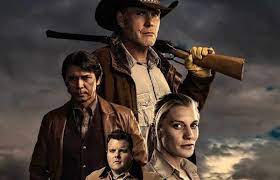
My latest Netflix binge is a show called Longmire. It first aired on A&E (a basic cable channel in the US) and I really liked it back then, despite being anything but a Western fan, which was the genre the show seemed to fit into, though it’s also a crime drama. Walt Longmire (based on books by Craig Johnson) is a Sherriff in the fictional Absaroka County, Wyoming. His wife died the year before the show starts, seemingly of cancer, but we find out that no, she was murdered. We meet his best friend, Henry Standing Bear, from the nearby Cheyenne reservation, and his daughter, a lawyer, and his deputies, and we learn about the kinds of crimes that a Sherriff in Wyoming might have to deal with, and the politics, and so much more.

“Any dogs in the show?”

            After two or three seasons on A&E the show was cancelled, for having too old of an audience supposedly. I don’t know if I realized at the time that Longmire had been picked up by someone else, but since I didn’t have Netflix back then it was over for me, and I mourned the loss.

            Maybe I’m an old soul, as I have often been told, but a lot of the shows that have been designated as being for older people have been favorites of mine since childhood – like Murder, She Wrote and Matlock and Law & Order. The assumption that we all only watch shows that reflect our current age and situation in life is silly, and something that, if true, should be challenged.

            The sixth and final season of Longmire aired on Netflix back in 2017, so there’s really no hope of them going back and doing more seasons now, damn it, especially because the show’s final episode wrapped things up in a way that kind of cuts off the blood supply for possible future seasons. But all of those knots could be untied – like when you knit a sweater and realize it’s too short, so you pull out the last row or two and add on – and it could be done seamlessly. Almost. But for now, I only have these six seasons to watch and re-watch to try to figure out why it burrowed so deeply into my psyche in such a short amount of time.

On second viewing I’m noticing more details, more places where they foreshadowed the future plot twists, and how they used music to create tension, and how they developed certain themes on a slow burn. I thought it might be too soon to watch it all again and that I would get bored, but that just hasn’t happened. I feel like I’m getting to know these people better, and seeing how much more detail was there in the first place, helping me to understand how their minds work and where they are strong and where they are weak and what they know about themselves and what they don’t.

The relationships between the characters are so deeply explored, often through just the tone of voice or a look between two people. And I love that every strong character in the show has weaknesses and grey areas and confusions over what is right and wrong. And even the best of friends disagree about what’s right in any given situation.

I love Lou Diamond Phillips in his role as Henry Standing Bear. He’s able to capture the easy charm of a bartender, and the deep loyalty of a best friend, and the spirituality and anger of a Cheyenne warrior, all without seeming to pivot from one part of himself to another. And Vic, the female Sherriff’s deputy from Philadelphia who goes from flirty to sarcastic to frightened to defiant to deeply loyal with the same seamlessness.  

“She sounds like Cricket.”

And then there’s Walt, the strong, silent Sheriff, who can be childlike and confused and then strong and formidable, and whose moral compass is in constant motion, not always leading him in the right directions but showing us that he is always searching for what is right. His bravery and endurance feel almost unbelievable, the way he pushes himself to the brink to help other people, but we get to see all of the damage it causes and all of the pain he’s trying to hide and all of the disappointment and the fear, so that his strength seems deeply human after all.

Nothing is simple on Longmire, but instead of the last minute plot twists of a show like Law & Order, each surprising development in the plot has been laid into the fabric of the show and feels believable and even inevitable, though still shocking.

I love that I’m addicted to a show set in the cowboys and Indians world of Wyoming, a world I wasn’t really curious about before this. I can’t find myself in these places or these people and yet their stories resonate deeply with me, maybe because, bottom line, I trust their values. I trust them to care about me. I believe that Walt and Henry and Vic would care what happened to me, and find ways to protect me if I needed protection. Despite all of the violence and tension in their world, I feel safe with them.

            I wish I could write like this. I wish I could write the next season of the show and make the actors come back to shoot it. But maybe most of all, I want to be strong the way these people are strong, while always still acknowledging my fears and weaknesses and confusions. I want to be clear about my values and goals, while still being open to learning something new about the world and about myself. And I want to be able to stick to what is true for me, even while respecting what is true for someone else, unless they’re delusional, in which case, fuck them.

            I think Walt would agree.

“Watch your language, Mommy.”

If you haven’t had a chance yet, please check out my Young Adult novel, Yeshiva Girl, on Amazon. And if you feel called to write a review of the book, on Amazon, or anywhere else, I’d be honored.

            Yeshiva Girl is about a Jewish teenager on Long Island, named Isabel, though her father calls her Jezebel. Her father has been accused of inappropriate sexual behavior with one of his students, which he denies, but Izzy implicitly believes it’s true. As a result of his problems, her father sends her to a co-ed Orthodox yeshiva for tenth grade, out of the blue, and Izzy and her mother can’t figure out how to prevent it. At Yeshiva, though, Izzy finds that religious people are much more complicated than she had expected. Some, like her father, may use religion as a place to hide, but others search for and find comfort, and community, and even enlightenment. The question is, what will Izzy find?

Disarray

            I’m so disoriented. The synagogue school year ended and that means I can focus on my writing, so of course I’m at loose ends. Generally I need to spend a few weeks tying up those loose ends before I can find my footing, and maybe this is just the same as always, but it feels even looser than usual. My brain feels like a kaleidoscope, but the colored pieces of paper never land in any particular shape, they just keep swirling.

            I’ve started six or seven blog posts in the past few days and each one has ended with balled up paper in the garbage can (yes, I still write longhand on legal pads). I’m not quite sure why each essay self-destructs, sometimes it’s because I thought I had a new idea and two pages in I realize I’ve said it all before, and sometimes I get two paragraphs in and realize I really don’t want to look in that particular dark corner right now. Part of it is probably that I have a very long to-do list for the summer and I can’t figure out what to focus on first, or why. But really, I can’t focus at all. Usually, when I’m writing an essay I feel like I can find an invisible container for it in my head, and with palpable edges, so that I can write and edit within that general area, without feeling too overwhelmed.

“You should try pee mail, its the best form of communication.”

            But suddenly there are no available containers, or I forgot how to create one, because I feel like I’m just aimlessly writing words on a page, and I can’t sense the parameters of the idea, and the sentences just go on without shape or purpose. And if I can’t shape an essay, how can I even imagine shaping a novel, which requires a container bigger than anything else.

            I know I’ve felt this way before, but I don’t remember when, or why, or how I got out of it.

            I feel like I need to prepare for the next school year right now and solve every problem that came up over the past school year in order to think clearly, but I’m also taking another online Hebrew class, and going to new doctors, and planning for another oral surgery, and I feel like I should get back on track with seeing the eye doctor and foot doctor and dermatologist, which I’ve been putting off as non-essential for the past few years. And I have a pile of books that I’ve read over the past year, filled with little pieces of paper marking sections I want to read over and take notes on, and I have a new pile of books to mark up, and I need to get back on track with exercise, and go to choir practices to prepare for the high holidays, again, and I want to keep up with blog posts and therapy appointments, and all of that seems to come before working on the novels I expected to have finished by now.

            I can feel the looseness coming over me right now, and with it the desire to rip up pages, but I can’t keep writing and ripping and writing and ripping all the time. I need to land somewhere, so I am forcing myself to keep writing this essay, even if I can’t imagine the shape it will ultimately take. I am not comfortable in this state of mind, but I have to keep persisting and doing the work and writing the sentences I can write, until the shape and texture and purpose of the essay comes into being, or else I’ll never be able to move on to the bigger projects that are swirling in my brain.

“We’re going to rest while you do that.”

If you haven’t had a chance yet, please check out my Young Adult novel, Yeshiva Girl, on Amazon. And if you feel called to write a review of the book, on Amazon, or anywhere else, I’d be honored.

            Yeshiva Girl is about a Jewish teenager on Long Island, named Isabel, though her father calls her Jezebel. Her father has been accused of inappropriate sexual behavior with one of his students, which he denies, but Izzy implicitly believes it’s true. As a result of his problems, her father sends her to a co-ed Orthodox yeshiva for tenth grade, out of the blue, and Izzy and her mother can’t figure out how to prevent it. At Yeshiva, though, Izzy finds that religious people are much more complicated than she had expected. Some, like her father, may use religion as a place to hide, but others search for and find comfort, and community, and even enlightenment. The question is, what will Izzy find?
The Mother’s Day Mushrooms

            Mother’s day traditionally marks the beginning of the gardening season, even when the gardening has already been going on for a while, and most years Mom and I spend Mother’s day morning at a gardening store, filling up the trunk of the car with all of the plants and seeds and mulch and tools she might need, at least for the next week or two. But for Mother’s day breakfast this year, my brother and his eldest son came to visit, with bagels and cream cheese and lox, to celebrate Mom. My brother brought a bouquet of colorful yarn, and my nephew brought a big box of mushroom starters: three huge white blocks, one for Blue Oyster mushrooms, one for Lion’s Mane, and one for something called Piopino, each in their own bags, with a special instruction booklet.

The yarn bouquet, after some of the yarn had already been unwound.

            When my brother’s kids were younger we used to go for nature walks all the time, with Mom in the lead, and then the kids, and then me. We’d walk down by the river near their house, and the kids would climb trees, and collect rocks and leaves and whatever else they could find, unless Grandma warned them off of something yucky or poisonous. And when it was too cold to be outside, she taught them how to make little boats out of empty walnut shells and float them in a bowl of water; just because. As a result, my oldest nephew has his own vegetable and herb garden, with birds who call it their home, and for Mother’s day, he thought the best gift he could give his Grandma would be the chance to watch mushrooms grow, and he was right.

            And after breakfast, my nephew and his Dad braved the woods behind our building, and the uncertain ground under a huge fallen tree trunk, to pluck two giant mushrooms, still connected to each other, just so Mom could see them up close and then put them in her garden, to inspire the other plants to grow big and strong.

Mushrooms on the dead tree trunk

            My Mom’s love of gardening came from her father, whose yard was filled with flowers, and birds, and dastardly squirrels, and contraptions to keep the squirrels away from the bird feeders. But she didn’t do much gardening at the house I grew up in, partly because she was busy working and doing other creative things, but also because it just didn’t feel like a place where good things would blossom. Almost as soon as she divorced my father, and we moved to a new home, she started to garden. She planted her father’s lilies, and then strawberries and tomatoes and marigolds, and one year she planted pumpkins that took over the whole yard. And now she gardens all year long, planting seeds indoors and seedlings outdoors, and if she’s not planting, she’s weeding or preparing the ground for more planting later on. And she loves it! And Cricket loves it! And Ellie and I sit on the bench and watch them, and listen to the birds, and shrug, happy for them, though mostly bewildered.

“What’s your problem?”

            Within days of the Mother’s day visit, the new mushrooms were sprouting, magically, from those plain white blocks, and our neighbor was deep cleaning her bird bath to accommodate all of the birds returning to the yard, and there were pink and orange tulips, and magenta rhododendrons, and purple irises, and red azaleas, and green everywhere, including on the pawpaw tree.

Piopino
Lion’s Mane
Blue Oyster

            We are now in pawpaw counting season. First the red flowers had to appear on the tree, and darken to crimson and then to a reddish dark brown, and then, as the flowers died and fell away, the baby pawpaws appeared from the wreckage. So now starts the long summer of watching the pawpaws grow, and worrying that they will be eaten by passing birds, or squirrels, or that they’ll fall off in the rain, or die off for lack of nutrition. The counting becomes even more difficult as the leaves grow to their full size and obscure the growing pawpaw fruit, but I try to accept it, because the leaves are doing their best to protect those baby pawpaw fruits from disaster.

Baby pawpaw fruit

            It’s funny, just as Mom spends her summers tending her garden, I kind of do the same with my writing. We plant our seeds and nurture them and weed out the overgrowth and anything that’s getting in the way, and hope that something comes of all of the worry and the work. And each year we overplan, and barely get through half of what we hoped to accomplish. I can’t make the summer expand to give me the time and patience to do everything I want to do, just like Mom can’t use the whole yard, and then some, to plant all of the flowers and vegetables she dreams of harvesting in the fall. But we do what we can do.

“Isn’t it nap time yet?”

If you haven’t had a chance yet, please check out my Young Adult novel, Yeshiva Girl, on Amazon. And if you feel called to write a review of the book, on Amazon, or anywhere else, I’d be honored.

            Yeshiva Girl is about a Jewish teenager on Long Island, named Isabel, though her father calls her Jezebel. Her father has been accused of inappropriate sexual behavior with one of his students, which he denies, but Izzy implicitly believes it’s true. As a result of his problems, her father sends her to a co-ed Orthodox yeshiva for tenth grade, out of the blue, and Izzy and her mother can’t figure out how to prevent it. At Yeshiva, though, Izzy finds that religious people are much more complicated than she had expected. Some, like her father, may use religion as a place to hide, but others search for and find comfort, and community, and even enlightenment. The question is, what will Izzy find?
The Broken Bookcase

We have a blue Ikea bookcase in the hall that has been tilting for a long time now, but there’s been so much else going on that it never seemed important enough to try to fix it or replace it. We have bookcases everywhere, and I have five in my room alone, so one tilting bookcase didn’t seem like an emergency; until one of the shelves fell, and even then we just put “shelf pins” on the shopping list and eventually bought some, and of course, forgot to put them in. And then another shelf fell. And I still can’t be bothered to deal with the damned thing.

The Broken Bookcase

It’s not that a bookcase is such an expensive thing to replace, especially if we get another one from Ikea, its more that we’d have to actually go to Ikea, carry the heavy box to the car and from the car to the apartment, and then put the thing together, oh, and also empty the broken bookcase and take the broken pieces down to the garbage and refill the new bookcase.

I don’t have the energy for any of that, let alone all of it.

I’ve been trying to clear out the “extra books” from my collection for years now (so that we wouldn’t need so many bookcases), by re-reading the books that I’m on the fence about. I’ve already filled two boxes with books I no longer need, but giving books away is harder than you’d think. The library never wants them, and finding a place that wants the books, on the third Thursday of the month, at twilight, still requires carrying heavy boxes of books out to the car. So at this point I still have a box of discarded books on the floor, next to the bookcases, and I still have three shelves full of books to read through. I also have a bad habit of ordering more books all the time.

“She’s going to throw out our toys to make room for books, isn’t she?”

This feels like a metaphor for the way my brain has been lately: overwhelmed with ideas to follow up on, all resting on iffy shelves and waiting for me to start culling through them; but I can’t even think straight enough to do the culling before another ten or twenty ideas pile on. I feel like every day I’m looking at these tilting shelves in my brain, knowing that it’s all going to overflow at any moment, with no idea how to stop it.

I decided to take a break from going to online Hebrew classes for a few months, because I’ve been struggling to stay focused during the classes this past semester, and because the time I spend in those classes and doing the homework for them has kept me from doing other important things on my to-do list. I’m hoping to get back to the classes over the summer, when I have more free time to focus, but I feel the loss of the socializing and the Hebrew already. I still don’t even know what to do with all of the Hebrew I’ve learned so far, or why it’s been such an obsession for at least two years, if not my whole life.

I feel like there’s a path I should be on, and a long term goal I should be working towards, and that Hebrew language learning is part of it; but I don’t know what that goal is. I don’t want to move to Israel, and I don’t particularly want to go back to school full-time to become a translator or a rabbi or a cantor. I would like to go deeper into Jewish education, if I can, working with teens, maybe, as well as with the younger kids, and maybe even doing curriculum development. But I don’t know of a path to get there, and I don’t want all of that to be instead of writing my novels – the notes for which have filled up a bunch of shelves of their own.

I feel like there’s a whirlwind in my brain, pushing me in different directions all the time, keeping me confused and off kilter, and I’m worried that my internal bookshelves are as wonky as the ones in the broken bookcase in the hall, and it will all tumble down at any moment.

My hope is that once synagogue school is over for the year, I’ll be able to concentrate on all of those ideas whirling around in my brain, and organize them, and maybe even choose some to work on. But I’m afraid I’ll be as busy with doctors and tests this summer as I was last summer, without much improvement in my health to show for it, and those wonky internal shelves will just keep tilting.

But I keep slowly reading through my piles of books, and writing down all of my ideas, and sorting and discarding when I can, because this is how I move forward. It’s not especially practical, or fast, but it’s the way my mind works, so it will have to do for now.

“It’s important to just be yourself, Mommy.”

If you haven’t had a chance yet, please check out my Young Adult novel, Yeshiva Girl, on Amazon. And if you feel called to write a review of the book, on Amazon, or anywhere else, I’d be honored.

            Yeshiva Girl is about a Jewish teenager on Long Island, named Isabel, though her father calls her Jezebel. Her father has been accused of inappropriate sexual behavior with one of his students, which he denies, but Izzy implicitly believes it’s true. As a result of his problems, her father sends her to a co-ed Orthodox yeshiva for tenth grade, out of the blue, and Izzy and her mother can’t figure out how to prevent it. At Yeshiva, though, Izzy finds that religious people are much more complicated than she had expected. Some, like her father, may use religion as a place to hide, but others search for and find comfort, and community, and even enlightenment. The question is, what will Izzy find?

Jury Duty

            When I first received a jury questionnaire in the mail, back in the spring, I wrote in the space provided about my various health issues and why it would be difficult for me to manage a full day of jury duty, let alone several days of a trial, and asked to be excused. When I didn’t hear back from them with a request for more information, I thought I’d done enough to be let off the hook. But the jury summons came anyway, on the same day that I’d gotten clearance from the Pulmonologist for my oral surgery, and the summons was dated for the week of the surgery itself.

“Oh, come on, people!”

I was able to postpone the summons for a few weeks, but I didn’t even try to get out of it completely; partly because I felt guilty trying to get out of jury duty, and partly because I didn’t want to go through the humiliation of trying to prove to my doctor that my disabilities are significant. I’d gotten out of jury duty a while back with a doctor’s note, when they were going to send me to Brooklyn (an hour and a half trip each way, by train, in the summer), but I had a doctor I trusted back then, and I knew for sure that I wouldn’t have been able to handle that trip, no matter how hard I’d tried. But this time, it was different, or I kept thinking it was.

            I told myself that I’d only have to drive twenty minutes each way, because the court complex is nearby, and I knew the route, and even if the weather was disgusting, I’d be inside most of the time, and sitting. And then my surgery was postponed too, with jury duty coming first instead of second, so I really didn’t see any way out of it.

            One of the more stressful things about jury duty, in my area at least, is that instead of being told to come in on a specific day, you are put on call for a week, meaning that every day at five o’clock you have to check the website to see if your number has been called for the following day. But I was lucky, this time, because when I checked the website the Friday before my summons week, I found out that I was being called for Monday, which meant I had the whole weekend to prepare: do the food shopping and the laundry, take extra naps, fill up my book bag with all of the things I’d need, and thank god I didn’t have to wait until five o’clock each day, for the rest of the week, to find out if I’d have to go in the next morning.

“But who’s gonna take me out to pee?!”

            I feel like I should be one of the people who is actively interested in every part of the justice system, and in doing my civic duty, and I keep thinking that I should use jury duty as a way to research future novels and learn about police procedure and all that. And, beyond that, I feel like jury duty is an obligation, like voting, and I don’t want to be one of the people who lies to get out of jury duty and then laughs about how juries are all made up of the stupid people who can’t get out of it. But I don’t have much energy, and I have a lot of social anxiety issues that make things like this ten times harder than they should be, and, whenever I’m near a police officer or inside of a court building, I think I’m going to be arrested.

            My mom has only been called for jury duty once in her life, and, so far, I’ve been called five or six times. I don’t know how I got so lucky. The first time I’d just graduated from college, and I was really nervous, but also kind of excited. I went through the voir dire, where the lawyers ask potential jurors all kinds of questions to see if they’ll be a good juror for the case, and when they asked if I’d ever been the victim of a crime, I had to say, uh, yeah, and the guilty party got away with it. I thought about saying no, just to see what it would be like to be chosen for a jury, but I’m not a good liar. Another time, I vaguely remember that we were given damp sandwiches and bused to another location that looked like a repurposed elementary school, but I was scratched, again, when they got to the victim-of-a-crime question. There was another time when I had to call in each day, for a week, to find out if they needed me, and they never did. That was probably the worst.

“Waiting sucks.”

            Even during my short stints at jury duty, though, it’s become clear that the lawyers just aren’t as interesting as the ones on TV, and the cases aren’t as dramatic or convoluted, and there’s almost never a twist ending, which is just disappointing. Instead it’s a lot of sitting around and waiting. If only I could bring one of the dogs with me for company – though there’s a very good chance that Cricket would get me arrested.

            I should have asked for a doctor’s note, because I’m just so tired all the time, and because Mom was still recovering from her second hip surgery, and because the dogs needed me, and because I needed to keep the apartment relatively livable, but I was too chicken. So I went.

            I packed diligently: phone, phone charger, jury summons, extra mask, book to read for fun, book to read for serious, notebooks and pens, oatmeal in a thermos (with a spoon), gingerale (in case of nausea caused by anxiety), and wet wipes.

            I got to the courthouse a few minutes early and found a seat in a corner of the central jury room, which was, thankfully, well air-conditioned and big enough to leave room for social distancing. Most people wore face masks, even though we were allowed to show our vaccination cards to get out of it, and after a little while of sitting there and staring around the room at each other, we watched a few videos: about jury service in New York and about implicit bias (how we fill in a picture when it is incomplete, based on assumptions that may not be true). And then we waited. A bunch of names were called while I played with my phone: sent an email and a text, did some water sorting and some Duolingo. And then we waited some more. I finished reading my book-for-fun (Rhys Bowen’s God Rest Ye Royal Gentlemen) and another group of names were called, and then we waited again. My phone was running out of power, but I was too scared to go wandering around looking for a place to charge it, so I got some writing done, and read some of the serious book (Karen Armstrong’s The Case for God), and then some more names were called and then we waited again. It was getting close to lunch time by then, and my neck and back hurt, and I was wondering if we would be sent to a cafeteria or let out for the hour and a half for lunch, and wishing I could go home and take a nap. And then my name was called. A whole group of us were led into a smaller, less well air-conditioned room, and I was really worried that we would be sent to do a voir dire right away and miss our lunch break altogether, and my headache would keep getting worse and I’d end up crying, or yelling at someone, or getting myself arrested, somehow. And then a non-descript man came into the room with a big pile of papers and told us that the rest of the cases for the day had been settled, and we would be going home early. There were quite a few hoots and hollers and Praise Gods and then we were called up one by one to get our printed sheet confirming that we had completed our jury service. And that was it.

            It had rained at some point while we were deep inside the court building, far from any windows, but the air outside still felt wet and thick as I walked across the street to my hot car, but…I was free!

            But even as I was driving home, hours earlier than expected, I wasn’t quite able to process what had happened. Time had slowed down so thoroughly in that big, isolated, jury room, with all of the empty spaces filled with anxiety about what might happen next, and not trusting myself to know how to answer the lawyers’ questions if I was called in to try out for jury and worried I would end up on a five week trial because I was too scared to say no. And then, suddenly, I was free, and I was still awake and aware enough to drive home without needing to pull over to rest, and even though I was a little bit shaky with fatigue, I was actually okay.

            And then I was home. Mom and the dogs met me at the door and I was able to take a nap in my own room, with puppies for company, and eat whatever I wanted to eat instead of whatever I could fit into a thermos. It wasn’t the easiest day of the summer, but it wasn’t the hardest one either, after all. All summer long there’s been one challenge after another, and even if it hasn’t been easy, each challenge has been met, somehow. And even though I’d much rather not be in survival mode endlessly, it’s good to know that if I need to survive, I can do it. I just hope I won’t get another jury summons too soon, and Mom won’t need another new hip for a while, and things will start to calm down a little bit.

But…I’m not holding my breath.

If you haven’t had a chance yet, please check out my Young Adult novel, Yeshiva Girl, on Amazon. And if you feel called to write a review of the book, on Amazon, or anywhere else, I’d be honored.

            Yeshiva Girl is about a Jewish teenager on Long Island, named Isabel, though her father calls her Jezebel. Her father has been accused of inappropriate sexual behavior with one of his students, which he denies, but Izzy implicitly believes it’s true. As a result of his problems, her father sends her to a co-ed Orthodox yeshiva for tenth grade, out of the blue, and Izzy and her mother can’t figure out how to prevent it. At Yeshiva, though, Izzy finds that religious people are much more complicated than she had expected. Some, like her father, may use religion as a place to hide, but others search for and find comfort, and community, and even enlightenment. The question is, what will Izzy find?

Reading Donna Leon

            Lately I’ve been reading Donna Leon’s Commissario Guido Brunetti books: police procedurals set in Venice, Italy. She is a master of place: the specifics of transportation, and weather, and neighborhood cultures that change every few streets. And she’s a master at the bureaucracies and corruption and duplicities her characters have to deal with, and the ways they try to manage to do good despite all of it.

            I keep hoping that the next mystery I read, or the next episode of Murder, She Wrote I watch, will unlock the secret of how to write a mystery, without having to pound my head against the wall a thousand (more) times, but each time I think, no, I couldn’t do that: I can’t be as confident as Jessica Fletcher; and I don’t know enough police procedure to write about a detective; and I’m just not clever enough to come up with a good puzzle, and then solve it.

“I can solve it!”

            But even though reading these books and watching these shows hasn’t made me feel more capable of writing a mystery novel myself, I do feel like it helps me fill up on the possibility of justice and the hope that there really are good people in the world who are trying to make things better.

“Like me?”

            I actually started writing my first mystery novel this summer, instead of just endlessly plotting it on tiny pieces of paper the way I’ve been doing for the past few years, but the pages have come in fits and starts, especially because I’m also working on the continuing Yeshiva Girl saga, and blog posts, and trying to fit it all in between various crises. But even though it’s been difficult, it IS progress. And my only choice is to keep writing, and reading, whenever I can, and learning from other writers about how they’ve untangled their plots to see if they can give me new ideas for how to untangle the plot points in my own mystery that still have me wrapped up in knots.

“Hurry up, Mommy!”

Even if I never get to Venice and experience the flooding of the Acqua Alta in person, or ride a boat from one crime scene to another, or sit in the overheated office of the Commissario, I feel like I’ve been there and learned from him, and from Donna Leon, and Jacqueline Winspear, and Agatha Christie, and P.D. James. I’m hoping that, however slowly, my own pages will continue to add up into something I can be proud of.

“Will the chicken treats add up too?”

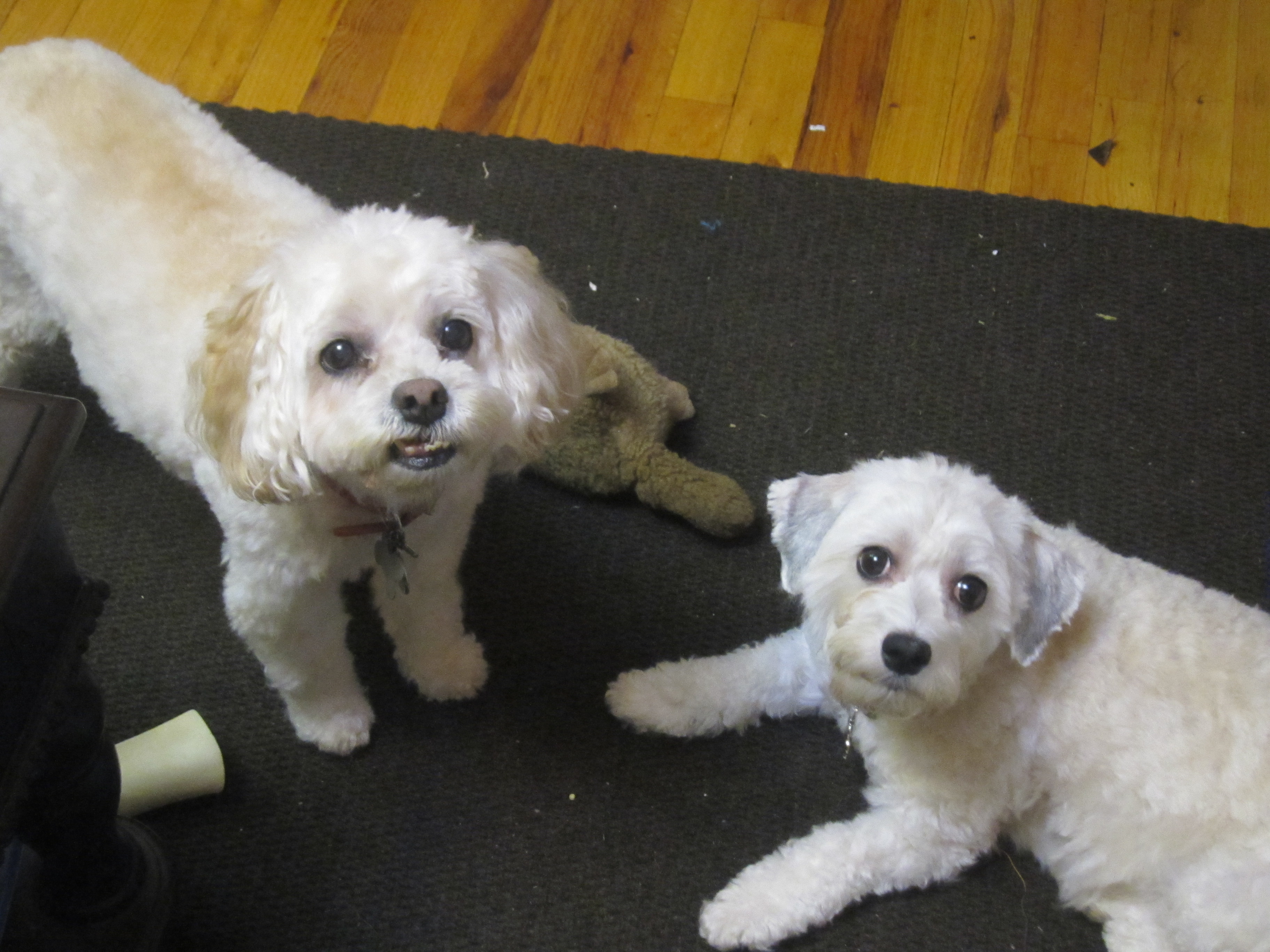
p.s. I want to thank Leslie Bowman, from The Adventures of Bitey Dog (at https://theadventuresofbiteydog.com) for her beautiful portraits of Cricket and Ellie.

Cricket
Ellie

If you haven’t had a chance yet, please check out my Young Adult novel, Yeshiva Girl, on Amazon. And if you feel called to write a review of the book, on Amazon, or anywhere else, I’d be honored.

            Yeshiva Girl is about a Jewish teenager on Long Island, named Isabel, though her father calls her Jezebel. Her father has been accused of inappropriate sexual behavior with one of his students, which he denies, but Izzy implicitly believes it’s true. As a result of his problems, her father sends her to a co-ed Orthodox yeshiva for tenth grade, out of the blue, and Izzy and her mother can’t figure out how to prevent it. At Yeshiva, though, Izzy finds that religious people are much more complicated than she had expected. Some, like her father, may use religion as a place to hide, but others search for and find comfort, and community, and even enlightenment. The question is, what will Izzy find?
The Water Sorting Puzzle

            When I use the Duolingo app on my phone, since I refuse to pay for the premium version, I see a lot of ads. Some are for local furniture stores, some are for Duolingo Plus (the paid version), some are for other language learning apps, but a lot are for games. There’s one where you have to put pieces of a “wooden” puzzle together, and one where the fat king gets in all kinds of danger and his life depends on you moving little icons around on the screen, and then there are all of the different versions of water sorting puzzles; some use test tubes, some use bottles, or vases, some even use colored balls instead of water, which is not the same at all. There’s something unreasonably peaceful, and satisfying, about watching water pour from one bottle to another, until all of the blues are with the blues and all of the greens are with the greens. I found myself watching the water sorting game ads all the way through to the end, instead of dropping my phone and looking for something else to do for those thirty seconds.

“Play with me!”

            And a few weeks ago, after the Duolingo tournament had raised my stress level into infinity instead of the app’s usual calming effect, I gave in and downloaded one of the water sorting games.

            There’s no productivity excuse for playing this game; I’m not learning a new language or important scientific principles, but the game is actually the embodiment of some lessons I keep thinking I’ve learned, and keep having to relearn: one, that it’s okay to fail, as long as you keep trying (the game lets you retry the same puzzle until you’ve mastered it, without penalty); and two, sometimes, in order to reach your stated goal you have to take a circuitous route, because there will be barriers in your way that you can’t foresee.

“I love to run in circles!”

            The goal of the water sorting game is to move the sections of colored water from one bottle to another until each bottle holds only one color of water, and you get two empty bottles to help you sort, because you can only pour purple onto purple or green onto green, but any color can be poured into an empty bottle. And the strategy that works for you in one puzzle rarely works in the next one, so that time after time I have to relearn that even if my goal is to get all of the purples into one test tube, I’ll still have to deal with the reds and greens and yellows in the way.

            So, for example, if I want to write the sequel to Yeshiva Girl, which I’ve been trying to do for a very, very long time, I have to accept that there will be more barriers to overcome, and that I won’t always (or even usually) know what they will be ahead of time. I’ll need to try new things, again, and again, again, and if I continue to fail, I may have to start over from the beginning with a blank page. But starting over doesn’t mean I’m failing, it means I’m learning, and inevitably, I will find a way forward.

            There’s a variation of the water sorting game where you can’t see the color of the water below the top section of each bottle until you move the top section away and the next color is revealed, and therefore you cannot plan ahead. I love this variation because it frees me up to accept my blindness, and to accept that I won’t know everything that will be coming my way, and therefore I can take a deep breath and know that I can’t be expected to plan and strategize, and it’s okay to just take it one step at a time, and see what happens.

“One step at a time, huh?”

            I still go to Duolingo every day to work on my languages, and I haven’t fallen into a deep hole wherein all I do all day long is sort colored water instead of writing or getting chores done, yet, but each time I take time out to play the game, I feel like my brain waves are untangling and relaxing back into place, or finding new and better configurations that can help me work through the knots in my actual life with a little more patience.

“I hate patience.”

If you haven’t had a chance yet, please check out my Young Adult novel, Yeshiva Girl, on Amazon. And if you feel called to write a review of the book, on Amazon, or anywhere else, I’d be honored.

            Yeshiva Girl is about a Jewish teenager on Long Island, named Isabel, though her father calls her Jezebel. Her father has been accused of inappropriate sexual behavior with one of his students, which he denies, but Izzy implicitly believes it’s true. As a result of his problems, her father sends her to a co-ed Orthodox yeshiva for tenth grade, out of the blue, and Izzy and her mother can’t figure out how to prevent it. At Yeshiva, though, Izzy finds that religious people are much more complicated than she had expected. Some, like her father, may use religion as a place to hide, but others search for and find comfort, and community, and even enlightenment. The question is, what will Izzy find?

Why am I still struggling to write fiction?

            For a long time now I’ve been trying to be practical: I went out and got a social work degree because I thought I needed to have a practical career, and I discovered that wanting to be practical and being able to do those practical things is not the same at all; and then, or even before then, I tried to be more practical about my writing, and focus on what other people wanted me to write, instead of trusting myself and writing what I needed to write.

            I spent most of last summer working on essays about psychology and trauma, because that’s what I thought I should do, because it seemed more practical than writing fiction, and more likely to get published. But, while my therapist was somewhat happy with my efforts (nothing I write is quite how she would write it, so…), I found the writing difficult and frustrating, and alienating, and the rejections kept coming anyway.

“Oy.”

            Back when I went to school to be a writer, the message was always that there is a right way to write: there are rules you have to follow, and styles and techniques that you have to master. But four years of graduate school (two masters degrees) didn’t teach me how to be that writer, they just instilled a lot of stop signs in my brain, telling me what not to do, and who not to be (basically me). And then came all of the rejections from the publishing world, for work my teachers thought would get accepted. It’s demoralizing to be rejected both for who you are and for who you aren’t. It doesn’t leave many options.

            But it would be unfair to blame my fiction block solely on those rejections. I haven’t felt safe writing fiction for a while now, partially because of the external voices telling me that I’m writing all the wrong things, but even more so because I’ve been afraid of the truths that will come out if I allow my imagination to run free. At least with memoir writing, I only have to deal with the things I was willing and able to do in my real life; in fiction I would be opening the door to all of the forbidden thoughts: all of the dreams and ideas and impulses I’ve refused to act on.

            The thing I’ve always loved about writing fiction is that I don’t have to worry so much about the truth. I don’t have to worry if I’m misquoting or mischaracterizing someone (or capturing them exactly as they are, but as they don’t want to be seen). I can play. As a kid that meant that I could write wish-fulfillment stories, and send my characters to exciting places and give them of all the money and friends and good looks I could ever want. But even then I discovered that letting my imagination go where it wanted to go meant that other things came up too, darker things that I didn’t want to deal with. I’d try to write my version of Fantasy Island, where everything was supposed to be perfect, and monsters would start climbing up the walls and crawling out from under the beds.

“Monsters?!”

            I kept writing fiction, but I found ways to keep a lid on my imagination, listening to all of the No’s in my head, from teachers and family and friends and writing around all of those stop signs. Each story or novel took forever to write, with all of those interruptions, and the process was not fun, and I became more and more discouraged.

            But I can’t stop writing; that’s not one of the options. I want to be able to convince myself that the rejections are irrelevant, and that instead of writing what I think I am supposed to write, I should write the things I need to write. But even if I can overcome the first set of stop signs, I’m not sure I can convince myself that it’s safe to write whatever comes into my mind. I want to trust myself. I want to be ready to just write and let the chips fall where they may, but what if those chips explode in my face?

“Potato chips?”

If you haven’t had a chance yet, please check out my Young Adult novel, Yeshiva Girl, on Amazon. And if you feel called to write a review of the book, on Amazon, or anywhere else, I’d be honored.

            Yeshiva Girl is about a Jewish teenager on Long Island, named Isabel, though her father calls her Jezebel. Her father has been accused of inappropriate sexual behavior with one of his students, which he denies, but Izzy implicitly believes it’s true. As a result of his problems, her father sends her to a co-ed Orthodox yeshiva for tenth grade, out of the blue, and Izzy and her mother can’t figure out how to prevent it. At Yeshiva, though, Izzy finds that religious people are much more complicated than she had expected. Some, like her father, may use religion as a place to hide, but others search for and find comfort, and community, and even enlightenment. The question is, what will Izzy find?

Everyday Miracles

            This year at synagogue school we’re focusing on miracles for Hanukah (last year we focused on the lights from the candles), and I’m doing a writing workshop with the kids based on Walt Whitman’s poem Miracles (https://poets.org/poem/miracles), to help them see the everyday miracles in their own lives.

            There have been times in my life when I was able to feel the level of wonder Walt Whitman felt at the miracles all around him, but I haven’t been in that state of mind lately. My first thoughts are of what I don’t have, or what’s wrong, or what I’m failing at. My hope is that by actively pushing myself to think about the daily miraculous things, I might be able to regenerate my sense of wonder: like the miracle of Ellie running through the leaves, or the miracle of Cricket giving a five minute diatribe, in the form of an Aria, about why I shouldn’t be allowed to leave the apartment, or the miracle of packages arriving at my door just because I typed a few things into my phone.

“Where’s MY iPhone?

            I want bigger miracles, though. I want to stop feeling so hungry – for food or love or success or whatever else. I want to feel less pain, physical and emotional. I want all of my hard work to kick in so I can finally feel successful and capable and healthy, and safe. It’s hard to be satisfied with the little miracles when I want so much more.

The fact is, I’m struggling. My psychiatrist upped my dose of antidepressants, because my lows have been more persistent lately, even prior to my father’s death. It feels like exhaustion, but I don’t know if there’s a medical cause or a psychological one, or a mix of both. All of the research being done on Long Covid (which I don’t have, because I never got Covid, thank God) promises to offer some insight for those of us who have other long term pain disorders, but I’m not optimistic, honestly.

            My latest experiments with Intuitive Eating have led me to look into self-care more deeply, to see if there are things I could be doing to help lift my mood that I haven’t tried yet, or haven’t tried enough; things, especially, that would take the place of extra food, because I’ve been relying on food as self-care too much lately. My current project has been about collecting good memories (times when I’ve felt cared for, safe, and accepted as I am), so that when I find myself wanting to eat beyond physical hunger I can fill the space with a good memory instead.

            Some of the memories I’ve been working with are: when I was four years old and my grandfather bought me a stuffed panda that was as tall as me and he walked me and the panda, hand in hand, down the driveway to the car; and the time when my brother and I sat on the lawn during a rainstorm with a towel over our heads; and the time we stayed over at Grandma and Grandpa’s house and they took us to Lickety Split for ice cream (I probably had mint chocolate chip) and then we were allowed to choose whichever candies we wanted, and my brother and I sat in the guest room, next to the cuckoo clock, sharing our candy dots and ingesting enormous amounts of paper along the way.

“Yum, paper!”

            I’ve also been collecting songs and TV shows and movies and books that have relieved anxiety or depression in the past, so that if the sweet memories don’t help enough I can move on to visiting YouTube or Spotify mid-meal, or I could even act out a scene from Harry Potter with the dogs if nothing else works.

            I just want to feel better, but it’s all trial and error and lately I’ve been feeling like I’m treading water. I remember this feeling from summer camp, when we had to do a Buddy Call at free swim in the lake. The water was deep and opaque, so we had to go in as pairs, with each pair given a number, and midway through the session we had to call out our numbers, to make sure we were all still alive. If you weren’t at the dock when the whistles blew then you had to tread water through the whole Buddy Call, which could take a while. Under the water I was kicking my legs furiously, but above the water I had to pay close attention to the numbers being called out, so I wouldn’t miss our turn. It was exhausting, and panic inducing. I worried that I’d forget my number, or forget how to count in Hebrew letters, but most of all I worried that my legs would give out and I’d fall under the water and the lifeguards would have to dive in to search for me and they’d be pissed off at me for the rest of the summer. I didn’t have faith that my buddy would remember our number, or call it out, or save me if I started to drown. I didn’t have much faith in other people, period.

“I would save you, Mommy!”
“Yeah, sure. Me too.”

            So this writing workshop on miracles is coming at the right time, and maybe when the kids tap into their own ideas of what’s miraculous in their lives I will remember my own miracles too. My hope is, always, that if I keep trying, keep working at this process of healing, good things will come. I just wish they’d come a little bit faster.

If you haven’t had a chance yet, please check out my Young Adult novel, Yeshiva Girl, on Amazon. And if you feel called to write a review of the book, on Amazon, or anywhere else, I’d be honored.

            Yeshiva Girl is about a Jewish teenager on Long Island, named Isabel, though her father calls her Jezebel. Her father has been accused of inappropriate sexual behavior with one of his students, which he denies, but Izzy implicitly believes it’s true. As a result of his problems, her father sends her to a co-ed Orthodox yeshiva for tenth grade, out of the blue, and Izzy and her mother can’t figure out how to prevent it. At Yeshiva, though, Izzy finds that religious people are much more complicated than she had expected. Some, like her father, may use religion as a place to hide, but others search for and find comfort, and community, and even enlightenment. The question is, what will Izzy find?

Reading about Pawpaws

            A few weeks ago I had the opportunity to read one of my essays out loud to a Mutual Support Zoom for my synagogue. We’ve been doing these all year, as a way to keep each other company and to get to know our fellow congregants during Covid. We’re winding up the series now, since most of the regulars have been vaccinated and are returning, slowly, to in-person events, and this was my last chance to take a risk and add my voice to the mix.

“When do I get to talk?”

The theme of this particular Zoom was trees, probably the third or fourth on that theme, because with all of the time we’ve been spending at home for the past year nature has caught everyone’s attention more fully than before. People have been presenting photographs and quilts and poems on trees, and experts have been called in to speak about the science of trees and the care and feeding of trees. When I was asked if I had anything to contribute on the subject, I thought about my pawpaw trees. They have grown with me, and surprised me, and devastated me for a long time now, and I realized that this was something I wanted to share. It didn’t hurt that I had an essay ready to go, freshly rejected from various literary magazines.

“Harrumph.”

            I haven’t done a public reading of my work in a long time, and in the past, I have found them overwhelming. At the graduate reading for my MFA in Fiction I was so anxious that I started crying at the podium, which made it much harder to see the papers in front of me, though I made it through, eventually.

            This reading went a lot better than that one; maybe because it was a small group of familiar faces, or because in the intervening years I’ve had a lot of practice reading other people’s work out loud and teaching in front of a class. I don’t know. It was certainly helpful to have my pawpaw friends there to keep me company, in spirit. Whatever made the difference, this time I actually enjoyed reading my work to an audience. And I think I even did a good job of it (which, given my propensity to self-criticism is saying a lot).

            I don’t know where this leads me, but it felt like a big step forward, because it’s a sign that, maybe, despite all of my fears, I’m getting better at pursuing the things I love. Wouldn’t that be wonderful?

“Yes!”

            So here’s the essay I read to those fifteen kind people. I hope you like it.

A Pawpaw Story

            Almost fourteen years ago now, I ordered a box of Pawpaws at a friend’s suggestion. They arrived in September, each fruit wrapped in newspaper because they are so fragile and easily bruised. Pawpaws are custardy sweet, and the flesh has to be eaten with a spoon, not peeled like an orange, or sliced like an apple, or bitten straight into like a strawberry. They are filled with a row of almond shaped seeds that you have to dig out, or suck on, to get the flesh that clings stubbornly to them. It’s work.  The Pawpaw season is very short and the fruit rots within days, so if you order a box (usually from Ohio) you need to eat them, or freeze them, fast.

             Some say pawpaws are too sweet, or too funny looking, or too smelly, but, I discovered, pawpaws are just right for me.

Pawpaw fruit (not my picture)

            We saved the seeds in the freezer, like the instructions said to do (pawpaw growers are, by their very nature, proselytizers), and at the end of the winter, Mom and I planted the seeds in big ceramic pots in the kitchen, next to the window sill, with the pots wrapped in scarves because there was still a bit of a chill left in the air. And then, like the Talmudic sages said the angels do for every blade of grass, I stood over the pots and whispered, “Grow, Grow.”

            And they did grow. The seedlings were tall, and full of personality, and five or six of them even survived long enough to be planted outdoors once the weather was warm enough. We kept them in their pots at first, though, so that they could come back inside if they needed to.

            Three, maybe four, survived the first year and grew into saplings, gradually growing taller, as their leaves extended out like shiny green fans. For years, their leaves paled to yellow in the fall, disappeared for the winter, and reappeared in the spring.

            We had to dig the three surviving trees up and replant them five years later, when we moved. And one suffered a horrible gardening accident when the maintenance men were working higher up on the retaining wall and tossing small trees downhill. But the other two Pawpaw trees survived, now carefully marked, and settled into their new surroundings. They continued to grow, year after year, getting taller, and healthier, but there was no fruit yet, not even a flower.

            We got impatient and ordered two new baby trees, because a Pawpaw expert told us we needed to have at least two trees in close proximity in order for fertilization to occur, and the two we had were too far apart. But the baby trees were crushed in the shipping process and never really recovered, though we watched over them hopefully for a season.

Finally, after eleven years, my two Pawpaw trees started to flower. The flowers were small, and a deep burgundy brown color, but pretty quickly they dried up and flew away, and the leaves turned yellow again and the trees went to sleep again for another winter.

            The following year, the flowers came back bigger and brighter, and there were more of them, and they were filled with enough powdery, sticky pollen that we were able to transfer it from the flowers of one tree to the flowers of the other, by Q-tip, and hope for fruit. A tiny cluster of baby fruit showed up a while later, and even though it only survived for a week, we were hopeful that maybe in another year, after another season of flowering, the trees would be ready to fruit for real.

A pawpaw flower

            Twelve years may seem too long to wait for a piece of fruit, but to me the wait was sort of the point.

            And then, about a month later, disaster struck, of the human kind. I was napping during the day, as I often do, and Mom was in the living room working on a quilt. Somehow she heard a sound over the thumping of the old sewing machine, maybe the crying out of a dying tree had a particular power. I heard a scream, and a door slam, and then my dogs came to get me, but they couldn’t tell me what was wrong. I waited, worried about that scream and the horror it foretold. I could only imagine the death and destruction, the multiple apocalyptic events held in that scream. When Mom finally returned, ringing the doorbell, because she’d forgotten her key, she told me that the new gardeners had killed one of the pawpaw trees, and she’d reached them just in time to save the second one.

I didn’t understand. The pawpaw trees were over fifteen feet tall by then, and no longer wearing the blue tape they’d worn years earlier to mark them as special, because after seven years on the property they didn’t seem at risk anymore. Mom said she’d had to drag the murdered Pawpaw tree into the woods herself, for burial. But, why? The gardeners told her that they’d had to cut everything back in order to mow the lawn in straight lines. But not a tree, she’d screamed at them, you could have trimmed some of the branches if they were in your way, but who cuts down a tree in order to mow a lawn?

            The violence of it felt real to me, not metaphorical. When I finally went outside, the stump of the dead tree stuck up out of the retaining wall, looking wet, almost bloody. Obscene.

            Within minutes, Mom was googling for advice. She wondered if we could re-plant the amputated branches, or order pollen from another pawpaw tree to be sent to us each year, in order to fertilize our lone tree and maybe, finally, produce fruit.

            But I sat still, undone, convinced that you can’t un-chop a tree.

            Weeks passed. We dressed the lone pawpaw tree in a colorful bowtie, to protect it from future gardeners, and I whispered to it daily, to keep it from dying of loneliness.

            And then Mom called me to look at something in the retaining wall, in the area of the dead tree stump. I thought maybe she would show me more of her re-growth experiments, expecting me to be excited and invested, when all I could feel was the deadness of everything. Instead, she showed me pawpaw leaves, living and breathing on two long stalks, half green and half brown, and wobbly from very recent growth, growing out of the dirt two feet from the dead stump. We had not planted new Pawpaw seeds, or even noticed any random Pawpaw trees planting themselves under the mass of other trees and bushes in the retaining wall, but there they were. It just seemed so unlikely, to me, that Pawpaw trees could have created themselves, without any help, just when we needed them most.

            I picked one of the leaves to bring over to the big Pawpaw tree to compare. But I still felt skeptical, because that’s my automatic response to most things. It can’t be true, especially if I want it to be true. Mom pointed out the unique quilting design on the leaves, unlike any other leaves nearby, and the shine on the baby leaves, which I’d seen many times myself when our Pawpaws came back to life each spring.

            A few days later, Mom went back to the same spot, to make sure the Pawpaw stalks were still there, and not just a mirage made out of grief, and she found another, much smaller, Pawpaw sapling, maybe just a few weeks old. And she kept going back, and searching more carefully, and finding more Pawpaws, sprouting everywhere like a tiny village growing from the roots of the seemingly, but not really, dead tree.

            And I had to accept that my skepticism, my pessimism, was wrong. Sometimes the things we want most really do happen; sometimes trees can re-create themselves. From the beginning, I thought that Mom and I would put in endless years of effort for no real reward, because that’s just the way of things. But there they were, a forest of pawpaws coming to life all around me, trying to tell me that trees are living things, and deep in their roots they are desperate to survive, just like us. And sometimes, despite everything, we grow.

The pawpaw tree in autumn.

If you haven’t had a chance yet, please check out my Young Adult novel, Yeshiva Girl, on Amazon. And if you feel called to write a review of the book, on Amazon, or anywhere else, I’d be honored.

            Yeshiva Girl is about a Jewish teenager on Long Island, named Isabel, though her father calls her Jezebel. Her father has been accused of inappropriate sexual behavior with one of his students, which he denies, but Izzy implicitly believes it’s true. As a result of his problems, her father sends her to a co-ed Orthodox yeshiva for tenth grade, out of the blue, and Izzy and her mother can’t figure out how to prevent it. At Yeshiva, though, Izzy finds that religious people are much more complicated than she had expected. Some, like her father, may use religion as a place to hide, but others search for and find comfort, and community, and even enlightenment. The question is, what will Izzy find?