Tag Archives: writing

How the Book Signing Went

yeshiva girl with dogs

I have discovered that three out of four writers can stand for two hours at a book signing event, and I am the fourth writer. I did stand for the short presentations, where each of us described our books, though I had to lean on random pieces of furniture while the others spoke, and then I almost tripped myself when it was my turn. For the rest of the time we were set up at four small tables, side by side, though, again, I was the only one actually sitting at my table, with everyone else sort of floating nearby. I chose the table with a Picasso-like picture of a girl with brown hair, because it looked like I felt, and sat behind a copy of Yeshiva Girl set up in a Lucite holder. It occurred to me that I should have made some kind of display – two crocheted dragons, maybe, like the YA Fantasy writer, or a blow up of the cover photo on the book, like the memoir writer – but, too late. All I had was me.

I was the newbiest of the newbies there, because the fantasy writer had been doing signings for her book since 2016, and the other two were classroom teachers, but I found that as long as I was able to sit down, and people could come over to me to ask their questions or tell me their stories, I did really well. I’ll have to practice my standing-and-speaking skills, though, for the future. People seemed to actually be interested in the premise of my book, which surprised me. I walk around assuming that no one will be interested in anything I have to say, though, of course, desperately hoping that they’ve been waiting all their lives just to meet and hear from me.

Each person I met had a story, or a thousand stories, to tell and I was awed by them and curious about them, and a little bit overwhelmed, as in, who’s going to notice my star in the midst of such a starry sky. I met a local humor columnist, who bought my book, and we talked about wanting to write mysteries, and the books we’ve read, and writing inspirations, and I had to be careful not to geek out too much and ignore the rest of the potential readers in the room. I met one woman who wanted to read my book, but was afraid it would be too painful, though she encouraged her friends to read it, and talked to me about the importance of people feeling safe to speak up and tell their stories. And there was a woman who’d gone to a tiny catholic school in Bedford Stuyvesant, Brooklyn, way back when, and had plenty of stories to tell about the experience. And another woman who had worked for a Chassidic-run company and felt her otherness acutely.

I’d only started to get nervous two nights before the book signing event, and the anxiety only became acute that morning, with an internal voice telling me that it would all turn to shit, and I was completely unprepared, and I didn’t have the right clothes or makeup, and I would fall into a deep depression after the inevitable and complete failure.

But I did it! I signed books! I stood in front of strangers and presented my book! I didn’t hide under my bed – the way I wanted to – or pretend to be someone I’m not.

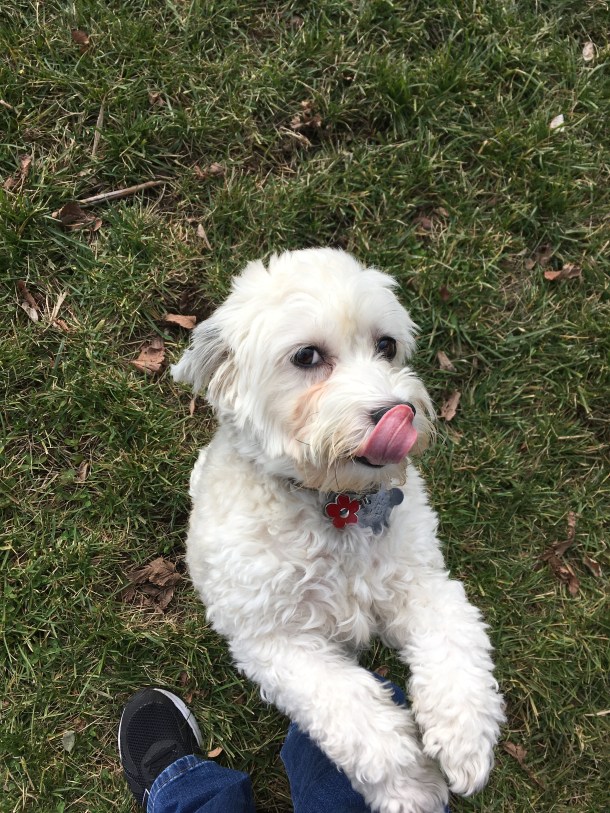
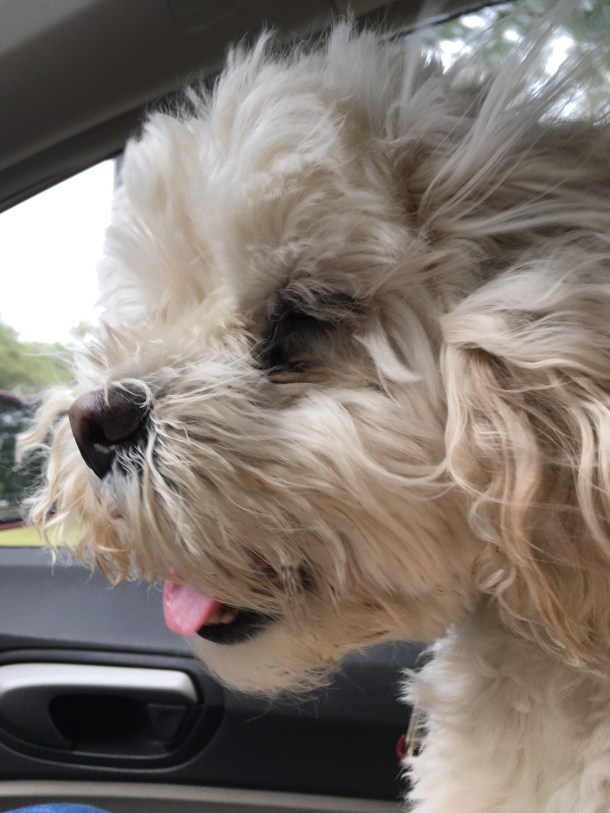
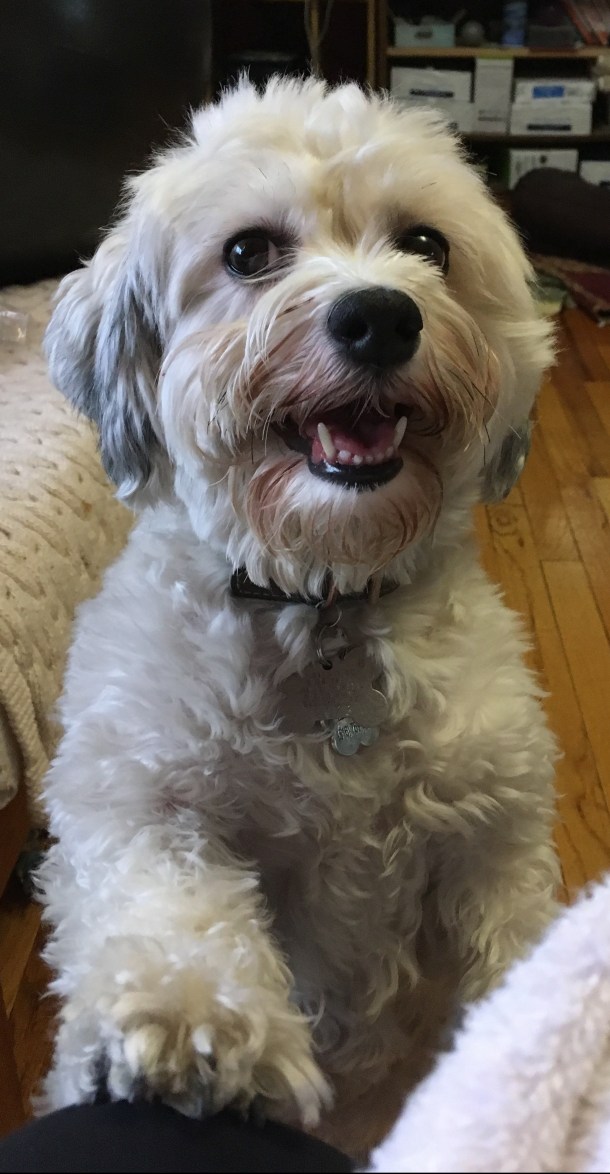
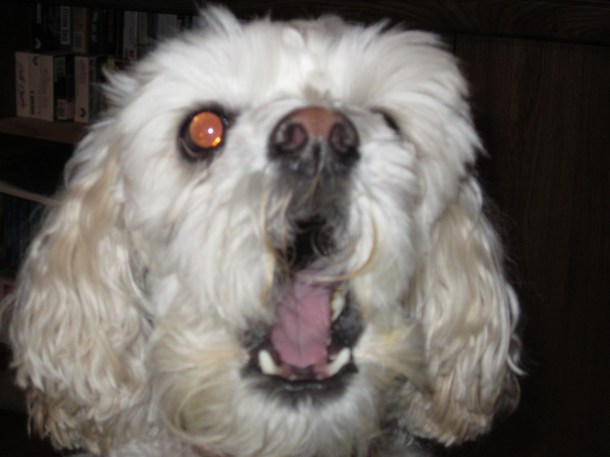
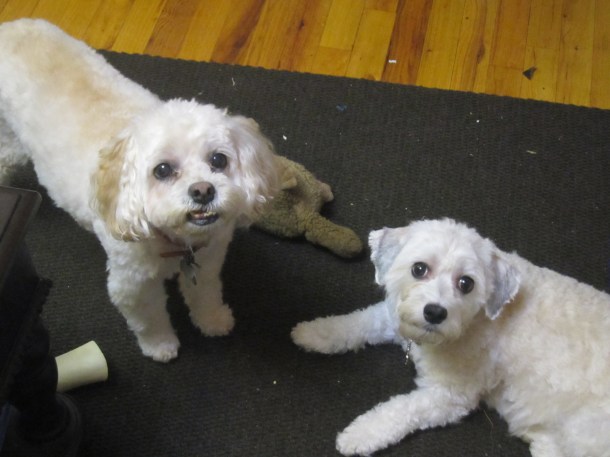
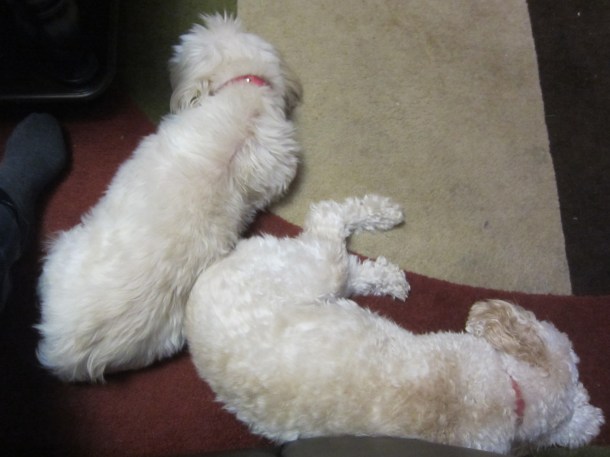
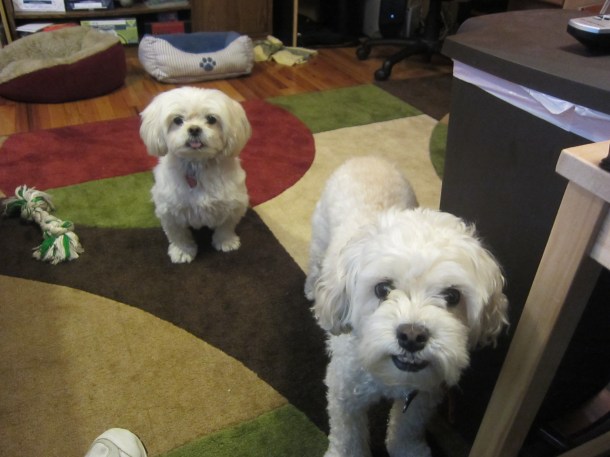
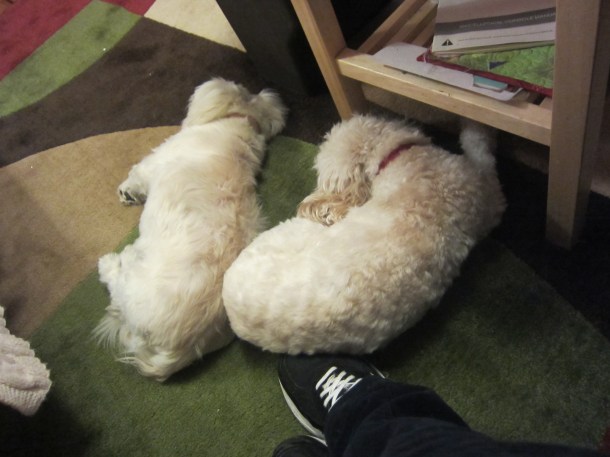
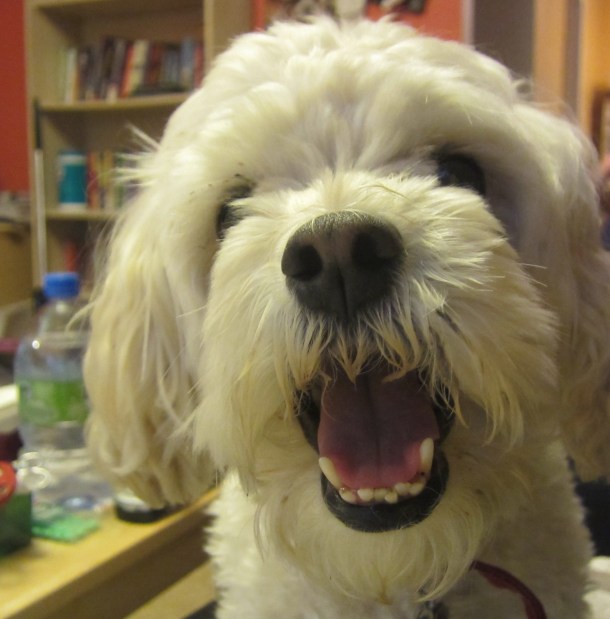
I sold four books and signed five (my aunt came with her own copy, and she stayed for the whole two hours for moral support! Yay Aunt Debbie!). And the woman who ran the event, Robin, one of the owners and the superstar event coordinator at Dolphin Books in Port Washington, NY, asked me to sign two extra copies for the store. Here’s hoping I get more chances to try it again, and next time bring one or both of the dogs for moral support, or to scream at people to buy Mommy’s book.

IMG_0913

“Let’s go, Mommy!”

img_0510

“Buy my Mommy’s book!”

I want to thank the other authors at the event:

A high school history teacher/coach (Billy Mitaritonna, Last of the Redmen: Memoir of a St. John’s Walk-on) who wrote about the power of perseverance, and said that the secret was in how his coaches and his father encouraged and supported him no matter how many times he failed. He said that his students were the ones who told him to write his memoir, to share his story with others because it had been so inspiring to them.

Then there was the Dragon Girl (Elana A. Mugdon, Dragon Speaker: The Shadow War Saga, Book One), who was brave beyond my capacity to imagine. She dressed as the protagonist in her young adult fantasy series, wearing a long white wig, in pig tails, a corset, and leather armor. Her protagonist is the only non-magical person in her world, and yet she is the heroine of the story.

The fourth author was a graphic designer (Beth Costello, The Art of the Process: establishing good habits for successful outcomes) with a workbook to help people through the process of design. She had the confidence of a practiced teacher, and the social media skills to have a roomful of supporters waiting to hear from her and buy her book (which meant that I had an audience too!).

I could have used a vat of chocolate frosting in the aftermath of the event, to soothe my frayed nerves, but as soon as we got home the girls needed to go out to pee and that helped with the depressurization process. They squealed their excitement at having their humans back home and raced around the yard with their famous author slash pooper scooper Mommy, and then we settled in on the couch to watch something silly and romantic on television. Overall a successful day.

010

“Can we watch something else?”

If you haven’t had a chance yet, please check out my Amazon page and consider ordering the Kindle or Paperback version (or both!) of Yeshiva Girl. And if you feel called to write a review of the book on Amazon, or anywhere else, I’d be honored.

Yeshiva Girl is about a Jewish girl on Long Island named Izzy (short for Isabel). Her father has been accused of inappropriate sexual behavior with one of his students, which he denies, but Izzy implicitly believes that it’s true. Izzy’s father decides to send her to an Orthodox yeshiva for tenth grade, out of the blue, as if she’s the one who needs to be fixed. Izzy, in pain, smart, funny, and looking for people she can trust, finds that religious people are much more complicated than she had expected. Some, like her father, may use religion as a place to hide, but others search for and find comfort, and community, and even enlightenment.


My To-Do List


Every night, I write up a to-do list for the following day, to make sure I don’t forget important appointments or tasks that need to get done. There was a time when I had to put get dressed and brush teeth on the list, just to give me something to successfully check off, but my lists have grown since then, and most days I find that I’ve only gotten halfway through the list before the day is over. This has gotten worse since I finished graduate school, in December, and found myself with some “free” time before I’m allowed to take the social work licensing exam.

Without Schoolwork at the top of my to-do list, a lot of other projects have cropped up and they all seem equally important to me. Of course, studying for the licensing exam is on my list every day, as is read books which refers to my hefty pile of self-required reading that I mentioned in a previous post. I also put practice ukulele, freewrite and revise, and bike and shower on the list every day (the last refers to time spent on my stationary bike and the shower I have to force myself to take in the aftermath. I take showers every day, don’t worry, but some part of my brain needs to be given credit for making the effort).

I also add tasks that I need to do on a particular day, like researching for a new writing project, or making a food shopping list, or doing the laundry, or setting the DVR for the week, both because I know that I would forget otherwise, and because of the satisfaction I feel when I can cross off a task as finished.

016

“Make sure our scratchy time is on the list.”

I almost never put language apps on my list, even though I end up spending at least an hour a day on Duolingo and Tinycards and Drops. I should be fluent in French, German, Spanish and Hebrew by now, given the amount of time I spend glued to that little screen, but alas, I am not. I also don’t put watch TV or check social media on my list, because it would be wrong to give myself credit for fueling my addictions. And napping. I can’t put napping on the list, because that would be cheating.

007

“Napping is important work, Mommy.”

When I have to put go to work back on my to-do list, a lot of my other tasks will end up falling by the wayside, and that worries me. For the first time in three and a half years I feel like myself again, even with all of my random thoughts and interests pulling me in every different direction. It’s not the most productive way to live, but it feels more like me, and it allows more parts of me to get the attention they crave. But work will change things.

The dogs will always be priorities, and basic tasks of living (AKA showers), but music and reading lists, and multiple writing projects, I’m not sure they will get the attention they need when something as big as Work gets in the way. And I’m not sure how to prevent that from happening.

People pooh pooh it when I say I’m worried, and tell me that I’ll have plenty of time for everything I want to do, and of course work is the most important thing, and isn’t it cute that you write books as a hobby, and so on. But I know myself. Even if I’m only working part time, it will take most of my energy to make that happen. I will have “free” time, but I’ll need to spend it recovering and resting, not challenging myself with different projects that mean something to me. I want to have faith that work will add to my life, add to my satisfaction and my life experience and my confidence and give me more freedom (because: money). But I’m afraid it will take things away from me instead: autonomy, time, energy, hope.

And the dogs really don’t appreciate this idea of work as something to be done away from home. What will happen to their treats and extra walks and snuggle time? And the separation anxiety will exhaust all of us. But mostly me. In the meantime, I follow my to-do lists, and try to function the best I can, and wring as much as possible out of my day, and hope that there will always be room on my to-do list of the things I love.

017

“We’re on the list, right?”

If you haven’t yet had a chance, please check out my Amazon page and consider ordering the Kindle or Paperback version (or both!) of Yeshiva Girl. And if you feel like writing review of the book, on Amazon or anywhere else, I’d be honored.

yeshiva girl with dogs

Yeshiva Girl is about a Jewish girl on Long Island named Izzy (short for Isabel). Her father has been accused of inappropriate sexual behavior with one of his students, which he denies, but Izzy implicitly believes that it’s true. Izzy’s father decides to send her to an Orthodox yeshiva for tenth grade, out of the blue, as if she’s the one who needs to be fixed. Izzy, in pain, smart, funny, and looking for people she can trust, finds that religious people are much more complicated than she had expected. Some, like her father, may use religion as a place to hide, but others search for and find comfort, and community, and even enlightenment.


Who do I want to be when I grow up?

I still want to be a novelist when I grow up. I want to write about people’s lives and about all of the things we don’t usually tell each other about ourselves. I want to connect. My favorite thing about social work is when people stop feeling judged and defensive, and can just tell their own stories, with all of the unique zigs and zags their lives have taken. I’m often surprised when people don’t realize how interesting their own stories are, and how unique their choices and circumstances have been. It’s like reading a really long, really good, book.

I still wish I could be a Mom and a wife, but that’s starting to seem unlikely. The thing is, both social work and writing put me in an observer role, and no matter how much I like my work, I still need some way to feel like my life, in itself, is important. I need the chance to be the star of my own story. Dogs definitely help with that. They seem to make everyone feel more central and more important. I’ve considered having a side practice focused on dogs, where we’d sit on the floor and I would give ear scratches and commiserate with the long journey each dog has had to go through. I would love that.

IMG_0313.JPG

“I have a lot to say!”

I’m still unclear about what actually constitutes growing up. I used to think that, at some point, I’d feel more secure and confident in myself, and my choices, and I’d finally feel like I have a clue how to live my life. This has clearly not happened to me yet, and it doesn’t really describe most of the people I know who would generally be considered grownups.

The more external signs of being grown up, to me, were always about career, and home ownership and parenthood. But as time goes by I’ve had to question those markers, because a lot of people do not own homes, or have children, and still seem like grownups to me. And, even though it’s less popular, or possible nowadays, a lot of women still seem very much like grownups to me, even if they never had a professional career outside of the home. It’s something in the way they take responsibility for themselves, or have authority over others, or seem to accept themselves for who they are at a basic level.

In my mind, being sick, with whatever it is I have, prevents me from being a grown up. Grownups are people who can do things all day and take on big responsibilities, not people who need three hour naps and wrap themselves in icy hot strips on a regular basis. Grownups know how to take care of everything that needs to be taken care of, and don’t have an excessive amount of anxiety wafting around them at all times.

IMG_0251

“You can fix it, Mommy.”

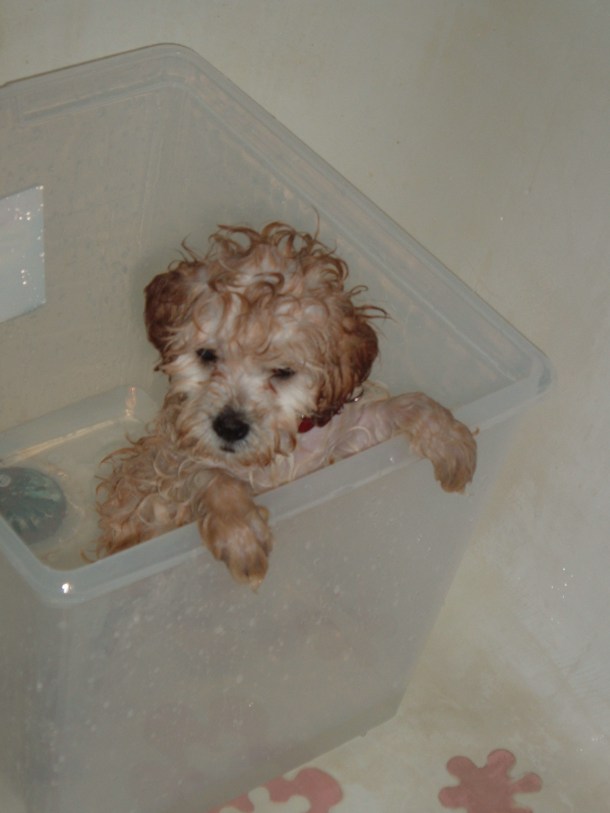
Cricket has no aspirations towards being a grown up. She’s focused on her daily needs for food, exercise, and love. She insists that being a grown up is overrated if it means spending too much time away from her.

It’s hard to argue with Cricket.

IMG_0309.JPG

“Why would you even try?”


The Social Work Detective


I keep thinking about writing a mystery novel with a social worker as the protagonist. I never took a class in forensics or criminalistics (they weren’t offered at my schools), but I think one of the things that draws me to social work is the craving to be a detective; to find out the mystery of the person or family or couple sitting in front of me, telling me they have no idea what went wrong. My protagonist would be curious about everyone she meets, though, so I’d have to be careful to try to limit her focus to the people who are pertinent to the particular case at hand, or else the book will be never ending.

In real life, death and destruction, or any kind of physical pain or gore, horrifies me, but in a novel, murder calms me down. Maybe murder mysteries have the same paradoxical quality as Ritalin or caffeine: calming a hyperactive mind with a stimulant. The intensity of murder, in a novel, helps me to focus on one thing at a time, instead of on the thousands of priorities running through my mind: I need to lose weight, pay off my student loans, do my homework, find a second dog, get to work on time, keep up with friends, fix the world, and find the right outfit to wear on Thursday.

But would it be as calming to be the writer of the mystery instead of the reader? Would I have to do a ride along with the local police in order to get the details right? Would it be a cozy or a thriller? Would I have to kill off characters I like? Or worse, make one of my favorite characters into the murderer?

IMG_1860

Cricket, with the trowel, in the garden.

I don’t even know why I’m trying to plan a new novel right now, given all of the work I have to do for school. I feel swamped this year. The work seems harder and more all-encompassing, and the stakes seem to be higher too. But, it’s not so much that I want to write a mystery, it’s that my mind goes there on its own. Some part of my brain is always working on story ideas, and coming up with plot points and character names. Taking the time to put it all down on paper at least gives me some sense of order for these random thoughts, so that they don’t think they have to repeat themselves, endlessly, out of fear of being forgotten.

IMG_0510

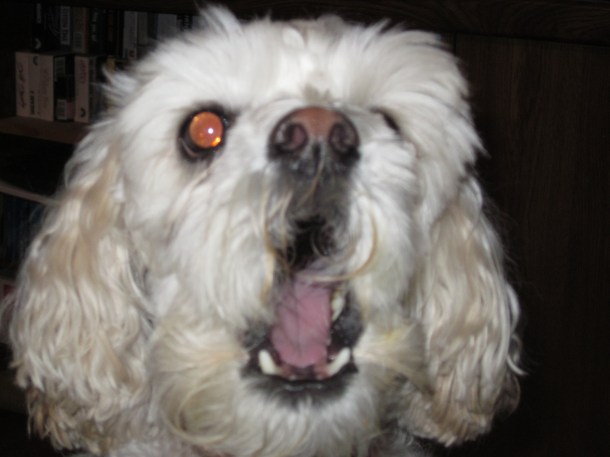
“Listen to me!!!!!!”

The only thing I know for sure about my social work mystery is that there would have to be a dog in the book. This isn’t a social worker thing, just a me-thing. I would feel bereft trying to write a whole novel, or even a short story, without a dog in it. Cricket is auditioning for the role, but I’m worried she’d want to be the protagonist herself.

puppy in November 005

“I am always the star of the show.”


Scrabble Trauma


I am terrible at Scrabble. I had a traumatic experience playing Scrabble once when I was a teenager, with the nanny of the kids I used to babysit for. English was her second or third language, so when the mom came home and looked at the Scrabble board and laughed at her nanny’s terrible spelling, I had to tell her, no, that word was mine. It was humiliating, but, really, it’s not my fault Scrabble doesn’t come with spell check.

People assume that writers are all great spellers, and grammar geeks, and can recite Shakespeare from memory, and none of those descriptions fit me. I never won a spelling bee in my life, I rely on spell check for everything, and I only lasted two semesters as an English major before my head felt like it was going to explode from boredom. I only like using big words when they capture something I couldn’t express in any other way, otherwise I prefer basic vocabulary. I am unlikely to wax rhapsodic about a vermillion sunset, for example.

IMG_0238

“Me neither.”

The idea of playing Scrabble, even now, makes me nauseous and sweaty. One of my best friends in high school was a demon at diagramming sentences. She loved the math of it. She also did well at spelling bees and vocabulary tests, but she hated writing essays. I could write essays and stories and poems ad infinitum, but my spelling was atrocious and the parts of speech still elude me.

My Mom plays Words with Friends on her computer. She has an ongoing game with my brother, and another with a good friend of hers, and she can stare at the screen for hours trying to come up with the perfect words, enjoying every minute. I would punch the computer screen within two minutes if I tried to play, so I don’t.

IMG_0254

“Grandma has been stolen by the computer.”

I had to look up the rules of Scrabble for this post, because I can never remember them. They seem random to me, even though the point value of each letter is supposedly determined by rigorous statistical determinations of letter usage in Standard English. Vowels get one point and less common letters, like Q and Z, get ten points each, which leads to some very silly word choices, in my opinion. Scrabble takes words, which I normally view as a cornucopia of opportunities for self-expression, and turns them into nonsense.

One thing I did like, in my research, was finding the dictionary definition of the word Scrabble: to scratch frantically. This describes exactly what happens inside of my brain when I try to play the game; it captures my anxiety and panic perfectly. But is that how other people feel when they play the game? Are there people who enjoy frantically scratching at the sides of their brains?

I think Cricket and I are on the same page when it comes to Scrabble, or Words with Friends. Though Cricket’s anger has more to do with the fact that Grandma is staring at her computer instead of doing what she is supposed to do: scratching Cricket, frantically or otherwise.

IMG_0876

“Much better.”

On #MeToo


When the #MeToo hashtag first appeared, I wasn’t sure what to do with it. I was afraid that it would minimize the seriousness of sexual harassment and sexual assault, watering the terms down to the point of meaninglessness, and I doubted that it would lead anywhere. I was wrong. It hasn’t gone away, instead, because of twitter and Facebook and some very good journalism, women’s voices are being heard and abusers are being named, and even fired.

But not all of them. Woody Allen still gets to make movies. And Stephen Colbert still promotes his movies on The Late Show. Actors still make excuses to work with Woody Allen, and say things like, I don’t want to take sides in a “family issue.” They don’t say, I don’t have an opinion on a moral issue of deep significance that represents the misuse of power not only of men in general but of fathers in particular, because that would make them sound icky.

IMG_0238

There are even people who think it is a legitimate thing to say, of a politician, I don’t care that he’s a pedophile, as long as he belongs to my political party.

IMG_0510

“No way!”

I’m not sure why certain cases are taken seriously and others aren’t. I’m not sure where this whirlwind is going to land, and I worry that there will, as always, be a backlash. I’m also not a fan of the assumption that this is simply a men against women issue, as if all women have taken the high road. Unfortunately, women have been as expert at shutting down other women’s voices as men have.

My experience, as a victim of childhood sexual abuse, has been that people, of both sexes, did not want to know. And if they heard me and believed me, they still thought I should be able to get over it quickly. Maybe a year of therapy, at the most. But I’m in year twenty-something of therapy and I see no end in sight. I wrote a novel about childhood sexual abuse, but editors told me that they found the subject matter, or the way I addressed it, too painful to read, and too difficult to place, no matter how “beautifully written.” Even when I went to graduate school for writing, and sat with other writers in classes, and bars, and on couches in dorms, there was a deep unwillingness to listen to people who shared these kinds of painful stories, unless they were wrapped in the cozy fluff of sci fi or horror or mystery, or, alternatively, gave graphic details of the sex acts. There is very little tolerance for a story that emphasizes the fear and vulnerability of the victim, and the complex and time consuming process of recovery. People want something easier to live with. They want empowerment and resolution in two hundred and fifty pages.

I am afraid that, even now, the reason why #MeToo was so successful is because people only had to read two anonymous words, and didn’t have to bother with the whole, difficult story. I am afraid that those two words are all I am really allowed to say.

IMG_0313

“You can’t shut me up!”

Interviewing the Seniors


I’m taking a break from writing my monthly column for my synagogue newsletter, mostly because the newsletter is being discontinued. I was given the option of continuing the column as a monthly email blast, but I turned it down, for now, because school is kicking my butt extra hard this year.

IMG_0215

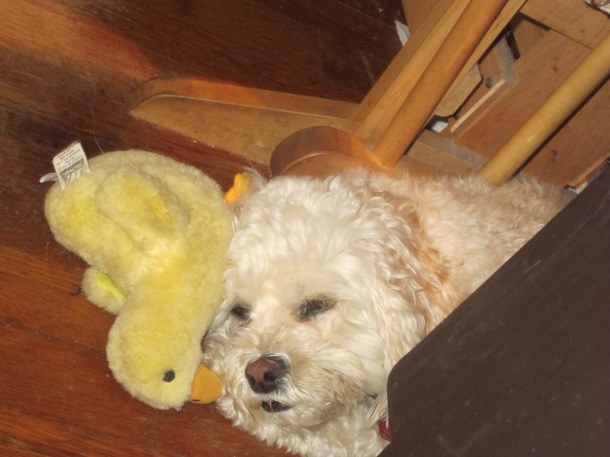
I could use a duckie to nap with too, right about now.

What I loved about writing the articles was the feeling that I was doing something meaningful for my community, not just for my own ego (though that too). I felt like I was picking up loose threads from the community, and weaving them into the whole, to make a stronger fabric.

My biggest regret is that I wanted to do more interviews with the seniors at the synagogue. There’s a whole generation of ninety, and near-ninety year olds, with stories to tell. Stories about coming to the United States when their families escaped from Nazi Germany, or fighting in World War II, or meeting their spouses (of more than sixty years now), or marching and protesting and taking political action to change the world.

IMG_0313

Cricket is an awesome protester!

It’s amazing to me that I have gotten to the point where I’m not terrified of doing interviews anymore. I’m a little anxious, it’s true, but I’m even more compelled by the lives people have managed to live, and any clue they can give me on how to live my own life better. I want to know these people, and I especially want to understand the work it takes to build a community out of such different people. Relationships between individuals are hard enough to create and sustain, but communities? They are complex beings that can die so easily.

There’s a concern among older Jews, and maybe older people of other religions as well, that young people don’t want to belong to religious communities anymore. That, even if they believe in God, or engage in religious behavior, the synagogue itself is not where they want to be. But I have a different take on it. I think young people want the chance to create their own communities, the same way previous generations were able to do. They want the chance to reconstruct the world in their own ways, which is what every generation hopes to do. And if they can hear the stories of their parents and grandparents and great grandparents, they can learn how previous generations went about making their own choices, and where they may have struggled or succeeded along the way. Then the next generation can take the communities we already have and re-imagine them instead of needing to start from scratch.

At least, that’s how I feel about it. I see ways that my community brings me comfort and knowledge and connection, but also ways that it doesn’t quite include me, or reach me, as I am. And my job, in the articles I’ve been writing, and may have to start writing again next year, is to teach people how to expand their view to include me and the rest of the people who have felt left out until now.

Like Cricket. Just watching services on the computer is not enough. At the very least, she’d like to have a private meeting with the rabbi to discuss her concerns. And if he just happened to have a bag of chicken treats at the ready, that would work too.

IMG_0581

“Treats!!!!!!”


The Work of Memory


One of the most anxiety producing parts of being a social work intern is having to write process recordings every week. Some schools have moved onto a much simpler format for these, with two pages of basic description (and evaluation) of a meeting with a client, but my school, and many others, still use a long form that includes: a word for word (approximately) transcript of the conversation, a column to point out the skills the student tried to use, a column for the analysis of events that happened, and a column for the feelings and doubts of the student throughout the interview. On the first page of the process recording, there’s also a section for a description of the who, what, when, where, and why of the meeting, and on the last page there are questions to help you analyze the meeting’s success overall.

010

“What is she talking about?”

My early process recordings averaged 13 pages, for one client meeting, and one was up to eighteen pages (my supervisor was not in love with that). The hardest part, for me, is the word for word transcript. Obviously it’s not an exact record of what the client and I said, because I don’t tape my meetings and because I don’t have that kind of memory. In fact, each transcript takes me three or four passes, at least, to get it into the semblance of a back and forth conversation similar to what really happened (though, given that each of my meetings is an hour or so, a lot still gets left out).

I can’t imagine Cricket or Butterfly trying to reconstruct a word for word, or bark for bark, transcript of their day. Their sense of time is, to say the least, imprecise. Cricket forgets how long it’s been since she last saw Grandma. A minute could have passed since Grandma went downstairs for the mail, but when she returns, Cricket greets her as if she’s been gone for days. If she tried to record that event, there would probably be twenty pages in the middle, filled with despair and resentment, as if she’d been lost in the desert without water, for years.

022

“Oh my God! Oh my God! Where were you?!!!!!”

For official purposes at my internship, I have to write out a summary of each of my meetings, and that gives me a general record to start from for the process recordings. For those reports, I describe what we talked about in the meeting, and what we resolved for the client to do by next week, etc. But to get those notes into dialogue form, I need to pull a lot more from my memory, and fill in the transitions between topics, and focus on particularly difficult moments: how we get from topic A to topic Z; what order things came up in; Did I say something to bring this up, or did it come out of nowhere; when I was overwhelmed and unsure what to say; when I thought I did well.

I often wonder if the work of remembering is this hard for everyone, or if it’s a specific problem for me, because my brain seems to store things out of order and scattered in various corners instead of in a more linear fashion. I dread doing these process recordings every week, but once they’re done, I feel like I really learned something, about myself, about the client, and about how I want to proceed. I resent having to do them, and yet I hope we don’t switch to the short form, because this method has been my best learning tool, and the best way for me to really resolve the leftover feelings I have after a session with a client.

Ideally, I would become so practiced that I could knock off a process recording in an hour. Then I could do one on every client meeting, or on my own therapy sessions, or on the news shows that drive me nuts. I could write out each of my interactions with the dogs to see where I’m going wrong: like, why is Butterfly still so stubborn about who should be in charge of her leash (I think it’s me, and she thinks I’m wrong)? Maybe there’s a secret hidden in plain sight, and if I could just diagram every moment, I could figure out what I’ve been missing.

011

“I will stay right here, looking adorable, until I get what I want.”

Maybe that’s what Cricket is really doing while she seems to be chewing on her feet: she’s processing, and analyzing, and deciding how she wants to handle things the next time I do something that bothers her – like when I say No, or Quiet, or I fail to give her treats when she wants them. Maybe she’s doing this all day long, and sharing her realizations with her sister, and that’s why they keep outsmarting me. That could also explain why they are so exhausted all the time.

It’s a theory.

005

“Getting Mommy to do everything we want, every day, is exhausting.”

The Third Act

The Third Act


I’ve always struggled with endings. I can write a beginning and a middle, and even a climactic confrontation, but actual endings, of stories, poems, songs, and especially novels, have been hard for me. I can write myself into a corner, like all of the experts tell you to do, with the stakes at their highest, and no hope to speak of, but I can’t write my way back out again.

We rely on stories to give our lives a more satisfying shape. We can tolerate the stress and conflict necessary in storytelling, because we believe we know that there will be relief and success in the end. But that’s never been my life experience. The tension never really abates. It just ratchets up and up until I get used to the higher level of anxiety. I may look back, a year later, and realize that I’ve solved a problem or learned a lesson, but I don’t feel the relief while it’s happening.

I’m always looking ahead. I can’t help it. Even when I read a book or watch a movie, and the happy ending comes along, I start imagining how badly the next part of the story will go instead of reveling in the joy. I must have accomplished things, or finished things, in my life, but it never feels that way. When I graduated from high school or college or graduate school, I was focused on the abyss ahead of me, rather than any sense of accomplishment at finishing something important. I never felt like I was really closing a book, or even a chapter, unless it was a chapter with a cliff hanger.

I am most comfortable with middles – where it’s just about doing the work in front of me, and not thinking about where I have to go next. But I’m not supposed to just stick to middles. I have to graduate, and start new things, and struggle all over again to figure out what to do, or why to do it.

The plan for my own third act (or fifth? Or ninth?), has been social work school, leading to a career, at least part time, as a social worker. But my third act is turning into a whole drama of its own, with a thousand catastrophes to overcome, and I’m barely a third of the way through the program.

One of the possible endings for a story, instead of a happy ending, or a tragic (everybody dies) ending, is simply getting up the next day to try again; the whisper of a hope of a happy continuation. This is what I’ve tried to tell myself, almost daily, of late: that it’s enough if I can get up the next day and try again. But I don’t really believe that. I want the relief of a happy ending. I want the denouement, the unknotting of tension, that I’ve been promised.

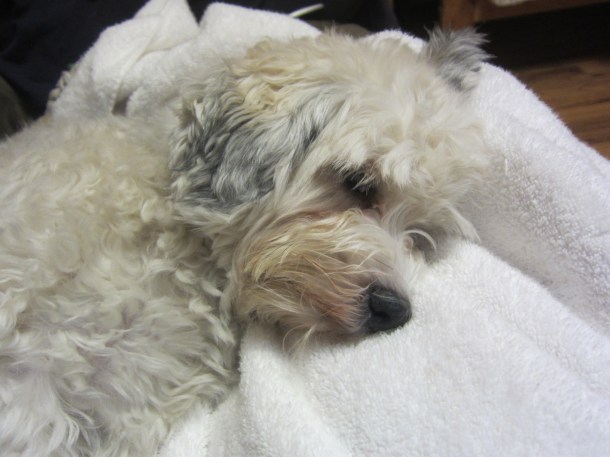
The dogs are so much better at shaping their stories. It’s the naps. Their days are made up of a series of short stories, conveniently separated by restful and rejuvenating naps. Cricket wakes up because she has to pee (inciting incident). She jumps on her Mommy, and cries and scratches, until Mommy agrees to take her outside (Cricket is the heroine of her own story). Outside, she sniffs, and barks, and chases squirrels and random humans, until she is ready to go back inside. Once inside, she stares at her Mommy and the treat bag, until the treat is given (the final climax). Then she eats her treat (denouement), and takes a nap (resolution). This neat structure happens over and over again every day, to Cricket’s great satisfaction.

img_0510

“Wake up, Mommy!”

pix-from-eos-086

“Watch me, Mommy!”

030

“Where are my treats, Mommy?”

img_0876

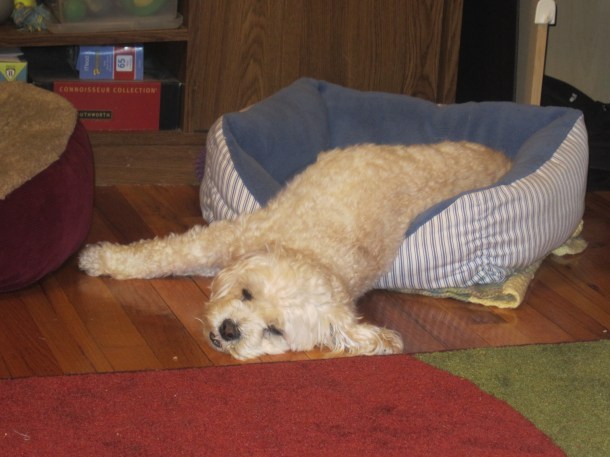
Sleepy time!

Butterfly hitches a ride on Cricket’s daily structure, but sometimes she gets to be the heroine of her own story: barking me awake, running free through the yard to finally relieve herself of her burdens. But she doesn’t mind being Cricket’s sidekick the rest of the time. There’s something satisfying in being part of someone else’s story, instead of always having to be the heroine of your own. But then again, it’s not like we have much of a choice. This is Cricket’s story and the rest of us are just her supporting characters.          Just ask her.


img_0321

Butterfly, the trusty sidekick.

pix from eos 041.jpg

Butterfly, the star of her own show!

img_0434

And it’s sleepy time again.

img_0313

Until,…

My Internship


My internship with Traumatic Brain Injury (TBI) patients, at an out-patient day program on Long Island, started recently. I get very anxious before and after my hours, but the adrenalin rush gets me through while I’m actually working there. One of my favorite activities they do there is chair yoga, though, because it gives me a chance to breathe again. I wish I could bring Butterfly with me, for my own sake but also for some of the clients, who could use some of her ambient joy. One of the guys used to have a dog, but he can’t have a pet at all now, because his aide has allergies. If he could just sit with Butterfly for a little while each day, and whisper in her ear and pet her back, it could really help him. I know that it does wonders for me.

IMG_1248

Butterfly, my therapy dog.

The purpose of the day program is multiple: one, just to give the families of our clients a respite; two, to get the patients out of their homes and into social situations, so they don’t feel isolated and lonely; three, to fight off boredom and depression in whatever ways we can; and four, to continue, on a more causal and social basis, the work of speech, movement, and cognitive therapy that they can’t do on their own.

I am most interested in that last part, if only because it holds the most potential for my active participation. But for the clients, I think the most essential part of the program is the socializing part. At the day program they can practice their speech and memory skills without being laughed at (for the most part), and their brain injuries are taken for granted; they don’t have to compete with “normal” people for attention, or be embarrassed or ashamed by what they can’t do.

The structure of our days at the program is a bit loosey goosey, but the clients’ favorite activities, over all, seem to be games: guessing games, Hangman, Pictionary, Jenga, Connect Four, Uno, etc. They’re laughing and testing their social skills and showing off. It reminds me of kindergarten, though, with games like Duck Duck Goose and Musical Chairs, which I found extremely stressful. Those games seemed to exaggerate the possibility of rejection for me, rather than mitigate it. But the other interns, and even more so our supervisor, are much more comfortable with this part of the work. They enjoy the games and know how to stay upbeat and playful, pushing back against the depression and stuckness that might otherwise prevail in the room.

I do well with the clients one on one, and in casual situations, because I’m genuinely curious about them, but I’m afraid of how I’ll manage running a workshop or exercise from the front of the room. I wish I could practice some of my group-running skills on the dogs, but, first of all, Cricket is not a joiner, and second, they can’t hold pens in their paws, or answer my questions in words, so a lot of the exercises would be lost on them.

IMG_0136

Cricket is not a joiner.

IMG_0129

Unfortunately, dogs can’t write.

My supervisor suggested that I use my writing background with the clients in some way: so I collected poems and song lyrics the clients might relate to; and I printed out a page of Cricket pictures so that they can identify the emotions on her face, and make up stories about what happened before the picture was taken (I’m hoping her faces will be a good instigator for discussions on anger and anxiety and joy and relief, all kinds of things they wouldn’t automatically discuss with each other out of the blue); and I made up a list of autobiographical questions for the clients to answer and turn into short essays; and then there’s a group exercise in storytelling; and then I did research on hand drumming and handclapping therapy; and I made up a quilting pattern exercise, using fabric and paper and glue. So, at least I’ve found an outlet for all of my nervous energy.

Early on, my supervisor warned me and my fellow interns that some of the clients can be manipulative, and we shouldn’t believe them when they say this or that, and they don’t want to be challenged, and they can do more than they’ll admit, and on and on. Even if all of those things are true, it’s never as simple as all that. Motivation plays a huge role in what people can and can’t do. That’s not being manipulative, it’s about genuinely needing a reason to take an action and not wanting to just do what someone tells you to do.

Depression also plays a big role. The brain trauma itself can cause depression, and so can some of the medications they need to take to control their symptoms, but there’s also the depression that comes from having your life plan obliterated, and your sense of your place in society taken away from you. It is much harder to figure out motivation when you know that you can’t meet your own goals, no matter how hard you try. You need to not only come up with a new set of goals, but you have to accept that those goals will be very modest compared to the people around you. There’s an expectation that these clients should feel grateful that they have a day program to go to, and people who will pay attention to them, but that kind of gratitude can be hard to come by when you feel like so much has been taken away from you.

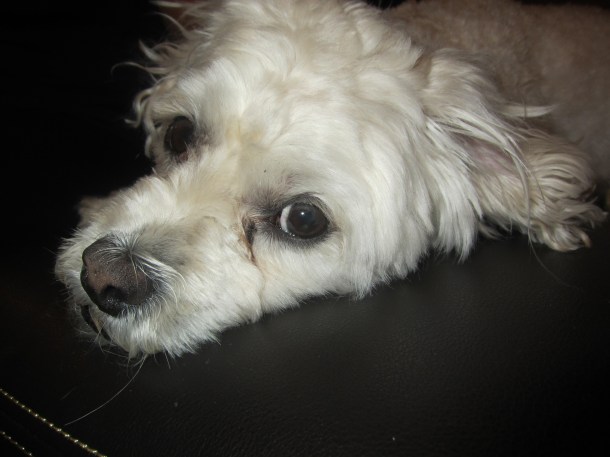
I’ve learned a lot from Cricket about how to accept bad behavior that isn’t meant to be hurtful. Her short-circuited nervous system means that she has low frustration tolerance, so she will use whatever behaviors she can think of to relieve her anxiety. She doesn’t mean to be a hellion; she just wants to feel better.

013

Cricket just wants to feel better.

I’m enjoying the work, but it’s exhausting. When I came home from my first long day at work (Nine AM to Three PM feels long to me), Butterfly was out of her mind with excitement. She’s not used to me being away for so long and it felt great to be getting such a greeting; those are usually reserved for Grandma after she’s been out gardening for five minutes. She ran around in circles and bumped into her sister, who was hopping and panting and trying to sniff my shoes herself. It’s nice to be celebrated every once in a while.

008

“Mommy! You’re home!”