Tag Archives: music

Listening to Israeli Music in the Car

            When Mom and I bought our Subaru Crosstrek last summer, the car salesman demonstrated how to link an iPhone to the car’s computer in order to answer phone calls hands free. But as soon as Mom’s phone was linked to the car’s computer, a podcast or a phone call or a voice mail came bursting out of the speakers at us, and we had to press every button in the car before we could finally make it stop. And as a result we decided, as we often do, that this latest technological advance was not for us.

            But then, a few months ago, when I was listening to music on my phone in the car because I was tired of hearing the same Olivia Rodrigo and Taylor Swift songs on the radio over and over, I noticed that the battery was low and plugged my phone into the car charger, and suddenly my Spotify account was playing over the car’s speakers. And it was wonderful! So now, as soon as I get into the car, I put my phone on the car charger and open my Spotify app and my music fills the whole car instead of just the cup holder next to me.

            Of course, I still pay attention to the news, but only when I feel like I have the energy to deal with it because trying to make sense of the different narratives of what’s going on in the Middle East (and here), as reported by different outlets through varying lenses feels like trying to untangle a pile of fishhooks. But listening to Israeli music, with a playlist that has ballooned to over 300 songs, has become my sanctuary. Especially when I’m on my way to school to teach my students, listening to Israeli music instead of news about Israel helps me get into a mindset where I can have hope for the future, so I can be the person I need to be for my students.

            Alas, I only have a free Spotify account, which means I can only listen to my playlist on shuffle, and I still have no idea how Spotify decides to shuffle the songs. Luckily, even though my Israeli music playlist is ridiculously long, it is filled with songs I really like, so even if the shuffle decides I need to hear the same song on the drive to and from work, or jumps from one style of music to a very different style of music, it’s all good. And there’s actually something comforting about having the app choose which song to listen to next, because it makes me feel like I’m not really alone in the car; like there’s a tiny DJ in there, somewhere, keeping me company and telling me everything’s going to be alright.

Four songs on a theme:

David Broza - It'll be Alright – Hebrew with English Subtitles https://youtu.be/qtI7h5A9eEQ?si=EHnP_sG13WAKC92E
Yasmin Moellem – It Will Be Good - Hebrew https://youtu.be/qvdQ4mGMVkg?si=8SnxkJslFPMKPUfv
Cafe Shahor Hazak - It Will be Okay – Hebrew https://youtu.be/PQp2a_yunmM?si=KWPCfyJyFLvq0qbU
Lior Narkis – In the end it will be Okay – Hebrew https://youtu.be/SNsBoZLyIAk?si=Q3lf1MrHvXShQdwY
David Broza
Yasmin Moellem
Cafe Shahor Hazak
Lior Narkis

If you haven’t had a chance yet, please check out my Young Adult novel, Yeshiva Girl, on Amazon. And if you feel called to write a review of the book, on Amazon, or anywhere else, I’d be honored.

            Yeshiva Girl is about a Jewish teenager on Long Island, named Isabel, though her father calls her Jezebel. Her father has been accused of inappropriate sexual behavior with one of his students, which he denies, but Izzy implicitly believes it’s true. As a result of his problems, her father sends her to a co-ed Orthodox yeshiva for tenth grade, out of the blue, and Izzy and her mother can’t figure out how to prevent it. At Yeshiva, though, Izzy finds that religious people are much more complicated than she had expected. Some, like her father, may use religion as a place to hide, but others search for and find comfort, and community, and even enlightenment. The question is, what will Izzy find?

I Am Not Alone


               In my adventures through Israeli music I’ve found one song title coming up over and over again: Lo Levad, or, Not alone.
               At first, I thought they must all be covers of the same song, because Israeli music is filled with covers and mash ups and duets, in a way that makes it feel like the whole country is one big Glee club. But when I listened to each recording, I realized that, no, they were all different songs, with different lyrics and musical styles and intentions. 
               Since loneliness is a feeling I’m very familiar with, I wanted to understand why Israel in particular would have so many songs on this topic, not just referenced in the lyrics but in the titles themselves. So, I chose three songs that I found particularly powerful, maybe only because they are “my” kind of music, to examine further.
Lo Levad – Jane Bordeaux https://youtu.be/H_gMtQ7BTo4?si=Obq-yjaSAL1Ry2yb
 
               Jane Bordeaux’s Lo Levad (written by Doron Talmon) was posted on YouTube soon after October 7th and is set at a kibbutz overrun by Hamas. A lone, burned tree is the first and enduring image of the song, but the roots of the tree are still strong, because of the people who are coming together to remember those they lost, and to rebuild. The melody is sad, but the message of community coming together is hopeful, and that melancholy contrast lingers long after the song is over. It’s not a big, banging rock song, or a cry for help; maybe it’s more like a folk song, the kind of thing you’d sing at a campfire, after a long day of cleaning up or picking clementines, to remind yourself that the effort is worth it. The basic message of Jane Bordeaux’s Lo Levad: some limbs of the tree may have been burned, but the roots are strong and with help the tree will heal and grow again.
 
Lo Levad – Aviv Alush and Omer Adam with Veteyn Chelkaynu https://youtu.be/EiYoDi7IwFQ?si=vX4tXZO1_EZxLzT-
               The second Lo Levad I chose was posted just before October 7th this year, and is performed by Aviv Alush and Omer Adam, and written by a collective of artists called Veteyn Chelkaynu, as part of a yearly project leading up to the Jewish high holidays, to inspire secular Israelis to return to religious study in some small way. The message of this Lo Levad is that you can always go home again, by which they mean return to God and to Torah (the Hebrew bible), which is very much in sync with the message of Rosh Hashanah, and the month of Elul that leads up to it. This is my favorite of all of the Lo Levad songs I’ve heard, and did the most to genuinely make me feel less alone each time I heard it, maybe because the idea of prayer and study, as part of a community, actually does resonate for me, a lot; though I wouldn’t limit it to religious study, because in my experience almost any group studying together, or singing together, and willing to acknowledge weakness and the need for comfort, creates this same powerful energy. I also like the contrast of the two voices, one gruff (Aviv Alush, a popular Israeli actor) and one sweet (Omer Adam, maybe the most famous and certainly the most prolific of Israel’s singers), and I like that in both the lyrics and the music, this song champions both crying out for help and reaching out to help someone else; there’s no sense that one role has more value or respect than the other. The basic message of Aviv Alush and Omer Adam’s Lo Levad: life is a difficult journey for everyone, with lots of choices along the way, but you don’t have to go on this journey alone, and you can find your way home, with help.
Lo Levad – Hanan Ben Ari https://youtu.be/6G_1fUcExJY?si=AB3rwHmRzwZDhqB3
               The third Lo Levad I chose is from Hanan Ben Ari (co-written by Roi Chasan), a popular Israeli singer/songwriter who sings a kind of pop/religious hybrid that really seems to crossover well. His Lo Levad, which is actually from seven years ago, is anthemic, built like an uphill climb, both in the music and in the lyrics (or what I understand of them, because the Hebrew here was hard for me in certain places). It’s written in third person, so it has that distance of speaking about someone else’s pain (even though it could be about him, who knows), and there’s a choir that jumps in when the song builds. The basic message of Hanan Ben Ari’s Lo Levad: even if you fall into the dark cavernous pit of loneliness, you can find the light and even the wings to fly.
               Together, all of these songs feel like puzzle pieces in the larger picture of how loneliness feels and how we try to combat it. Loneliness is certainly not unique to Israelis, but maybe their willingness to acknowledge it, and their focus on combatting it in community fits the Israeli ethos in particular. In the United States, where our most insistent value is independence, we have mixed feelings about acknowledging loneliness as a problem. We, maybe, see loneliness as a necessary price for the kind of rugged individualism we are supposed to strive for. But in Israel, where collectivist kibbutzim played such a big role in its beginnings, and mandatory army service brings people together from all walks of life, community is the key to survival.
               The loneliness theme also resonates in the physical isolation that is inherent in where Israel is located in the world, surrounded by Muslim majority countries that have, historically, seen Israel as a cancer that needs to be excised; and it responates with the long history of Jewish wandering that has led to being seen as the other by the majority populations of pretty much every place in the world.
               Wherever the loneliness comes from, though, it’s a relief to have it expressed, in music and in words, in so many ways; just the chance to hear about someone else’s struggle, and their attempts to find comfort, helps me fight off at least the bitterest edges of the loneliness.
               I didn’t include translations for these songs, because I wasn’t happy with my inability to really capture the magic of the words, and because I think it’s the music that is most powerful in these songs. There are, of course, other songs that have helped push away the loneliness, even when loneliness wasn’t even mentioned in the titles:
               Shleimim/Complete is performed by Idan Rafael Haviv (written by Avi Ohayon, Akiva Turgeman, and Matan Dror) and is a gentle love song about the kind of love that grows with every year together. https://youtu.be/kRy0xSsly_o?si=DKlSPPCyykkSRcdU
               Am Echad/One nation is written by Eli Keshet, Ben Tzur, and Omri Sasson and performed by a bunch of different Israeli musicians, and it’s a call for national unity in response to the current war, but also manages to capture the sweetness of coming together, even in hard times. https://youtu.be/u7CeOuIrxBM?si=8dtFFim9SZTnF9Bk
               Im Hayah Lanu Zman/If we had time, performed by Elai Botner and Noam Kleinstein and written by Elai Botner and Oren Jacoby is a re-recording of a song from a movie I never saw, about a different war, but Noam Kleinstein’s voice, even if I never understood the words, cracks me open every time I hear this song. https://youtu.be/mwPAlYxqLqE?si=uXKDfSQDW7xHKIXD
               As usual, I’ve been reading and listening to lots of voices about the war, and I found two people who were especially helpful in explaining the difference between the media coverage of the war in Israel and internationally: 

Einat Wilf with Eylon Levy – https://youtu.be/mHZyuposz3I?si=1rR7z-agkbHMt09o

Matti Friedman with Dan Senor – https://youtu.be/hZ3JGq5dxEE?si=I46SXBRex5B1ThRF

 
               It still feels pretty lonely to be Jewish right now, but all of these resources have helped in different ways, and writing the blog and hearing from my readers and fellow bloggers, helps immensely. I don’t need everyone to see things the same way I do, but I do need to feel like I’m part of the picture, part of the community of voices that are hearing and being heard.
               Thank you for helping me feel less alone.
 

If you haven’t had a chance yet, please check out my Young Adult novel, Yeshiva Girl, on Amazon. And if you feel called to write a review of the book, on Amazon, or anywhere else, I’d be honored.

            Yeshiva Girl is about a Jewish teenager on Long Island, named Isabel, though her father calls her Jezebel. Her father has been accused of inappropriate sexual behavior with one of his students, which he denies, but Izzy implicitly believes it’s true. As a result of his problems, her father sends her to a co-ed Orthodox yeshiva for tenth grade, out of the blue, and Izzy and her mother can’t figure out how to prevent it. At Yeshiva, though, Izzy finds that religious people are much more complicated than she had expected. Some, like her father, may use religion as a place to hide, but others search for and find comfort, and community, and even enlightenment. The question is, what will Izzy find?


Translating Israeli Music

            I’ve been obsessively listening to Israeli music for a few years now, but the obsession went into overdrive after October 7th, when I needed to feel a connection to Israel that wasn’t all about the news. And as the months have passed, Israeli musicians have been creating more and more music, and finding new meaning in songs that came out before October 7th, as performers have crisscrossed their small country singing at soldiers’ last minute weddings, at hospital bedsides, for evacuees from the south and the north of Israel, and really for whoever has needed comfort. David Broza and Hanan Ben Ari and Shiri Maimon and Ishai Ribo and Sarit Hadad and Omer Adam and Keren Peles and Benaia Barabi and so many others have been singing at small parties and huge vigils and everything in between with a generosity and humility that’s hard to imagine in American superstars. It’s as if the whole music industry in Israel has mobilized to try to help people put their feeling into words, and to fight off the isolation of grief.

            I wish the outside world could hear what I’m hearing, but because most of the songs are in Hebrew, they just don’t reach across the divide. And, despite listening to all of this music out of a desire to connect, I’ve actually felt even more isolated, because so few people around me are listening to the same music. Even at my synagogue, where the situation in Israel is top of mind, there are very few people who understand enough Hebrew to listen to this music and enjoy it. So, a few weeks ago, I started trying to translate some of the songs into English, in the hopes that I could close some of that divide.

            My goal was to try to make the music accessible to people who don’t know Hebrew and for me to understand the songs better myself. I’m certainly not the first person to feel called to do this; there are multiple sites online where amateur translators can upload their translations of songs from other languages (my favorite is lyricstranslate.com).

Some Israeli pop songs have been professionally translated: there’s a popular video on YouTube of Tamir Greenberg on Kochav HaBah singing an English version of Hanan Ben Ari’s Shvurei Lev/The Broken Hearted. And there’s a lovely half English/half Hebrew version of an Ishai Ribo song (with the Solomon Brothers) that manages to capture something of the original magic.

Hanan Ben Ari – Shvurei Lev/Broken Hearts – the original Hebrew - https://youtu.be/z27MZP_4P_U?si=Pbl5l_VobYY3pDop
Tamir Greenberg Singing Hanan Ben Ari’s Shvurei Lev/Broken Hearts - in English - https://youtu.be/Je6LCZH_wF8?si=6mLVIw-G1vnpnDH3
Ishai Ribo &The Solomon Brothers – My Way Back Home – English and Hebrew - https://youtu.be/WZ6HvzFh7js?si=fVRJ2guZL--PlP9e

            But more often than not, the English translations are awkward. The problem is that Hebrew has so many internal rhymes and rhythms, and English is so chaotic and free form that you can’t make the songs sound alike. So, when I approached my own translations I didn’t even bother trying to rhyme, and focused instead on capturing the rhythm and the emotion of the original Hebrew, to the best of my ability.

            The first song I chose is called Zeh Beseder/It’s Okay and it was a collaboration between an Israeli singer named Benaia Barabi and survivors of the Nova Music festival. It’s written in simple Hebrew, so I didn’t have to spend too much time on Google Translate, and it’s all about survivor’s guilt and needing to heal at your own pace, so it felt pretty universal.

Benaia Barabi and the Nova Singers – Zeh Beseder - https://youtu.be/WlBWOrLqErI?si=jNANaBBvWK4LWMza
 

Zeh Beseder/It’s Okay – Written and performed by: Benaia Barabi, et al.

(My Translation)

It’s okay that we’re not okay now

It’s okay to sing when it hurts

It’s okay to cry every morning

And even then to choose to rise

It’s okay to not feel normal

It’s okay not to say a word

It’s okay to dance ‘til morning

In a darkness full of hope

It’s easier to hide my face

To keep the pain in for a thousand years

The voices that keep screaming in my head

To pray for those small moments

When life is normal and we start to change

Only for my broken heart, I’ve tried to keep the faith

I want most of all to be together

To never have to be alone

To choose to sing at the top of my voice

And to reach out for your hand

We want most of all to live without fear

It’s okay to laugh just like that

Most of all I want to hug you close

Is it okay for me to love?

Most of all I want to hug you close

It’s okay for me to love

It’s okay to put on make-up and dress well

It’s okay to start to lose direction

Life keeps moving forward

So who am I not to go along?

It’s okay not to find the answer

It’s okay to need to pray for faith

It’s okay to ask a thousand questions

Of whether to be or not to be

It’s easier to hide my face

To keep the pain in for a thousand years

The voices that keep screaming in my head

I want most of all to be together

To never have to be alone

To choose to sing at the top of my voice

And to reach out for your hand

We want most of all to live without fear

It’s okay to laugh just like that

Most of all I want to hug you close

Is it okay for me to love?

            The second song I chose is called Habayta, which literally means, “Towards Home,” about wanting the hostages to come home. The performance of the song, by Raviv Kaner, captures everything, even if you don’t understand any of the words, honestly. And if it were a song in English, about Americans being held hostage, it would probably be on American radio 24/7.

Raviv Kaner – HaBayta - https://youtu.be/Kgv7LNME33s?si=msXRuCH4nT_RSgo5

HaBayta/Return Them Home – Written by: Raviv Kaner and Elnatan Shalom

(My translation)

My father’s up, he’s already awake

My mother’s here, her pain just never ends

Mom and Dad go back to sleep again

Maybe it’s Shabbat and not Sunday

Surrounded by the noise and the chaos

There’s nothing left, there’s no point

Return him home to me right this moment

There’s nothing left, there’s no point

Return her home to me right this moment

Return them home

It’s dark now, turn off all the lights

Maybe for a day or two, at least

Because between despair and hope, I dream

When it’s over, I will breathe again

Surrounded by the noise and chaos

There’s nothing left, there’s no point

Return him home to me right this moment

There’s nothing left, there’s no point

Return her home to me right this moment

Return them home

There’s nothing left, there’s no point

Return them home to me right this moment

There’s nothing left, there’s no point

Return them home to me right this moment

Return them home

            Maybe, in the end, I’m just doing these translations as a way to spend more time with music I love, but it would be really nice to share it with other people.

            Let me know what you think.

Bonus: Two versions of a Jewish prayer (that didn’t need translation) that has become popular for months now, because it asks for the release of captives:

Acheinu Kol Beit Yisrael – With English Subtitles - https://youtu.be/MYXr6wk19rA?si=tEZqQMmv4_LhyVIu

Lior Narkis and Avi Ohayon’s version (my favorite) – https://youtu.be/vYoQpKNt4II?si=LDwqbZrereSKGP73

If you haven’t had a chance yet, please check out my Young Adult novel, Yeshiva Girl, on Amazon. And if you feel called to write a review of the book, on Amazon, or anywhere else, I’d be honored.

            Yeshiva Girl is about a Jewish teenager on Long Island, named Isabel, though her father calls her Jezebel. Her father has been accused of inappropriate sexual behavior with one of his students, which he denies, but Izzy implicitly believes it’s true. As a result of his problems, her father sends her to a co-ed Orthodox yeshiva for tenth grade, out of the blue, and Izzy and her mother can’t figure out how to prevent it. At Yeshiva, though, Izzy finds that religious people are much more complicated than she had expected. Some, like her father, may use religion as a place to hide, but others search for and find comfort, and community, and even enlightenment. The question is, what will Izzy find?

On the Coverage of the War in Israel and Gaza

            I have been trying to write my thoughts on this for weeks, but I’ve been afraid of getting things wrong, or of bringing down anger from any and all directions. I have a fourteen page draft of a blog post that seems more like a thesis than a personal essay, but I’m not an expert on the history of Israel, or military tactics, or academic jargon, or even anti-Semitism; I care about those things, and am impacted by them, but other people will do a much better job of holding forth on those subjects than I ever could.

“Don’t look at me.”

            What I can write about is how it has felt to watch the news lately, and be on social media, being told by so many people what I should think, or do, or say in the aftermath of the Hamas attack on Israel on October 7th, a day after the fiftieth anniversary of the Yom Kippur war. I don’t believe that Jews, or Israel, should be immune to criticism; I also don’t believe that Hamas is anything but a terrorist group (calling them a liberation group suggests a real misunderstanding both of their mission and of how they have governed Gaza for the past decade and a half). What I know for myself is that hearing about the massacres on October 7th made me worry about family and friends in Israel, but watching the gradually more toxic responses around the world, and especially on American college campuses, has been frightening. I thought for sure that the chants of “from the river to the sea,” which is a demand for the eradication of the State of Israel and its current population of more than eight million Jews, plus two million non-Jews, would convince people that this pro-Hamas reaction is morally wrong, but that hasn’t happened. I thought it was the norm to recognize the difference between Hamas and Palestinians in general, and that everyone knew the difference between Israelis living within the internationally accepted borders of Israel (like the ones who were massacred and kidnapped), and Jewish settlers in the West Bank, but no. In fact, a lot of the terminology being thrown around about Israel (colonialist, apartheid, genocide) has become mainstream in a way I never expected. Social media is powerful in creating false narratives, and even more successful in advancing partial narratives that are misleading.

            An enormous number of Israelis who spent the past year protesting against Benjamin Netanyahu’s far right government and its attempts to peel away layers of democracy are now fighting for their country’s survival, both in the military and in thousands of volunteer efforts to help the survivors from the south, who had to escape Hamas and Islamic Jihad rockets, and evacuees from the north, escaping Hezbollah rockets. I am proud of how quickly Israelis were able to find their way forward, and worried about the choices of the military and the government, and frightened by the lack of critical thinking and journalistic ethics that seem to abound right now when facts would be really helpful. I am proud of the Haredi (ultra-orthodox) Jews in Israel who are joining the army for this war, despite a very contentious law that allows them to avoid military service in favor of study, and I’m angry at some Jewish settlers in the West Bank who think they have a religious right to hurt their Palestinian neighbors.

            But I can’t fix any of those things. I cannot vote in Israel, and I can’t call every reporter who takes Hamas’ word without evidence and remind them that that’s just stupid. I can only be here, living my own little life in New York, and sending prayers to my family and friends who really need it right now.

“I pray all the time, Mommy.”

            At my synagogue, on Long Island, we’ve spent a lot of time talking about how we find comfort right now, since that’s really all we can control. We’ve had speak ups, to share our grief and confused feelings, and vigils, for the survivors and the dead and the missing and all those on the ground who are still in danger. One of the rabbis from my synagogue joined a group of New York rabbis for a short trip to Israel, to show solidarity and to learn more about what’s going on. I think, right now, many American Jews, because we are further away from the danger and, in most cases, experiencing less direct trauma, are wishing for ways to reach peace. But we, I, have no idea what the military realities are, and what it will take to make Israelis safe again. I refuse to tell Israel what they should do, though, of course, I have questions.

            I have a lot of trouble with people who equate the horror of a massacre perpetrated on civilians and a war conducted, or at least trying to be conducted, under the set rules of war.

            My focus has been on finding podcasts and articles that can help me understand more of what it feels like to be in Israel right now, so that I can be more empathetic, and to reassure me that Israel is a real place and not this cardboard cutout of evil that often gets portrayed by Pro-Palestinian activists on American college campuses.

            Israel Story, a great podcast in English that shares stories from all segments of Israeli society, has been posting short interviews with Israelis in different sectors during the current war. In the past, Israel Story has covered many Palestinian stories with empathy and clarity, humanizing and coloring in details of lives we often don’t get to hear about. The archives are full of those stories, but right now the most powerful of the short interviews I’ve heard was with a father who rescued his teenage son from the music festival in the South of Israel after the massacre had begun. www.israelstory.org/episode/sivan-avnery/                I’ve also been listening to podcasts from a school in Jerusalem called the Shalom Hartman Institute which has done a lot of work bringing together religious and secular, American and Israeli, and finding ways to have difficult conversations that are productive and even inspiring. I also watched a webinar interview with Yehuda Kurtzer, the president of the Institute in North America, that addressed what it feels like in Israel right now, and how liberal American Jews are dealing with the current news environment. https://youtu.be/Glia_tSZqmo?si=g3Fr8T4XR_D7Qkwk

            I go to the Forward and the Times of Israel and the Atlantic for articles that help me understand the issues involved. Here are links to two of the many articles that I’ve found helpful: https://blogs.timesofisrael.com/why-is-israel-being-blamed-for-the-hamas-massacre/

            I go to Kveller and Nosher and My Jewish Learning for a break from the news and a chance to remember that there is still Jewish joy and silliness, and comfort food, and so much to learn about being Jewish that has nothing to do with politics or war.

            But most of all I go to music. I have a ridiculously long Israeli music playlist on Spotify filled with music from Ishai Ribo and Hanan Ben Ari and Yuval Dayan and Keren Peles and Jane Bordeaux and Ofra Haza and Arik Einstein and David Broza and Hadag Nachash and Hatikva 6, and I keep finding more musicians and more music to remind me that there is more to Israel than this war.

Hanan Ben Ari – https://youtu.be/z27MZP_4P_U?si=uu7wqn1pEn6cRdd8

Ishai Ribo – https://youtu.be/7mmu6EzLZfM?si=egySHSIHEU0ckn7t

Jane Bordeaux – https://youtu.be/5t59s1sa1oc?si=o2XozKDDdpCiaSFA

Yuval Dayan – https://youtu.be/V4qsi4V-NFY?si=FqlWyWA40AIKhBYA

            So that’s where I’m at right now. I’m still trying to write out my thoughts on the war itself, and the history that led to it, mostly for my own clarification, but the rest of the time I’m taking a lot of deep breaths, and listening to voices across the spectrum, when I’m up to it, and listening to music when I’m not.

            I wish everyone Besorot Tovot, good news to come, and comfort and understanding until that time comes.

“Paws crossed.”

If you haven’t had a chance yet, please check out my Young Adult novel, Yeshiva Girl, on Amazon. And if you feel called to write a review of the book, on Amazon, or anywhere else, I’d be honored.

            Yeshiva Girl is about a Jewish teenager on Long Island, named Isabel, though her father calls her Jezebel. Her father has been accused of inappropriate sexual behavior with one of his students, which he denies, but Izzy implicitly believes it’s true. As a result of his problems, her father sends her to a co-ed Orthodox yeshiva for tenth grade, out of the blue, and Izzy and her mother can’t figure out how to prevent it. At Yeshiva, though, Izzy finds that religious people are much more complicated than she had expected. Some, like her father, may use religion as a place to hide, but others search for and find comfort, and community, and even enlightenment. The question is, what will Izzy find?
Choir Rehearsals

            I can’t do choir rehearsals at my synagogue during the school year anymore. I tried.

For the past two years we’ve either had online rehearsals or did recordings on our own, so even if a zoom meeting came up on a day when I had to teach synagogue school, I could still go home, have dinner, unwind for a minute, prep for my next class, maybe even take a shower, and still be in time for the Zoom. But in-person rehearsals are a whole other thing. I have to rush through prep and communicating with parents and dinner then get back in the car, rehearse for an hour and a half, and only get home around ten o’clock at night. When I tried, a few weeks ago, I hit a wall around nine o’clock. I left the rehearsal early, but it still took me days to recover.

“Life is exhausting.”

            And I was frustrated. I’d already committed to singing at the Women’s Seder (a yearly event at my synagogue, a few weeks before Passover, to celebrate the women in the Exodus story and modern religious music by women), and I had to tell the musical director, and the Cantor, that I wouldn’t be able to get to the rehearsals, for that or for anything else during the rest of the school year.

            When I told the musical director that I wouldn’t be able to get to the rehearsals, he sent me the music (four songs we’d done in the past, and only one with two part harmonies) and said he trusted me to be ready on my own, which was both kind and a lot of pressure.

And when I reached out to the Cantor to tell him that I wouldn’t be able to go to choir rehearsals during the school year any more (after almost a week of working up the nerve to write the email), his response came back quickly and with a lot of understanding and compassion.

            But I still felt crummy.

I haven’t been able to go to many in-person Friday night services either. I know I’m not the only one who has fallen out of the habit of going to services in person, but I still feel guilty when I watch the Friday night Zoom and see that only two or three congregants are actually in the sanctuary. And I feel guilty when I choose to attend with my camera off, instead of showing my face on Zoom, even though I know I don’t have the energy to change out of my pajamas or even comb my hair.

“My hair looks perfect.”

I feel guilty when I set limits to protect myself, but I also feel angry, because I’d rather be someone who can do all of these things. I don’t want to be ill.

Hopefully I will be able to manage choir rehearsals over the summer, when I don’t have to teach on the same days, and I’ll be able to prepare for the high holidays and socialize with friends and feel more normal, but we’ll see.

            Even though I can’t get to choir rehearsals, I have been able to bring more music into my classroom. Not only does the Cantor come in to sing with the students, but a visiting teacher gave us an idea for another way to bring in more music. He suggested playing different versions of the same prayer for the kids, to give them a chance to see for themselves how well, or badly, the music fits the meaning of the prayer. He chose Oseh Shalom (He Makes Peace) for his example, because it’s a prayer that has been done in so many different ways, and I followed his example. I found seven versions of the prayer and we all sat together on the floor and listened to one version after the other. The choice of song became even more meaningful after the war in Ukraine began, because the kids have been watching the news, along with the rest of us, and singing about peace, and thinking about peace, gave them a way to feel like they were doing something to help.

Some of the kids danced to the faster versions of the song, and others took notes like the serious musicologists they are, talking about how the changes in language and instruments and voices added to our ideas about what peace might actually be: it isn’t just the slow and mournful kind of peace we’re used to singing about, but also the raucous, complicated, dissonant, fast and faster, loud and louder, one voice and many voices cacophony that can encompass everyone, if we let it.

We may have played the music too loud, because one of the kids came back from the bathroom saying they could hear it down the hall, but I don’t think anyone minded. Music has so much power to make us feel heard, and connected, to each other and to ourselves. I never want to lose that connection from my life, or my teaching.

And, maybe inspired by my students, I was able to practice the songs for the Women’s Seder on my own, and when the day came, I was ready to sing with the female members of the choir without too much anxiety. And it felt really good to be a part of things, and to be able to add my voice, and not have to stay home and watch it all on Zoom. I hope this is a sign that there will be ways for me to adapt to circumstances in the future and always find my way forward, but for now, this was enough.

In case you’re interested in trying the experiment:

Oseh Shalom by Nurit Hirsch https://youtube.com/watch?v=-ODQuc6PzVk&feature=share
Oseh Shalom (SATB Choir) by John Leavitt https://youtu.be/EzdeEuttarI
Oseh Shalom by Debbie Friedman https://youtu.be/scbPrzCicLk
Oseh Shalom by Elana Jagoda https://youtu.be/MhBtIWGsaCo
Oseh Shalom by - Nefesh Mountain https://youtu.be/IrDDeQxRepU
Oseh Shalom by Nava Tehila https://youtu.be/EFdngngTpqo
Oseh Shalom by Ochs https://youtu.be/1Rw-r6hrCOc
Peace.

If you haven’t had a chance yet, please check out my Young Adult novel, Yeshiva Girl, on Amazon. And if you feel called to write a review of the book, on Amazon, or anywhere else, I’d be honored.

            Yeshiva Girl is about a Jewish teenager on Long Island, named Isabel, though her father calls her Jezebel. Her father has been accused of inappropriate sexual behavior with one of his students, which he denies, but Izzy implicitly believes it’s true. As a result of his problems, her father sends her to a co-ed Orthodox yeshiva for tenth grade, out of the blue, and Izzy and her mother can’t figure out how to prevent it. At Yeshiva, though, Izzy finds that religious people are much more complicated than she had expected. Some, like her father, may use religion as a place to hide, but others search for and find comfort, and community, and even enlightenment. The question is, what will Izzy find?

Israeli Music

(Note: I was originally planning to post this essay back in the spring but decided to pull it when the violence broke out in Gaza and Israel, because it felt like the wrong time to share my lighthearted adventures in Israeli music. Since then I have had a lot of time to think about my silence, and the value of silence and expression at different times. I still don’t have a clear mathematical equation to tell me what to say when, so I have to trust that my readers will take this essay for the love letter it was meant to be, with the understanding that love doesn’t mean perfect acceptance of the loved one’s behavior.

Israel is imperfect and Israeli governments have made problematic decisions that are at odds with world opinion. Israel is also the ancient homeland of my people and the modern miracle that gave many Jews a place to thrive after the Holocaust. Should that miracle have come at the cost of Palestinian peoplehood? No. Were there ways to allow for both peoples to live peacefully in their homelands? Possibly, possibly not. Can things change going forward? I hope so.

Israel is a complicated place, with conflicts between Israelis and Palestinians, and between Jews of Ashkenazi and Mizrachi or Sephardi descent, and between secular and religious Jews. It’s a place where emotions run high and violence and spirituality and hope are all deeply ingrained. Sometimes the only thing that can make it all bearable, for me, is to listen to the music and sing along – expressing all of the hope and bitterness and love and anger at full voice.)

My Israeli Music Mixtape

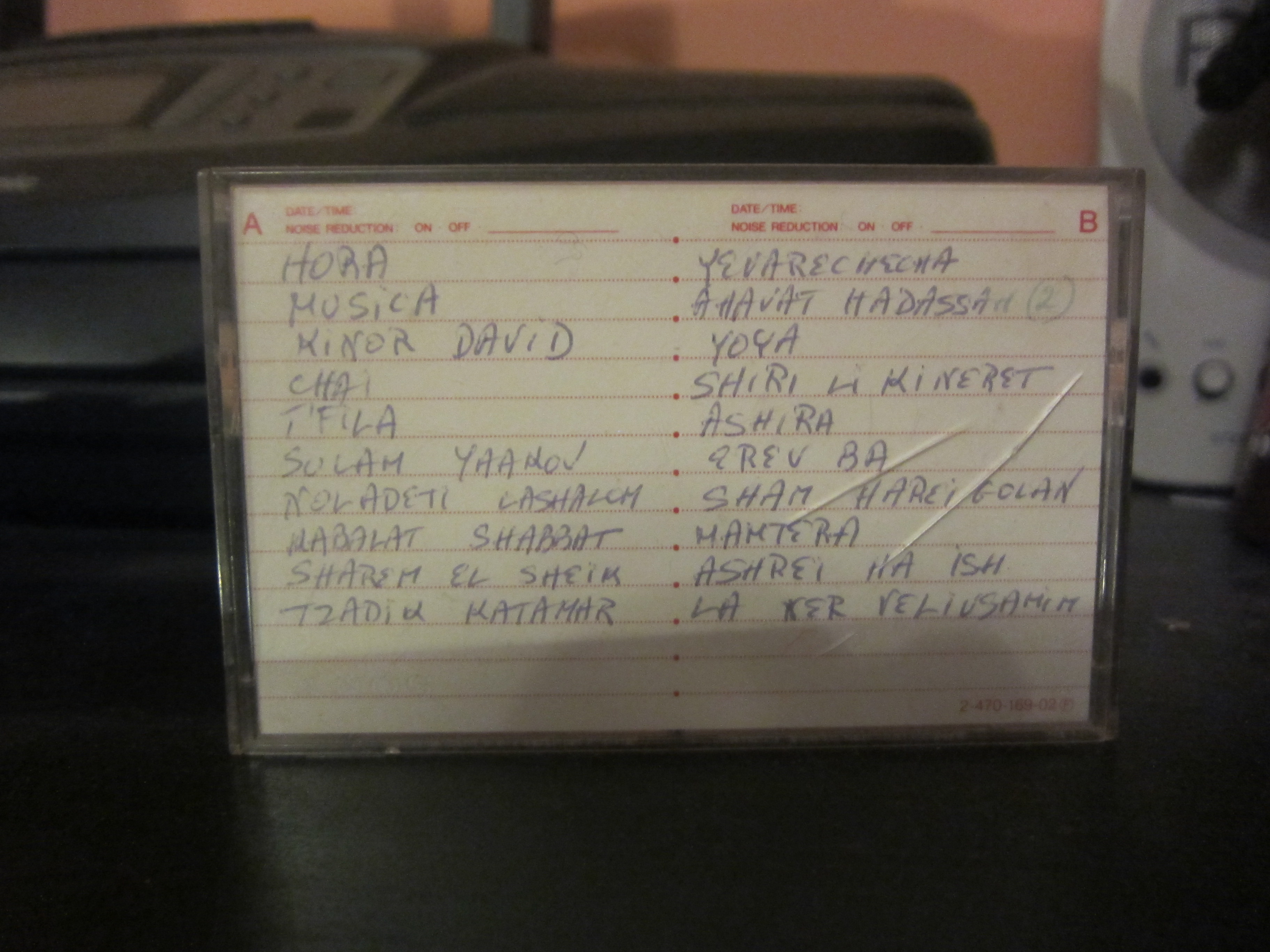
            My best friend in Seventh Grade was Israeli. She had come to the States with her family a year or so earlier, and we became friends because I was new to our orthodox Jewish school and willing to help her with her English homework. I also understood more Hebrew than most of my classmates, and we shared a love of music. She made me a mix tape of the Israeli songs she thought I should know, to fill out the list of Israeli songs I’d learned in school and camp (she was also a big Billy Joel fan, so I learned his songs too). Eventually she switched to public school and we drifted apart, but I heard years later that she’d become a DJ in Israel, which seemed appropriate.

            Last summer, the Cantor at my synagogue did a Zoom session on Jewish music (of the Non-liturgical kind), and one of the songs he played was an Israeli song, and it was like a time capsule, sending me back to junior high and afternoons singing along with my mix tape. As soon as the Zoom was over I went searching for that old mix tape, and found it. When I tried to play it in my old tape deck from college, though, the tape crumbled in the machine. Not to be deterred, I went to YouTube to re-find some of those songs, and found a bunch of other familiar Israeli songs as well. I made a short playlist, and searched out the lyrics, in Hebrew and English, thinking I could use them in synagogue school in some way, and then filed them away.

            Then, a few months later, I came across an American podcast called Israel Hour Radio: one hour a week filled with Israeli music, both the classics and the modern stuff. I started listening to the archives, with theme episodes on classic songs of the seventies and eighties, and Eurovision hits, and countdowns of the best songs of each year.

On Yom Ha’atzma’ut (Israeli Independence Day) this past year, I played some of the Israeli music videos for my synagogue school students. Unfortunately, the sound from my computer diffused quickly in the cavernous social hall that we’d been using as a classroom during Covid, and, more importantly, most of the songs were in Hebrew, which turned out to be the real deal breaker.

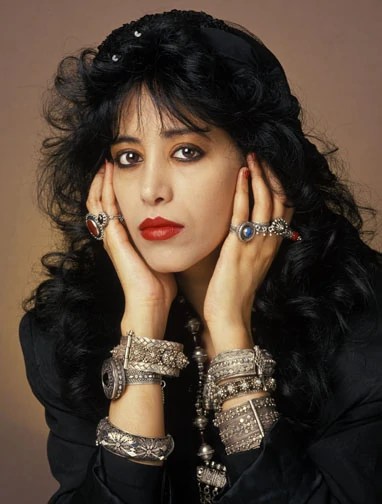
            But I’d had such high hopes! I wanted the kids to love the music as much as I did at their age! I wanted them to hear Ofra Haza singing Yerushalayim Shel Zahav and be knocked out by the clarity of her voice and the way it soared and how her technique seemed so transparent that you could hear her soul right through it.

Ofra Haza

And I wanted them to know that Israel has won the Eurovision song contest a bunch of times, with Hebrew songs, on a world stage! Most of all, I wanted them to know that Hebrew is more than just a language to pray in; that you can even dance to it!

“I can dance!”

            Growing up, so much of my education about Israel was focused on politics and religion, and not on the daily lives of the people who live there. It didn’t even occur to me that they had their own radio stations, let alone that they’d gone way beyond folk music and Israeli dancing into Rap and Hip Hop and Rock and Techno and Pop and Reggae. There’s also a deep strain of humor, silliness, and protest music, as well as a lot of love songs.

            My favorites are still mostly in the category of Shirei Eretz Yisrael (Songs of the Land of Israel), because they are like love songs, filled with longing for a better world, acknowledgement of the bitter and the sweet, and hope for the future. My dream is that, with time, my synagogue school students will like these songs as much as they like Netta (the Israeli Eurovision winner from 2018 who became famous singing a song in English, with lots of clucking noises and chicken-like dance moves – no, really).

Netta

            There was always a strong tradition of public singalongs in pre-State and Modern Israel, as a way to build a national identity from the patchwork of Jews from Eastern Europe and America and Asia and the Middle East. That tradition landed in my American life, in summer camp and synagogue and school, so that I could sing more in Hebrew than I could speak. In my endless YouTube searches this past year, I discovered a relatively recent phenomenon called Koolulam, an Israeli group that creates public sing along videos. They choose a song and prepare the lyrics in Hebrew, Arabic and English, and then they bring together people from all across the country – Muslim, Christian, Jewish, single and with families, young and old – and they teach them the song and make a video of the final version. They call themselves a “social musical initiative” dedicated to bringing disparate groups together. In a way, Koolulam is an extension of the original Israeli imperative of nation building through singalongs – but now the goal is to bring everyone in the country together, not just the Jews. And the resulting videos really are inspiring.

            So, maybe next year, when we can sing together again, I’ll be able to teach my students some of my favorite Israeli songs, even if they are in Hebrew, and no one is clucking. Though I’m sure we could find an excuse to add in the clucking.

“Really?”

            In case you’re interested, I’m adding links to a few of the songs on my Israeli music playlist, but for a deeper education I recommend listening to back episodes of podcast.

NettaToy (the chicken song) - https://youtu.be/CziHrYYSyPc

Ofra HazaYerushalayim shel zahavwith English subtitles https://youtu.be/72QC8EGnxTw

David Broza Yihieh Tov with English subtitles https://youtu.be/qtI7h5A9eEQ

Nina Simone - Eretz Zavat Chalav (A land flowing with milk and honey) - https://youtu.be/YBAAkJyEhlA

Koolulam – Al Kol Eleh for Israel Independence Day https://youtu.be/oxzR9Z-kG6Q

Koolulam One Day (3000 people Muslim, Christian, Jewish) https://youtu.be/RjPpMXMjIj0

Ishay Ribo and Nathan Goshen - Nechakeh Lecha https://youtu.be/ryTO71_eMO4

English translation for Nechakeh Lecha https://lyricstranslate.com/en/%D7%A0%D7%97%D7%9B%D7%94-%D7%9C%D7%9A-nechake-lecha-we-shall-await-thee.html

Amir Dadon and Shuli Rand – Bein Kodesh lechol https://youtu.be/sCJh9YcrL3k

English translation for Bein Kodesh lechol https://lyricstranslate.com/en/%D7%91%D7%99%D7%9F-%D7%A7%D7%95%D7%93%D7%A9-%D7%9C%D7%97%D7%95%D7%9C-bein-kodesh-lechol-between-sacred-and-profane.html)

“We need more music, Mommy.”

If you haven’t had a chance yet, please check out my Young Adult novel, Yeshiva Girl, on Amazon. And if you feel called to write a review of the book, on Amazon, or anywhere else, I’d be honored.

            Yeshiva Girl is about a Jewish teenager on Long Island, named Isabel, though her father calls her Jezebel. Her father has been accused of inappropriate sexual behavior with one of his students, which he denies, but Izzy implicitly believes it’s true. As a result of his problems, her father sends her to a co-ed Orthodox yeshiva for tenth grade, out of the blue, and Izzy and her mother can’t figure out how to prevent it. At Yeshiva, though, Izzy finds that religious people are much more complicated than she had expected. Some, like her father, may use religion as a place to hide, but others search for and find comfort, and community, and even enlightenment. The question is, what will Izzy find?

Life in the Absurd

            Out of the blue, one evening, Mom got an email about a pop-up vaccine site taking people over 65, and she called and got an appointment for the next morning. And then, after she’d gotten the vaccine and scheduled her second shot, she felt so guilty that she’d gone without me, and that so many of the sites on Long Island were reserved for older people and not for essential workers or teachers, that she started obsessively watching for new sites, and nagging me to do the same. I didn’t enjoy having to jump onto the computer each time she saw a hint of a possibility of an appointment for me, especially because they all turned out to be nothing. But then, three weeks later, an email arrived saying that there was a site taking people over 60 and teachers, from our town. She emailed back and got me an appointment for that evening.

            The only problem was that I was still at synagogue school, where I was so overwhelmed with the laptop and iPad (to teach the remote kids), while also corralling the in-person kids, that I didn’t think to check my phone. By the time I got home Mom was standing in the parking lot, waiting for me. She yelled through the window of the car that I had an appointment, and I screamed back, for what?

            The Pharmacy was in a small strip mall two towns over, down a badly lit hallway and behind a non-descript door. It was some kind of specialist compound pharmacy, with one pharmacist and two helpers, and I was one of the last appointments of the day. I made sure to tell the pharmacist that I teach synagogue school, in case she wanted to disqualify me on the spot as not a real teacher, but she just nodded and asked where I teach, and then she told me that I was getting the Moderna vaccine, and stuck the needle in my arm. One of her assistants filled out a vaccine card and scheduled my second appointment, and then they sent me on my way.

            It took all of five minutes, and I had a hard time processing that I had really gotten the shot, even while holding an ice pack against my right shoulder. Two days later my left shoulder started to hurt, in the same spot as on my right shoulder. I tried to find a reasonable explanation for it, like maybe I’d been sleeping on my left side to protect the right shoulder, though that didn’t explain the pinpoint nature of the pain. But I was still wiped out from synagogue school, or from the vaccine shot, or both, and I couldn’t really think it through.

 The next day, which turned out to be the second windiest day of the year, I decided I had plenty of energy to do the food shopping on my own, even though Mom said it was too cold to go out and she and the dogs all gave me funny looks. Instead of wearing my hair in braids or a pony tail, which is what I’ve been doing since my hair got so Covid-long, I left it down, and it rose in a whirlwind around my face until I couldn’t see a damn thing. Then I went into the supermarket and filled my cart with everything on the shopping list, and only realized at the checkout that I didn’t have my pocketbook with me. I asked if they could watch my cart, melting ice cream and all, at the customer service desk, and then ran out to the car, hoping my pocketbook would be sitting on the passenger seat waiting for me. It wasn’t.

“Oy.”

I knew I had to drive home and find my pocketbook, but I was afraid someone would see me driving away and think I was a criminal of some kind, racing out of the parking lot. It was only when I’d pulled out into traffic, heart racing, that I thought to check under Mom’s cushion on the passenger seat, and of course my pocketbook was right there. I was relieved and flustered and had a hard time figuring out where to make my U-turn back to the supermarket. I parked in the same exact spot I’d just left and then ran out, forgetting my mask in the car, so I had to race back and find it on the floor, under Mom’s cushion, which I’d managed to toss into the air in my frenzied search for my pocketbook.

I tried to walk back into the supermarket like a sane, rational person and gracefully guide my cart from the customer service desk to the next open checkout lane, but there were no open lanes, except for the self-checkout. I hate self-checkout. I don’t understand how this is supposed to be more convenient when every time I try to buy a fruit or a vegetable someone has to come over and play with the machine to get it to recognize my broccoli. But I paid for all of my groceries and managed to put them in my reusable and refrigerator bags, piled to the top of the cart. As soon as I got outside, of course, the bag on top of the pile fell off the cart, and the receipt flew away in the wind, never to be seen again. By the time I got home I felt like I’d been through all of the Herculean labors, and fell into bed, exhausted.

“I totally get it.”

            I’m pretty sure my life isn’t the only one falling into the absurd lately, but I like to tell myself that mine is the most absurd, just so I can feel like I’m winning at something.    

The fact is, everything has seemed nonsensical for a long time now, as if we’ve all been suffering from pre-Covid brain fog for years. There was that weird four year period when our president was a white supremacist, and then that year when people refused to wear face masks to protect them from a deadly disease. And then there were those news outlets that only believed in alternative facts. It was weird. Okay, it’s still weird. States are rapidly putting new voting restrictions into place, after what was deemed the most secure election in US history by the Republican in charge of cyber security. And US senators are proclaiming that they didn’t feel threatened by men with bear spray and flag poles attacking the Capitol police and setting up a gallows to hang politicians, but one little black woman knocking on a door in the Georgia Legislature clearly scared the bejeezus out of them.

“Humans are weird.”

            There are times when I believe that God is everywhere, and that the universe is a web of invisible circuits that bring us all together. And then there’s the rest of the time, when I still believe that God is everywhere, but I’m pretty sure the web of invisible circuits is broken, or at least rotting at significant junctures. Hopefully, once we’ve all been vaccinated we can start to do the work of fixing those connections.

To that end, I thought I’d share some new liturgical music from the musical director/composer/rabbinical student from my synagogue whom I’ve mentioned in the past (I make a short appearance in the choral section of the video.) The title of the song is HaRofei, which means the healer, and it’s based on Psalm 147. The lyrics alone are wonderful, but with the music and all of the voices and instruments he was able to bring together, it’s a stunner. https://youtu.be/fmsMljlUWok

“Where are the dogs?”

If you haven’t had a chance yet, please check out my Young Adult novel, Yeshiva Girl, on Amazon. And if you feel called to write a review of the book, on Amazon, or anywhere else, I’d be honored.

            Yeshiva Girl is about a Jewish teenager on Long Island, named Isabel, though her father calls her Jezebel. Her father has been accused of inappropriate sexual behavior with one of his students, which he denies, but Izzy implicitly believes it’s true. As a result of his problems, her father sends her to a co-ed Orthodox yeshiva for tenth grade, out of the blue, and Izzy and her mother can’t figure out how to prevent it. At Yeshiva, though, Izzy finds that religious people are much more complicated than she had expected. Some, like her father, may use religion as a place to hide, but others search for and find comfort, and community, and even enlightenment. The question is, what will Izzy find?

Choir Videos

            One of the more nerve wracking parts of my summer has been the process of rehearsing for and recording choir videos. Since my synagogue will be all virtual for the high holidays, and singing in a group over zoom is a non-starter, the cantor and the musical director came up with a plan to create ten choir videos to add to the Zooms, cutting together individual videos of all of the singers and musicians. This means that I listen to a guide track on my headphones, and sing at my computer screen, day after day. It is awful.

“Oh God, she’s singing again.”

            I hate looking at myself. I look like Mrs. Potato Head, but when I tried to look just over the computer screen to stare at the wall instead of at my face, the videos came out disturbing. I deleted one attempt after another until I finally decided to ask my mom to help me decide when it was good enough to send in (because left to my own devices it was clearly never going to be good enough).

            The first song took twenty rehearsals and ten to fifteen deleted videos, the second was not that much better, but by the third, maybe because we were finally singing just the Alto part and I could sing along with the head Alto on the guide track, I did the video in one shot. Three days of rehearsal leading up to it, of course, but even with the Mrs. Potato Head thing still going strong, I was happy with my vocal and willing to send it in.

            We’ve been having zoom rehearsals every two weeks, to familiarize us with the two or three pieces we need to perform before the following rehearsal, and to review the technological issues, like accessing the google drive folder where all of the music is hiding, and how to send in the oversized videos. I was so proud of myself after I finished the first batch of videos, and even had two days to go back to ukulele practice before the next rehearsal, but then, of course, the next set of songs were harder than the first.

            My favorite pieces are the ones where I can sing along with the head Alto, both because it’s comforting to hear her voice and because I can focus on the best parts of my vocal range. When we sing along with the cantor I’m usually singing an octave above him, so the notes that are easy for him are tough for me, and it feels more like harmony than unison. There’s something magical about singing the exact same note as someone else, as if there’s a sort of “ding” that goes off in my head that tells me I got it just right.

“Ding!”

            We won’t be doing much communal singing this year at my synagogue. During a normal year we would have a choir rehearsal every other week, just to hang out and learn new music, but with the average age of the choir members in the seventies, and the extra danger of passing Covid while singing, we’ll be staying on Zoom for the foreseeable future, which means we can learn a song, but we can’t sing it together. So I’m trying to make the most of the singing I get to do this summer. There’s some small sense of community from the Zoom rehearsals, but the real power comes from singing along with one other singer and the piano on the guide tracks, and knowing that, eventually, all of the voices will come together, somewhere in the cloud. And if that means I have to sit in front of a computer and stare at my potato head for minutes at a time, so be it.

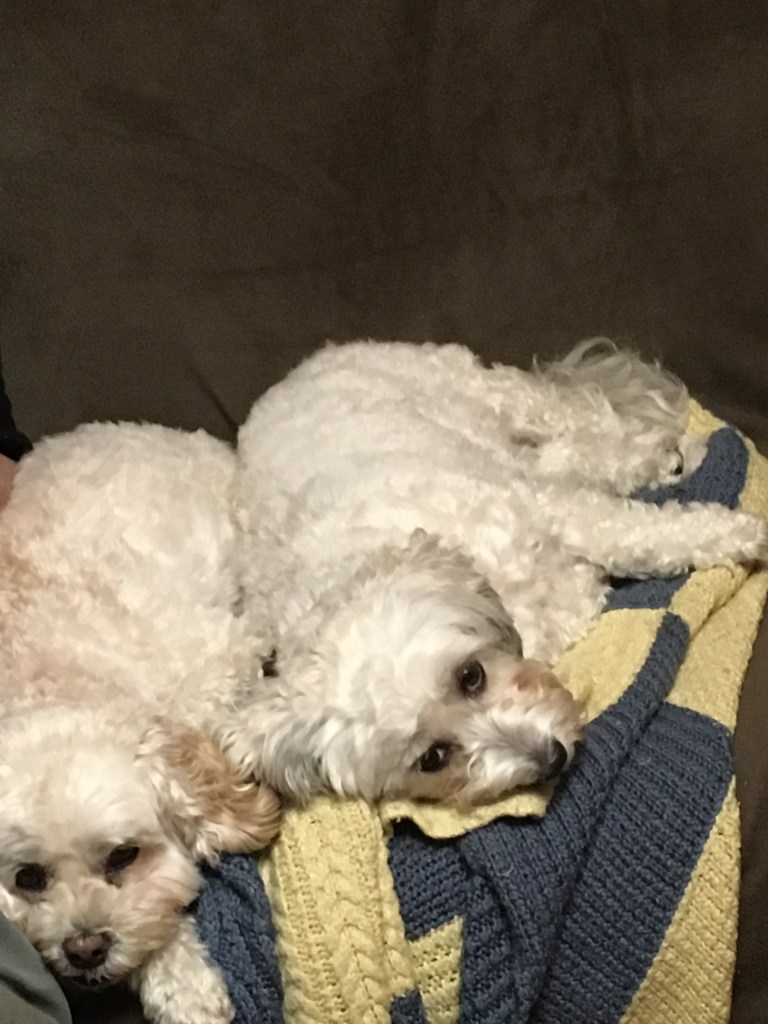
            Cricket and Ellie have been kind enough not to laugh.

“It’s hard work.”

If you haven’t had a chance yet, please check out my Young Adult novel, Yeshiva Girl, on Amazon. And if you feel called to write a review of the book, on Amazon, or anywhere else, I’d be honored.

            Yeshiva Girl is about a Jewish teenager on Long Island, named Isabel, though her father calls her Jezebel. Her father has been accused of inappropriate sexual behavior with one of his students, which he denies, but Izzy implicitly believes it’s true. As a result of his problems, her father sends her to a co-ed Orthodox yeshiva for tenth grade, out of the blue, and Izzy and her mother can’t figure out how to prevent it. At Yeshiva, though, Izzy finds that religious people are much more complicated than she had expected. Some, like her father, may use religion as a place to hide, but others search for and find comfort, and community, and even enlightenment. The question is, what will Izzy find?

The Mumble Grumble Prayers

            One of my jobs as a synagogue school teacher is to teach my students how to pray, but sometimes I worry that I’m the wrong person for the job. I grew up going to a Conservative Jewish day school, where half of each school day was spent on Hebrew language, and Jewish history and customs, and prayers. But I don’t remember actively learning the why behind the prayers. I learned how to sing the prayers, and which prayers and blessings to say when, but the Kavanah, the intention, was most often left for last, or for never.

The assumption, I think, was that little kids couldn’t understand the deeper meaning yet, but by seventh grade I’d switched over to an Orthodox school where there was a sudden descent into the mumble grumble form of prayer. We didn’t focus on the music of the prayers much anymore, instead we gave value to the words of the prayers, with a requirement to read or say every single word. The problem was that the girls were given very little time to say the morning prayers, and it was mumble grumble, or nothing. Even at my most fluent, I couldn’t have even skimmed the Hebrew of the prayers in the short time allotted to us, though many of my classmates were able to do it, and even seemed to feel something. In orthodoxy, our teachers told us, the belief was that if we did the right things, and read the right things, and said the right things, we would become good Jews, even if we never understood the why of any of it. But for me, that method didn’t work.

“Harrumph.”

 I’m only responsible for teaching the kids a few prayers each year in synagogue school, which gives us time to learn the tunes, and the words (often in transliteration), but most of all the intention behind each prayer, which meant that I needed to know what those were; and in some ways I had to start from scratch. I did my research and reading, but most of my learning came from going to services myself. At my synagogue we learn a lot of different versions of the prayers, to emphasize different ways of looking at the words and meaning, but even when we use the same version over and over, we often stop to read a poem or hear a story first, to shed new light on the purpose of the particular prayer. And that has given me a lot of material to share with the kids, but, more often than not, I ask the kids if they can explain it to me.

“Huh?”

For example, the Mishaberach is a prayer for wishing someone healing from physical or emotional pain, so we spend some time talking about how a prayer might be able to comfort us, or give us strength, even if we don’t believe that God is answering our wishes directly. And when we look at the words of the Ve’shamru, a prayer we say on Friday nights to remind us of the obligation to celebrate Shabbat, I’ll ask them why we might need, or want, a reminder in the form of a prayer every week, especially one that we say after the Sabbath has already started. And then we can look at the Modeh Ani, one of the weekday morning prayers, in which we thank God for letting us wake up in the morning, returning our souls to us after a night in God’s safe keeping (go ahead, try to teach that concept to children without accidentally referencing zombies, I dare you).

“Zombies?!”

A lot of this focus on creating meaning is due to the fact that most progressive Jews (Reform, Reconstructionist, Humanist, Conservative, etc.) don’t feel obligated to pray. In orthodoxy, you are supposed to accept the burden of obligation, in rituals, and daily behaviors, long before you ever learn the why behind the what, which is what makes mumble grumble prayer a help to them. In progressive Judaism the why always comes first, because many of the obligations have been made voluntary, which has its own risks.

Sometimes I worry that my synagogue school students are missing out by spending so little time on their Jewish education each week. I wouldn’t have been able to fill my brain with so much of the how of Judaism, and the history of Judaism, without half of each day of my childhood being set aside for learning how to be Jewish. And I feel lucky to have the background I have, and the wealth of information to tap into. My hope is that, in the time my students and I have together, they will learn to see the obligations of their religious community as more than worth the gifts they will get in return, especially because there are so many fewer obligations in Progressive Jewish life. And maybe this lighter touch will keep them from falling into the mumble grumble form of religion, where the obligations drown out the inspirations.

            In my ongoing search for ways help the kids to feel connected to the prayers, I went to a Zoom presentation by the founders of a musical group called the Nigunim Ensemble, based in Israel. They have created new versions of old prayers, incorporating chants and new rhythms from Arab, Persian, and popular Israeli music. Their message to our Zoom class was that the Jewish world can, and should, widen its ideas of prayer music, not only to include more people in our community, but to add more layers of emotion to the experience of prayer. And I was excited by all of the new sounds they were introducing to us, but for me, the message that came through most strongly was the sense of joy I heard in their voices. And I realized that not only singing good music, but singing in community, allows me to feel heard and accepted, as I am. And, when I feel heard by my community, I start to think that maybe God can hear me too.

“We can hear you, Mommy.”

If you haven’t had a chance yet, please check out my Young Adult novel, Yeshiva Girl, on Amazon. And if you feel called to write a review of the book, on Amazon, or anywhere else, I’d be honored.

            Yeshiva Girl is about a Jewish teenager on Long Island, named Isabel, though her father calls her Jezebel. Her father has been accused of inappropriate sexual behavior with one of his students, which he denies, but Izzy implicitly believes it’s true. As a result of his problems, her father sends her to a co-ed Orthodox yeshiva for tenth grade, out of the blue, and Izzy and her mother can’t figure out how to prevent it. At Yeshiva, though, Izzy finds that religious people are much more complicated than she had expected. Some, like her father, may use religion as a place to hide, but others search for and find comfort, and community, and even enlightenment. The question is, what will Izzy find?

Cricket and Ellie’s Extraordinary Playlist

My favorite television show this Spring was Zoey’s Extraordinary Playlist, where Zoey, a computer programmer in her twenties, discovers that she can hear people’s innermost thoughts and feelings in song and dance numbers (after an accident in an MRI during an earthquake). I’m a sucker for a musical to begin with, but this show made the connection between music and emotional honesty even more explicit. And I loved it!

            And watching the show made me wonder what I might be singing, out walking the dogs, or on Zooms, or at the supermarket, if someone could hear my “heart songs” (this is what Zoey’s friend called the song and dance numbers only Zoey could see and hear on the show). Would my heart songs express the feelings I already feel safe sharing? Or the things I consciously choose to keep to myself? Or feelings I don’t even know I have?

“Ooh, a mystery!”

            I’m a little bit afraid of this question; on the one hand, I don’t think my emotions are much of a mystery. I may not sing them at the top of my lungs to every stranger on the street, but I imagine that most of my feelings are kind of obvious. Except, what if there were surprises? What if the emotions I haven’t yet wrestled into compliance just started to let themselves out? That worries me. I think I’d rather be Zoey than be heard by Zoey.

            Some of the “heart songs” Zoey heard on the show didn’t express people’s deepest secrets, but rather things that Zoey, when she wasn’t hearing the songs, wasn’t able to figure out for herself. Before the accident in the MRI gave her this special power, Zoey was kind of dense about her own emotions, and anyone else’s, and it was keeping her stuck and lonely. The heart songs were her awakening to the world around her and the world inside of her.

            I can imagine some of the songs I’d hear other people singing, though: like my rabbi singing Sondheim on every occasion (which he kind of does already); or long litanies of anger and complaint from my fellow shoppers in line at the supermarket (some singer/songwriter laments, but mostly in the Headbanger genre). My synagogue school students often did break into song at random moments, to let me know how bored they were by my chosen lesson plans. My preference would be to listen to a playlist of ballads about people’s secret longings and disappointments, but I’m not sure I’d be that lucky.

“Oy.”

            And, what if in my version of the disorder, all of the singing and dancing people would be tone deaf and have two left feet? I’d be cringing all the time, and dodging falling bodies. I don’t do well with cacophony, and long stretches of listening to off key music might actually kill me. But at least I wouldn’t have to spend as much time guessing at what people are thinking, reading body language and tone of voice and worrying that I’m guessing wrong. Instead, I could feel confident that I really did know what people were thinking, and then I could move on to feeling guilty about all of the ways I would inevitably fail to help them.

            Given that, I still love the idea of my day being filled with music. And I love the idea of all of my thoughts and feelings being intertwined with music, instead of just standing there, like stick figures, marching through my brain.

“There’s music in my head? Can you get it out?”

            But I do worry that if I could hear and see these musical numbers as vividly as Zoey does, then I’d become so overwhelmed with external noise that I wouldn’t have any room left to hear my own thoughts. I’d have to hide away in my room just to get any writing done – which, come to think of it, describes my regular life pretty well.

            The only people I know who wouldn’t be overwhelmed by a sudden outpouring of song and dance numbers, expressing our most secret feelings, would be dogs. For Cricket and Ellie, and all of their compatriots, humans are vividly expressing their deepest secrets, through tone of voice, and body language, and especially smell, all the time. Dogs know everything! And yet they still love us. It’s pretty much the dream of every human being, that even at our most vulnerable and imperfect, with all of our embarrassing smells and shameful secrets hanging out, we could still be deeply loved. And yet to dogs, that’s a given. And, more often than not, we do this for our dogs in return (those lovely creatures who lick themselves in public, and breathe stinky breath in our faces, and expect us to pick up their poop while they bark their heads off at all of our neighbors). It’s other humans we struggle to accept as they are, and other humans who we think will reject us if they knew everything.

Pets, even dogs as judgmental and harrumph-y as Cricket, love us just the way we are. No wonder we love them so much in return.

If you haven’t had a chance yet, please check out my Young Adult novel, Yeshiva Girl, on Amazon. And if you feel called to write a review of the book, on Amazon, or anywhere else, I’d be honored.

            Yeshiva Girl is about a Jewish teenager on Long Island, named Isabel, though her father calls her Jezebel. Her father has been accused of inappropriate sexual behavior with one of his students, which he denies, but Izzy implicitly believes it’s true. As a result of his problems, her father sends her to a co-ed Orthodox yeshiva for tenth grade, out of the blue, and Izzy and her mother can’t figure out how to prevent it. At Yeshiva, though, Izzy finds that religious people are much more complicated than she had expected. Some, like her father, may use religion as a place to hide, but others search for and find comfort, and community, and even enlightenment. The question is, what will Izzy find?