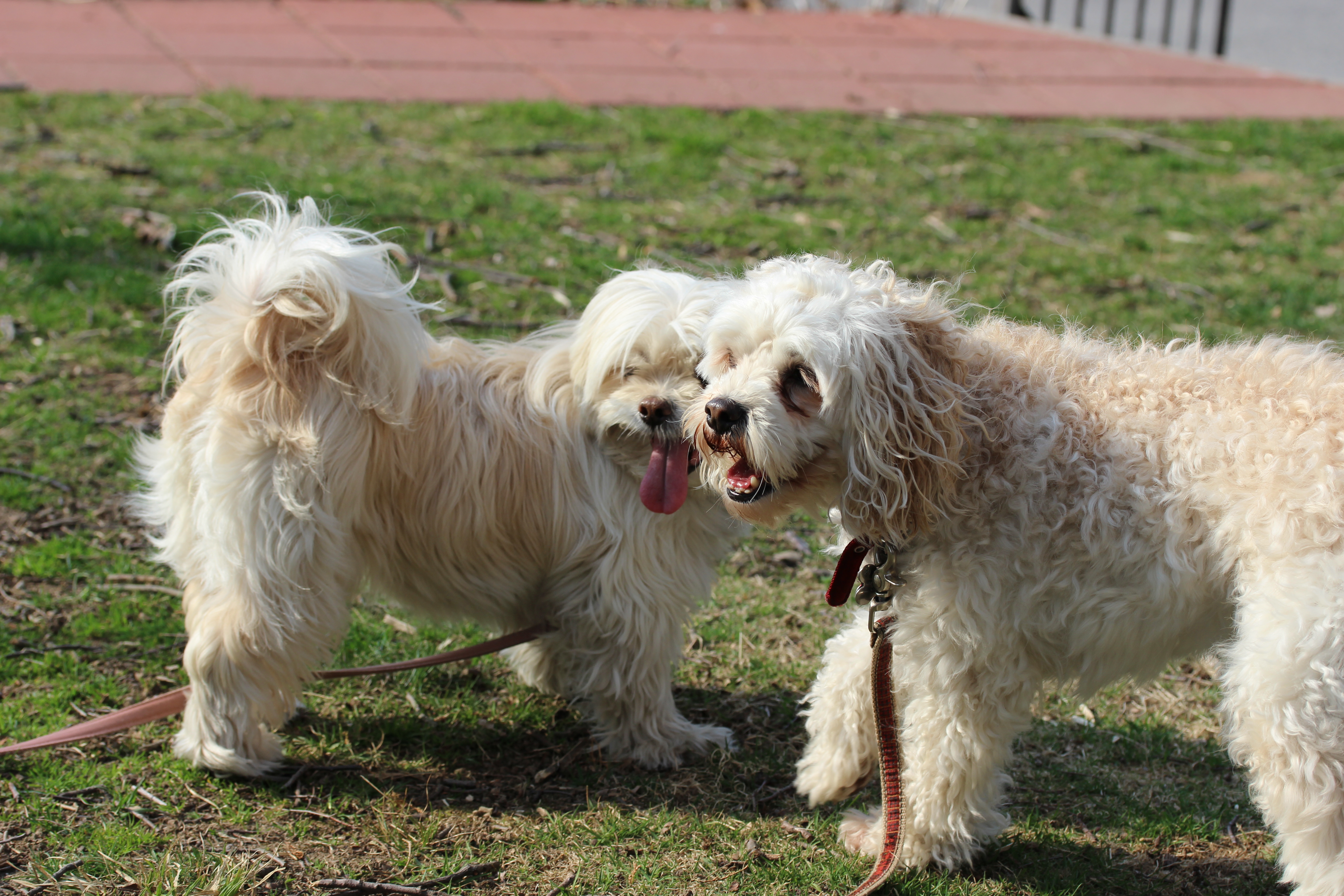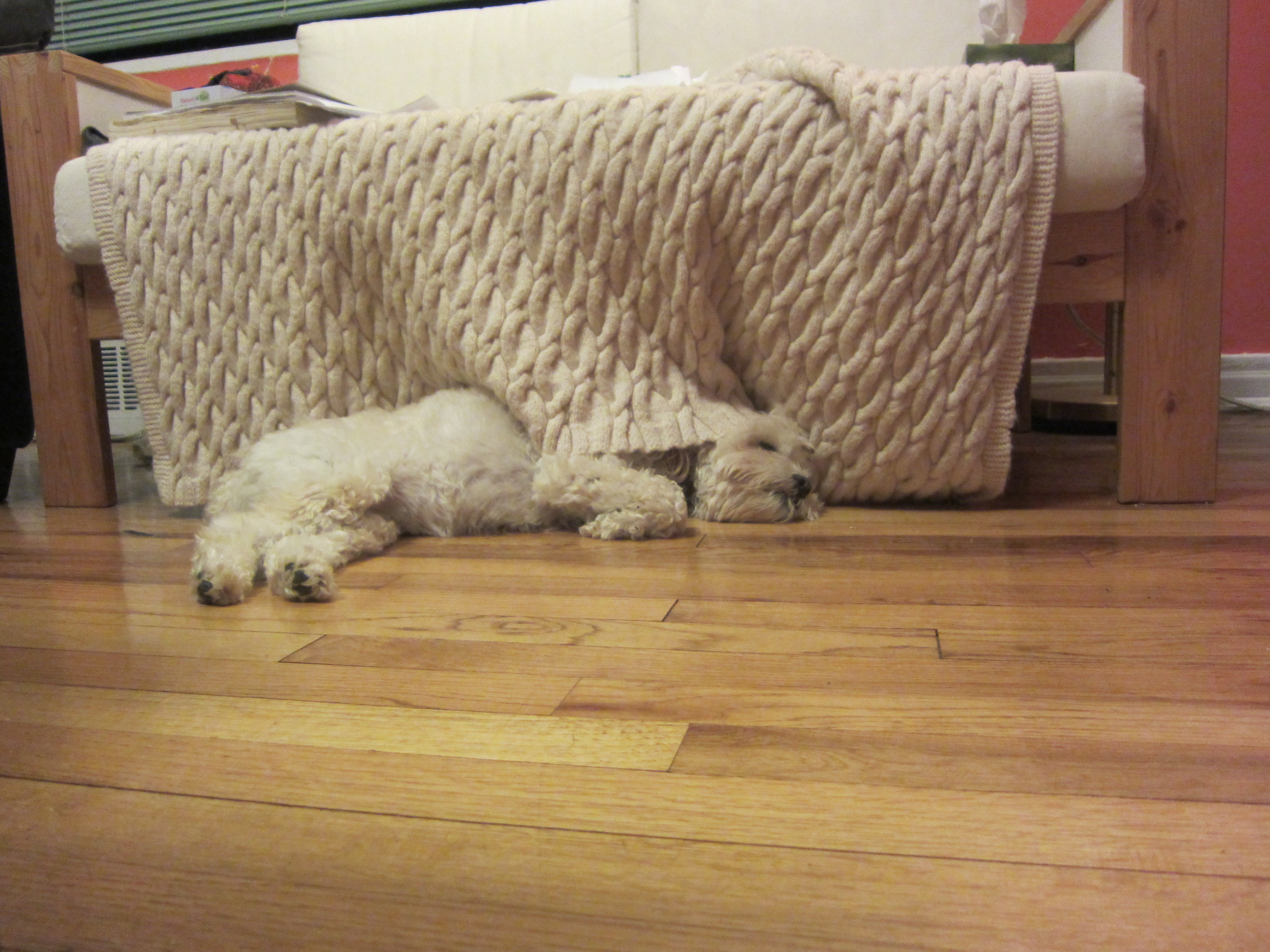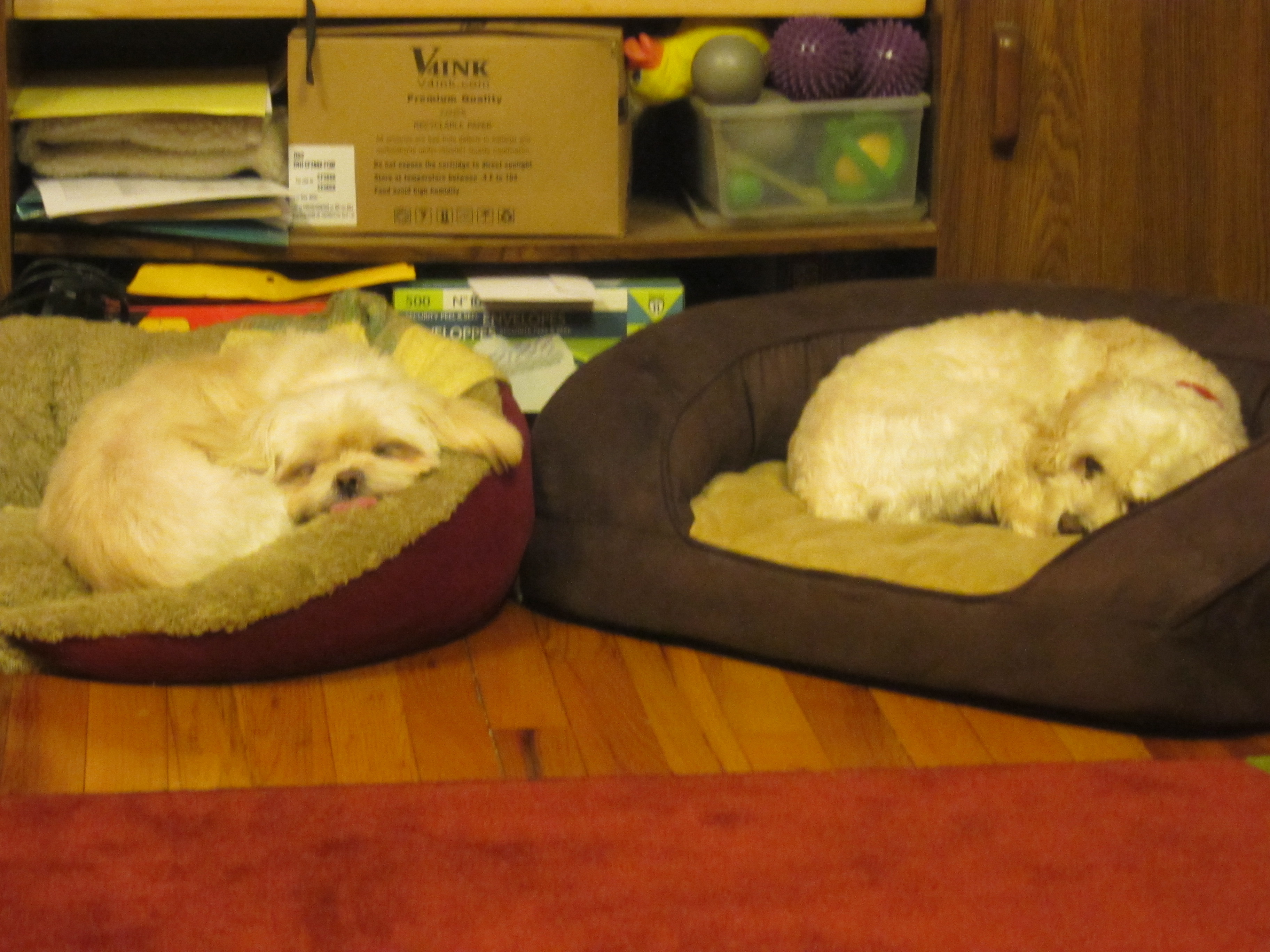
Tag Archives: pets

Why Don’t Dogs Have Gynecologists?

“What’s she talking about?”


I’m supposed to go for a mammogram this month. I went for my baseline last year, and the doctor wants me to go every year now, despite recommendations to the contrary out in the world. I almost fell down halfway through the test last year as they pressed each breast into the squeeze machine three times. How can this be the state of the art? Is someone under the impression that breasts can’t feel pain?

I’m afraid I’m not going to be able to push myself to go to the appointment, and my doctor will be mad at me for not doing it, and I will inevitably develop breast cancer and die and it will be my fault because I didn’t want to faint in the radiology office.

Like this.

Like this.

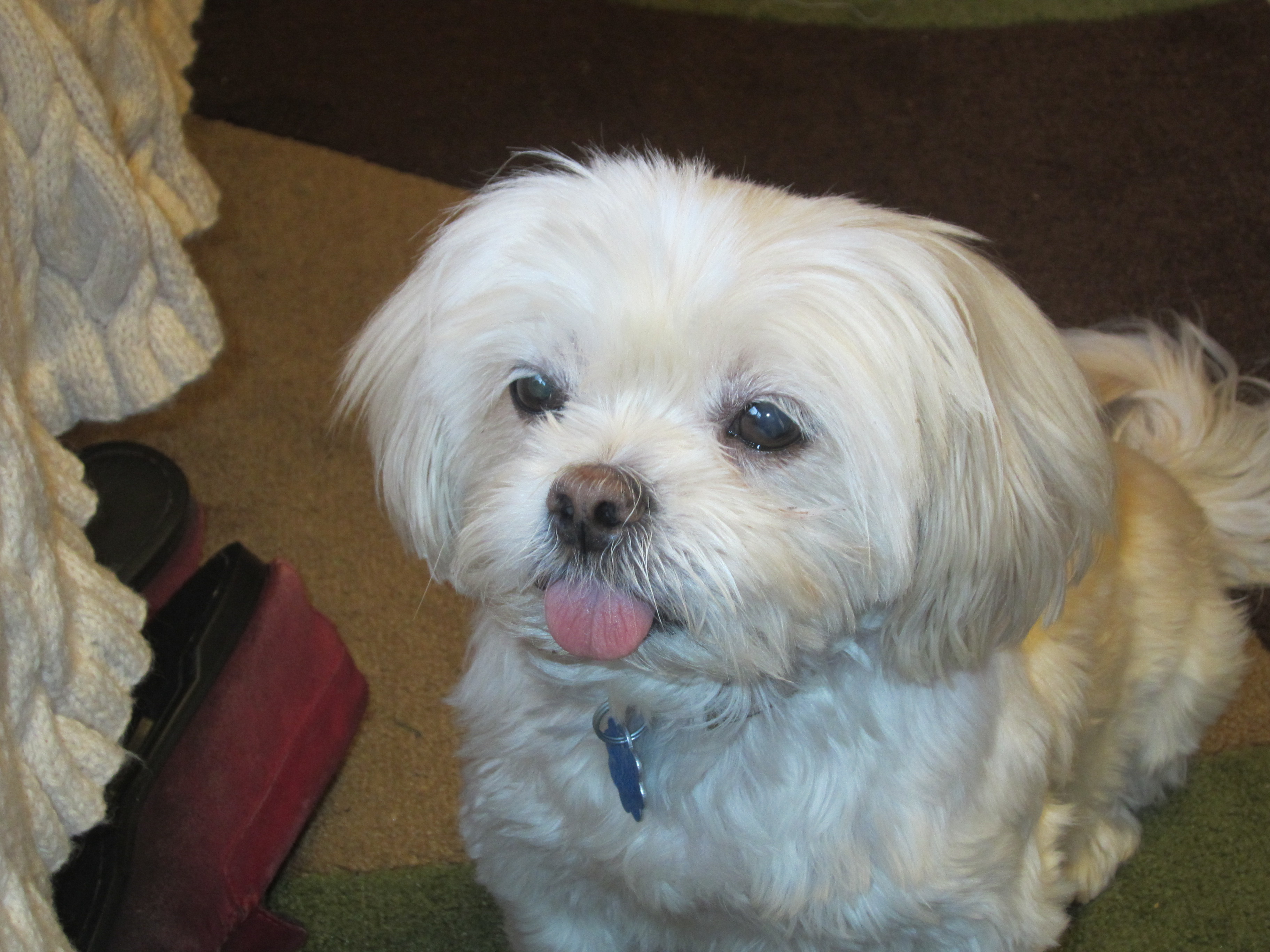
I’ve never heard of a gynecologist for dogs, though you never know what’s out there, somewhere. My dogs haven’t had to get mammograms. I can’t even imagine how that would work. Cricket thinks that having the goop removed from her eyes is the worst humiliation; can you imagine trying to squeeze some sensitive part of her anatomy until it is flat?
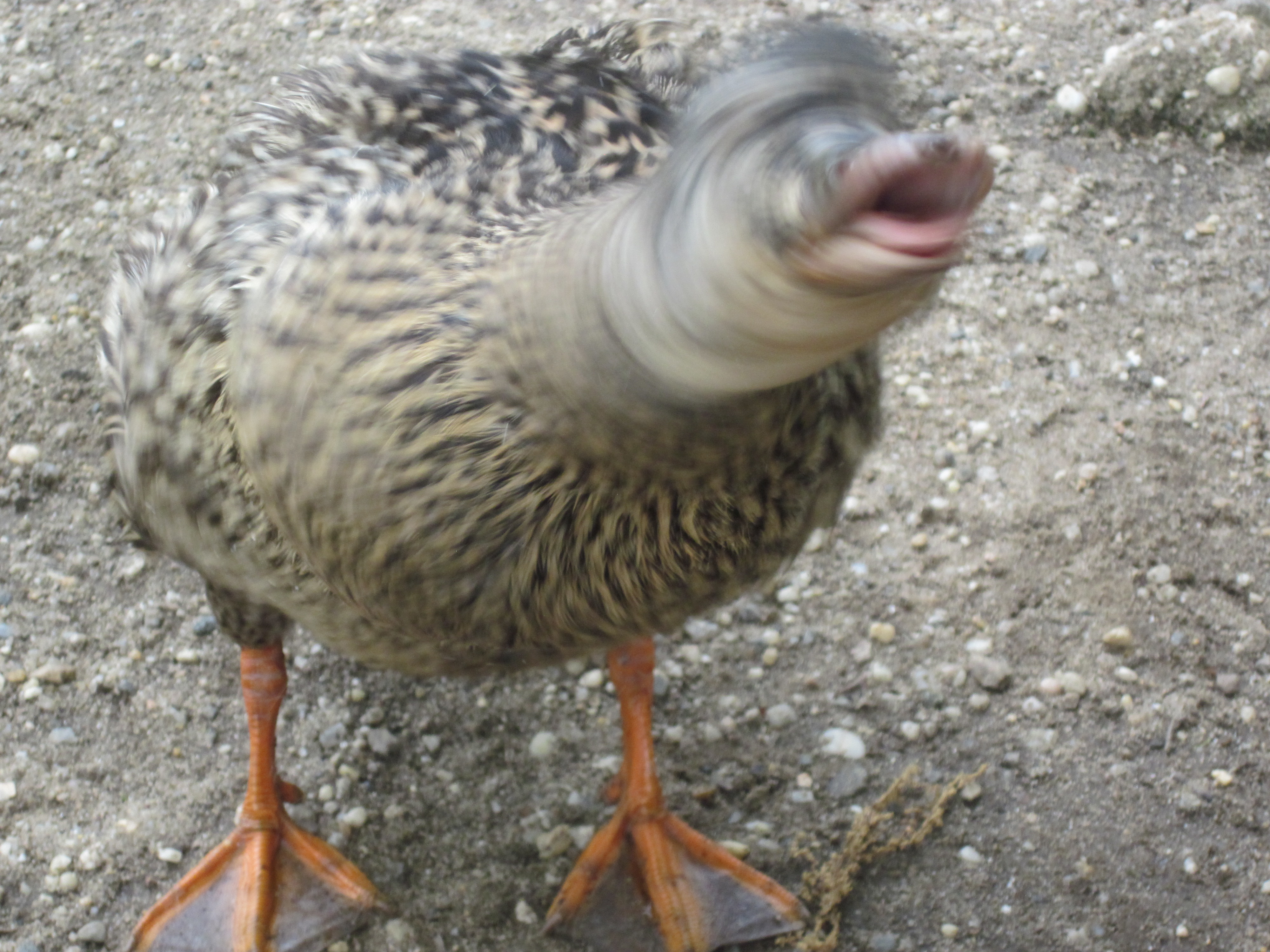
“What?”

I wish I could be more like Cricket, and feel like I have the right to refuse these humiliating tests, or at least to bite the person who tries to perform them on me. I feel like women need to rise up.

“Fight!!!!!!”

The thing is, veterinarians go into veterinary medicine almost always because they love animals and have compassion for them. Whereas doctors for humans often go into medicine because of the steady income, the prestige, or an interest in science. And gynecology? I don’t think too many kids grow up dreaming of becoming gynecologists.

I went to my first gynecologist when I was in my late twenties. I had been putting it off to avoid the inevitable panic attack and having to talk to a stranger about my sexual abuse history. I told the doctor my story as quickly as possible, and she seemed sympathetic for a minute, but then she told me to get on with my life. She said that my health would be better once I had babies, because that’s what the female body is meant to do. And then she complained that my body made the internal exam “difficult.”

“Grr.”

The next gynecologist seemed more down to earth. She listened to my spiel about sexual abuse, and promised to be careful with me, and asked questions. True to her word, she did her best to avoid hurting me during the internal exam itself, but as soon as I sat up, in my cloth gown, on the edge of the metal table, I started crying uncontrollably, and she said, “Are you sad that the exam is over?”

She meant to be funny, but her cluelessness for how that would sound to a sexual abuse survivor was bizarre. I don’t understand why female gynecologists are not more sensitive to this, given that the conservative estimate is that 1 out of 4 women were sexually abused before the age of 18. But, even if I had no abuse history, it would be normal for a woman on a table, being poked internally with a piece of metal, to be uncomfortable and self-conscious. And yet the doctors seem impatient with this.

My current gynecologist is pretty matter of fact. At the first exam, after a discussion, fully clothed, in her office, and changing into paper clothes and having to shimmy down the table, she tried the regular speculum and then said no, let me go get the one we use for the nuns.

She works in a large office, next door to a plastic surgeon, and around the corner from a cancer treatment center. It’s not comforting. It’s like a one stop shop for women: get birth control, have a baby, get cancer, get your breasts redone, get cancer again, go into remission, and then celebrate living a long life by getting a facelift.

I go to the gynecologist because I have to go, but I dread it all year. I’m not saying I’d rather be a female dog, but sometimes I wish I felt free to act like one.

IMG_0237

Cricket’s Commandments


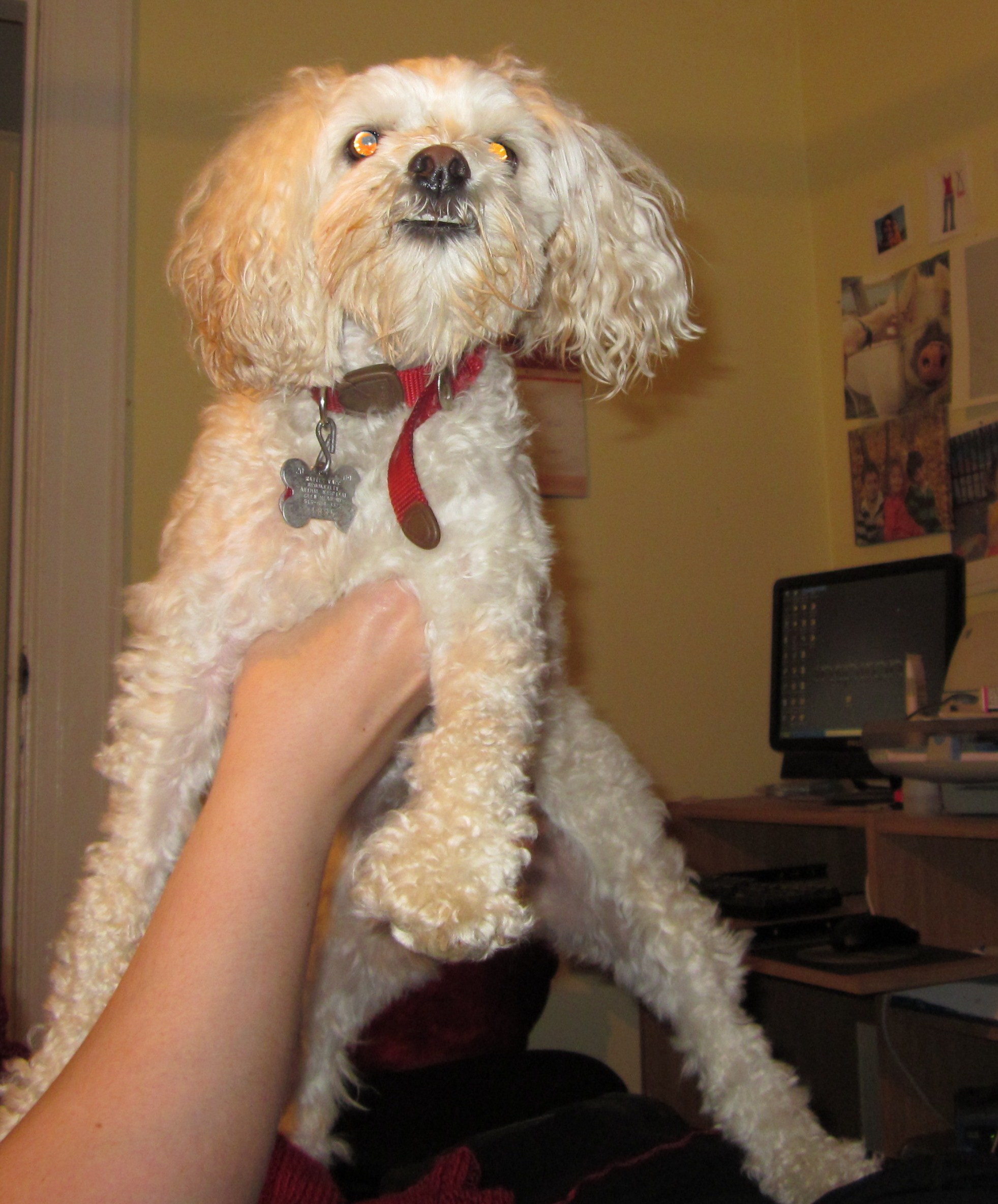
Cricket has something to say.

Cricket has something to say.

Cricket has a long list of rules for how we must behave in her house.

  • I am the big dog and no other dog shall come before me.
  • Thou shalt not wash my poopy butt.

    "Never."

    “Not ever.”

  • Stealing my eye goop is a killable offense.
  • Thou shalt not read a book when I want scratchies.
  • Thou shalt not douse my neck with Frontline.
  • Butterfly shall never have more treats than me.

    "No?"

    “Never?”

  • Butterfly shall not sit on the couch, or on a lap, unless she is getting her blood tested, which leads to treats for me.
  • If Butterfly gets scratchies or treats, I must get more scratchies and more treats.
  • Butterfly can never leave the house without me, because she might get treats I do not get.
  • No one shall walk up and down the stairs in my building, or open and close doors, or God forbid, bring the mail!

But Cricket has just as many rules for her own behavior as for ours.

  • If there is a leaf, I must catch it.

    "Mine!"

    “Mine!”

  • If there is a squirrel, I must chase it.
  • If there is a weed, I must grab it with my teeth and tear it from the ground.

    "Grr argh."

    “Grr argh.”

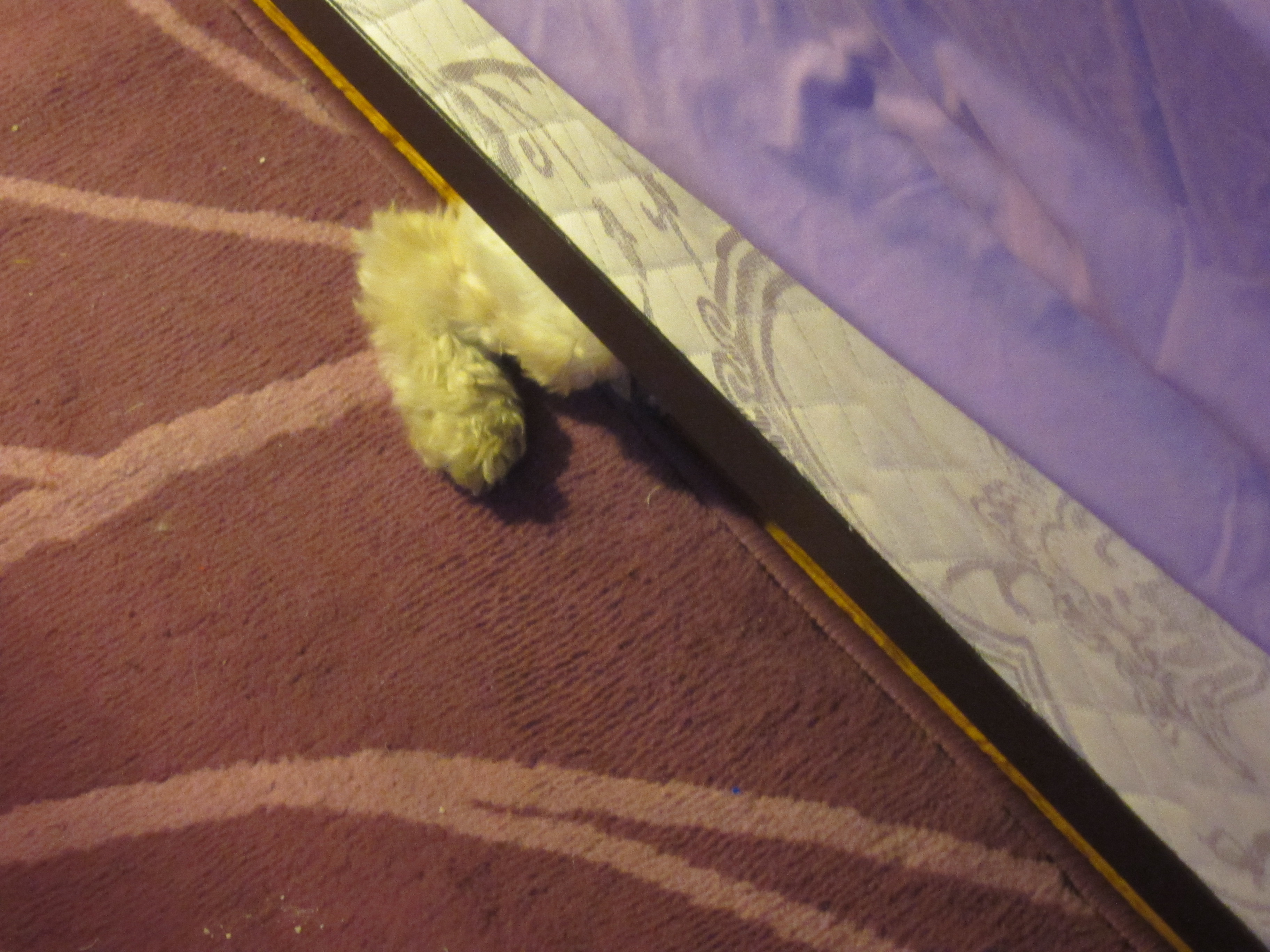
  • At bed time, I must crawl under Mommy’s bed and leave a paw out to be noticed.

    "You can't see me, can you?"

    “You can’t see me, can you?”

  • When Butterfly gets her blood tested, I must stand in the corner, between the two couches, and stare across the room at the bag of chicken treats.
  • If at all possible, I must poop in the planting boxes.
  • After a bath, I must run like a crazy dog and dry my butt on Mommy’s bed.
  • When I am angry, I must pick up a tug toy and taunt Mommy with it.

    "You can't have it!"

    “You can’t have it!”

  • When I am grumpy, I must hide under the couch.
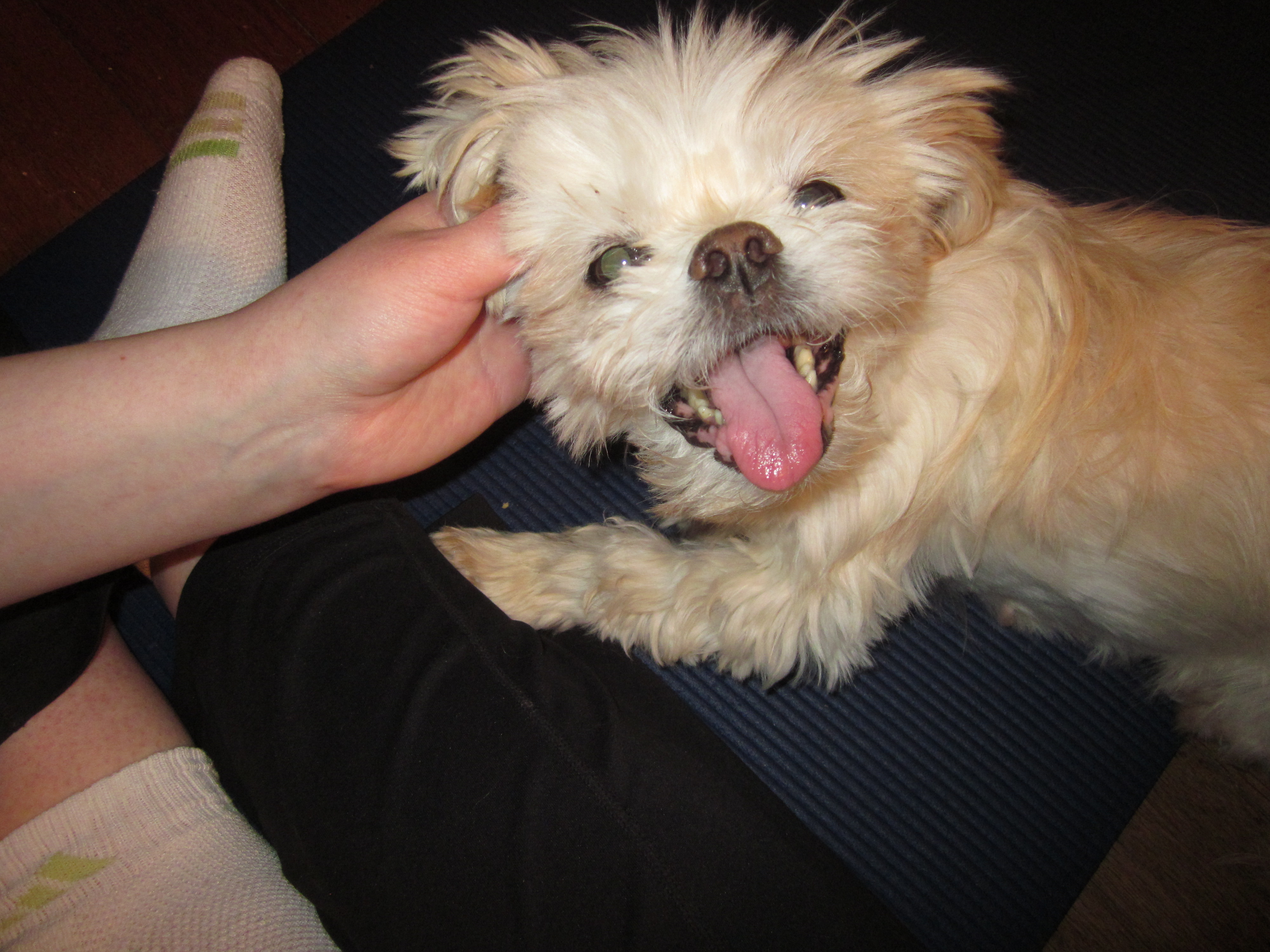
  • When I am lonely, I must climb on a person for warmth, and ignore any protests.
  • If no one wakes up at two AM to take me outside, I am free to poop on Grandma’s green quilting mat in the living room, or under the dining room table.

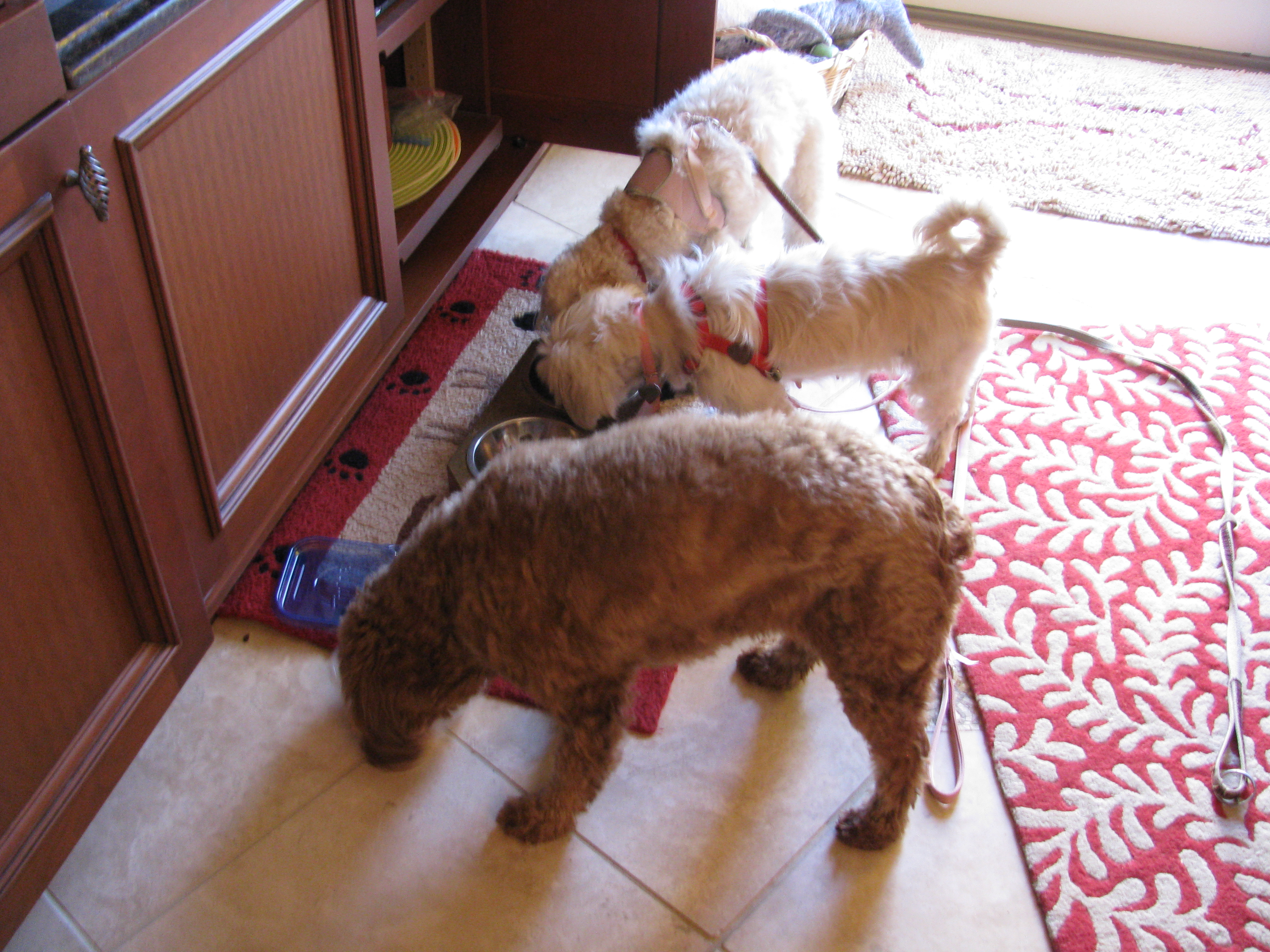
Cricket’s number one rule, though, is: Cricket must never be left alone. She insists on this and treats us like criminals when we dare to leave her behind in the apartment. She’s not destructive. She never chews a pair of shoes or destroys a box of toys while we’re gone, she just mopes. She gives very impressive grumpy face. It’s like when a parent doesn’t punish a child for bad behavior but just looks at them and says, “I am very disappointed in you.”
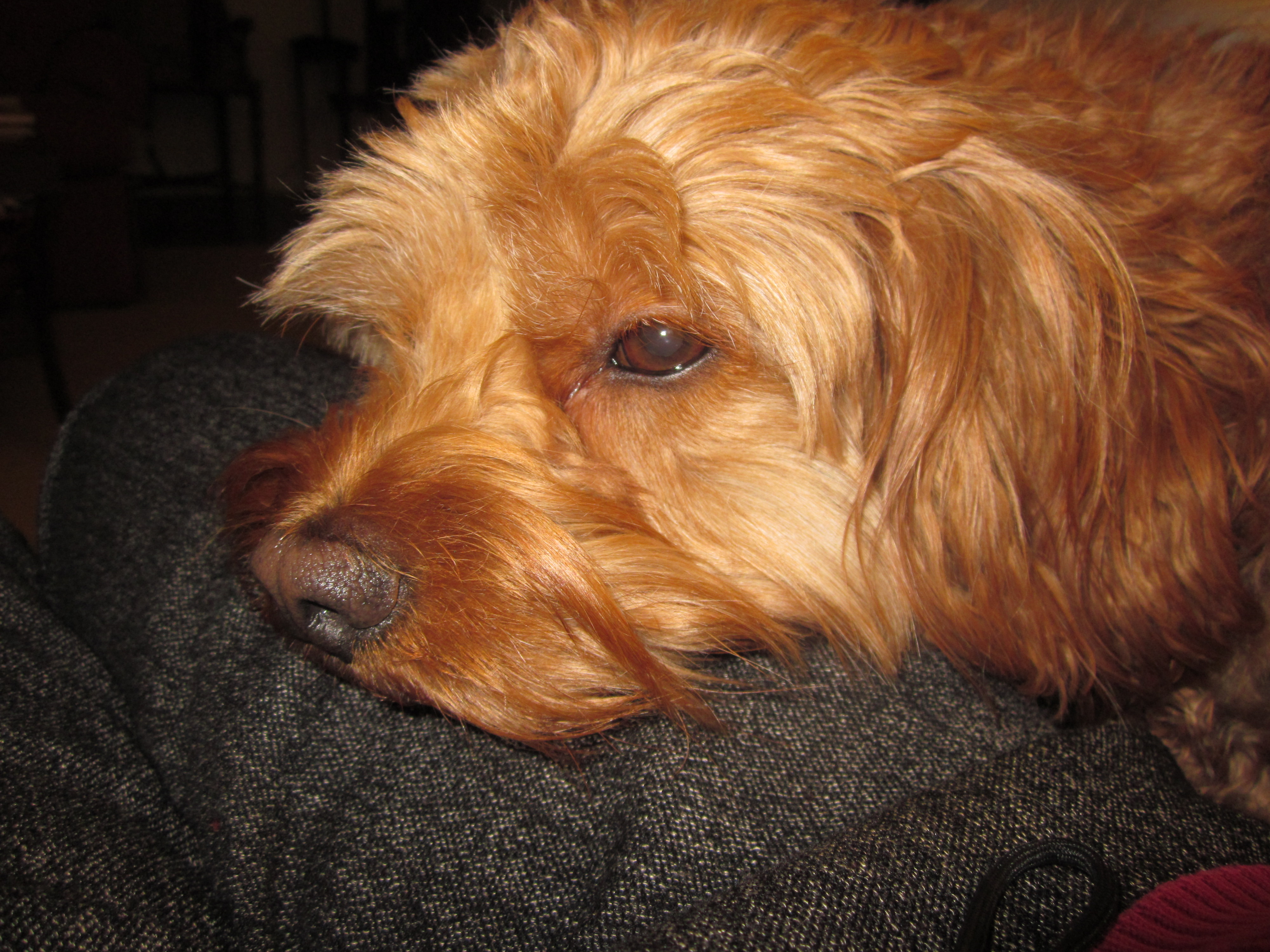
"I am very disappointed in you."

“I am very disappointed in you.”

Cricket has quite a few more rules in mind, but has had a harder time insisting on them. No one listens, for example, when she says that she should get a whole roasted chicken for breakfast, or a chocolate bar for dessert. And she has yet to convince either of her people to let her go out and play in traffic. Harrumph.

The Glucose Curve

In January of 2014, Butterfly, my ten year old Lhasa Apso, was diagnosed with diabetes. We went for monthly visits to a doctor she loved, and did twice daily blood tests and insulin shots, and we seemed to be making progress. But, over the summer, her doctor left the clinic and Butterfly’s sugar started to go up and down like a roller coaster. By the fall, nice doctor or not, we had to go back to the clinic for advice.

Butterfly was not feeling well.

Butterfly was not feeling well.

The doctor who saw Butterfly in October was a per diem, filling in for the day, and he was concerned about her sugar. He made me very nervous, despite his choir boy face and laughing Scottish accent and frequent stops to tickle Butterfly behind her ears, because he said there might be another underlying health problem. He wanted me to do a glucose curve at home: starting first thing in the morning, I would test her blood sugar every hour or two, until I couldn’t stay up any longer, then I should send the results to one of the regular vets, to see if they could recognize a pattern.

But she always loves those ear tickles.

But she always loves her scratchies.

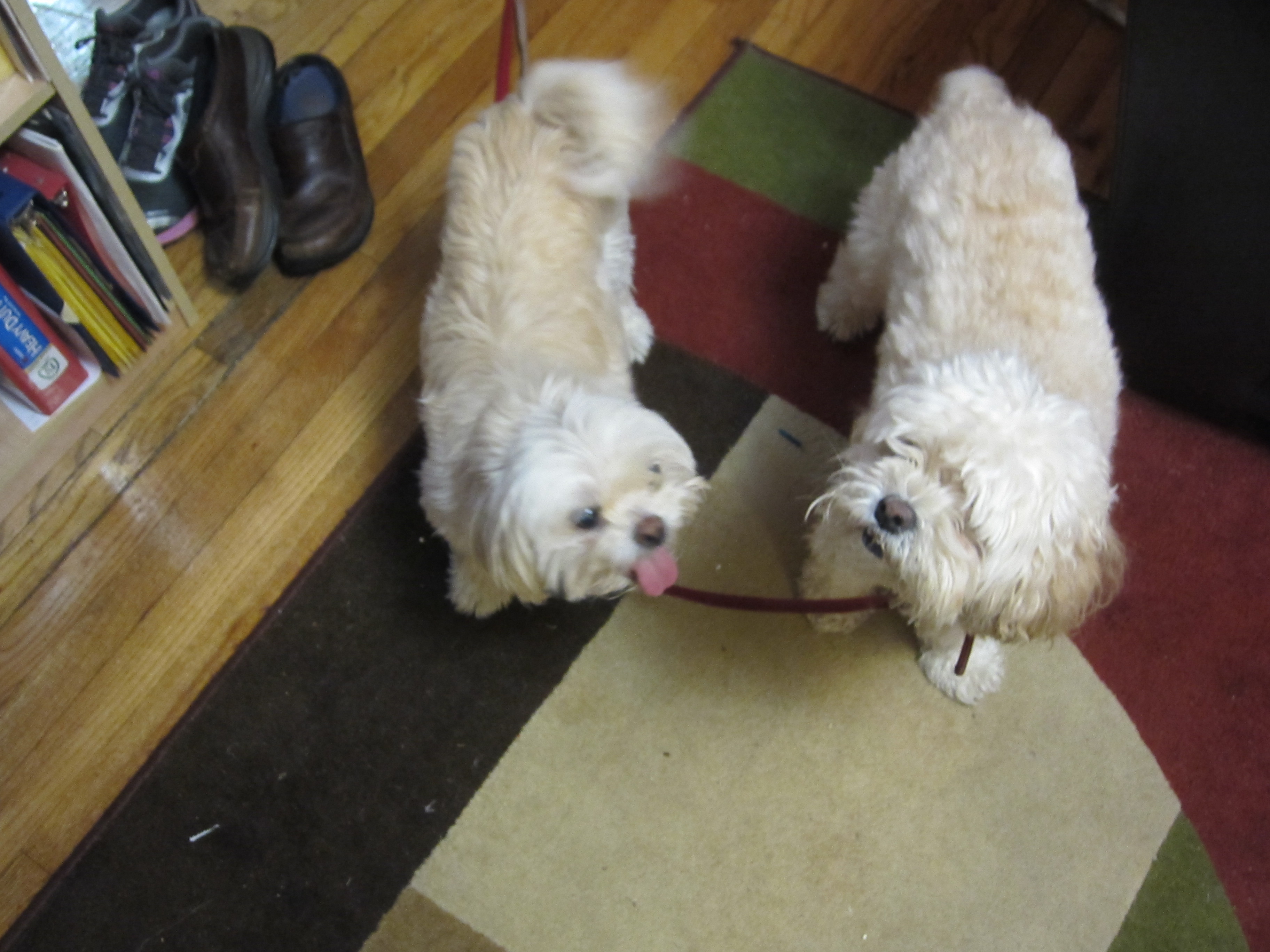
The glucose curve day was, possibly, the best day of Butterfly’s life. Every time I went to take her blood, she made me chase her around the apartment first, and after each test she got another chicken treat. I had to break the chicken treats into tiny pieces to avoid an exploding Butterfly halfway through the day. And, of course, Cricket matched her treat for treat, and attempted to climb the bookshelf to reach the bag of treats when the pieces were too small for her liking.

Butterfly's tail is ready.

Butterfly’s tail is ready.

Cricket's tail is running away.

Cricket’s tail is running away.

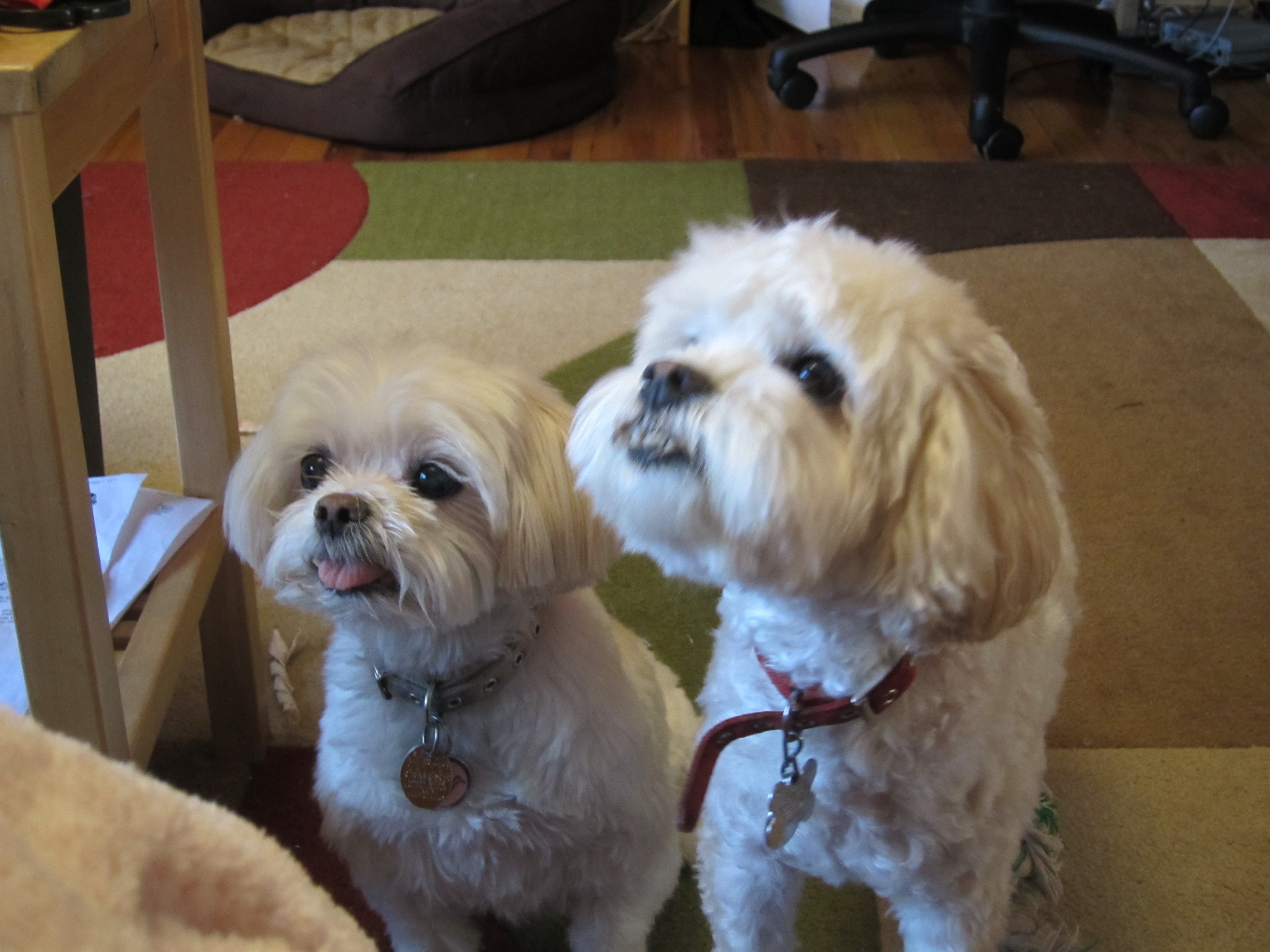
Cricket and Butterfly, ready for their treats.

Cricket and Butterfly, ready for their treats.

By the last blood test, at two o’clock in the morning, Butterfly was wiped out and ready for bed, but still willing to grab a last chicken treat on her way down the hall.

We made an excel sheet out of her test results, with comments about her moods, and meals, and exercise, and pooping. The vet we sent it to was duly impressed, but she said she was worried about Butterfly’s very low sugar numbers midday. She wanted us to lower the insulin dose and redo the curve in two weeks.

I liked the compliments – I really love compliments, and I especially like when my organizational skills are noticed and appreciated – but I was hoping for a different response. Anything but “do it again.” The second glucose curve, two weeks later, was closer to normal, and the vet told us to keep everything the same, and redo the test in a few months.

By December, Butterfly’s twice daily blood sugar readings were getting wild again, so I ordered extra test strips and lancets and chicken treats and woke up at 5:45 AM on December 30th and started testing her blood every hour or two, administering an enormous amount of chicken treats to get her, and Cricket, through the ordeal. We stayed up until 2 AM, or I stayed up, Butterfly took a few naps.

Nap time.

Nap time.

When we finally met Butterfly’s new vet in person, she had a theory she wanted to test: that Butterfly’s blood sugar was bouncing up so high as an over-correction to too much insulin, and if we lowered the insulin dose again, maybe things would even out. Two weeks on this dose, and then another glucose curve. This was becoming normal for us.

Cricket sniffed Butterfly all over when we got home, to make sure no extra treats had been consumed, but also to make sure Butterfly was still Butterfly. We’d tried taking Cricket with us to the clinic, once, and she spent the whole time hiding behind my legs and barking at everyone and everything. But still, staying home alone made her disgruntled and suspicious.

Cricket's suspicious face.

Cricket’s suspicious face.

Unfortunately, the low insulin dose skyrocketed Butterfly’s blood sugar levels into the too-high-for-the-meter-to-count range. She was drinking and peeing constantly, in the house and out, so even without a glucose curve, we raised the insulin back up. And, of course, waited two weeks and went through the whole day of testing again, to Butterfly’s delight. And the numbers were still not right.

I was afraid that the doctor would give up on getting Butterfly’s sugar normalized and tell me to accept that she’s just going to die sooner rather than later, and it’s not worth stressing about. But she’s my baby! And I am stressed about it! I was angry that being a conscientious dog mommy hadn’t added up to better health and better luck for Butterfly, and for my carpeting.

“What’s wrong with peeing on the carpet?”

And then Mom came up with a plan (okayed by the vet) to give Butterfly an extra unit of insulin when her blood sugar levels are high, and the regular dose otherwise. I have no idea if this will work long term, or why the doctors haven’t wanted us to try it before now, but so far it seems to be helping.

I just want Butterfly to feel better, and not need to pee every five minutes, and live forever. Is that so wrong?

IMG_1259

Why We Need A Canine Co-Rabbi

Google image of a Rabbinical dog. What do you think?

Would this little guy make you want to go to synagogue? (not my picture)

Almost from the beginning of my time at the synagogue three years ago, I’ve been talking to the rabbi about dogs. I don’t remember how it started. Maybe I brought in a picture of Butterfly and Cricket right after we adopted Butterfly from the shelter, maybe it was because I’d heard about his dog, who’d died just a few years before we arrived, and was well known by the congregation, playing a role in rabbinical stories over her long tenure as canine in residence. And maybe it’s because, going to the rabbi’s house for a new members evening, I noticed that pictures of the dog were as prominent as pictures of his daughters, meaning, she was family.

"We are family!"

“We are family!”

He made it clear that he wants a smallish dog, but not too small, hypoallergenic, because he always has people at his house and doesn’t want anyone to get sick, and she has to be a girl. He has two daughters, so he knows he gets along well with girls, but maybe he also wants to avoid the marking and humping young male dogs can do. I did not ask.

I gave him a list of hypoallergenic, or supposedly hypoallergenic, dogs, and we went over it, a year and a half ago.

Talking about dogs is a neutral zone where I can offer the rabbi my attention and concern, without feeling like I’m invading his privacy. There’s such a strange dynamic with teachers and rabbis and therapists, where you create a bond and naturally want to know more about them, but their privacy is meant to be protected, and it feels like I am puffing myself up imagining that I know anything or have the right to care about whether or not he has a dog.

Once a year, dogs play a role in the ritual life of the congregation when they come to the pond on Rosh Hashanah. The ritual of Tashlich is about tossing our sins into the water to let go of them and start the new year fresh. At our synagogue we toss birdseed instead of the traditional bread, which supposedly chokes the birds. I guess the dogs are invited, because with all of the goose poop, no one will notice if they pee or poop on the grass.

"Where should we pee?"

“Where should we pee?”

But once a year is not enough if we want the dogs to get to know each other and develop their own roles in the congregation. We need a rabbinical dog to lead the rest of the dogs in finding their place in the community, whether it be helping kindergarteners learn to read, helping bar and bat mitzvah kids practice in front of a friendly congregation, or offering help to dogs who need it.

We need a rabbinical dog, a small, well trained, friendly, hypoallergenic dog, who can walk through the crowd offering consolation and sweetness and reminders of dogs at home. Just like a rabbi is often a stand in for the good parent you either had or needed.

The rabbinical dog could sniff each congregant’s dog, have private meetings with those in need of further consultation, and maybe plan a few more events during the year for the sake of dog/human families who otherwise have to go to shul without half of the family.

"Why can't we go with you?"

“Why can’t we go with you?”

I think the only real problem with dogs in the synagogue, other than peeing on the carpet, is that there is often food, especially cake and cookies and chocolate. We are in great danger of setting up the oneg on Friday night, going into services, and coming back an hour and a half later to an empty buffet table and sick dogs.

Butterfly is always hungry.

Butterfly is always hungry.

But Cricket might need some Pepto Bismal.

But Cricket might need some Pepto Bismal.

The Choir


I joined the choir at my synagogue a few years ago, when I was still a one-dog-woman, battling wills with Cricket, and needing somewhere else to be every once in a while, preferably with humans. At the first choir rehearsal of the summer, the cantor handed me a loose-leaf filled with the High Holiday music, and then he had to rush off to answer someone else’s questions. I didn’t even know where to sit.

I wandered around until the musical director introduced herself. As soon as she told me her name, I recognized her as my elementary school music teacher, and started to panic. She was a bit of a… let’s just say she had a tendency to be critical. She didn’t really remember me, but reminisced about other students she really liked over the years. When she asked if I was an alto or a soprano, I said, “somewhere in between,” and she sat me with the altos, because there were only two of them.

The rehearsal started inauspiciously, with a song I had never heard before that required the altos to sing something entirely unlike a melody. The next hour and a half was pure panic and confusion, for me, and boring repetition mixed with endless criticism for everyone else. When I tried to stand up at the end, I couldn’t balance and fell back down into my seat, and when the musical director came over and asked if I was okay, I started to sob.

Partly it was the adrenalin let down after my 90 minute panic attack, but also, I’d been having seizure-like episodes and walking problems for a while by then, so my balance was unreliable. Mom was there to drive me home, and as she walked me out of the sanctuary, the musical director walked out with us, talking non-stop. She said that I was brave to have tried, but choir isn’t for everyone, which made me cry harder. I tried to suck it up and smile and pretend I was fine, but she kept talking to me and the tears kept coming.

When I got home, I was determined to show her that I could stick it out. I put my new loose-leaf full of music on my bed and took out my guitar and picked out the first song in the book note by note. Cricket jumped up on the bed and pawed at the guitar strings. The sound stunned her, but she pawed again, and seemed to think she had discovered a monster hidden inside of the guitar. She is not a fan of monsters, other than herself, so she jumped off the bed in search of safer adventures.

Cricket's suspicious face.

Cricket’s suspicious face.

I practiced the High Holiday songs every day, with Cricket nearby but suspicious. None of the music was familiar to me, and I wasn’t used to four part harmony at all, but I pushed myself to go to the next rehearsal. The people who recognized me were surprised to see me again, and when the musical director came over, she looked at me like I was a fourth-grader who’d just peed on the floor. She said she was glad to see me, and I chose to believe her.

"You pee on the floor too, Mommy?"

“You pee on the floor too, Mommy?”

I thought I would be better prepared this time, but of course we only sang the songs I hadn’t practiced yet. I didn’t cry after the second rehearsal though, that was my big triumph.

I went to the next rehearsal, and the next, but I never seemed to catch up. There were different altos at each rehearsal, so I didn’t get to know anyone very well, and the row of bases behind me was completely filled, and loud, so I could barely hear my own voice to figure out what I was singing.

Cricket thinks fluffy hair would help me block out the bases behind me.

Cricket thinks fluffy hair would help me block out the other singers.

In between rehearsals, my neurologist was testing me for everything under the sun, but finding nothing. I was having a lot of trouble walking Cricket, even around the block, and the butterflies in my stomach during choir rehearsals were turning into pterodactyls and trying to rip me open from the inside.

Cricket, leading the way, dragging me with her.

Cricket, leading the way, dragging me behind her.

By the end of August, the Neurologist was convinced that my problems were all psychological, and that I should try anti-depressants because he saw no physiological cause for my symptoms. He wanted me to see a psychiatrist from his group, but my insurance refused to cover it. They would, on the other hand, cover a hospital stay.

At first I was adamant that I would not go into a hospital: because I didn’t want to be away from Mom and Cricket, because I didn’t want to be watched all day, and because I did not believe I was crazy. But the choir rehearsals were setting off long forgotten pockets of dread that I could not squash, so, when Mom asked me, for the 72nd time, if I would please go to the hospital, I looked at the looming dates of the High Holiday services, and finally said yes.

That was more than two and a half years ago, and my neurological problems are still undiagnosed, though the anti-depressants have made other things easier. Butterfly arrived after my attempt to join the choir had ended, and after the guitar was zipped in its case and hidden in the back of the closet, and I wonder sometimes if I would have handled things differently if I’d already had Butterfly at home. But the fact is, I don’t sing to Butterfly at all! I’ve always thought that the one kind of singing I’d be able to do is to sing to my children, and yet here she is, big floppy ears at the ready, and I don’t sing to her.

Butterfly's big ears.

Butterfly’s big floppy ears are ready.

I do sing, but only when everyone around me is singing too. I look forward to the special Friday night services at my synagogue, when a full band comes to play, because with all of the singing and clapping and drums and amps, I can sing full out and not worry that everyone will hear me.

And it feels wonderful. It really does.

"Don't worry, Mommy. We're ignoring you."

“Don’t worry, Mommy. We’re ignoring you.”

I Want To Write A Mystery


My second master’s program was mostly on-line with two one-week residencies on campus per year, but that one week was so packed with intrigue and drama and mental illness; it was like setting up and taking down a circus tent, twice a year. I’ve been thinking about writing a mystery set there, because the campus becomes like a small town, with a lot of viable suspects and a ticking clock. The characters are vivid and verbal and often jealous and unpredictable. And then there’s the irony of setting a mystery in an environment where they look down on genre writing, and mysteries in particular.

"Can we come too?"

“What?”

But I struggle with mystery plots in the same way I struggled with chess as a kid. My father expected me to learn the strategy just by watching him play, and expected me to be a grand master within a few days, maybe a week. I felt stupid for not being able to think three moves ahead; I didn’t understand why one piece was more valuable than another, or why each piece had different rules; and I felt an undeniable empathy with the pawns, because they were small, like me, and easily sacrificed.

Despite reading endless mysteries, and reading endless books on how to write mysteries, I do not even know where to start. I went through a severe addiction to Rex Stout and Agatha Christie that has never really ended, I just ran out of new material to feed it. Lately I’ve been reading Deborah Crombie, Jacqueline Winspear, Rhys Bowen, Jonathan and Faye Kellerman, Donna Andrews, Henning Mankell, J.K. Rowling as Robert Galbraith, Louise Penny and Charles Todd. I want to be Sherlock Holmes, with a nicer disposition. But so far, my brain has not rewired itself into puzzle-solving-mode.

My other possible mystery setting is my synagogue. I’d love for the sleuth to be an eighty-year-old woman, or a middle-aged rabbi, or both of them together. And the senior citizens in the bible study class (retired doctors, and lawyers, and teachers, and social workers) could help decipher the clues. But I worry it might seem as if I’m writing about specific people, and that could get me into trouble.

"Uh oh."

“Uh oh.”

My mystery would, of course, have to have a dog in it. Even a fictional dog calms me down, reduces my stress level, and reminds me about what’s important and what isn’t. There could be a German shepherd who is more wayward puppy than officious guard dog (I couldn’t train even a fictional dog to be well behaved. I just don’t have it in me); there could be a yapping Yorkie biting at the criminal’s ankle to slow him down; or a sweet Great Dane sitting by her dead owner’s side; or a black Lab sniffing for clues and finding the murder weapon under a pile of leaves.

This is not my picture, but I'd love to put this puppy in a novel.

This is not my picture, but I’d love to put this puppy in a novel.

Lilah the Black Lab, and my niece, is an expert sniffer!

Lilah the Black Lab, and my niece, is an expert sniffer!

I used to think about using Cricket as my detective and writing a children’s mystery. Cricket would make a wonderful Sherlock Holmes; she’d even look good in the hat. She has all of the characteristics of the irascible, obnoxious detective who doesn’t get along with other people, but she would be a terrible police dog, not at all reassuring to the populace.

Detective Cricket is on the job!

Detective Cricket is on the job!

Detective Cricket is always looking out for danger!

Detective Cricket is always looking out for danger!

Detective Cricket is, um, easily distracted.

Detective Cricket is, um, easily distracted.

I’d love to write a detective like Jessica Fletcher in Murder, She Wrote. I’ve watched every episode of that show, at least three times. She is smart and stands her ground, but she’s had many disappointments in life, including never having children of her own, like me. She’s unassuming and uncool, and has to stand her ground against people who don’t believe her, but she doesn’t doubt herself or what she saw, or what she deduced. She’s friendly with everyone but doesn’t mind confrontations when necessary.

My detective would not be quite like that. She would need to take naps, first of all, and she’d have trouble with heights, and social anxiety. She’d have to sit down a lot, and maybe she’d need a driver. So, a female Nero Wolfe, but, again, with a nicer disposition.

Detective Cricket and deputy Butterfly, ready for anything.

Detective Cricket and deputy Butterfly, ready for anything.

Dylan’s Cafe

Dylan’s Cafe


It was too cold to go to Washington, D.C. this year to visit my great aunt. We’ve gone the past two winters, in January, but this year the visit was scheduled for late in February, when Washington, D.C. was basically shut down from the snow. So we stayed home, and huddled indoors with the dogs because each time we went outside I felt like someone was carving my ears off with a spoon.

Butterfly made a snow heart with her feet.

Butterfly made a snow heart with her feet.

I missed getting to see my great aunt, and her daughter, and her granddog Zoe, but Butterfly, at least, was grateful to miss the long car ride, and Cricket sniffed every inch of the snow to make up for not getting to sniff Zoe. And in my mind, I did end up travelling to D.C., remembering my first visit to the city, way back before my great aunt moved there to dote on her grandson and granddog.

Sweet Zoe

Sweet Zoe.

All three girls on a previous visit.

All three girls on a previous visit.

I was barely seventeen and my cousin Sarah wanted to go to D.C. the day before Thanksgiving, to take pictures of the white house at night. I had just dropped out of college two weeks earlier, and Sarah thought I needed an escape.

We stopped at a candy store before the trip, and loaded up on gummy worms and jelly beans to balance out the bag of potato chips and the diet soda, and then we drove down to D.C., singing along to Bonnie Raitt and the Black Crows. I don’t know what my cousin and I talked about for five hours in the car, but we had a great time. She is ten years older than me, and was therefore a font of worldly wisdom. She was one of the only people who took my dropping out of college in stride. She never blamed me, or made light of it. She just cared about me and wanted me to feel better.

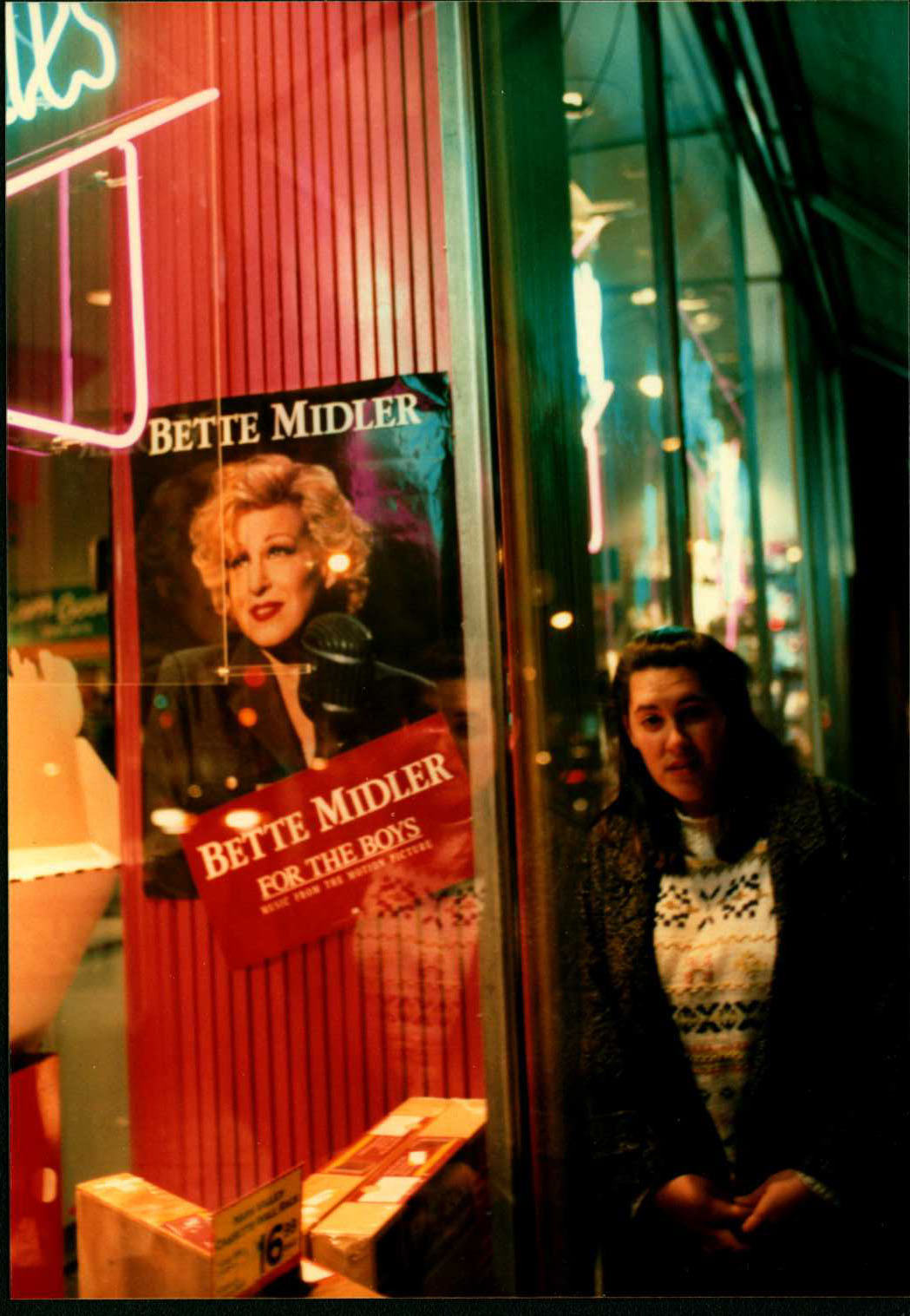
As soon as we arrived at the hotel, we dropped off our bags and went out to the movies. We saw Bette Midler in For the Boys on a huge curved screen with a red velvet curtain in front of it. It was the kind of theatre that felt magical, instead of like a box with seats in it.

Me and Bette Midler

Me and Bette Midler. Photo by Sarah Feinsmith

It was dark out when the movie ended but we were too keyed up to go back to the hotel. We joined the crowds walking around Georgetown, window shopping and people watching. When I saw a sign that said “Dylan’s Café” I stopped. For background, you need to know that Beverly Hills, 90210 had just come on TV the summer before, and I was in love with it in a way I cannot explain, or even understand, today. And the cool guy character on the show was named, of course, Dylan.

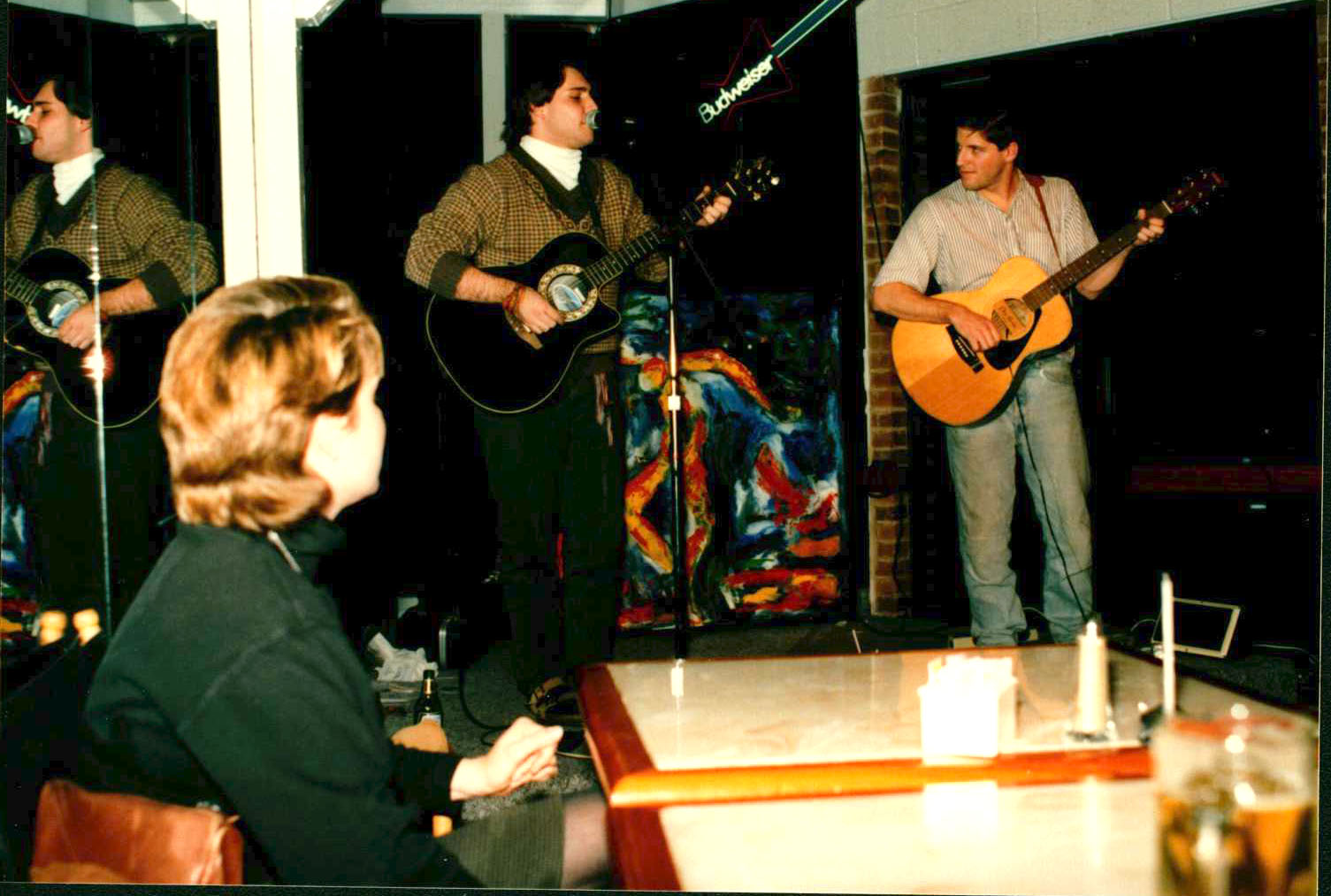
My cousin said we had to go in. The café was up a set of stairs and when we found out there was live music – two guys with guitars – we had to stay. And, according to my cousin, I had to have a drink. I don’t even remember what kind of music they played; whatever it was originally, it was played on two acoustic guitars so it didn’t end up sounding like heavy metal.

The guitar guys

The guitar guys. Photo by Sarah Feinsmith

There weren’t many people at the tables, so Sarah went over to chat with the lead singer and his sister between sets, and requested a James Taylor song for me. The guitar guys sang Fire and Rain, which, with lines like, “I’ve seen lonely times when I could not find a friend,” felt like it had been chosen just for me.

Important lessons learned at Dylan’s cafe: wine coolers make for the worst headaches; and a cute guy with a guitar trumps even the worst headache.

That trip brought me back to life. For one long day and night in D.C., I didn’t have to argue with anyone; I didn’t have to be lonely, or work at things that seemed meaningless; and I didn’t have to give in to authority figures who had none of my best interests at heart. I thought, maybe, life could be fun and interesting, and filled with music and cute boys. Maybe I could transfer to Georgetown and study Political science. Maybe I could learn to play guitar and sing in a band. Anything seemed possible.

The White house, in the morning. Photo by Sarah Feinsmith

The White house, in the morning.
Photo by Sarah Feinsmith

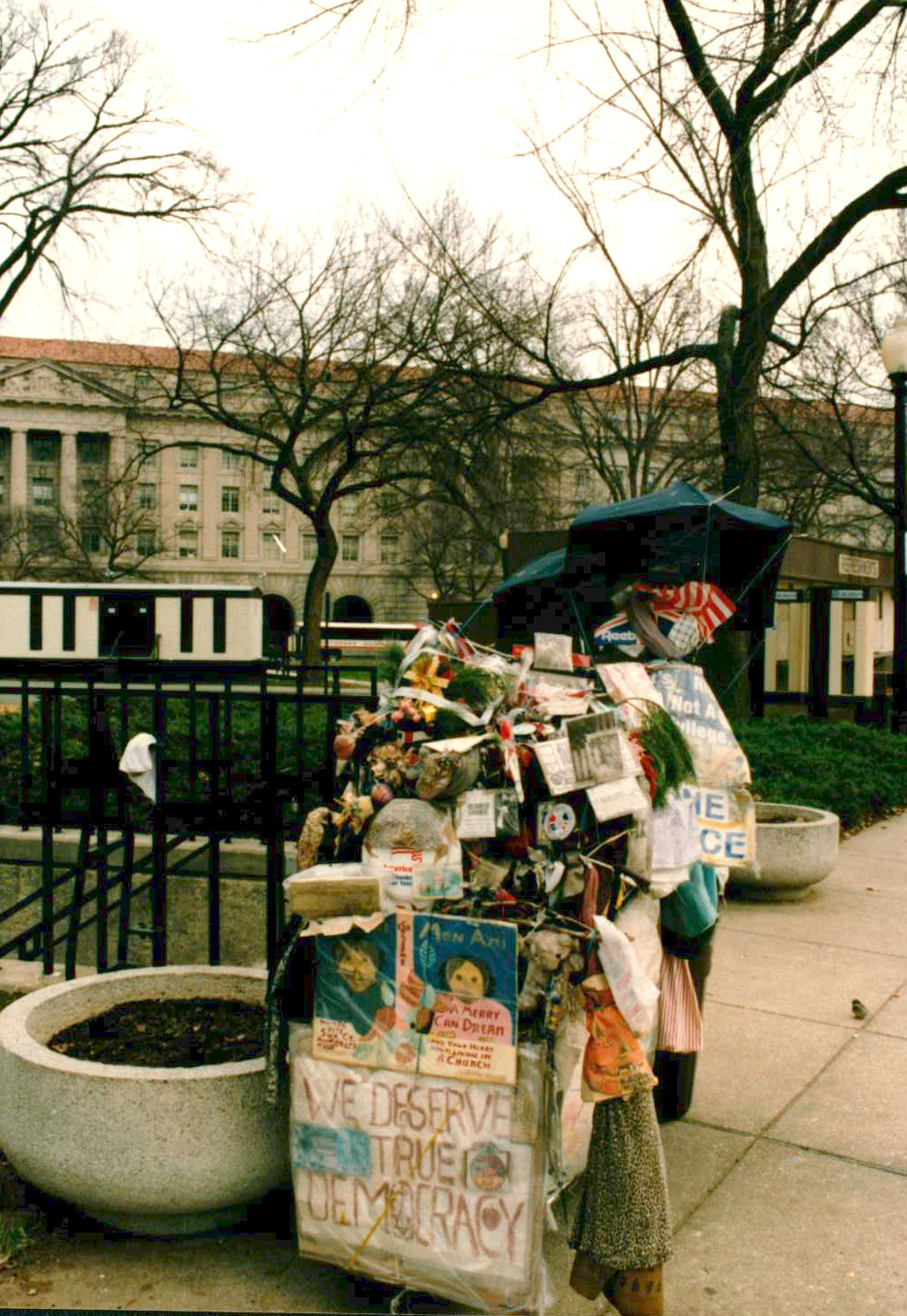
Democracy. Photo by Sarah Feinsmith

Democracy.
Photo by Sarah Feinsmith

We almost missed Thanksgiving dinner, because we wanted to do some sight-seeing on Thursday morning. Sarah hadn’t gone to sleep at all, because of the late night taking-pictures-of-the-white-house thing, so we turned the music up and kept the windows open to keep her awake as she drove across chilly New Jersey in the dark. We made it home before all of the food was gone, and Dina, my black lab mix, gave me a greeting as if I’d been gone for years instead of just a day.

Dina. Photo by Sarah Feinsmith

Dina.
Photo by Sarah Feinsmith

I might have forgotten my night in D.C. once I got home and back into the reality of my life, but Sarah made a photo album of the trip for me, to remind me that I could be happy, and that wonderful things could happen at any moment. And I realized that, even if I was not going to have the smooth path forward in life that I’d expected, the bumpy road might hold a few good surprises along the way.

Sugar

I love sugar. Well, not straight sugar. I was never a big fan of Pixie Stix, or rock candy, or sugar cubes. But I love chocolate frosting and Nutella and Twizzlers and marzipan. I like candy in every color and shape and size. When I first watched Willy Wonka and the Chocolate Factory, I was pretty sure it was a vision of heaven. I don’t like bitter or sour very much, savory is good, salty is okay, but sweet is my thing. Sushi was a wonderful discovery, because it looked and tasted like candy but had actual food value.

One winter, Mom and I took a series of cake decorating classes. They were inexpensive, and once a week, at the local Michael’s craft store, and once we finished level one, we went on for levels two and three, and would have done level four if it had been offered. I loved making cakes, and frosting, and doing crumb coats, and lattice work. I learned how to make royal icing flowers, and animal characters out of fondant and marzipan, and experimented with Nutella cream cheese frosting. I made chess pieces and roses out of molded chocolate, and white chocolate molded flour pots with chocolate frosted dirt. I tried to make petit fours and failed miserably.

Chocolate music on a flourless chocolate cake.

Chocolate music on a flourless chocolate cake.

Marzipan fruit is just as good for you as real fruit, right?

Marzipan fruit is just as good for you as real fruit, right?

Chocolate dirt, enough said.

Chocolate dirt, enough said.

The trouble with petit fours is, even after you find the right recipe for the cake, so that it’s moist but not delicate, you need a sure hand for the cutting and placing of layers, and then you need to be willing to waste a lot of icing by pouring it over the cakes on a wire rack so that the excess pools underneath. This is where Cricket came in, waiting for the overflow to overflow.

"You can start pouring, Mommy."

“You can start pouring, Mommy.”

Cricket was an only dog during the cake decorating winter, and she made full use of her prominent place next to the table, standing by the edge as the icing dripped onto her head, or jumping as high as she could to reach the counter to inspect whatever was going on up there. She cried and scratched at Grandma’s leg to get access to the mixer as it rumbled and tumbled and created glossy white frosting. She’s not especially dexterous with her paws, so she couldn’t participate in molding marzipan figurines, but she loved to help with clean up whenever something fell on the floor. We all had a great time that winter.

Cricket, after icing removal.

Cricket, after icing removal.

But, my father developed adult onset diabetes by the time he was the same age as I am now. In fact, his brother and father also developed diabetes, and then diabetic neuropathy and strokes, and a whole host of other problems, so it is definitely in my genes. I focus on moderation, and go to doctors regularly, and eat my vegetables, and take the medications I’m required to take. I use a lot of vegetables in my cooking, because I like my food to be colorful: red and yellow and orange peppers, tomatoes in all shapes and sizes, red onions, and French green beans, and perfect heads of broccoli cut into individual trees. But I worry.

I am always being told to cut sugar out of my diet completely, that it will solve all of my health, mood, intellectual, spiritual and whatever other problems I may have, immediately, and I will have the energy of a cheetah.

This, of course, is never true. I try it, I suffer, I keep trying, and then I stop. And whether I’ve tried the diet for two weeks or two months or two years, someone is always certain that if I just tried a little bit longer it would all work out and I would be perfect. I’ve tried sugar free, and dairy free, gluten free, and wheat free, and it’s all terrible and squeezes my brain until there is not even one drop of serotonin left and life is not worth living. Mom tells me that too much sugar makes her feel sick and tired, but I’ve never felt that way myself. I might refuse to notice such a thing.

My father went on a high protein diet, eventually, to try and manage his diabetes and ate mostly chicken and spinach. This would not work for me at all, but it would be Butterfly’s ideal, without the spinach. Butterfly, my ten year old Lhasa Apso, has diabetes too, but her diabetes is more like type one, or juvenile onset diabetes in humans, and is controlled by twice daily insulin shots. She also has a special diabetic-friendly kibble and eats a lot of chicken, though not as much as she’d like.

"Yummies?!"

“Yummies?!”

She doesn’t look or act sick, unless her sugar gets very low, and then she gets maple syrup on her gums and she bounces back. It’s a relief to know what’s wrong with her and how to fix it. For Butterfly, sugar is directly related to how she feels every day; no matter how much she craves things like pizza crusts and pancakes and bread, which were among her favorite things in the world before her diagnosis last year, she’s better off, and happier, without them.

The same isn’t true for me. There is no diet that will fix what’s wrong with me, at least that I know of. And while, theoretically, I’d be healthier overall without sugar, I would not be happier, or even happy at all, with a diet like that. I tend to think, and I know this is not the prevailing view, that a little bit more sugar in our diets might help us like each other a little bit more. Maybe I should try to make those petit fours again, and pass them out to my neighbors. I just have to make sure that the icing doesn’t drip to Butterfly’s level. She’d be licking the floor for days.

Cricket, licking the bowl.

Cricket, licking the bowl.

Butterfly, staying on her diet.

Butterfly, staying on her diet.

The Adult Bar and Bat Mitzvahs


My synagogue, periodically, runs an adult Bar and Bat Mitzvah class. Mostly women take the class, because it is mostly women who missed out on the chance to have their own Bat Mitzvah back when they were 12 or 13. The current class has about 13 people in it, ranging in age from early forties to early eighties. There’s one man and the rest are women.

The one man in the Bar and Bat Mitzvah class is a non-Jew. He and his Jewish wife have a son in the Hebrew school and are very involved in the synagogue, and he started the classes as an opportunity to better understand the religion his wife loved and his son was learning in school. He took Hebrew language classes, and learned the prayers and history and philosophy, and gradually, through his own process, he decided that this was his community, that he would convert and become a Jew. But the fact is, he could have decided otherwise, and that would have been okay too, with the rabbis, with his wife and son, and with the community at large (for the most part).

The work he put into this, not knowing for sure how it would turn out, is what I respect so much, rather than the outcome. There’s something about having two years set aside, with teachers and fellow students and a set goal that everyone values, that I really want for myself. Graduate school was sort of like that, but more expensive. I’d love to have a two year program to learn how to deal with Cricket, with a group of peers going through all of the same difficulties. There’s a cocoon-like feeling to it, this group of people struggling towards the same goals and overcoming difficulties together, in a non-competitive environment. It’s the non-competitive-ness that appeals to me most, the idea that everyone is supposed to succeed, not just the cream of the crop. They don’t come out of this program with a degree, but I think it must be life changing, like my Bat Mitzvah was for me.

"My turn!"

“My turn!”

"I am so well trained!"

“I am so well trained!”


I loved my Bat Mitzvah. The ceremony itself, anyway. I didn’t love my party, or having my grandmother stay over in my room so that I had to sleep on the floor. I didn’t love my father spending months trying to convince me not to have a Bat Mitzvah at all, and the rabbis at my school complaining about the music and dancing planned for the after party on Saturday night. But I loved leading a whole Saturday morning service from beginning to end. I loved reading the Torah and chanting the Haftorah. I loved having my own congregation for a couple of hours.

My current congregation.

My current congregation.

There are four separate Adult Bar and Bat Mitzvah services being done, once a month throughout the winter, with three or four students running each, with the three clergy members there to preside and help. And their families come: grandchildren fly in from across the country; ninety-year-old mothers come from nursing homes to finally see their daughters Bat Mitzvahed; children and siblings and cousins and friends are all invited. And the rest of the Adult Bar and Bat Mitzvah students come to show their support, along with a few of us from the rest of the congregation, though not many. I went to the first of the four services, because one of the women asked specifically, and it was beautiful.

I didn’t grow up in a Reconstructionist synagogue. I didn’t even know what Reconstructionism might be. It sounded like a lot of work – like maybe we’d be building and tearing down houses every week. I’ve only been to this one Reconstructionist synagogue, so I can’t be sure if it is representative of the whole movement, but what I do know is that it is about being open minded, but rigorous. If you are going to adopt a ritual, or get rid of one, you should do your research, understand the history, understand your own reasons for your decision, and take the community into account before you proceed.

The only thing wrong with the synagogue is the prejudice against dog participation. There are no Bark-Mitzvahs, no dog-naming ceremonies, no doggy choir for the high holidays. Clearly, this is the next necessary level of innovation for the Reconstructionist movement. I’d bet more people would come to the Adult Bar and Bat Mitzvah services if dogs were invited to participate. I’m just saying, it’s something for the membership committee to think about.

Butterfly wants this outfit in pink.

Butterfly would look great in this outfit, in pink.

"Um, I'm not so sure about that, Mommy."

“Um, I’m not so sure about that, Mommy.”


Skating Lessons


The ground has been very icy lately. Even when the snow starts out powdery soft, we end up with ice rinks on the grass within a day, and the girls seem to enjoy it. I’ve always wanted to take them ice skating, but indoor rinks don’t seem to welcome dogs.

"This outdoor ice is too bumpy, Mommy."

“This outdoor ice is too bumpy, Mommy.”

Cricket would be a terrible figure skater. She would be gripping the ice with her toe nails and hopping like a bunny rabbit, but maybe Butterfly would like the glide, just flying for a few seconds, and glorying in the curve.

Butterfly, dreaming about the glide.

Butterfly, dreaming about the glide.

I took skating lessons as a kid at the local rink. We were separated by levels – alpha, beta, gamma, delta – and given one rectangle of ice for our group lessons. We wore snowsuits and white skates and gloves and hats. We learned snowplow stops, two foot turns and bunny hops, falling and standing up. But the rink was so cold, and I was uninspired. I never saw skating as something I could get better at.

But that changed when I was seventeen. I had gone to college, and run home screaming, and needed something therapeutic to do while I went to therapy. One day, in desperation, Mom suggested going ice skating, and we went, and I never wanted to leave. I spent the whole two hour session, in terrible blue plastic rental skates, loving it.

I went three days a week, took group lessons and then individual lessons, got my own white skates, and started to improve. But really I loved just skating around the rink. I loved the whoosh of the air, and the speed, and I loved that feeling of attachment to the ice – like a trolley car must feel. With walking and running, your goal is to push off of the ground, to get away from it, but skating is all about the ice and the blade coming together. You fly best when you are attached to the ice (unless you’re a female pair’s skater, in which case, God help you).

No!!!!!!!!!

No!!!!!!!!!

Eventually I had to go back to school and be responsible, and I couldn’t figure out what place skating had in my life. But I was still obsessed with watching skating on TV. For a few years there, the televised skating world was filled with wonderful, creative, emotional performances. Torvill and Dean did a program called Encounter, or January Stars, and it was extraordinary. Everything they did was wonderful, but that one haunts me. Scott Hamilton makes me laugh, Kurt browning makes me want to skate or dance or just watch him on an endless loop. Katya Gordeeva, either back in her pair days with Sergei Grinkov or in the aftermath, is exquisite and soul deep. Michelle Kwan made me cry and made my heart beat in sync with hers. They all have this ability to be inside of the music, wearing it like clothes.

katya and sergei

Katya and Sergei, way back when.

Mostly now we get repetitive Olympic eligible competitions, and packaged professional shows that all look the same, but every once in a while something wonderful happens: Meryl Davis blossoms into a beautiful and evocative ice dancer, Kurt Browning skates with his sons, Jeremy Abbot creates whole new styles of movement on the ice. Even if there are only one or two minutes of blissful skating in a whole two hour program, I can’t risk missing those two minutes.

I wish my girls could take figure skating lessons. I can picture them, bundled up in pink snowsuits, wearing four skates each, learning to glide and stop and turn, and hopefully not pee on the ice. Cricket would love to be able to jump, but she’d also be at risk for severely hurting herself, and others. Butterfly would follow her teacher and then sniff after the Zamboni as it cleaned the ice.

I found this picture of a dog in a snowsuit on line, because if I tried to do this to Cricket, I would be in the hospital.

I found this picture of a dog in a snowsuit on line, because if I tried to do this to Cricket, I would be in the hospital.

Ditto.

Ditto.

They’d probably have to have the ice to themselves, because putting up orange traffic cones wouldn’t really stop Cricket from busting out into the crowd and going in the wrong direction and kicking her blades around. Maybe she’d do better with hockey skates, because they don’t have a toe pick on the front. Figure skates are serious weapons.

Those toepicks are vicious!

Those toepicks are vicious!

But, then, Cricket is pretty dangerous herself.

But, then, Cricket is pretty dangerous herself.