Category Archives: Uncategorized

I Want To Write A Mystery


My second master’s program was mostly on-line with two one-week residencies on campus per year, but that one week was so packed with intrigue and drama and mental illness; it was like setting up and taking down a circus tent, twice a year. I’ve been thinking about writing a mystery set there, because the campus becomes like a small town, with a lot of viable suspects and a ticking clock. The characters are vivid and verbal and often jealous and unpredictable. And then there’s the irony of setting a mystery in an environment where they look down on genre writing, and mysteries in particular.
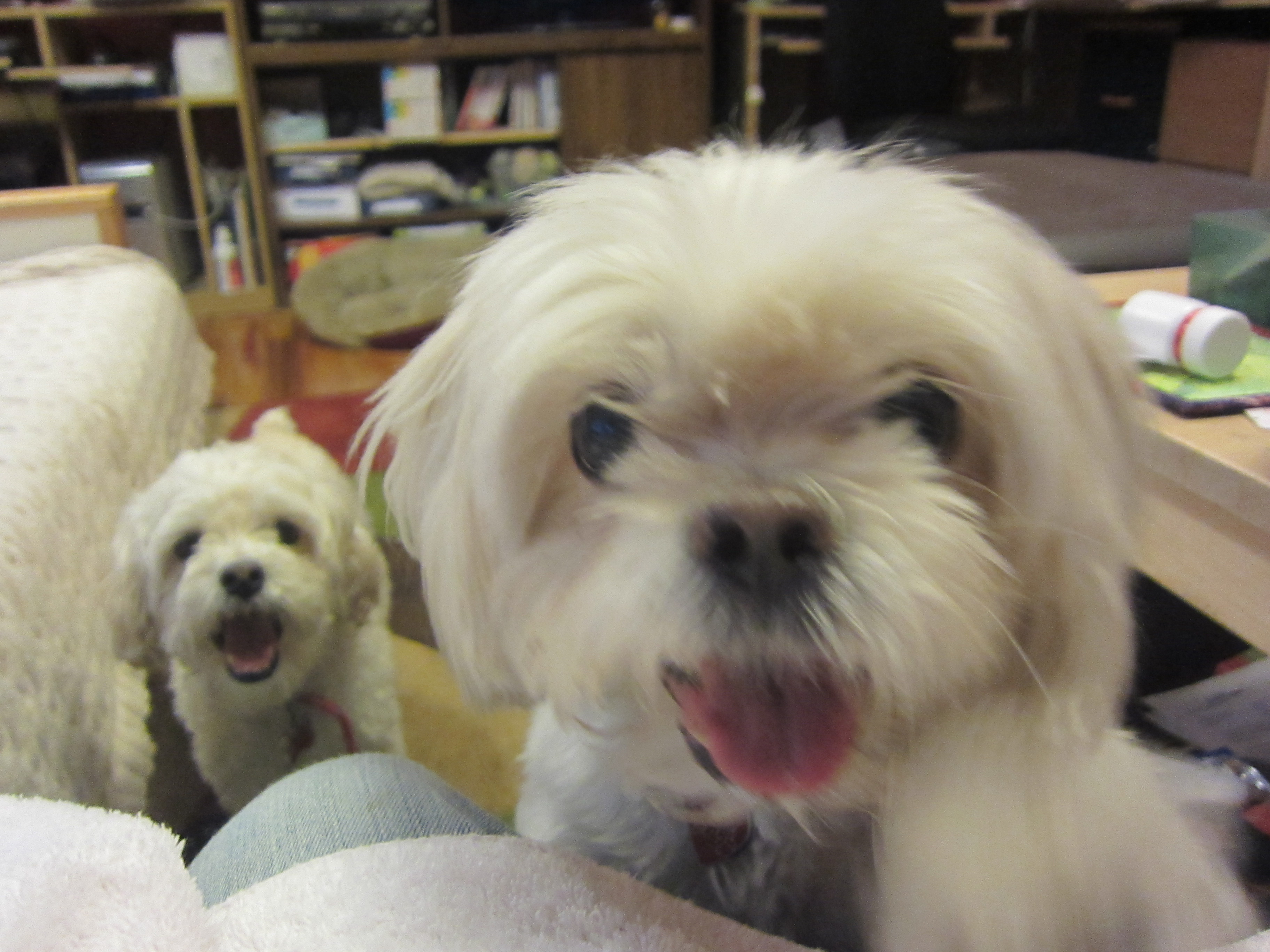
"Can we come too?"

“What?”

But I struggle with mystery plots in the same way I struggled with chess as a kid. My father expected me to learn the strategy just by watching him play, and expected me to be a grand master within a few days, maybe a week. I felt stupid for not being able to think three moves ahead; I didn’t understand why one piece was more valuable than another, or why each piece had different rules; and I felt an undeniable empathy with the pawns, because they were small, like me, and easily sacrificed.

Despite reading endless mysteries, and reading endless books on how to write mysteries, I do not even know where to start. I went through a severe addiction to Rex Stout and Agatha Christie that has never really ended, I just ran out of new material to feed it. Lately I’ve been reading Deborah Crombie, Jacqueline Winspear, Rhys Bowen, Jonathan and Faye Kellerman, Donna Andrews, Henning Mankell, J.K. Rowling as Robert Galbraith, Louise Penny and Charles Todd. I want to be Sherlock Holmes, with a nicer disposition. But so far, my brain has not rewired itself into puzzle-solving-mode.

My other possible mystery setting is my synagogue. I’d love for the sleuth to be an eighty-year-old woman, or a middle-aged rabbi, or both of them together. And the senior citizens in the bible study class (retired doctors, and lawyers, and teachers, and social workers) could help decipher the clues. But I worry it might seem as if I’m writing about specific people, and that could get me into trouble.
"Uh oh."

“Uh oh.”

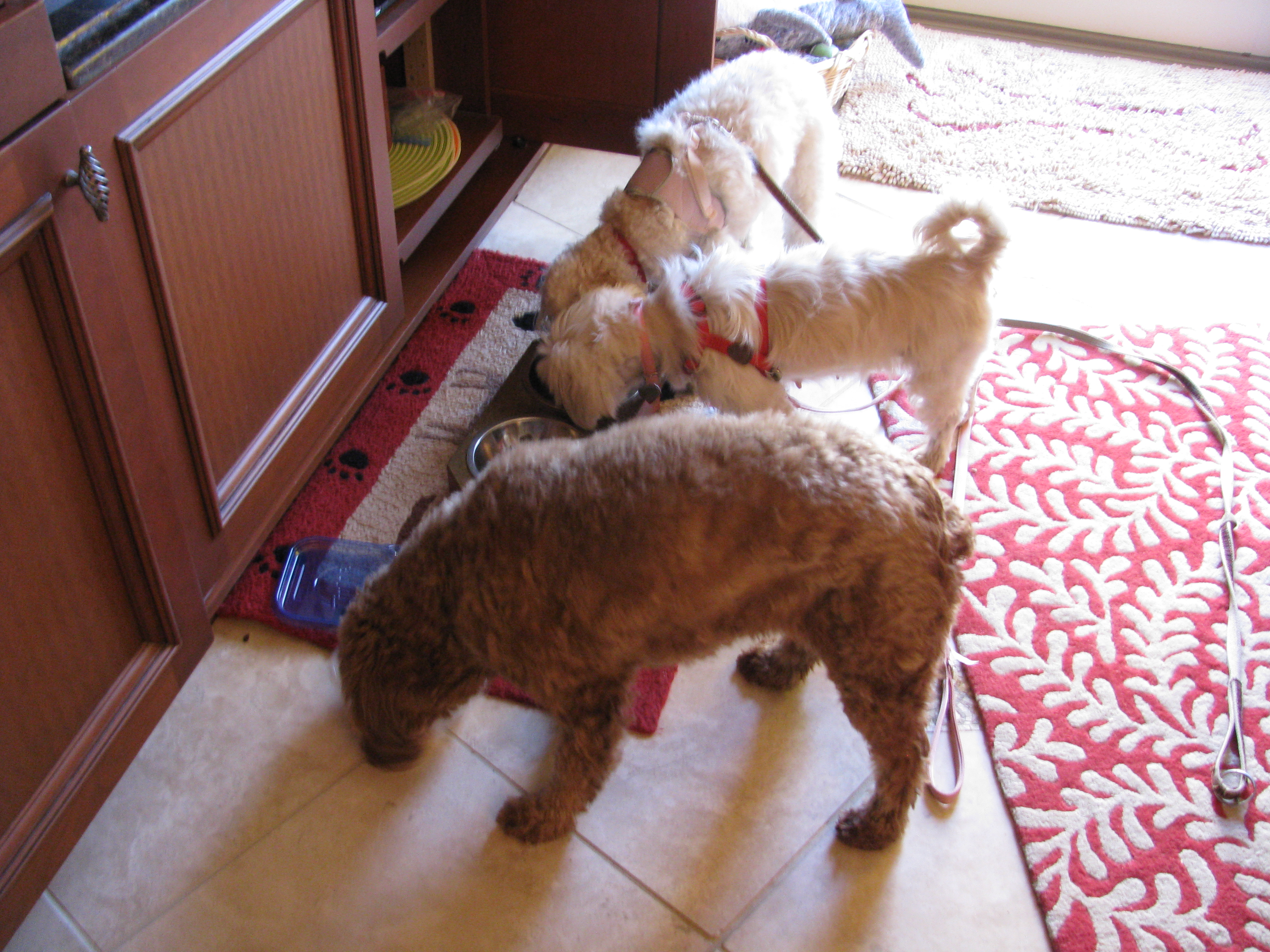
My mystery would, of course, have to have a dog in it. Even a fictional dog calms me down, reduces my stress level, and reminds me about what’s important and what isn’t. There could be a German shepherd who is more wayward puppy than officious guard dog (I couldn’t train even a fictional dog to be well behaved. I just don’t have it in me); there could be a yapping Yorkie biting at the criminal’s ankle to slow him down; or a sweet Great Dane sitting by her dead owner’s side; or a black Lab sniffing for clues and finding the murder weapon under a pile of leaves.

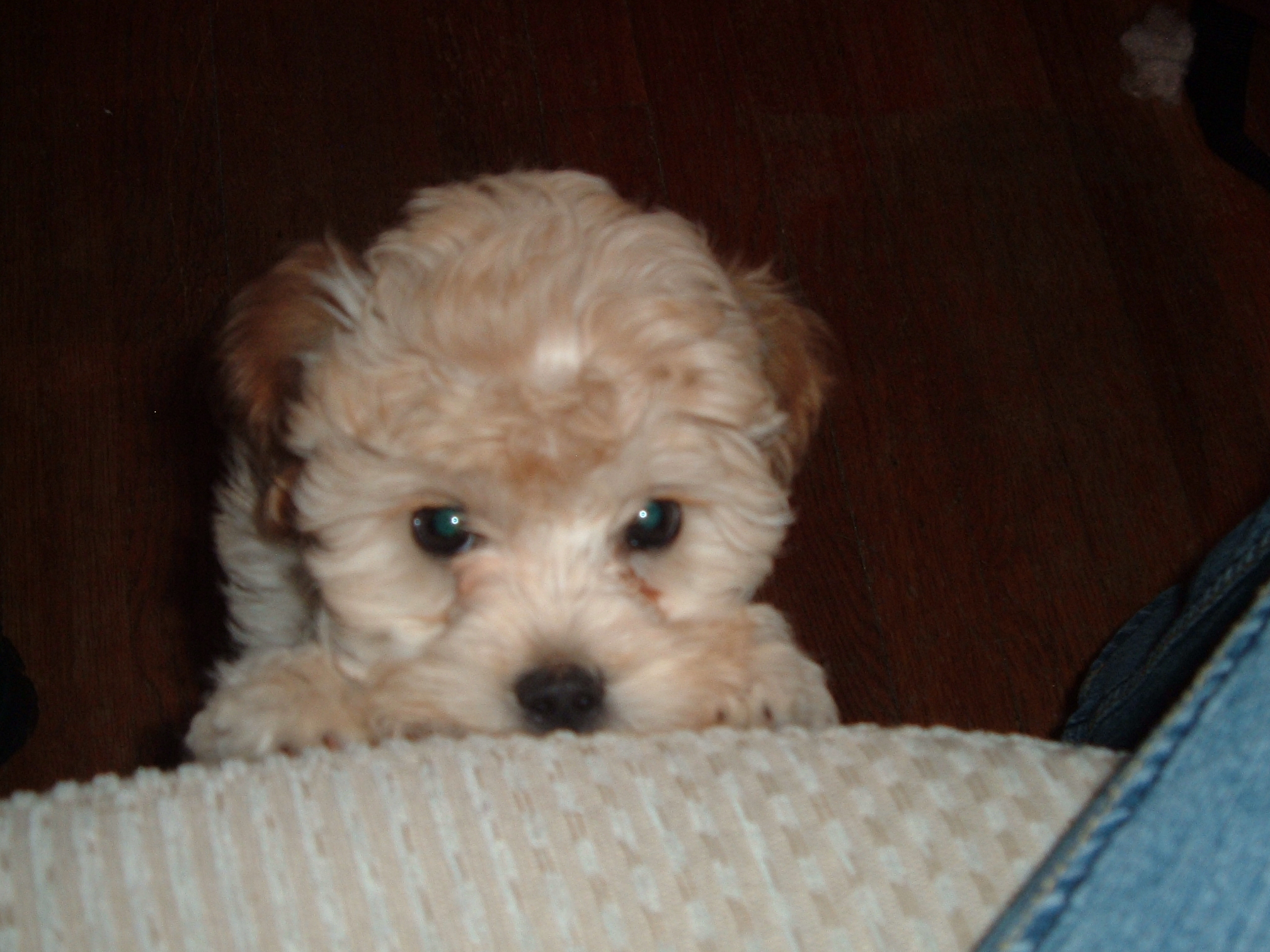
This is not my picture, but I'd love to put this puppy in a novel.

This is not my picture, but I’d love to put this puppy in a novel.
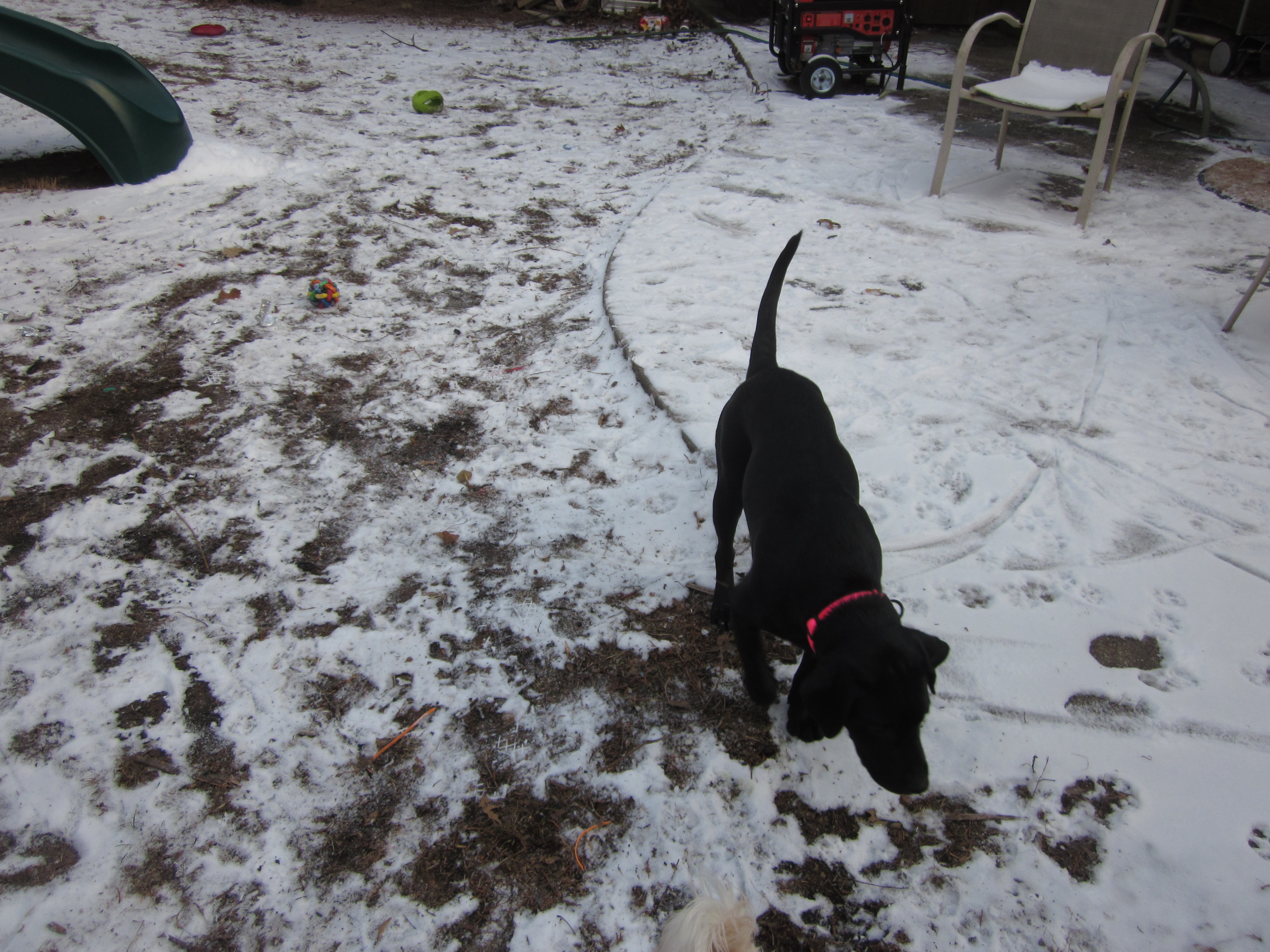
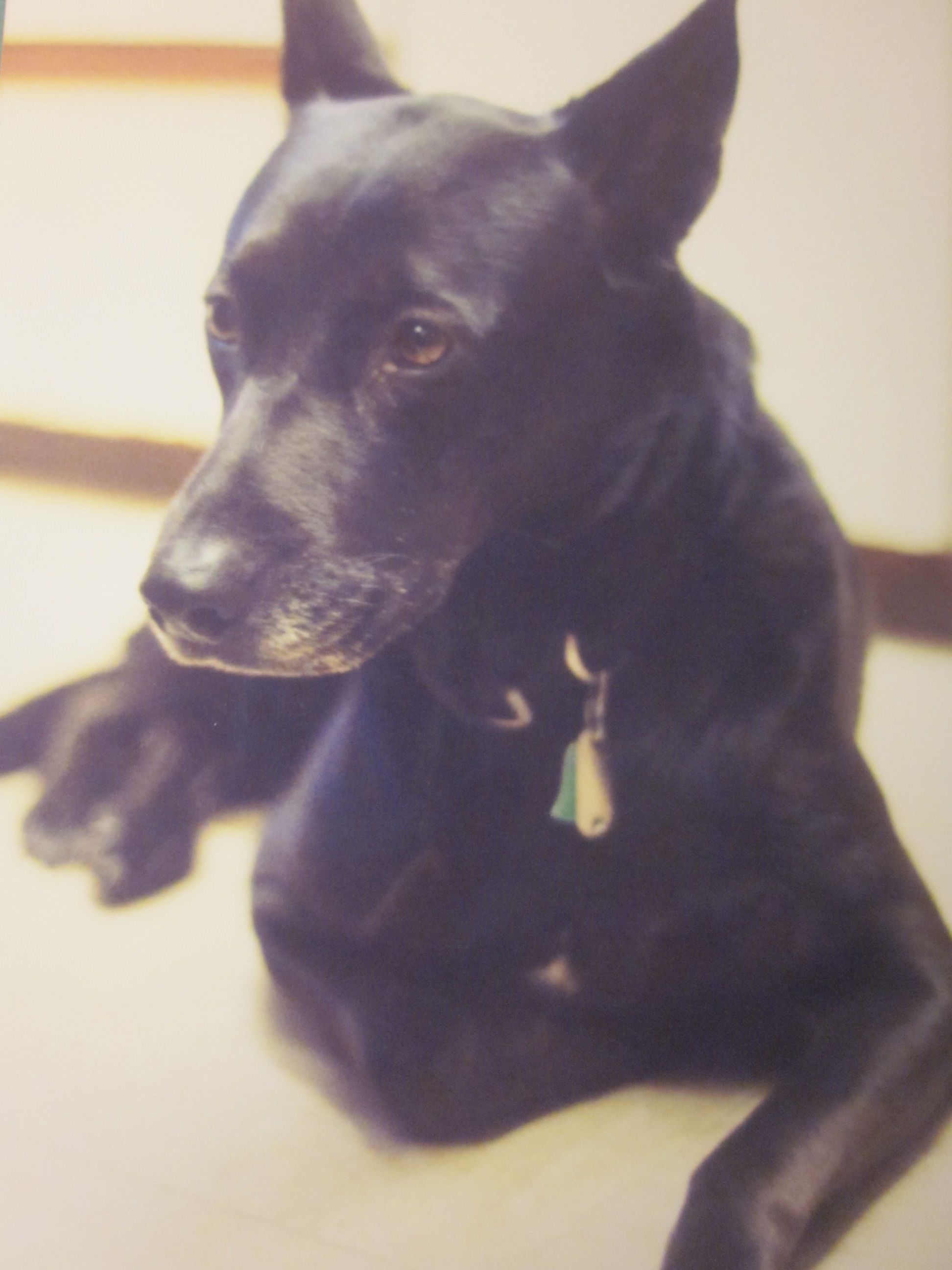
Lilah the Black Lab, and my niece, is an expert sniffer!

Lilah the Black Lab, and my niece, is an expert sniffer!

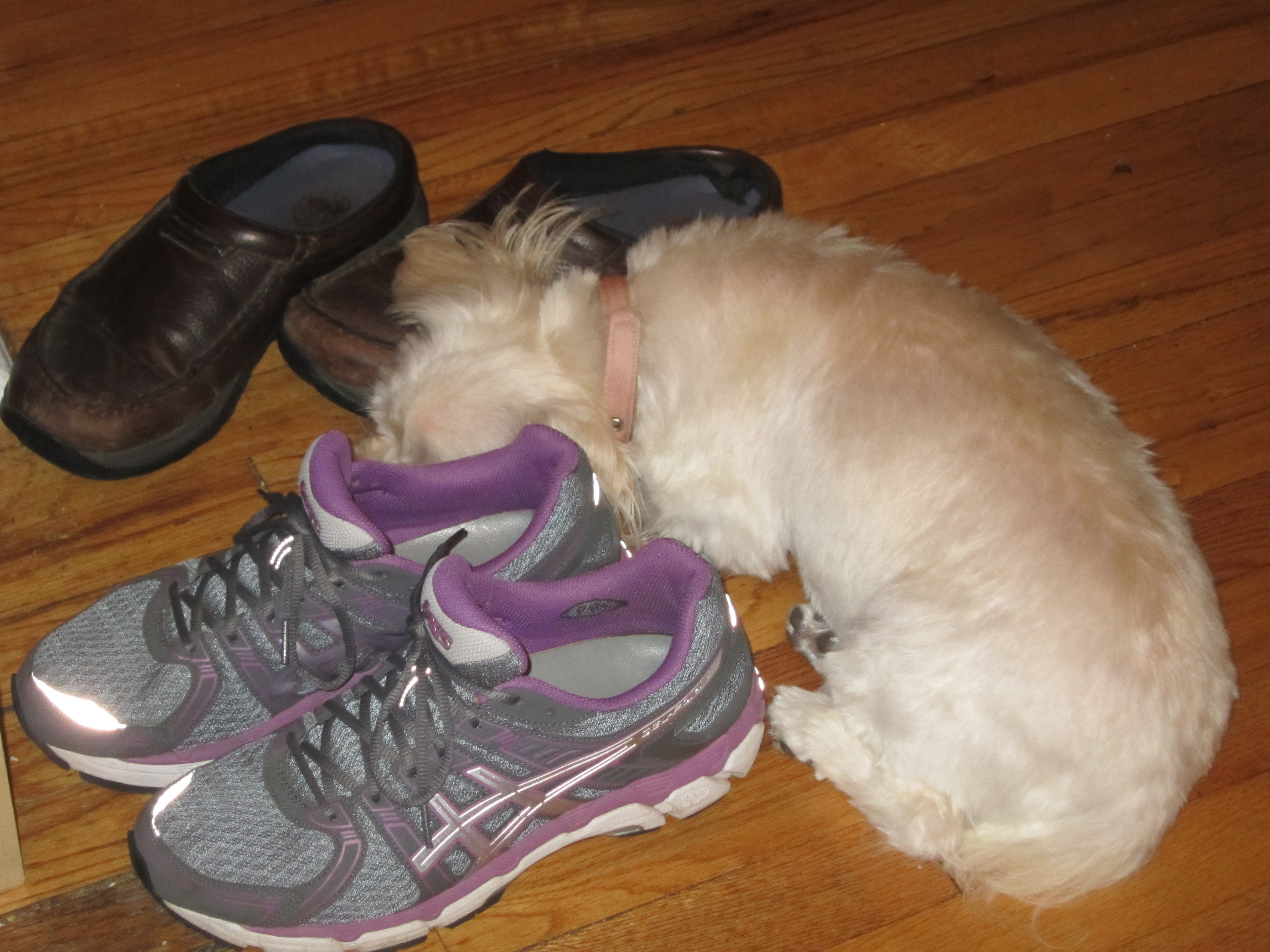
I used to think about using Cricket as my detective and writing a children’s mystery. Cricket would make a wonderful Sherlock Holmes; she’d even look good in the hat. She has all of the characteristics of the irascible, obnoxious detective who doesn’t get along with other people, but she would be a terrible police dog, not at all reassuring to the populace.

Detective Cricket is on the job!

Detective Cricket is on the job!

Detective Cricket is always looking out for danger!

Detective Cricket is always looking out for danger!

Detective Cricket is, um, easily distracted.

Detective Cricket is, um, easily distracted.

I’d love to write a detective like Jessica Fletcher in Murder, She Wrote. I’ve watched every episode of that show, at least three times. She is smart and stands her ground, but she’s had many disappointments in life, including never having children of her own, like me. She’s unassuming and uncool, and has to stand her ground against people who don’t believe her, but she doesn’t doubt herself or what she saw, or what she deduced. She’s friendly with everyone but doesn’t mind confrontations when necessary.

My detective would not be quite like that. She would need to take naps, first of all, and she’d have trouble with heights, and social anxiety. She’d have to sit down a lot, and maybe she’d need a driver. So, a female Nero Wolfe, but, again, with a nicer disposition.
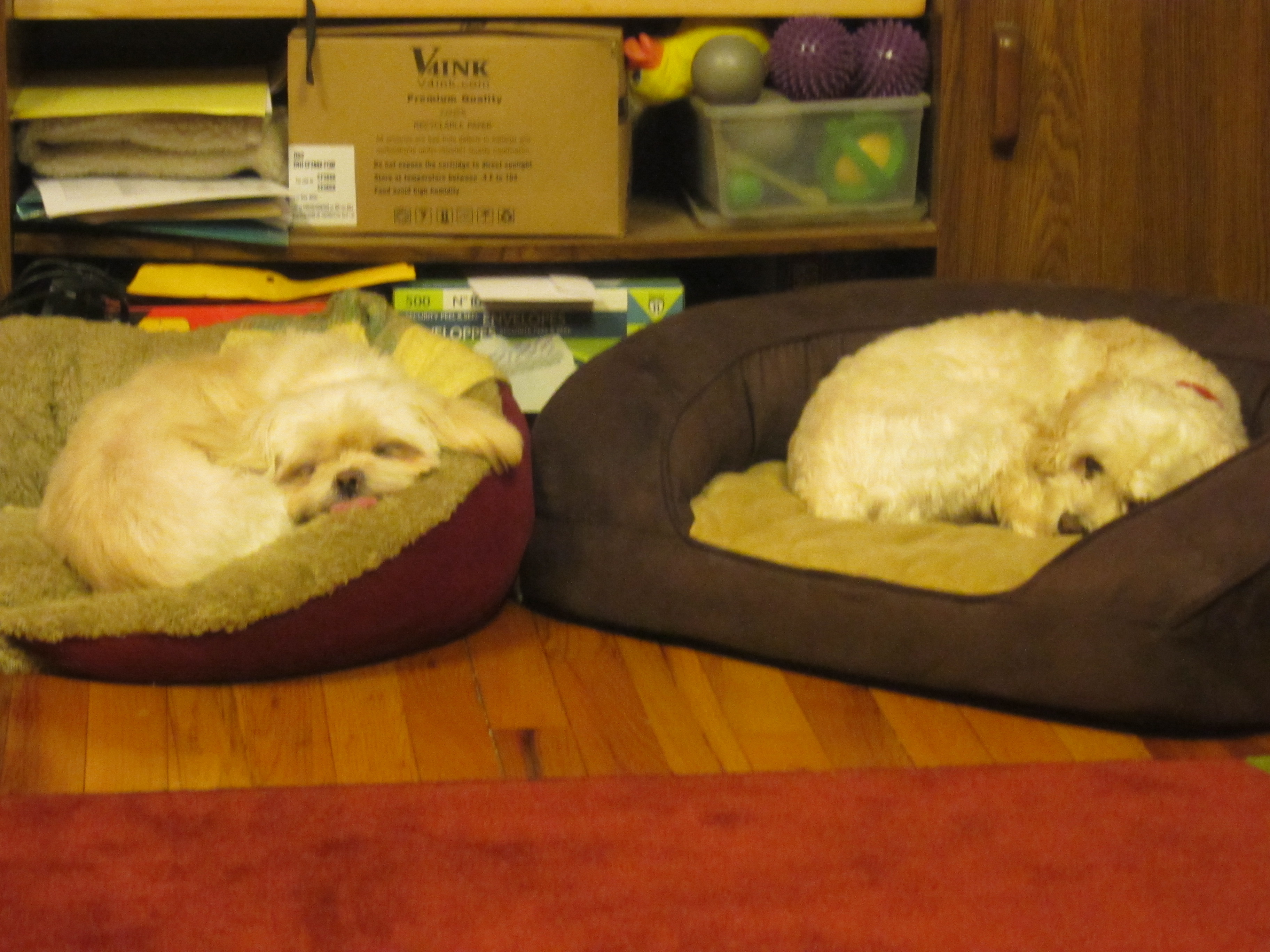
Detective Cricket and deputy Butterfly, ready for anything.

Detective Cricket and deputy Butterfly, ready for anything.
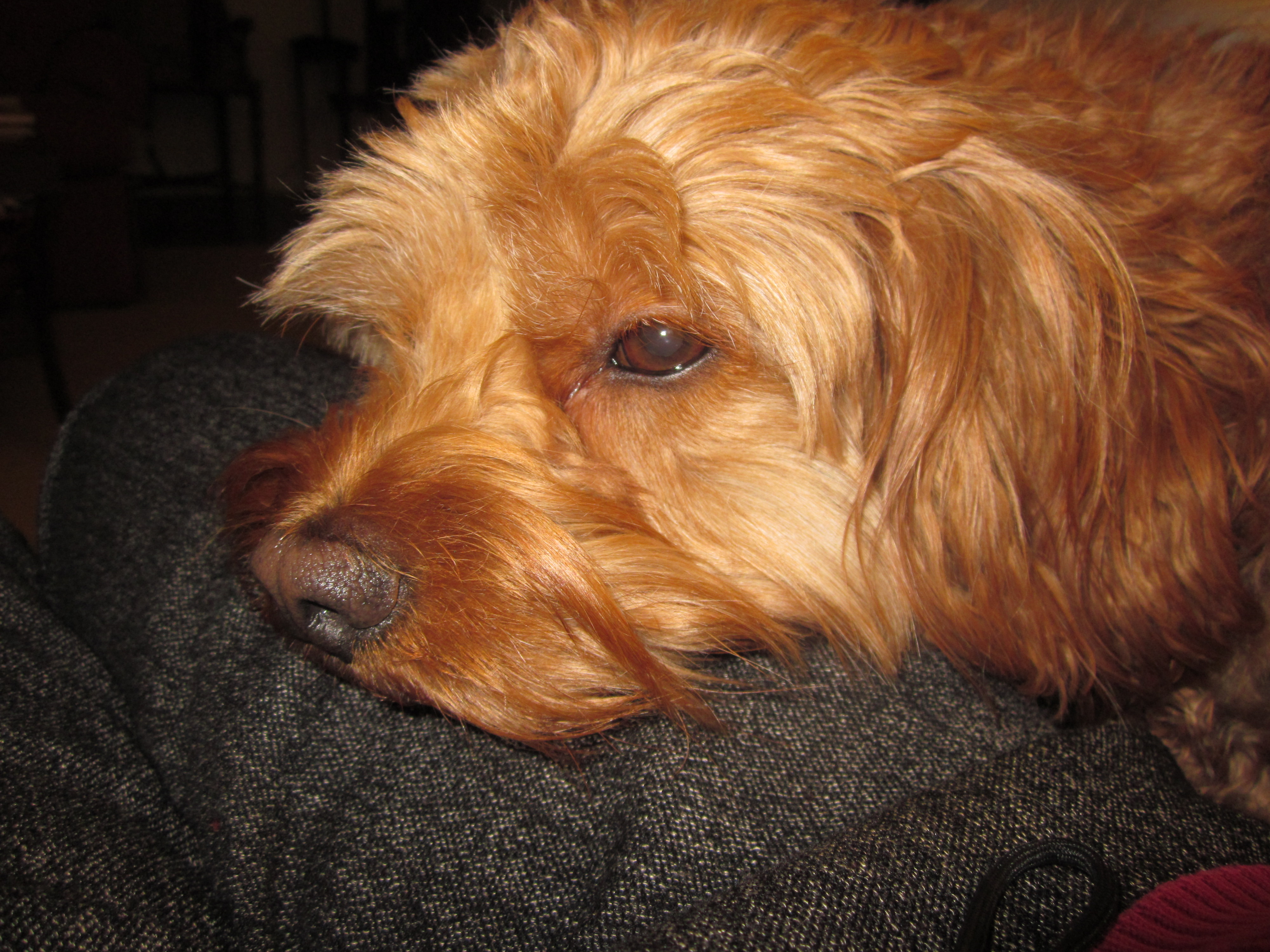
Dylan’s Cafe

Dylan’s Cafe


It was too cold to go to Washington, D.C. this year to visit my great aunt. We’ve gone the past two winters, in January, but this year the visit was scheduled for late in February, when Washington, D.C. was basically shut down from the snow. So we stayed home, and huddled indoors with the dogs because each time we went outside I felt like someone was carving my ears off with a spoon.

Butterfly made a snow heart with her feet.

Butterfly made a snow heart with her feet.

I missed getting to see my great aunt, and her daughter, and her granddog Zoe, but Butterfly, at least, was grateful to miss the long car ride, and Cricket sniffed every inch of the snow to make up for not getting to sniff Zoe. And in my mind, I did end up travelling to D.C., remembering my first visit to the city, way back before my great aunt moved there to dote on her grandson and granddog.

Sweet Zoe

Sweet Zoe.

All three girls on a previous visit.

All three girls on a previous visit.

I was barely seventeen and my cousin Sarah wanted to go to D.C. the day before Thanksgiving, to take pictures of the white house at night. I had just dropped out of college two weeks earlier, and Sarah thought I needed an escape.

We stopped at a candy store before the trip, and loaded up on gummy worms and jelly beans to balance out the bag of potato chips and the diet soda, and then we drove down to D.C., singing along to Bonnie Raitt and the Black Crows. I don’t know what my cousin and I talked about for five hours in the car, but we had a great time. She is ten years older than me, and was therefore a font of worldly wisdom. She was one of the only people who took my dropping out of college in stride. She never blamed me, or made light of it. She just cared about me and wanted me to feel better.

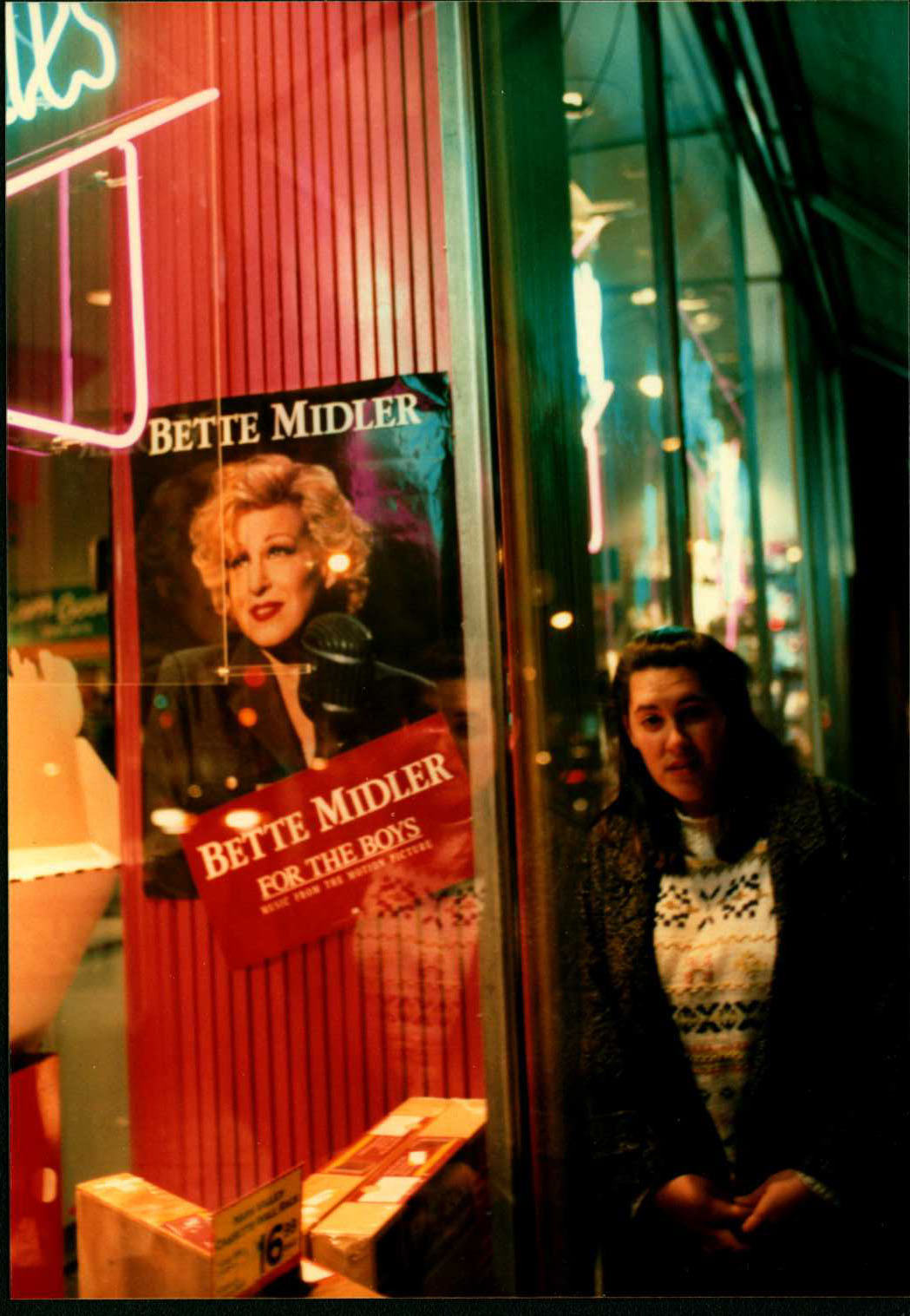
As soon as we arrived at the hotel, we dropped off our bags and went out to the movies. We saw Bette Midler in For the Boys on a huge curved screen with a red velvet curtain in front of it. It was the kind of theatre that felt magical, instead of like a box with seats in it.

Me and Bette Midler

Me and Bette Midler. Photo by Sarah Feinsmith

It was dark out when the movie ended but we were too keyed up to go back to the hotel. We joined the crowds walking around Georgetown, window shopping and people watching. When I saw a sign that said “Dylan’s Café” I stopped. For background, you need to know that Beverly Hills, 90210 had just come on TV the summer before, and I was in love with it in a way I cannot explain, or even understand, today. And the cool guy character on the show was named, of course, Dylan.

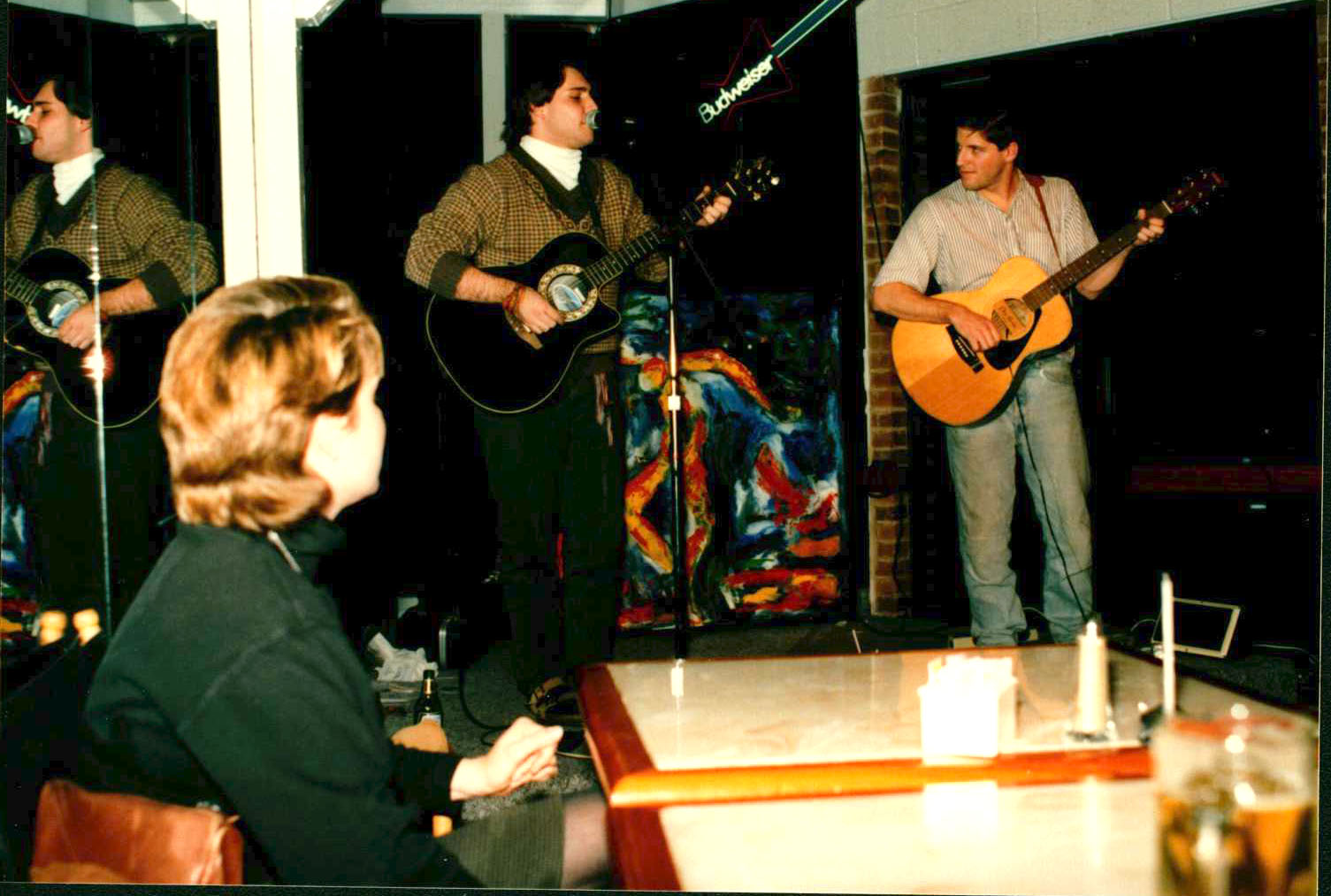
My cousin said we had to go in. The café was up a set of stairs and when we found out there was live music – two guys with guitars – we had to stay. And, according to my cousin, I had to have a drink. I don’t even remember what kind of music they played; whatever it was originally, it was played on two acoustic guitars so it didn’t end up sounding like heavy metal.

The guitar guys

The guitar guys. Photo by Sarah Feinsmith

There weren’t many people at the tables, so Sarah went over to chat with the lead singer and his sister between sets, and requested a James Taylor song for me. The guitar guys sang Fire and Rain, which, with lines like, “I’ve seen lonely times when I could not find a friend,” felt like it had been chosen just for me.

Important lessons learned at Dylan’s cafe: wine coolers make for the worst headaches; and a cute guy with a guitar trumps even the worst headache.

That trip brought me back to life. For one long day and night in D.C., I didn’t have to argue with anyone; I didn’t have to be lonely, or work at things that seemed meaningless; and I didn’t have to give in to authority figures who had none of my best interests at heart. I thought, maybe, life could be fun and interesting, and filled with music and cute boys. Maybe I could transfer to Georgetown and study Political science. Maybe I could learn to play guitar and sing in a band. Anything seemed possible.

The White house, in the morning. Photo by Sarah Feinsmith

The White house, in the morning.
Photo by Sarah Feinsmith

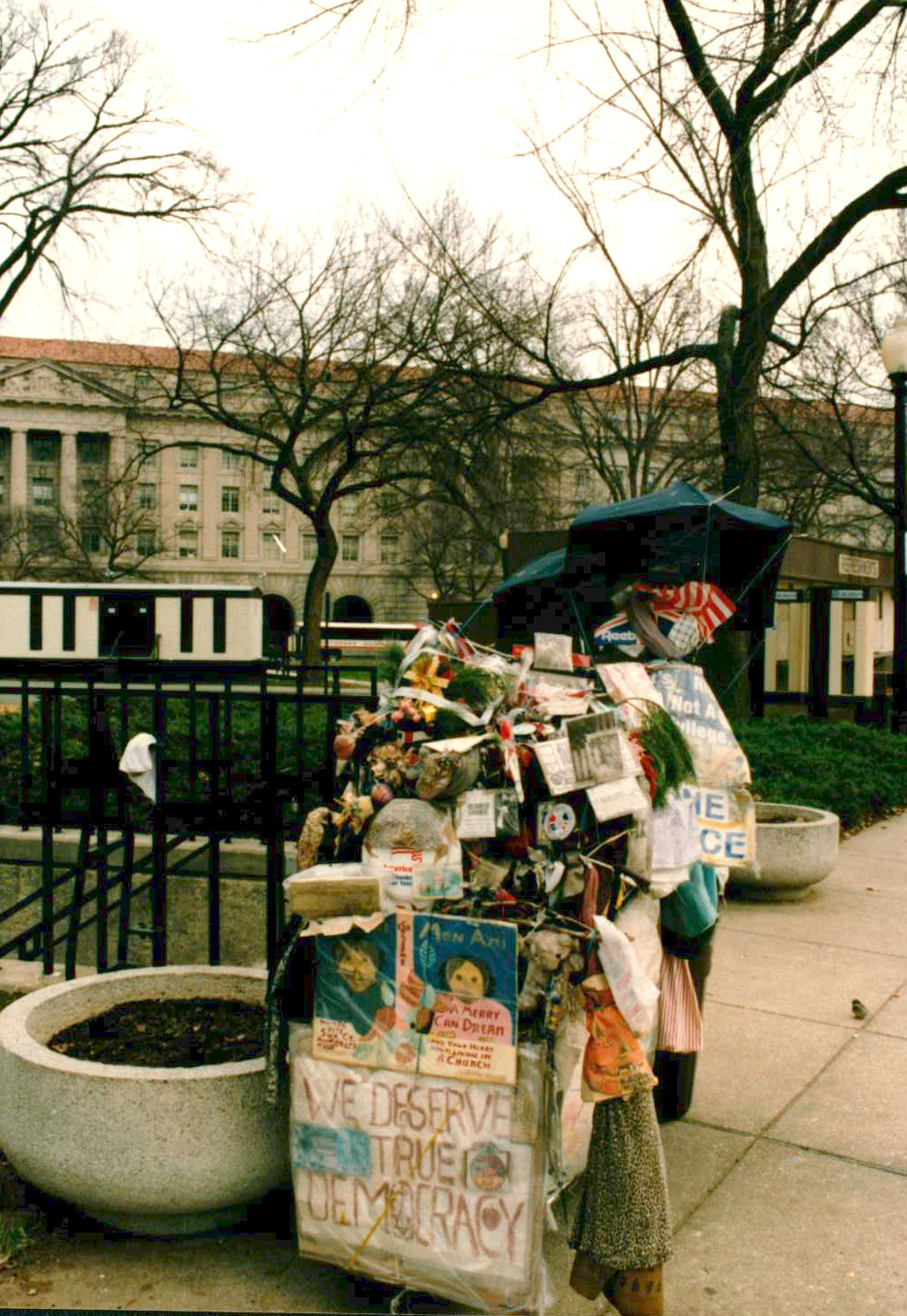
Democracy. Photo by Sarah Feinsmith

Democracy.
Photo by Sarah Feinsmith

We almost missed Thanksgiving dinner, because we wanted to do some sight-seeing on Thursday morning. Sarah hadn’t gone to sleep at all, because of the late night taking-pictures-of-the-white-house thing, so we turned the music up and kept the windows open to keep her awake as she drove across chilly New Jersey in the dark. We made it home before all of the food was gone, and Dina, my black lab mix, gave me a greeting as if I’d been gone for years instead of just a day.

Dina. Photo by Sarah Feinsmith

Dina.
Photo by Sarah Feinsmith

I might have forgotten my night in D.C. once I got home and back into the reality of my life, but Sarah made a photo album of the trip for me, to remind me that I could be happy, and that wonderful things could happen at any moment. And I realized that, even if I was not going to have the smooth path forward in life that I’d expected, the bumpy road might hold a few good surprises along the way.

Magical Thinking


Up until a few years ago, I was a very hopeful person. It wasn’t necessarily reasonable hope; some of it was fantasy-like, and full of magical thinking, but it got me through. The hopefulness started to recede as my health got worse, and as rejections piled up for my writing. And as the hope seeped away, I started to realize how necessary it had been.

"I believe there will be chicken in my future."

“There will be chicken in my future, right?”

Hope doesn’t have to be reasonable or rational. Hope is like a dream: it can defy gravity and space and time. I think it takes some amount of magical thinking to be a writer, or to remain in therapy, or to even plan ahead and imagine that things can be different in the future, instead of continuing as they are now, indefinitely.

"If I dream about a walk, it will come."

“If I dream about a walk, it will come.”

Butterfly gives me hope, because of how sweet she is, despite eight years of being used and abused at a puppy mill. I believe that Butterfly survived her ordeal by believing in magic, and dreaming of a place, far away, where she could run and play and eat as much as she ever wanted. Even if that fantasy had never come true, the dreaming of it still would have made her days easier to bear.

Butterfly's first day home

Butterfly’s first day home

Dogs are role models for hopefulness. They wake up in the morning believing there will be walks and cuddles and food and excitement. They give us hope that life can be good even if its parameters are small; even if the gifts available are small. They give us hope that a life filled with love might be enough.

"I have Mommy's sock and that means I have Mommy."

“I have Mommy’s sock and that means I have Mommy.”

Dogs are trying so hard to teach us happiness, and we are stubbornly resisting the lessons and holding on to our pessimism. They must be so frustrated with us.

"Treats?!"

“Treats?!”

Magical thinking is supposedly bad for me, like chocolate cream pie, or fried chicken. It’s a vice, a drug, a crutch that has deleterious effects on my mental health. But magical thinking is also where my hope comes from, when reality can’t supply it. If my life had been lucky, and most of my efforts had paid off in success, and most of my dreams and goals had been realized, maybe I wouldn’t need magical thinking. But I don’t know anyone whose life is like that.

Even under the worst circumstances, it’s the hopelessness that will destroy you. Being too realistic, too practical, too down to earth, can kill a person.

"What's next?"

“Treats?”

Cricket always believes that she will get a plateful of whatever we are eating for dinner, and that she could eat a whole rotisserie chicken on her own without any bad after effects. There’s something about magical thinking that is vital to our well being. It’s what allows us to believe in things that don’t yet exist. It allows us to go beyond what we’ve been told in school, or by our parents, and imagine something different for ourselves.

"Yummy!"

“It’s my turn next, right?”

Maybe I haven’t lost my hopefulness after all.

Sweet dreams.

Sweet dreams.

The Big Bad Headache


I missed a week on the blog, but I have a good excuse. Thursday, July 31st, I went into the city for a Lumbar Puncture (AKA Spinal Tap). My neurologist wanted the LP to rule out all kinds of scary diseases he doesn’t think I have. I had to run around (or slowly traipse around) this huge hospital for blood tests and nurse visits, with aides walking me from one place to another. Hospitals should seriously consider Golden Retriever guides instead of humans – much more comforting, and just as capable of answering any questions I might have.

Delilah, my preferred Golden Guide.

Delilah, my preferred Golden Guide.

For the test itself I was placed face down on a table, with a pile of pillows under my stomach. The Novocain shot in my back hurt the way it hurts at the dentist (meaning, a lot, but over pretty soon), but then I was tapped like a keg. I felt like a maple tree with a spout hammered into my back. Then the table tilted until I was almost standing up, and the cerebrospinal fluid started to drip out. Then the table was flipped forward, like a see saw, to check the pressure of the fluid. Then back for more dripping and forward for another pressure, then finally flat, tap removed, and transferred to a stretcher to be wheeled to recovery to lay flat for an hour.

The explanation for the hour on my back was that it would help avoid a leak of spinal fluid that would lead to a bad headache. I assumed the headache would come on soon, if it was going to come at all, so when the hour passed I began to think that (for once!) I’d fallen on the good side of the percentages and wouldn’t have a bad reaction to the spinal tap.

All day Friday I rested with my puppies at my side, because the doctor had told me to avoid too much activity and because I was exhausted. I felt a bit dizzy, but I was still congratulating myself for not getting the terrible headache.

Cricket was supposed to be my foot rest here. Hmm.

Cricket was supposed to be my foot rest here.

Saturday morning, Cricket woke me at five AM I felt a bit odd, but I usually do at five AM. I tried to go back to sleep, but with each hour my head started to hurt more, until I tried to stand up again and the world exploded.

I couldn’t walk much further than the living room without extreme pain, but I still thought that if I took Tylenol and drank caffeine, as recommended, the headache would pass.

When I woke up on Sunday morning, I tried to stand up and the pain was crushing. That’s when I started to panic. It felt like an alien creature was crawling through my skull and sticking its rhinoceros-tough fingers through my eyes and ears and down my throat. I took pain pills and Pepto Bismal and drank caffeinated tea and tried not to listen when Mom mentioned the emergency room.

At some point, I don’t know when, I started to throw up, a lot. There was a pink puddle on the tile floor of the bathroom, with little islands of white pain pills floating in it. I went back to my room to lie down and the puppies piled on top of me, but I had to move them to get to the bathroom and throw up again, and again.

Mom called my neurologist and his colleague said to call an ambulance and go to the emergency room, for a procedure called a blood patch, where my own blood would be taken from my arm and put into the epidural space, to stop the leak of spinal fluid. Somehow they had forgotten to warn me that the headache would come on after a few days, and that it would be a positional headache, meaning that any time I lifted my head, bombs went off.

The paramedic came with two police officers, and I could barely get out of bed and into the wheel chair, where the vomiting continued as they carried me down the stairs and out to the ambulance. Everything was blurry because I couldn’t wear my glasses, but Mom told me later that the towel that magically appeared in my hands came from our very kind downstairs neighbor.

There’s something about extraordinary pain that makes you lose all vanity. You do not care that vomit is dripping from your face, or that you’re still in your sweaty pajamas and you never brushed your hair. Who gives a fuck, just help me!

At the hospital, eventually, something was injected into the IV in my arm that calmed the nausea, and Fioricet and constant fluids were prescribed for the headache. Then the pain management specialist/anesthesiologist came over to tell me that the OR was closed on Sundays, so I would have to stay over night for observation until he could get me scheduled for the blood patch on Monday. Bye.

The ER doctor explained, in the aftermath, that I was better off staying in the hospital because if I tried to go home I was very likely to destabilize and end up back in the ER.

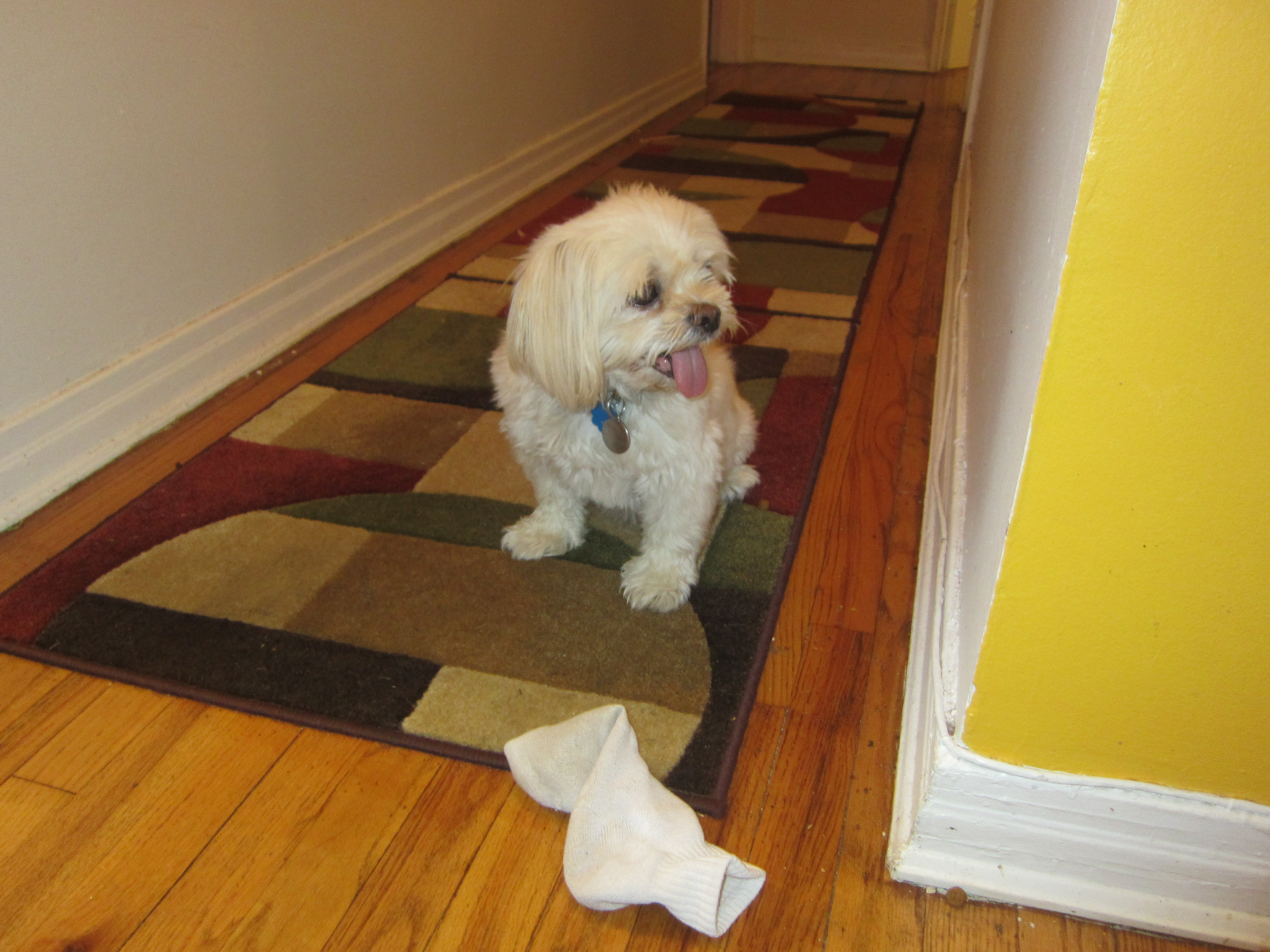
Mom went home to walk the girls and to bring me some things, and by the time she came back I was much more coherent. She brought me a picture of Butterfly with a sock in her mouth, because Butterfly had run into my room, picked up one of my dirty socks from its home next to the laundry basket and then ran to the front door with it. Because she missed me.

"Mommy forgot her sock!"

“Mommy forgot her sock!”

One thing I noticed about being in the hospital: no matter why you are there, every nurse, doctor, aide, and PA asks about bowel movements. Some of them press a stethoscope to the belly to listen for interesting noises. I had to apologize to them for my quiet belly, and explain about the amount of vomiting I’d done, without much subsequent eating. I felt like an underachiever; though I was peeing constantly from the fluids, so I wasn’t a complete disappointment.

My neurologist called from the city on Monday to tell me that the results from the LP had come in, all clear. So, sorry, but you seem to be going through all of this for nothing.

More blood was taken, for some unexplained reason, and a surprise CT scan, and blood pressure checks every five minutes, so I was kept busy until it was time for my procedure in the afternoon.

The anesthesiologist came by before the blood patch to explain that this would be more painful than the original LP, but hopefully successful at patching the leak, and ending the headache. Hopefully. For this procedure there was a pre-op nurse, two OR nurses, a post-op nurse and a few other people who didn’t introduce themselves. The head operating room nurse had pictures of Butterflies on her cap and Mom took that as a good sign, that my puppies were with me in spirit.

"Where's Mommy?"

“Where’s Mommy?”

The operating room was very bright, and huge, and intimidating, especially with my face down and half my butt sticking out. One of the nurses held my hand and patted my head, while the doctor shot me with Novocain and started to dig into my back with a needle. Then he was taking blood from my arm to insert into the epidural space, and decided to tell his colleagues about the guys who first discovered that shooting cocaine into the spinal column could cause such pain relief that you could hit each other in the legs with baseball bats, and squeeze your gonads with pliers, and not feel a thing.

Then he went back to sticking needles in my back and hitting them with hammers and squeezing lemon juice and razor blades under my skin, or whatever it was he was doing back there.

When it was finally over, I still felt like there was an axe embedded in my lower back, but after the required hour of lying flat I was eager to sit up and prove that the headache was gone and I was ready to go home. I felt like a pin cushion and didn’t want to spend another night in the hospital and risk more surprise procedures. It took until 9:45 PM for the discharge papers to come through, but I finally got to go home to my puppies and my own bed.

Cricket can make anyone into a pillow.

Cricket can make anyone into a pillow.

I was proud of myself for managing well, for communicating clearly and talking to a million people and doing everything I needed to do, but having Mom with me made all the difference. Everyone should have a Mommy like mine. But I still think there should have been puppies at the hospital. I don’t know what they’re thinking not having puppies on staff.

Wouldn't they be great as hospital greeters?

The new hospital staff!

Passover for Dogs


I think the role of dogs in Passover has been woefully neglected. Cricket and Butterfly are my family, and they deserve a prominent role in such an important holiday, but I’m not sure what that role should be.

Butterfly and Cricket are ready for anything!

Butterfly and Cricket are ready for anything!

Leading up to Passover, there is an official search for leavened bread, or chametz, throughout the house, because you’re not supposed to eat, or even own, leavened bread for the weeklong holiday. When I was a kid, our dogs were very helpful with searching for old crackers under my brother’s bed, or half eaten candy bars in my book bag, or left over dog food in the corners of the kitchen. And then they would help with the ritual cleaning, done by candle light, where we would dump a handful of bread crumbs on the pristine floor and say a blessing as we swept it up, and the dog would lick the floor clean.

Dina, surveying the kitchen floor.

Dina, surveying the kitchen floor.

Samson, chewing on something more tasty

Samson, chewing on something more tasty, my brother

Delilah, intimidating the bread out of the house.

Delilah, intimidating the bread out of the house.

I may have to reinstitute this ritual, if only to clean up the kibble trail Butterfly has left throughout the apartment.

My favorite part of Passover is the Seder itself. All of the stories and songs make me feel like I’m living inside of a story book and travelling back in time. But the Seder is, first and foremost, all about the food.

When you think about it, the Seder is organized as a series of small plates. First you eat a piece of matzo, then a nibble of raw horse radish. Then you make a sandwich out of matzo and horseradish and sweet apple and nut charoset. It’s a tasting menu that gradually builds. And all the way through there’s the wine. This would be Cricket’s idea of a good time. She’s always been a fan of small plates, and wine.

Just a little sip.

Just a little sip

and a taste.

and a taste.

Generally the next course at our house was a hard boiled egg, to represent life, with some salt water to represent the tears that are inevitable in life. Then gefilte fish, for sweetness, with some horseradish on top, to toughen you back up. Then matzoh ball soup with chicken and carrots and onions, just because. And then the rest of the meal came at once, with brisket or chicken or steak, a vegetable or two, some sweet potato tzimmes. And then for desert, a nondairy flourless chocolate cake, Ring Jells, and macaroons.

Every dog we ever had made it a habit to stretch out under the table during the meal, to catch anything that dropped.

We brought Cricket with us to my brother’s Passover Seder one year, before Butterfly arrived on the scene. Cricket was actually a good distraction for the kids, since we didn’t eat dinner until 10:30 at night. The kids were antsy and grumpy with the lateness of the hour, and it was a relief for them to sit under the table with Cricket, and murmur to her, and feel like she could understand them.

I think Cricket would have been very helpful with the search for the Afikomen, if she’d been invited to participate. There’s a custom to break the middle piece of matzoh and hide half of it somewhere in the house. The children search for it like a treasure hunt and get a reward if they find it. At my brother’s house it was an every-man-for-himself blood sport, but I would have loved if Cricket could have participated as part of a team, with some chopped liver smeared across the matzoh, so she could really use her skills to help her human cousins. She would have been especially happy to share in the reward, which, for her, would have been the chopped liver.

I’d really like for Butterfly to experience a Seder. It’s not that I believe she would understand the words, but the story is all about the escape from slavery to freedom: this year we are slaves in Egypt, but next year we will be free in Jerusalem. And Butterfly knows that story. She lived in a puppy mill for eight years, and now she is home, where she belongs. There should be songs for her to sing, to express the pain of her journey, and the happiness of the now. I’d like to sing those songs with her and celebrate that miracle. And maybe find some kosher for Passover chicken treats for her to eat between songs.

Butterfly has a lot to sing about!

Butterfly has a lot to say!

Candle Lighting


When we first moved into the new apartment, back in May of 2013, I promised myself a set of candle sticks for Friday night candle lighting. Usually I’m at synagogue for Friday night services and they light Shabbat candles for us there, but I thought it would be a milestone to light my own candles again.

Traditional Shabbat Candles (not my picture)

Traditional Shabbat Candles (not my picture)

I looked in a few brick and mortar stores, while we were looking for other things we needed, like shelving and couches and tables and other little things like that. But I couldn’t find anything. The ensuing online search was extensive, but I eventually found a set of candlesticks that I liked very much. And then I found out that the online store that advertised the special candlesticks had gone out of business, just leaving the web page up to taunt me. When the special candlesticks disappeared, I lost my nerve.
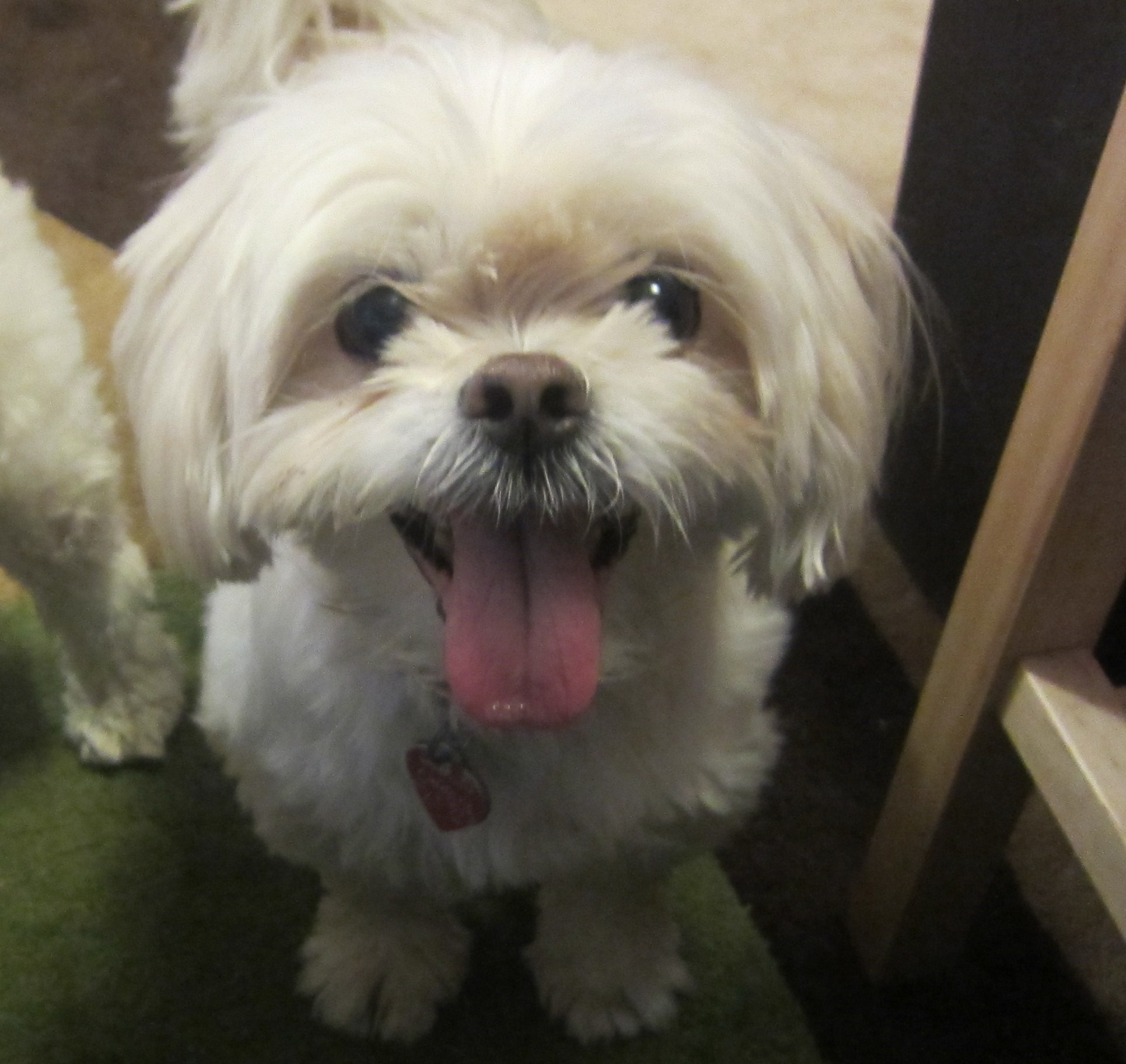
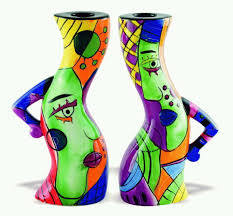
Candlesticks with attitude. Eek!

Candlesticks with attitude. Eek!

I used to be clumsy, or distracted, and sometimes I still am. I have memories of dropping lit matches into full garbage cans, dropping lit candles onto counter tops, setting tablecloths on fire, etc. My fingers would get numb and shaky in the presence of fire, and not act the way I’d trained them to.

Don't worry, that's just my house burning down.

Don’t worry, that’s just my house burning down.

I used to light the Shabbat candles in our house growing up. I’m not sure why my mom didn’t want to light the candles, maybe it was her way of rebelling against my father’s obsession with becoming more and more religious. So it became my job, and I didn’t feel like I could say no.

The fat white Shabbat candles never sat still in their candle holders, so I had to melt the bottoms a bit to make them stick in place. Lighting the wooden matches always made me anxious. If the strip on the box had started to wear down, because we got those huge boxes instead of pocket sized, I’d have to light the candle from the stove, and then worry about doing something ritually wrong by turning off the flame on the stove after the official Shabbat candles were lit.

I hated that fear of doing it wrong. I hated feeling like someone was watching me, just waiting to yell “Gotcha!”

There’s something universal about candles, in all religions, despite electric light being ubiquitous. The flickering, temperamental quality of candle light, or the heat or temporariness of it, seems to add meaning. The Sabbath is a day of rest, a day to stop doing things the way you always do them and be more conscious and aware, of your family, of nature, of love and joy. It’s a time to remind yourself that there’s more to life than work. I wonder if the flame of the candles is, in part, a symbol of how dangerous that rest day maybe be, or may feel, when you stop rushing around and start to really experience your life. There are a lot of shadows hiding behind our busy lives, and the light of the candles may illuminate them in a way we are afraid to face.

If I could make this ritual work for me, I’d want to light four candles: one for me, one for Mom, and one for each of the dogs. But I keep seeing the dogs getting burned and the apartment going up in flames.

There’s a custom in orthodox Jewish homes, and maybe in more liberal Jewish homes now too, of blessing each child on Friday night as part of the ritual of the Sabbath. I knew a family with six kids who did this, and it was a lovely thing to see. Each child went up to their father, in age order, and he closed his eyes and put his hands over the child’s head and said a blessing, including a special wish for each child.

Maybe I could adapt this ritual for my dogs, instead of doing candle lighting, and come up with a prayer to say for them once a week. Just the act of resting hands on their heads would have a calming effect. I could wish them good sleep, good poops, and exciting things to sniff.

"Go ahead, Mommy. I dare you to bless me." (That would be Cricket.)

“Go ahead, Mommy. I dare you to bless me.” (That would be Cricket, on the right.)

And eventually, maybe, I’ll find another set of candle sticks that captures my imagination and help me over the hump. And maybe a fire retardant table cloth to put under them wouldn’t hurt.

Blog Candy

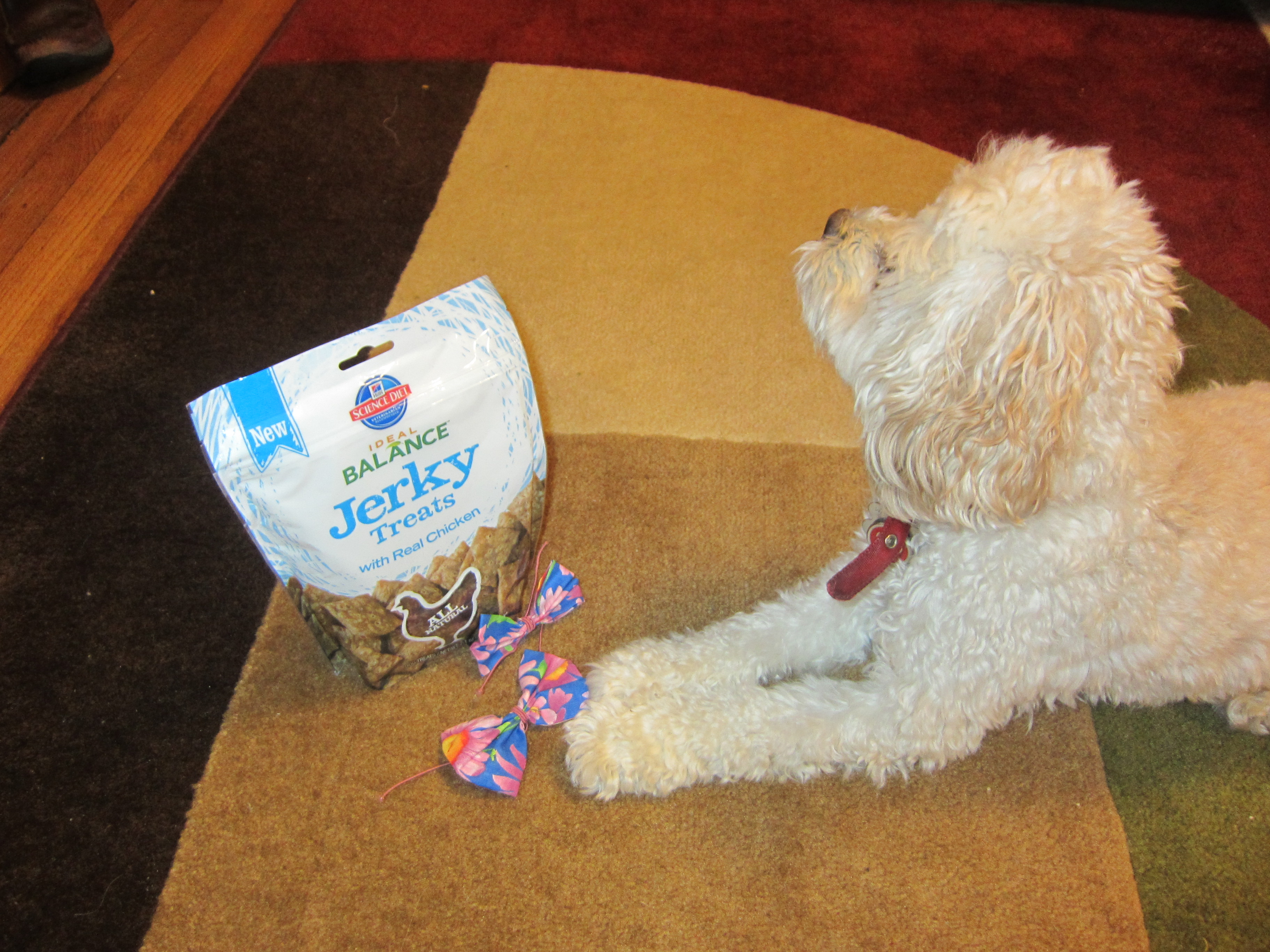
Cricket is guarding the treats

Cricket is guarding the treats

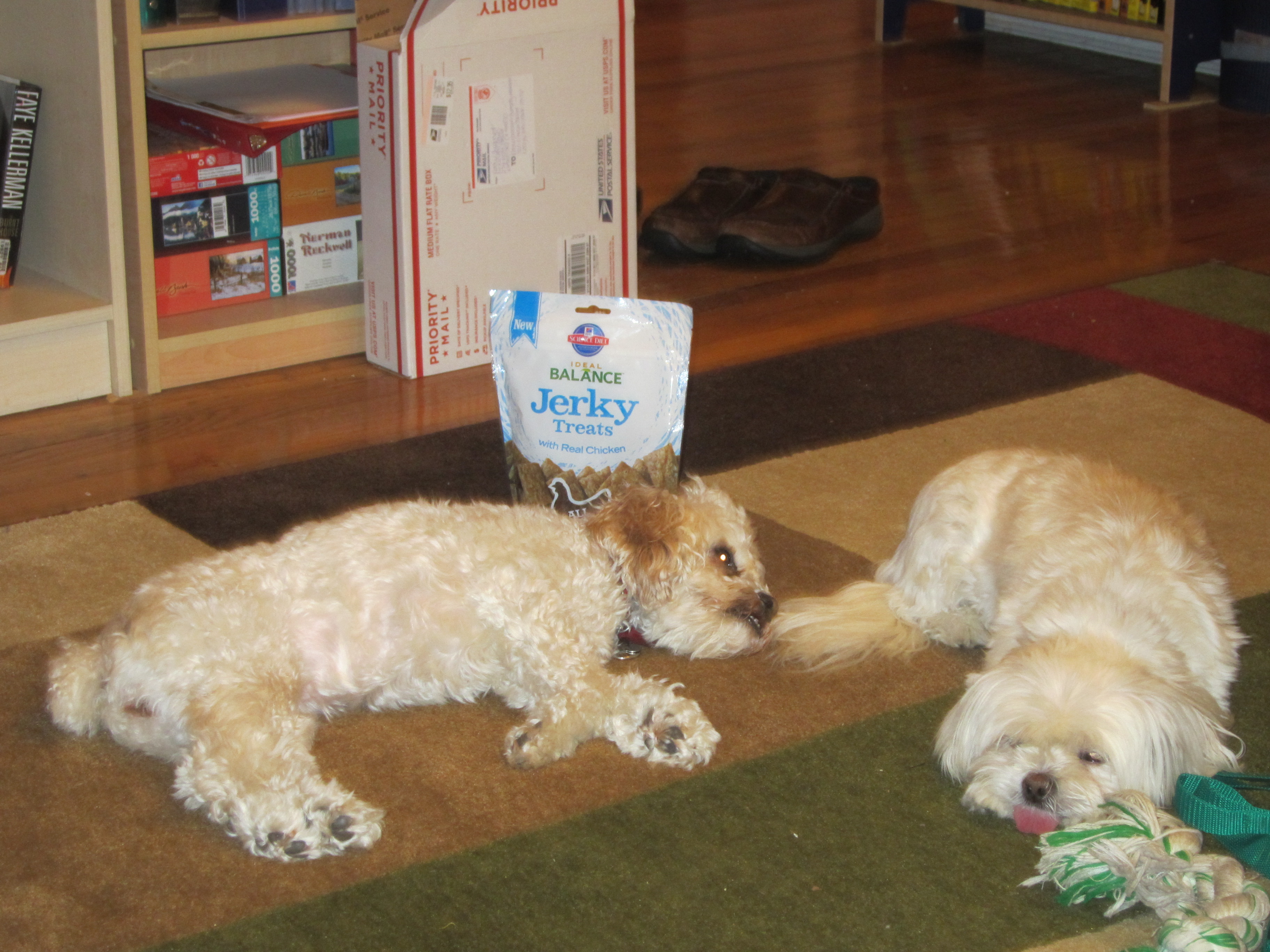
Thank you to Rachel Sheppard at mykidhaspaws.org for the treats and bows! Butterfly let Cricket have first shot at opening the present, but now they are both sleeping next to their treats.

Sweet dreams

Sweet dreams

Delilah’s Diabetes

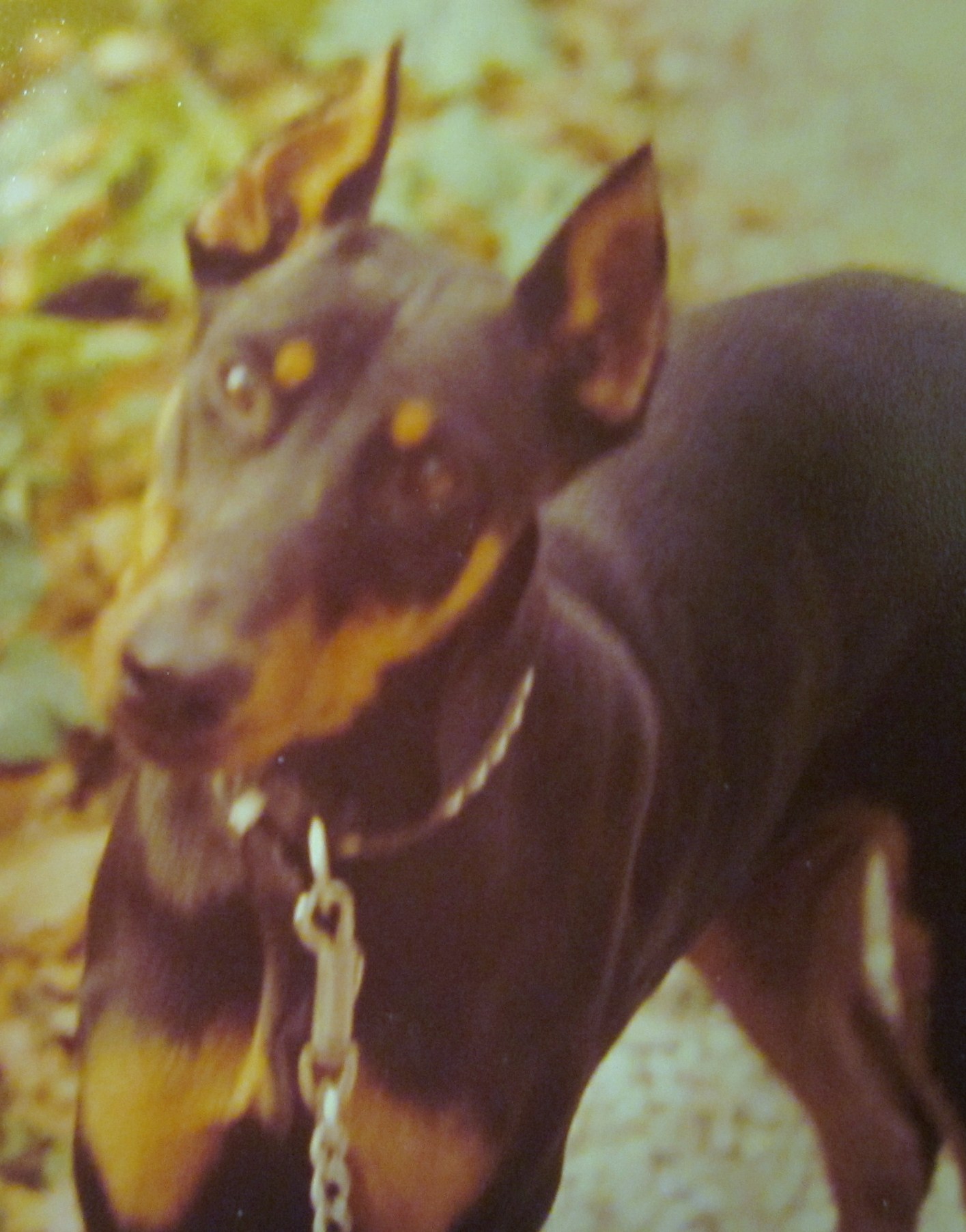
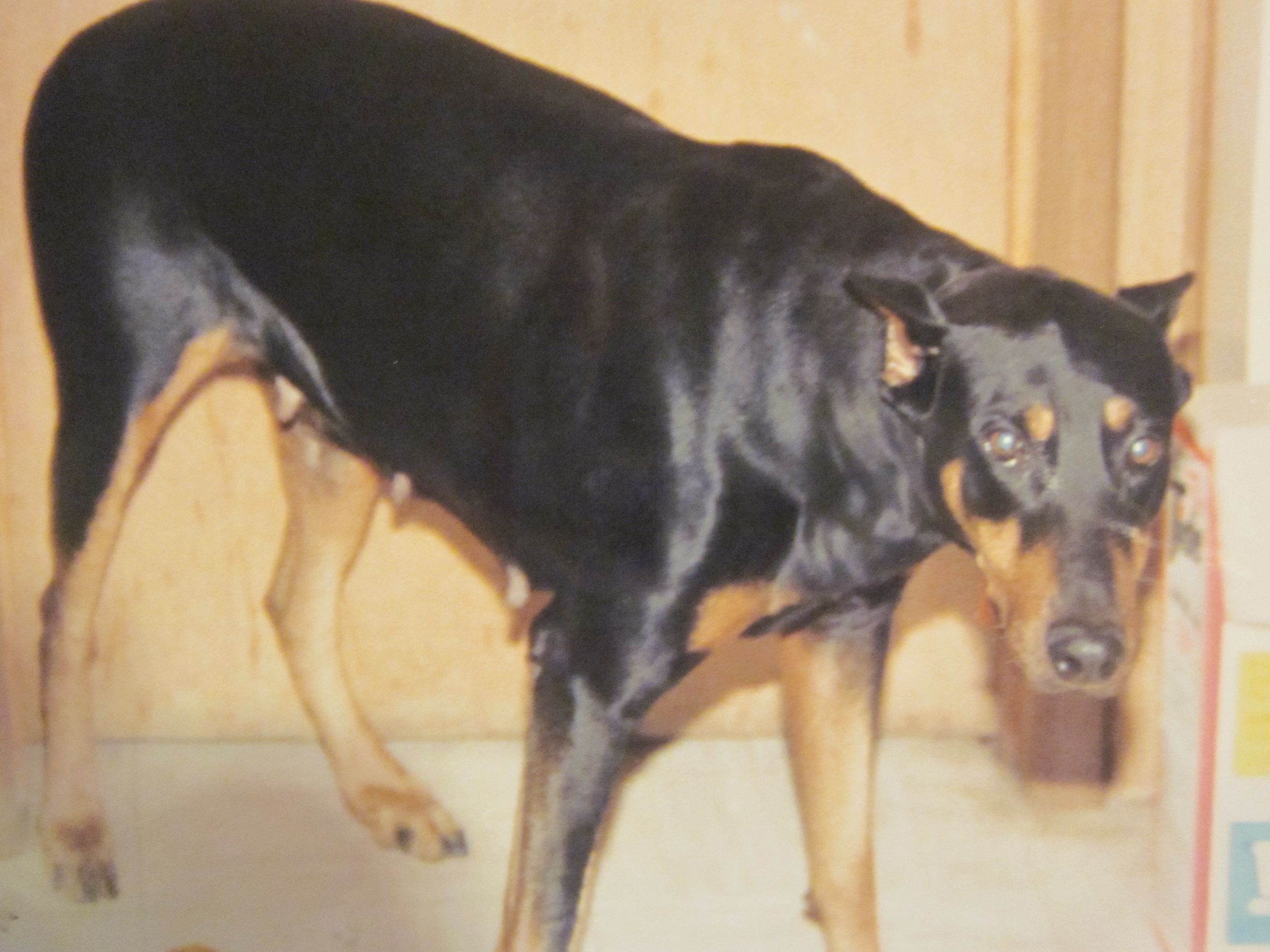
When Delilah was about eight years old, and I was fourteen, she developed diabetes. I don’t know how we discovered it, but we were sensitive to certain signs because my father had been diagnosed with type-two diabetes about four years earlier. Delilah was a healthy, if skinny, Doberman Pinscher until she got sick. She wasn’t the most energetic creature, but as soon as the door bell rang, she would start to bark, like the guard dog she was born to be. Except that, as the person entered the house, Delilah would walk backward up the stairs, and continue to bark from a safe distance.

She spent a lot of time out in the backyard. Mom would leave the back door open, with the screen door in place, so if Delilah wanted to go outside she could push the door open with her nose, and if she wanted to come back in she could bark once or twice. But more often than not she’d just rest on the back porch.

I never saw Delilah jump off the porch, I only heard about it, that this mostly quiet dog could get so worked up over the little birds who nested under the roof of the garage that she would stand on the porch with her front feet on the railing and then leap into the air to catch a bird. The drop from the porch railing looked steep to me, but Delilah was an athlete and took it in stride.

And then she got sick. The vet sent Mom home with hypodermic needles, alcohol wipes, and vials of insulin. She had to get the shots daily, with Mom learning how to pinch an inch of skin and plunge in the needle where Delilah was least likely to feel it.

Delilah was on insulin for almost a year before she died. I don’t even remember her showing signs of deterioration by the time summer came.

I had a habit of waking up early on Saturday mornings to clean the kitchen before my parents woke up. I generally woke up anxious, and scrubbing counter tops calmed me down. One Saturday morning in July, I was halfway down the stairs when I saw Delilah on the floor of the dining room. There was a greenish grey aura around her, like a dark version of the chalk outline the police on TV draw around dead bodies. This dog who had been brown and black, now seemed grey. I knew she was dead, and I panicked and ran back upstairs to hide in my room and let someone else find her.

By the time I came back downstairs a few hours later, my parents were there. They’d found her, wrapped her in a blanket, and moved her body to the back porch, because nothing could be done while it was still the Sabbath.

It was summer, so it was past nine o’clock by the time the Sabbath was over. It was dark by then, and raining. Suddenly, my father thought burying her was an immediate necessity. It couldn’t wait until the morning. It couldn’t be handled by the vet. He couldn’t ask friends to come and help. I had to help carry the blanket covered dog down the porch steps, to the back corner of the backyard, dig a hole, put her in, and cover the hole with dirt.

Mom tells me it was more common back then to bury a dog yourself, but by the time I was fifteen, it didn’t feel common at all, it felt illegal and disturbing. I was crying and shaking and my father was yelling at me to hurry up and to shut up.

It wasn’t a good way to say goodbye to someone who had been family to me for more than half of my life. And it was too dramatic for Delilah. She would have preferred something quiet and peaceful, with the TV on in the background and a few gentle pats on the head.

Delilah’s Puppies


Delilah was a pure bred Doberman Pinscher. We adopted her from a breeder when I was six or seven years old on the condition that her first litter would go back to the breeder (and he would supply the stud and medical care). My father fed her from the table and spoke to her in German, but she liked to sleep on my bed in the afternoons, after barking at strangers passing by all day.

She had a job, though, and that was to get pregnant as soon as her body was ready. Mom woke me up when Delilah went into labor. I think it was sunrise or shortly afterwards, because the rays of the sun were shooting through the windows in the little vestibule between the kitchen and the dining room. The vestibule was just the right size for Delilah, her puppies, Mom, my brother, and me.

I remember Delilah breathing heavily, panting, with sweat dripping from her tongue. She had a kind of crazed look on her face, but very serious, especially after each bag of puppy slid out of her. The bags were grayish brown and slimy, but Delilah was conscientious about freeing each puppy from its cocoon, and cleaning it thoroughly so it could start to breathe and walk freely.

Suddenly, Delilah was a warrior. Any attempt to get close to her puppies without her permission and she’d bare her teeth and growl.

At around six weeks, the puppies were sent to the breeder for a medical visit. My father brought me with him to the breeder’s workshop to pick them up. I got there just in time to see a row of puppy tails on the work bench, unattached to the puppies. They had their ears wired up as well, with what looked like copper wire laced through each ear like a long row of earrings.

The puppies were warm, squeaky and cuddly, and when my parents brought them back to the breeder for good at eight weeks old, I was sad, but I wasn’t heart broken. I’d thought of them as borrowed, from the beginning.

The second litter of puppies was different. My father thought he could make money as a breeder on his own. He paid the original breeder a stud fee, and then the resulting puppies were ours to sell, free and clear.

My brother and I were away at sleep away camp during the pregnancy and arrived home a few days after the puppies were born. My father made sure to tell us that there had been eight puppies originally, but that Delilah had rolled onto one and killed it. When I repeated the story to my mother recently, she said no, it was a still birth. Delilah didn’t kill her own baby, why would you think that? But Delilah did, supposedly, leave a mark on the foot of one of the seven puppies, a boy, and I named him Wounder.

I believed the story – that Delilah had stepped on him, and wounded him – and somehow, in my nine year old brain, that transposed into “Wounder.” Maybe I was trying to combine the two things I saw in him, “wound” and “wonder.” But the final version resonated as more meaningful to me, even then, before I’d ever heard of a Freudian slip.

Mom put an ad in the paper after a few more weeks, and people came by to look at the puppies. But no one bought them. Maybe it was because we weren’t registered breeders or the paperwork wasn’t good enough, or we were asking for too much money.

My father was angry that the puppies didn’t magically sell themselves, and he abdicated responsibility for them. Eventually my mother had to bring the puppies to the animal shelter to be adopted out, because, she said, we just couldn’t keep eight full grown Doberman Pinschers in one house.

The shelter took all of the puppies but one, Wounder. They said he was too rambunctious, climbing on counters and showing them he was boss. I loved that about him. I was sure that my father would have to let me keep Wounder now, but he said no. We couldn’t have an un-neutered son and his un-spayed mother in the same house, and my father refused to have either of them fixed, so Wounder would have to go.

My mother tried to find him a home, but no one would take him, even for free. She had to take him to the pound, where, I knew, they put unadoptable dogs down after a specified period of time. I was told that he was adopted from there, but I’m not sure I believe that.

Delilah went back to sleeping on my bed every afternoon and barking at strangers who came to the door. But I never forgot Wounder, and I don’t think Delilah forgot him or the rest of her puppies either. They were her babies, after all.

Abraham, the suburban pony


Image          

  My parents had a pony named Abraham before I was born. The pony originally belonged to one of my father’s students, who could no longer afford to stable him in the city. So my father paid $50, and brought the pony out to Long Island in the back of a van. The name Abraham was supposed to signify that he was the first animal in the family, or at least, the first male animal, which, to my father, meant the same thing.

            My parents seemed to believe that a pony would fit right into the suburbs. This was forty years ago, when Long Island was still developing, and looked sort of like the country, if you squinted. They kept rabbits and ducks in the backyard, along with the pony and a dog. They received a lot of complaints from the neighbors, especially about the smell. But my father would just ride around in the horse cart that Abraham pulled down the street, and ignore what anyone else had to say.
            The house had actually been built on a former horse farm, but by the time my parents arrived, the streets had been paved and the area had been developed into rows of suburban homes, with fenced in yards. Abraham’s stall was in the back of our garage, but he had free run of the backyard while my parents were at work during the day.

All of Abraham is a story to me, because he was sent away before I was born.

The neighbors were finally able to change the local ordinance to make keeping a pony in your backyard illegal.

            My mother met the veterinarian who agreed to take Abraham to live at his farm. She saw him loaded into a trailer with her own eyes. And she assures me that he was taken to an actual farm, though it sounds like one of those stories parents tell their kids when the dog dies. Abraham isn’t really dead, he’s gone off to live happily ever after in a place where he can really stretch his legs.

            There was a horse farm next door to our synagogue when I was a kid, and every once in a while one of the horses would be outside, and I’d reach through the fence to pet his nose, and I’d ask him if he knew Abraham.

            Maybe the Abraham stories explain why I dream of having a farm of my own, despite having no recognizable farming skills. Or maybe it comes from reading Charlotte’s Web so many times. I thought I was just like Wilbur, the little pig, when I was growing up. I was chubby and white and naïve and I could have used Charlotte’s help quite a bit. And maybe I thought that having a pony, and some ducks and rabbits and a few extra dogs in my backyard would have made me feel spectacular, just like Wilbur.

           Image