Tag Archives: Jewish

Teaching Leviticus


For the next few months, I will be teaching a synagogue school class on Leviticus (Vayikra, in Hebrew), the third book of the Bible. It’s an odd book for children to study, with its focus on laws that applied in ancient temple times: laws for the Levites (the priests and their helpers) around purity and sacrifices and holiness. There’s also a section on dietary laws.

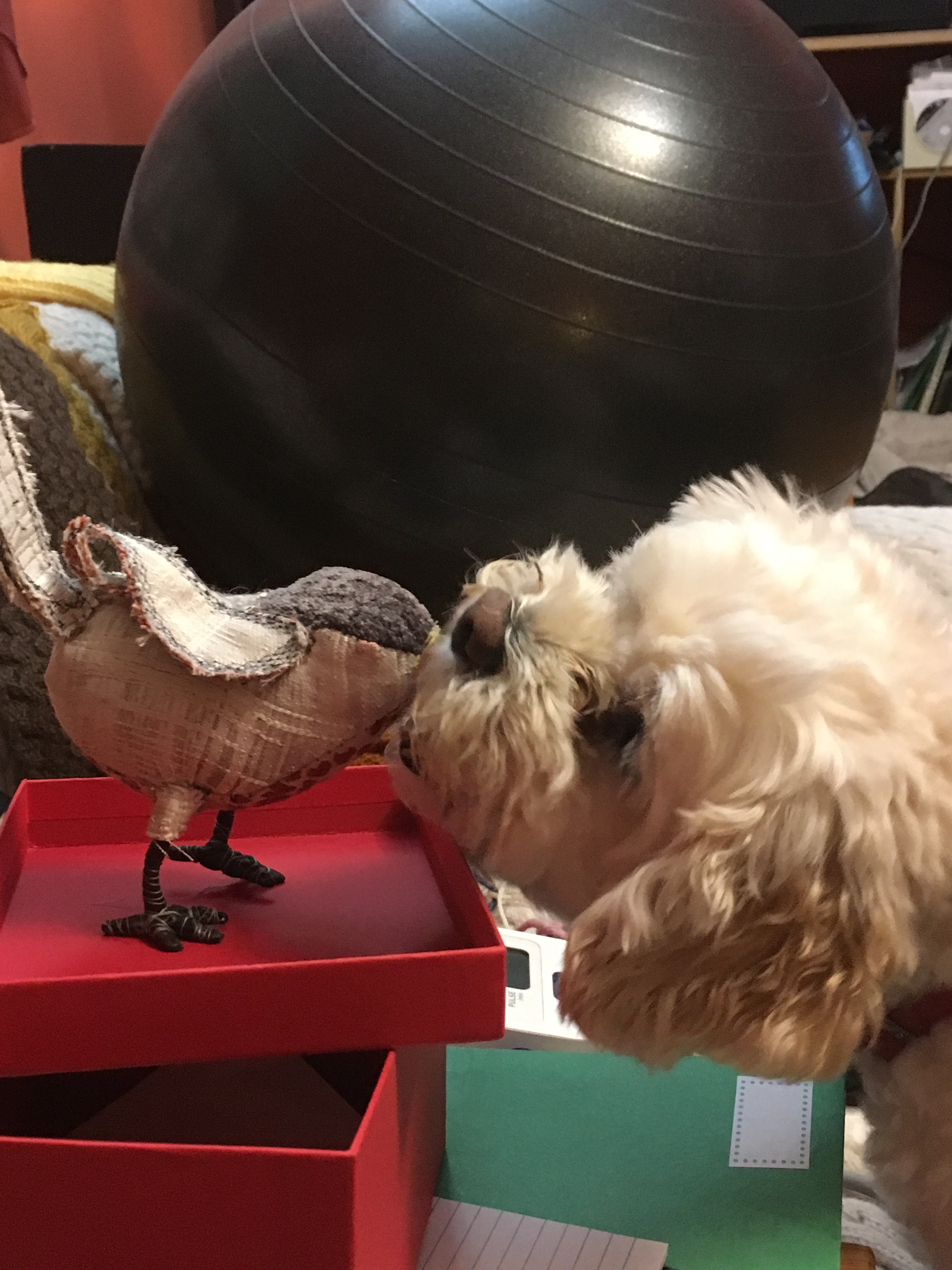
Cricket and bird

No, Cricket. You can’t eat the Canadian bird, even if she’s kosher.

But the fact is, the class will be based on a pre-set curriculum with very few actual quotes from the text, and much more focus on the ways these issues can be extrapolated into the modern lives of Jewish children. This makes a lot of sense. What’s the point of bogging down children’s minds with long passages, in Hebrew, about rules for priests who no longer exist? Judaism used to be a temple cult, with animal sacrifices, but long ago transformed into a synagogue and prayer-based religion.

Except, when I went to Jewish day school as a kid, we read everything, and we read it in both Hebrew and English, and it had an impact. We learned about “an eye for an eye” and that it should be translated to mean “money for an eye,” because the victim should be adequately compensated for the loss, rather than inflicting a similar loss on the perpetrator. We also learned about who’s responsible if someone’s ox falls into a pit on someone else’s property, and how punishments should vary based on whether a crime was intentional or accidental. It was, a little bit, like law school for ten year olds.

001

“That doesn’t sound like fun to me, Mommy.”

We also read the stories of the prophets in Hebrew, like a novel, without even bothering with the commentaries most of the time. Our Hebrew was pretty great, now that I look back on it.

I can’t say whether all of that was better or worse than what we do at the synagogue school; it’s just very different. My students still struggle to sound out words in Hebrew, confusing similar looking letters for one another, and struggling to remember which sound goes with which vowel sign. And the bible classes are meant to be taught in English. But I’d still like to infuse more of the Hebrew text into the process; not because it’s part of the set curriculum, but because I want them to know that there’s a connection between the lessons we’re learning in class and the Torah that we read with such awe during services in the sanctuary. We dress the scroll in velvet and silver, and we read it with a special silver pointer, from a parchment written by hand by a single scribe. I want them to hear the ancient Hebrew, and the strange melody of the chant, and to feel the connection to the past that makes it all feel so sacred and phantasmagorical to me.

I’m a little bit anxious about the transition to something so much more clearly planned out. This will be the only year, at least in synagogue school, that they study the book of Leviticus, so I can’t hop around and choose to teach whatever interests me at the moment as if I’m picking from a vast Chinese food menu, the way I do in the Hebrew class. There are important lessons here that won’t be addressed elsewhere and that will be helpful to them in preparing for their Jewish lives. But I’ve gotten used to the creativity of the Hebrew class, where we can spend fifteen minutes trying to shape the Hebrew letters with our bodies without feeling like we’re wasting time (I have one student who can do a bridge pose that looks exactly like the Hebrew letter Chet – it’s possible she has no spine).

045

“What letter am I, Mommy?”

It’s a balancing act, to bring the kids some of the magic that I feel, without overwhelming them with too much that is beyond their abilities for now. I need to make it fun, and relevant, and engaging, and useful to their daily lives, but I also don’t want it to feel so familiar that it loses its spark.

So, I need to study the lesson plans carefully, and study the book of Leviticus itself again, and try my best to teach my kids about holiness and where to find it in their lives, in their communities, and in themselves. And in dogs. There’s got to be room for the dogs in there somewhere.

IMG_0747

“There always has to be room for us.”

Wish me luck!


If you haven’t had a chance yet, please check out my Young Adult novel, Yeshiva Girl, on Amazon. And if you feel called to write a review of the book, on Amazon, or anywhere else, I’d be honored.

Yeshiva Girl is about a Jewish teenager on Long Island, named Isabel, though her father calls her Jezebel. Her father has been accused of inappropriate sexual behavior with one of his students, which he denies, but Izzy implicitly believes it’s true. As a result of his problems, her father sends her to a co-ed Orthodox yeshiva for tenth grade, out of the blue, and Izzy and her mother can’t figure out how to prevent it. At Yeshiva, though, Izzy finds that religious people are much more complicated than she had expected. Some, like her father, may use religion as a place to hide, but others search for and find comfort, and community, and even enlightenment. The question is, what will Izzy find?


The Movie I Walked Out On


For the past few years, the Israel Engagement committee at my synagogue has been showing Israeli films a few times a year, as a way to explore the modern state of Israel from the point of view of its own citizens. This year the theme is movies made by Palestinian Israelis, and told from a Palestinian perspective. You might think this would be a weak draw at a synagogue on Long Island, but more people came to the first movie of the year than come to most Friday night services.

This was my first time going. When the series first started I was busy with graduate school and too exhausted to go back to synagogue for an extra night, to sit in uncomfortable chairs and watch movies I could easily watch online. I finally went this year for a practical reason: I’m on another committee that’s planning to show a movie in a few months, and I wanted to see how the Israel Engagement committee managed the scheduling, snacks and seating, and the actual showing of the movie (and no one else on the committee volunteered to go).

IMG_1035

“We’ll just wait here for you, Mommy.”

Mom came with me for moral support, and we both decided to skip the schmoozing period before the movie. It turned out that even though the movie was listed as starting at seven, it actually didn’t start until after eight o’clock, so many people were still arriving long after Mom and I found seats in the back of the sanctuary (the film was being shown on one of the new screens in the remodeled sanctuary, to justify the expense of building screens into the design). This was my first lesson from the movie – don’t plan for seven and show the movie at eight, no matter how many people talk about “Jewish Time”. Fifteen minutes for schmoozing and late arrivals, and then start the movie, because I don’t want to be there forever.

The head of the Israel Engagement committee gave a brief introduction to the theme for the year, and a warning to the one sixteen year old in the audience that he had just made the age cut off, because there was some drugs and other adult themes in the movie.

I was a little apprehensive, partly because I’m always tense before seeing movies in movie theatres, worried that I’ll be trapped for an hour and a half watching a movie I don’t like, but also partly because the movie was billed as coming from a Palestinian perspective, and I had no idea what that would mean. The description of the movie had said that it was a story about three Palestinian women living together in an apartment in Tel Aviv, and it sounded like a sort of comedy/relationship movie, but there could still be anti-Jewish or anti-Israeli stuff going on, and while I’ve worked hard to challenge myself with different perspectives on Israel I tend to do it at home, where I can stop the movie or close the book and take a few deep breaths and pet a dog before continuing.

290

Two dogs available for petting.

Once the lights went out I took a deep breath and told myself to accept the challenge of watching the movie, because, really, it wouldn’t kill me. I might get bored, or annoyed, but how bad could it be, especially with so many other members of my congregation filling the room. I rolled my eyes at all of the marijuana, and the smarmy men hitting on the gorgeous women at the beginning of the movie. I couldn’t really tell when the dialogue switched from Arabic to Hebrew, because they all spoke so quickly and fluently in both languages. The whole thing hurt my ego, because after so much effort to work on my Hebrew I was still stuck reading the subtitles like everyone else.

I noticed that even though some of the men in the movie were creepy, either overly smarmy or overly controlling, there were a lot of other characters worth watching, straight and gay, religious and secular, successful and not so successful. And the actresses in the main roles were very good, luminous really, and funny and smart and interesting. The friendships developing among the women, once the early partying and drug scenes were out of the way, were surprisingly gentle and sweet, and I started to really care about what happened to them, especially to the religious girl who seemed very familiar to me, despite being a religious Muslim rather than a religious Jew. I was almost patting myself on the back for my open-mindedness by then, for being able to look past the drugs and the sex and the politics and just enjoy the people.

And then the rape happened. I saw it coming when the controlling fiancé touched his girlfriend’s hair-covering and started to tug on it. No, I saw it coming before then, in the way he tried to control where she lived and what she planned to do for work once they were married. The conflict was all telegraphed from the beginning, but it was played light and sort of funny, and I figured that over the course of the film the religious girl would come to realize that some kind of independence would be great and maybe she didn’t have to do every single thing her fiancé or male relatives told her to do. I assumed that the movie would continue in the same light-hearted style, with the sex happening behind closed doors, and all of the challenging topics addressed with humor and ellipses.

And then the fiancé touched the religious girl’s hair covering (they didn’t call it a hijab in the movie, so I’m not calling it a hijab, even though that’s the only word I know for a Muslim woman’s hair covering). My whole body tensed, because I know what it means for a religious man to break what other people might see as a minor boundary. I don’t care if you are Muslim or Jewish or Christian, if you follow modesty laws and you suddenly break them, watch out.

IMG_0457

“I’m watching them. All of them.”

The rape started so quickly, and I was so busy telling the girl (silently) to get the hell out of there, that it took me a second to really freak out. I wanted to drag that man off of her, just reach up into the screen and toss him to the floor, and I couldn’t. The only thing I could do was run, or walk, out of there. If she couldn’t run, I would have to run for her.

I stood up awkwardly, because there wasn’t a lot of room between the rows of chairs, and quietly told my mother that I had to leave. I was willing to sit alone in the hall by myself for the next hour or two, if necessary, but I wasn’t going to stay in that room and watch a woman being raped. I felt like, by sitting there, I was allowing it to happen, even making it happen.

Mom followed me out immediately, and listened to me ranting all the way home, and even sat with me, and the dogs, while we watched a Hallmark Christmas movie to recover.

257

It’s important to say that, even if they had warned me that there would be a rape in the movie, I’m not sure I would have known how it was going to affect me. Though, just the word rape would have been a trigger. No one used it. Watching people have sex on screen is embarrassing, and would have felt really weird in a room filled with fellow congregants, but not scary. Rape is scary.


As far as I know, no one else left. But I didn’t speak to anyone about it afterwards, so I don’t really know. I have no idea if they discussed the rape scene during the discussion after the movie, or if it had been eclipsed by other plot points by then. I don’t even know if anyone, other than the female rabbi who was sitting in front of me, even noticed that I left, or why. She emailed me after the movie, to make sure I was okay, and I sobbed with relief, because I was afraid that no one had even noticed that I’d left. Or why.

The thing is, a bunch of the people in that room have read my novel, or know about it, and know that I am an incest survivor. They do not talk to me about it, or ask me about it, though. And when I’ve offered to discuss it with the congregation, in person, in a letter, any which way, no one has taken me up on it. The fact that they can sit through a rape scene in order to show their support for Palestinian women and Palestinian filmmakers, but they don’t want to hear from me, hurts.

The rape scene, as much of it as I saw, still flashes through my mind over and over again. And I resent it. I have enough awful memories of my own. I don’t need more.

I felt selfish for walking out of the movie. I beat myself up about it for hours. I felt immature, and melodramatic, and I could hear my father’s voice in my head calling me Sarah Bernhardt and telling me that I was overreacting, again, just like I always used to do as a child when I got all riled up about my father’s behavior and the crazy conspiracy theories he liked to spin about why he kept being accused of sexual misconduct at work, with children.

But most of all I felt invisible and insignificant. I felt like, in the face of intersectionality and world issues, and the increasingly strong need for people not to think about certain things, I do not matter at all. That’s the scariest thing, to feel like I don’t matter to the people who matter to me. And I can’t shake that feeling any more than I can shake the etch-a-sketch of my mind and make the rape images go away.


If you haven’t had a chance yet, please check out my Young Adult novel, Yeshiva Girl, on Amazon. And if you feel called to write a review of the book, on Amazon, or anywhere else, I’d be honored.

Yeshiva Girl is about a Jewish teenager on Long Island, named Isabel, though her father calls her Jezebel. Her father has been accused of inappropriate sexual behavior with one of his students, which he denies, but Izzy implicitly believes it’s true. As a result of his problems, her father sends her to a co-ed Orthodox yeshiva for tenth grade, out of the blue, and Izzy and her mother can’t figure out how to prevent it. At Yeshiva, though, Izzy finds that religious people are much more complicated than she had expected. Some, like her father, may use religion as a place to hide, but others search for and find comfort, and community, and even enlightenment. The question is, what will Izzy find?


I hate games, so of course my students love them!


Even back in kindergarten, I hated playing Duck Duck Goose and Musical Chairs and Mother May I, and Red Light Green Light. I hated the competition, and I hated the humiliation when I couldn’t remember the rules, and the hierarchies that decided who would be a winner and who would, forever, be a loser.

IMG_1079

“I’m not a loser like you, Mommy. I’m a winner.”

A million years later, though, it turns out that games are a favorite at synagogue school, and the kids beg to play them over and over, spewing long lists of rules that I’ll have to learn in order to do it just right. They walk into the classroom, ignoring the worksheets and pencils on their desks (I love worksheets!) and they beg to play Jewish Jeopardy or Bingo or Tic Tac Toe before class even starts. They loved the day when we had an active shooter drill, because it meant competing with each other for who could hide best, and for who could make another kid laugh before laughing themselves.

When school first started in September, my idea of a perfect class session was: a handout to start things off; some practice with Hebrew letters; a sing along to learn one of the Hebrew prayers; and then a discussion about what the prayer meant to them; and then maybe a vocabulary list. I wrote one lesson plan after another along those lines, even after I discovered how hard it was to get the kids to sit in their seats for even two minutes at a time.

I figured I’d just need to come up with better ideas for how to reward them for cooperating. One of my first ideas was to give them a dance break, so they could work off their extra energy. I even bought a little speaker to attach to my iPhone, so they could hear the music over their own (very loud) voices. But they weren’t excited by the Nefesh Mountain songs I chose for them (Jewgrass music!!!), and then the new little speaker stopped working halfway through the song, and meanwhile the boys had decided to create a maze on the floor and crawl through the desks until the desks started to fall like dominoes.

Then I brought in sugar free candies and whole wheat pretzels for rewards, which seemed to get their attention, but it also distracted them and led to attempts to steal the snacks from the top of the cabinet (they are much taller than they look, somehow). And then I ran out of candy too soon (who knew sugar free peppermints were so popular?), and they started to complain about who got more pretzels than who, and how unfair the world is, and, by the way, teachers are always nicer to the girls! I’m still working with the snacks, because they are a good motivator, but I’m trying to be more consistent in who gets them and when.

157

“I like treats too, Mommy!”

I’ve had a lot of other ideas along the way for how to encourage the kids to finish at least a little bit of my lesson plan before half the class makes airplanes out of the worksheets (hint: half the class are boys). I thought of bringing in stress balls early on, when I noticed that a few pencils had been shattered, and the others were scattered across the floor, but I realized quickly that with the amount of energy and aggression in the room the stress balls would literally be bouncing off the walls, and the children’s heads.

I even thought about bringing Cricket in once, to keep some discipline, but her barking would have prevented even the small amount of work I was getting done. And I knew I couldn’t bring Ellie, because she would have peed on the floor, or cowered under my desk, with so many noisy little people around her.

179

“I could play with the children, Mommy. I just need to bring my friends.”

Some of my ideas actually worked out, though, like having the kids do Head, Shoulders, Knees, and Toes, in Hebrew, and making the shapes of the Hebrew letters with their bodies. But they get bored very easily, especially when they suddenly realize they’ve been tricked into learning something.

067

“You can’t trick me.”

I finally gave in to the pressure to play a game with the kids a few weeks ago, and they gave me a big list of rules I can’t remember, except that there were two teams, and when one team missed an answer the other team got the “rebound”. I used the game as a way to get through a word list I’d brought in for them, and for the first time they were actually able to get through a whole list, in both classes. To me, it felt tedious and mean and competitive, but to them it was awesome!

I don’t understand the draw, nor am I especially skilled at running games, and I have no creative ideas of my own for new games to play. So the following week I had the kids do student teaching (so they could teach me), and of course, after teaching alien languages and candy eating tricks, they focused on running games. There were clapping games and hiding games and games where we had to sit on the floor and games where we all had to leave the classroom. There were no games, unfortunately, that incorporated learning Hebrew. I’m sure you’re surprised.

But somewhere along the way I realized that if I give a little, they give a little back. I even had one kid ask for a harder worksheet. He decided that if he was going to have to get work done anyway, in order to earn the game he wanted to play, the worksheet should at least be challenging. So, they are teaching me, and they are very generous with their lessons, and eager to tell me when I get things wrong, which seems to happen often.

IMG_0238

“I’ve got a long list. Start typing.”

I’m still going to try out all of my own ideas on them, trying to make the learning itself more fun, and productive, at the same time. And you never know, maybe some time during the year they will become less concerned about who’s winning and who’s losing, but I’m not holding my breath. They’d win that competition easily.

004

“Mmmffmmhhm.”


If you haven’t had a chance yet, please check out my Young Adult novel, Yeshiva Girl, on Amazon. And if you feel called to write a review of the book, on Amazon, or anywhere else, I’d be honored.

Yeshiva Girl is about a Jewish teenager on Long Island, named Isabel, though her father calls her Jezebel. Her father has been accused of inappropriate sexual behavior with one of his students, which he denies, but Izzy implicitly believes it’s true. As a result of his problems, her father sends her to a co-ed Orthodox yeshiva for tenth grade, out of the blue, and Izzy and her mother can’t figure out how to prevent it. At Yeshiva, though, Izzy finds that religious people are much more complicated than she had expected. Some, like her father, may use religion as a place to hide, but others search for and find comfort, and community, and even enlightenment. The question is, what will Izzy find?


Orthodoxapalooza


A few weeks ago, when my best friend from high school was visiting from Israel, we met up on Central Avenue in Cedarhurst. If you are not an aficionado of the habits of Orthodox Jews on Long Island you may not recognize the name of the place, but Central Avenue is a haven for Orthodox Jews looking for kosher food, Judaica products, modest clothes and wigs, and the general companionship of similarly dressed people.  I was one of three women wearing pants, along the whole street, and even the little girls wore skirts over their leggings (and this was not a cold day).

030

“That seems like an awful lot of clothes, Mommy.”

I had to do a practice drive ahead of time, even though I’ve lived on Long Island my whole life, because I’d never driven to Central Avenue before. Even though I stayed in the car for that first trip, it felt a little bit like time travel, being surrounded by the sort of people I remembered from my adolescence. Even my brother’s Modern Orthodox neighborhood doesn’t quite jangle the same bells, if only because the skirts the women wear are shorter, and the men don’t let their payes (side-curls) grow long enough to dangle.

022

“Do I have those payless things?”

We met there because my friend had fond memories of Central Avenue from an adolescence filled with longing to go there, both to window shop and to mingle. She doesn’t have the same anxieties about not looking religious enough that I do, but she told me that people dress completely differently in her neighborhood in Israel, even though they’re just as religious as in Cedarhurst. I assumed she meant that they wear different kinds of clothes there because it’s so much hotter, but she said that even though you don’t need to dress a certain way in Israel in order to look sufficiently Jewish, there are still different styles of dressing for almost every religious neighborhood, so they can make it clear that they are each, even if only slightly, different kinds of Jews.

027

“We can’t BOTH be dogs. That’s just silly.”

Back in Cedarhurst, I noticed that the Jewish-friendly stores on Central Avenue are mostly high end, and I was afraid to go into one of the cafes, not because I question their level of kashrut (I don’t keep kosher), but because the prices were way over my head. The wigs in the wig shop weren’t cheap synthetics, but natural fibers and beautifully cut and colored, and the clothes were very well made, if mind-bogglingly similar. And almost every car was an SUV, even for the young marrieds with only one or two kids (so far). It used to be that very religious Jewish communities were sort of down at heel, because raising eight kids on a social worker’s or teacher’s salary, while the husband studies all day, doesn’t lend itself to wealth. But Modern Orthodoxy (which encourages Orthodox Jews to embrace living in the larger society instead of choosing isolation), has changed the lifestyles of many religious Jews, encouraging young men (and women!) to go into business or become doctors and lawyers, instead of studying all day.

But there are still a million rules to remember when you walk back into the Orthodox world, around clothes and food and haircuts and handwashing and on and on. It goes beyond the 613 Mitzvot the rabbis deduced from the Torah, because at some point orthodox rabbis decided that local customs should gain the power of Jewish law, which means that if the community you come from has the custom of waiting six hours to eat milk again after a meat meal, then that’s what you have to do, even though the length of time is not specified anywhere in the bible. And in my brother’s neighborhood if you only have one dishwasher, instead of one for milk dishes and one for meat dishes, then you are never having guests for dinner. There are strictures upon strictures, drawing lines between every two Jews, so that you are inevitably more religious than one neighbor and less religious than another and you are going to hear about it.

004

“I’m sorry, Mommy, but you’re just not religious enough for me.”

My friend, orthodox as she is, isn’t as kosher as the rest of her family, and doesn’t have quite enough children to compete with her younger siblings, but she has adapted to it. She respects their choices and makes sure not to serve them a chicken certified kosher by the slightly less strict rabbi in her neighborhood, but instead by the slightly stricter rabbi in their neighborhood, when they come over for dinner. She has always been tolerant of their differences, but able to hold on to her own views at the same time, which has a lot to do with why we were friends in high school, when I was nowhere near as religious as my classmates and, no one would eat at my house (only one dishwasher).

Like my friend, I work hard to be accepting of how other people live their lives, and I try to look for reasons to be tolerant and understanding, but religious orthodoxy pushes my buttons. It reminds me of feeling like an outsider as a kid, and feeling like I was an essentially bad person for the food I ate and the clothes I wore. I think I jump to conclusions much faster about a woman wearing a wig, or a man with a black hat or payes, than I do with people who are different from me in other ways. I feel automatically more self-conscious and less acceptable when I walk into a religious Jewish neighborhood, wearing my usual jeans and a sweater, whereas most other places I tend to feel invisible, in a good way.

I’ve found that this is a trigger for a lot of liberal or progressive or secular Jews, because it taps into a feeling that we are not good enough, not Jewish enough. And the fact is, being Jewish is an essential part of our identities, just in a different way than for the Orthodox. When one of my nephews, years ago, looked me up and down (in my jeans and short sleeves and sneakers) and asked me if I was Jewish, I had to take a deep breath not to hiss and curse at him. He didn’t mean anything by it (he was and is a very sweet boy), he was just raised in a world where Jews look a certain way, and act a certain way, and he didn’t know what to make of me. But even knowing that it was an innocent comment, I still felt the hurt, just as I do when I hear about the Orthodox rabbinate in Israel deciding that liberal Jews aren’t really Jews and their weddings and conversions are not kosher.

There are a lot of things about Orthodox Judaism that I love, though, most especially the way they preserve tradition and create worlds that are infused with Jewishness, so that you don’t have to work very hard to feel Jewish and to feel proud of being Jewish. Their children are educated in the history and traditions of the Jewish people, and feel connected to their community and heritage. But in the process, they also condemn a lot of other Jews to being outsiders, and to being treated as less than and in need of improvement. The endless rifts between progressive and Orthodox Jews, in Israel and in the United States, are painful and intransigent. We, as human beings, tend to be much better at identifying our differences than our similarities.

003

“It’s true. Human’s are terrible.”

But I went to Central Avenue in Cedarhurst anyway, and I chose to walk down the street, as I am, and no one gave me the evil eye, or pulled me aside to proselytize me into orthodoxy, the way I was afraid they might. Everyone went on with their lives, and, at the very least, kept their hurtful opinions to themselves. And I got to see my good friend for a few hours, with only the effort of a drive across the Island instead of a long plane ride across the world.

That’s a pretty good place to start.


If you haven’t had a chance yet, please check out my Young Adult novel, Yeshiva Girl, on Amazon. And if you feel called to write a review of the book, on Amazon, or anywhere else, I’d be honored.

Yeshiva Girl is about a Jewish teenager on Long Island, named Isabel, though her father calls her Jezebel. Her father has been accused of inappropriate sexual behavior with one of his students, which he denies, but Izzy implicitly believes it’s true. As a result of his problems, her father sends her to a co-ed Orthodox yeshiva for tenth grade, out of the blue, and Izzy and her mother can’t figure out how to prevent it. At Yeshiva, though, Izzy finds that religious people are much more complicated than she had expected. Some, like her father, may use religion as a place to hide, but others search for and find comfort, and community, and even enlightenment. The question is, what will Izzy find?


The Harmony


When I was eight years old or so, I started going to Saturday morning services in the big sanctuary at my Conservative synagogue. Most of the children in our synagogue went to junior congregation on Saturday mornings, for an hour of prayers and trivia games, meant to fit in between morning cartoons and afternoon gymnastics or computer classes. My brother and I went from the short children’s services in the tiny blue sanctuary, to the long adult services in the cavernous, stained-glass spectacle of the big sanctuary. And we loved it, or at least I loved it. The prayers were more complex, the congregants were happier to be there; but, for me, most of all, there were the harmonies.

295

Harmony, like this.

We had a female Torah reader, along with our male cantor, who sat with us in the congregation, except for when she had to go up to chant the Torah. When I was older, she taught me how to chant from the Torah for my Bat Mitzvah, and taught me the different chant for the Haftorah, and for the reading of the Megillah on Purim, but every week, during Saturday morning services in the big sanctuary, she taught me that there was such a thing as harmony. I learned by singing along with her, and somehow it made the songs sound deeper, and truer, and more complete. More than thirty years later I still sing her harmonies without a second thought.

This year, I finally sang with the choir at my synagogue, as an alto, during the High Holidays. The fasting and prayer and atonement, and the endless standing, of the long day of Yom Kippur is meant to be the final lap of the marathon; the gasping, I-don’t-know-if-I’ll-survive, final effort to change course before the rest of the year begins. But it’s not the repentance, or the fasting, or the standing that makes Yom Kippur powerful for me. In fact, if it were only that I would feel dimmed and darkened by the holiday. No, it’s the communal effort of it all, and the way we create energy and joy together, all of us participating – singing, reading, opening the ark, dressing the Torah, carrying it; for some, just the act of coming into the sanctuary to be with the community for hours at a time.

We read poetry and prose during the services at my synagogue, to dig into the crevices and corners of the prayers that we might otherwise ignore as we push our way through the service. This year we read part of an essay by a Reconstructionist Rabbi named Sandy Eisenberg Sasso, called Soul-AR Eclipse, about how we absorb so much of our loved ones that when they die they don’t totally leave us. I believe this. I’ve taken in so much from the people around me, some good for me, some not so good, but they’ve become so much a part of me that even when they are far away, they seem close by.

011

Butterfly

dina smiles

Dina

And I think that’s what happened this year as I was singing with the choir. This woman who hasn’t been in my life for many years, was standing right next to me, even singing through me. I felt like an eight-year-old again, singing harmonies, and filled with awe for the music, and the all-of-us. So many years ago she taught me that music can connect us, and help us to express the all-of-it, not just the happiness or the devotion, but everything we feel and can’t find any other way to say. I couldn’t name the feeling at the time, but I felt such relief singing those harmonies, knowing that music could be a conversation, even within myself.

Towards the end of Yom Kippur I went up onto the bima to read a poem by Linda Pastan. I didn’t know why I’d chosen that poem, except that it was one of the shorter readings available, until I read the last lines to the congregation and finally heard the words fully:

“When my griefs sing to me

From the bright throats of thrushes

I sing back.”


And I realized, yes, that’s what I do. I sing back. I sing in conversation with grief. I sing in response to grief. No matter what, I sing. And I’ve been doing it for a very long time.

003

Cricket sings too!

If you haven’t had a chance yet, please check out my Young Adult novel, Yeshiva Girl, on Amazon. And if you feel called to write a review of the book, on Amazon, or anywhere else, I’d be honored.

Yeshiva Girl is about a Jewish teenager on Long Island, named Isabel, though her father calls her Jezebel. Her father has been accused of inappropriate sexual behavior with one of his students, which he denies, but Izzy implicitly believes it’s true. As a result of his problems, her father sends her to a co-ed Orthodox yeshiva for tenth grade, out of the blue, and Izzy and her mother can’t figure out how to prevent it. At Yeshiva, though, Izzy finds that religious people are much more complicated than she had expected. Some, like her father, may use religion as a place to hide, but others search for and find comfort, and community, and even enlightenment. The question is, what will Izzy find?


Nonbinary Hebrew


I’ve been told, for years, that things are never all black or all white, but shades of gray in between. And I believe that. But I didn’t consider that these shades of grey could be applied to gender as well. The subject came up recently at my synagogue, when the clergy added their preferred pronouns onto their email signatures. None of the clergy members identify as nonbinary, but there are young people in the congregation who do, and this addition was meant as a sign of respect for them.

This is all new to me, and I’m still not sure I understand why someone would identify as nonbinary, rather than seeing themselves as a woman with some traditionally masculine qualities, or a man with some traditionally feminine qualities. But I realized quickly that I would need to think about this in more depth now that I’m teaching in the synagogue school, because Hebrew is a gendered language, like Spanish and French, and there are no clear ways to refer to a person who is nonbinary. Even if none of my students identifies as nonbinary yet, they may have family members who do.

English, surprisingly, is a much more egalitarian language than most, and nonbinary individuals have taken to using the pronoun “they” to describe themselves. The flexibility of the language, and the constant additions that have made English so hard to learn have also made it more capable of meeting our needs as society evolves. Hebrew, on the other hand, is an old language based in a male-dominated culture. If there is one man in a group and the rest are women, we have to use the Hebrew word for “men,” period. If a group of children is equally mixed between boys and girls, we have to use the Hebrew word for “boys” to describe the whole group, because there is no non-gendered word for “children.” This gender preference shows up in all of the Hebrew prayers, which led me to the obvious conclusion, growing up, that God must be a Man.

067

“That’s ridiculous.”

When I first read some Hebrew blessings written in female language, a few years back, I felt wildly uncomfortable. It just sounded so strange! And I’m not the only one who found the change uncomfortable, and unsustainable. Women have been trying to push the Hebrew language into more gender equality for decades, without much success.

This whole topic feels prickly and uncomfortable for me, because I default to male gender words in Hebrew without thinking twice. I automatically say boys or men, or refer to male doctors or teachers. And even when I say or write “I” sentences, as part of my refresher Hebrew lessons, I default to male verbs automatically, because it doesn’t occur to me that I might be talking about myself.

281

“What about dog words? Is Hebrew all people-centric too?”

I decided to search online to see how other people have been addressing this issue and I found a few articles about a student at the University of Colorado at Boulder who worked with their Hebrew professor to come up with a possible non-gendered addition to the Hebrew language. The two of them were inspired by the introduction of gender neutral terms in Spanish (though I haven’t come across these in my Spanish lessons so far, and only recently heard the term “Latinx” to refer to people of Latin American descent without referring to gender). The system the teacher and student came up with adds a neutral gender pronoun to Hebrew, and a way to construct gender neutral conjugations, at least in the present tense.

This new system has been controversial, and people have found it hard to learn. It’s also not the only attempt to address this problem. A Jewish summer camp in the States (not the one I went to) came up with another gender neutral term, specifically for “Camper,” in Hebrew, though they don’t seem to have gone further than that into adding new conjugations. It’s hard to know if either of these ideas will generalize to society at large, or if a new system will be inspired by them, or if none will take off at all.

And the fact is, it’s been hard for me to get used to using the word “They” to refer to an individual, in English, so I can’t imagine the discomfort Hebrew speakers must feel at being told to learn a whole new system in order to speak their own language correctly. But if we leave things as they are, with no gender neutral terms, where does that leave the people who feel like neither gender describes them? How can they ever feel accepted if they can’t be referred to correctly by their communities?

244

“Now you know how I feel. You keep calling me a dog. It’s rude.”

As a society, we make so many assumptions and have so many expectations about ourselves that are attached to gender. Would that change if we all used gender neutral language? Would we lose something that makes our lives meaningful by referring less often to gender? I don’t know. I’ve always considered myself female, and despite whatever discomfort I have with societal expectations of women it still seems like an accurate description of how I experience my gender. But it intrigues me to think about this question, of how much might be roiling under the surface of this dilemma of language. How much of our lives have actually been determined by the language we use to describe ourselves? And what kinds of surprises might we find if we take some small steps towards change?

YG with Cricket

If you haven’t had a chance yet, please check out my Young Adult novel, Yeshiva Girl, on Amazon. And if you feel called to write a review of the book, on Amazon, or anywhere else, I’d be honored.

Yeshiva Girl is about a Jewish teenager on Long Island, named Isabel, though her father calls her Jezebel. Her father has been accused of inappropriate sexual behavior with one of his students, which he denies, but Izzy implicitly believes it’s true. As a result of his problems, her father sends her to a co-ed Orthodox yeshiva for tenth grade, out of the blue, and Izzy and her mother can’t figure out how to prevent it. At Yeshiva, though, Izzy finds that religious people are much more complicated than she had expected. Some, like her father, may use religion as a place to hide, but others search for and find comfort, and community, and even enlightenment. The question is, what will Izzy find?


The Bird’s Visit

During the days between Rosh Hashanah and Yom Kippur (the Days of Awe) a bird came to visit my apartment. She showed up midday on Saturday; she was just there when I came back in from walking the dogs, flapping her wings against the inside of the living room window, inches away from the space where she must have accidentally come in (there’s a space next to the air conditioner that Mom uses to give the neighborhood birds their snacks). I tried to show the bird the exit, as gently as possible, but she ignored me.

IMG_1218

“I’m staying.”

I, of course, took pictures of her flying around the apartment, from light fixture to curtain rod to picture frame, thinking she would be leaving at any moment. And when I left to pick up Mom from the train (she’d been out quilting with friends for the day), I was sure the bird would be gone when we returned. But she was still there, and Mom said that she was a (female) house sparrow, based on her size and markings.

We put a few pieces of challah on the window sill in the living room, to show her the way back outside, but the bird picked up each piece of bread and flew it to her safe place (a wooden loom on top of Mom’s bookcase) and ate in peace. Then she took a nap, head curled into her neck, half hidden behind the living room curtain.

sparrow sleeping cropped

Sleeping birdie.

We were sure she would be gone by morning, after her meal and a long nap indoors, but she woke me up at seven thirty the next morning with a big squawk. She had ventured out of the living room at some point and found her way into my room. And decided she needed company; and that her company should be awake.

sparrow with stuffed animals

“Something is very wrong with these animals.”

When we all decamped to the living room for breakfast, and the CBS Sunday morning show (Mom watches the whole show just to see the moment of nature at the end), the bird followed. She was very entertaining. She flew back and forth from the kitchen to the dining room to the living room, doing her own version of dog zoomies. She shared Mom’s breakfast (Mom got a picture of the bird eating challah on the kitchen counter), and pooped in all kinds of new places.

IMG_1268

“Don’t poop on me, Birdie.”

Later, the bird even followed me into the bathroom when I went to take a shower (I didn’t notice she was there until too late, but she was kind enough to wait for me on top of the medicine cabinet instead of hanging out in the shower with me. Small favors). Cricket was waiting right outside the bathroom door afterward, horrified.

IMG_0930

“Aaaaack!!!”

By the thirtieth hour of the bird’s visit, Mom was getting worried. She’d reached out to her cyber community and was reminded of the health risks of having a wild bird in the house, because of the poop she seemed to drop any and everywhere. So we removed all traces of food from the kitchen counters, and even got rid of the bread for the outdoor birds. But the bird decided to try the kibble left in the dogs’ bowls, and then she checked the living room floor for any crumbs the dogs might have left behind. Cricket started to notice the invasion at that point, because it was one thing to have a bird flying around in the light fixtures, but something completely different to have a bird calmly walking along the floor, trying to share her food. Cricket’s food is sacrosanct, just ask Ellie.

281

“It’s true.”

IMG_1272

“Now where did that fluffy monster hide the treats?”

When it was time to go to sleep for the night, the bird set herself up on her wooden loom again, and she was still there the next morning, though she was kind enough not to wake me up this time. I do prefer to sleep as late as I can.

IMG_1280

Butterfly watching over Birdie’s meeting with Canada bird.

I was seconds away from naming her (Tzippy, short for Tzipporah, Hebrew for female bird) when the bird finally left. Mom plugged the hole next to the air conditioner with a tissue, to discourage her from coming back in, but the bird seemed to have finished her visit by then and didn’t return. There had been a lot of extra squawking outside the windows that morning, maybe from her family or friends, telling her that she needed to come back out to the real world.


The depression I felt after the bird left was pervasive. I felt like we’d exiled her. Yes, she pooped everywhere, and didn’t clean up after herself; and yes, she woke me up too early in the morning; and yes, Cricket was getting annoyed with her. But she made me feel special, just by being there. She made me feel chosen.

There’s a moment in the prayer service at my synagogue where we put our arms around each other to say the Priestly Blessing, as a way to celebrate family and community ties. It took me a few years to get used to all of the touching and closeness involved in that blessing, but for the forty-some-odd hours while the bird was staying with us, I felt like she was holding out her wings to be included in our little family group: singing the blessing with us, arm in arm.

And I felt blessed, and full of awe. We focus so much on self-examination and looking for the sins we need to atone for during the High Holiday season, but the bird reminded me that sometimes there’s nothing to atone for. Sometimes your assessment can tell you that you are on track and you are loved, and that you deserve the visit of a little bird to remind you that every day can be full of awe, if you pay attention.

IMG_1247

Bye bye Birdie.


If you haven’t had a chance yet, please check out my Young Adult novel, Yeshiva Girl, on Amazon. And if you feel called to write a review of the book, on Amazon, or anywhere else, I’d be honored.

Yeshiva Girl is about a Jewish teenager on Long Island, named Isabel, though her father calls her Jezebel. Her father has been accused of inappropriate sexual behavior with one of his students, which he denies, but Izzy implicitly believes it’s true. As a result of his problems, her father sends her to a co-ed Orthodox yeshiva for tenth grade, out of the blue, and Izzy and her mother can’t figure out how to prevent it. At Yeshiva, though, Izzy finds that religious people are much more complicated than she had expected. Some, like her father, may use religion as a place to hide, but others search for and find comfort, and community, and even enlightenment. The question is, what will Izzy find?



I Seem To Be a Teacher


The same week that I started teaching at synagogue school, I also ran a writing workshop on blessings at my synagogue. The combination allowed me to see very clearly how much easier it is to teach adults, and how much trouble I seem to have gotten myself into.

Things were a bit chaotic on the first day of synagogue school, because we only had partial class lists (most families register late, but the kids show up on the first day anyway), and the building was still a construction site, and, oh yeah, I’d never done anything like this before in my life!

It’s important to say that afterschool synagogue school is a unique set of circumstances: even the most well-behaved kids hit four o’clock and lose their minds; they can’t sit still; they have an enormous amount to say after keeping quiet most of the day; and they don’t really have room in their brains to fit in any more information. Desks are for climbing, other children are for bothering, and there’s a competition for who can say the nastiest things to the teacher – which would be me. It’s a joy!

I drove home after my first two hours of teaching in a state of shock. I felt like I’d been hit by a truck. On top of the chaos, the classroom was too warm, and early on, I realized I would not be one of those teachers who stands the entire time. But I didn’t vomit or faint, so that was a plus.

257

The girls were vicariously exhausted.

And, despite some rough spots, I actually did some real teaching (I know, because without realizing it the kids repeated things I’d said in week one when they came back for week two. They would be horrified to know this, so don’t tell them). The second day with the kids went much better than the first. We even came up with some ways to manage their extra energy: like standing behind their desks when they couldn’t sit still anymore, dance breaks, and even a little bit of Pachelbel Canon in D (“Ugh! Classical music!”), helped them get through it.

The blessings workshop, with the adults, two days later, was like a walk in the park on a cool day compared to synagogue school. We had ten people around the table, and everyone participated, and shared their blessings, and listened to everyone else with interest. The workshop was based on a post I did on the blog a few months ago (or the post was based on the work I was doing to build the workshop), with prompts for different categories of blessings, and an overall intention to help empower people to trust their own voices along with the voices of tradition. It went well enough that now I have to prepare for a new workshop on blessings leading up to Passover. I have six months, so I’m not too worried, yet.

281

“I’m worried for you.”

The thing is, the one career I was sure I didn’t want was teaching. It’s not that I expected to be bad at it, exactly. No, the real problem was that my father was a teacher, and I was afraid to be anything like him; or accused of being like him. My father was accused, multiple times, of inappropriate sexual contact with his students, so the idea of teaching and of going to jail seemed tied together in my mind from very early on. When people told me to get a PhD, in something, and become a professor, or teach writing after I got my MFA, I said no. I was too scared. What if I was accused of hurting someone? What if I actually hurt someone? What if I said the wrong thing? Or failed to be a good enough teacher? In my mind, I could go to jail for boring my students, or raising my voice, or just being in a bad mood, because my father’s paranoid ramblings at the dinner table suggested that that’s the kind of thing he’d done wrong, if anything. Even after I understood that my father was truly guilty of a crime, and had caused real harm to his students, I couldn’t uncross the wires in my brain around teaching.

Unfortunately, I never had a chance to see my grandfather in the classroom. He taught high school Consumer Education, and was the principal of an afterschool Hebrew school, but he died at age eighty, when I was eight years old, and he wasn’t in good health for the last years of his life, so his teaching was just a story I was told, not an experience I could draw from.

And yet, people kept telling me I’d make a good teacher, or even assumed that I already was a teacher (I’m something of a know it all), and I couldn’t shake the idea that this was the path not taken. When the chance to teach synagogue school came up a lot of internal bells started ringing, telling me that I had to at least try.

The dogs have offered to help me test out some of my ideas, and they keep reminding me that chicken treats are great motivators and that leashes are very reassuring (though I’m pretty sure that wisdom won’t translate especially well to human children). On the other hand, they are great at comforting and distracting me when I get home. They’ve always been wonderful at reminding me that I am loved.

249

“I love you, Mommy!”

244

Cricket is thinking about it.

I’m still overwhelmed with too many ideas for what to teach, and how to teach it, and I can’t fit even a quarter of my ideas into my actual classes. And I’m still comparing myself too much with other teachers, and feeling less than. But I am, slowly, developing more realistic expectations of myself. It will take some time to learn about classroom management, and how to not take the kids’ comments personally. But for now I seem to be teaching, and sometimes even enjoying it. And, maybe someday, I might even be good at it.

067

“Really?”


If you haven’t had a chance yet, please check out my Young Adult novel, Yeshiva Girl, on Amazon. And if you feel called to write a review of the book, on Amazon, or anywhere else, I’d be honored.

Yeshiva Girl is about a Jewish teenager on Long Island, named Isabel, though her father calls her Jezebel. Her father has been accused of inappropriate sexual behavior with one of his students, which he denies, but Izzy implicitly believes it’s true. As a result of his problems, her father sends her to a co-ed Orthodox yeshiva for tenth grade, out of the blue, and Izzy and her mother can’t figure out how to prevent it. At Yeshiva, though, Izzy finds that religious people are much more complicated than she had expected. Some, like her father, may use religion as a place to hide, but others search for and find comfort, and community, and even enlightenment. The question is, what will Izzy find?


A Summer of Singing


At the first official choir rehearsal for the Jewish High Holidays (Rosh Hashanah and Yom Kippur, starting Sunday night, September 29th), I received a loose-leaf full of music from the choir director. Most of the other choir members have been there for years (some for over thirty years), so while they mostly had to show up at rehearsals and sing, I had to take my loose-leaf home and study. Even the songs I thought I knew had to be relearned, because I was used to singing the melody with the congregation, and now I was singing the harmony with the other altos.

IMG_1035

“Do you really have to sing that again?”

The music kept repeating in my head all summer long. I knew my brain was doing this to be helpful, so that I could learn what I needed to learn in a hurry, but it meant that I was drowning in melancholy music for months. I couldn’t even escape it while I was sleeping.

The dogs are probably sick of hearing about repentance and atonement, but they seemed to like finally being able to participate in synagogue services, in their own way, in their own home. When the summer rehearsals started, I spent a lot of time being mute and grumpy, because I couldn’t sing along. But after months of studying I’ve learned most of the songs, and even figured out how not to be completely distracted by the other voices around me.

img_0510

Except for Cricket’s voice. That still distracts me.

Starting in September we had choir rehearsals once a week, and by then I knew most of the music, though some things were still beyond me, especially the songs where the altos just sing the oohs and ahhs in the background (it’s so hard to learn the music without words to hang the notes on!). There are a few pieces of music that still confound me, especially one that requires us to sing ten notes on one word, over and over again. I get three notes in and then shut my mouth and wait.

249

“I’ll sing for you, Mommy!”

Unfortunately, no one seems to have noticed all of the progress I’ve made, even though I make a point of singing out when I know what I’m doing. Maybe they think it was as easy for me to learn all of the music, or they forgot that I’m new to the choir altogether. I was kind of hoping for some praise; you now, gold star stickers to put on my loose-leaf, something like that. Maybe someday.

One very lucky break is that our temporary conductor is one of the altos, so she has been able to help us out with finding notes and some much needed attention. She also has her own interpretive dance style of conducting that’s really easy to follow, so that even when I’m looking down at the music and can only see out of the corner of my eye, I can understand what she’s telling us.

54 - wow, what's next

“I bet I could lead a choir!”

For the High Holidays, the choir will be sitting on a raised platform, in our newly redone sanctuary, and I am not looking forward to that. I’m used to being mostly invisible in the crowd at the high holidays, able to be grumpy or tired or whatever I am in relative obscurity. But this year I will be on public view, so I may have to put on a happy – or at least normal – face. This is also when I start to wish I’d lost more weight already, and bought a whole new wardrobe, and maybe had plastic surgery, because otherwise I just look like me. We don’t even get to wear robes to hide behind.

The biggest downside of being in the choir is that I can’t sit with Mom during the services. Hopefully she’ll be able to sit near the choir area, so that I can roll my eyes at her discreetly during the services. I think it might be frowned upon if I actually took out my cellphone to text my ongoing commentary during the services, but it might come to that. I mean, these are long services, and I have a lot to say!

017

“Do you? We never noticed.”

I’ve made some friends among the altos, though, so I should be able to nudge someone and whisper when something especially ridiculous happens. Which, of course, it will. With a new sound system, and echoing acoustics, and everyone stuffed together in one big room trying to express all of the repentance and atonement and misplaced guilt of a whole year, laughing fits are inevitable.

I wish you all a Shana Tovah U’Metukah (a good and sweet new year) with as much laughter as possible!

Happy New Year!

295


If you haven’t had a chance yet, please check out my Young Adult novel, Yeshiva Girl, on Amazon. And if you feel called to write a review of the book, on Amazon, or anywhere else, I’d be honored.

Yeshiva Girl is about a Jewish teenager on Long Island, named Isabel, though her father calls her Jezebel. Her father has been accused of inappropriate sexual behavior with one of his students, which he denies, but Izzy implicitly believes it’s true. As a result of his problems, her father sends her to a co-ed Orthodox yeshiva for tenth grade, out of the blue, and Izzy and her mother can’t figure out how to prevent it. At Yeshiva, though, Izzy finds that religious people are much more complicated than she had expected. Some, like her father, may use religion as a place to hide, but others search for and find comfort, and community, and even enlightenment. The question is, what will Izzy find?


The Last Summer at Camp


During my last summer at sleep away camp, at age thirteen, we had a strange outbreak of mosquitoes. We weren’t allowed to go in the lake for two weeks, and the mosquitoes were in pretty much every breath of air we breathed. I don’t know if it was an early case of West Nile Virus or something else they didn’t bother to explain, but I had to sleep in jeans and a sweatshirt, in ninety degree weather, to try to keep the mosquitoes at bay.

IMG_0887

“That sounds bad. I’m worried about this story.”

It was already a very, very bad summer for me. I’d begged to stay home, or better yet, go to California. I had this idea about California that wasn’t based on anything I can remember, except that it wasn’t home. I think my best friend at the time had been talking a lot about going to California for some reason, and she either went to California, or to Israel that summer, to visit family.

IMG_0917

“Oy. It’s getting worse.”

I was deeply depressed, irritable, anxious, and uncomfortable 24 hours a day. I’d lost weight (this was pre-anorexia, so I was normal thin, not skinny yet), and had some pretty outfits, and I’d assumed this would make me happy, but it actually made things worse.

Sex was everywhere in camp. There were a lot of rape accusations (all true as far as I could tell, but not taken seriously by the counselors, who were eighteen and nineteen years old, or the administration, who had no excuse). There was a lot of dating and flirting and coupling. I would not have been able to tell you why it was all so awful to me at the time. I couldn’t explain why I felt so thoroughly under attack. I’d had some memories of the sexual abuse by then, in vague images and awful feelings, but I didn’t know what it was, or what to do with it.

My parents came up on visiting day and I was sure they were going to take me home, but instead, my father announced that they were going to Israel in a few days and wouldn’t be back until it was time for me to come home from camp. And I couldn’t go with them. I screamed and cried and he took a picture of me, inconsolable (he framed it and put it up in the downstairs hallway in our house, where it stayed for years).

067

“Told ya.”

After the mosquito drama, or before it maybe (time was confusing that summer), the counselors took my age group on an overnight campout on a hill. It was coed, with the counselors down at the bottom of the hill, out of ear shot. None of this had been made clear ahead of time. There was at least one rape that night, but I only knew about it because it happened to a friend of mine. I have no idea what else happened, but we were a group of thirteen year old boys and girls without supervision, so I can guess. Someone stepped on my hand in the middle of the night, and no one seemed to notice when I screamed.

No one listened when I ranted about the campout for the next few days, because everyone else seemed to think that a coed sleepover for thirteen-year-olds was totally fine. I was the prude and the hysteric. And the fact is, I couldn’t explain why I was so angry about it when no one else had a word to say, except for the girls who whispered in my ear about rape, on the hill, and on other days and at other times, but refused to go to the administration, or to let me go for them.

None of the rapes, or attempted rapes, happened to me. I barely even touched a boy all summer. But the lack of concern from the adults enraged me. The counselors suggested that my problem was that I was too mature for my age group, and that was why I was so uncomfortable. My opinion was that I needed to walk home from camp, even if it took the rest of the summer. But I was too afraid, and had no money, and that made me feel powerless.


When a twelve-year-old girl was sent home because she had accused two boys of forcing her to give them blow jobs – and no one believed her, because, How can you force someone to give a blow job, really it’s the boys who were raped – I realized I was never going back to that camp.

And it was a terrible loss. The thing is, I’d never really been safe anywhere else. I was sexually abused at home and at my childhood best friend’s house. I was bullied at school. Camp was the one place that felt normal, where I could work through the kinds of painful experiences that everyone else had to go through too. It wasn’t a great joy, but it was a place where I had learned how to make friends, and set boundaries, and argue, and swim. But once sex became an issue, for me and for my peers, camp was no longer safe for me, with my abuse history. Maybe if they’d had better policies in place for how to handle problematic behaviors, or if the counselors were better trained, or if the adults had taken on more of an oversight role, things would have been different. But maybe not.

032

“I’m sorry, Mommy.”

Usually Mom drove to camp to pick me up at the end of the summer, but this time she arranged for me to go home with another Mom from our area and two of her daughters, because of her late return from Israel with my father. I felt really sick to my stomach on the drive, but I didn’t know the Mom or the girls well enough to say anything. When I finally got home I ran upstairs and barely made it to the bathroom in time, throwing up in the sink. I kept throwing up for the next two days, and by the time school started a week and a half later, I wasn’t eating much at all. My body felt like it had been filled with poison, and I didn’t want to risk adding more. Within weeks I was basically anorexic, and that seemed to help keep the poison at bay. By then I didn’t just want to be skinny anymore, I wanted to be invisible.


51WewBFUZ5L._AC_US218_

If you haven’t had a chance yet, please check out my Amazon page and consider ordering the Kindle or Paperback version (or both!) of Yeshiva Girl. And if you feel called to write a review of the book on Amazon, or anywhere else, I’d be honored.

Yeshiva Girl is about a Jewish girl on Long Island named Izzy. Her father has been accused of inappropriate sexual behavior with one of his students, which he denies, but Izzy implicitly believes is true. Izzy’s father decides to send her to a co-ed Orthodox yeshiva for tenth grade, out of the blue, as if she’s the one who needs to be fixed. Izzy, in pain and looking for people she can trust, finds that religious people are much more complicated than she had expected. Some, like her father, may use religion as a place to hide, but others search for and find comfort, and community, and even enlightenment. The question is, what will Izzy find?